What is a Dust-Free Feeding Station and How Does It Work?
Meta Description: Learn how a dust-free feeding station works, how to choose one, and how QTech-Machinery supports clean, efficient powder feeding systems.
A dust-free feeding station is a manual or semi-automatic material dumping system designed to reduce dust leakage when operators open bags and feed powders or granules into a production line. For factories handling plastic additives, PVC powder, resin, food powder, chemical powder, battery materials, pigments, or mineral fillers, it helps protect operators, keep the workshop clean, reduce material loss, and improve downstream feeding stability.
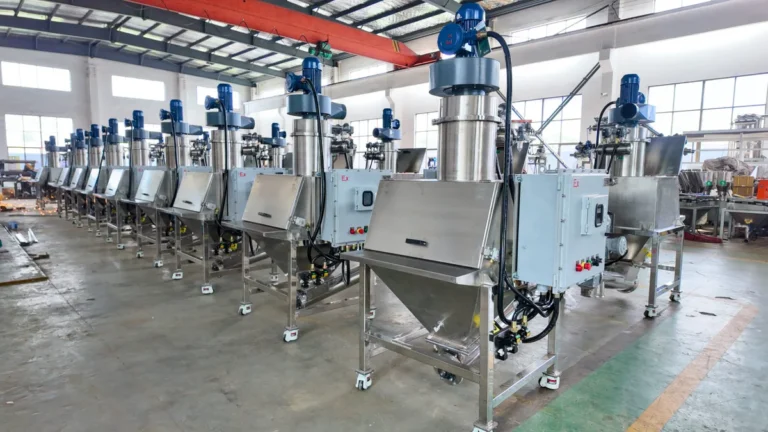
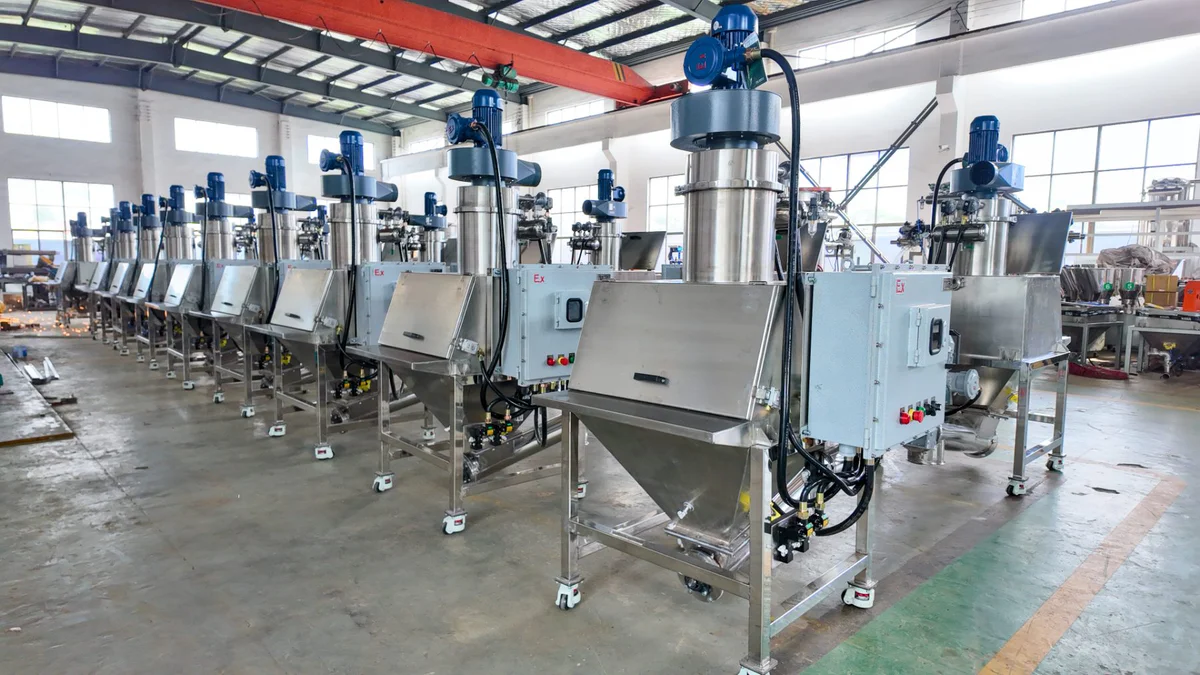
At QTech-Machinery, our dust-free feeding stations can be customized according to raw material type, feeding capacity, downstream equipment, workshop layout, voltage standard, and hygiene requirements. Based on our delivered project configuration, we can provide systems made of 304 stainless steel, equipped with PTFE-coated filter cartridges, automatic pulse back-blowing, air hammer anti-bridging devices, and Schneider electrical components.
1. What is a dust-free feeding station?
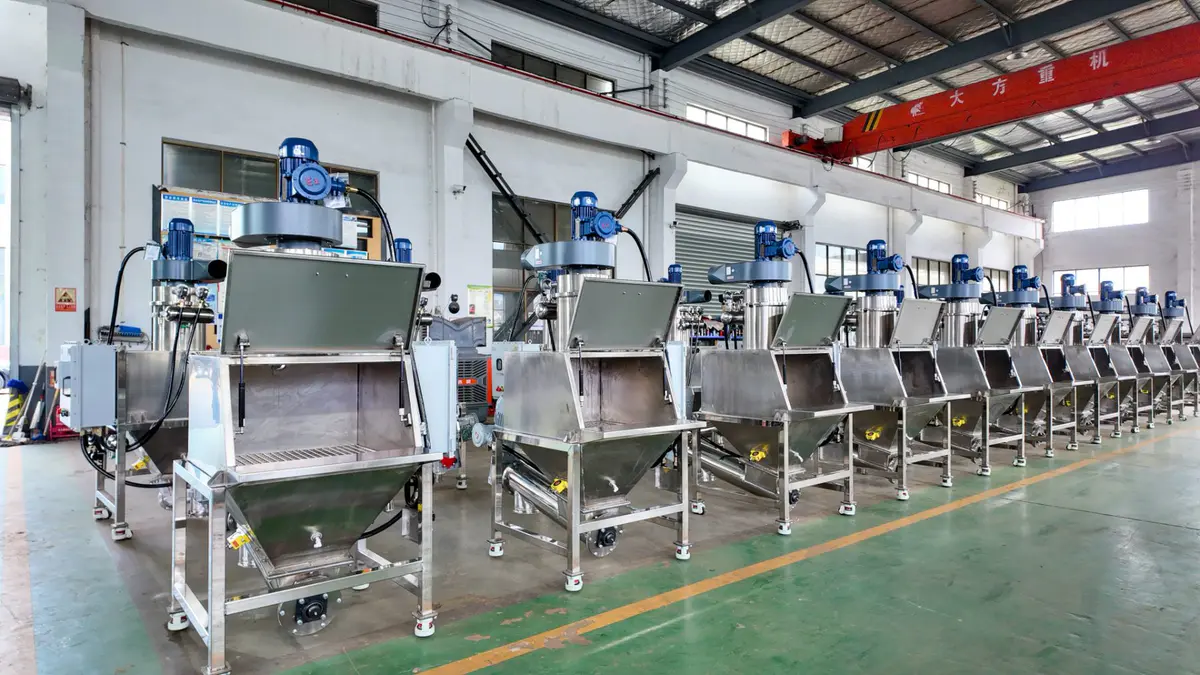
A dust-free feeding station is a controlled powder dumping system that captures dust during manual bag unloading and transfers material cleanly to downstream equipment.
A dust-free feeding station, also called a dust-free dumping station, bag dumping station, or powder feeding station, is used when operators manually open bags and pour raw materials into a production system. During this process, fine powder can easily rise into the air, causing dust pollution, operator exposure, material waste, and possible contamination.
The feeding station solves this problem by creating a controlled negative-pressure area around the dumping zone. When the operator pours material into the hopper, airborne dust is drawn into the built-in filtration system. Cleaned air is discharged, while captured powder is returned to the hopper through filter cleaning.
This type of equipment is widely used in:
- Plastic extrusion and compounding
- PVC powder handling
- Chemical powder processing
- Food ingredient feeding
- Pharmaceutical raw material handling
- Battery material production
- Pigment and additive dosing
- Resin and filler feeding
For plastic machinery factories, a dust-free feeding station is often connected with screw conveyors, vacuum loaders, mixers, storage silos, or extruders.
Recommended internal reading:
- QTech-Machinery Home
- QTech-Machinery Cases
- PVC Corrugated Pipe Extrusion Line Case
- Core Tube Extrusion Line Case
- 20–110mm PE Pipe Extrusion Line Case
2. How does a dust-free feeding station work?
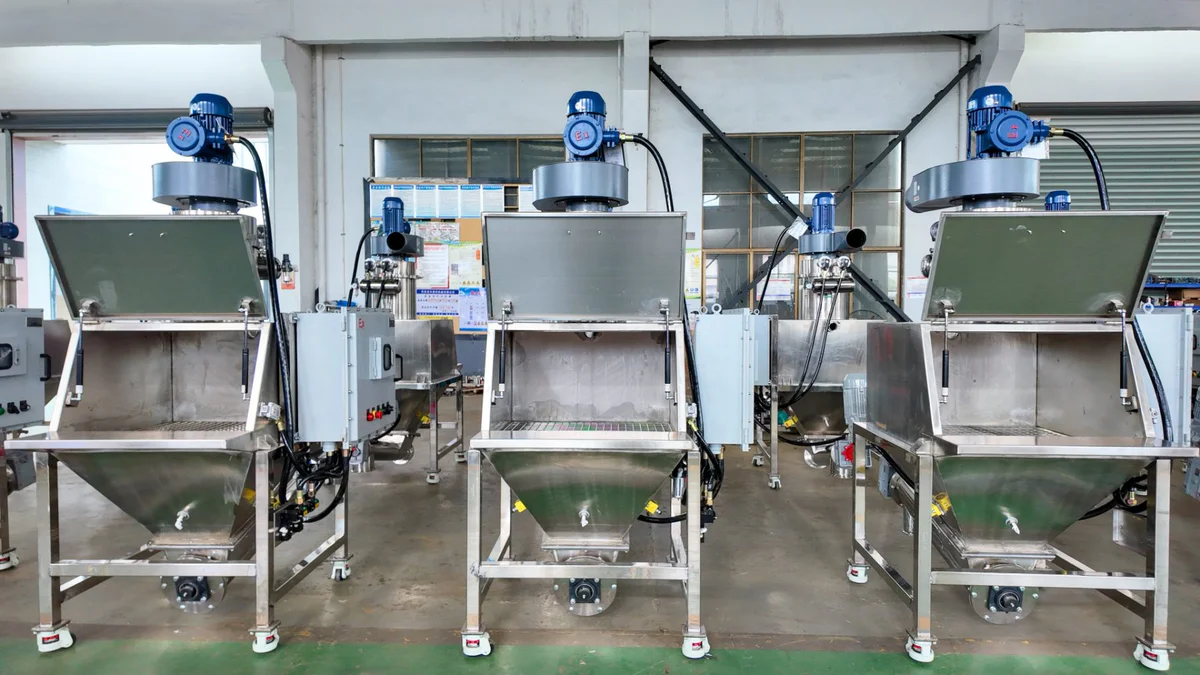
It works by using negative pressure, filtration, and pulse cleaning to capture dust while allowing powder to enter the production process smoothly.
The working process is simple but highly effective. When an operator places a bag on the feeding platform, opens it, and dumps the material into the hopper, the built-in dust collection system starts collecting airborne powder. The fan creates suction around the feeding area, pulling dust toward filter cartridges or filter bags.
The typical working steps are:
| Step | Process | Purpose |
|---|---|---|
| 1 | Operator opens the material bag | Prepares powder or granules for feeding |
| 2 | Material is dumped into the hopper | Transfers raw material into the station |
| 3 | Negative pressure captures rising dust | Prevents dust from escaping into the workshop |
| 4 | Filter cartridges separate dust from air | Keeps discharge air cleaner |
| 5 | Pulse back-blowing cleans the filters | Maintains filtration efficiency |
| 6 | Powder falls back into the hopper | Reduces material loss |
| 7 | Material enters downstream equipment | Supplies mixer, extruder, conveyor, or silo |
In QTech-Machinery’s configuration, the station can use 4 PTFE-coated filter cartridges and an automatic pulse back-blowing system. PTFE coating improves dust release from the filter surface, while pulse cleaning helps prevent filter blockage during continuous operation.
For powders with poor flowability, an air hammer can be installed to reduce bridging and material accumulation inside the hopper.
3. What are the main components of a dust-free feeding station?
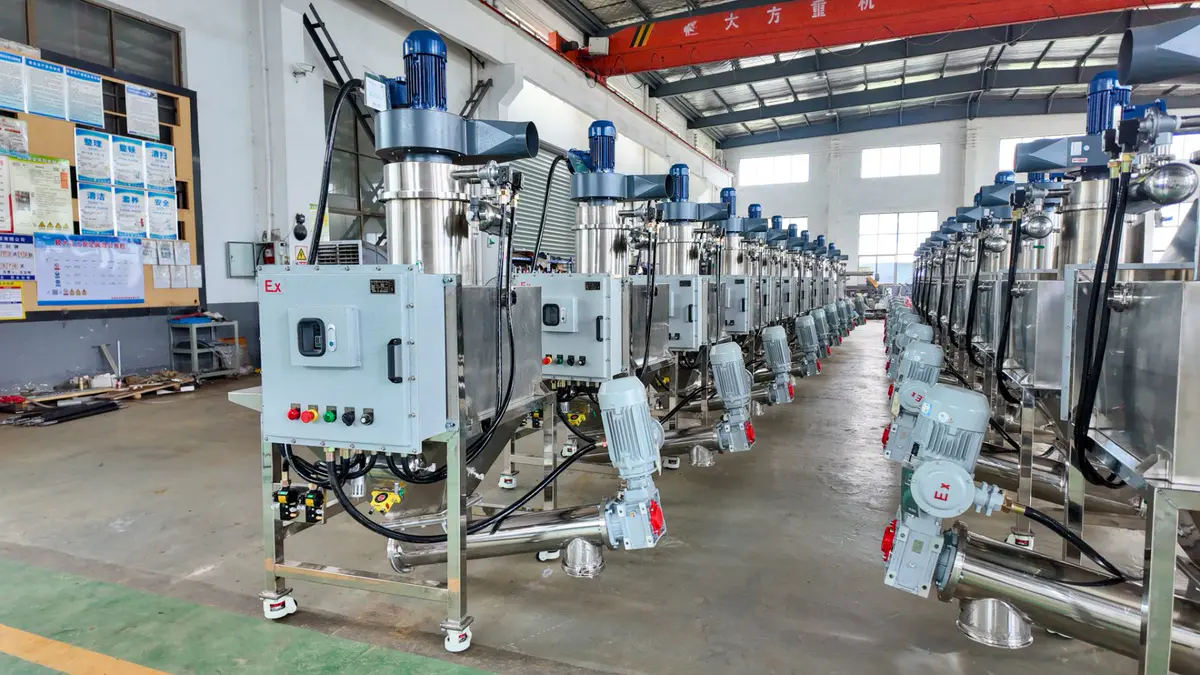
A dust-free feeding station usually includes a stainless-steel frame, feeding hopper, dust collection system, filter cartridges, pulse cleaning device, anti-bridging device, and electrical control system.
A well-designed feeding station is not only a hopper with a fan. It is a complete powder handling unit that combines mechanical structure, dust collection, operator protection, and downstream connection.
Main Components
| Component | Typical Configuration | Function |
|---|---|---|
| Main Body | 304 stainless steel, 2mm thickness | Provides corrosion resistance and easy cleaning |
| Feeding Platform | Manual bag dumping area | Allows operators to unload bags safely |
| Dust Collection Hood | Built into the dumping area | Captures rising powder dust |
| Filter Cartridges | PTFE-coated filter cartridges | Separates dust from air |
| Pulse Back-Blowing System | Automatic compressed-air cleaning | Cleans filters and maintains airflow |
| Air Hammer | Optional anti-bridging device | Prevents material blockage |
| Discharge Outlet | Custom outlet size | Connects with screw conveyor, vacuum loader, mixer, or silo |
| Electrical System | Schneider components available | Improves reliability and safety |
| Control Cabinet | Manual or automatic control | Controls fan, pulse cleaning, and auxiliary devices |
QTech-Machinery Product Configuration Example
| Item | QTech-Machinery Configuration |
|---|---|
| Quantity Delivered | 21 sets in one project |
| Material | 304 stainless steel |
| Steel Thickness | 2mm |
| Filter System | 4 PTFE-coated filter cartridges |
| Cleaning Method | Automatic pulse back-blowing |
| Anti-Bridge Design | Air hammer |
| Electrical Components | Schneider |
| Customization | Capacity, voltage, outlet, layout, and downstream connection |
This configuration is suitable for customers who require a clean workshop, stable powder feeding, and reliable industrial operation.
4. Why is dust control important in powder feeding?
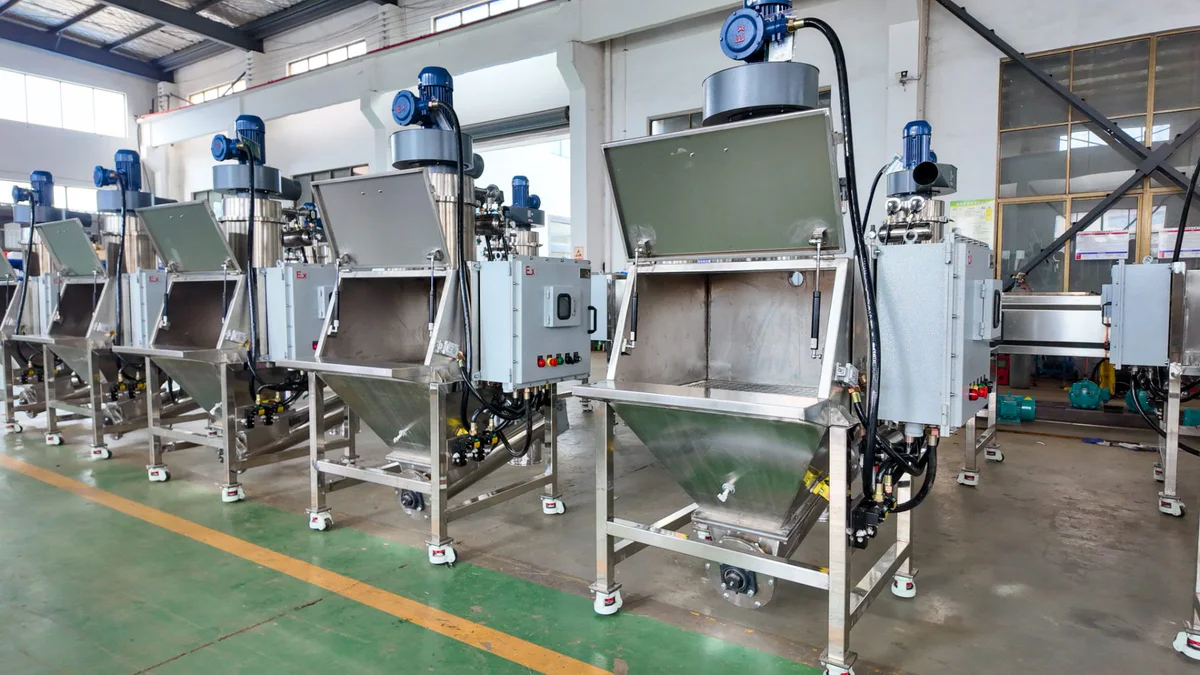
Dust control is important because it protects workers, reduces material loss, improves workshop cleanliness, and supports safer production.
Dust generated during manual bag dumping can create several problems. Fine powder can spread quickly in the workshop, settle on equipment, enter control cabinets, contaminate materials, and affect operator health.
In powder handling discussions, users often emphasize that even small changes in dumping height, airflow, and hood design can affect dust escape. Many powder processing professionals recommend controlling dust at the source, instead of relying only on general workshop ventilation.
External safety organizations also highlight the importance of dust control. For example:
- OSHA provides guidance on combustible dust hazards and emphasizes controlling dust accumulation in industrial environments: OSHA Combustible Dust
- CCOHS explains that dusts can become health or explosion hazards depending on material properties and concentration: CCOHS Combustible Dust
- Powder and bulk solids communities often discuss dust collection, loading points, and source capture as practical methods for reducing airborne dust: Powder & Bulk Solids
Key Benefits of Dust Control
| Benefit | Explanation |
|---|---|
| Cleaner Workshop | Less airborne dust during bag unloading |
| Operator Protection | Reduces powder inhalation exposure |
| Lower Material Waste | Captured powder can return to the process |
| Better Equipment Life | Less dust enters motors, bearings, and electrical cabinets |
| Better Product Quality | Reduces cross-contamination risk |
| Easier Cleaning | Less powder accumulation on floors and machines |
| Safer Production | Important for combustible or hazardous powders |
For plastic extrusion customers, good dust control is especially important when handling PVC powder, calcium carbonate, stabilizers, pigments, additives, and recycled powder materials.
5. How is a dust-free feeding station used in a plastic extrusion line?
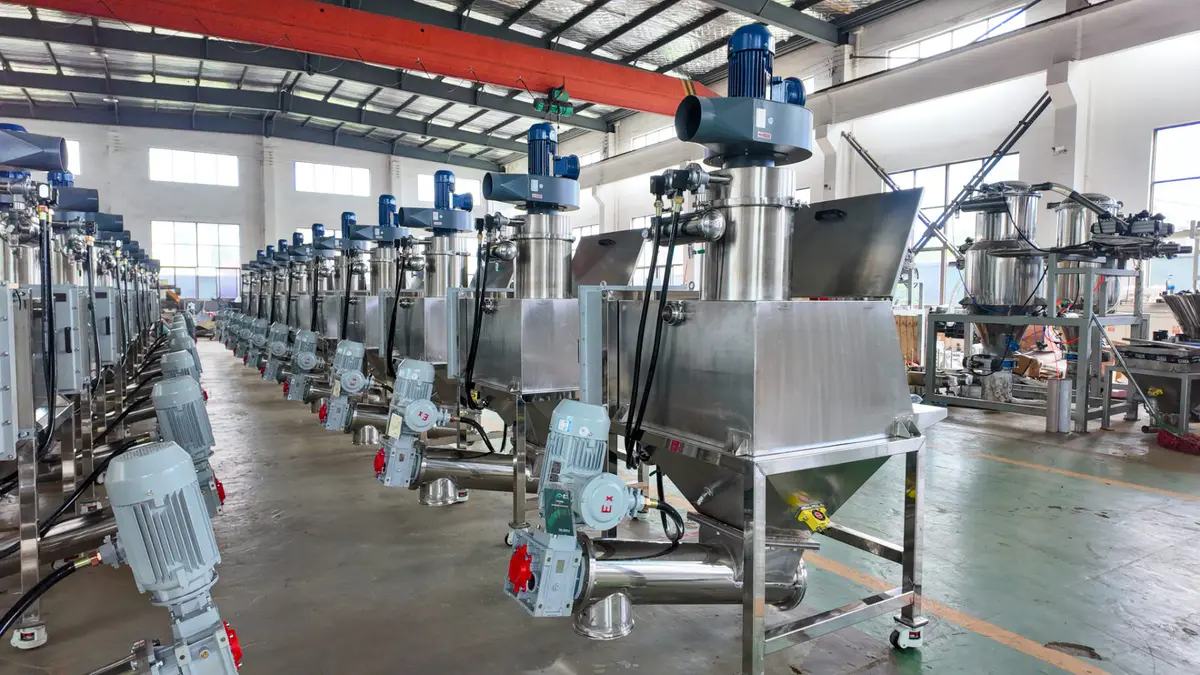
In a plastic extrusion line, the feeding station is used to unload powder or granules cleanly before sending material to mixers, loaders, silos, or extruders.
In plastic processing plants, dust-free feeding stations are commonly placed before the material conveying system. Operators unload bags of raw material into the station, and then the material is transferred to the next processing step.
Common Plastic Industry Applications
| Material | Typical Use |
|---|---|
| PVC Powder | Pipe, profile, hose, and cable compound production |
| PE/HDPE Granules | Pipe extrusion and recycling lines |
| PP Granules | Sheet, pipe, profile, and compounding |
| Calcium Carbonate | Filler for plastic modification |
| Pigment Powder | Color masterbatch or colored products |
| Stabilizer / Additive | PVC compounding and formulation adjustment |
| Recycled Powder | Recycling and reprocessing applications |
Connection with QTech-Machinery Extrusion Lines
A dust-free feeding station can be integrated into QTech-Machinery’s extrusion solutions. For example, in the PVC Corrugated Pipe Extrusion Line case, the customer required high production efficiency, stable output, advanced control, and scalability for future expansion. A dust-free feeding station can support this kind of extrusion project by improving material feeding cleanliness before extrusion.
The PVC corrugated pipe project supplied by QTech-Machinery included:
| Section | Configuration from Case |
|---|---|
| Project | Flexible Hose Extrusion Line – PVC Corrugated Pipe Extrusion Line |
| Customer | Hubei Dafen Pipe Industry Co., Ltd. |
| Material | PVC |
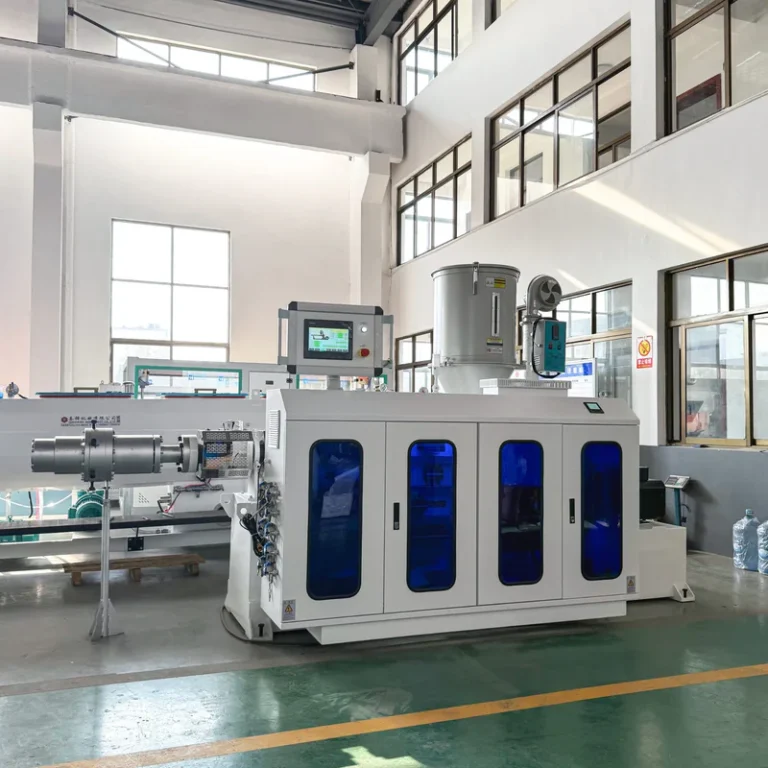
| Main Machine | Precision single screw extruder |
| Output | 10–70 kg/h |
| Motor | 45 kW Inovance permanent magnet servo motor |
| Screw | 65mm diameter, 28:1 L/D ratio |
| Forming Machine | High-speed corrugated pipe forming machine |
| Forming Speed | 2–10 m/min |
| Cooling | Water cooling |
| Applications | Agricultural irrigation, construction, industrial applications, telecommunications |
Although the case focuses on the extrusion line itself, clean and stable material feeding is an important upstream factor for stable extrusion performance.
6. How do customers choose the right dust-free feeding station?
Customers should choose a dust-free feeding station based on material type, dust level, capacity, hygiene standard, explosion risk, downstream connection, and local voltage.
Choosing the correct feeding station is not only about size. Different powders behave differently. Some powders flow easily, while others bridge, cake, stick to the wall, or generate heavy dust.
Customer Selection Steps
| Step | What to Confirm | Why It Matters |
|---|---|---|
| 1 | Raw material name | Determines contact material and filtration design |
| 2 | Powder or granule form | Affects hopper angle and discharge method |
| 3 | Bulk density | Affects capacity and hopper volume |
| 4 | Bag size | Determines feeding platform and operation height |
| 5 | Required capacity | Determines station size, fan, and outlet |
| 6 | Dust level | Determines filter area and dust collector design |
| 7 | Flowability | Determines whether air hammer or vibrator is needed |
| 8 | Hygiene requirement | Determines stainless steel grade and surface finish |
| 9 | Combustible dust risk | Determines whether explosion-proof design is needed |
| 10 | Downstream equipment | Determines outlet, valve, conveyor, or loader connection |
| 11 | Local voltage | Determines electrical configuration |
| 12 | Workshop layout | Determines machine height, direction, and maintenance space |
Practical Selection Guide
| Customer Situation | Recommended Configuration |
|---|---|
| General plastic powder | 304 stainless steel feeding station |
| Fine powder with high dust | Larger filter area and stronger dust collection |
| Sticky or bridging material | Air hammer or vibration device |
| Food or pharmaceutical powder | Higher hygiene-grade stainless steel and polished surface |
| Combustible powder | Explosion-proof motor, valves, and electrical design |
| Connection to screw conveyor | Customized outlet flange and transition hopper |
| Connection to vacuum loader | Sealed outlet and negative-pressure compatible design |
| Multi-material production | Easy-clean structure and quick-access filters |
When customers contact QTech-Machinery, we usually ask for material type, bag weight, feeding capacity, downstream equipment, workshop layout, and voltage. This allows our engineers to recommend the correct configuration.
7. What products and documents can QTech-Machinery provide?
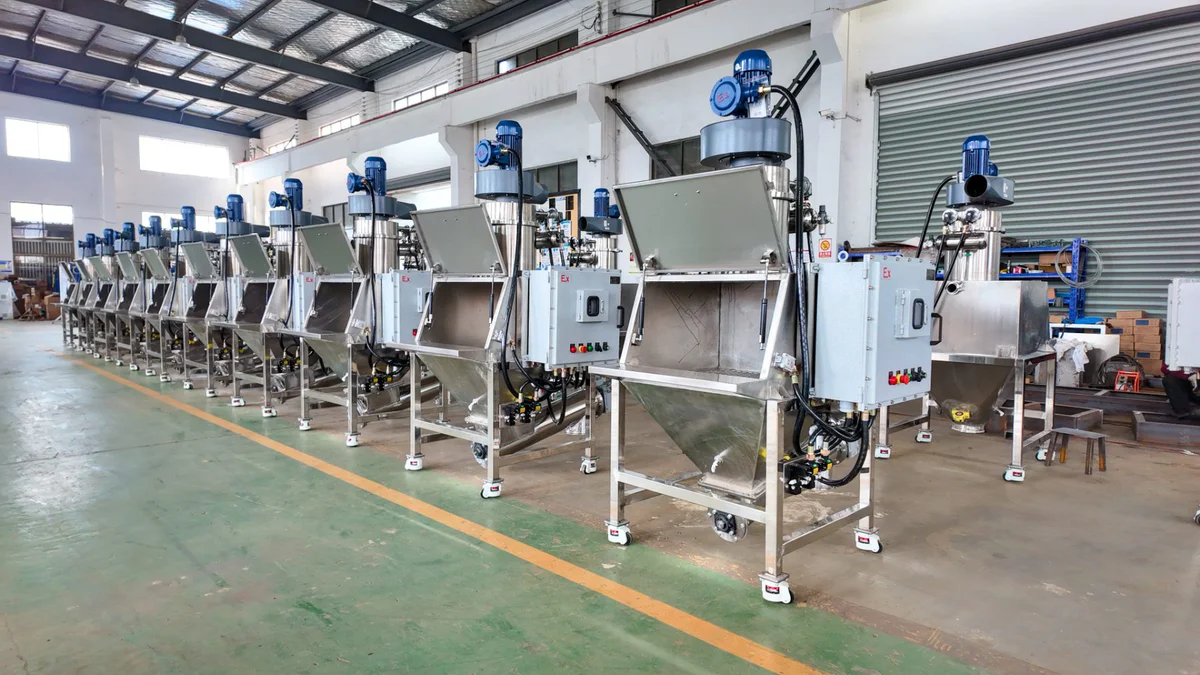
QTech-Machinery can provide standalone dust-free feeding stations, customized feeding systems, auxiliary conveyors, and technical documents for installation, operation, and maintenance.
As a plastic extrusion and recycling machinery manufacturer, QTech-Machinery can supply both individual feeding equipment and integrated production line solutions.
Product List We Can Provide
| Product | Description |
|---|---|
| Dust-Free Feeding Station | Manual bag dumping station with dust collection |
| Stainless Steel Feeding Station | 304 or 316L stainless steel option |
| PTFE Filter Cartridge System | Suitable for fine powder dust collection |
| Pulse Back-Blowing System | Automatic filter cleaning system |
| Air Hammer Anti-Bridging Device | Helps prevent powder blockage |
| Screw Conveyor | Transfers powder to mixer, silo, or extruder |
| Vacuum Loader | Transfers granules or powders by vacuum |
| Hopper Dryer | Dries plastic material before extrusion |
| Storage Hopper / Silo | Stores raw material before processing |
| Mixer Connection System | Connects feeding station with high-speed mixer |
| Extruder Feeding System | Supplies material to plastic extrusion line |
| Electrical Control Cabinet | Customized control with reliable components |
| Full Extrusion Line | Pipe, profile, pelletizing, recycling, or tube extrusion solution |
Documents We Can Provide
| Document | Purpose |
|---|---|
| Technical Proposal | Shows recommended equipment configuration |
| Quotation Sheet | Lists equipment price and commercial terms |
| Layout Drawing | Shows machine dimensions and installation space |
| Electrical Drawing | Supports wiring and maintenance |
| Operation Manual | Guides daily operation |
| Maintenance Manual | Supports filter replacement and equipment service |
| Spare Parts List | Helps customers prepare consumable parts |
| Packing List | Confirms shipped items |
| Test Video | Shows machine operation before shipment |
| Installation Guidance | Supports local installation and commissioning |
| Quality Inspection Record | Confirms machine checking before delivery |
Our Manufacturer Advantages
| Advantage | What It Means for Customers |
|---|---|
| OEM/ODM Customization | Equipment can be configured for different materials, capacities, and layouts |
| Stainless Steel Fabrication | 304 stainless steel structure improves durability and cleanability |
| Practical Dust Control | PTFE filters and pulse back-blowing help keep the feeding area cleaner |
| Anti-Blocking Design | Air hammer reduces bridging for difficult powders |
| Reliable Electrical Components | Schneider components improve system reliability |
| Production Line Experience | We understand how feeding stations connect with extrusion lines |
| Full Run Test Before Shipment | Customers can check operation before delivery |
| Voltage Configuration | Electrical system can match local voltage and frequency |
| Engineering Support | We help choose screw, die, downstream, feeding, and control setup |
| Fast Quotation | Configuration and quotation can be prepared based on customer data |
8. What should buyers prepare before requesting a quotation?
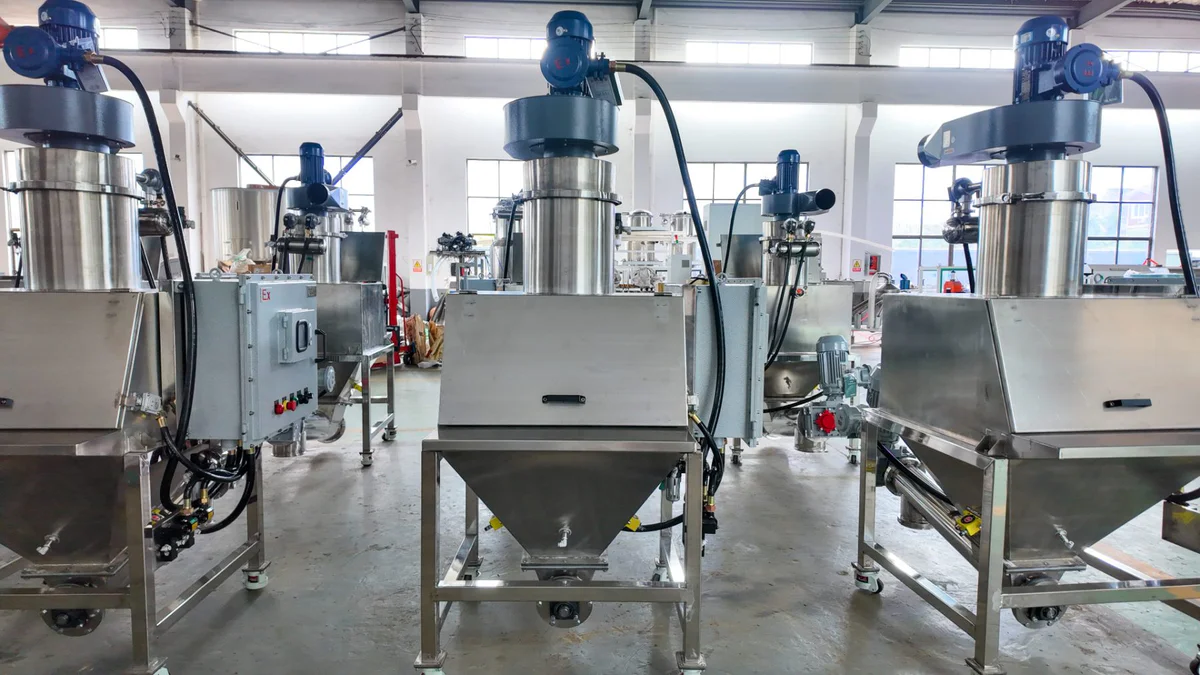
Buyers should prepare material information, capacity requirements, bag size, downstream equipment details, voltage, layout, and any safety or hygiene requirements.
To quote the correct dust-free feeding station, a manufacturer needs more than just the product name. The same station may work differently with PVC powder, flour, pigment, carbon black, resin granules, or battery powder.
Quotation Information Checklist
| Information Needed | Example |
|---|---|
| Raw Material | PVC powder, PE granules, calcium carbonate, pigment, additive |
| Material Form | Powder, granule, flake, pellet |
| Bulk Density | kg/L or kg/m³ if available |
| Bag Weight | 25kg, 50kg, jumbo bag, etc. |
| Required Capacity | kg/h or bags/h |
| Dust Level | Low, medium, high |
| Material Flowability | Free-flowing, sticky, bridging, easy-caking |
| Downstream Equipment | Mixer, extruder, screw conveyor, vacuum loader, silo |
| Outlet Height | Required connection height |
| Workshop Space | Length, width, height limitation |
| Voltage | 220V, 380V, 415V, 50Hz or 60Hz |
| Control Requirement | Manual control, PLC control, interlock with production line |
| Material Contact Standard | 304 stainless steel, 316L stainless steel, food grade |
| Safety Requirement | Explosion-proof or non-explosion-proof |
| Quantity | Single set or multiple sets |
Suggested Buying Process
-
Confirm your material and application
- Identify the powder or granule type, dust level, and downstream process.
-
Define the feeding capacity
- Estimate how many bags per hour or how many kilograms per hour you need to handle.
-
Send layout and connection details
- Provide workshop space, outlet height, and downstream equipment information.
-
Select the main configuration
- Choose stainless steel grade, filter type, pulse cleaning, anti-bridging device, and control system.
-
Review the technical proposal
- Check dimensions, motor power, outlet design, and maintenance access.
-
Confirm electrical standard
- Make sure voltage, frequency, and component brands match your local requirements.
-
Arrange production and testing
- QTech-Machinery can provide test videos and inspection before shipment.
-
Install and connect to your line
- The station can be connected with conveyors, mixers, silos, or extrusion equipment.
Comparison: Dust-Free Feeding Station vs. Traditional Manual Dumping
| Item | Traditional Manual Dumping | Dust-Free Feeding Station |
|---|---|---|
| Dust Leakage | High | Low |
| Operator Exposure | Higher | Reduced |
| Workshop Cleanliness | Poorer | Cleaner |
| Material Waste | More powder loss | Less powder loss |
| Feeding Stability | Depends heavily on manual operation | More controlled |
| Filter Cleaning | Not available | Pulse back-blowing available |
| Downstream Integration | Limited | Easy to connect with conveyors or mixers |
| Maintenance | Workshop cleaning required frequently | Filter and system maintenance required |
| Suitable for Modern Production | Limited | Yes |
Case Insight: Why Material Feeding Matters in PVC Corrugated Pipe Production
In QTech-Machinery’s PVC Corrugated Pipe Extrusion Line project, the customer, Hubei Dafen Pipe Industry Co., Ltd., needed a flexible hose extrusion line for PVC corrugated pipe production. The project required high output consistency, superior material handling, precise control, and future scalability.
The supplied line included a precision single screw extruder and a high-speed corrugated pipe forming machine. The extruder used a 45 kW Inovance permanent magnet servo motor, a 65mm screw, and a 28:1 L/D ratio, while the forming machine supported 2–10 m/min production speed with water cooling.
For similar PVC powder or additive feeding processes, a dust-free feeding station can strengthen the upstream section of the line by:
- Reducing dust during manual raw material unloading
- Improving workshop cleanliness before extrusion
- Supporting stable material supply to mixers or loaders
- Reducing powder waste
- Helping operators handle materials more safely
- Improving the professional layout of the production area
This is why dust-free feeding is not only an environmental improvement but also a practical production upgrade for extrusion factories.
External References and Industry Notes
Dust-free feeding station design is closely related to powder handling, dust collection, worker safety, and combustible dust prevention. The following references provide useful background for buyers and engineers:
-
OSHA – Combustible Dust
- OSHA explains that combustible dust can present fire and explosion hazards in many industries.
- Reference: https://www.osha.gov/combustible-dust
-
CCOHS – Combustible Dust
- CCOHS introduces how dust particles can become hazardous under certain conditions and why dust control is important.
- Reference: https://www.ccohs.ca/oshanswers/chemicals/combustible_dust.html
-
Powder & Bulk Solids
- Powder handling professionals frequently discuss dust collection, material flow, feeding points, and bulk material handling challenges.
- Reference: https://www.powderbulksolids.com/
-
BulkInside – Powder Handling Knowledge
- BulkInside shares industry information about powder processing, dust collection, conveying, and bulk material equipment.
- Reference: https://bulkinside.com/
These resources support the same practical conclusion: dust should be controlled as close to the source as possible, especially at manual dumping and transfer points.
Conclusion
A dust-free feeding station is an important powder handling solution for factories that want cleaner production, reduced dust leakage, better operator protection, and more stable material feeding. It works by capturing airborne dust at the dumping point, filtering the air, cleaning the filters automatically, and returning collected powder back into the process.
For customers in plastic extrusion, PVC pipe production, compounding, chemical processing, food powder handling, or industrial material feeding, QTech-Machinery can provide customized dust-free feeding stations with 304 stainless steel construction, PTFE-coated filters, automatic pulse back-blowing, air hammer anti-bridging design, Schneider electrical components, and customized downstream connections.
If you are planning a new powder feeding system or upgrading an existing extrusion line, send us your raw material, capacity, bag size, voltage, workshop layout, and downstream equipment. Our engineers can recommend the correct dust-free feeding station configuration for your factory.