
China Plastic Material Weighing & Batching System Factory
Automatic weighing, batching, dosing, and material feeding systems for plastic extrusion, compounding, PVC mixing, masterbatch dosing, regrind control, and powder handling. Every system is configured around your recipe, material form, accuracy target, throughput, and factory layout.
- Gravimetric and batch weighing options
- PVC powder and additive batching
- Masterbatch and regrind ratio control
- Integration with mixers and extruders
- Recipe management and batch records
- Dust control for powder materials
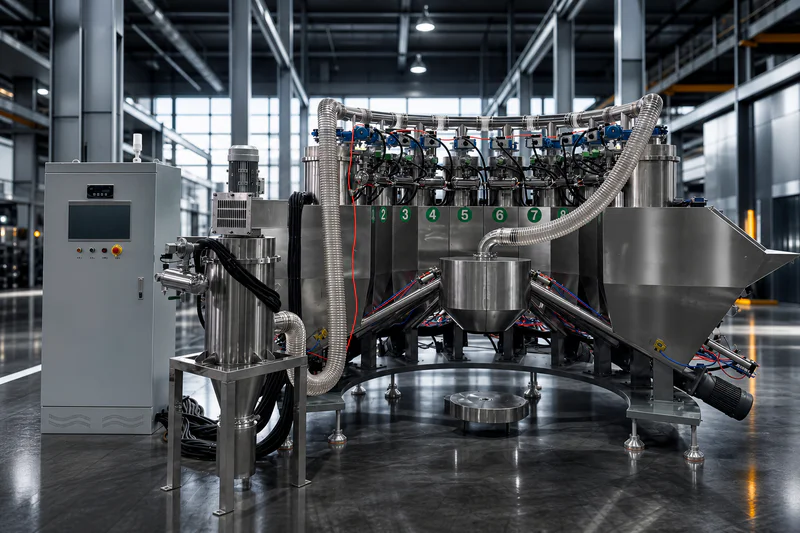
Up To 12 Components
Powder, Granule, Masterbatch
Everything You Need To Spec Your Weighing And Batching System
Find the right system faster. Jump to the section that answers your question, from system type and dosing method to accuracy, powder handling, and sending us your recipe for a quote.
Production Problems
Pain points a system solves
System Types
Gravimetric, volumetric, batch
Selection Guide
Match a system to your line
Dosing Methods
How each material is metered
System Configurations
Single, multi, custom setups
Problems To Avoid
Common sourcing mistakes
Application Areas
Extrusion, PVC, masterbatch
Accuracy And Traceability
Precision and batch records
Powder And Dust Control
Handling fine powders
Line Integration
Ties into your extruders
Factory Capability
What we build in house
Project Process
Selection to installation
Project Evidence
Systems built and tested
Quotation Checklist
What to send for a quote
FAQ
Accuracy, lead time, voltage
What Production Problem Are You Trying To Solve?
Pick your system by the problem in front of you first: recipe accuracy, color stability, additive cost, regrind ratio, powder flow, continuous feeding, or batch traceability. Match the fix to the pain, then spec the hardware.
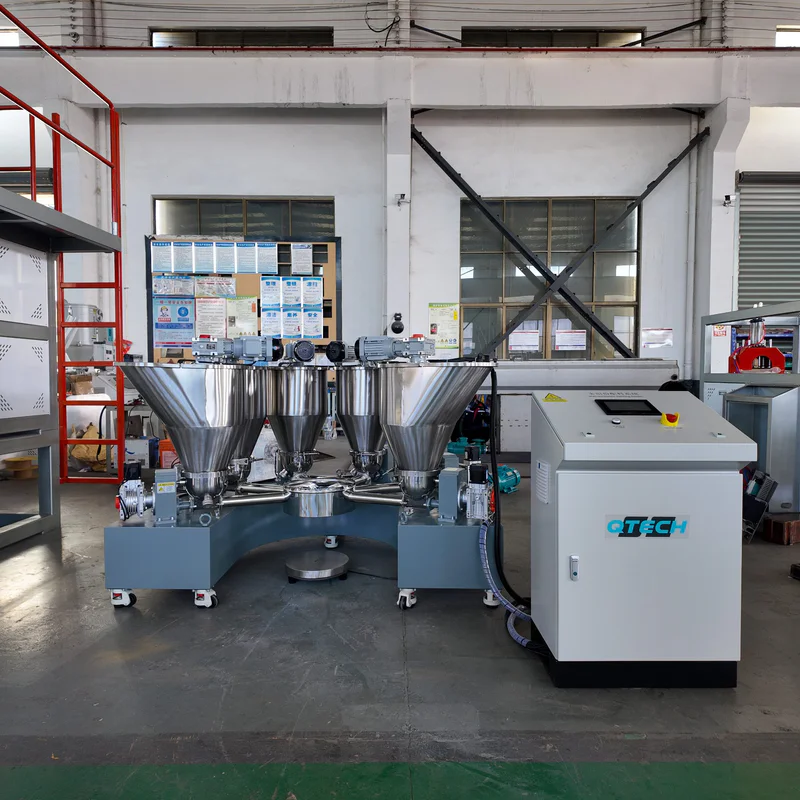 Problem 01
Manual Weighing Errors
Still weighing resin, PVC ingredients, masterbatch, or additives by hand? Small slips add up fast into unstable batches, wasted material, and rejected production.
Automatic weighing and batching holds every recipe step to its target weight, ratio, and feeding sequence, so your output stops depending on who is on shift.
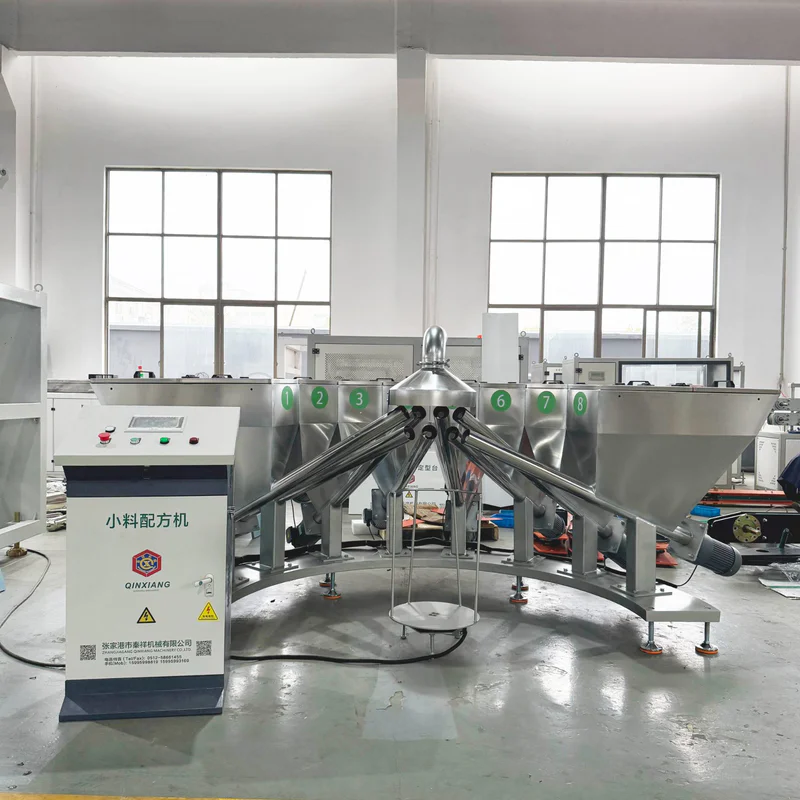 Problem 02
Color And Additive Variation
When masterbatch, pigment, or functional additives go in a little heavy or a little light, your color, product performance, and material cost all get harder to hold steady.
Gravimetric dosing meters those low-ratio ingredients by weight against your recipe, production rate, and material flow, so the color you sign off on is the color you ship.
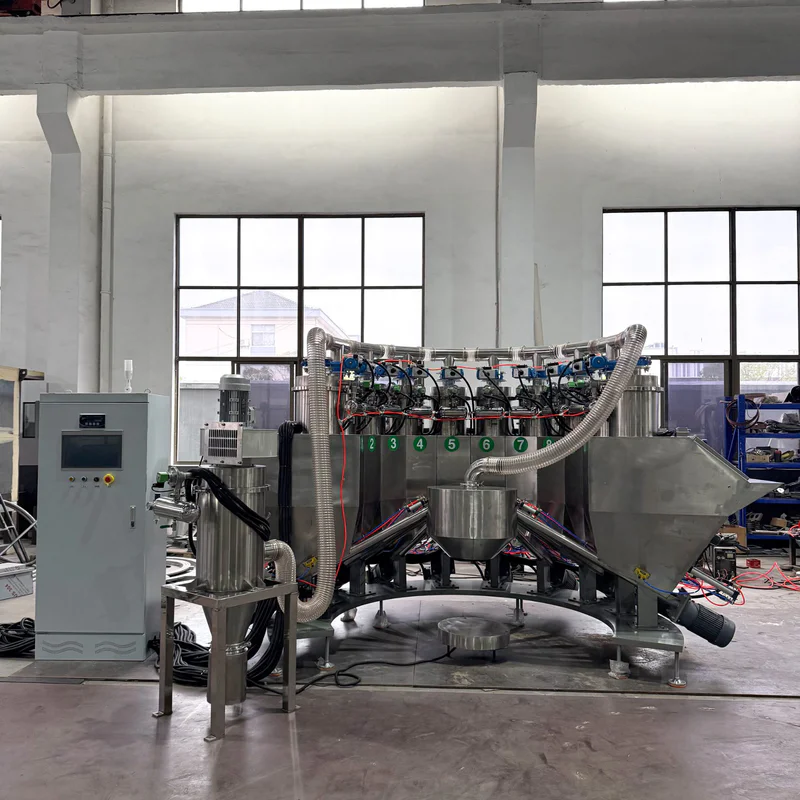 Problem 03
Unstable Regrind Ratio
Regrind and recycled material rarely behave. Bulk density shifts, particle size is uneven, and flow is inconsistent, so your real reuse ratio drifts through the run.
Regrind dosing is built into the recipe, with hopper and feeder design matched to the material form, flow behavior, and target ratio you actually run.
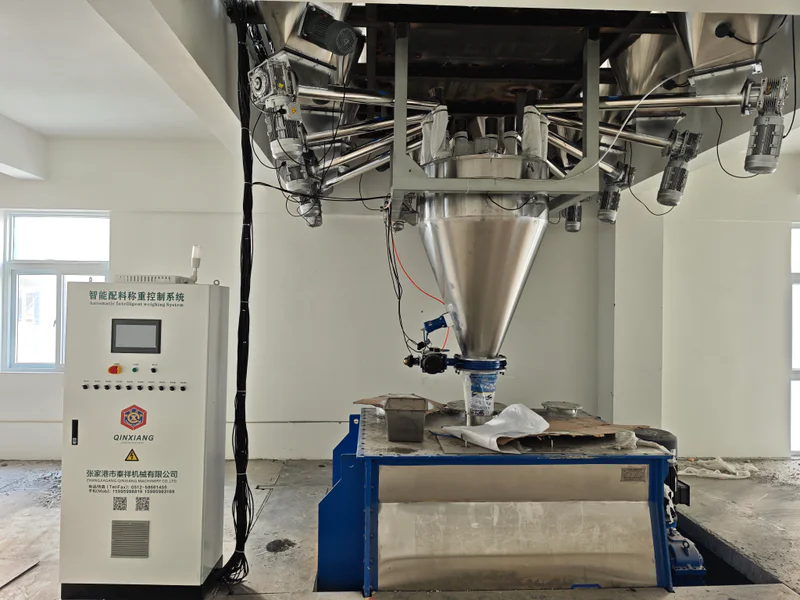 Problem 04
PVC Powder Batching Issues
PVC resin, CaCO3, stabilizer, lubricant, pigment, and the rest each need accurate weighing, the correct feeding order, and a clean handoff to the mixer.
A PVC batching system is configured around powder flow, batch sequence, small-additive weighing, dust control, recipe storage, and mixer feeding, all in one controlled loop.
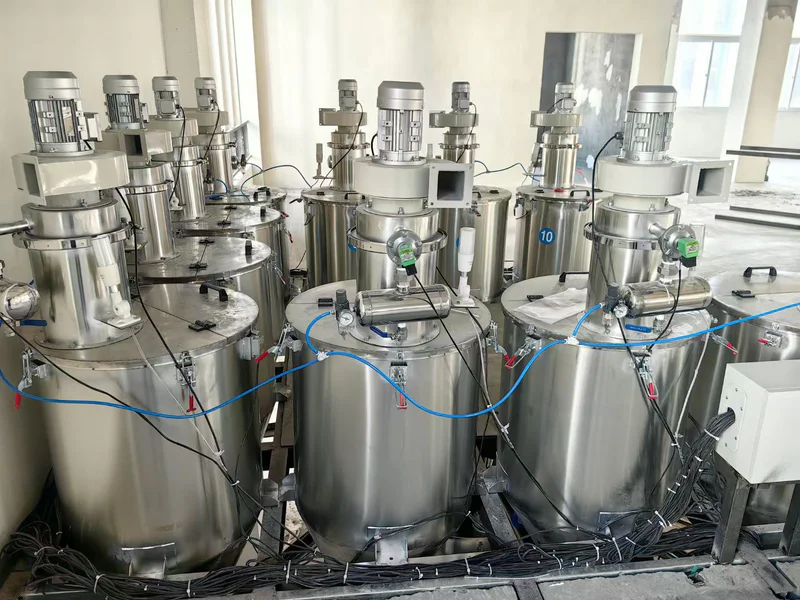 Problem 05
Unstable Continuous Feeding
On an extrusion or compounding line, every component has to hold a steady kg/h feed rate and stay locked to your recipe and line throughput.
Loss-in-weight feeding controls each component continuously, the right setup when you need a stable feed rate, tight process control, and long uninterrupted runs.
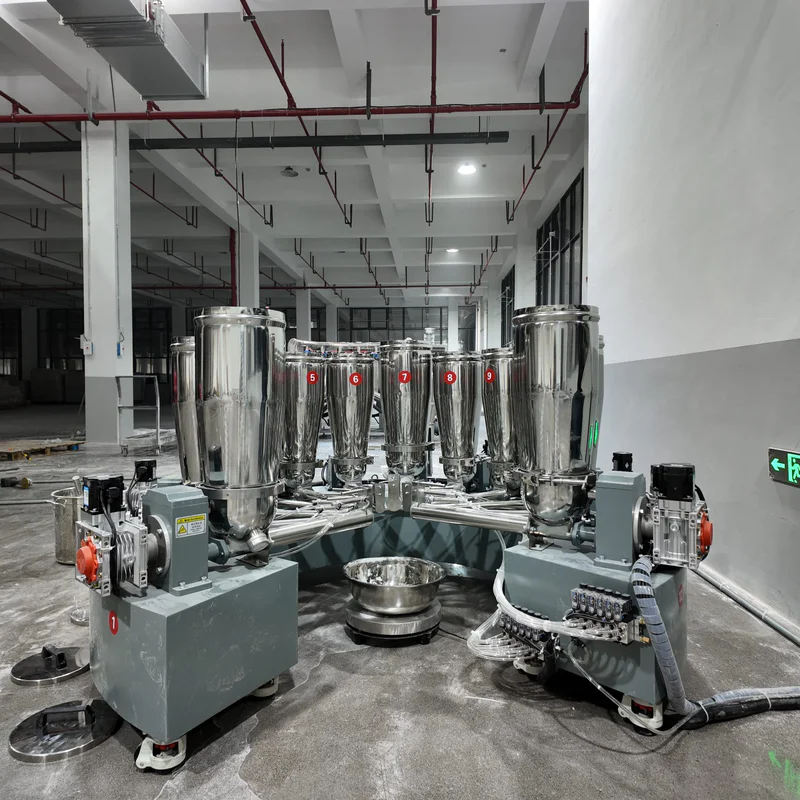 Problem 06
No Batch Traceability
When actual weighing data, recipe changes, alarms, and material usage are not recorded, tracking down the source of a quality problem eats hours you do not have.
Recipe management, operator permissions, batch records, alarm history, and material usage data can all be built in to match how your plant reports.
Weighing And Batching Systems We Configure
Different materials and processes call for different weighing, batching, and dosing methods. Look through the system types, then we shape one around your recipe structure, material form, accuracy target, throughput, and how it ties into your mixers or extruders.
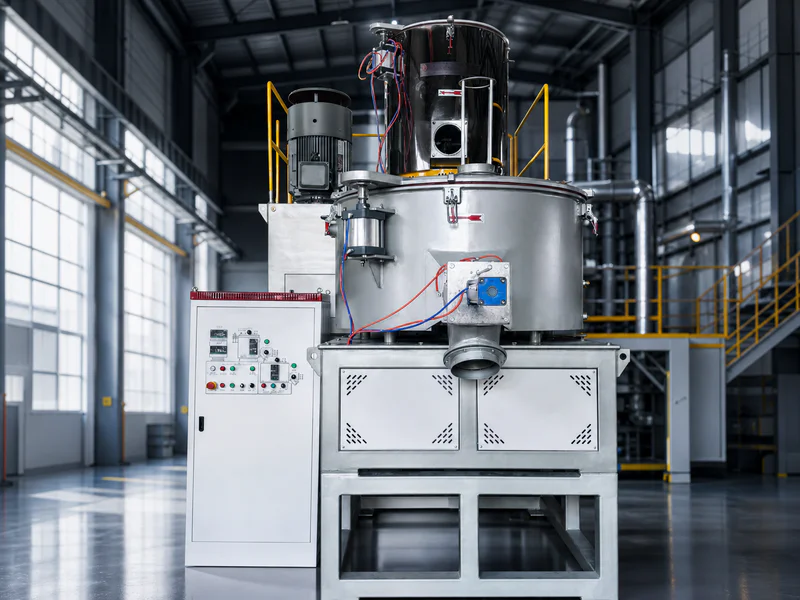
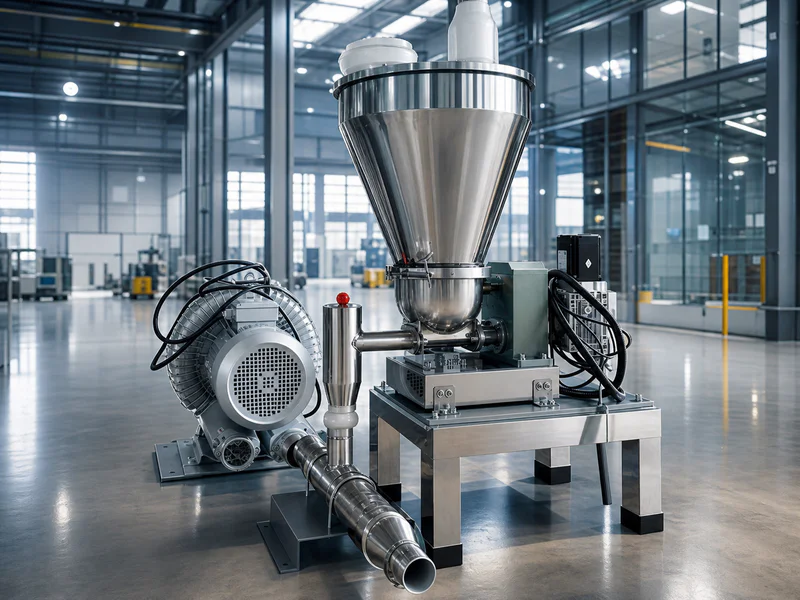
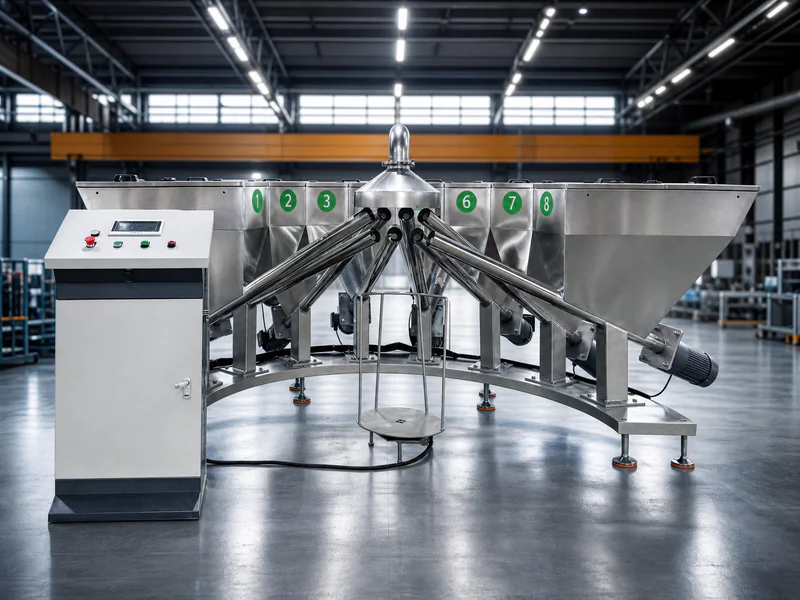
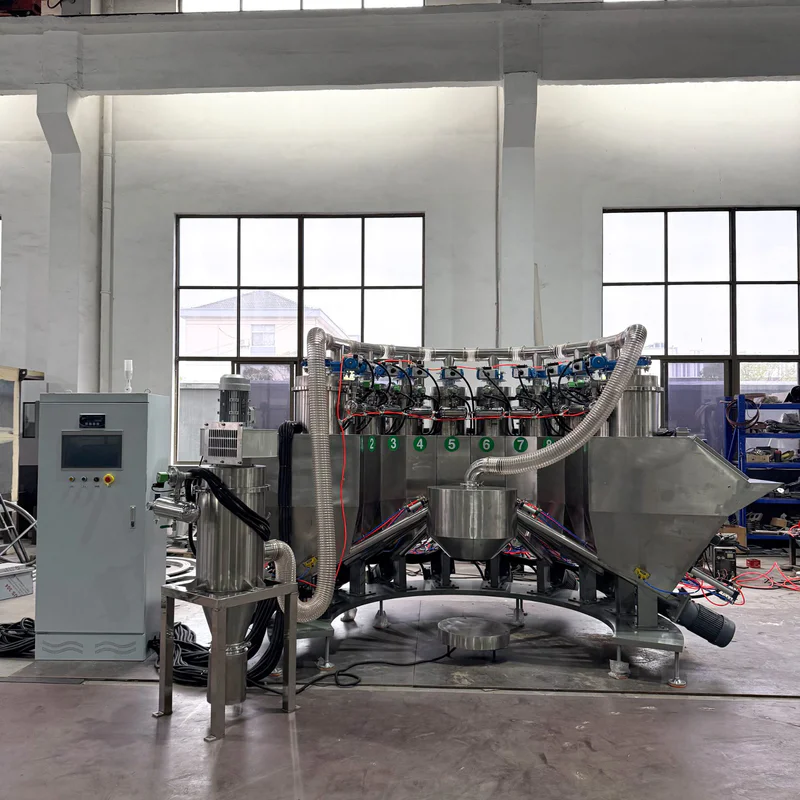
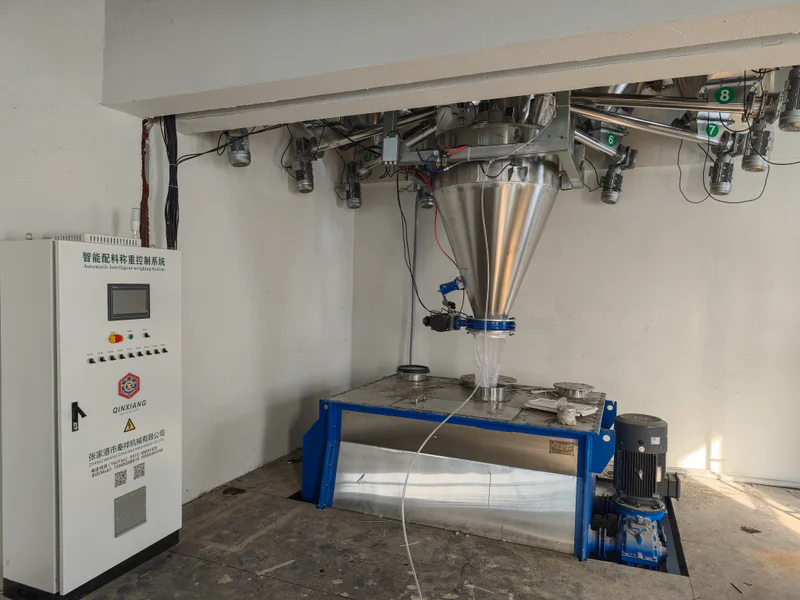
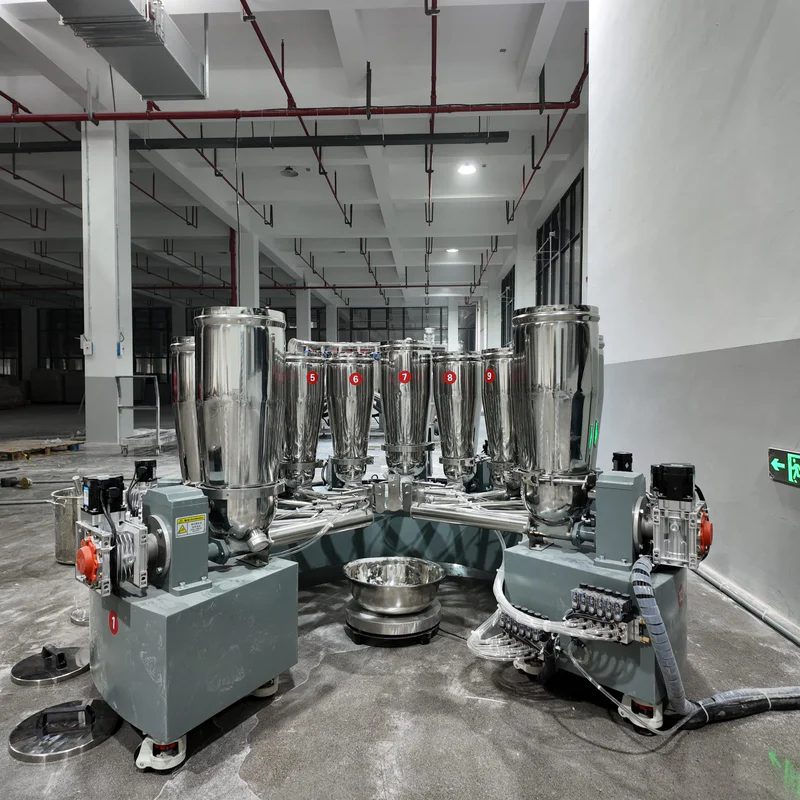
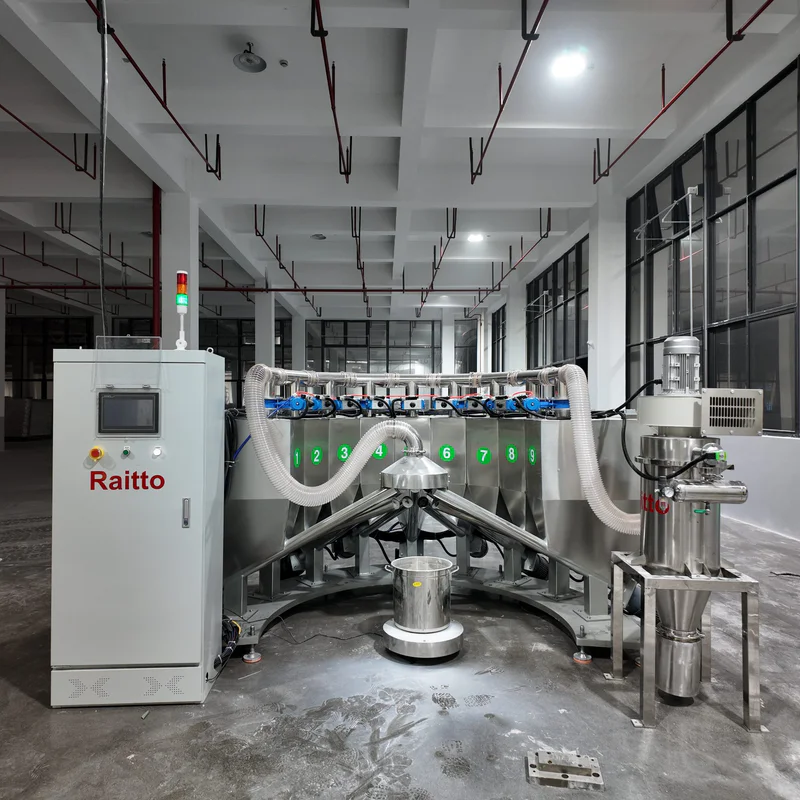
Every system is configured around your recipe, material form, accuracy target, throughput, and voltage. Send those details and we confirm the right setup before quotation.
The Right System Depends On Your Recipe, Not A Catalog Number
A batch blender, a loss in weight feeder, and a PVC powder batching system solve different problems. What matters is your material form, recipe structure, accuracy target, throughput, and how it ties into your mixers and extruders. Send those details and we match the method to your process before we quote, so you pay for the system your production actually needs.
How To Choose The Right Weighing And Batching System
The right system comes down to your material form, recipe structure, component count, batch or continuous production, accuracy target, throughput, dust condition, and how it connects to your mixers or extruders.
Start here before you look at a single model number. Match the system to how your materials flow, how your recipe is controlled, how much accuracy you actually need, and where the material feeds into the next process. Get those right and the model choice follows on its own.
| Selection Question | What To Check | System Direction |
|---|---|---|
| What materials need to be weighed? | Pellets, powder, flakes, regrind, and additives each flow their own way. | Hopper design, valve type, screw feeder, dosing unit, and anti bridging structure are picked by your material form. |
| How many components are in the recipe? | A two component color dosing setup and a ten component PVC batch are not the same machine. | Confirm hopper quantity, weighing points, dosing points, and the control sequence. |
| Is the process batch or continuous? | Batch mixing and continuous extrusion run on different weighing logic. | Batch weighing for mixer feeding, or loss in weight feeding for steady kg/h control. |
| What accuracy do you actually need? | Main resin, filler, color masterbatch, stabilizer, and foaming agent should not share one accuracy standard. | Load cell range, feeder type, and control method get matched to each material value and dosing ratio. |
| What throughput are you running? | A small molding machine and a large extrusion line need different hopper sizes, batch cycles, and feed capacity. | Confirm kg/h capacity, batch size, cycle time, and discharge speed. |
| Do your materials flow easily? | Powder, regrind, wood flour, and high filler blends bridge, flood, or sit stuck in the hopper. | Add an agitator, screw feeding, vibration, special hopper geometry, or flow assist where needed. |
| Do you need dust control? | PVC powder, CaCO3, pigment, stabilizer, and fine additives throw dust and create cleaning problems. | Consider enclosed transfer, sealed weighing points, filter units, and dust collection. |
| Does the recipe need to be stored? | Different products, shifts, and operators need recipe settings kept under control. | PLC and HMI can hold recipe storage, password levels, and controlled parameter changes. |
| Do you need batch records? | Without actual weighing data, alarms, and usage records, tracing a quality problem eats hours. | Add batch logs, alarm history, material usage data, and production records to project needs. |
| What equipment will it connect to? | Mixer inlet height, extruder throat position, silo layout, vacuum loader, and platform space all shape the design. | Confirm discharge height, installation space, conveying route, and control signal before final layout. |
No Single Machine Name Defines The Right System
The right system falls out of your recipe, your material behavior, your production capacity, your accuracy target, your dust condition, and your existing line layout. Send those details and we configure around them, so what you get is built for your plant, not pulled off a shelf.
Gravimetric, Volumetric, Batch Or Continuous?
Each dosing method controls material a different way. Your right choice depends on recipe accuracy, material flow, production mode, throughput, and how the system ties into your mixer or extruder.
Before you settle on a model, decide how the material should be controlled: by weight, by volume, by batch weight, or by continuous feed rate. A simple color dosing unit, a PVC batching system, and a compounding feeder do not run on the same control logic, so this choice sets the direction for everything after it.
| Dosing Method | How It Works | Suitable For | Check Before Choosing |
|---|---|---|---|
| Gravimetric Dosing | Measures material by weight and holds the actual dosing ratio to your recipe. | Masterbatch, additives, regrind, and multi component recipes where ratio accuracy matters. | Material form, dosing percentage, target weight, load cell range, and required accuracy. |
| Volumetric Dosing | Meters by screw speed, time, or volume instead of actual weight. | Simple color dosing, stable pellets, and lower cost jobs where accuracy demands are looser. | Bulk density changes, flow stability, calibration frequency, and screw selection. |
| Batch Weighing | Weighs each material into a batch or common weighing hopper before discharge and mixing. | PVC batching, mixer feeding, multi component recipes, and batch production. | Batch size, component count, feeding sequence, mixer cycle, and discharge height. |
| Loss-In-Weight Feeding | Tracks weight loss from each feeder and trims feeding speed to hold kg/h output. | Continuous extrusion, compounding, additive feeding, and lines that need a stable feed rate. | Refill method, feeder type, material flow, target kg/h, and connection to line control. |
When To Use Each Dosing Method
Same four methods, looked at from your production reality. Here is when each one earns its place, based on your material, your recipe, and how your line runs.
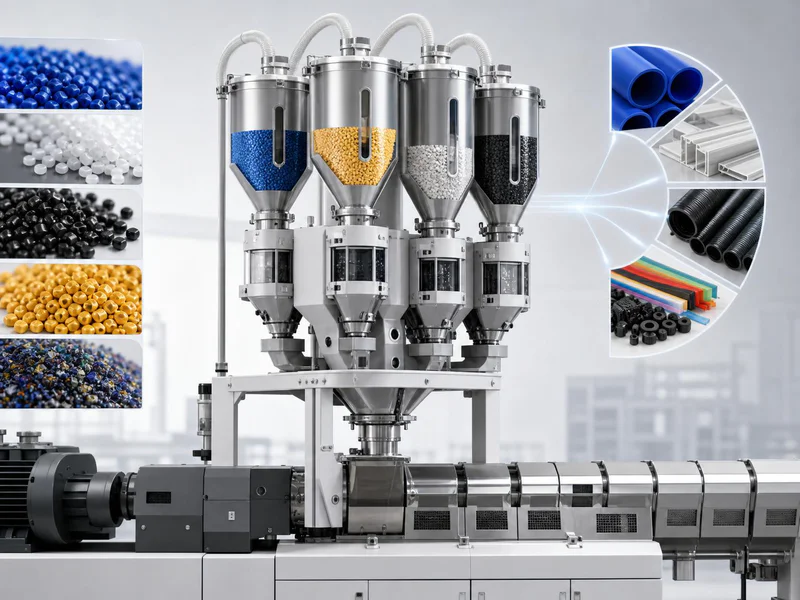
Gravimetric Dosing
Reach for gravimetric dosing when material ratio drives your color, performance, cost, or batch consistency. It weighs the material instead of trusting screw rotation alone, so it fits masterbatch, high value additives, regrind control, and multi component recipes.
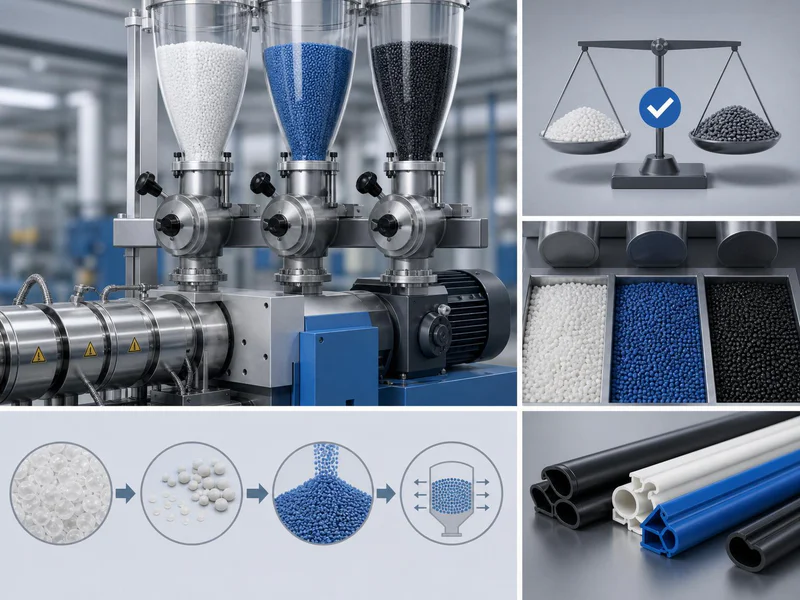
Volumetric Dosing
Volumetric dosing suits you when the material is stable, the recipe is simple, and accuracy is not strict. It is easier and lower cost, but bear in mind that shifts in bulk density, pellet size, or flow can move the actual dosing ratio on you.
Batch Weighing
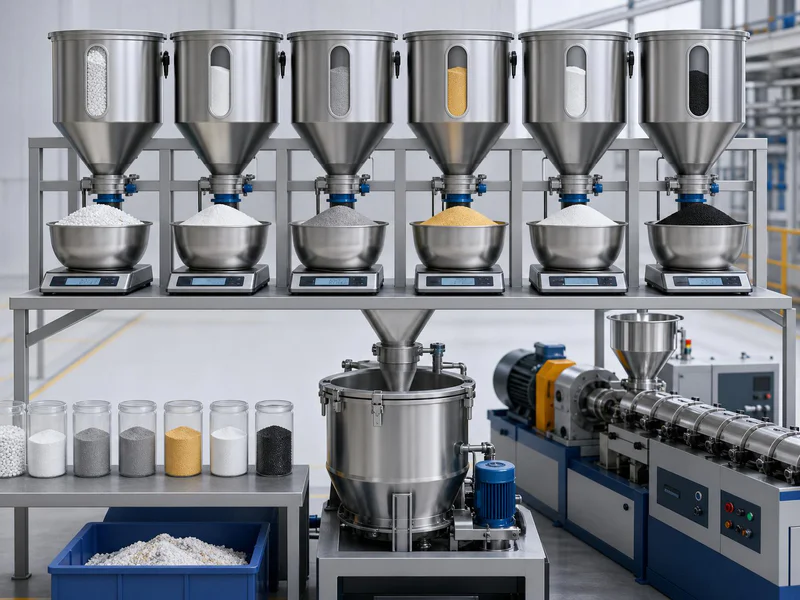
Use batch weighing when materials need preparing before mixing or extrusion. It is the common choice for PVC resin, CaCO3, stabilizer, lubricant, pigment, and other additives that have to enter the mixer by recipe weight and in the right sequence.
Loss-In-Weight Feeding
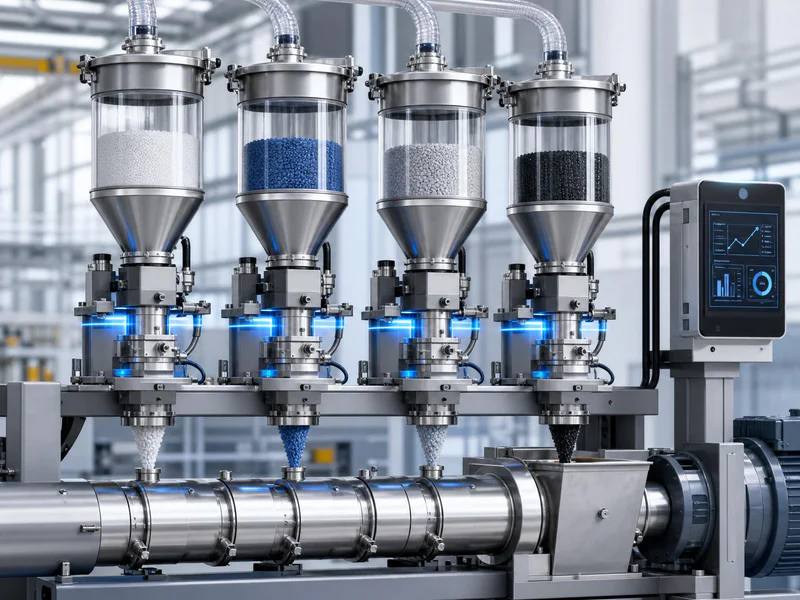
Loss in weight feeding is the one when your line needs continuous material flow. Each feeder is weighed as it runs, and the system trims feeding speed to hold the target kg/h. It fits compounding, continuous extrusion, and stable additive feeding.
Start From Your Main Concern, Land On A Method
Find the row that sounds like your production, and the control method to look at first is right beside it. Most plants match more than one, which is normal.
Color variation or additive waste
Gravimetric DosingSimple color dosing with stable material
Volumetric DosingPVC powder and additive batching
Batch WeighingMixer feeding by recipe batch
Batch WeighingContinuous extrusion feed rate
Loss-In-Weight FeedingCompounding recipe control
Loss-In-Weight FeedingRegrind ratio control
Gravimetric DosingLow ratio additive accuracy
Gravimetric Or Loss-In-WeightPick the method by how your material behaves and how your process runs, not by the name on the machine. Send your recipe, material form, dosing ratio, kg/h capacity, and existing line layout, and we help match the control method that fits.
Typical Weighing And Batching System Layouts
Your layout should follow how materials enter the process, how the recipe is controlled, and where the weighed material discharges. These are the common configurations for extrusion, compounding, PVC mixing, additive dosing, and central material handling.
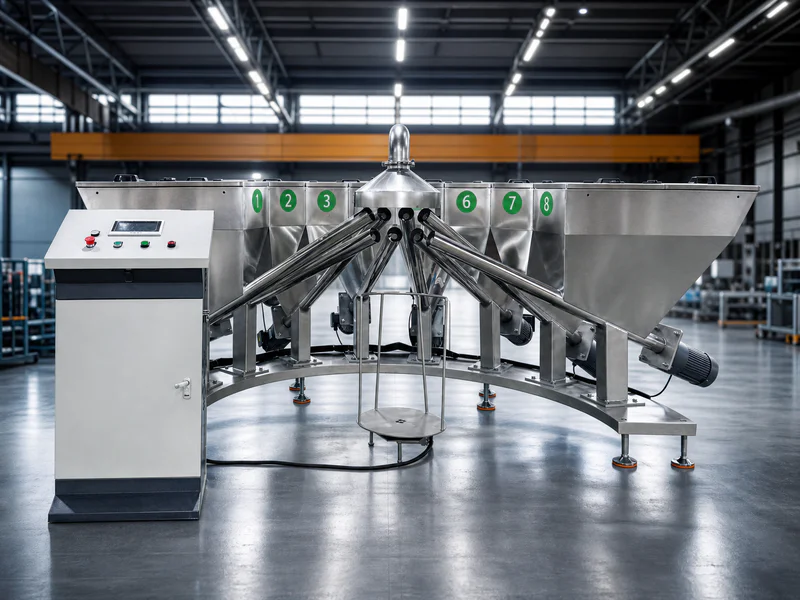
Resin, Masterbatch And Regrind Blender
This one holds resin, color masterbatch, additives, and regrind to recipe ratio before anything reaches the processing machine. When you need color to land the same every batch and your regrind ratio to stay put, this is the layout. It suits PE, PP, and general plastic production where color consistency and material cost both matter.
You want stable color, controlled regrind ratio, and cleaner material prep before processing.
Material types, component count, dosing ratio, kg/h, inlet height, and whether it mounts above the machine or beside the line.
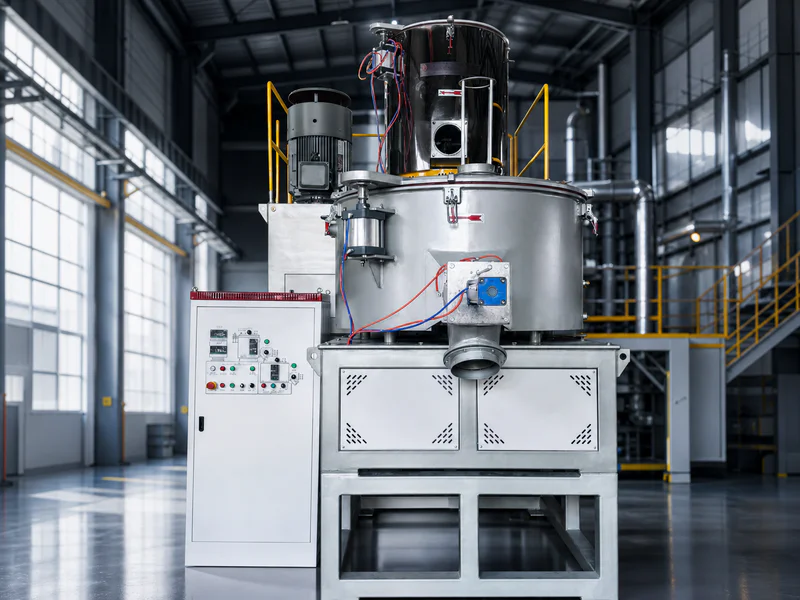
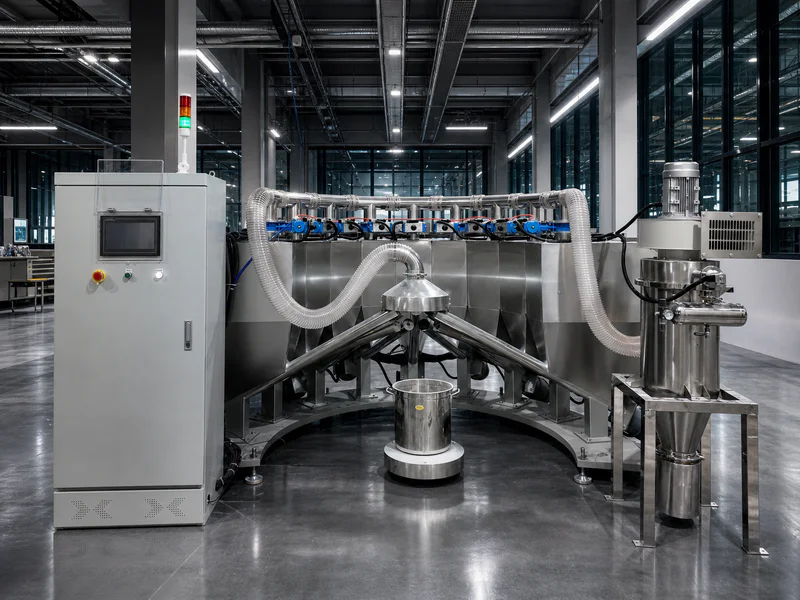
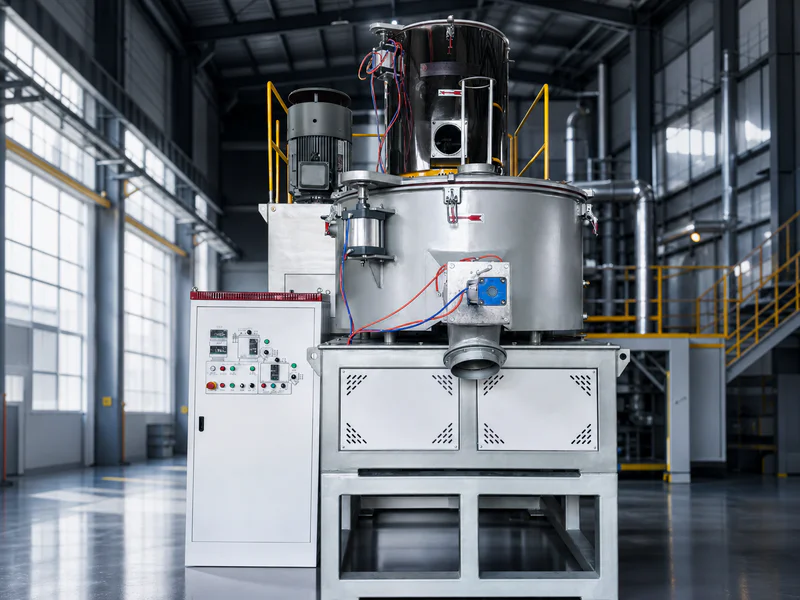
PVC Weighing And Mixing System
Built around PVC recipe accuracy, powder feeding sequence, small additive weighing, dust control, and mixer integration. If you run PVC resin, CaCO3, stabilizer, lubricant, pigment, or foaming agent before mixing and extrusion, this is the setup. It fits PVC pipe, profile, board, cable compound, foam board, and WPC or PVC projects.
You process PVC resin and powder additives before mixing and extrusion.
PVC recipe, batch size, mixer model, hot and cooling mixer cycle, powder flow, dust needs, and mixer inlet height.
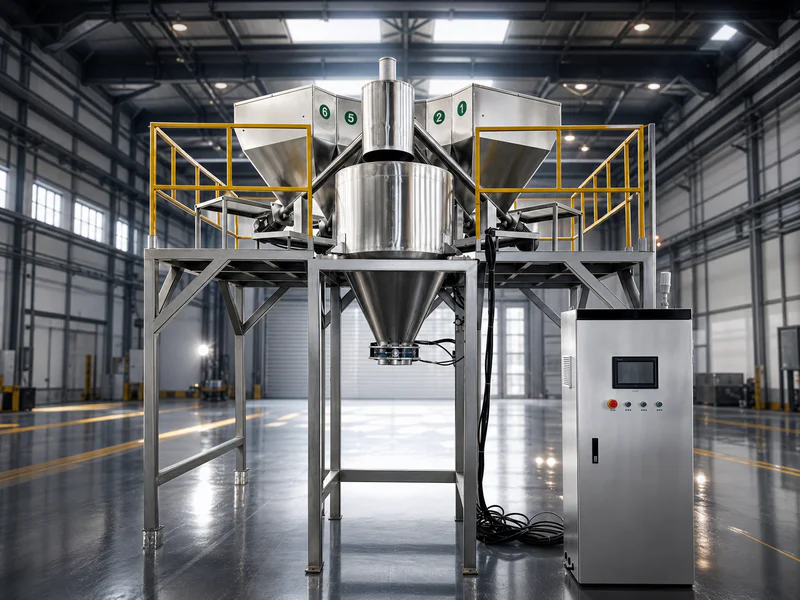
Continuous Loss-In-Weight Feeding
This layout is for when material flow has to stay steady through long runs. Each component gets controlled by feed rate, recipe setting, or line throughput, so nothing walks off target hours in. It fits compounding, cable compound, masterbatch, high filler materials, and continuous extrusion.
Your extrusion or compounding process needs each material feeding continuously at a stable kg/h.
Target kg/h per component, material form, refill method, dosing percentage, extruder capacity, and whether feeders follow line speed or recipe changes.
Micro Ingredient Weighing System
When a gram or two of the wrong ingredient throws off your color, stability, foaming, or surface quality, you weigh the small stuff on its own. This handles stabilizer, pigment, lubricant, foaming agent, UV additive, and other low ratio ingredients, cutting the manual small dose errors and keeping recipe execution consistent.
Small ingredients strongly affect color, stability, foaming, surface, or product performance.
Each ingredient name, target weight, dosing percentage, flow condition, batch frequency, and whether it is powder, granule, or mixed.
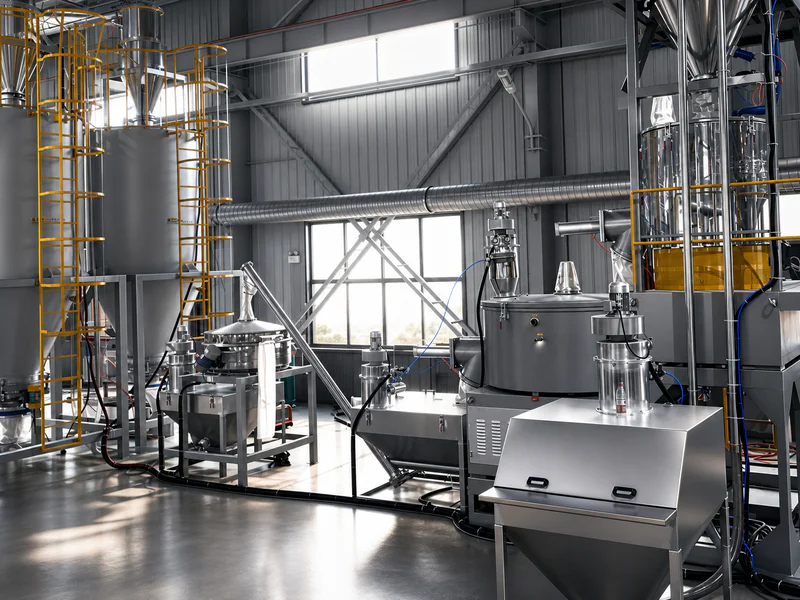
Central Material Handling And Batching
This ties your upstream storage, conveying, weighing, batching, and feeding into one material prep process. Worth considering when you run several lines, get through a lot of material, or want to cut labor and clean up how material moves through the plant. It fits factories using silos, big bags, vacuum loaders, mixers, extruders, or multiple feeding points.
You have multiple lines, high material consumption, or want less labor and cleaner handling.
Workshop layout, line count, storage method, conveying distance, discharge points, platform space, dust condition, and expansion plans.
Every configuration is shaped around your material, recipe, throughput, layout, and voltage. Send those details and we confirm the right layout before quotation.
Common Problems To Avoid Before You Order
A weighing and batching system should not be chosen on price or a machine name alone. Before you order, run through the problems that quietly hit recipe accuracy, material cost, product quality, dust control, and line integration.
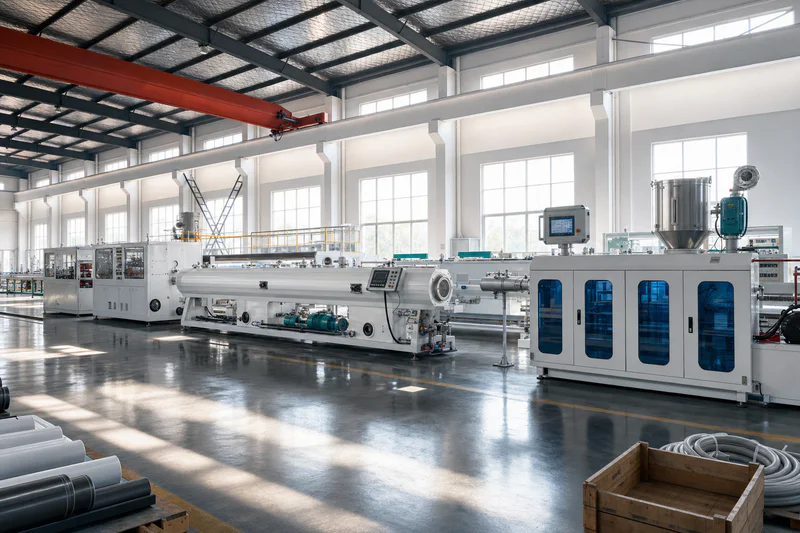
Where These Batching Systems Are Used
Weighing and batching systems get configured for the plastic lines where recipe accuracy, material ratio, and feeding consistency actually move your quality and cost.
 01
01
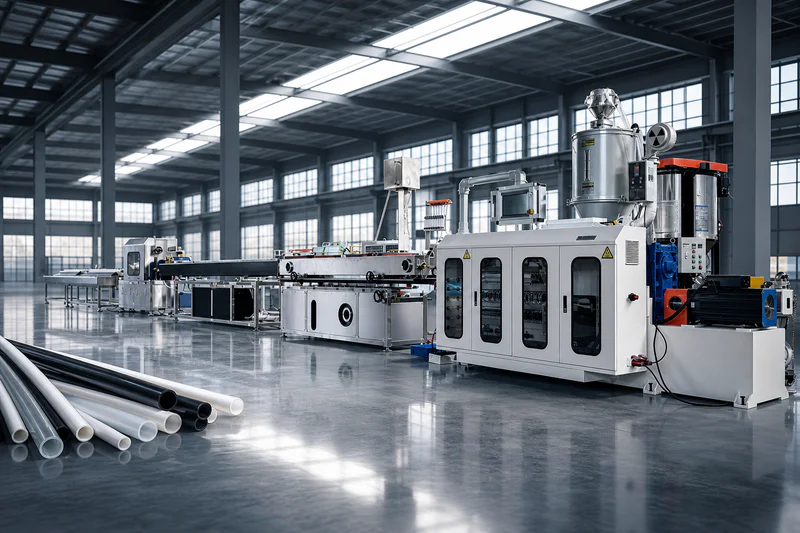
Pipe Extrusion
For PE, PP, and PVC pipe production running resin, masterbatch, regrind, filler, or additives.
 02
02
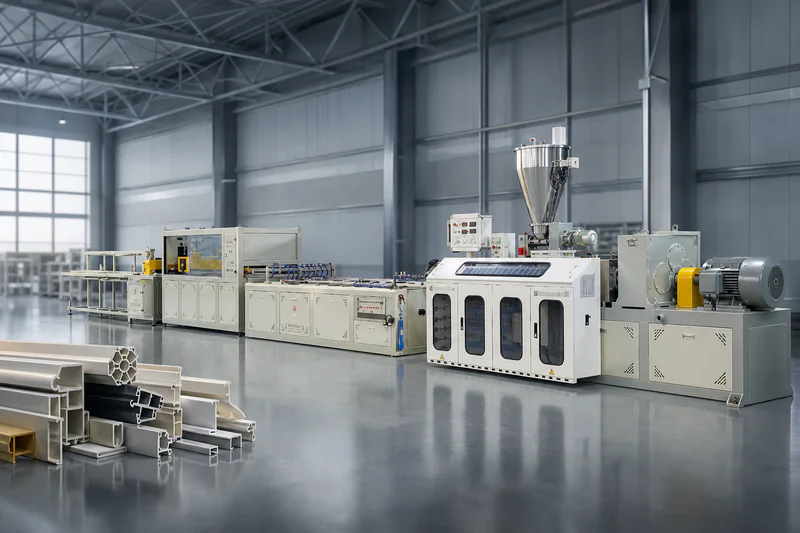
Profile Extrusion
For PVC and WPC profile production, where powder batching and additive control decide surface quality and processing stability.
 03
03
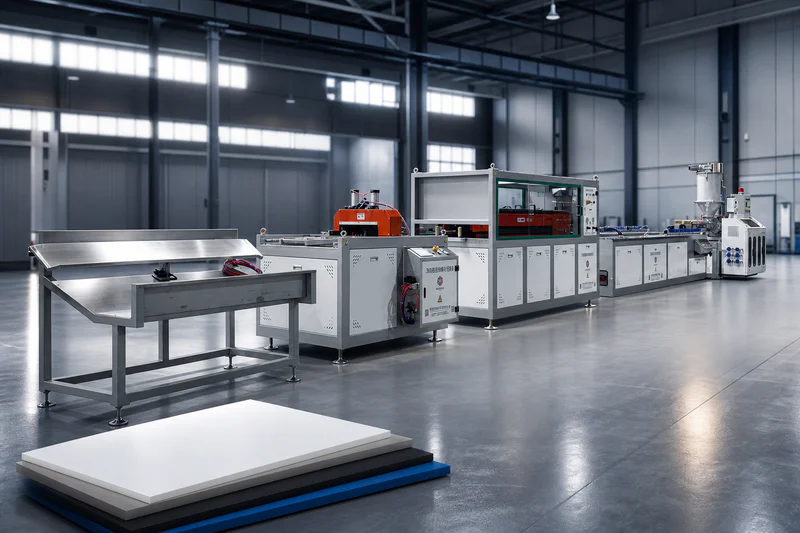
Sheet And Board Extrusion
For sheet and board lines running virgin resin, edge trim regrind, masterbatch, filler, or functional additives.
 04
04
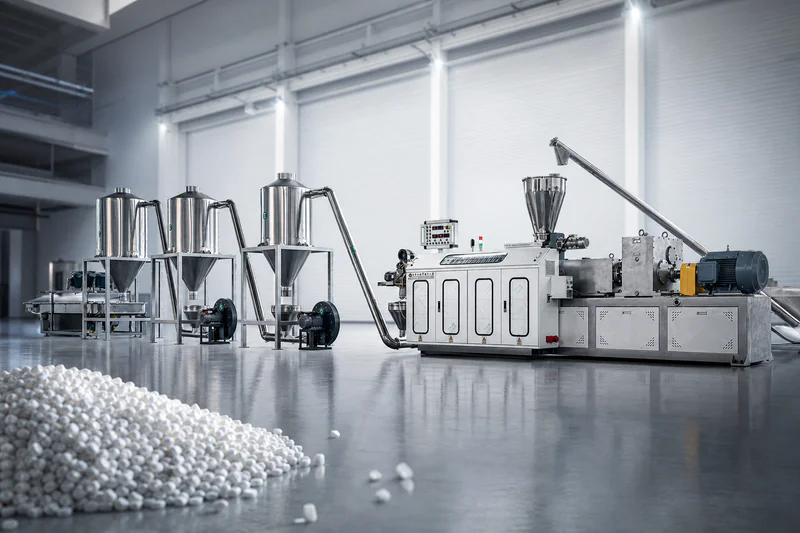
Compounding And Pelletizing
For continuous production where several materials need stable feeding by recipe or kg/h rate.
 05
05
Injection And Blow Molding
For molding machines that need stable resin, masterbatch, and regrind preparation before processing.
 06
06
PVC Mixing
For PVC resin, CaCO3, stabilizer, lubricant, pigment, and other additives before hot and cooling mixing.
Same System Family, Built Around Your Process And Voltage
Whether you run pipe, profile, sheet, compounding, molding, or PVC mixing, the system gets configured around your materials, recipe, throughput, and factory layout, then wired to your local voltage and standard before shipment. Send your line details and target output and we confirm the right setup before quotation.
Accuracy, Recipe Control, And Batch Traceability
A batching system should control more than how material gets weighed. It should control how your recipes are used, changed, recorded, and checked while you produce.
Review dosing accuracy by material type, target weight, feeder type, and production condition. A large resin batch and a low ratio additive dose do not need the same weighing strategy, and treating them the same is where accuracy quietly slips.
Dosing Accuracy
Accuracy is not one fixed number for everything. Resin, filler, masterbatch, regrind, powder additives, and micro ingredients each want their own weighing range, feeder type, and control setting. Get that split right and the whole recipe holds.
What Sets The AccuracyRecipe Management
Recipe management pulls production off any single operator. Store your formulas, select and control them through the HMI, and material ratios stay consistent across shifts, product changes, and batches, no matter who runs the line that day.
What You ControlBatch Records
Batch records let your team see exactly what happened in each weighing and feeding cycle. Actual weights, alarms, material usage, and operator actions all sit on record, so a quality review or a problem trace takes minutes instead of a shift.
What Gets RecordedA Reliable System Weighs Right And Proves It
Accuracy without records leaves you guessing when quality slips, and records without accuracy just document the problem. Discuss both together against your recipe, material behavior, accuracy target, production capacity, and quality control needs, and we configure the system to hold all of it.
Powder Flow, Dust Control, And Safe Material Handling
Powder batching is not pellet dosing scaled down. Material flow, dust points, cleaning access, and local safety rules all need reviewing before the layout gets confirmed.
PVC powder, CaCO3, wood powder, talc, pigment, stabilizer, and fine additives like to bridge, flood, stick to the hopper, or throw dust at feeding and discharge. For a powder project, the system gets built around both weighing accuracy and how the material actually handles.
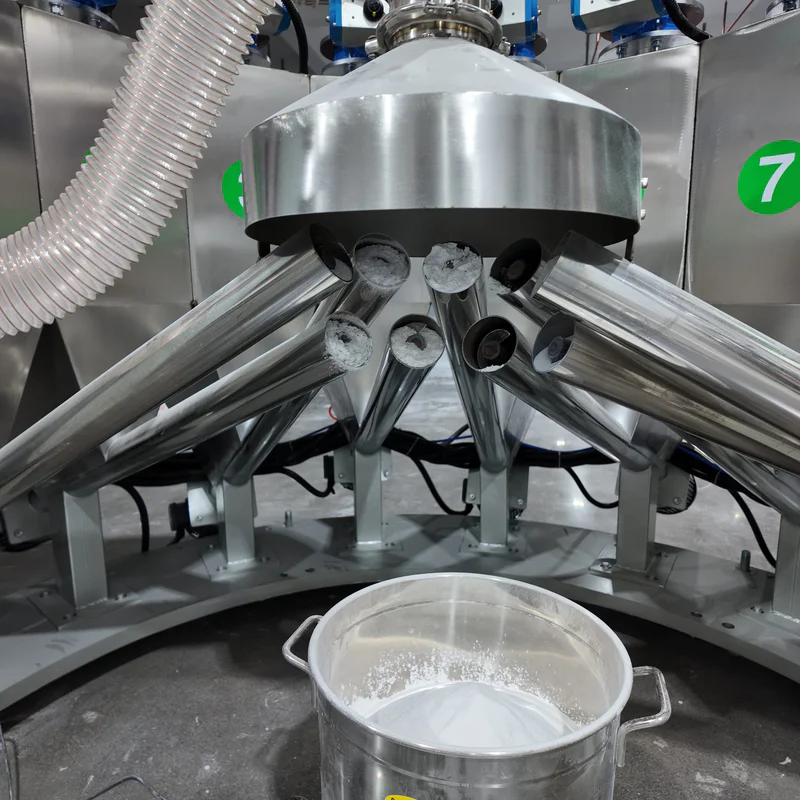
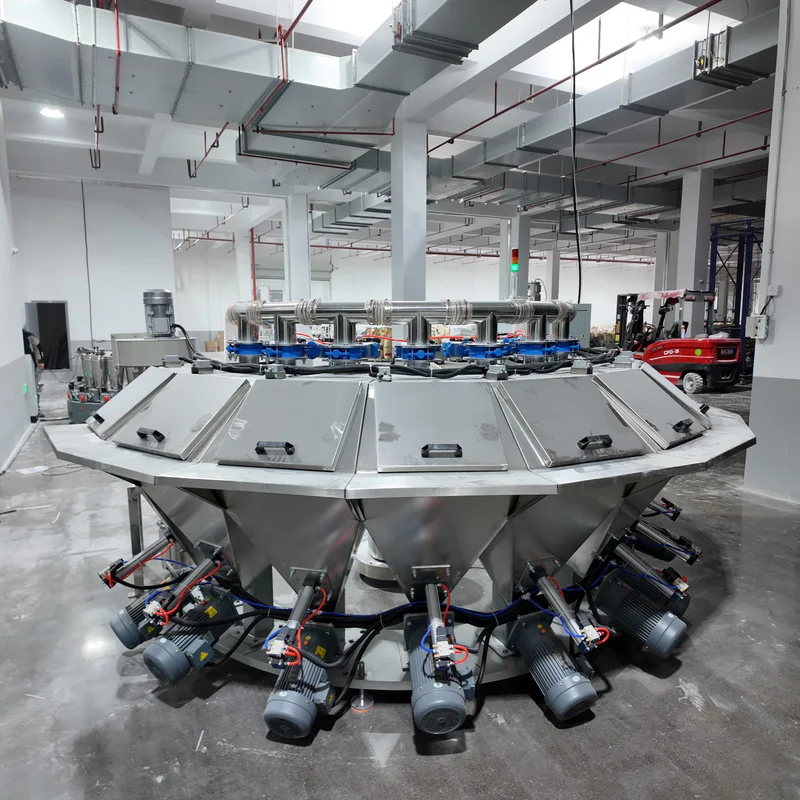
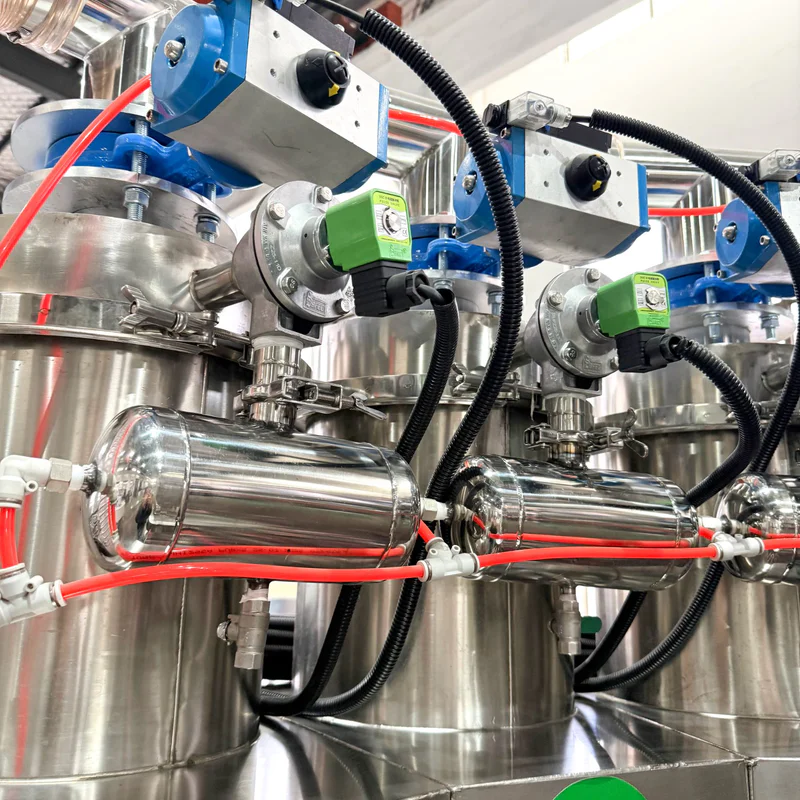
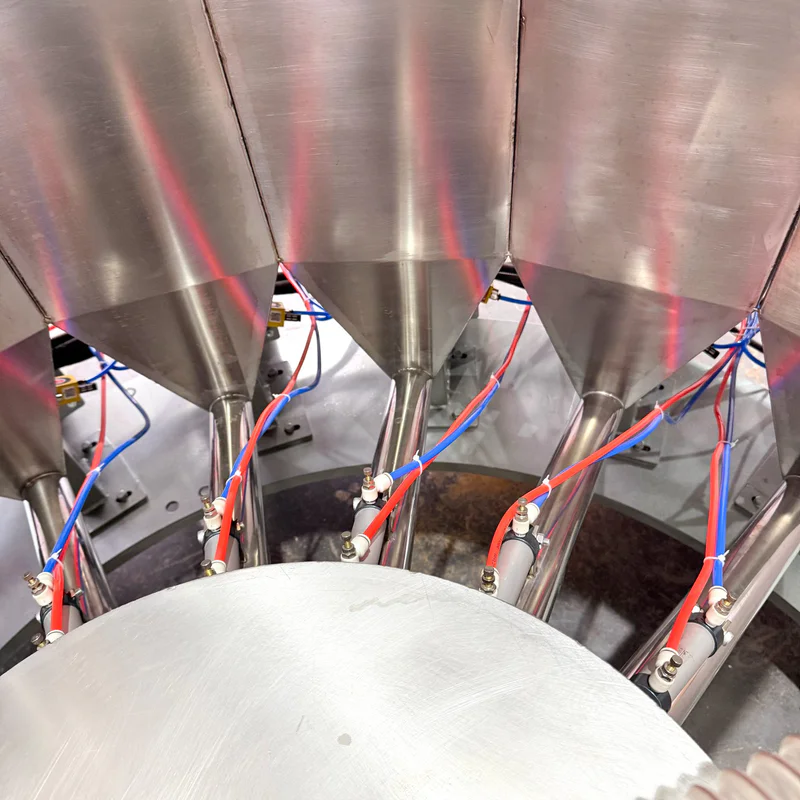
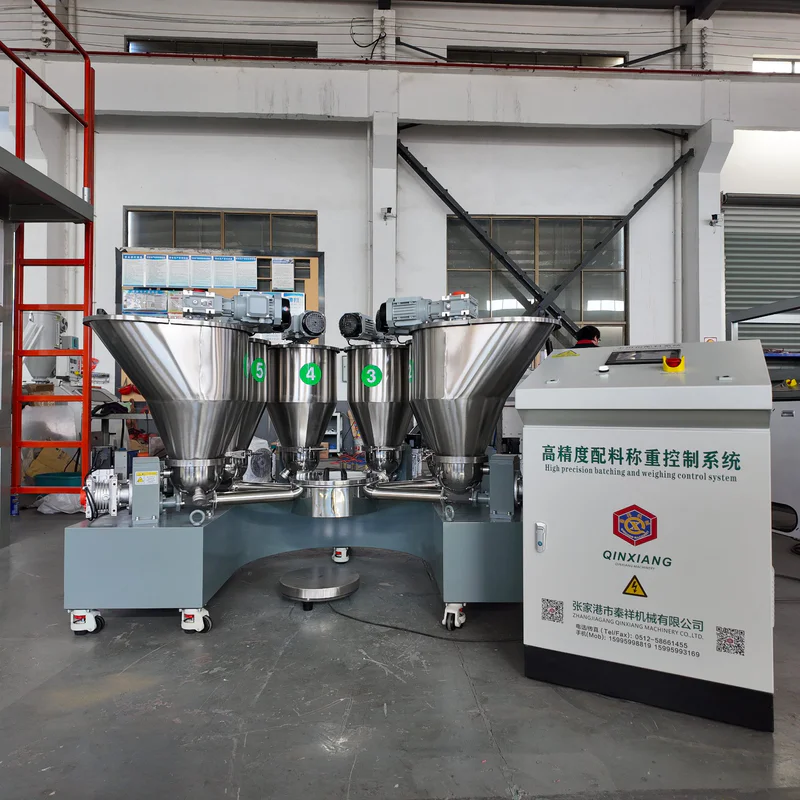
Not sure how your powder will behave in the system? Send your material, particle size, moisture, and dust condition, and we check the flow and handling before you order.
Never Spec A Powder System On Capacity Or Price Alone
Powder flow, dust condition, cleaning access, mixer connection, and local safety requirements all get checked before the final configuration. Skip that review and the cheapest quote becomes the one that bridges, dusts, and stalls on you. Send your material and dust condition and we confirm the right setup first.
Connect The System To Your Existing Line
A batching system should fit your current mixer, extruder, silo, vacuum loader, platform height, and feeding route, not force you to rebuild the whole material area.
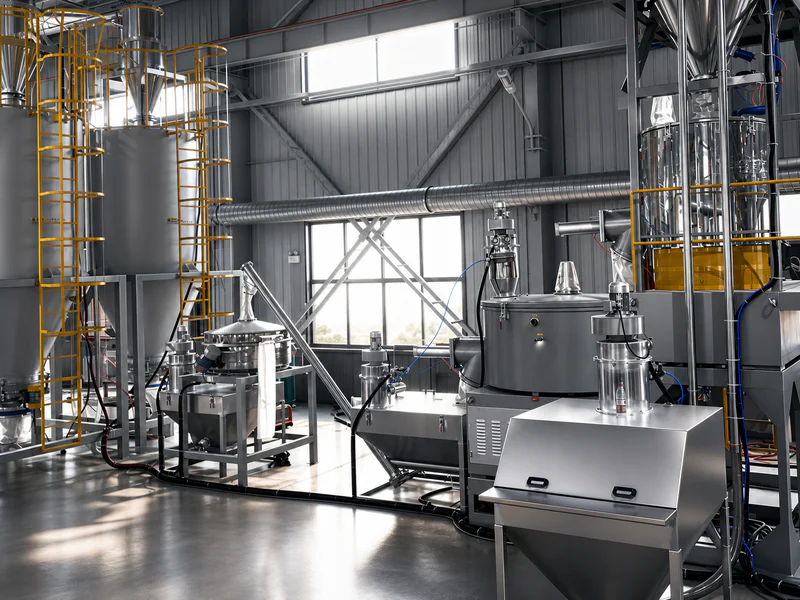
Silo / Bag Feeding
Your material storage and intake
Weighing And Batching
The system we configure and connect
Mixer / Blender
Your existing mixing equipment
Extruder / Processing Machine
Your line, fed on recipe and rate
Whether it is a new project or a line upgrade, the layout gets reviewed around the equipment you already run. Mixer inlet height, extruder throat position, discharge point, conveying distance, platform space, and control signal all get confirmed before the final design, so the system drops into your floor instead of fighting it.
The System Should Fit Your Floor, Not The Other Way Around
The whole point is a batching system that works with your line, your material flow, and your workshop space. Send your equipment photos, layout drawing, and feeding point height before quotation, and the system gets configured to drop in with fewer installation changes.
Factory Capability For Weighing And Batching Systems
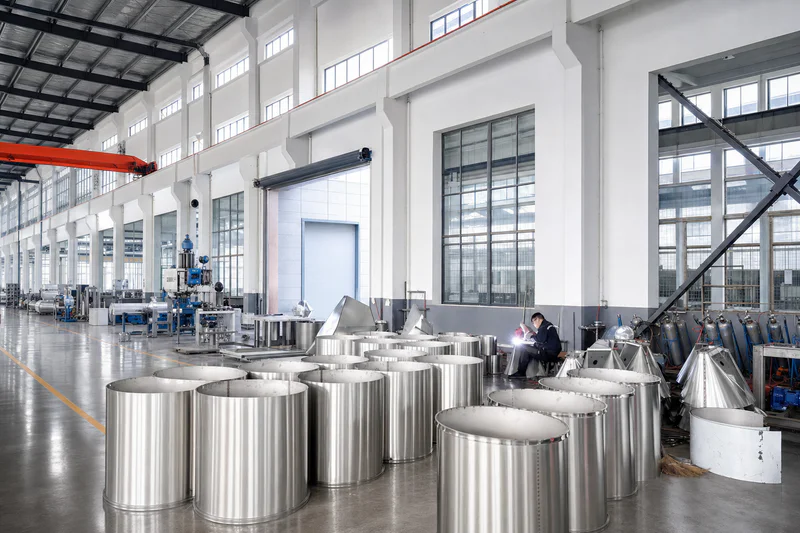
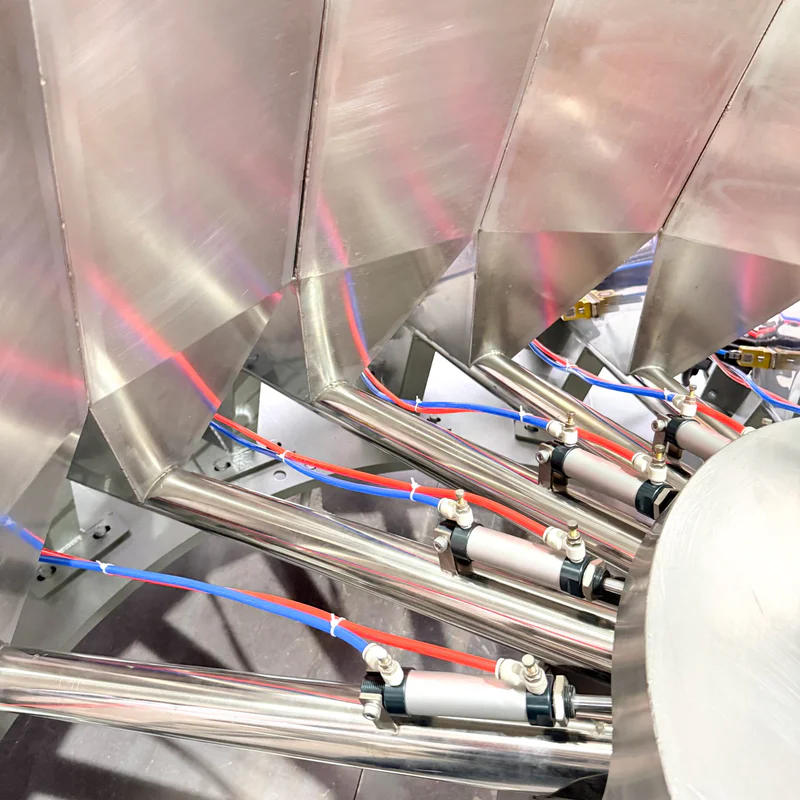
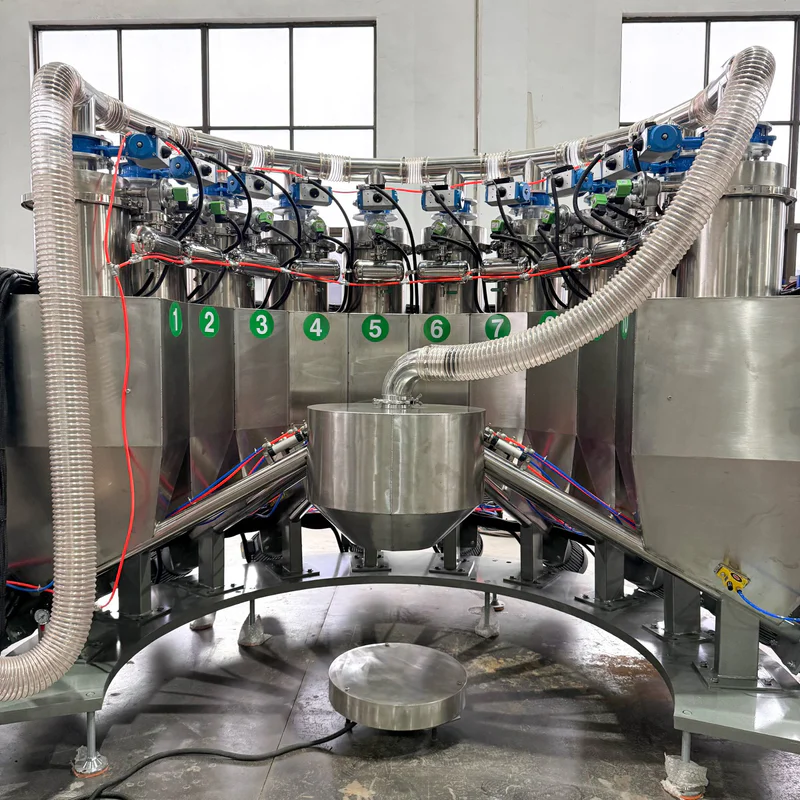
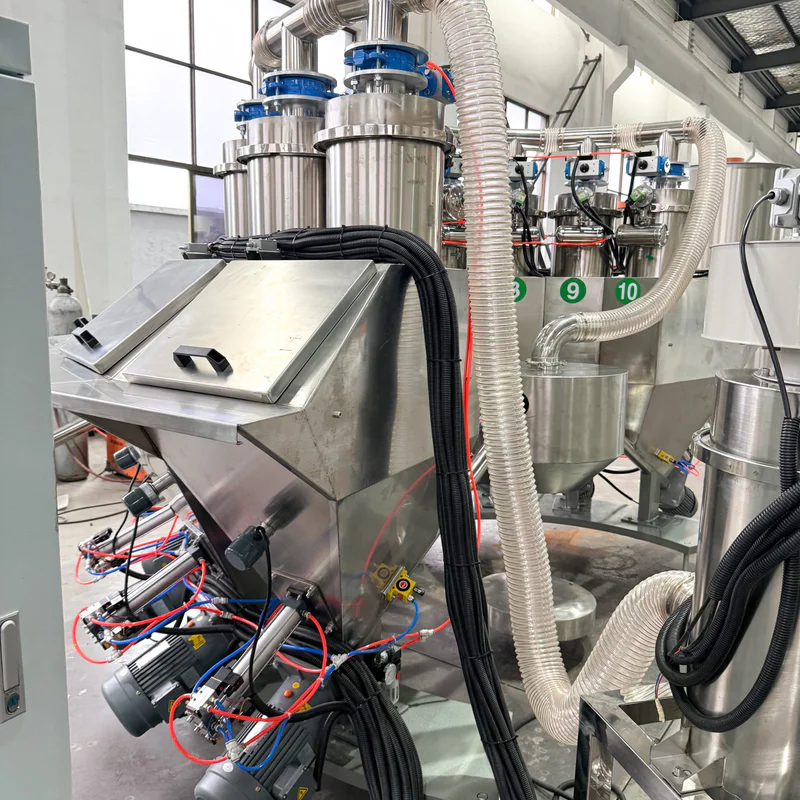
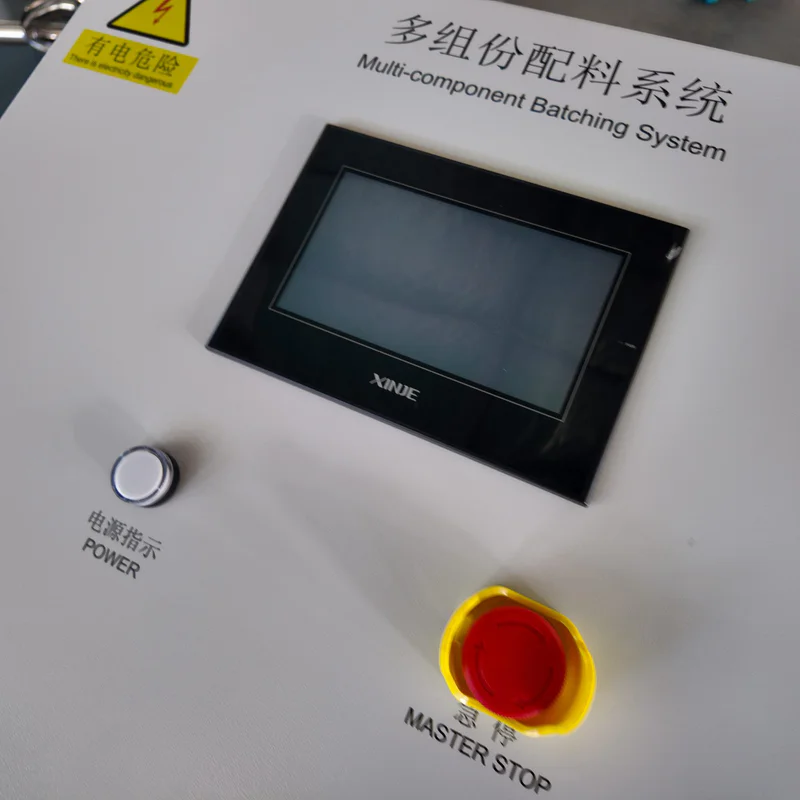
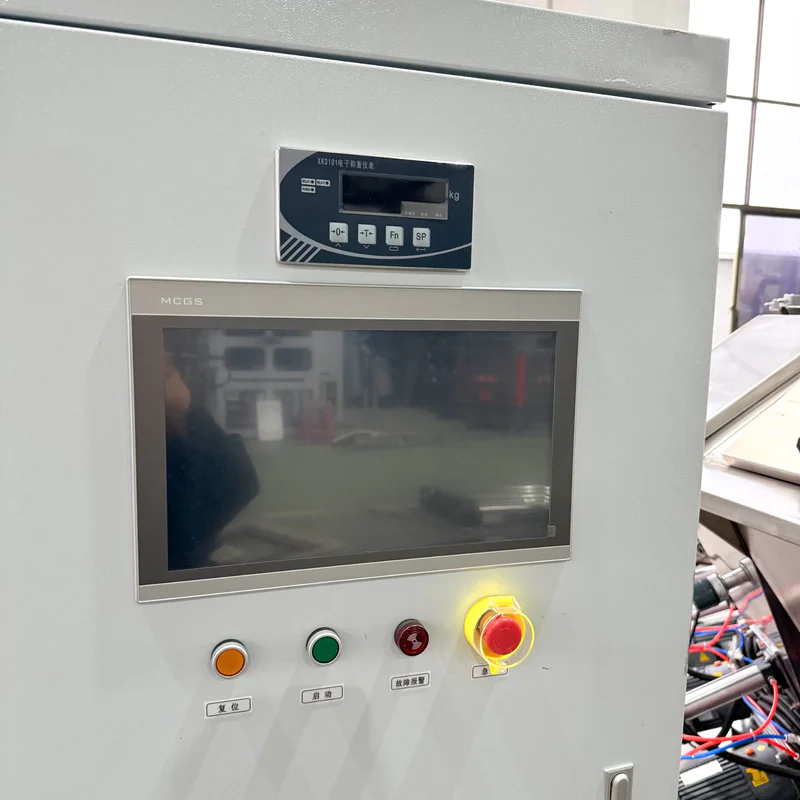
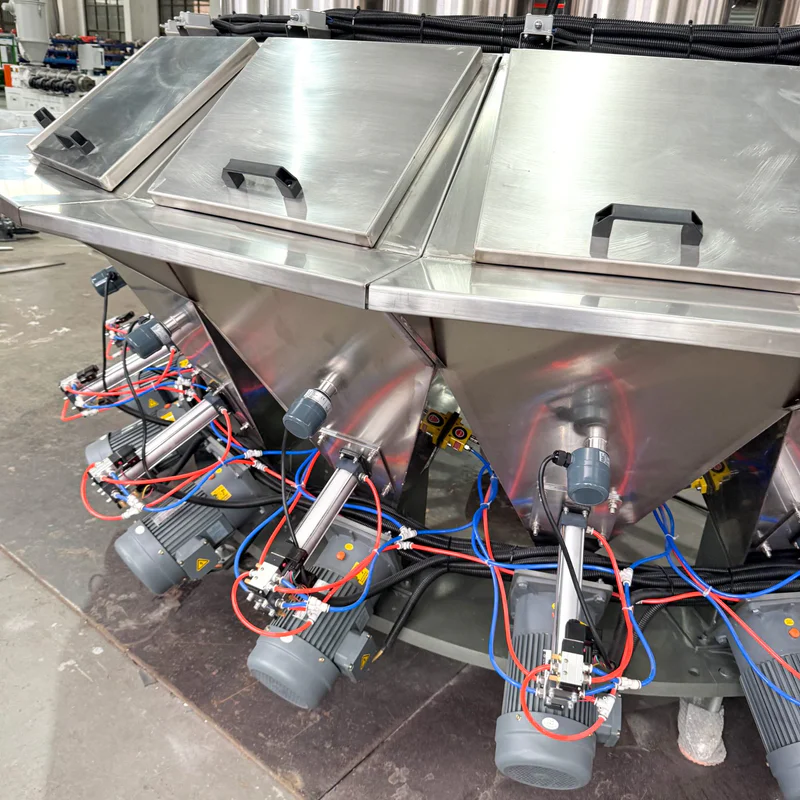
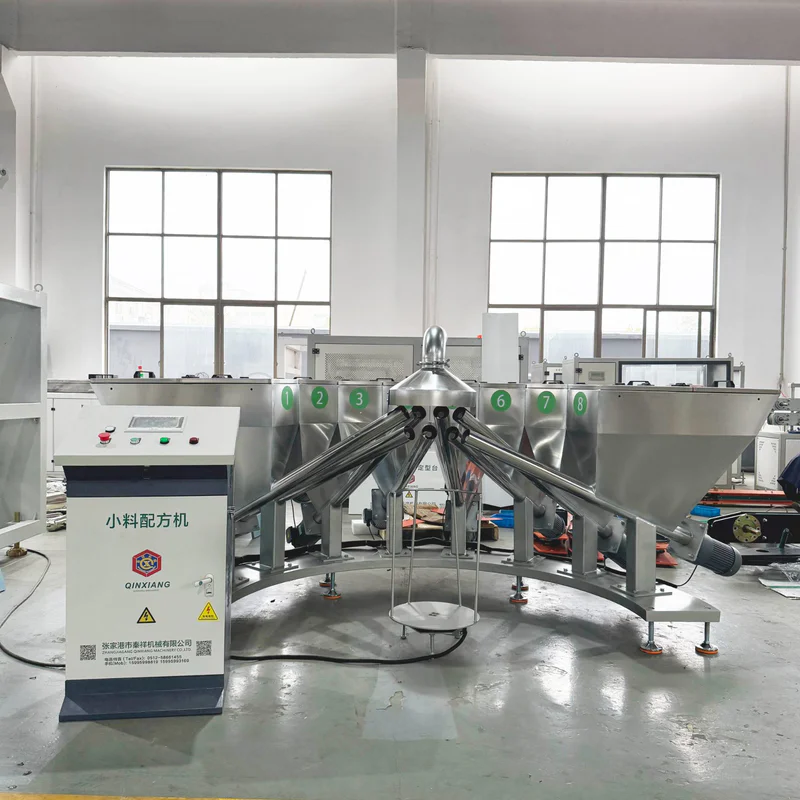
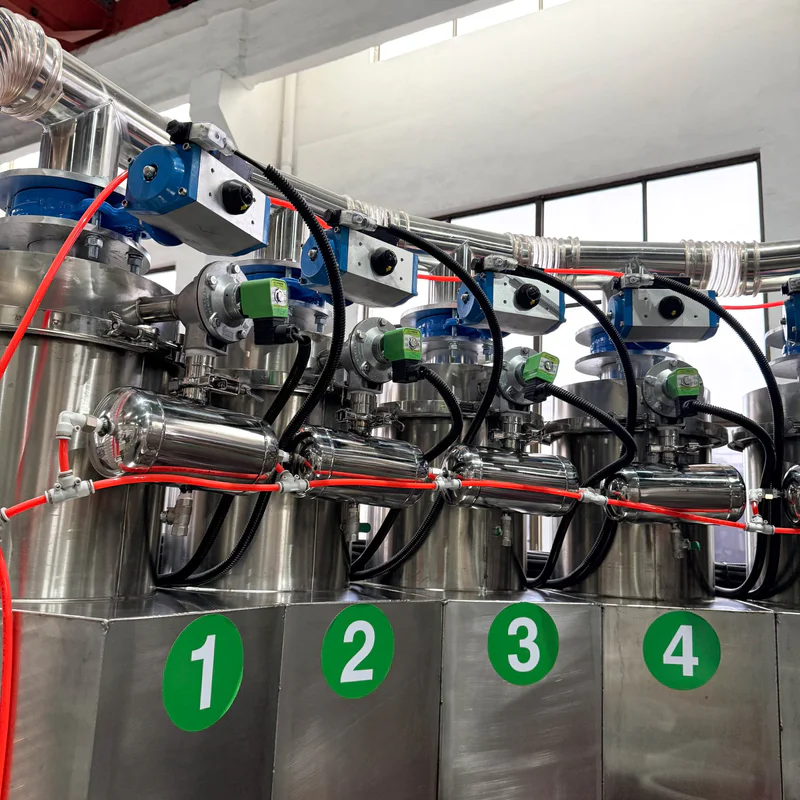
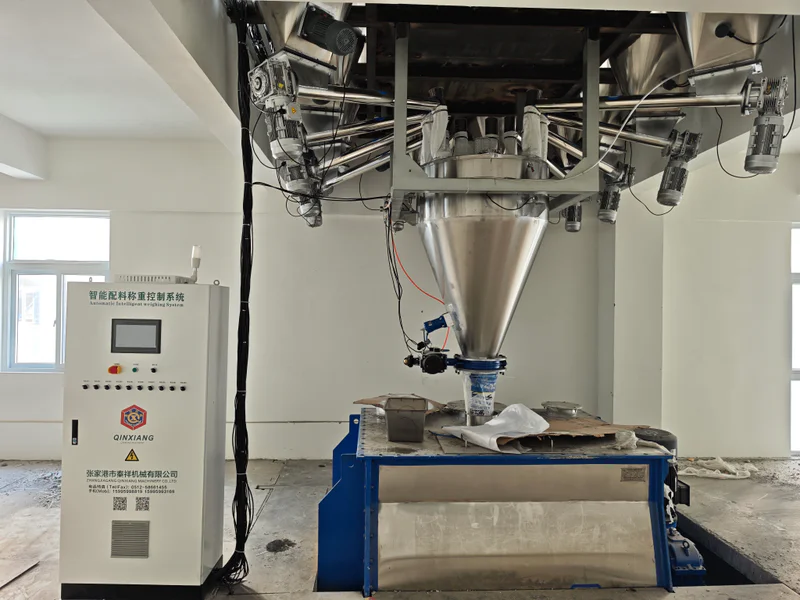
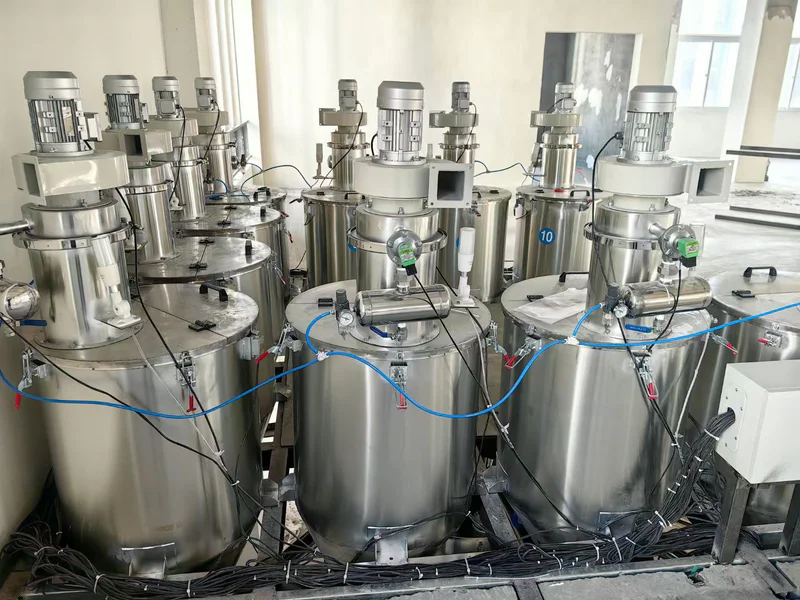
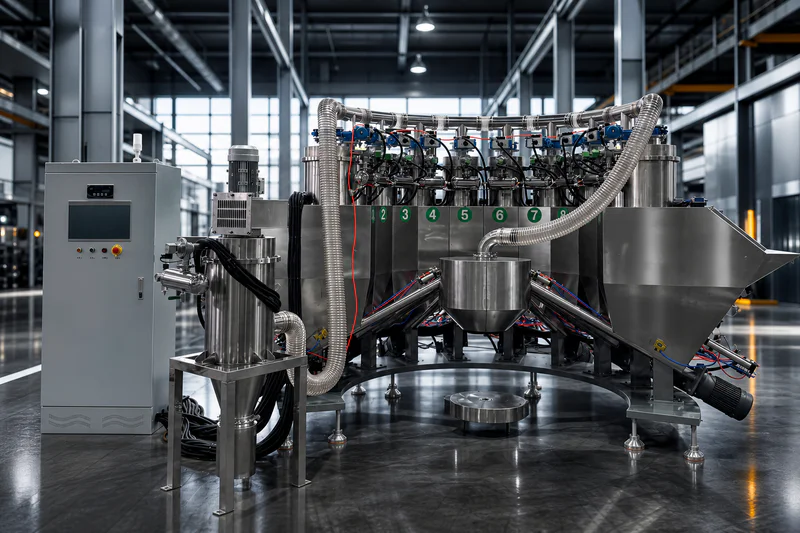
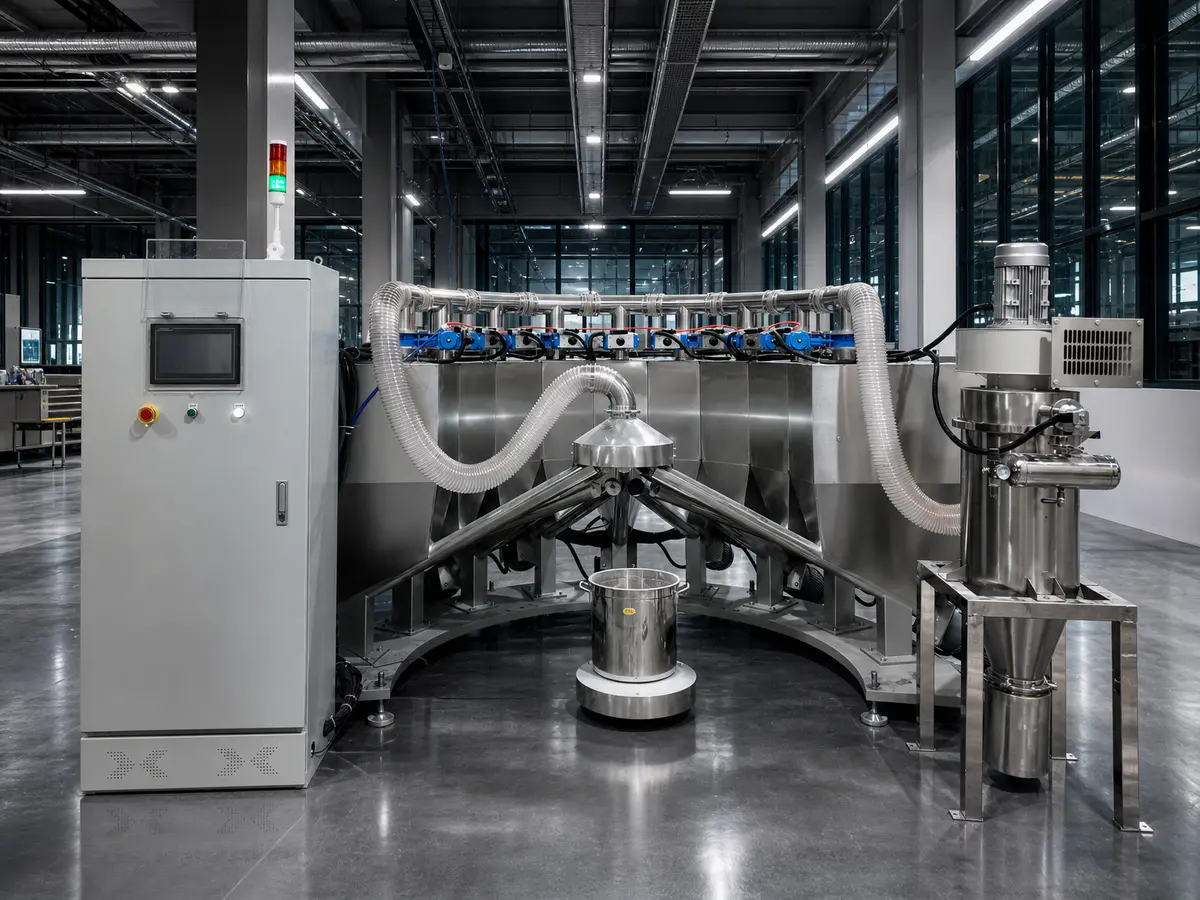
We configure your system around recipe structure, material form, component count, accuracy requirement, throughput, and factory layout. From hoppers, feeders, weighing bins, and discharge valves to PLC control, HMI recipe management, system assembly, and factory testing, every project is prepared to match your mixing, extrusion, or material handling process.
How Your Batching System Project Works
A weighing and batching system gets planned around your recipe, material behavior, production capacity, and factory layout before manufacturing starts. Here is how a project runs from first review to installation.
Recipe And Material Review
You share your materials, recipe percentage, batch size or kg/h target, material form, bulk density, flow condition, dust condition, and current batching method.
A clear starting point for system selection
Process Type Selection
We confirm whether your process needs batch weighing, gravimetric blending, loss in weight feeding, PVC automatic batching, micro dosing, regrind dosing, or powder batching.
The suitable weighing and dosing method
System Layout Design
The layout is planned around hopper quantity, feeder type, weighing method, discharge point, mixer or extruder interface, platform height, conveying route, and control cabinet position.
A system layout matched to your workshop
Technical Quotation
The quotation is built from system components, hopper number, feeder type, weighing range, capacity, control requirements, dust control needs, installation support, and documentation.
A quotation based on your actual process
Manufacturing And Assembly
Hoppers, feeders, weighing bins, valves, load cells, control cabinet, and related structures are manufactured and assembled to the confirmed configuration.
A system built to the agreed layout
Testing And Calibration
Before shipment, key functions get checked: load cell calibration, feeding test, recipe sequence, alarm test, discharge test, HMI operation, and a sample batch simulation.
A tested system before delivery
Shipping And Installation Support
Export packing, wiring diagrams, operation manuals, spare parts list, installation guidance, calibration support, and operator training can all be prepared for the project.
Support for installation and startup
Batching System Projects, Details, And Testing
A reliable system should be backed by real project detail, not just equipment names. Look through system layouts, hopper and feeder detail, control cabinets, HMI interfaces, testing records, and shipment photos before you settle on a configuration.
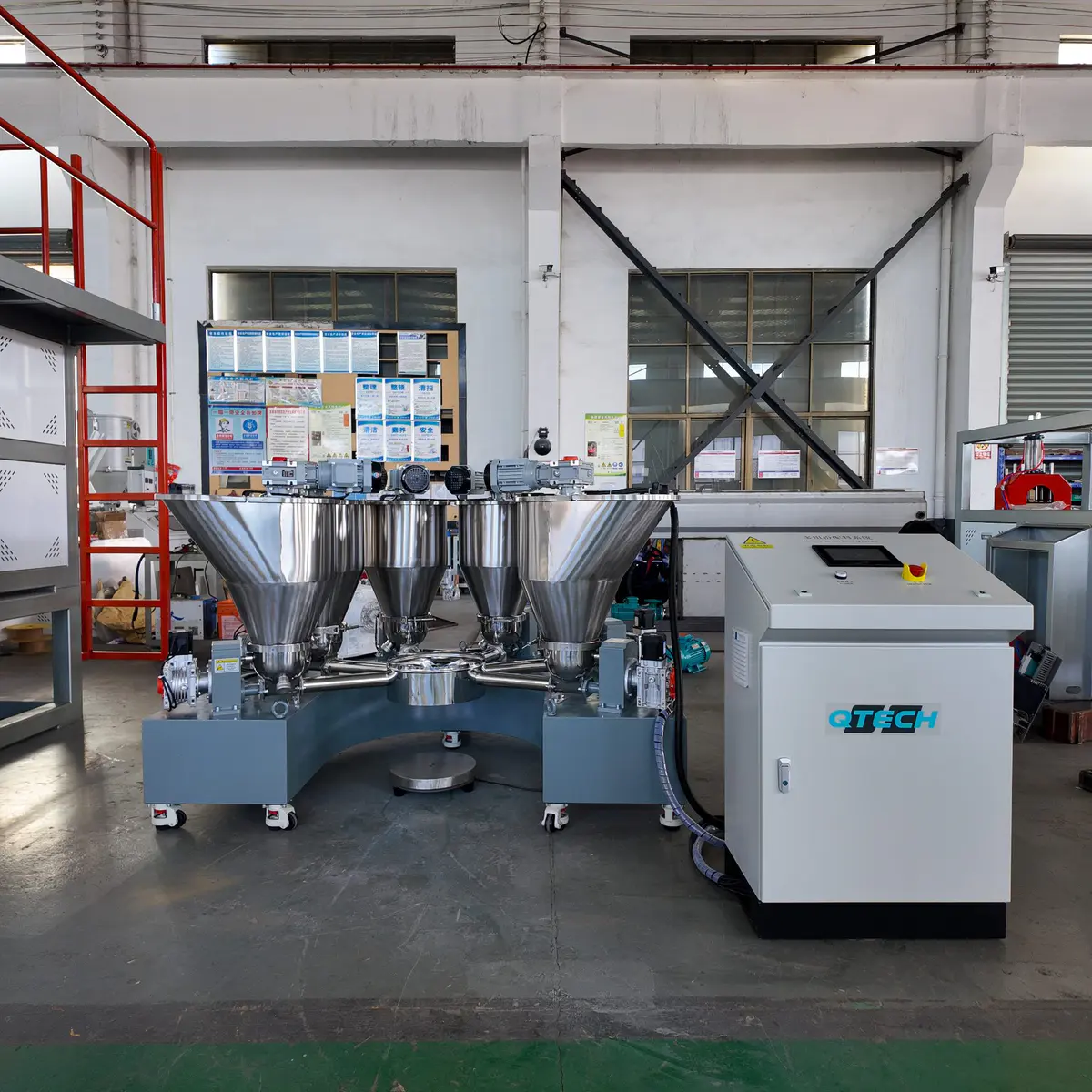
Project layouts show how material storage, conveying, weighing, batching, mixing, and feeding connect into one process.
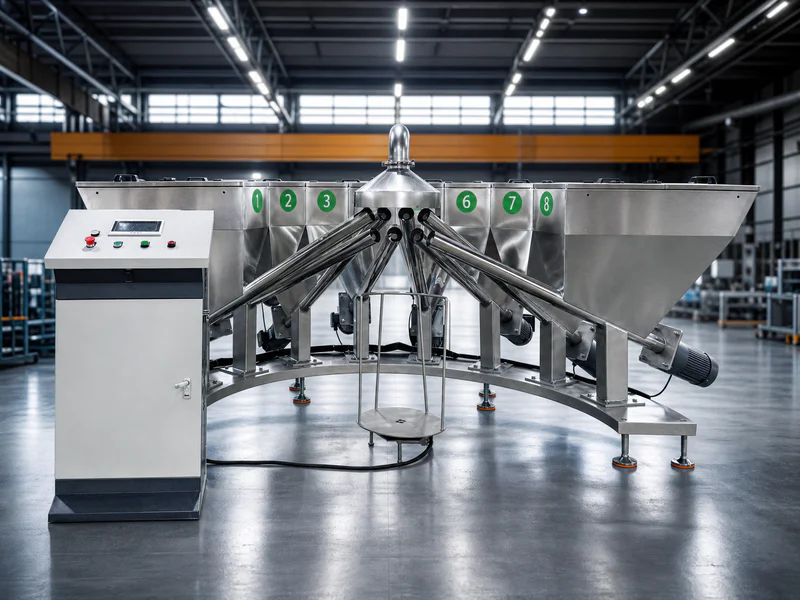
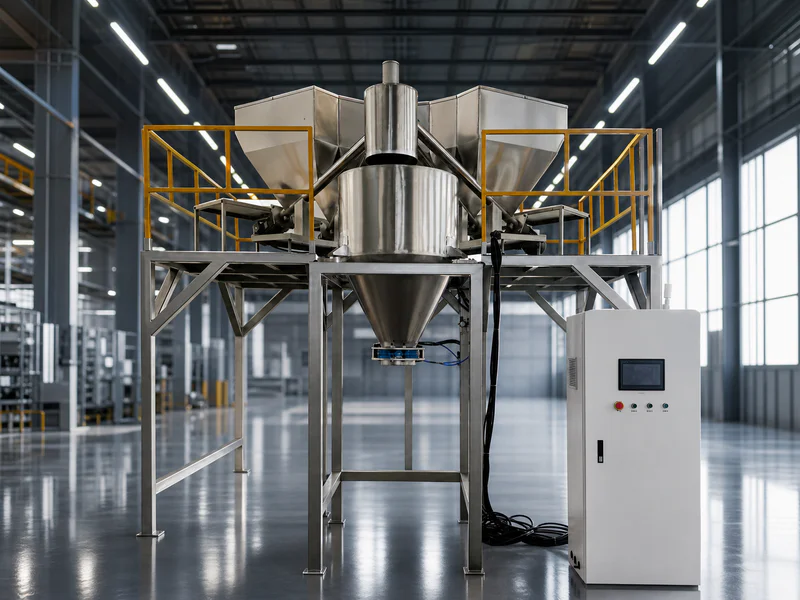
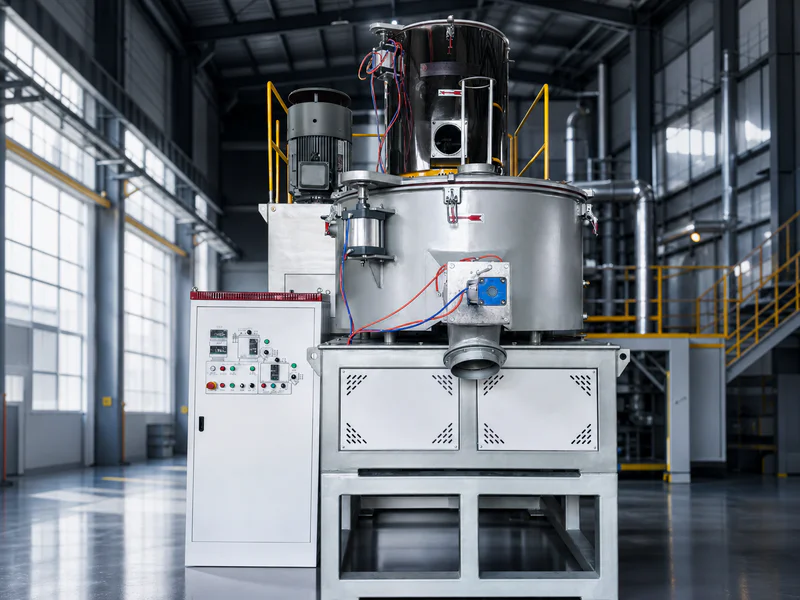
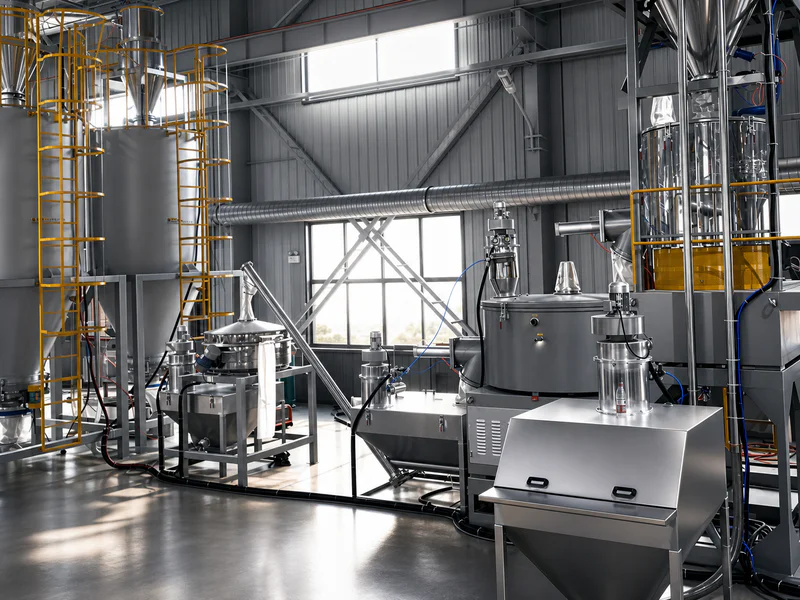
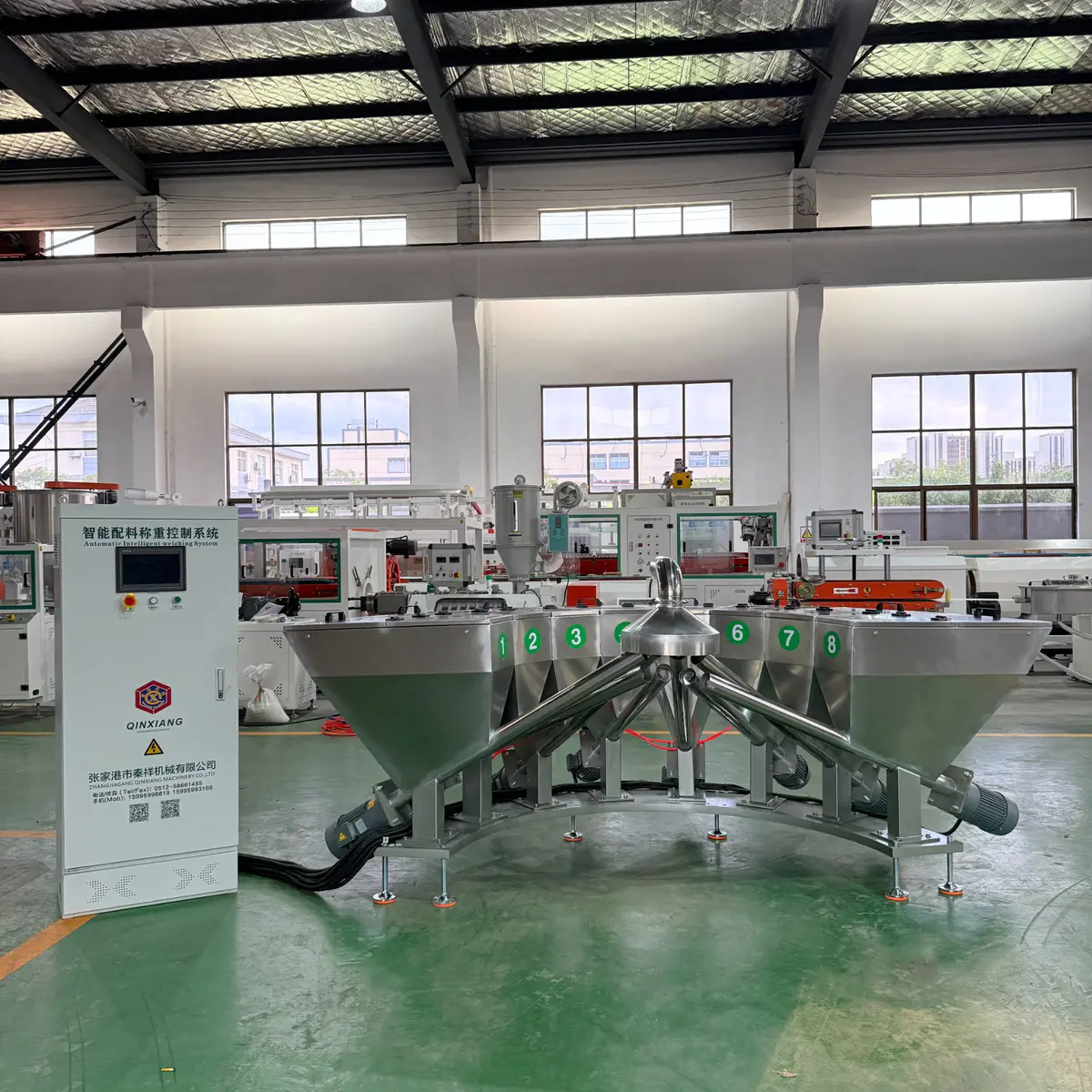
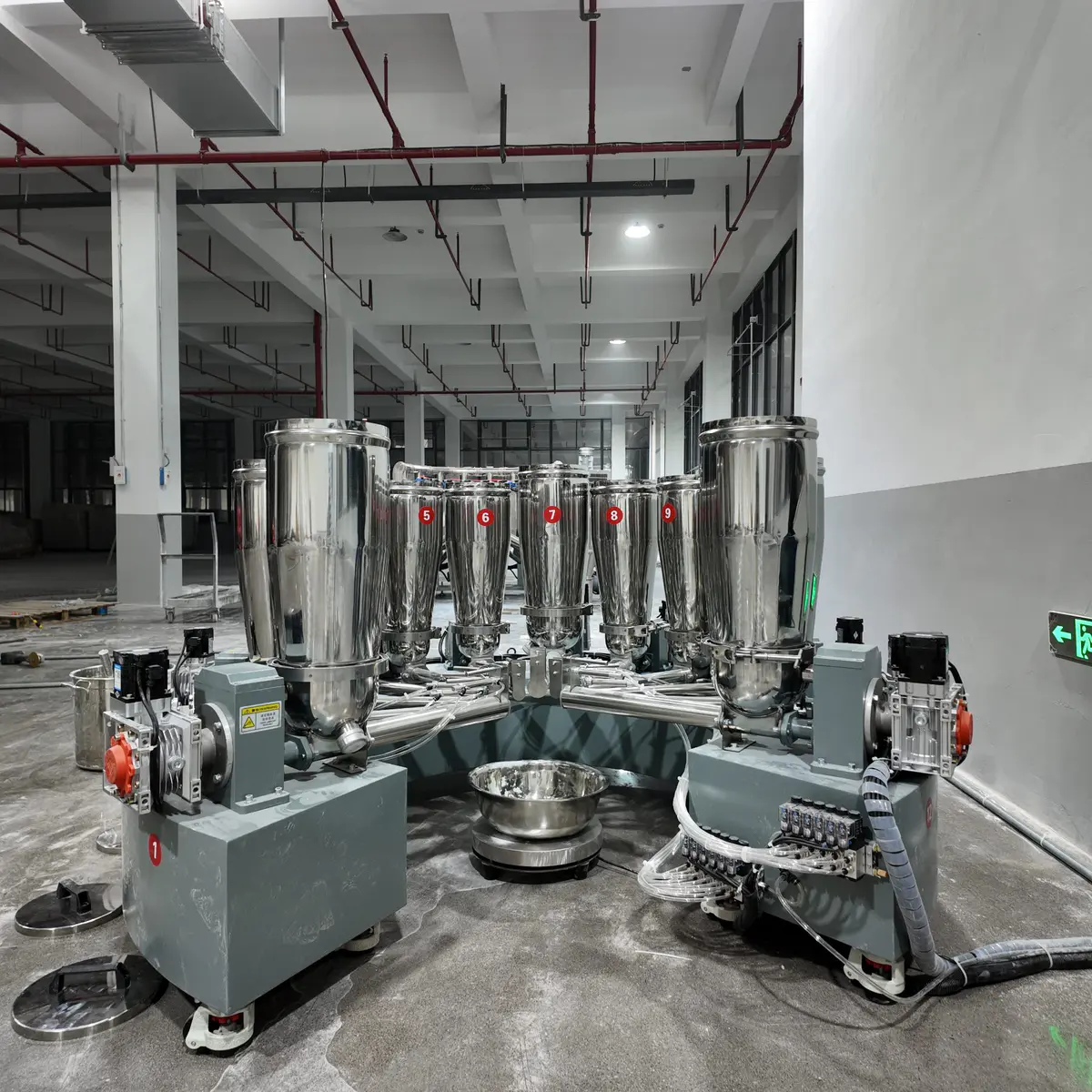
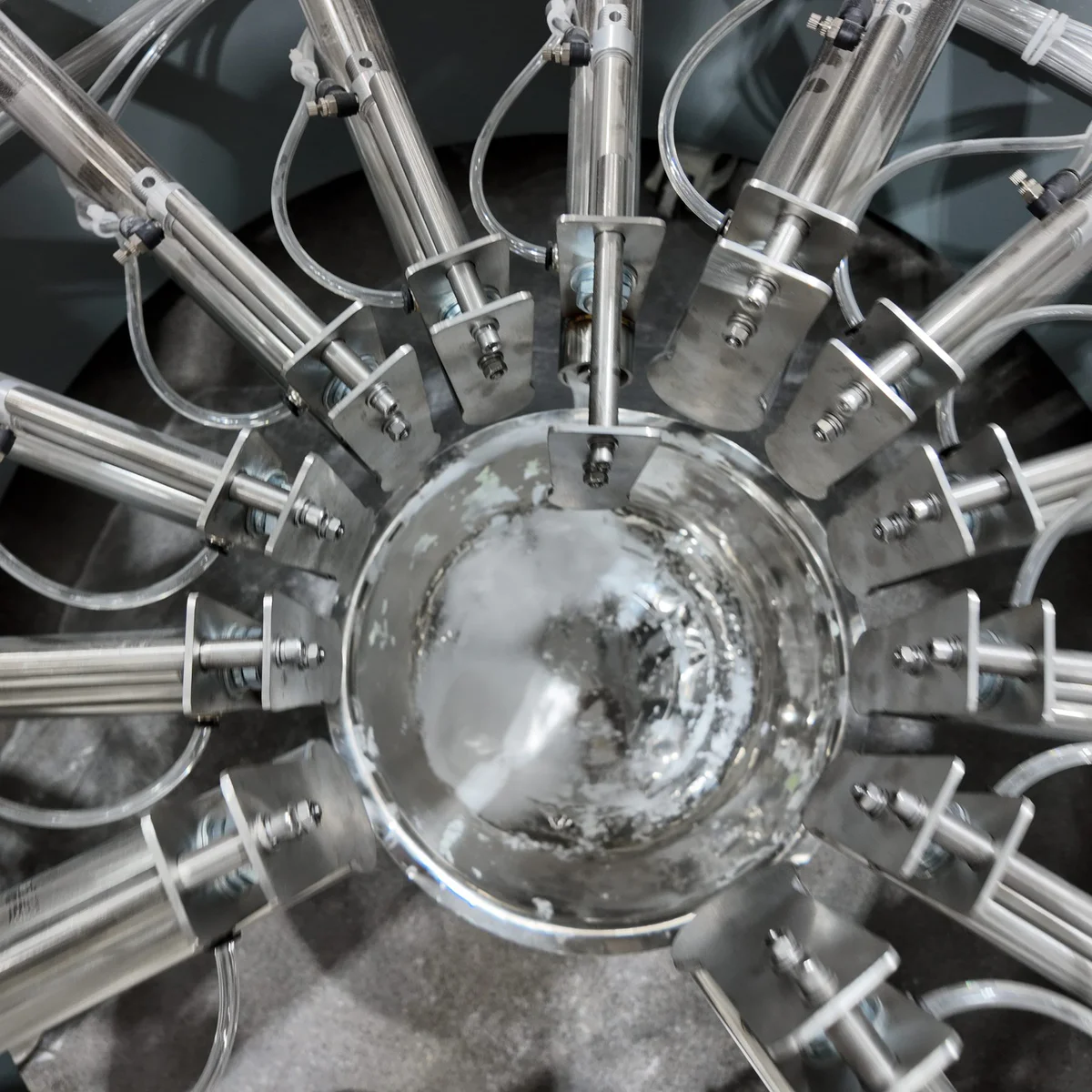
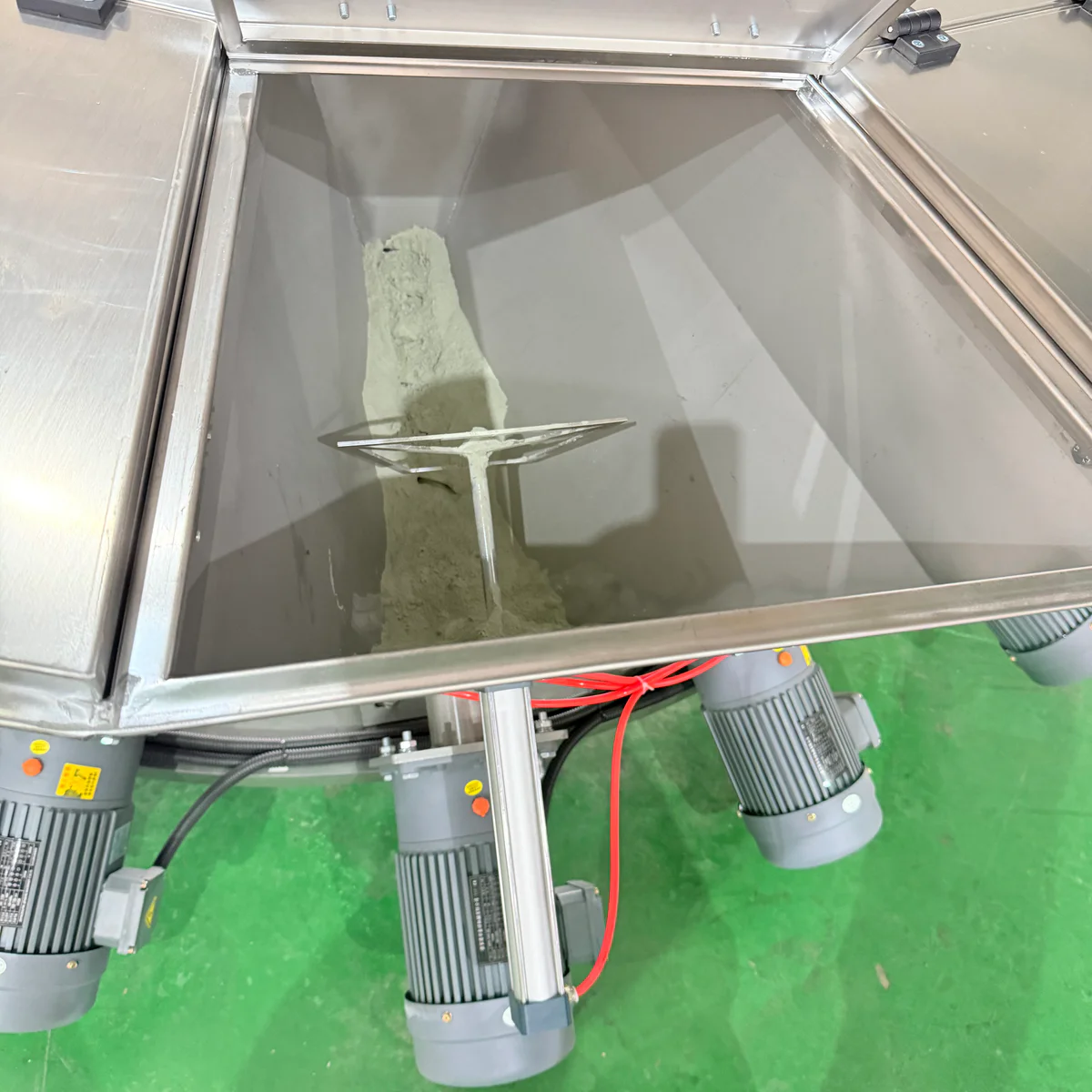
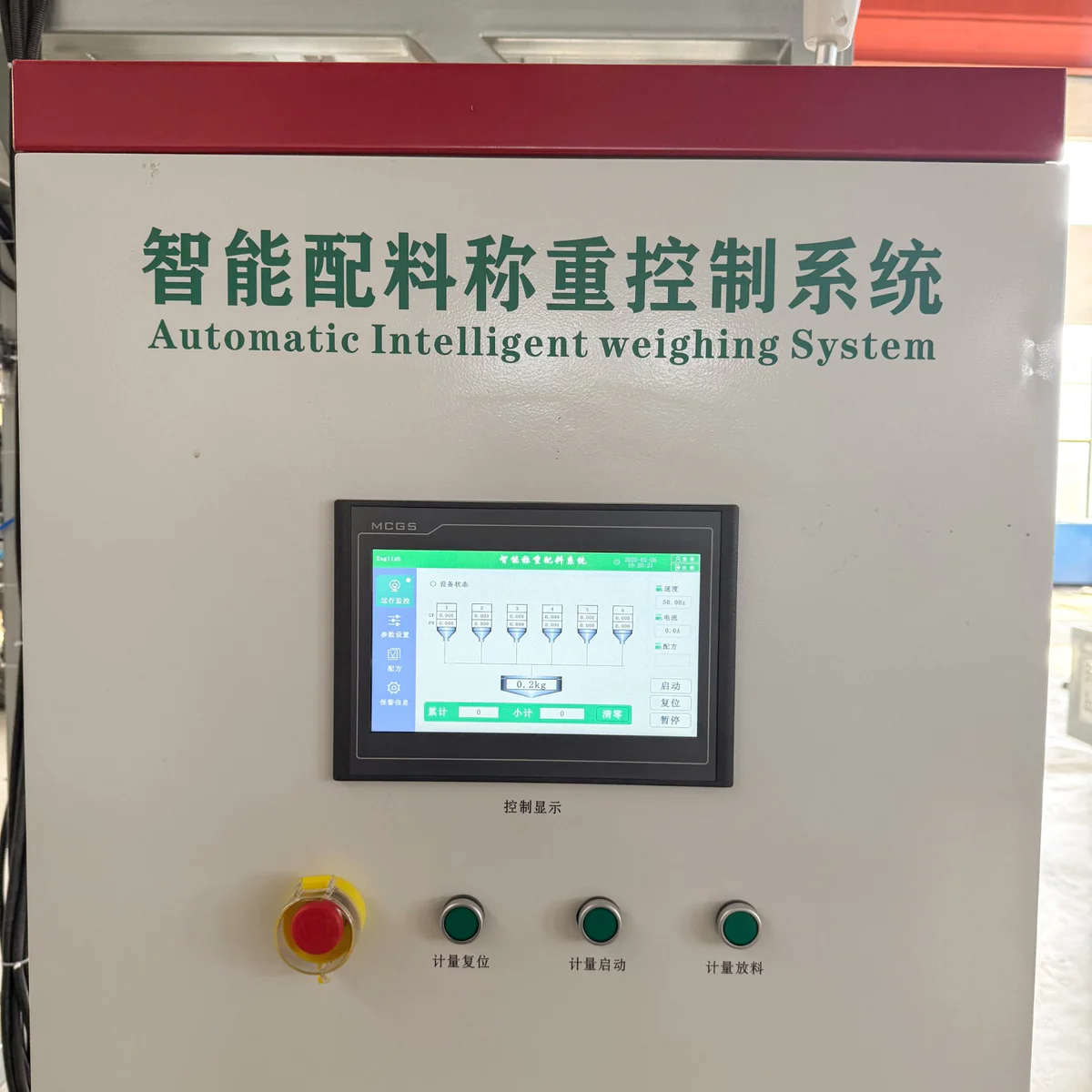
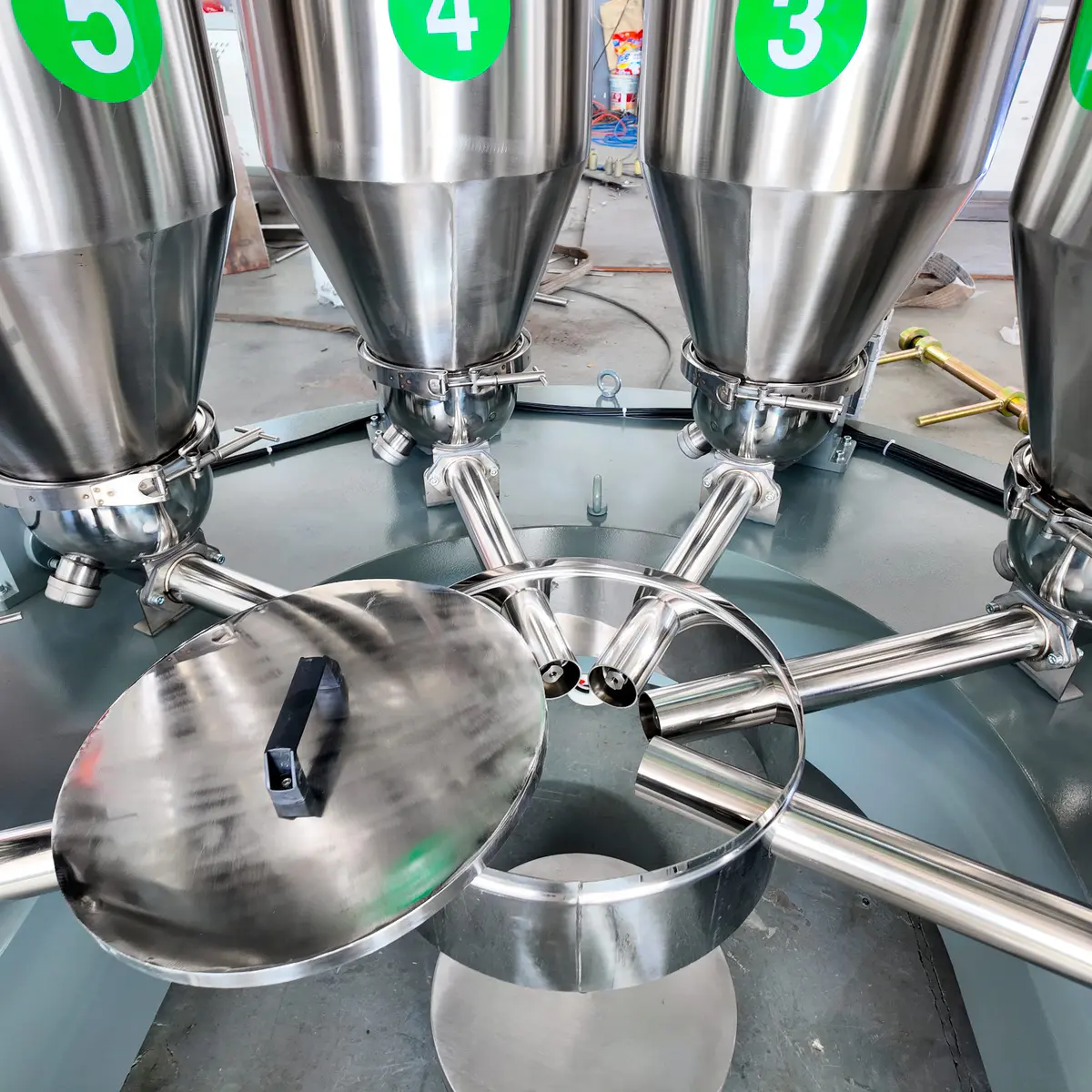
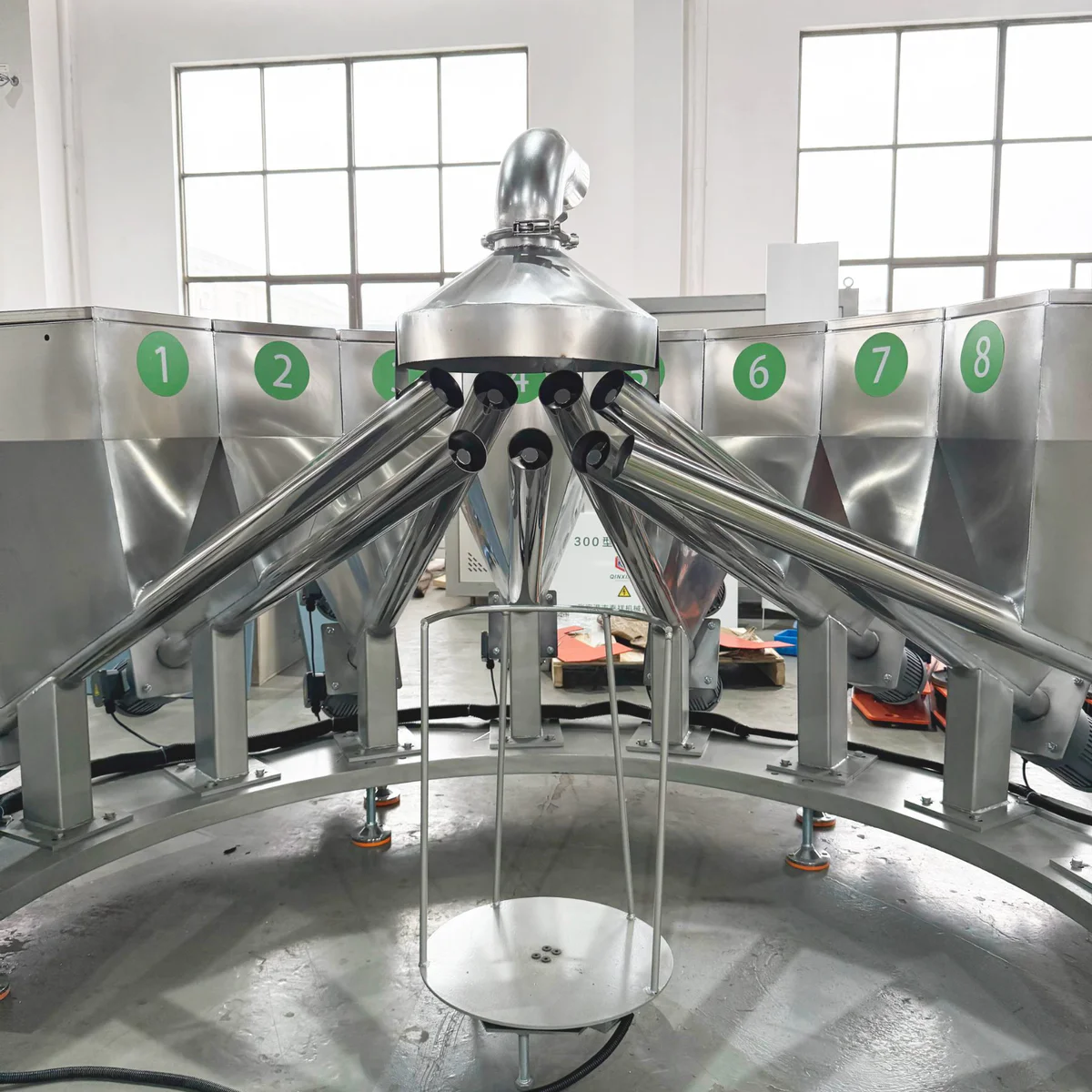
Close up photos of hoppers, screw feeders, weighing bins, discharge valves, and load cells help you understand the actual system structure.
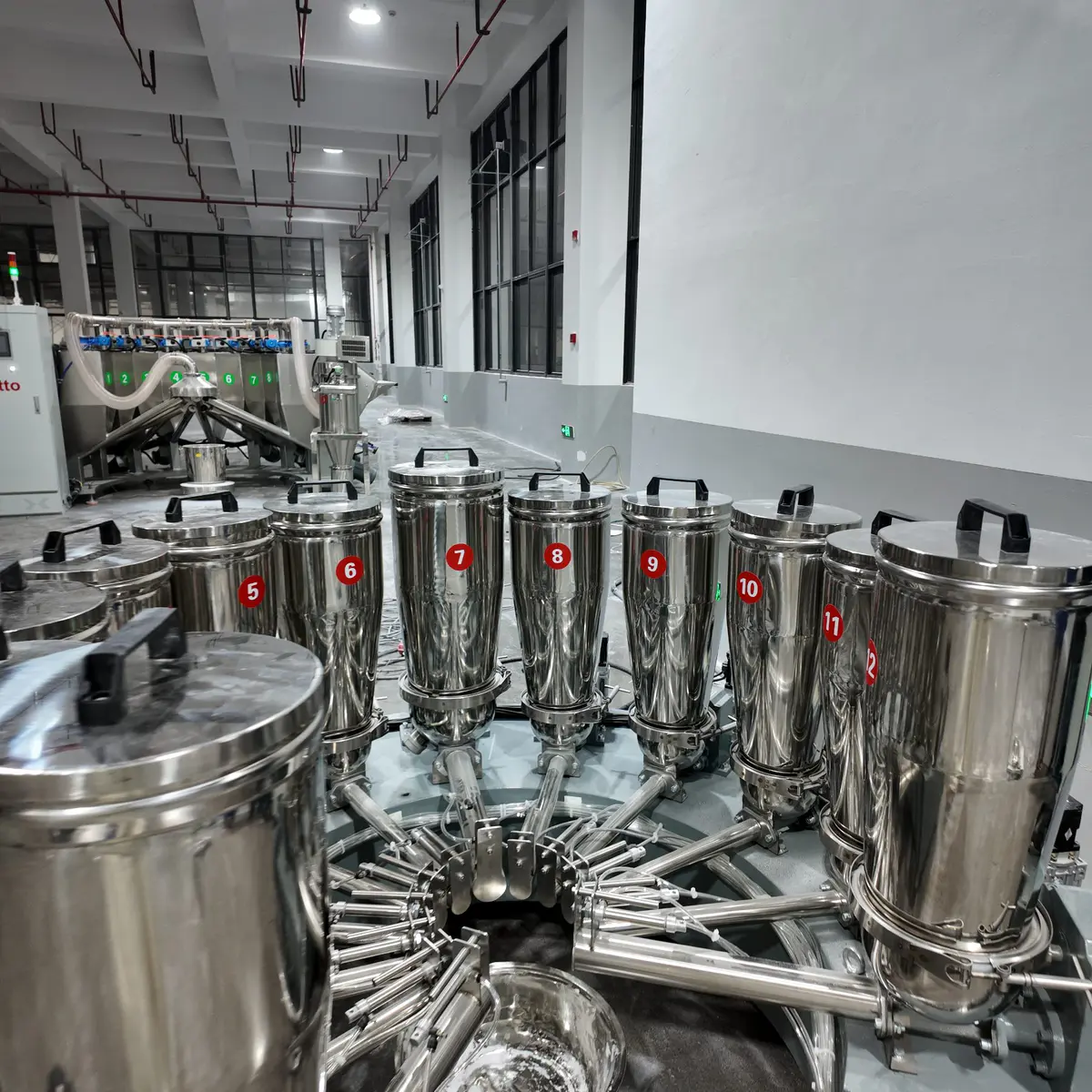
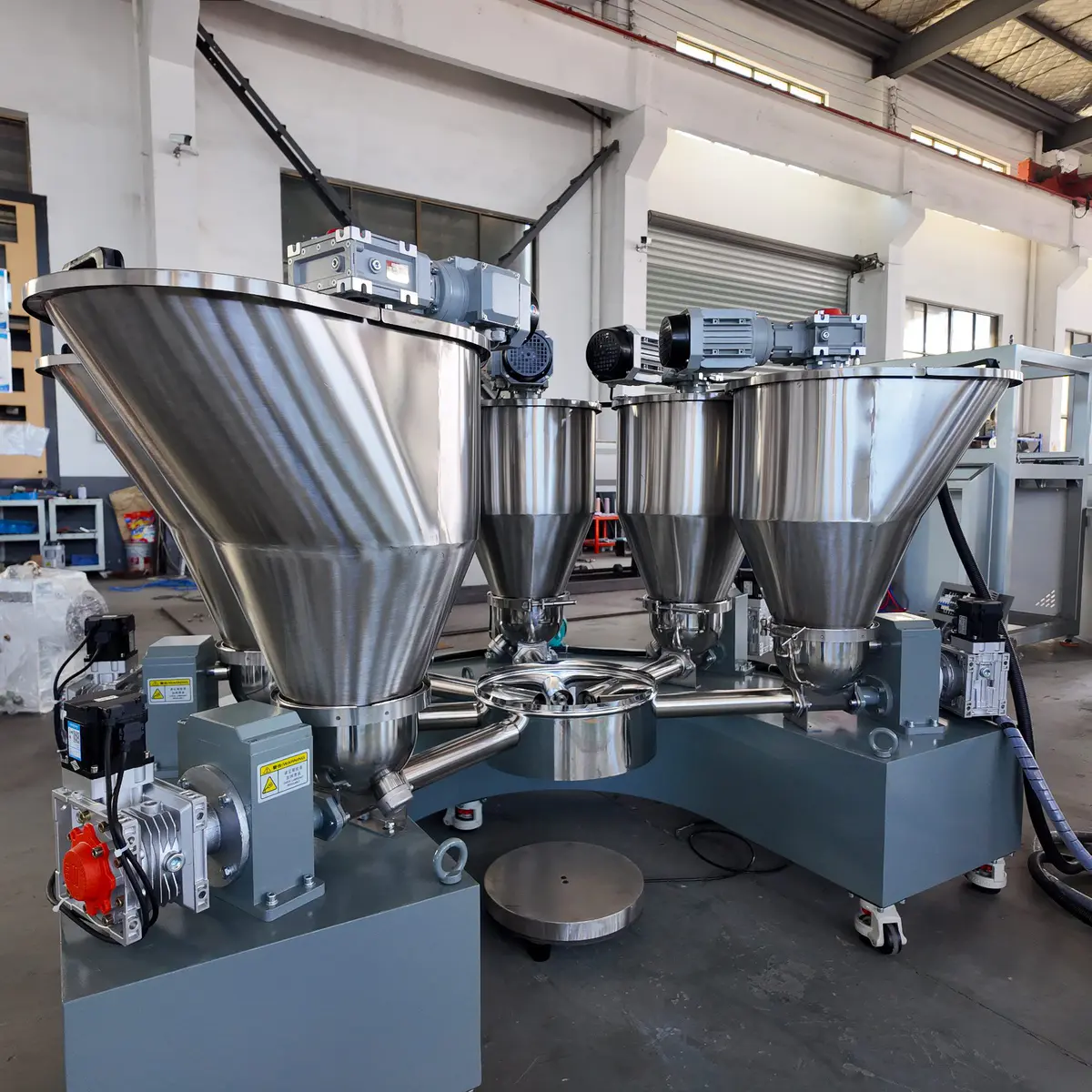
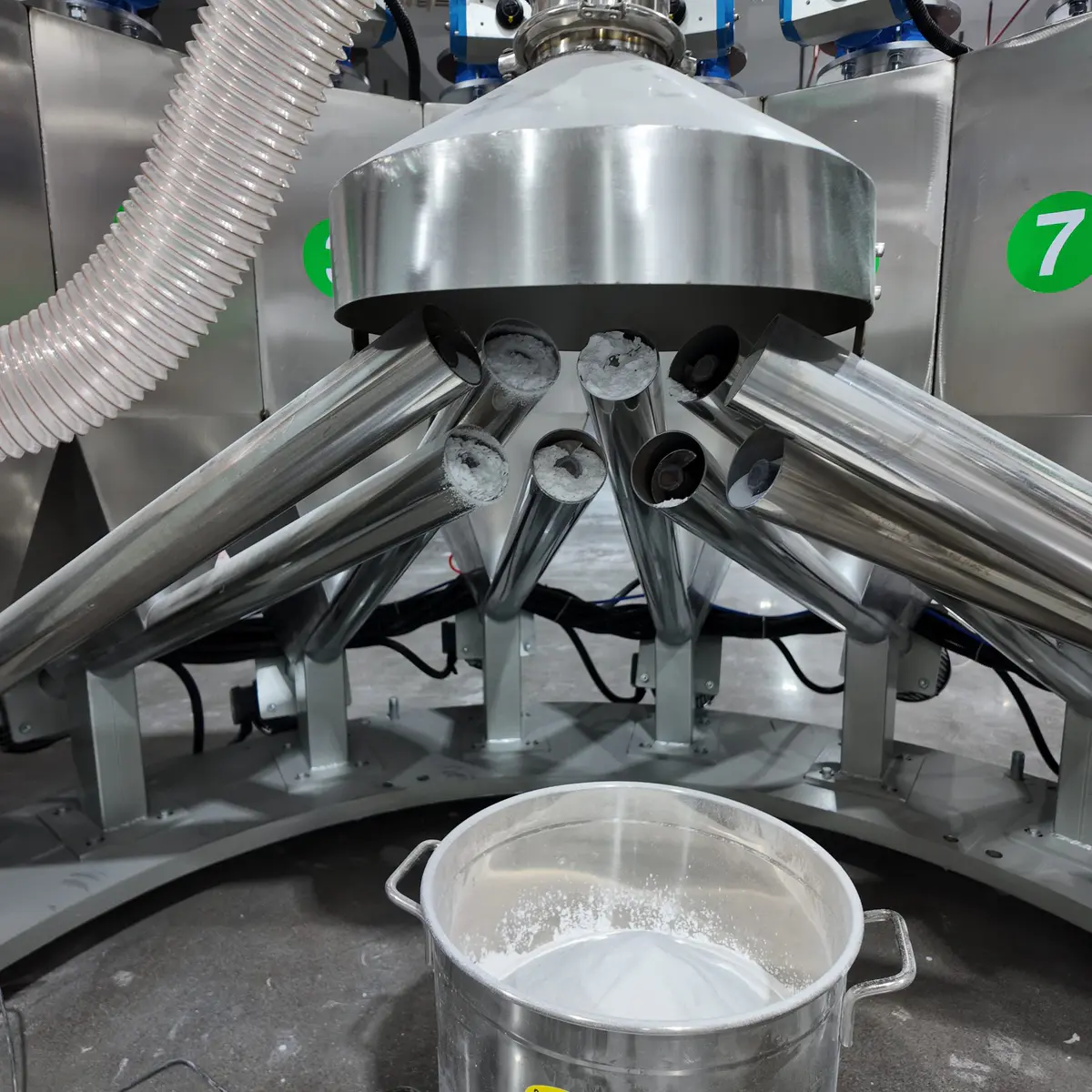
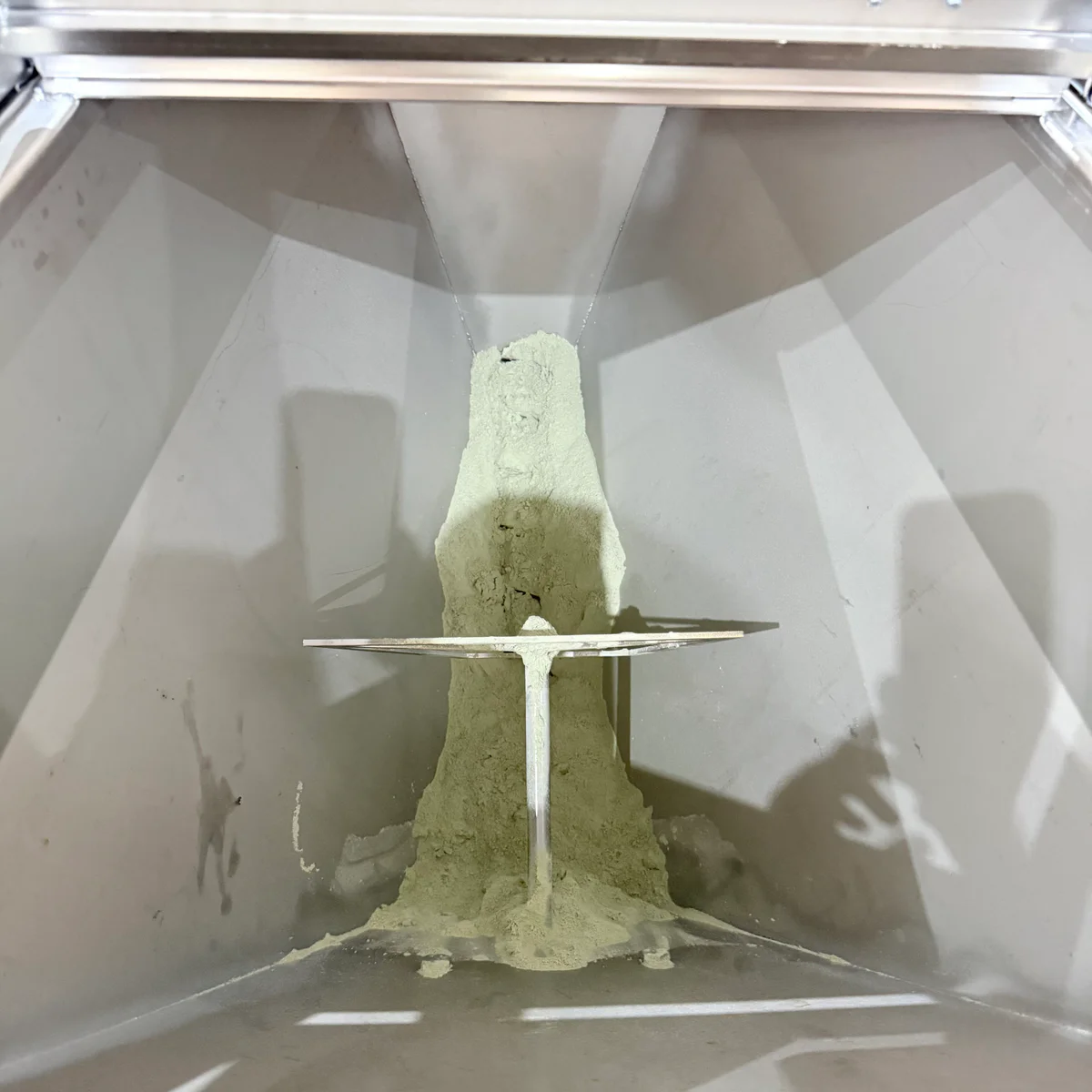
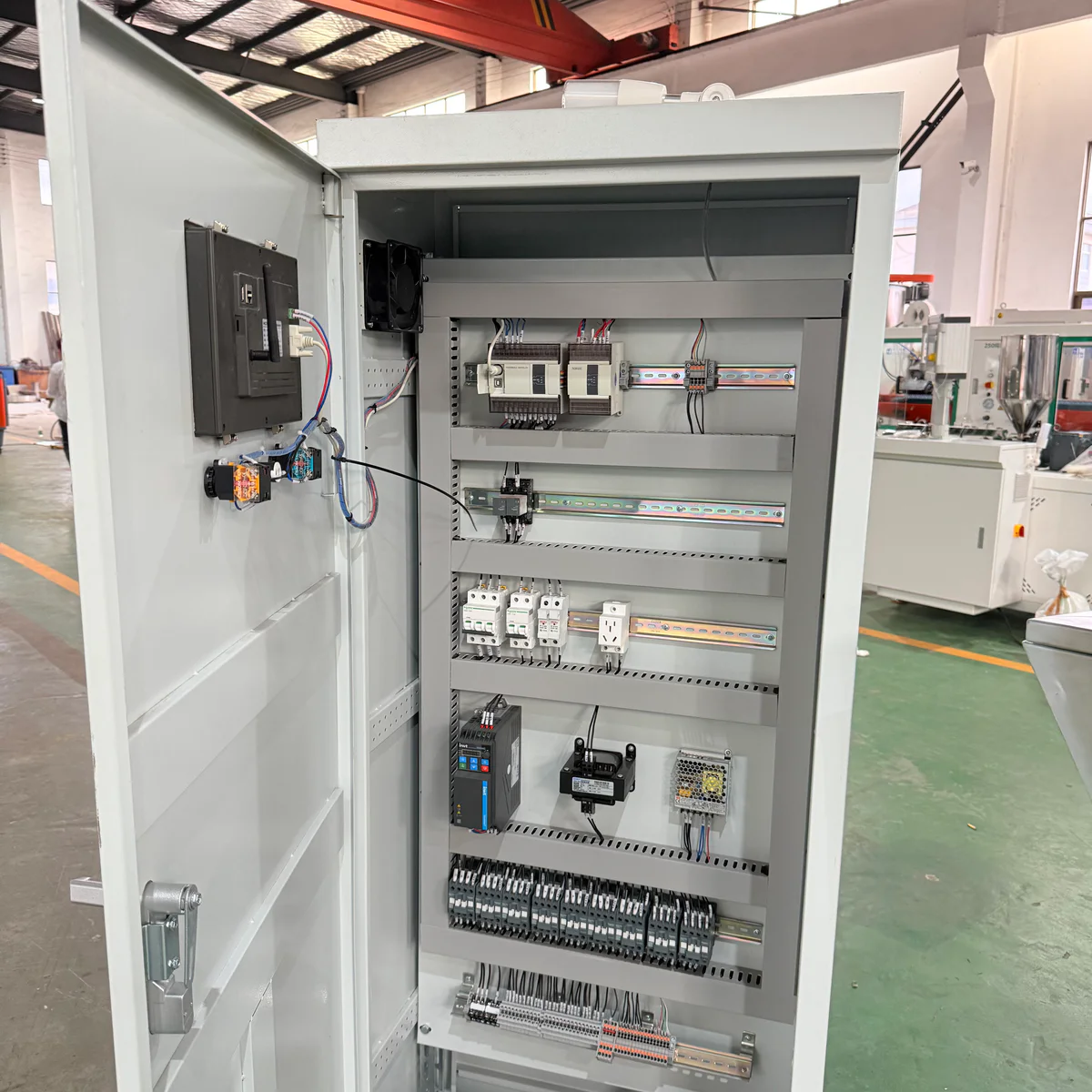
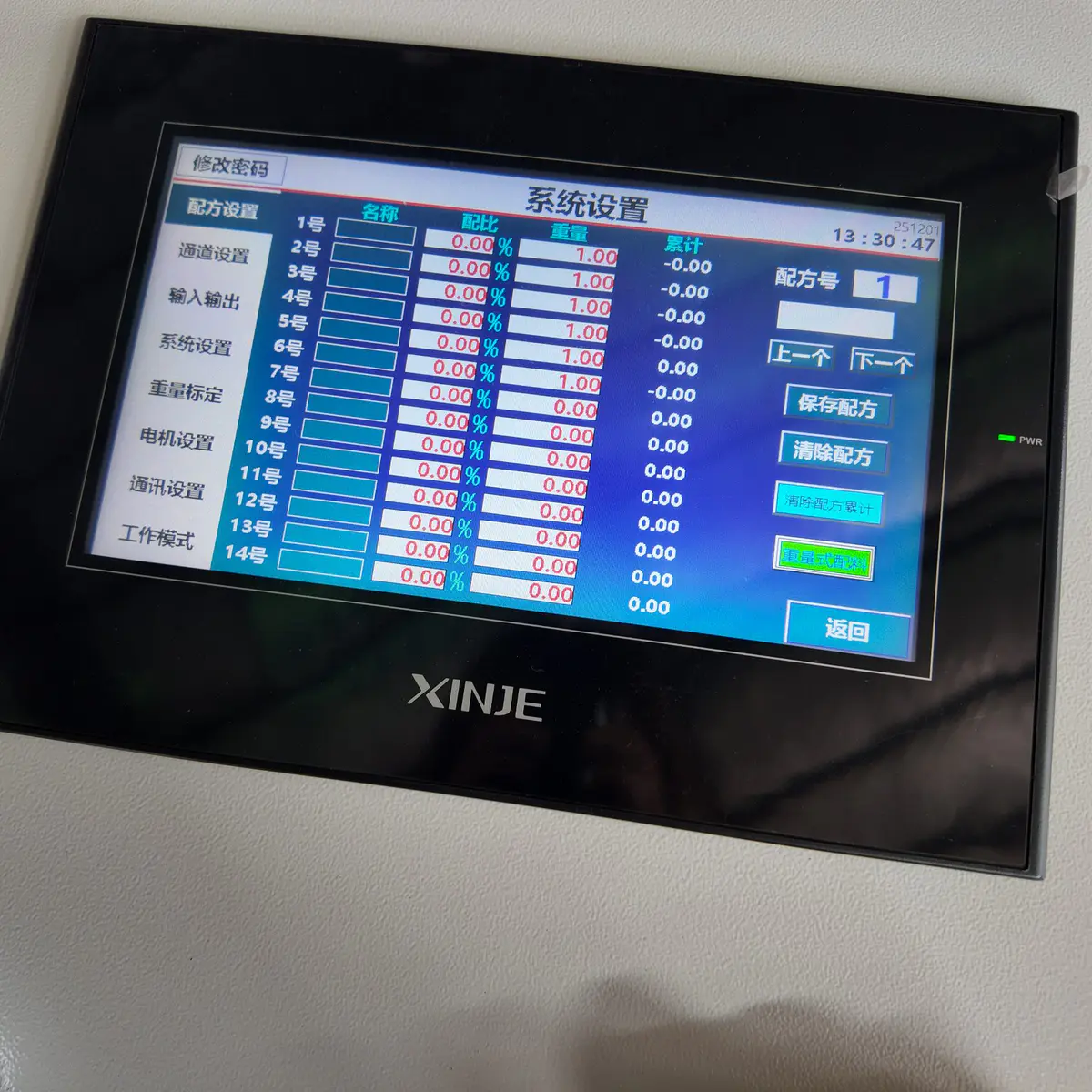
Control cabinet wiring, PLC configuration, and HMI recipe screens show how weighing sequence, recipe storage, alarms, and operation settings are managed.
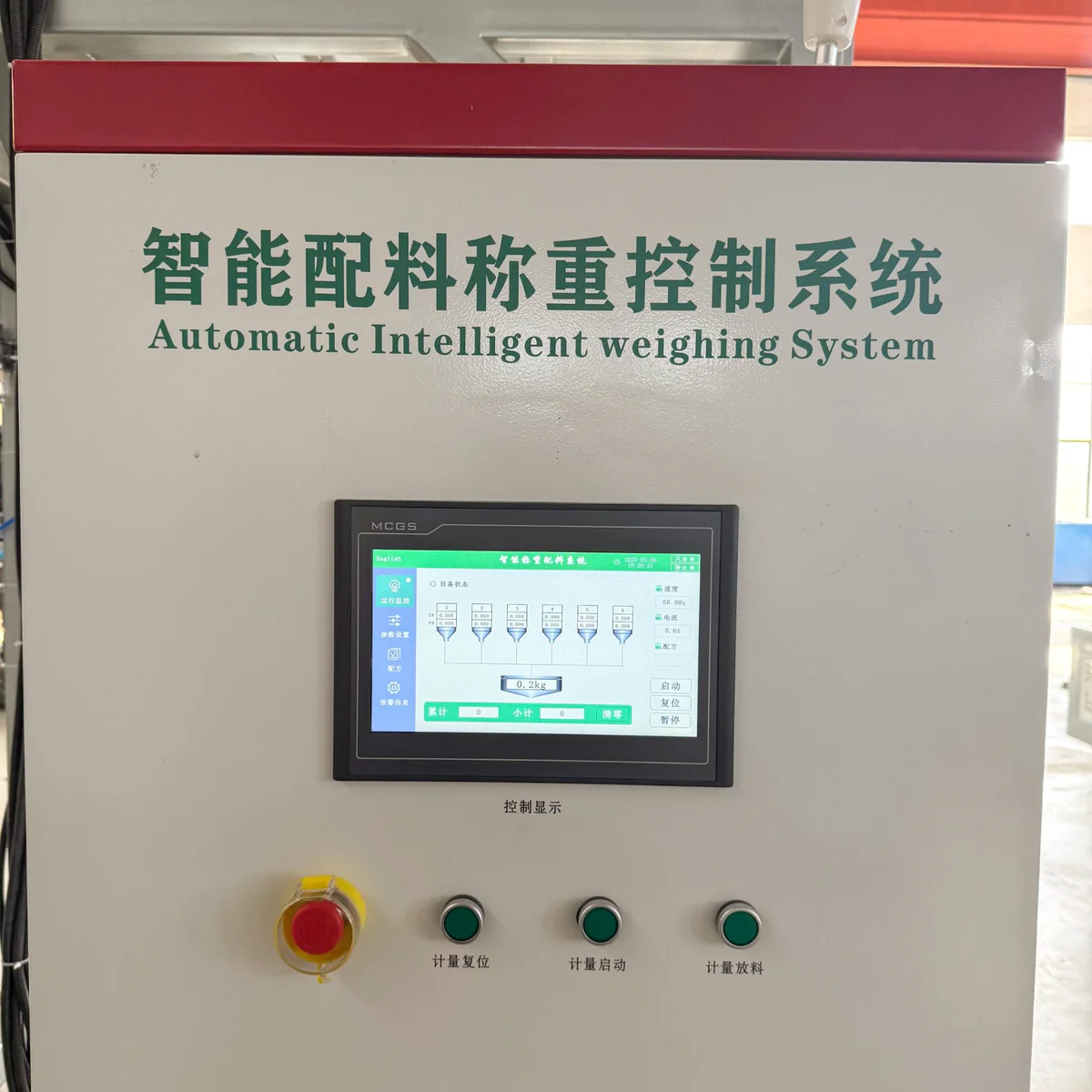
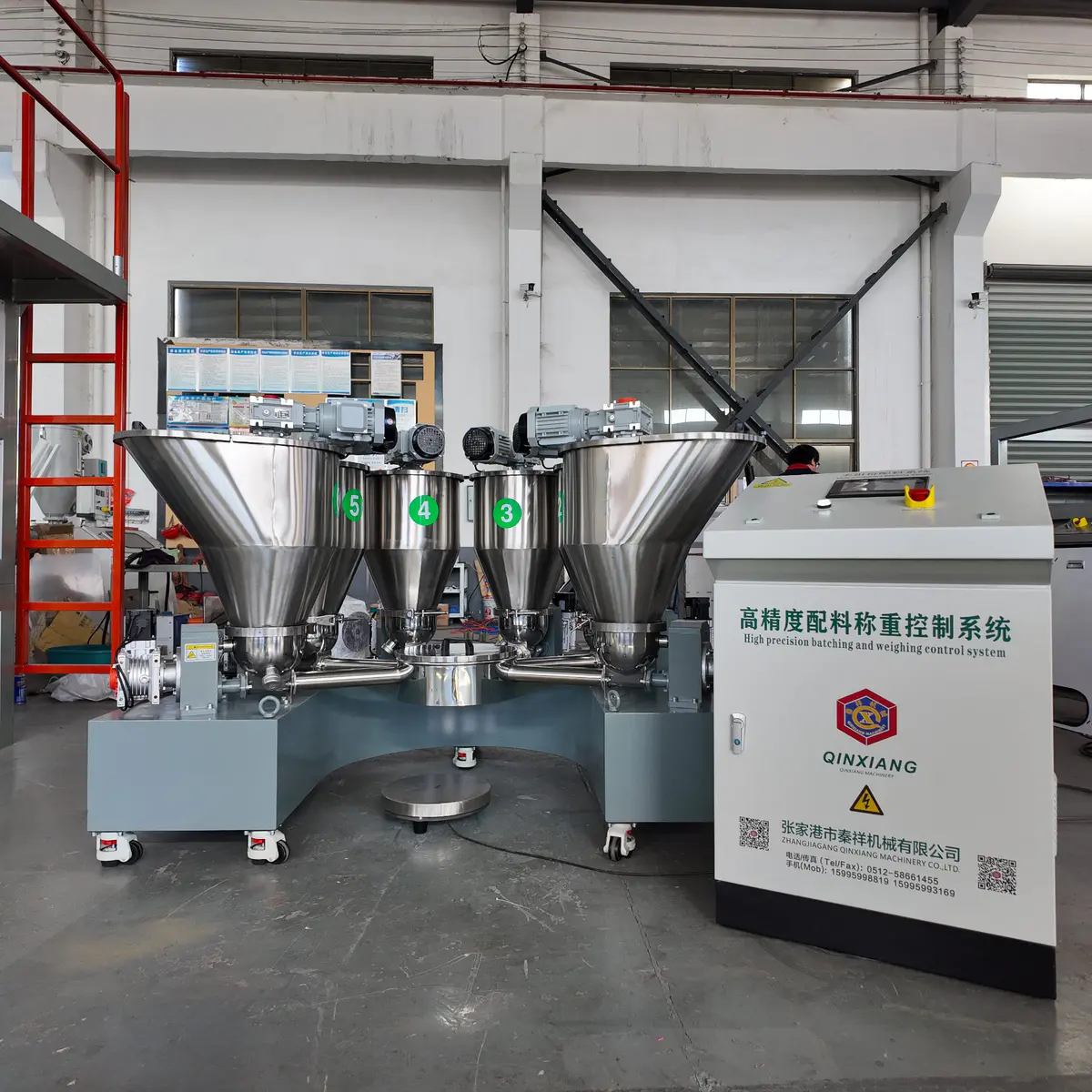
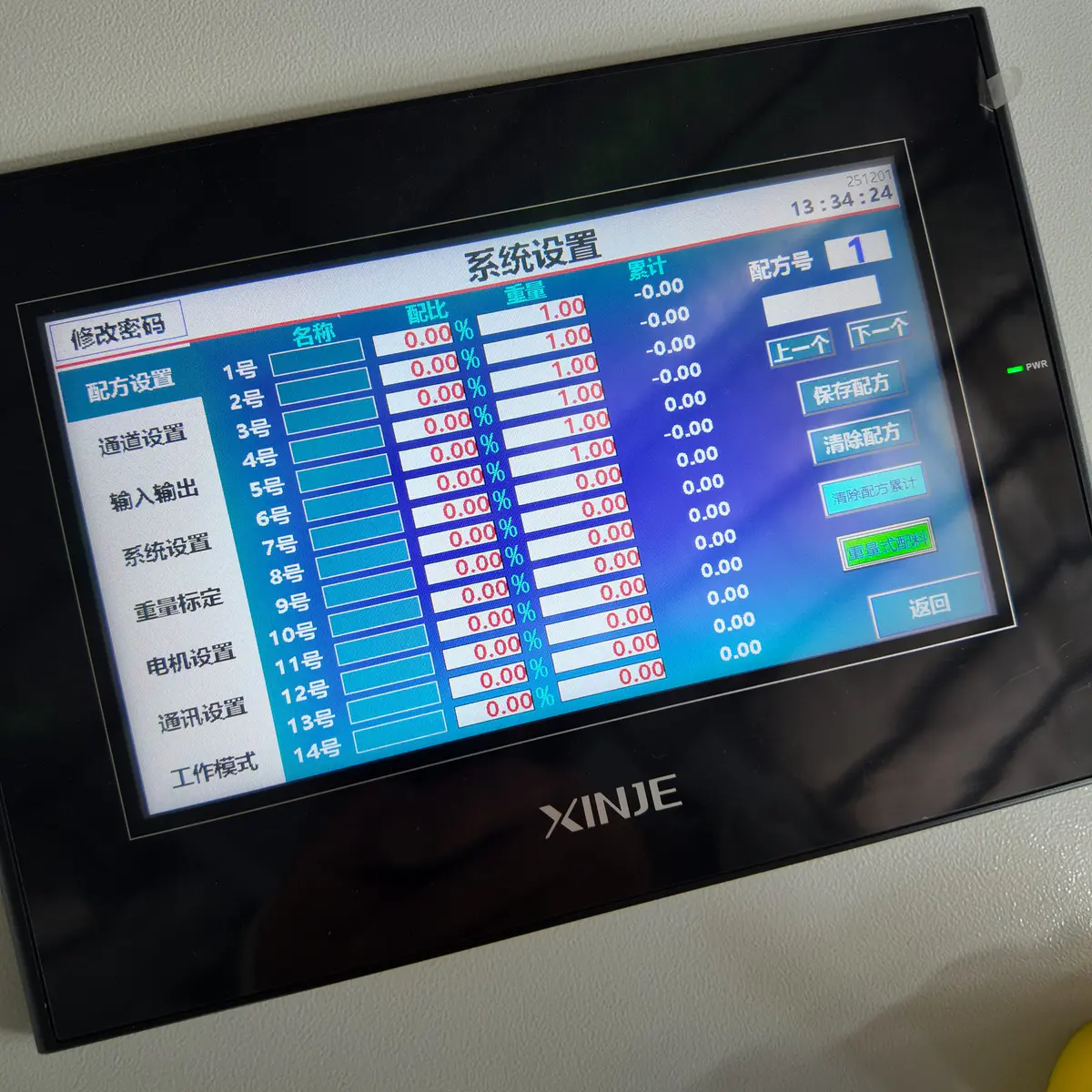
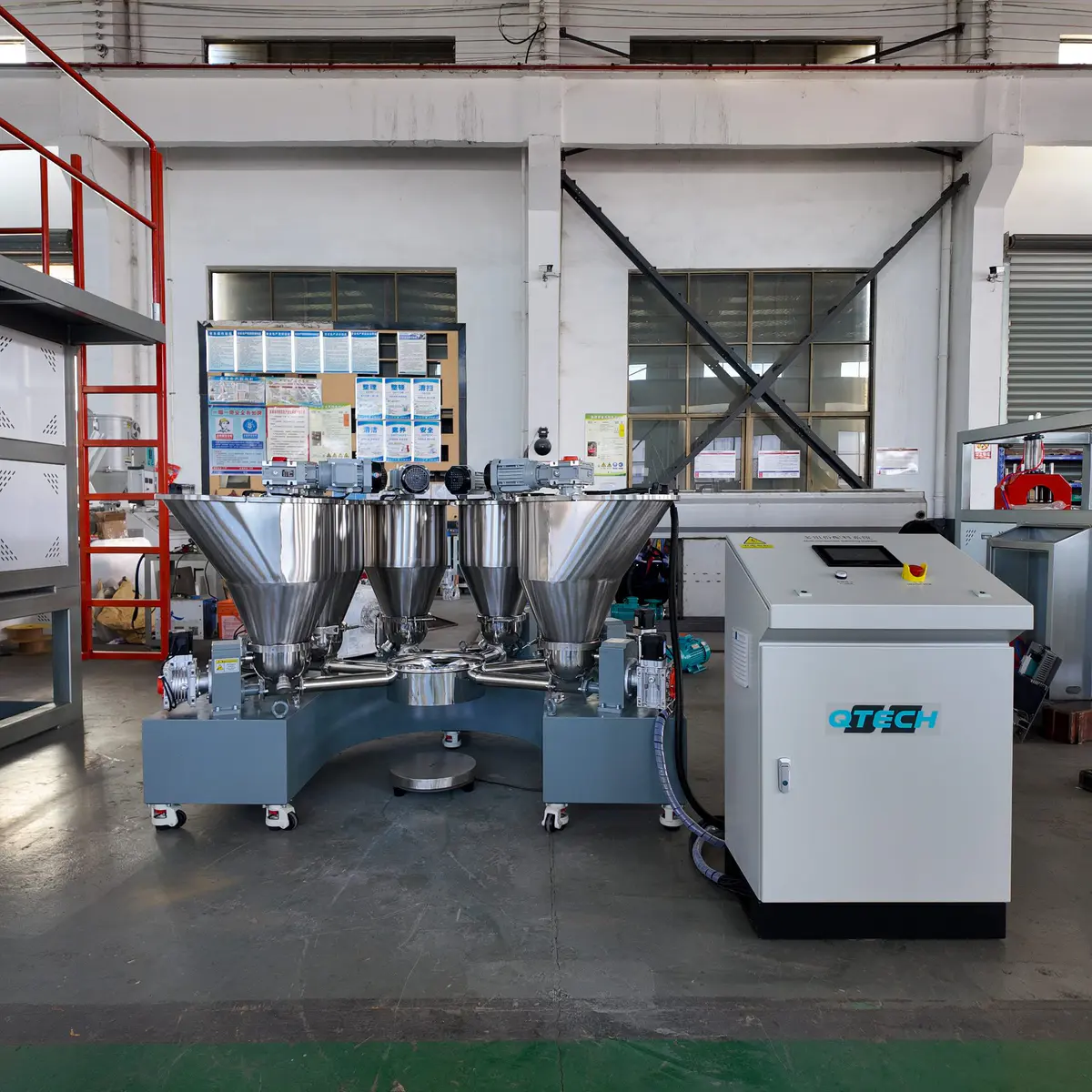
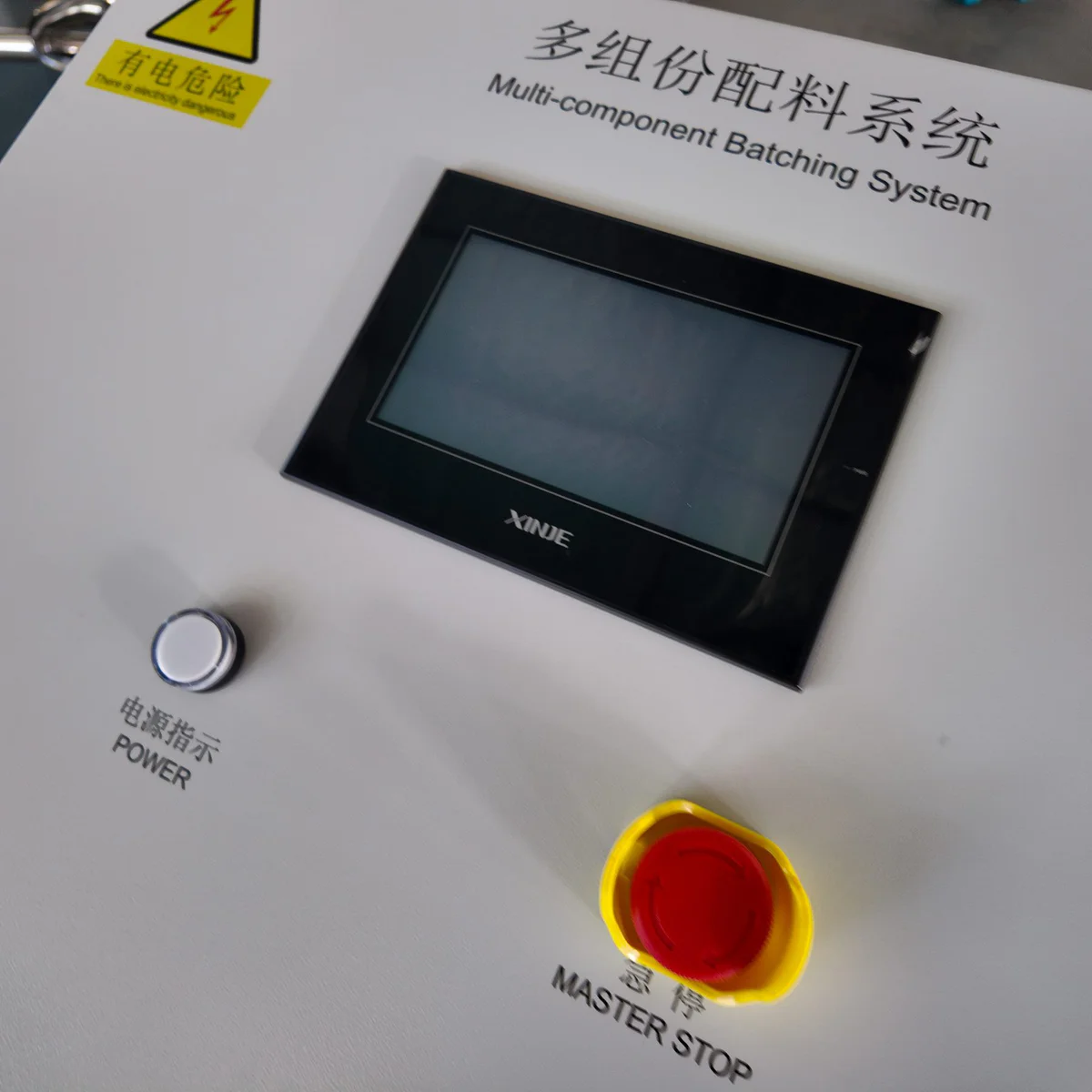
Factory testing can include load cell calibration, feeding test, discharge test, recipe sequence check, alarm check, and HMI operation review.
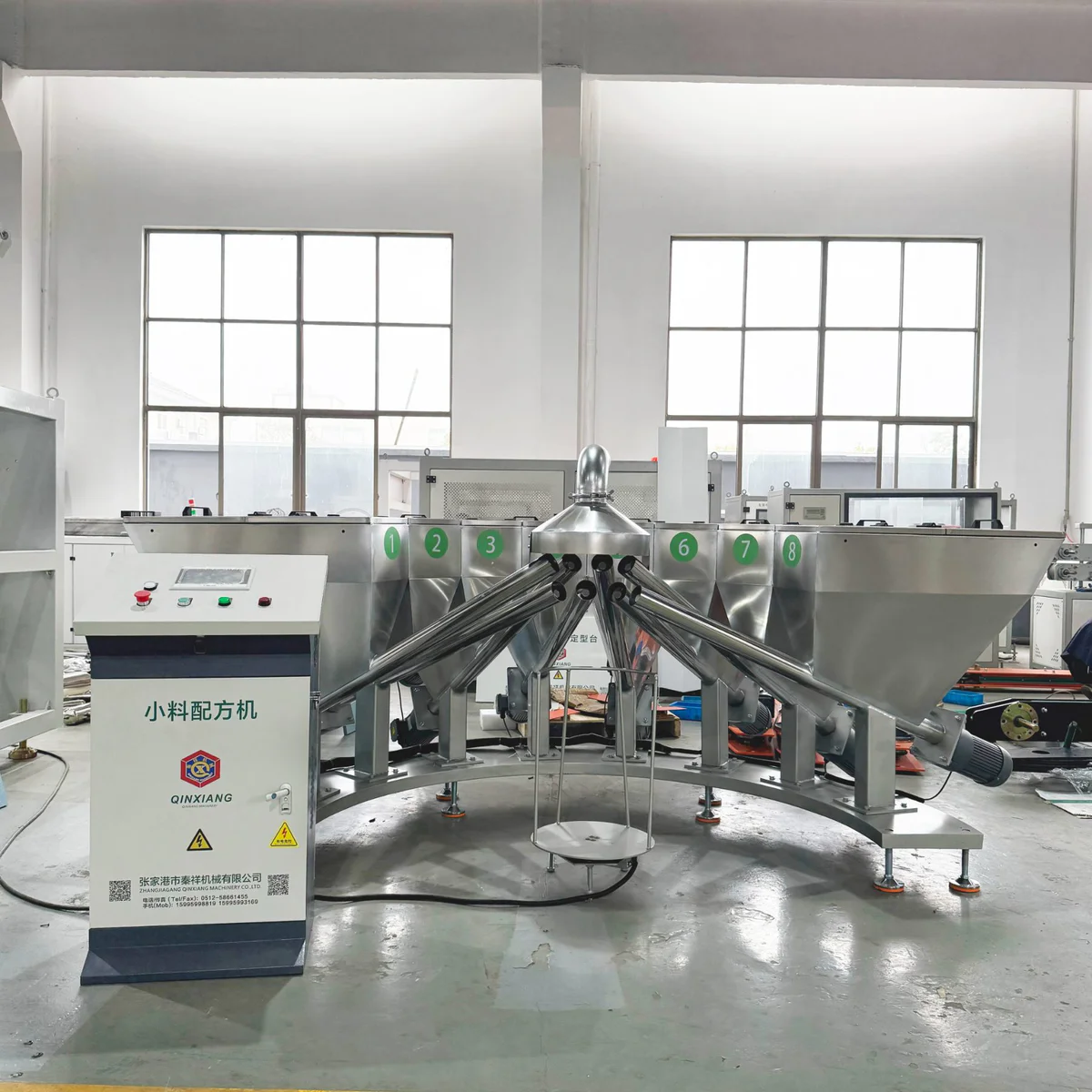
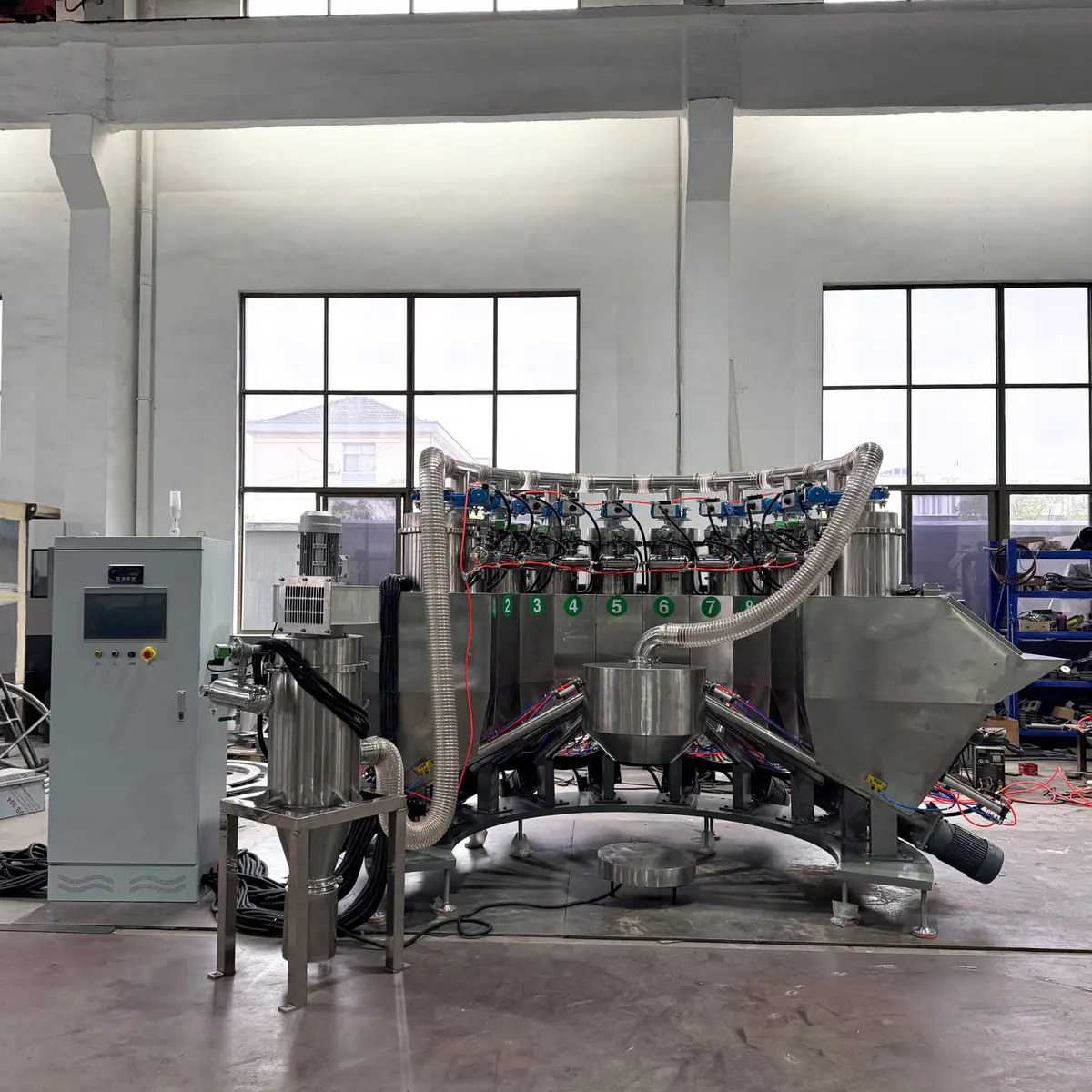
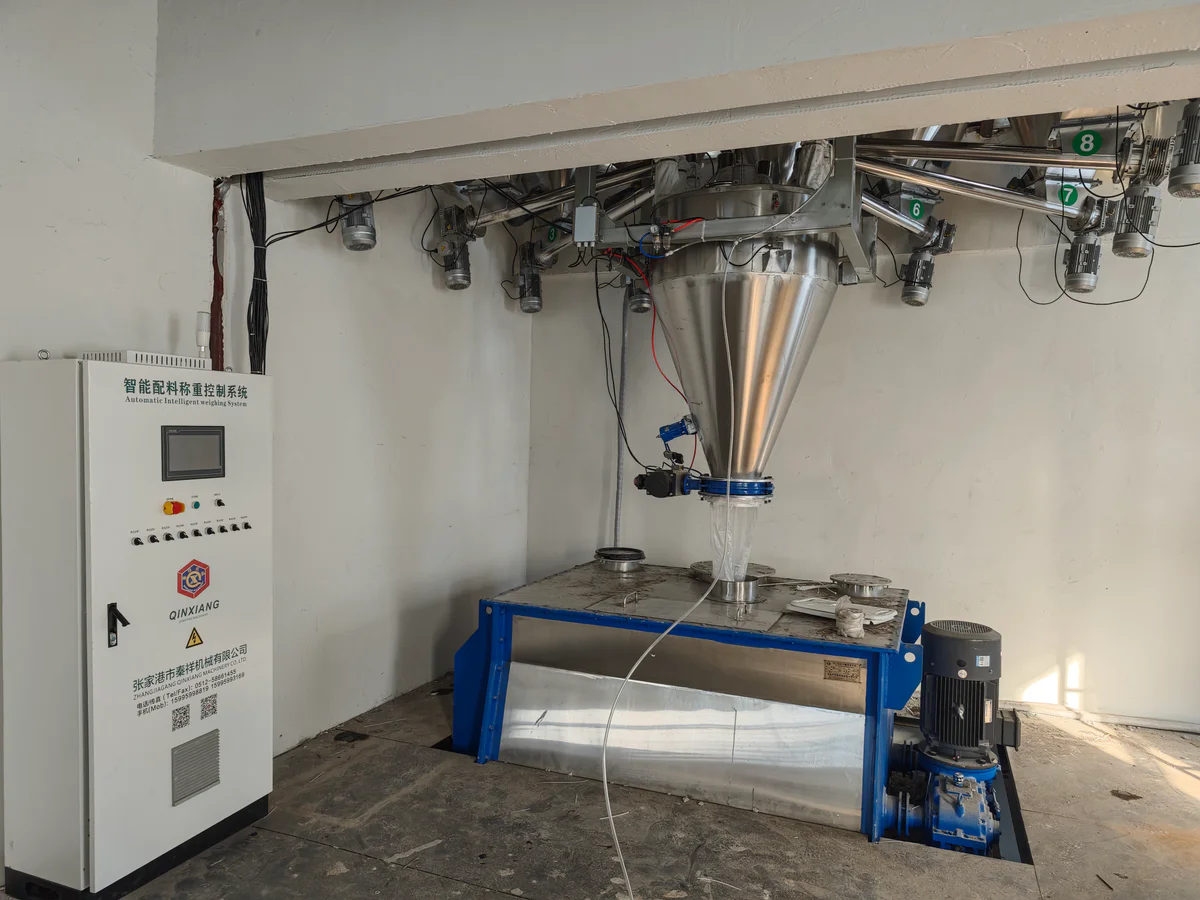
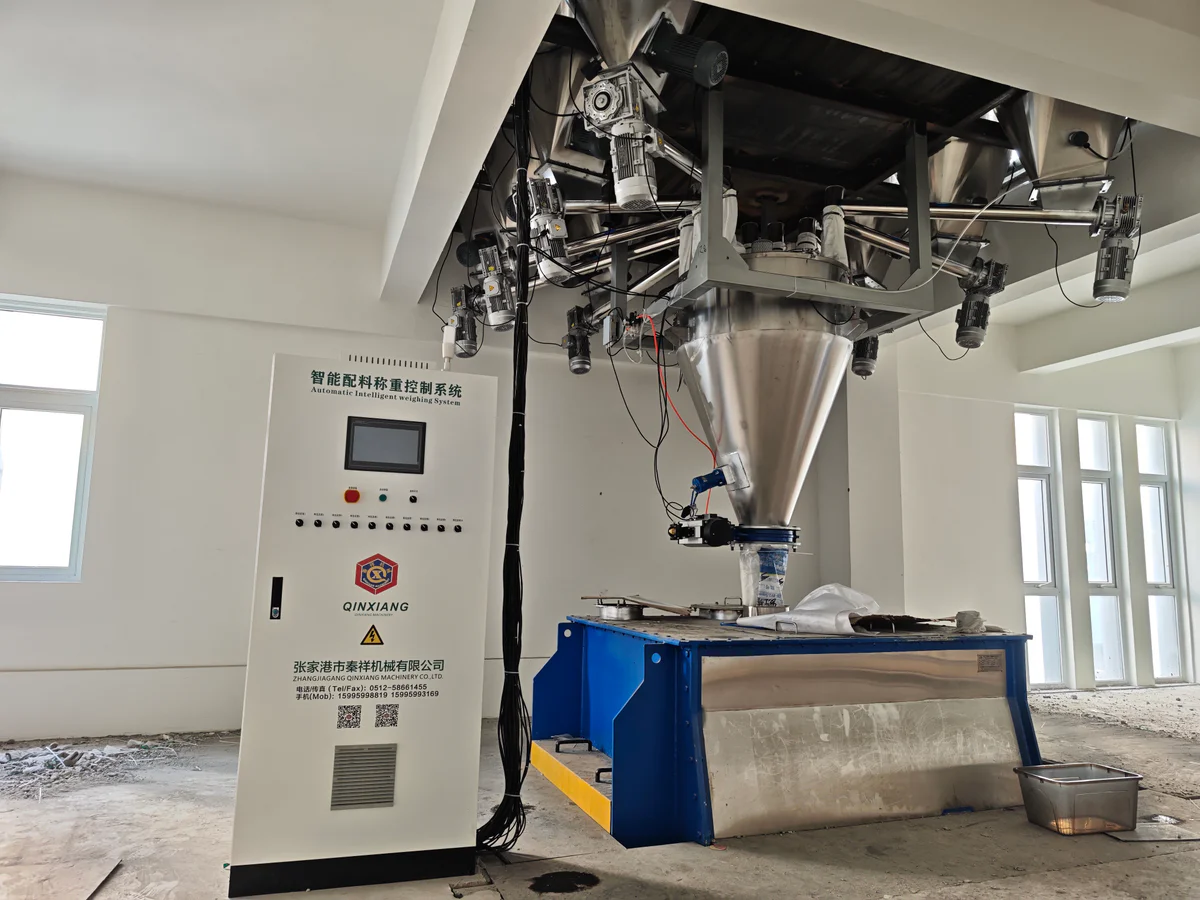
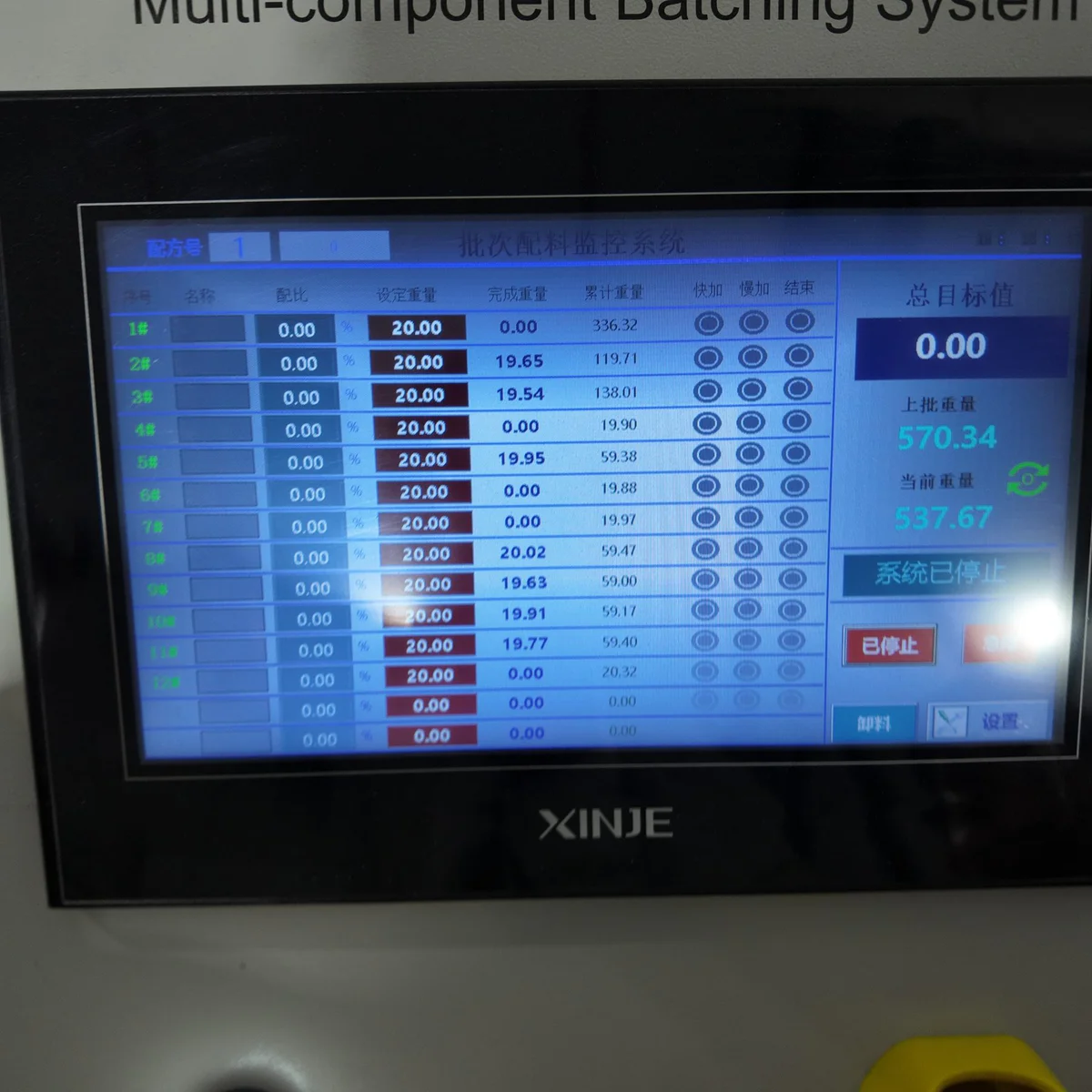
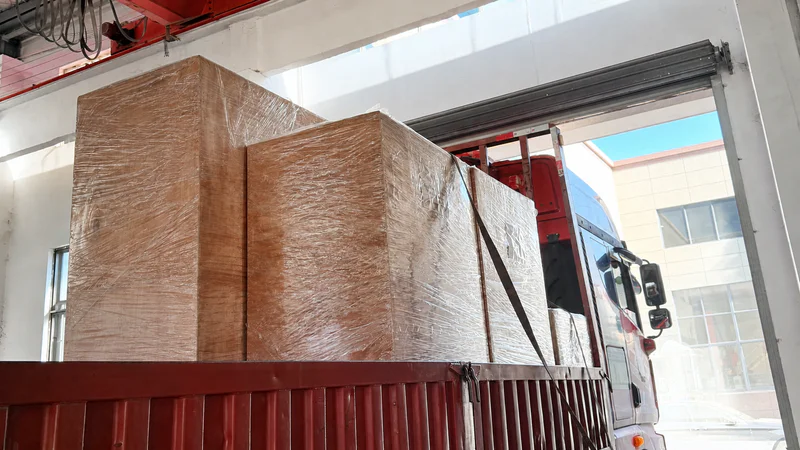
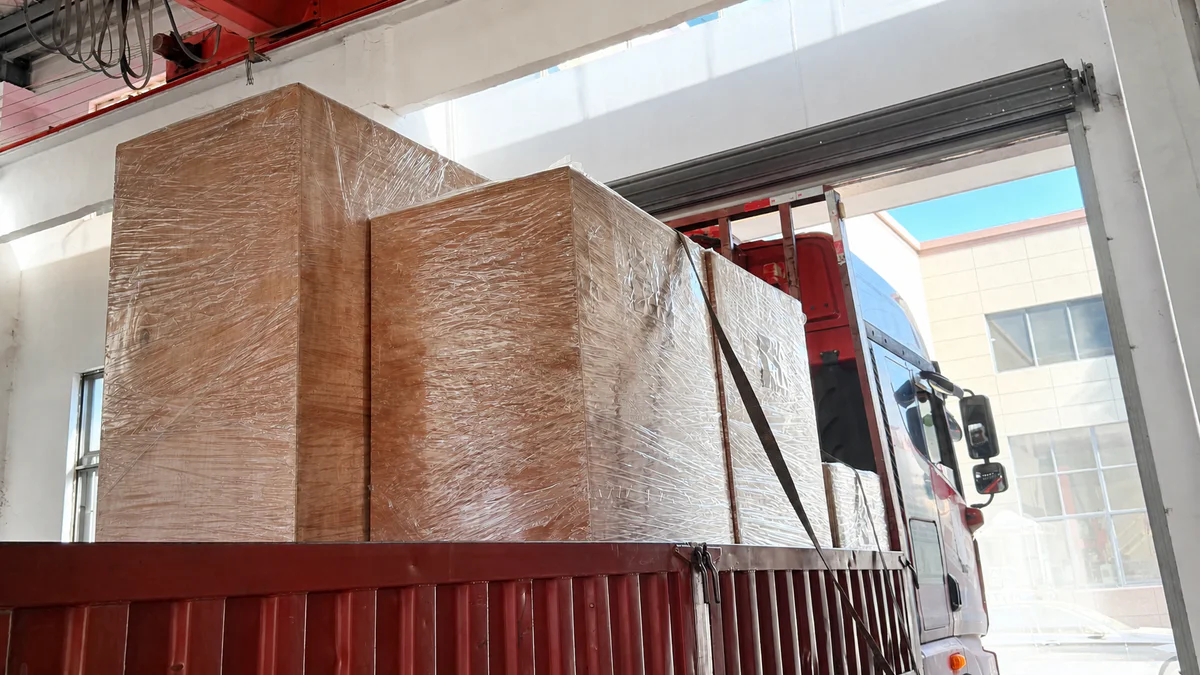
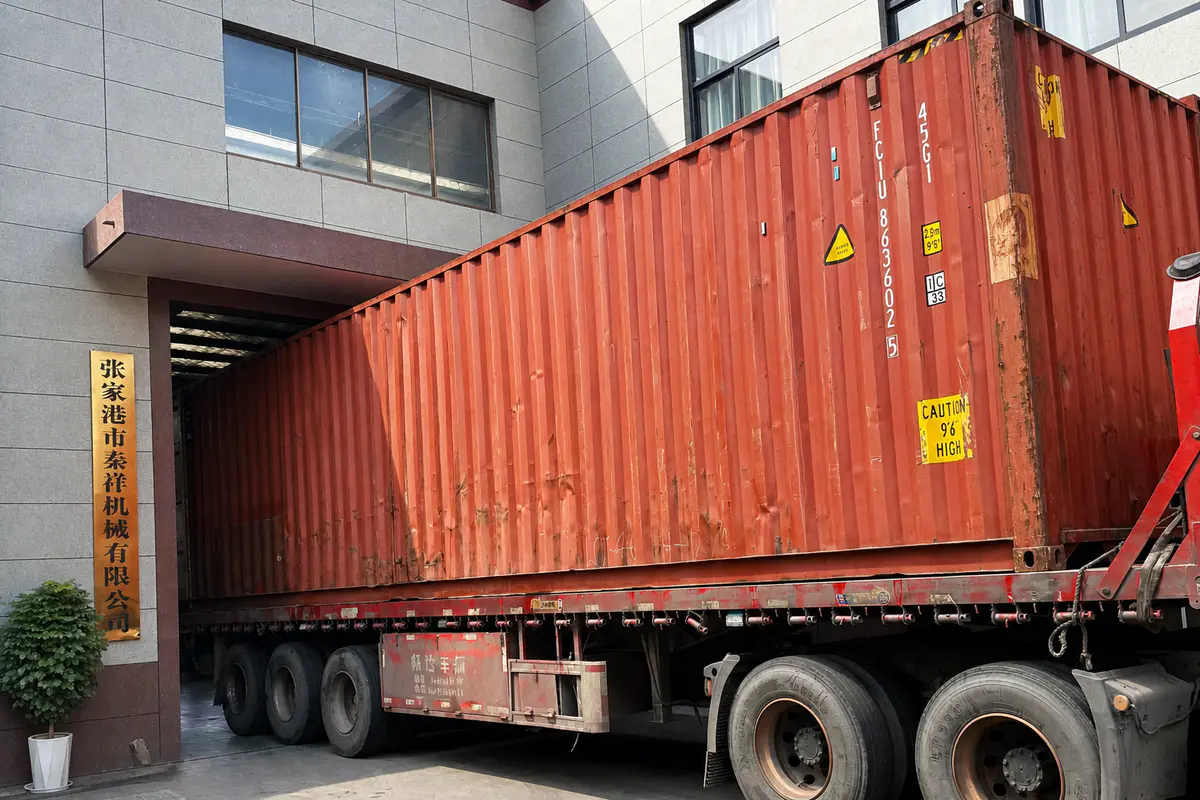
Packing and shipment photos help confirm export preparation, equipment protection, and delivery readiness before the system leaves the factory.
Want To See A System Like Yours Before You Commit?
Tell us your material, recipe, and process type, and we can share layouts, hopper and feeder detail, control screens, and testing records from projects close to yours. Every system is configured to your recipe and factory layout, then wired to your local voltage before shipment.
What To Send For A System Quotation
To recommend the right weighing and batching system, share the details below. The more accurate your information, the closer the configuration lands to what your line actually needs.
Your Quotation Brief
Eight points cover almost everything we need. Fill in what you know and we work out the rest before quotation.
01Application
Extrusion, compounding, PVC mixing, injection molding, blow molding, or recycling.
02Materials
Resin, masterbatch, regrind, PVC powder, CaCO3, filler, stabilizer, lubricant, pigment, or additives.
03Material Form
Pellets, powder, flakes, regrind, granules, or mixed materials.
04Recipe Ratio
Number of components and the dosing percentage for each material.
05Production Capacity
Batch size, or continuous throughput in kg/h.
06Accuracy Requirement
Required weighing accuracy for main materials and low ratio additives.
07Existing Equipment
Mixer, extruder, silo, vacuum loader, feeding point height, and available layout space.
08Special Conditions
Powder bridging, dust, static, cleaning, contamination, or local safety requirements.
Weighing And Batching System FAQs
The questions buyers ask most before they send a recipe. If yours is not here, message Maggie and you get a straight answer.
What is a material weighing and batching system?
It weighs your different raw materials to a set recipe before mixing, extrusion, compounding, molding, or feeding. Configure it for resin, masterbatch, regrind, PVC powder, filler, and additives, and it holds your material ratio, feeding sequence, and batch consistency.
How do I know which system fits my process?
It comes down to your material form, component count, recipe ratio, batch size or kg/h, accuracy target, and existing layout. A simple resin and masterbatch recipe may only need gravimetric blending, while PVC powder batching or continuous compounding needs a different structure.
Gravimetric or volumetric dosing?
Gravimetric controls material by weight, so it suits you when recipe accuracy, color stability, additive cost, or regrind ratio matters. Volumetric controls by screw speed or volume, which works for simpler jobs with stable materials and looser accuracy needs.
When should I choose loss-in-weight feeding?
When materials need feeding continuously at a stable kg/h. It is the usual pick for extrusion, compounding, masterbatch production, cable compound, and additive feeding, where each component has to follow the recipe through long runs.
Can it handle PVC powder and small additives?
Yes, but PVC powder and small additives are not ordinary pellets. PVC resin, CaCO3, stabilizer, lubricant, pigment, and foaming agent each need attention to weighing range, feeding sequence, powder flow, mixer connection, dust control, and batch records.
Can one system control masterbatch, additives, and regrind together?
Yes. A multi component gravimetric blender or batching system handles resin, masterbatch, additives, and regrind together. The build depends on component quantity, dosing percentage, flow behavior, target accuracy, and whether it feeds an extruder, mixer, injection, or blow molding machine.
How is batching accuracy determined?
Review it by material type, target weight, dosing ratio, feeder type, weighing range, and production condition. Large resin batches, low ratio additives, powder, and regrind should not share one accuracy expectation.
Can it connect to my existing mixer, extruder, or silo?
Yes, it gets planned around your equipment. Before layout design, confirm mixer inlet height, extruder throat position, silo or vacuum loader connection, discharge point, platform space, conveying route, and control signal requirements.
What should be checked for powder and dust control?
For PVC powder, CaCO3, wood powder, pigment, stabilizer, or fine additives, review powder flow and dust points before configuration. Hopper design, screw feeding, anti bridging structure, enclosed transfer, filter units, cleaning access, and local safety rules can all affect the final design.
Can it store recipes and production records?
Recipe storage, password levels, operator permissions, batch records, alarm history, and material usage data can all be included to project requirements. These help you control recipe changes, compare actual weighing data, and support production review when a quality problem shows up.
Start Your Batching System Project With Maggie
Whether you need a system matched to your recipe, an upgrade on an existing line, or just help picking a direction, send what you have. Maggie replies personally within 24 hours with real configuration details and a clear next step.

Maggie
Batching System Sales, QTech Machinery
Replies within 24 hoursEvery message here reaches me directly. Tell me about your recipe and material needs and I come back with a system configuration and a real quote, not a brochure.
Your materials, recipe ratio, throughput, or a line layout is enough to start. We supply weighing, batching, and material handling systems to factories and importers across 60+ countries.
Maggie
Sales, Zhangjiagang Qinxiang Machinery Co., Ltd.
Tell Us About Your Batching System Project
Fields marked are required.