
China Plastic Extrusion Machine Factory
Configure the right plastic extruder for PVC, PE, PP, ABS, WPC, recycled materials and custom extrusion applications.
From single screw extruders and twin screw extruders to co-extruders, precision tube extruders and pilot extrusion machines, we help you match screw type, output, melt stability, feeding method and downstream equipment before your production starts.
- Screw design matched to your material
- Single and twin screw options
- Machine replacement and line integration
- Factory testing before shipment
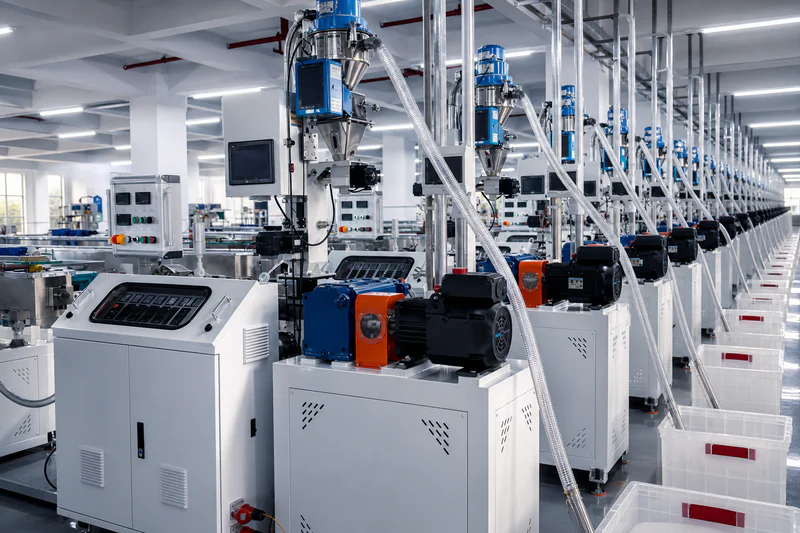
Single & Twin Screw
PVC, PE, PP, ABS, WPC
Find The Right Extruder Faster
Jump straight to whatever answers your question, from picking a single machine or a full line, to matching the screw to your material, to sending us your specs for a quote.
Machine Or Complete Line
One machine or a full line
Machines We Build
Extruder types we make
Choose Your Extruder
Match a machine to you
Single Vs Twin Screw
Which screw fits your job
Application Match
How your product shapes it
Problems To Avoid
Common sourcing mistakes
Technical Specifications
Screw size, output, power
Replacement And Upgrade
Swap or upgrade a machine
Factory Capability
What we build in house
Testing Before Shipment
Run tested before it ships
Project Process
Enquiry to installation
Machine Evidence
Machines built and running
Quotation Checklist
What to send for a quote
FAQ
MOQ, lead time, voltage
Final Consultation
Talk through your project
Plastic Extruder Or Complete Line?
Not every project needs a full extrusion line. Work out whether you only need the core extruder, or a complete production system from feeding to finished product.
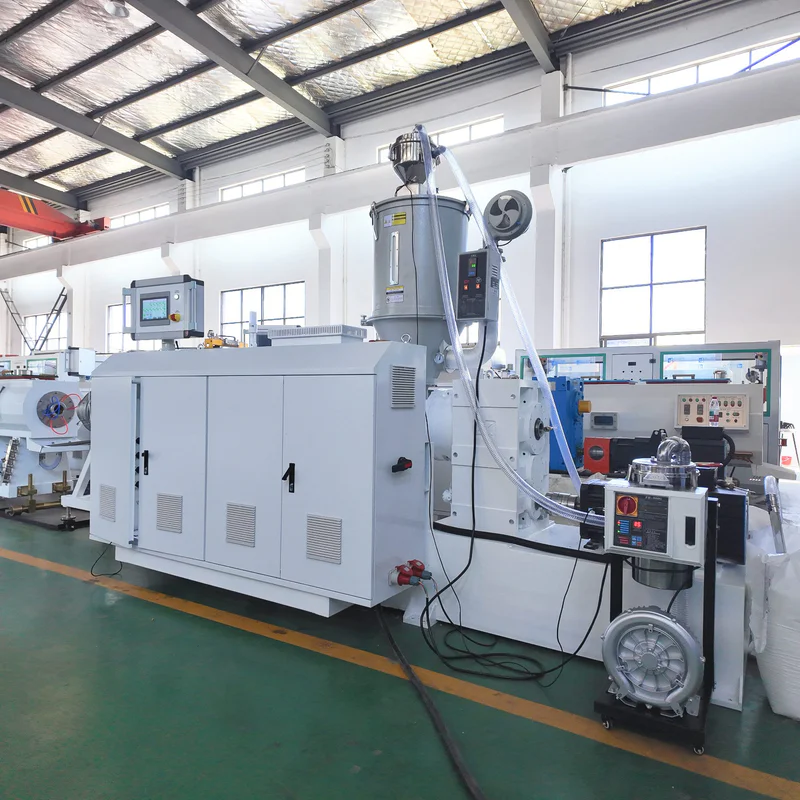 Machine Only
Choose A Plastic Extrusion Machine
Pick this if you already have your downstream equipment, die tooling, cooling, calibration, haul-off, cutting, winding or pelletizing systems, and just need a matched extruder for replacement, upgrade or line integration.
Best For
- Existing line upgrade
- Old extruder replacement
- Co-extruder addition
- Output improvement
- Pilot or lab testing
- OEM equipment integration
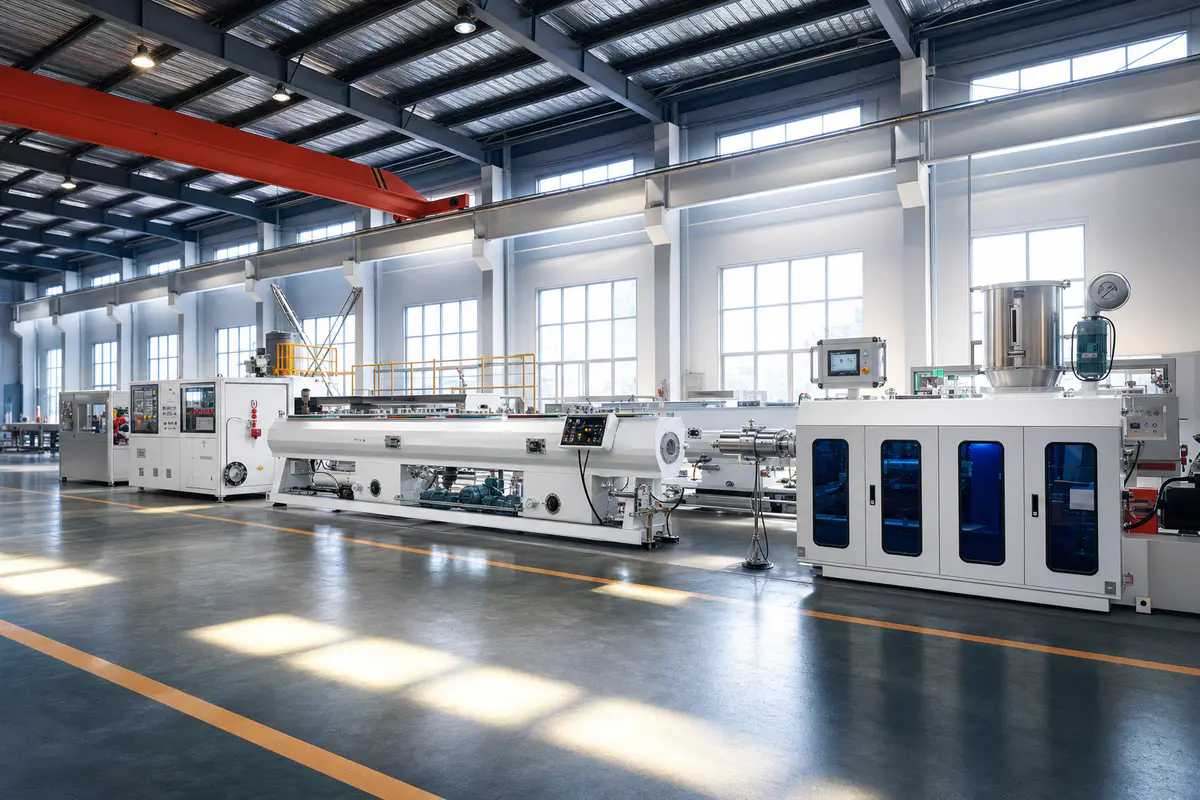 Full System
Choose A Complete Extrusion Line
Pick this if you need a complete system from raw material feeding to final product forming, including the extruder, die, cooling, calibration, haul-off, cutting, winding, pelletizing and any other downstream equipment.
Best For
- New pipe production
- Profile manufacturing
- Sheet and board production
- Precision tube projects
- Recycling and pelletizing
- New factory setup
Not sure which way to go? Send your material, product size and output target, and we will tell you what your project actually needs.
Not sure which option fits your project? Send your material, final product, output target and current equipment condition, and we can help you choose the right direction before we quote.
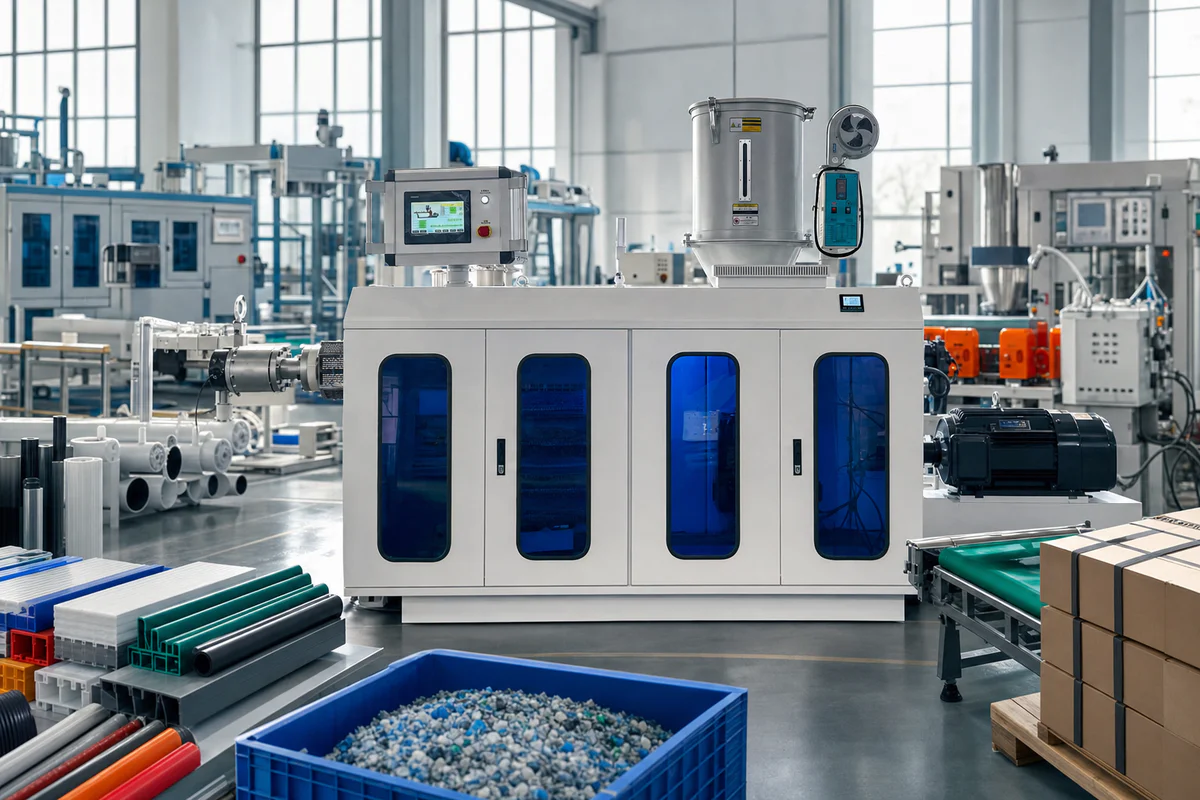
Plastic Extrusion Machines We Build
Different materials and production goals need different extruder configurations. Pick your machine type by material form, screw structure, output target, melt stability, feeding method and downstream connection.
 Single Screw
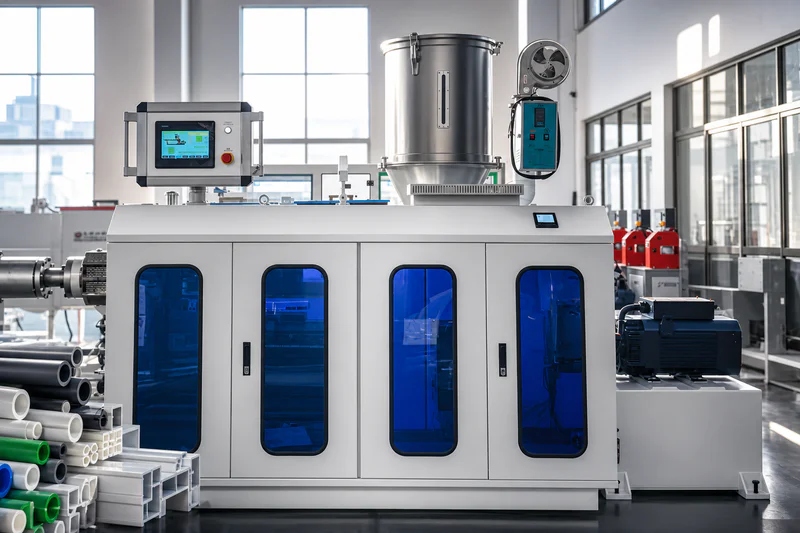
Single Screw Plastic Extruder
Common for pellet-based thermoplastic extrusion like PE, PP and ABS. A good fit when you need stable melting, consistent output, easy operation and reliable connection to pipe, sheet, tube or pelletizing downstream.
 Conical Twin
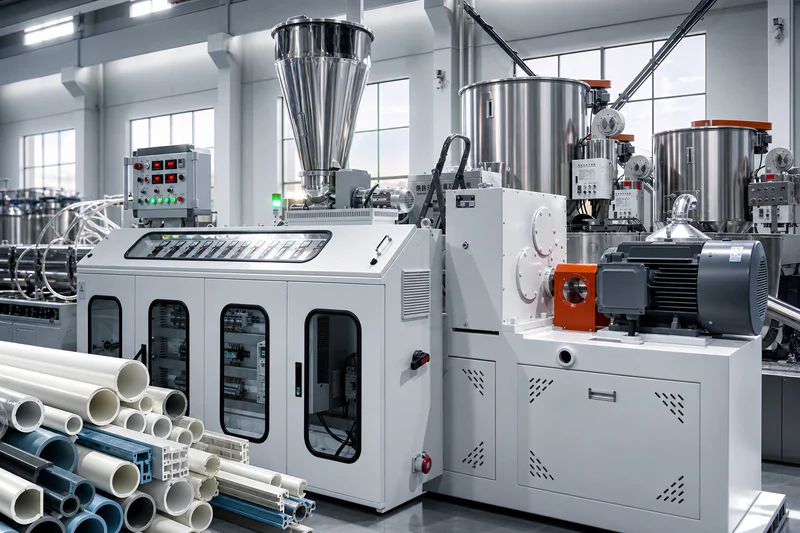
Conical Twin Screw Extruder
Often configured for PVC powder, PVC pipe, PVC profile, PVC foam board and WPC/PVC. Suits you when temperature control, formulation compatibility, plasticizing stability and torque are the key requirements.
 Co-extruder
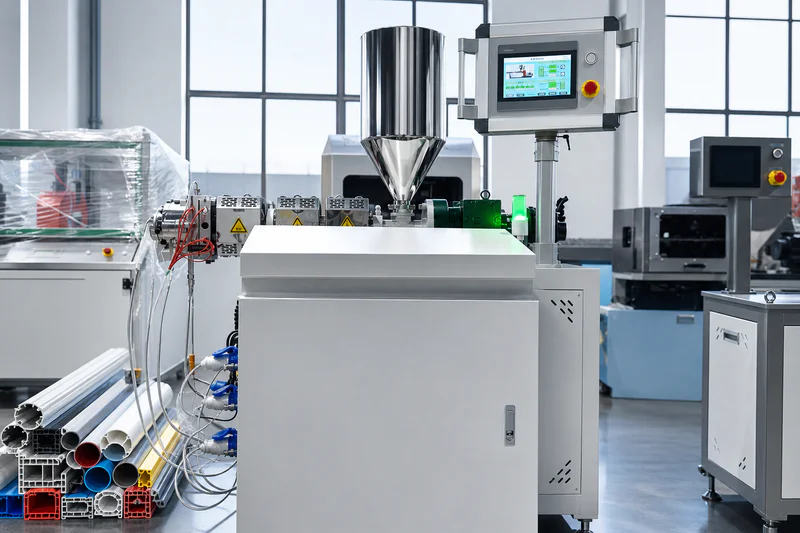
Plastic Co-extruder
Adds color stripes, surface layers, functional layers or multi-layer structures to pipe, profile, sheet and tube lines. Configuration depends on layer ratio, material compatibility, output, installation space and sync with the main extruder.
 Precision Tube
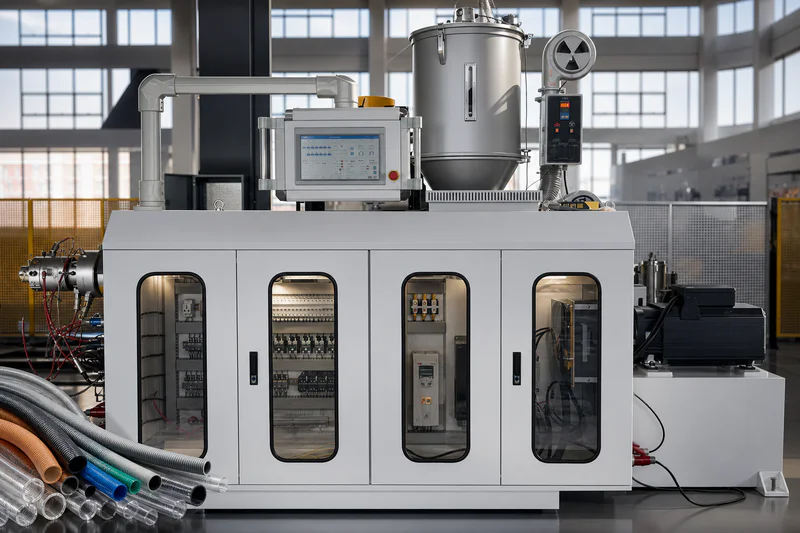
Precision Tube Extruder
Built for small-diameter tubing where melt stability, low pulsation, accurate temperature control and tight OD/ID tolerance matter more than peak output. Used for medical tubes, pneumatic tubes and instrument tubes.
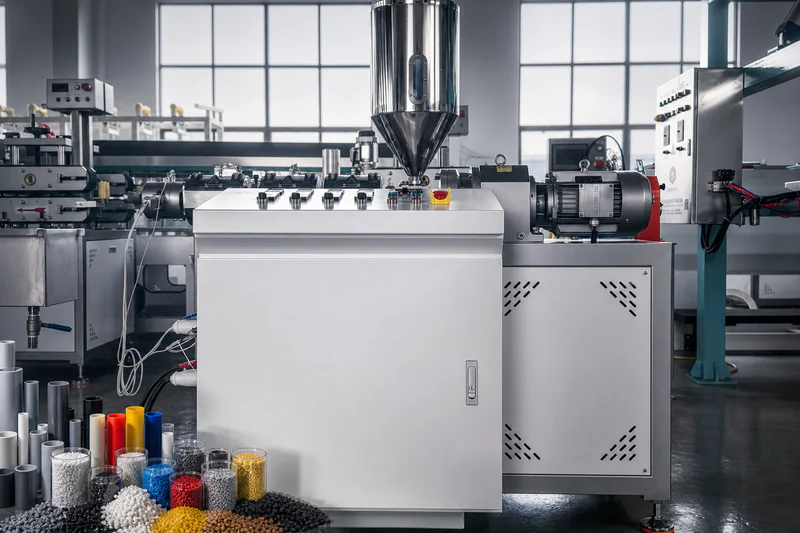 Lab And Pilot
Lab And Pilot Extruder
Made for material testing, formulation development, small-batch runs and process trials. A fit when you want flexible operation, easier cleaning, lower material waste and repeatable testing before scaling to production.
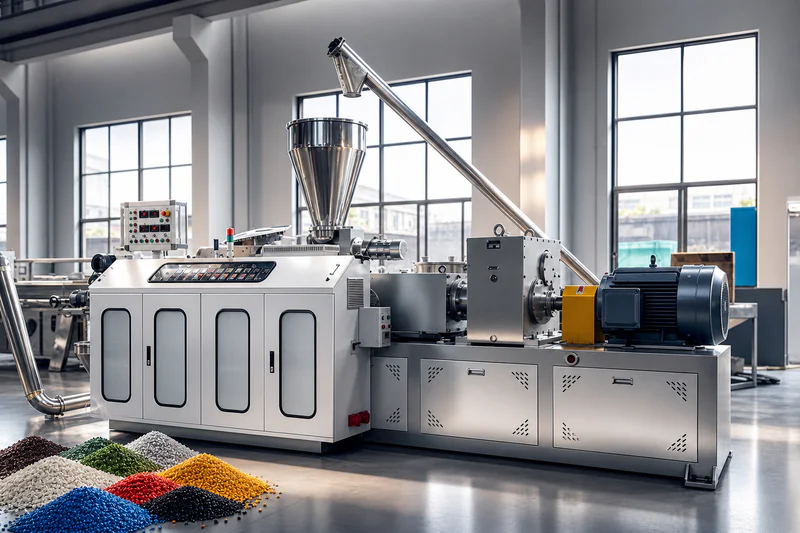 Recycling
Recycling And Pelletizing Extruder
Configured for plastic scrap reprocessing, in-house waste recovery and recycled material pelletizing. Selection should weigh feeding stability, material moisture, degassing, melt filtration, screw wear resistance and pellet quality.
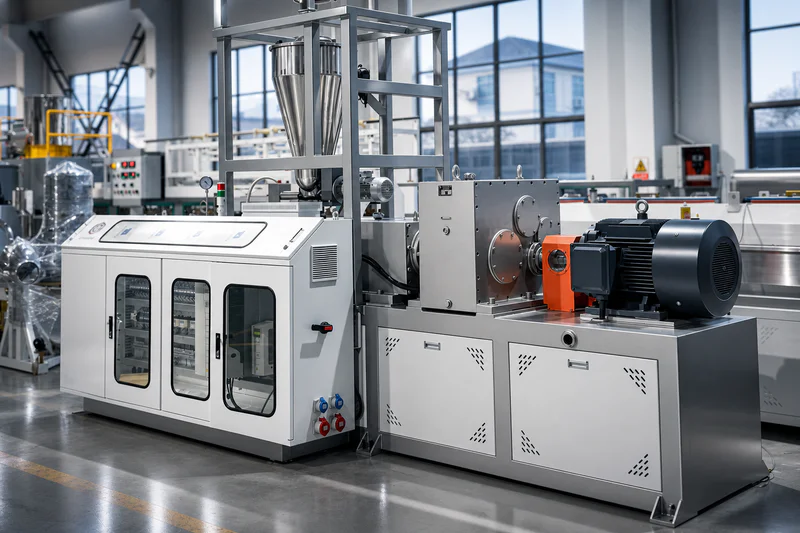 Parts
Parts
Related Extrusion Equipment
Screw and barrel, die head, screen changer, melt pump, feeding system, control cabinet and spare parts, configured to your machine or upgrade project. Parts should match the material, output and current line condition.
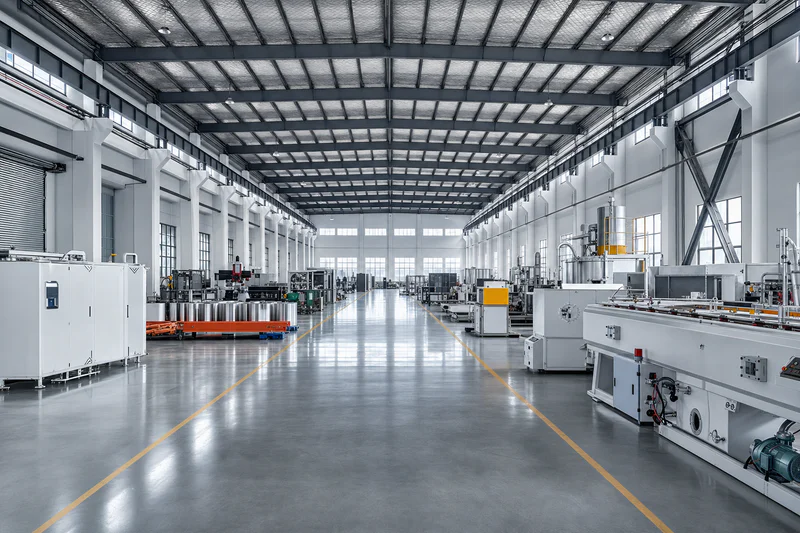 Custom Built
Customized To Your Requirement
If none of the machines above match your project, we build to your requirement. Send your material, final product, output target and current line condition, and we configure the screw type, output and downstream connection around it.
Not Sure Which Extruder Fits?
Send your material, material form, final product, output target and existing equipment information. We can recommend a suitable extruder configuration before we quote, so you know what your project actually needs.
Choose The Right Plastic Extruder
A plastic extruder should not be picked on screw diameter, motor power or price alone. The right configuration depends on your material, feeding form, output target, melt stability, temperature sensitivity and downstream equipment. Walk through these ten points before you request a quote.
 01
01
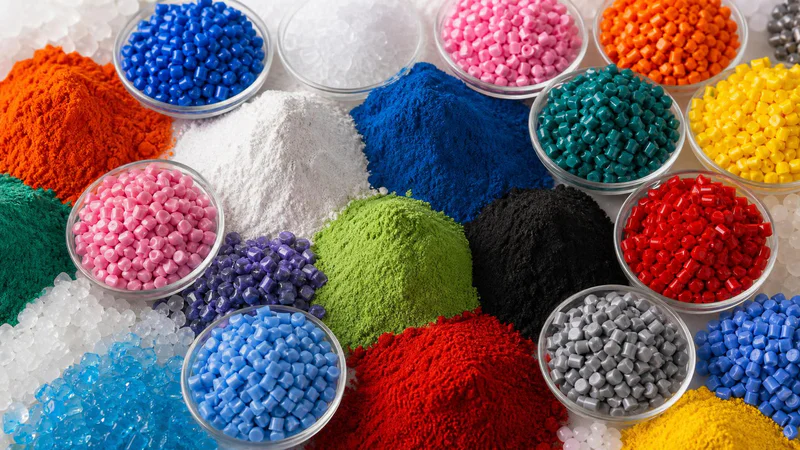
Material
Watch OutWrong screw type can cause poor plasticizing, unstable output or material degradation.
We ConfigureScrew type, screw design, barrel heating, cooling and material contact parts.
 02
02
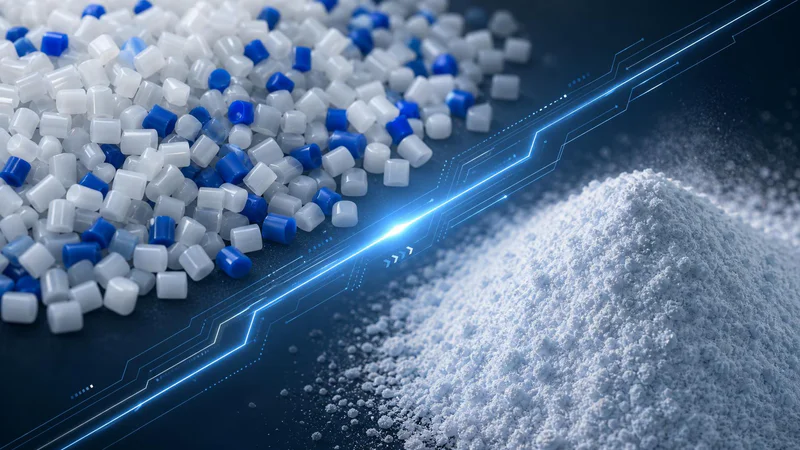
Material Form
Watch OutPellets, powder, flakes, regrind and film feed differently. Poor feeding can reduce output and cause pressure fluctuation.
We ConfigureHopper, force feeder, screw feeder, compactor or feeding assistance.
 03
03
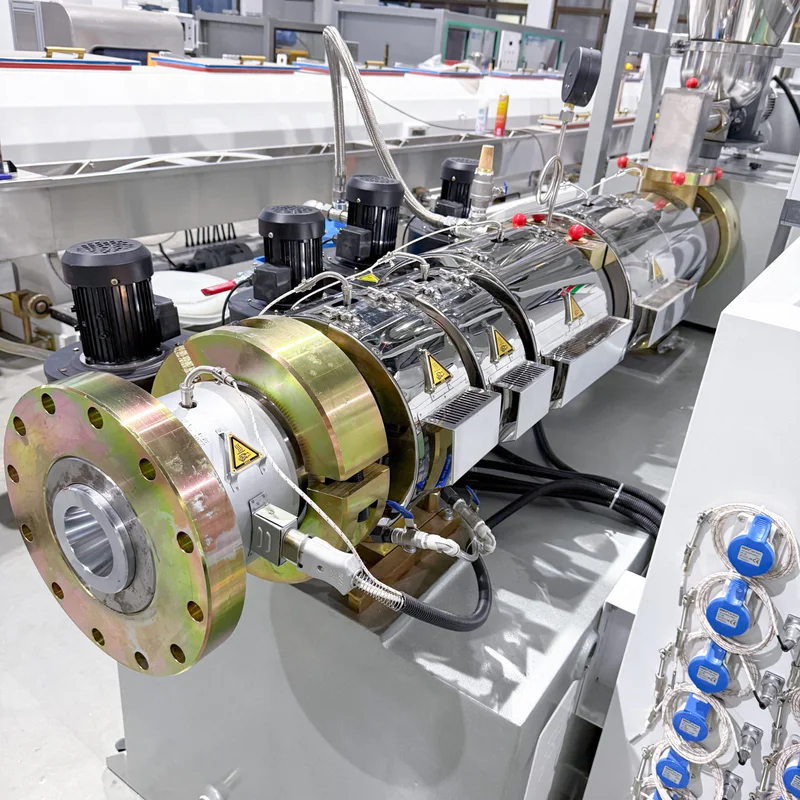
Screw Type
Watch OutA single screw may not fit PVC powder or high-filler materials, while a twin screw may not be needed for simple pellet extrusion.
We ConfigureSingle screw, conical twin screw, parallel twin screw or co-extruder.
 04
04
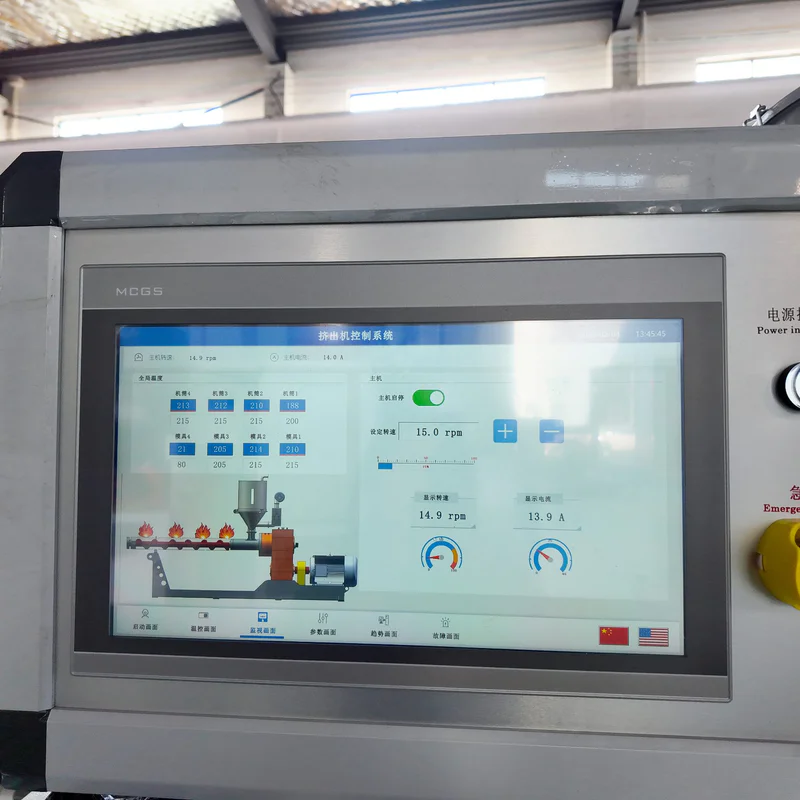
Output Target
Watch OutHigh motor power does not guarantee stable production. Output also depends on material, die pressure and downstream capacity.
We ConfigureScrew diameter, L/D ratio, motor power, gearbox and line matching.
 05
05
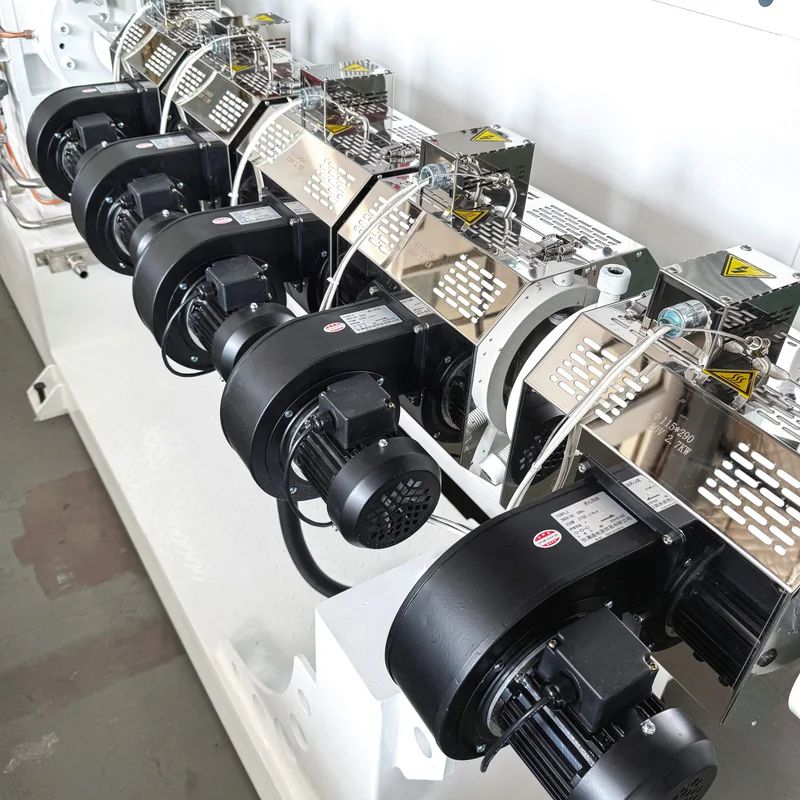
Heat Sensitivity
Watch OutPVC and some recycled materials can degrade, yellow, burn or form black spots under unsuitable temperature and shear.
We ConfigureTemperature zones, screw cooling, barrel cooling, low-shear design and process control.
 06
06
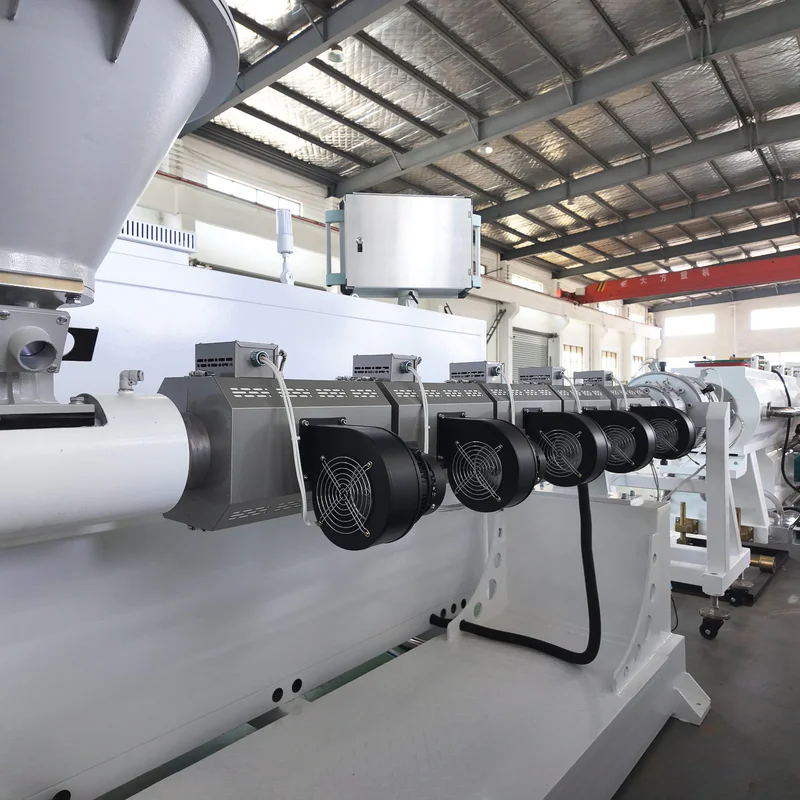
Filler And Wear
Watch OutCaCO3, wood powder, glass fiber and recycled materials can increase screw and barrel wear.
We ConfigureWear-resistant screw and barrel, surface treatment and spare parts planning.
 07
07
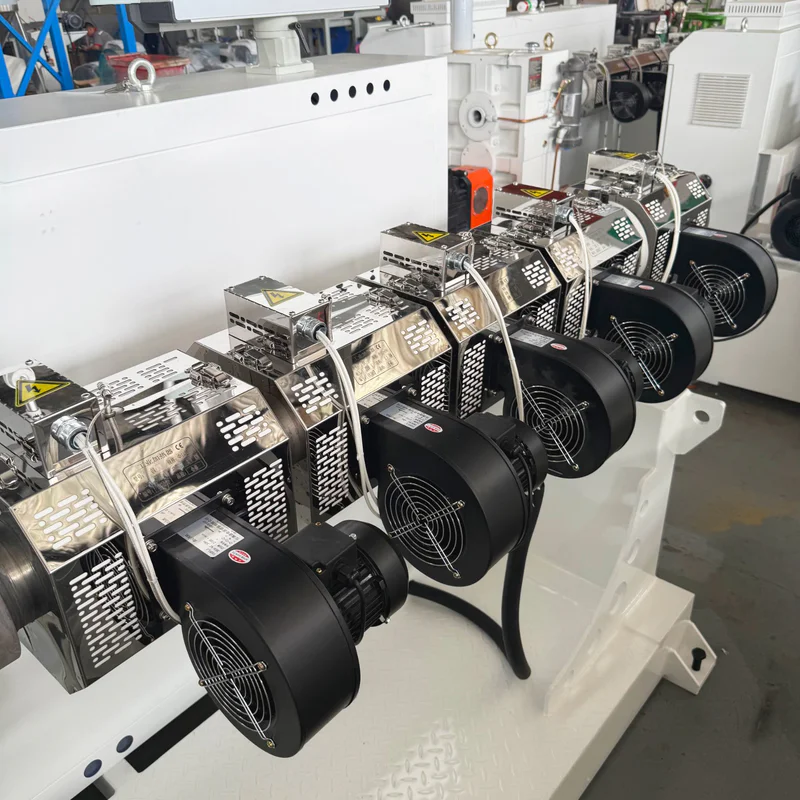
Venting Requirement
Watch OutMoisture and volatiles can cause bubbles, unstable extrusion, poor surface quality or pellet defects.
We ConfigureVented barrel, vacuum degassing, screen changer and filtration system.
 08
08
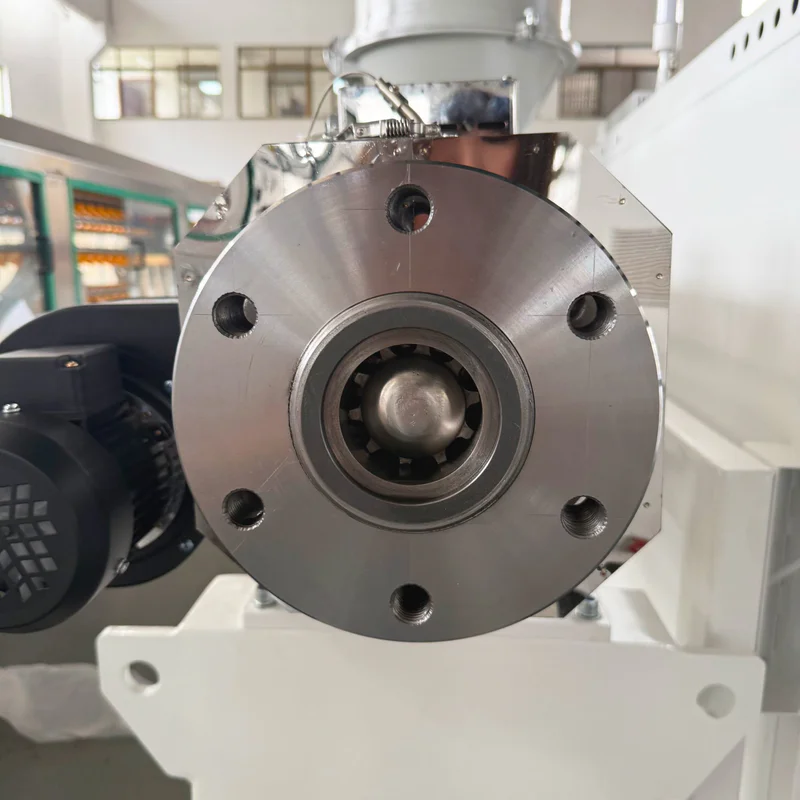
Existing Line Condition
Watch OutA new extruder may not match your current die, center height, control system or downstream equipment.
We ConfigureMachine dimensions, flange connection, center height, control interface and integration plan.
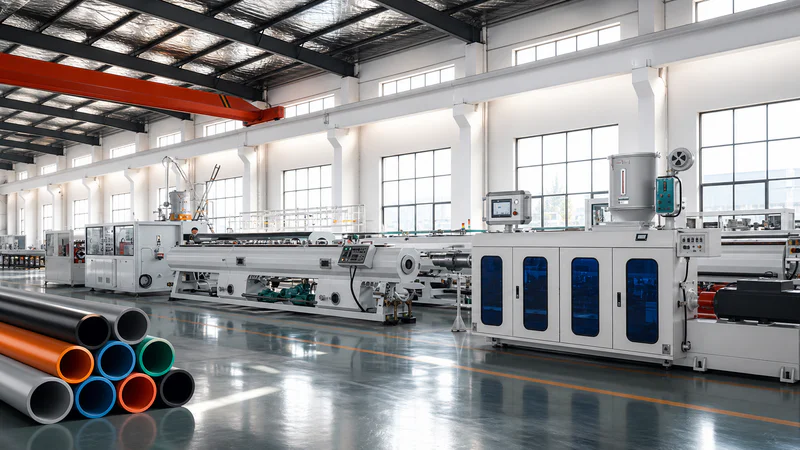 09
09
Final Product
Watch OutPipe, profile, sheet, tube and pelletizing projects need different melt pressure, output stability and downstream matching.
We ConfigureExtruder type, die connection, melt pressure control and downstream compatibility.
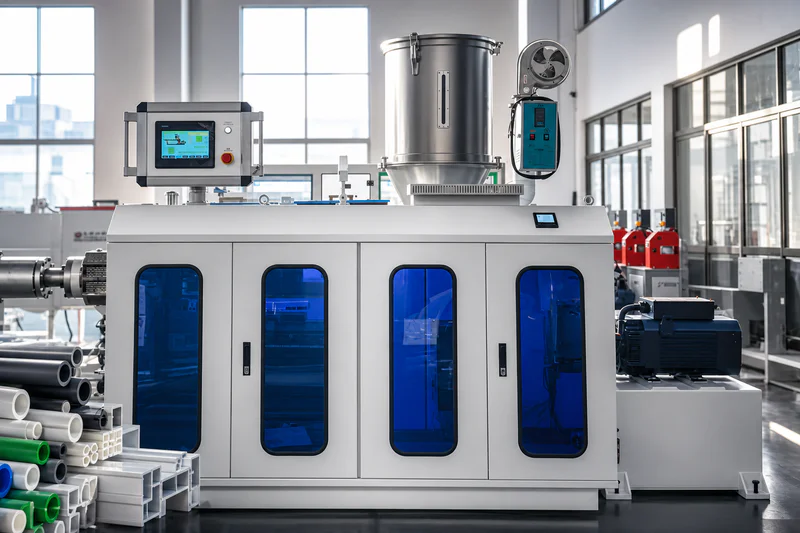 10
10
Control Requirement
Watch OutPoor control can make temperature, pressure, alarms and operation harder to manage during long production runs.
We ConfigurePLC, HMI, temperature control, pressure monitoring, alarm functions and voltage standard.
Single Screw Or Twin Screw Extruder?
There is no one-size-fits-all extruder. The right choice depends on your material form, formulation, filler ratio, output target, mixing demand, heat sensitivity and downstream equipment.
Single Screw Extruder
- Pellet-based PE, PP, ABS
- Stable melting, consistent output
- Simple operation, lower cost
- Pipe, sheet, tube, pelletizing
Twin Screw Extruder
- PVC powder, WPC, compounding
- Strong mixing and degassing
- Higher torque for filled material
- Conical and parallel options
Tell us your material, filler ratio and output target, and we tell you which screw actually fits your process, not just the cheaper machine.
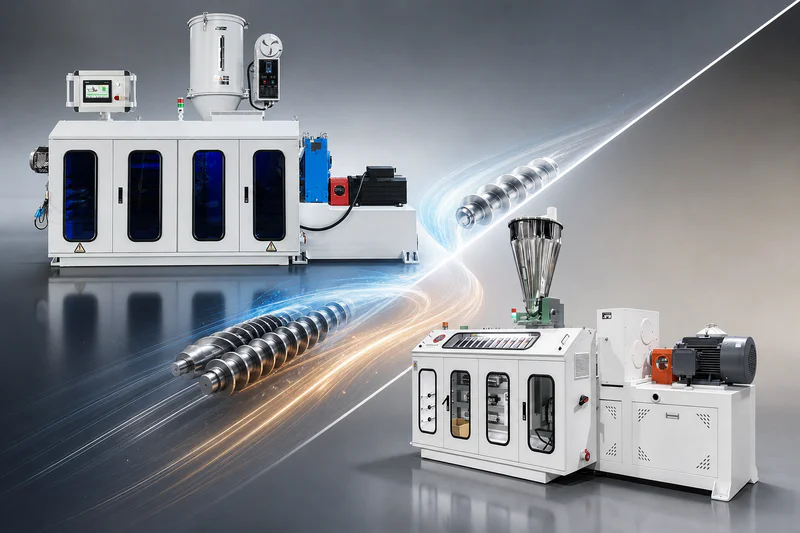
Not Sure Which Screw?
Send your material and output target, we match the screw type before quoting.
Extruder Types Compared
Match the machine to your material, output and mixing demand. Here is what each extruder type does best, and what to confirm before we quote.
| Extruder Type | Better For | Main Focus | Not Ideal For | Check Before Quote |
|---|---|---|---|---|
|
Single Screw Extruder Pellet Based |
PE, PP, ABS and pellet-based thermoplastic extrusion | Stable melting, melt conveying, consistent output, easy operation and energy control | PVC powder, high-filler formulas or processes needing strong mixing | Material grade, pellet or regrind ratio, target output, die pressure, screw diameter, L/D ratio and downstream speed |
|
Conical Twin Screw Extruder PVC Powder |
PVC pipe, PVC profile, PVC board, PVC foam board and WPC/PVC applications | PVC powder plasticizing, low-shear processing, torque, temperature control and formulation stability | Simple PE or PP pellet extrusion where a single screw is enough | PVC formula, filler ratio, stabilizer system, output target, venting need, screw cooling and wear condition |
|
Parallel Twin Screw Extruder High Output |
Higher-output PVC, WPC, filled materials, modified plastics and compounding applications | Mixing, degassing, torque capacity, output stability and processing consistency | Low-cost simple extrusion where strong mixing or higher torque is not required | Filler type, moisture level, additive system, degassing need, screen changer, pelletizing or downstream connection |
|
Co-extruder Multi-layer |
Color stripe, surface layer, functional layer or multi-layer extrusion | Layer ratio, flow stability, material compatibility and synchronization with the main extruder | Main extrusion output on its own | Main extruder output, layer thickness, installation space, die connection and control linkage |
The Right Screw Depends On Your Job
Single screw and twin screw extruders are not better or worse in general, only better or worse for a specific material, formula, feeding form and final product. If you are not sure, send your material, output target and final application before you choose the machine type.
Match The Extruder To Your Application
Your final product decides more than the extruder model. It also shapes screw type, melt pressure, die connection, cooling method, line speed and downstream equipment. Use the guide below to find the right machine direction before we quote.
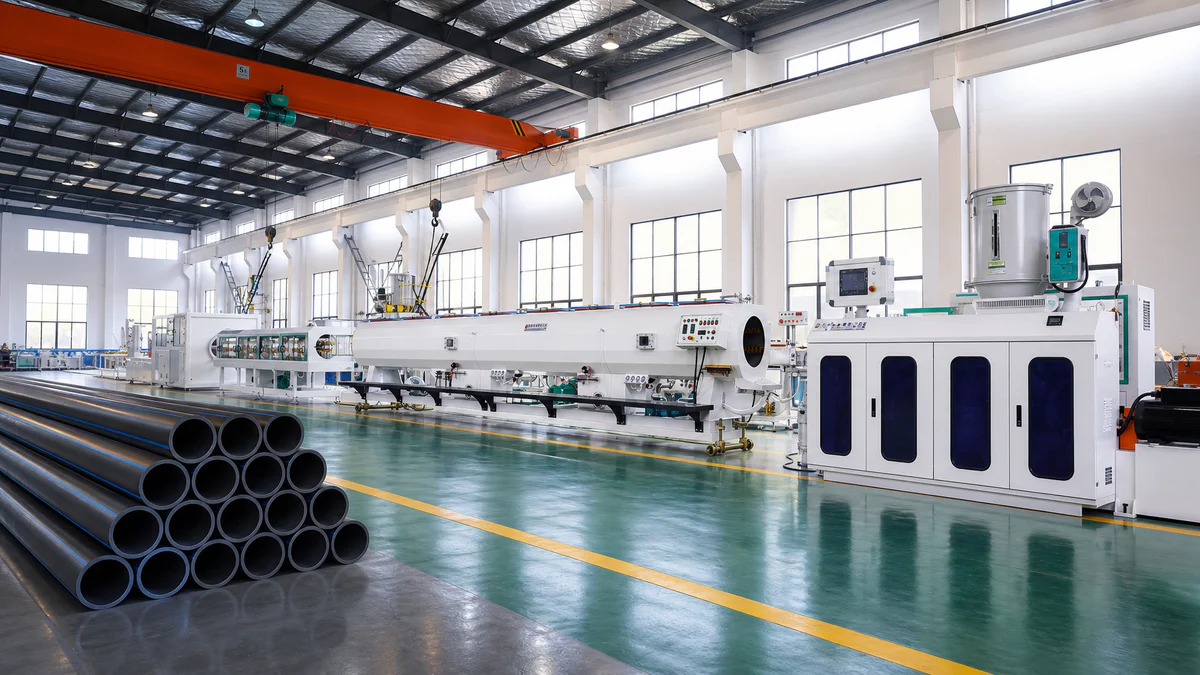
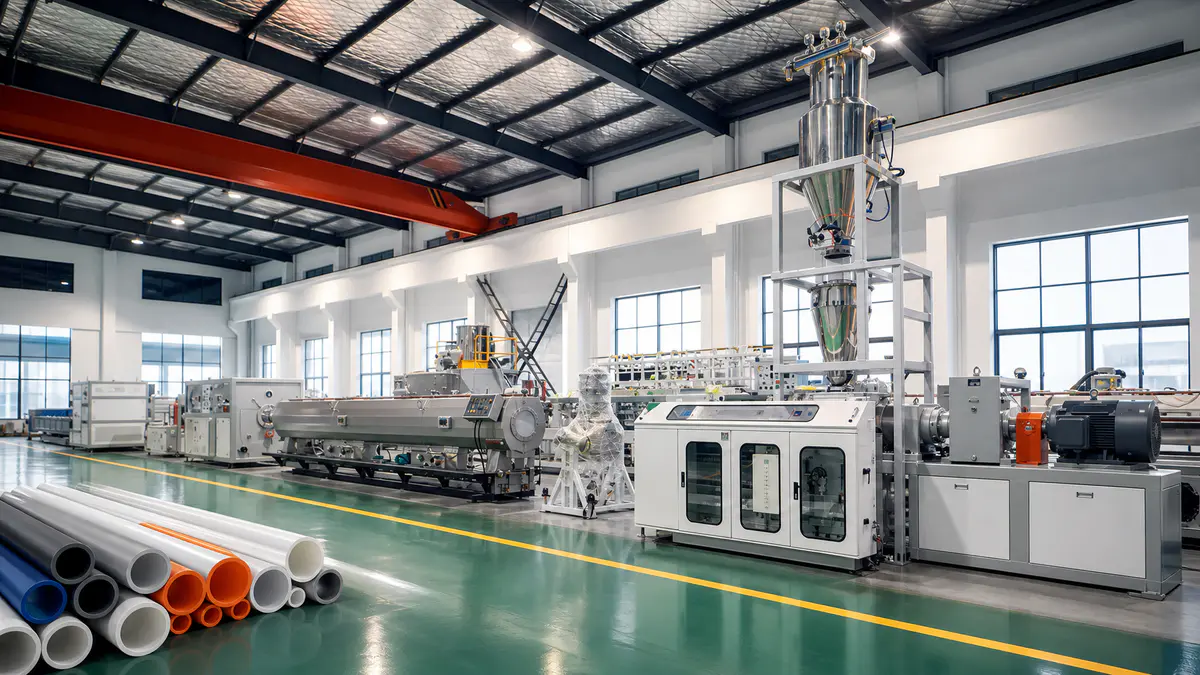
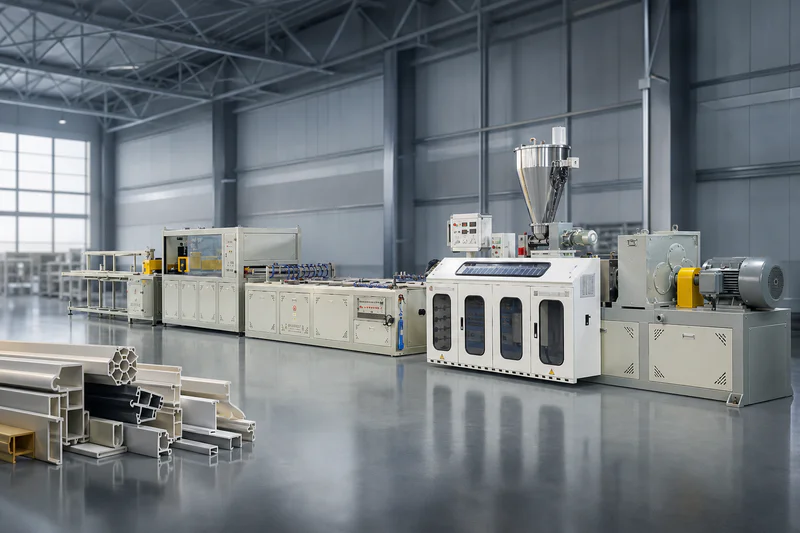
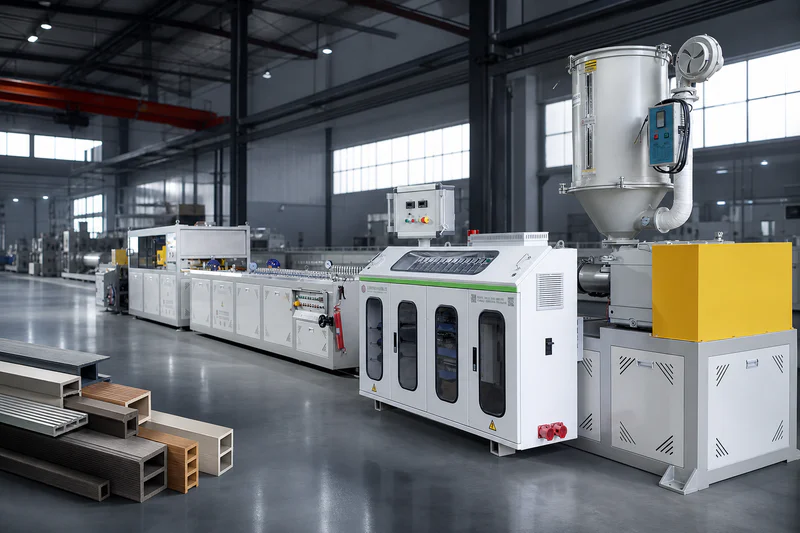
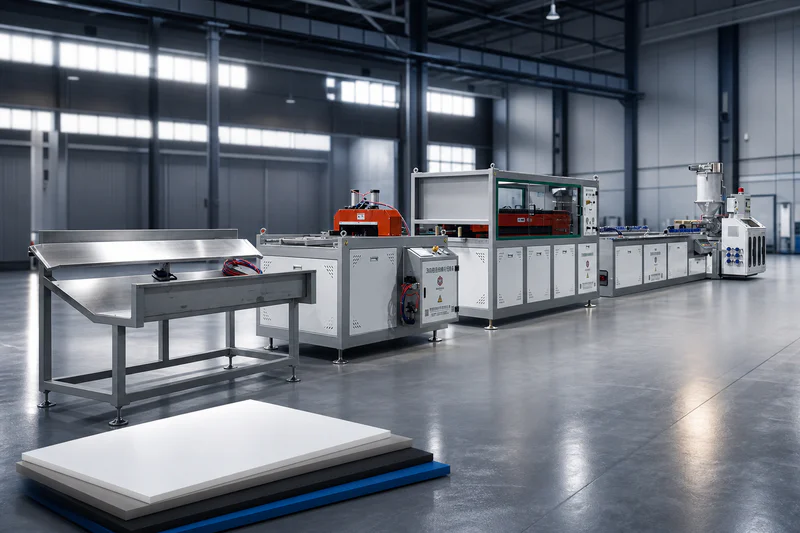
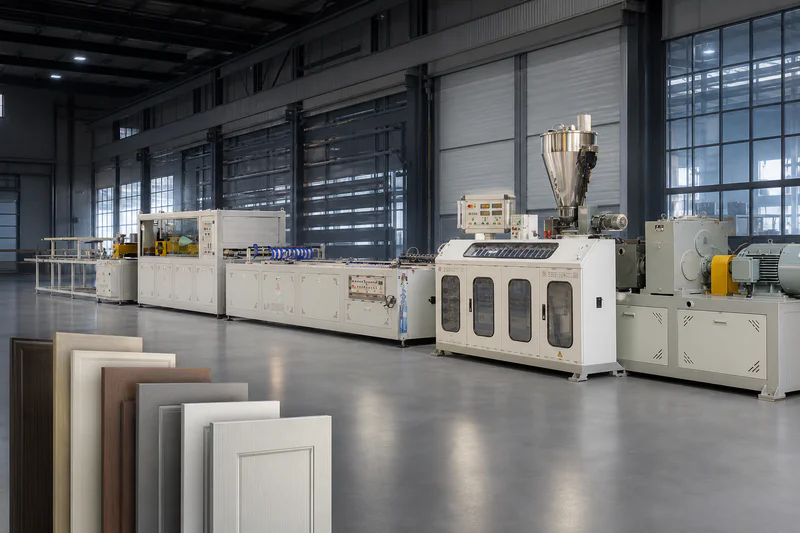
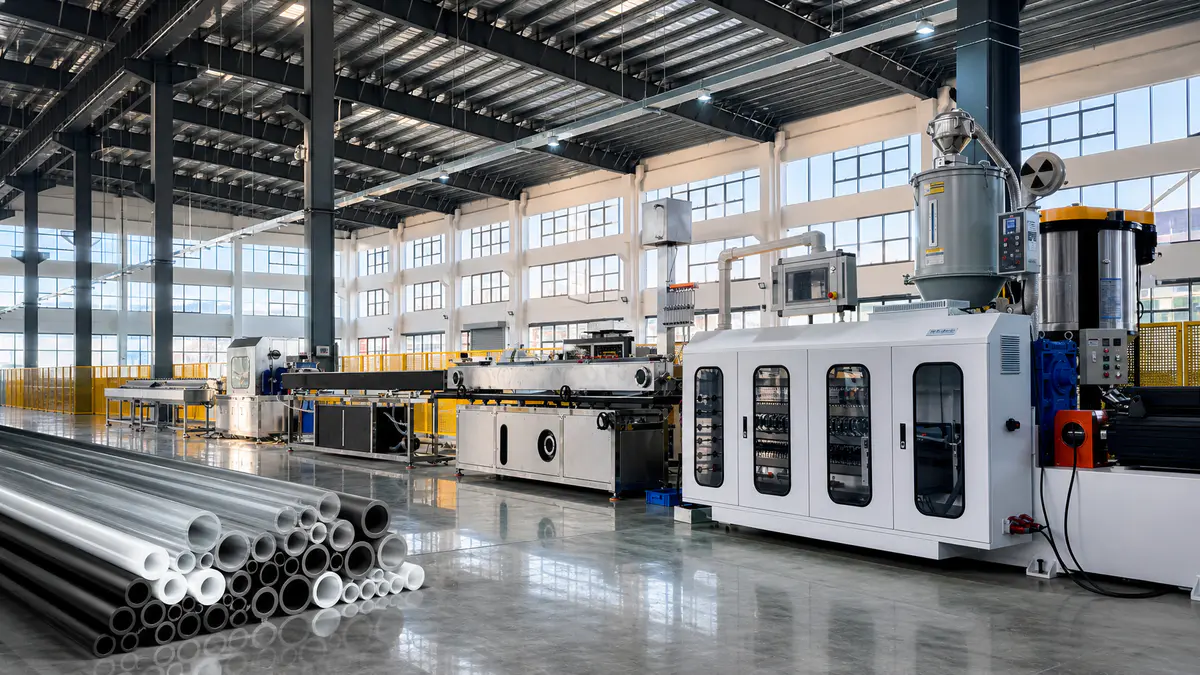
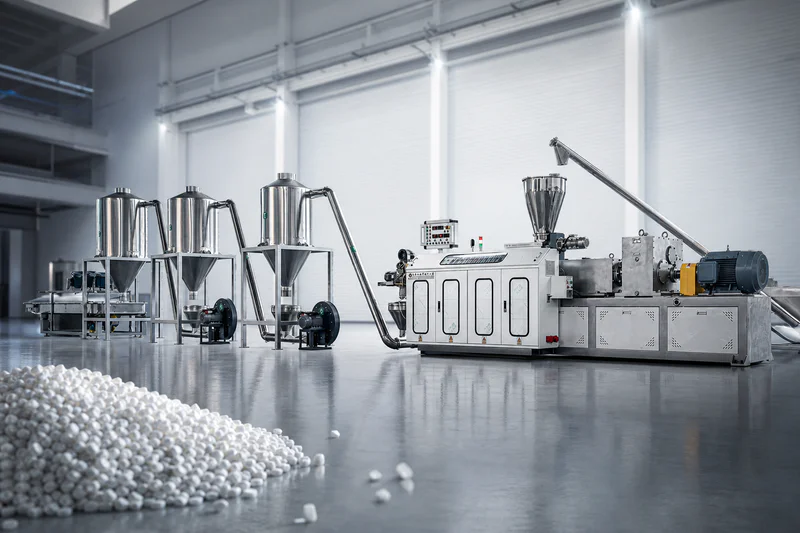
Not sure which direction fits your product? Send your final product, material and output target, and we help you check the right machine direction before you order.
Not Sure Which Application Fits?
Send your material, final product, target output and current equipment condition. We help you decide whether you need a core extruder, an upgraded main machine or a complete extrusion line.
Common Problems To Avoid
The wrong plastic extruder can hurt output, product quality, energy cost and line stability. Check these six common problems before you order.
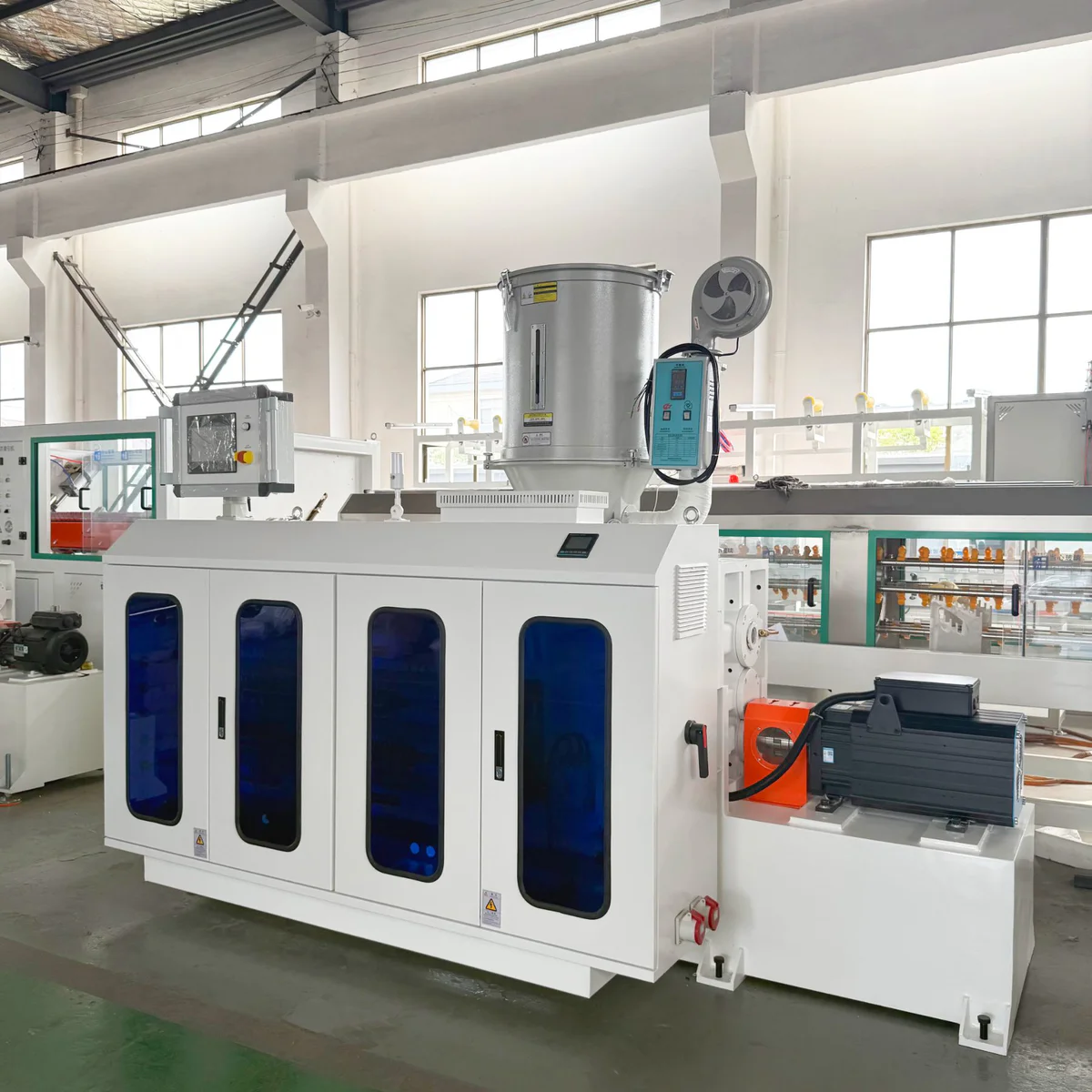
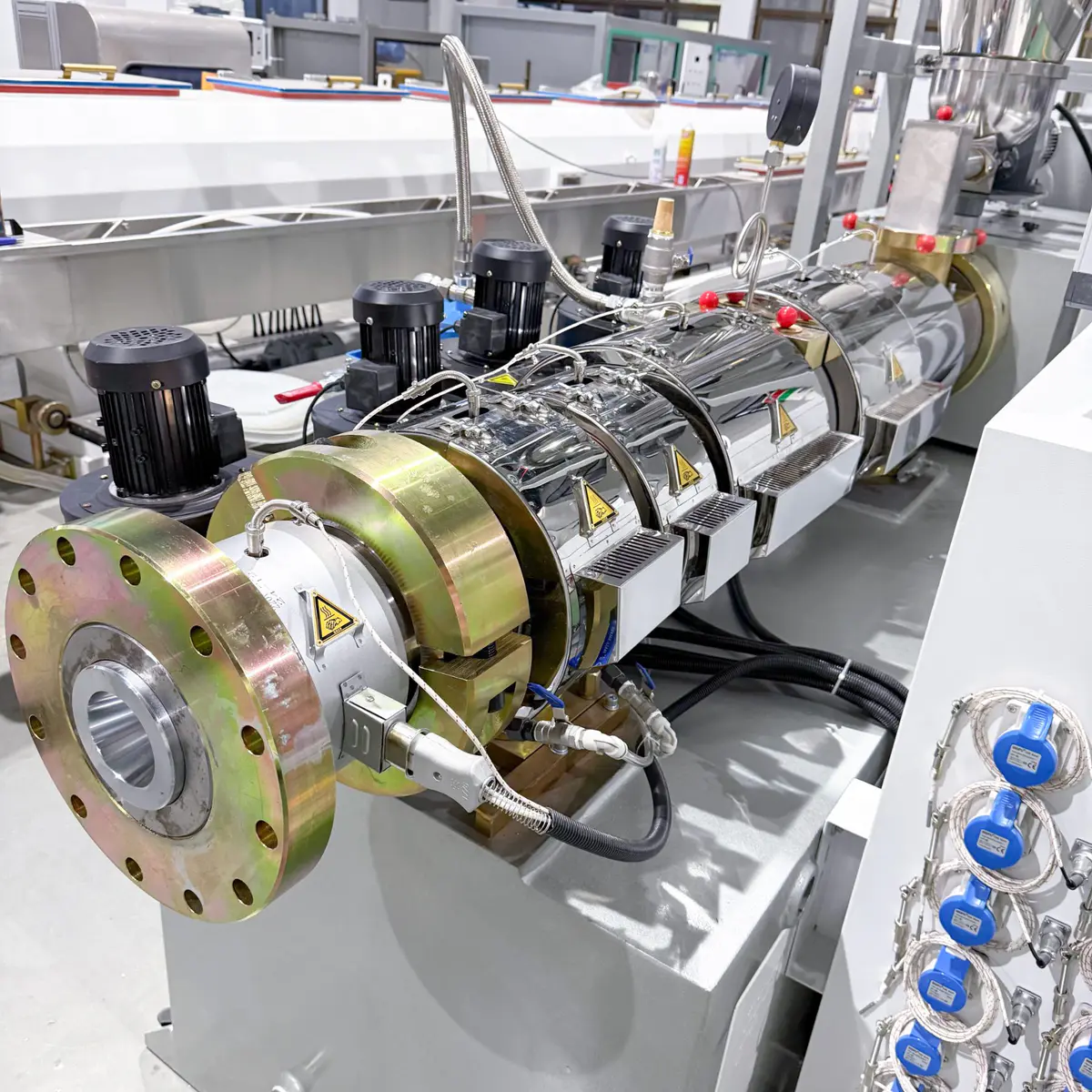
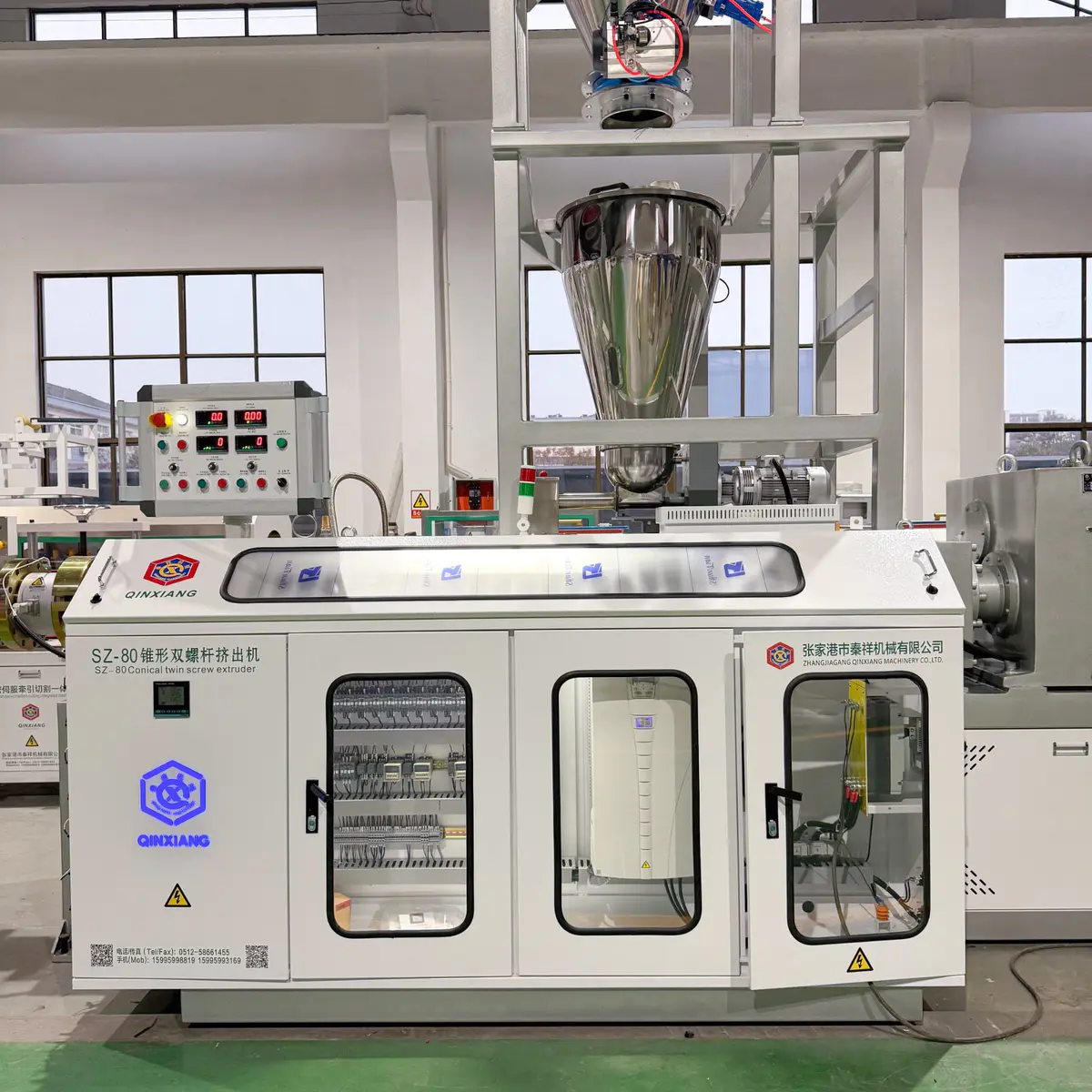
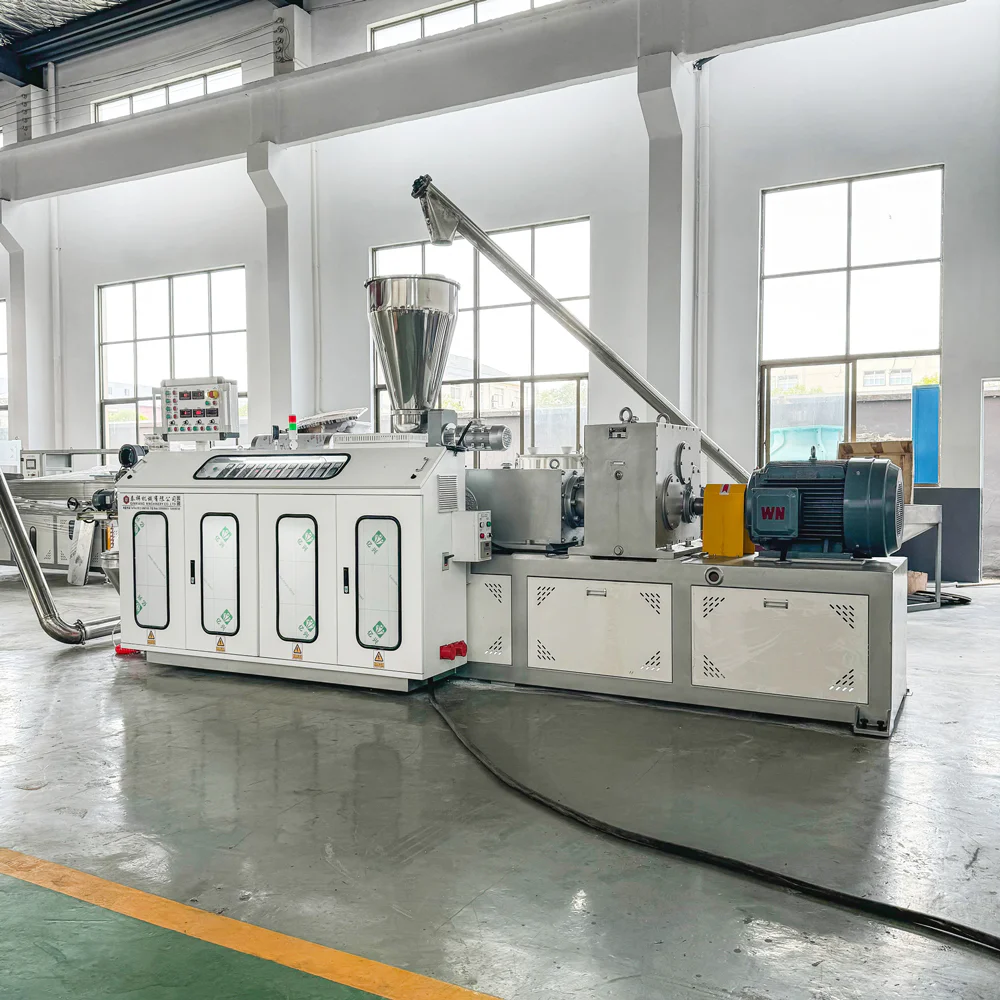
Key Technical Specifications
An extruder should be specified by material, screw type, output target, melt stability and downstream connection. The same model can perform differently on PVC, PE, PP, ABS, WPC or recycled materials, so confirm each of these before you order.
Screw Diameter
Sets output range, material residence time and machine size. Pick it by material type, final product and downstream capacity, not just target kg/h.
L/D Ratio
Drives plasticizing, melting, mixing and melt stability. Different materials may need different screw length and structure for stable extrusion.
Screw Type
Single screw, conical twin, parallel twin and co-extruder suit different materials and processes. Match the screw type to material form, formula, filler ratio and final application.
Output Range
Discuss output by material and product. PE, PP, PVC, WPC, ABS and recycled material can each hit different stable output on the same extruder.
Motor And Gearbox
Motor power and gearbox torque should match material resistance, screw structure and output target. Higher motor power alone does not guarantee stable production.
Screw And Barrel Material
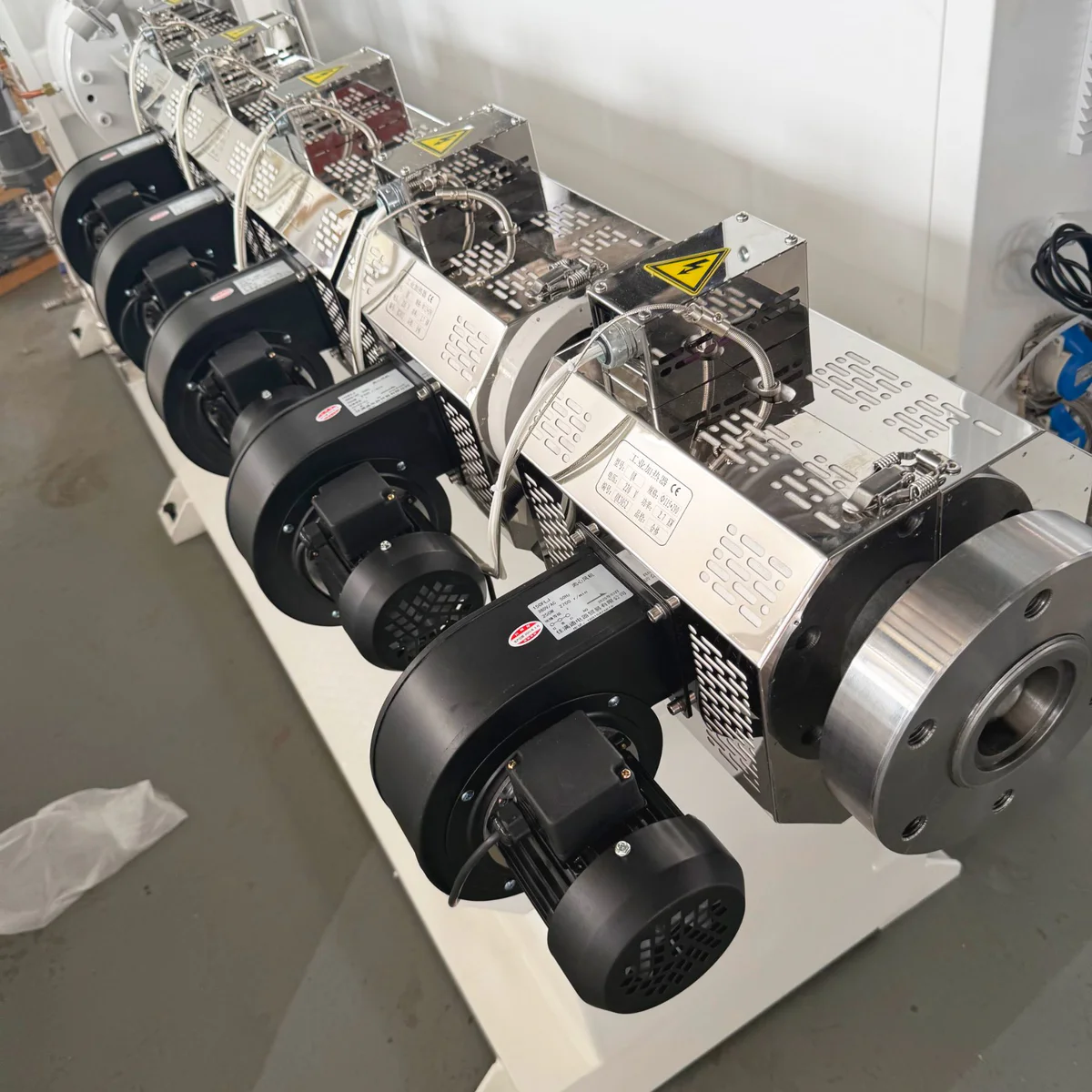
High-filler PVC, WPC, glass fiber and recycled plastics raise wear. Confirm screw and barrel material, surface treatment and spare parts before ordering.
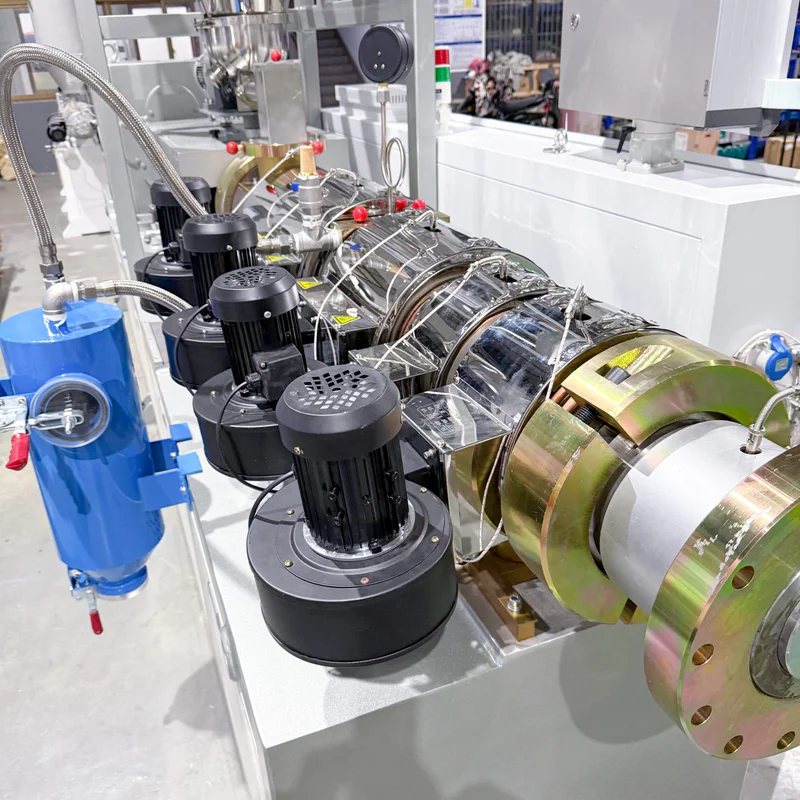
Heating And Cooling
Temperature zones, heating method and cooling design affect melt stability, PVC processing, recycled material extrusion and long-run operation.
Feeding Method
Pellets, powder, flakes, regrind and film feed differently. Pick hopper, screw, force or compactor feeding by material form to keep output stable.
Venting And Degassing
Moisture and volatiles cause bubbles, black spots, surface defects or unstable pellets. Some materials need a vented barrel, vacuum degassing and filtration.
Control System
PLC, HMI, temperature control, pressure monitoring, alarms and voltage standard should match your factory operation and local electrical requirements.
Integration Dimensions
For replacement or upgrade projects, center height, flange connection, footprint, die connection and control interface should match your existing line.
Send Us Your Specs
Share your material, output target and downstream setup. We match every spec above to your project before quoting.
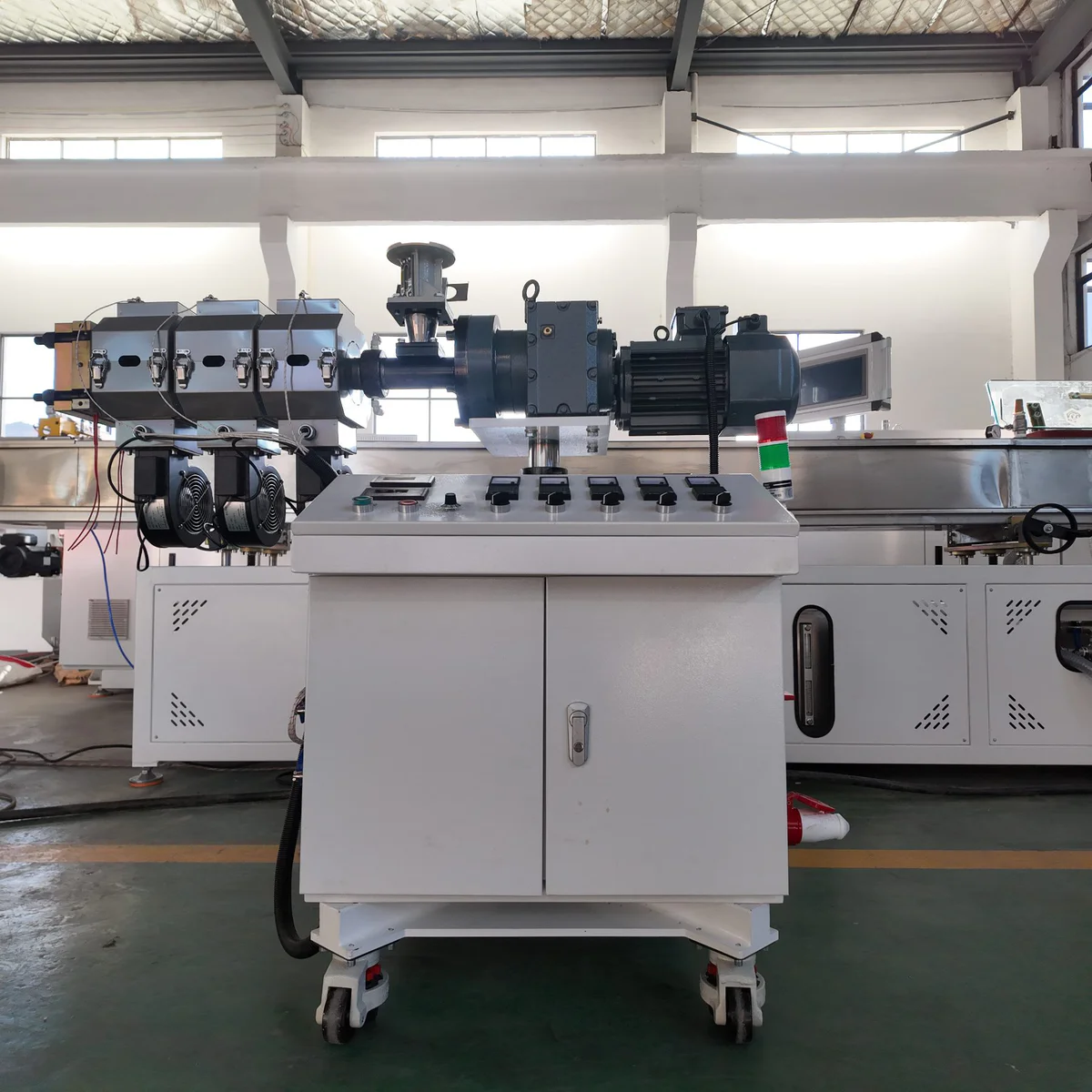
Replace Or Upgrade Your Existing Extruder
If your line is still usable but the main extruder is limiting output, melt stability or energy efficiency, a matched replacement extruder is often a better move than rebuilding the whole line. We review your pipe, profile, sheet, tube or pelletizing line and configure a new extruder to fit your current die, center height, downstream equipment, control system and production target.
Keep Your Line, Change The Machine
Match a new extruder to your current die, center height, controls and downstream capacity, so you lift output without replacing everything.
Scenario 01
Old Extruder Replacement
When the current machine runs unstable output, worn screw and barrel, high energy use or poor plasticizing, we configure a new extruder around your line layout, die connection, motor power, center height and production target.
Scenario 02
Output Upgrade
If your downstream still has capacity, the main extruder can be reviewed for higher output, better melt stability and improved feeding. Check it together with die pressure, cooling capacity, haul-off speed and cutting system.
Scenario 03
Co-extruder Addition
Add a co-extruder for color stripes, surface layers, functional layers or multi-layer extrusion. The configuration should match main extruder output, layer ratio, material compatibility, installation space and control synchronization.
Scenario 04
Line Integration Support
For upgrade projects, the new extruder must fit your existing line. Center height, flange size, machine footprint, electrical standard, control interface and downstream capacity should be confirmed before manufacturing.
Send Your Machine Details For An Upgrade Check
A replacement extruder should not be picked on model number alone. Send your current machine details and production problem, and we check whether you need a new main extruder, a screw and barrel upgrade, a co-extruder addition or a complete line solution.
Information To Share
- Current extruder model
- Screw diameter and L/D
- Main motor power
- Center height
- Die connection size
- Current output
- Target output
- Material and formula
- Downstream equipment details
- Photos or videos of the line
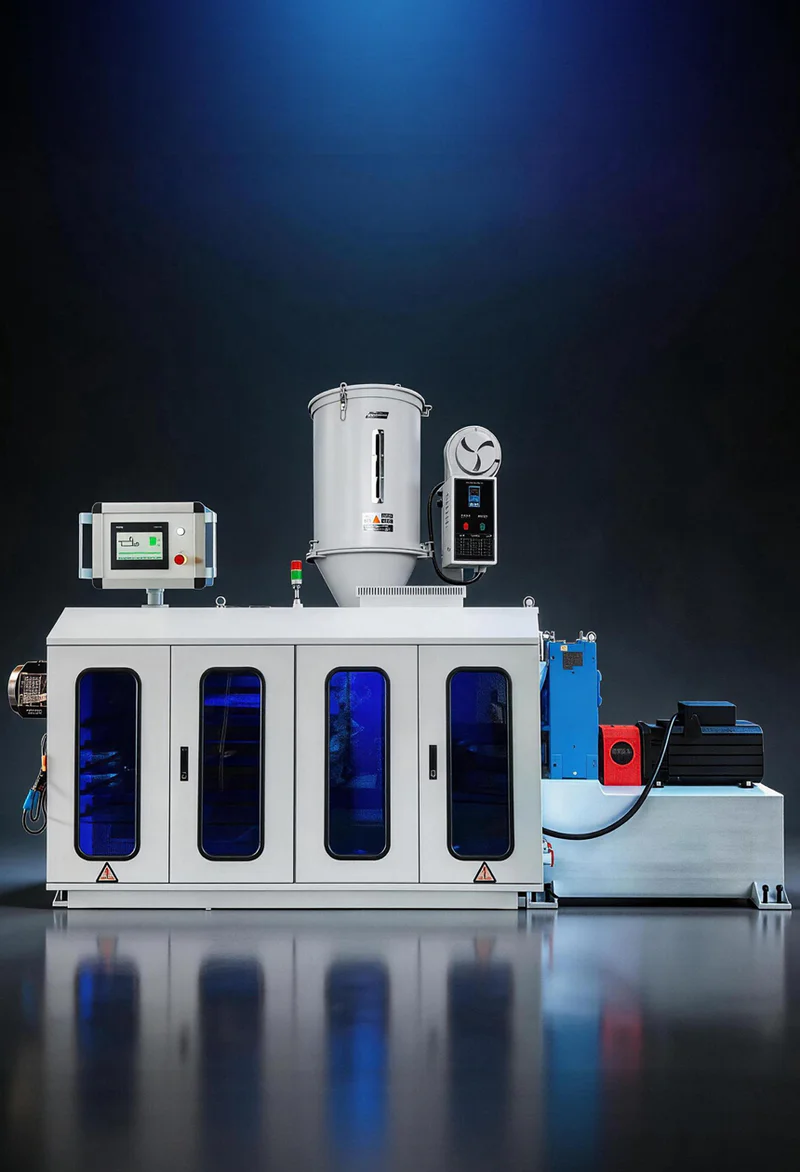
Factory Capability For Plastic Extrusion Machines
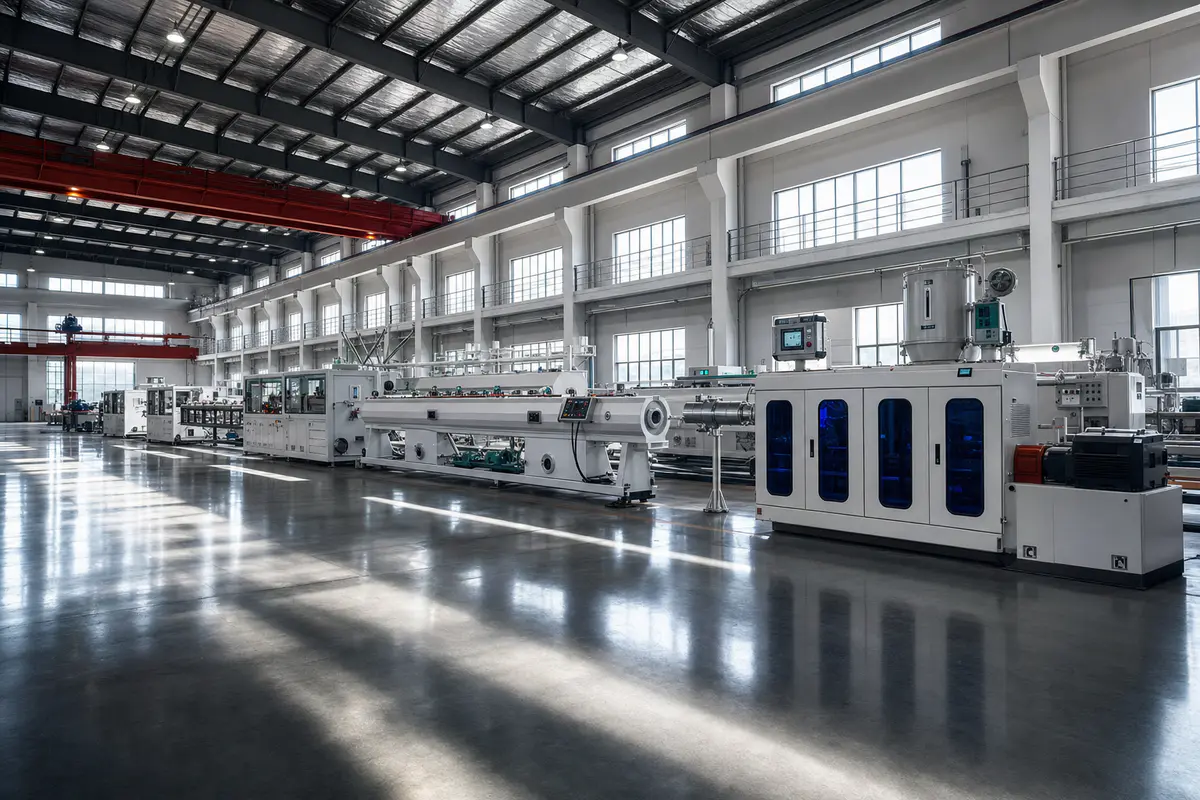
See how each extruder is built, assembled and checked before shipment. From screw and barrel matching to gearbox installation, electrical control, machine testing and export packing, every step supports stable operation, easier installation and long-term maintenance.
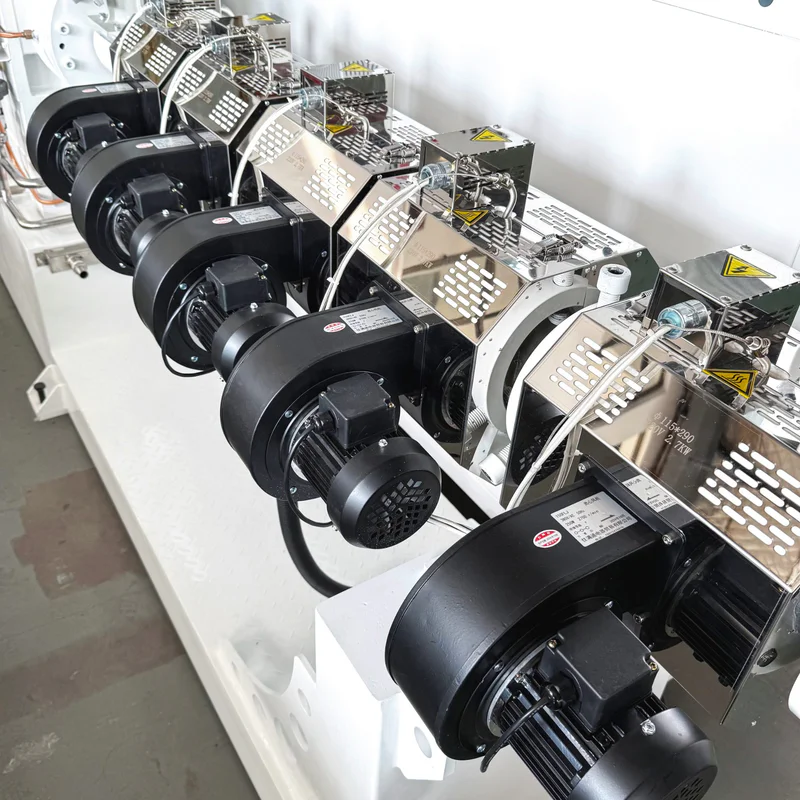
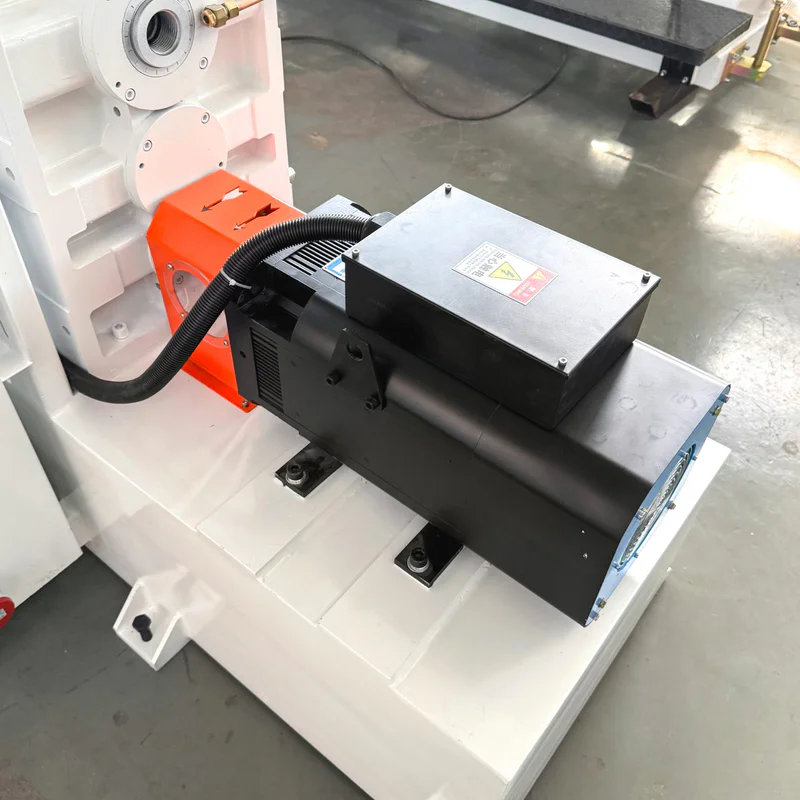
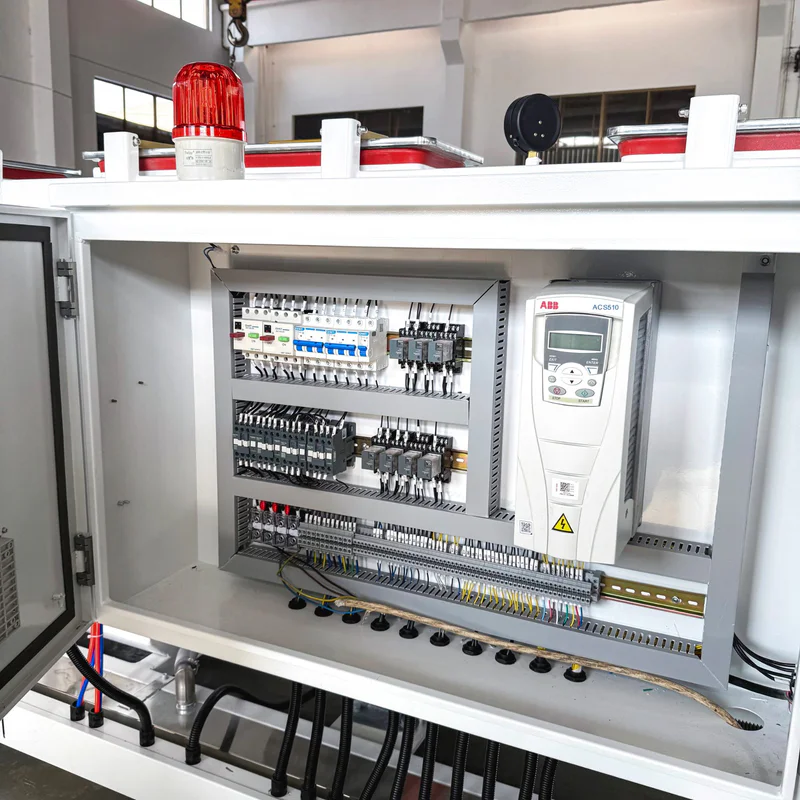
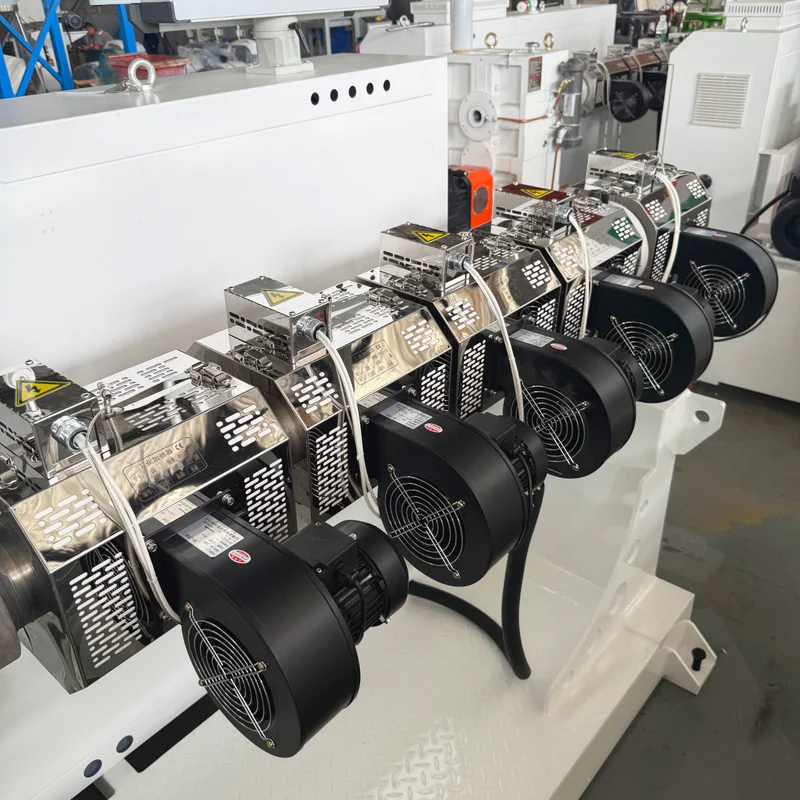
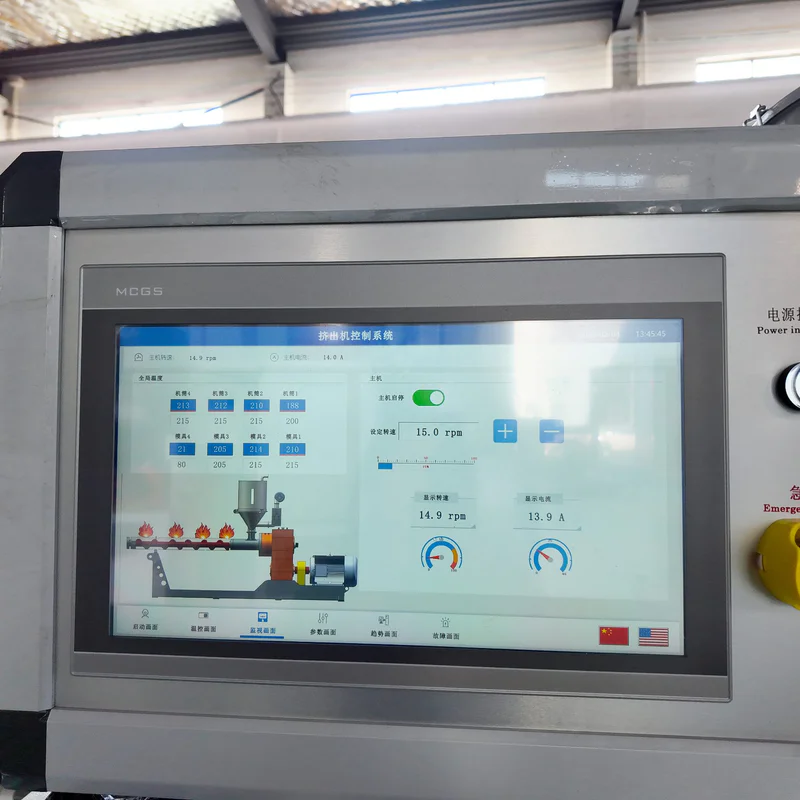
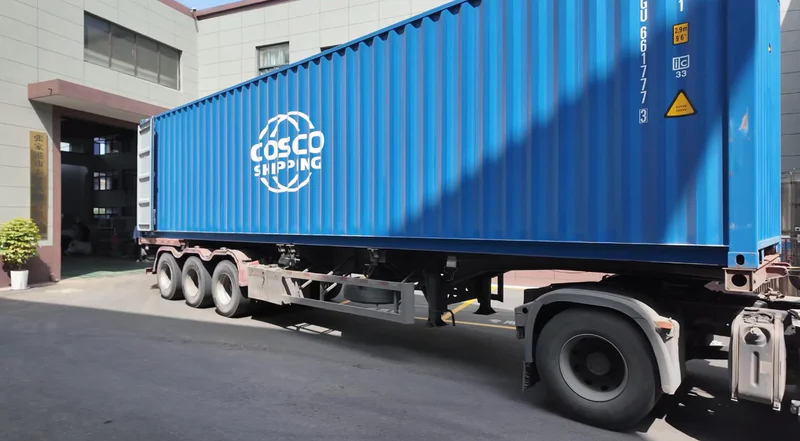
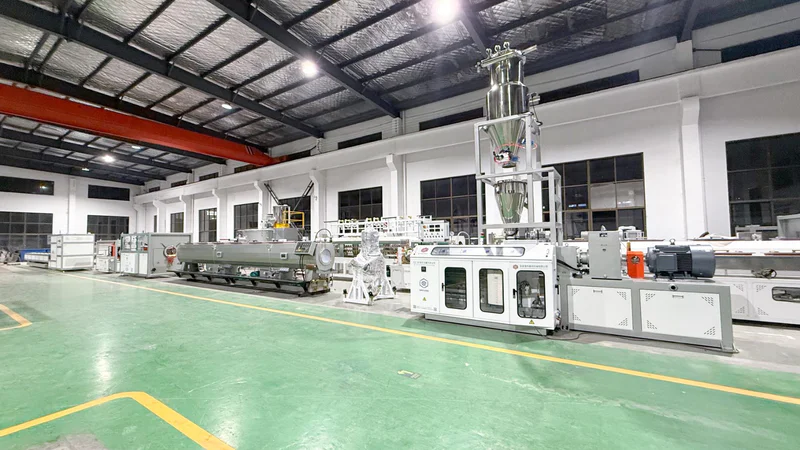
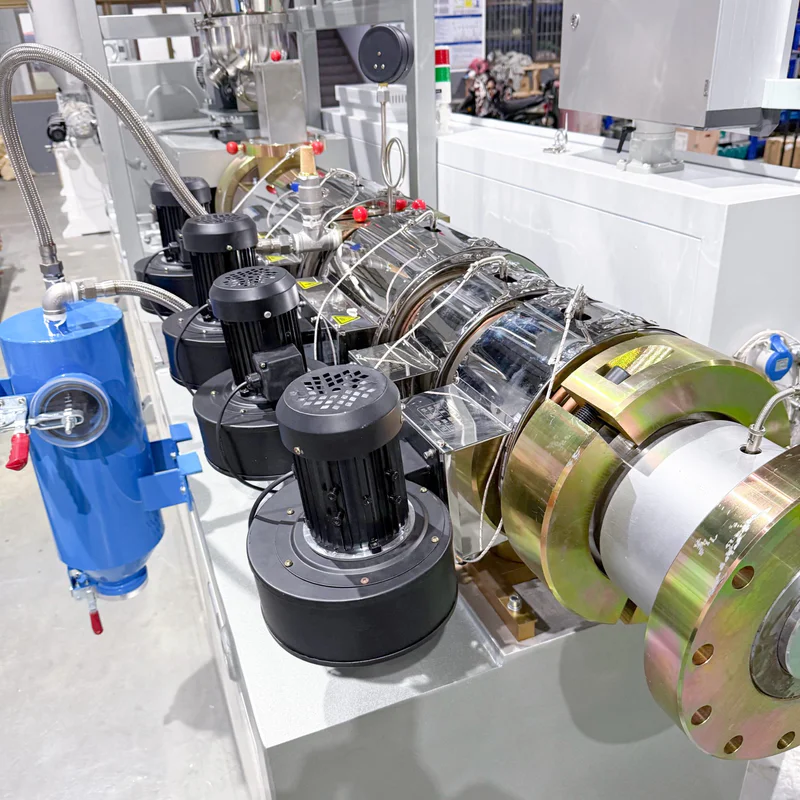
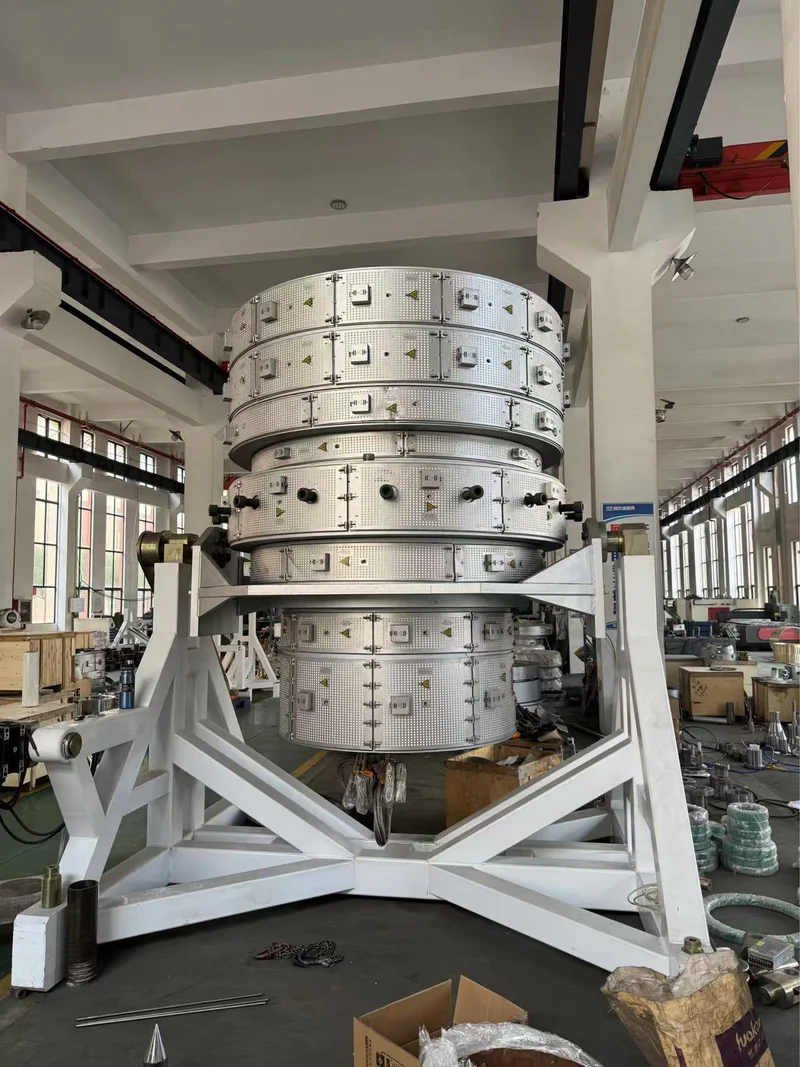
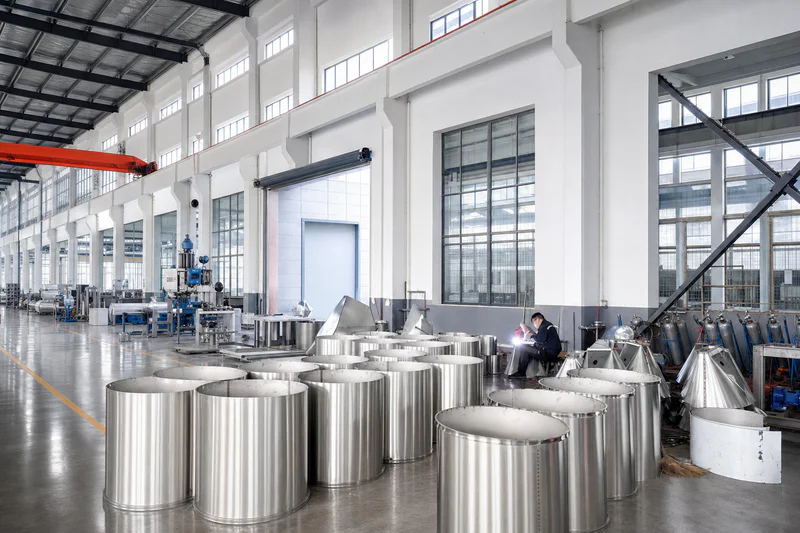
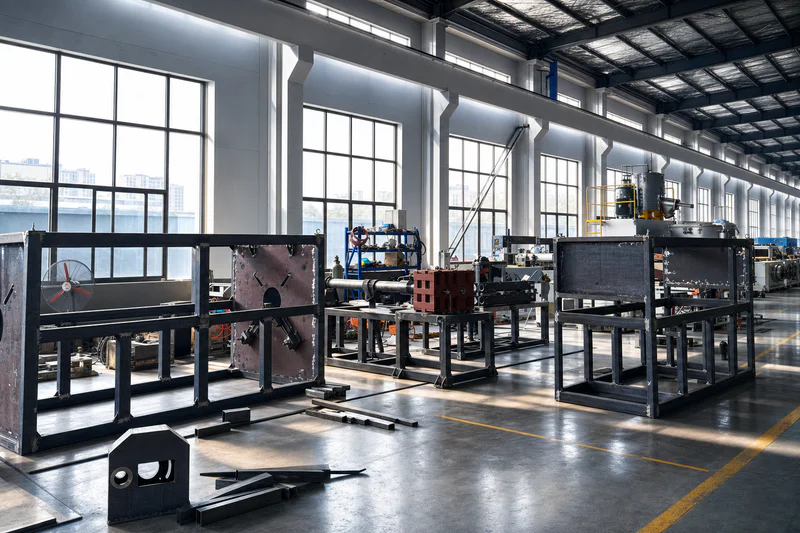
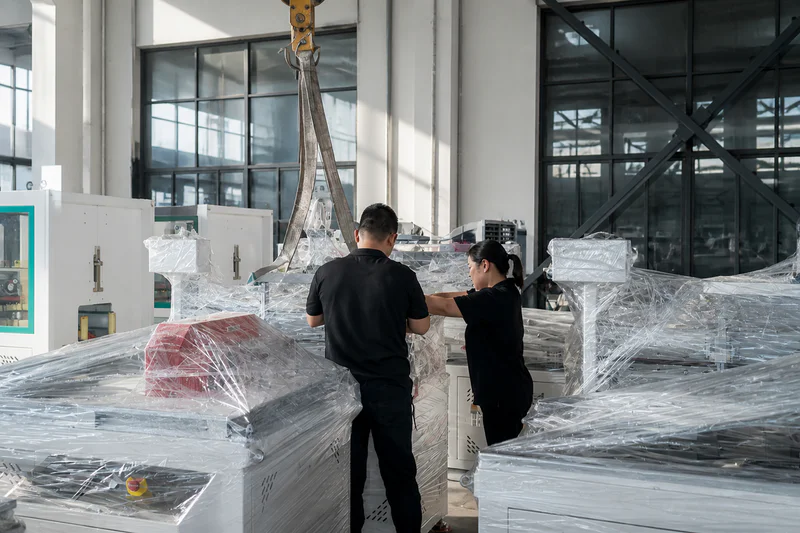
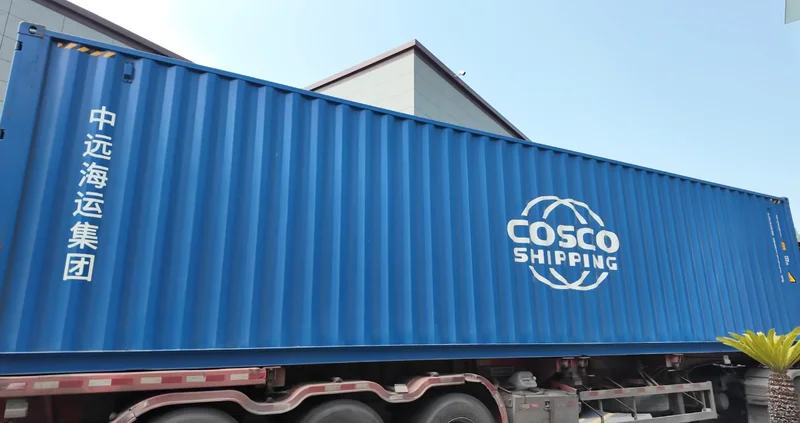
Every Extruder Is Run Tested Before It Leaves
Machines are voltage and standard configured to your market, then run tested before packing. Confirm your material, output target and voltage when you send an inquiry, so we quote the correct configuration and spare parts.
Testing Before Shipment
Before shipment, the extruder can be checked against the agreed test scope. The goal is to confirm mechanical running, heating performance, motor operation, gearbox condition, electrical control and basic machine readiness before packing.
Mechanical Running Check
The extruder is checked for screw rotation, machine running condition, abnormal noise, vibration and basic mechanical stability.
Confirms: screw rotation, running condition, noise, vibration and mechanical stability.
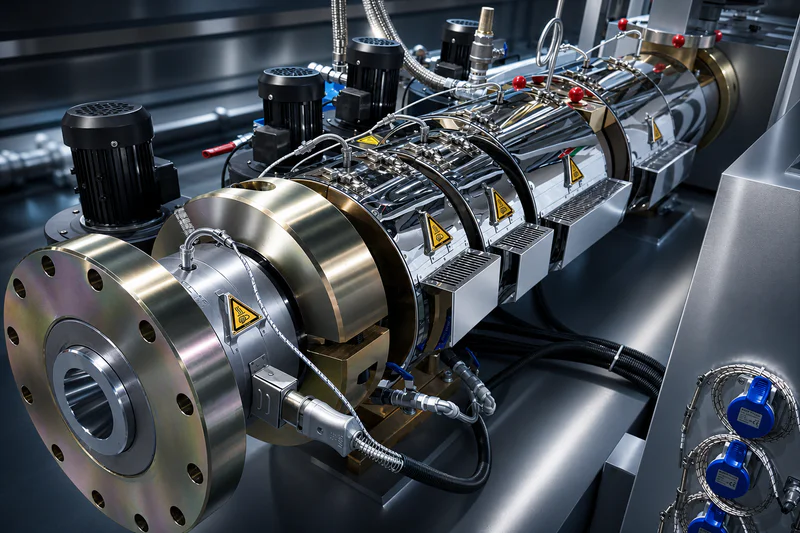
Heating Zone Check
Barrel heating zones and temperature control are checked to confirm the machine can heat and respond properly before shipment.
Confirms: barrel heating zones, temperature control and heating response.
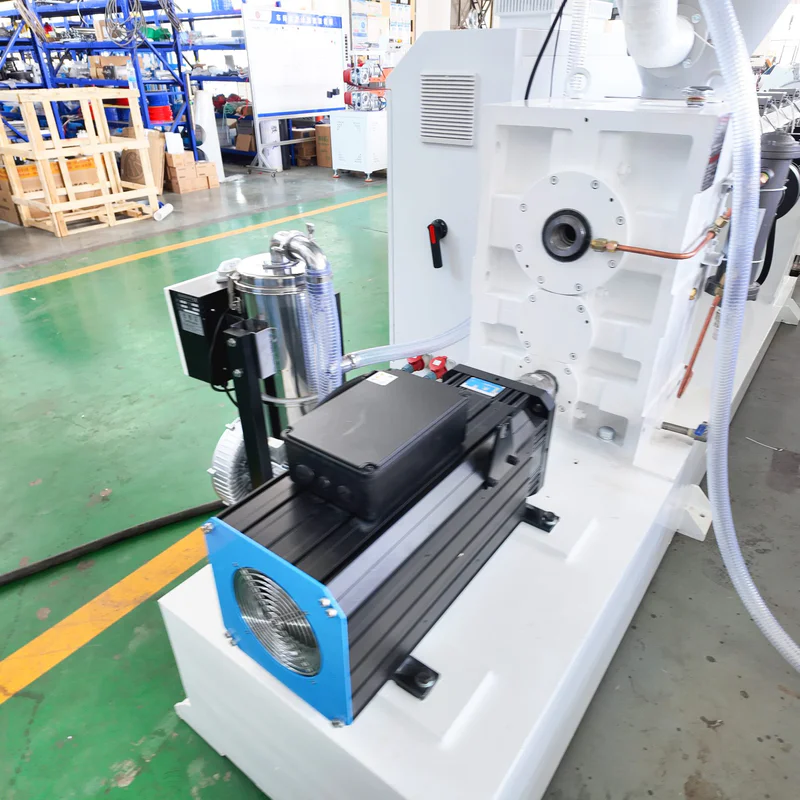
Motor And Gearbox Check
The main motor, gearbox and transmission system are checked for running condition, direction, noise and basic operating performance.
Confirms: motor running, rotation direction, gearbox noise and transmission performance.
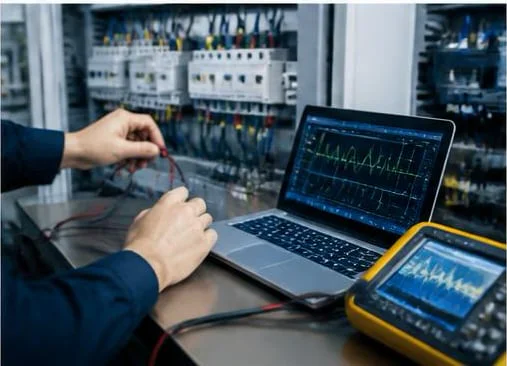
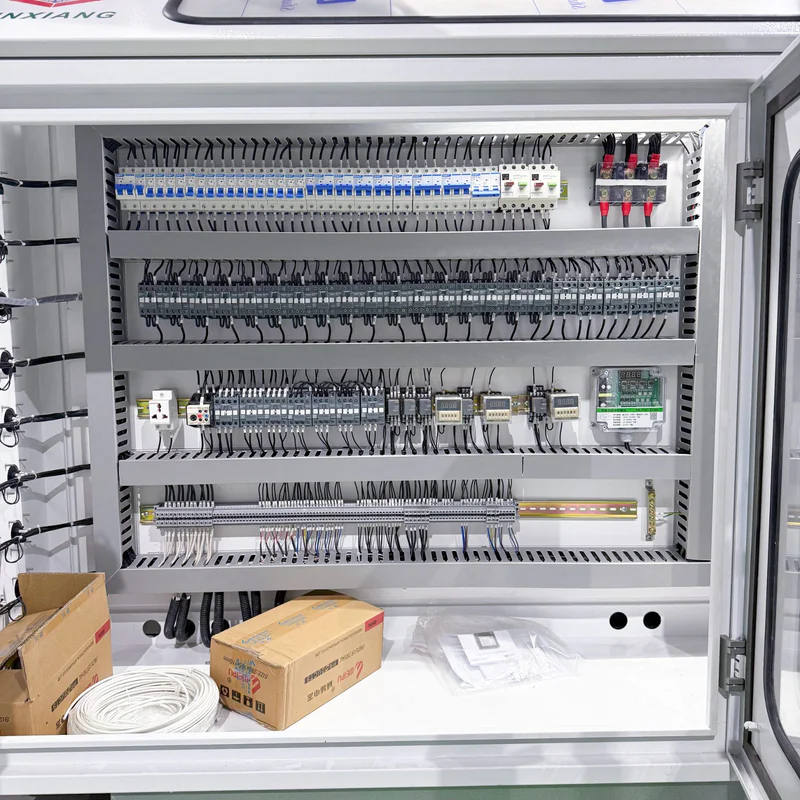
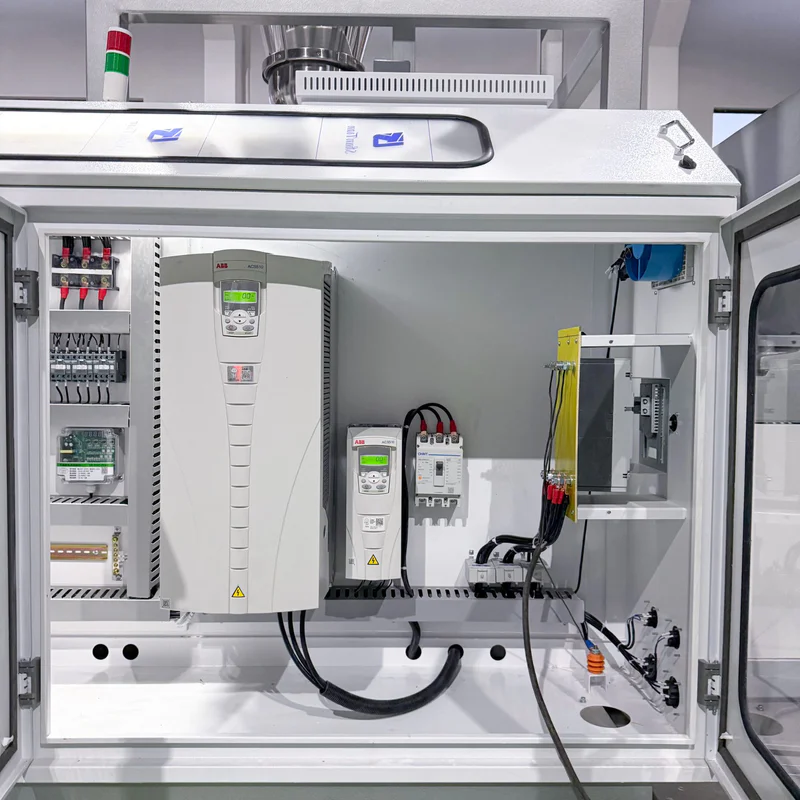
Electrical Cabinet Check
The electrical cabinet, wiring, control buttons, temperature controllers, PLC, HMI and alarm functions can be checked against the final configuration.
Confirms: wiring, control buttons, temperature controllers, PLC, HMI and alarms.
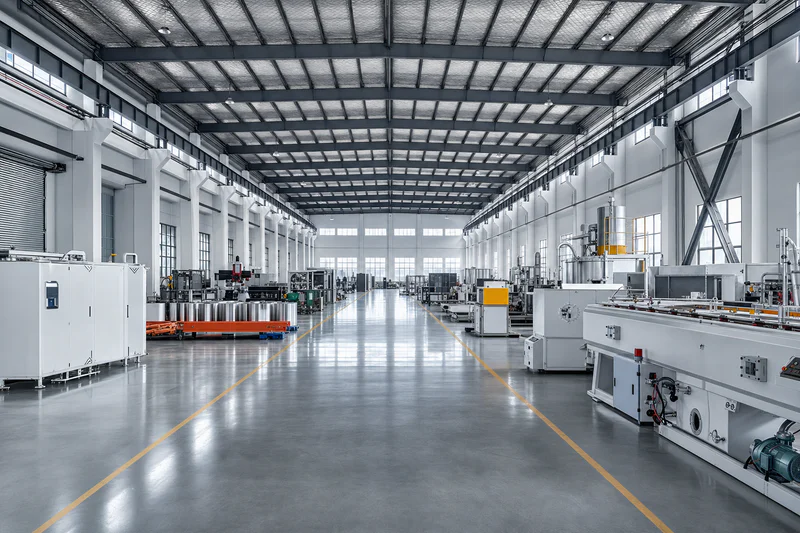
Material Trial If Required
For selected projects, a material trial can be arranged according to material availability, die condition and the agreed testing requirements.
Confirms: material availability, die condition and agreed trial scope.
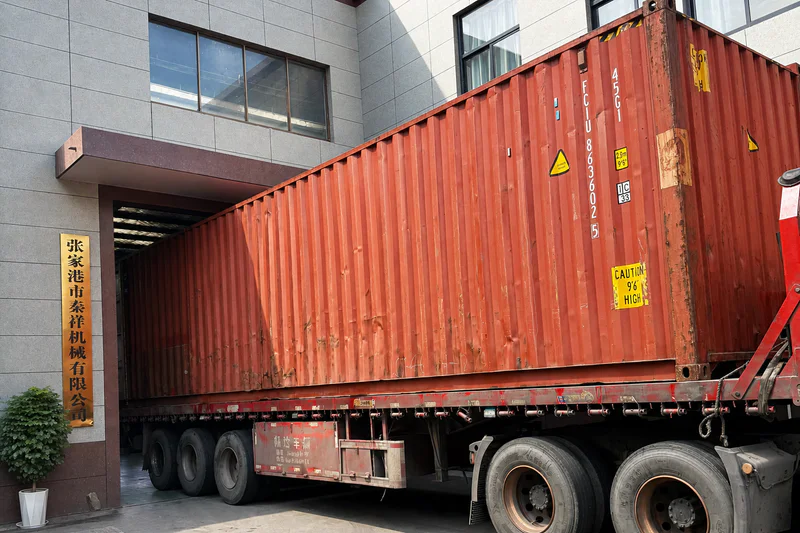
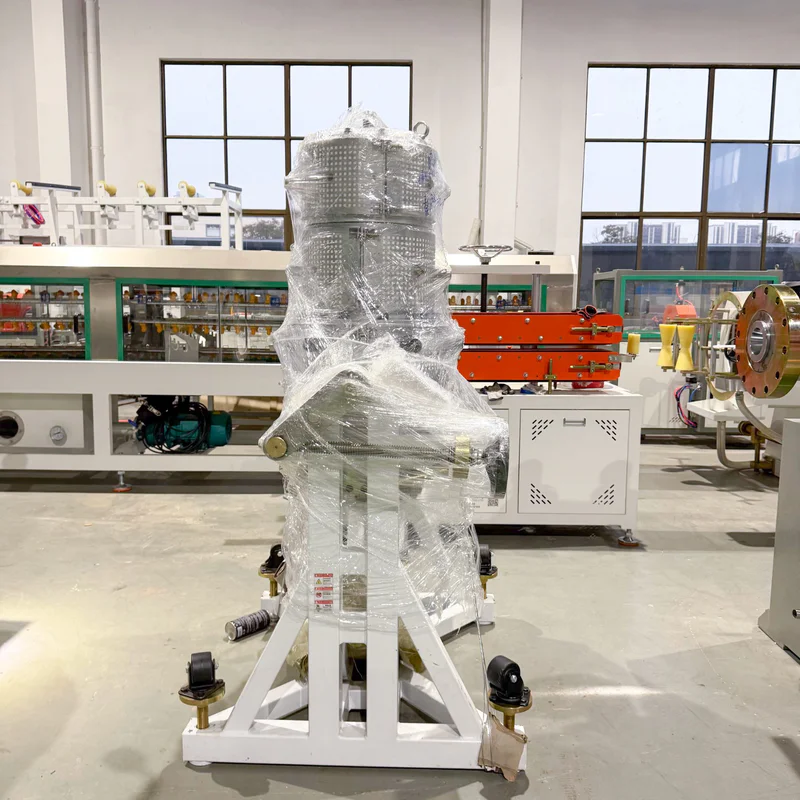
Packing And Document Check
Before packing, machine parts, spare parts, operation manual, electrical diagram and related documents can be checked for shipment preparation.
Confirms: machine parts, spare parts, manual, electrical diagram and export documents.
Pre-shipment testing helps reduce installation risk after arrival. For replacement or upgrade projects, testing should also cover voltage standard, control interface, spare parts and the information needed for line integration.
Plastic Extrusion Machine Project Process
From material review to machine testing and shipment, each step confirms the right extruder configuration before production, packing and line integration.
Material And Process Review
We check your material, material form, final product, target output and processing concerns to confirm whether you need a single screw, twin screw, co-extruder, precision or pelletizing extruder.
Existing Line Check
Replacing or upgrading? We review your current machine model, screw diameter, motor power, center height, die connection, downstream equipment and current production problems.
Extruder Type Selection
The machine type is chosen by material behavior, feeding form, formula, filler ratio, heat sensitivity, mixing demand and final application, not by model number or price alone.
Technical Configuration
We confirm screw diameter, L/D ratio, motor, gearbox, heating and cooling zones, screw and barrel material, feeding method, venting, screen changer, control system and voltage standard.
Quotation And Confirmation
The quote is built around the confirmed configuration, optional items, spare parts, testing scope, packing and delivery, so you compare on configuration, not price alone.
Manufacturing And Assembly
After confirmation, the frame, screw barrel, gearbox, motor, heating system, cooling system and electrical cabinet are manufactured and assembled to the agreed specification.
Testing Before Shipment
Before packing, the machine is checked for mechanical running, screw rotation, heating zones, motor operation, gearbox condition, electrical control and a material trial if required.
Shipping And Integration
After testing and packing, the machine ships with documents, spare parts and export packaging. For upgrades, installation guidance focuses on line connection, control interface and downstream matching.
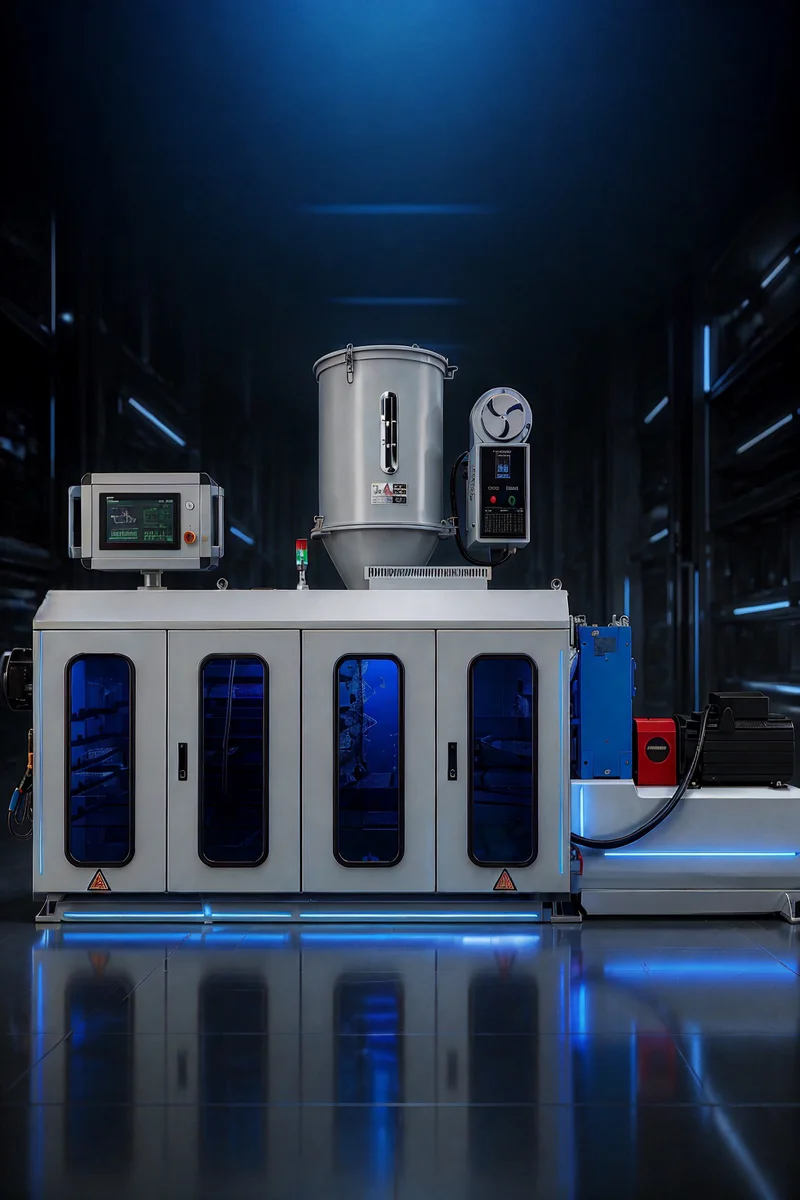
Review, Configure, Build, Test, Ship
From your first material review to installation support on site, one team stays with your project the whole way.
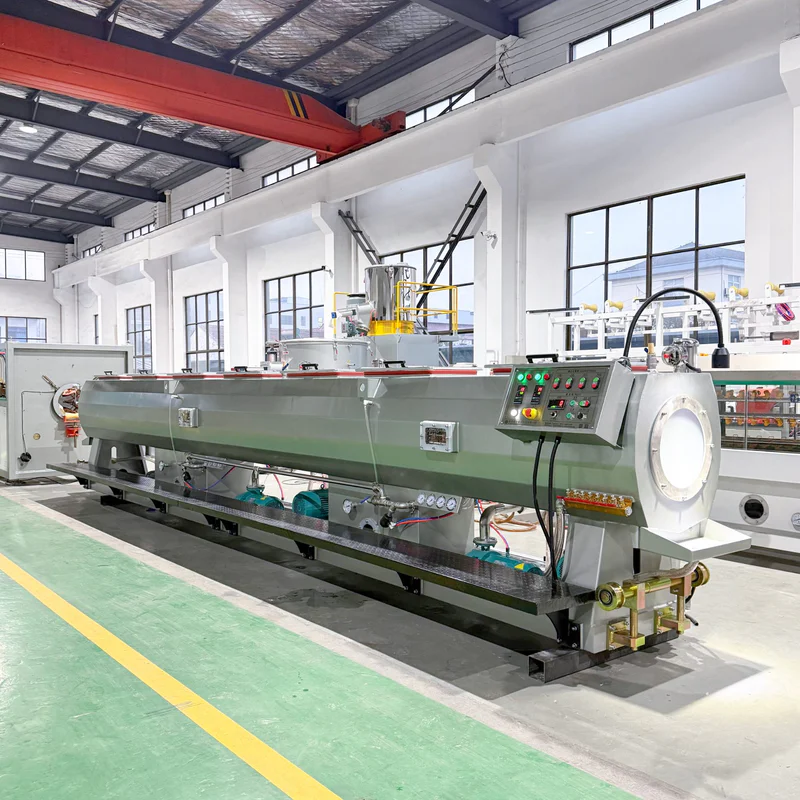
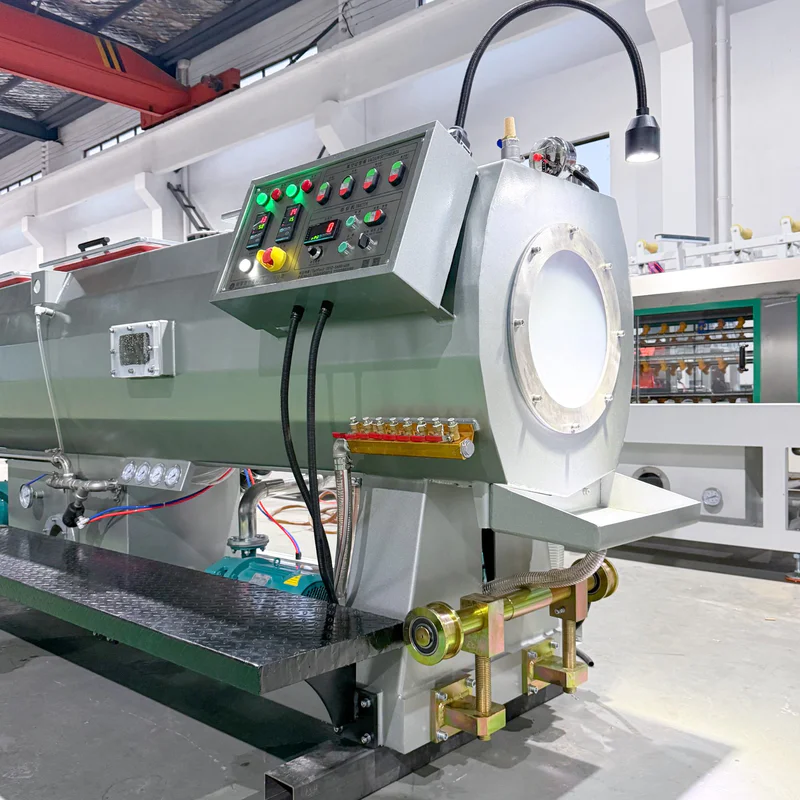
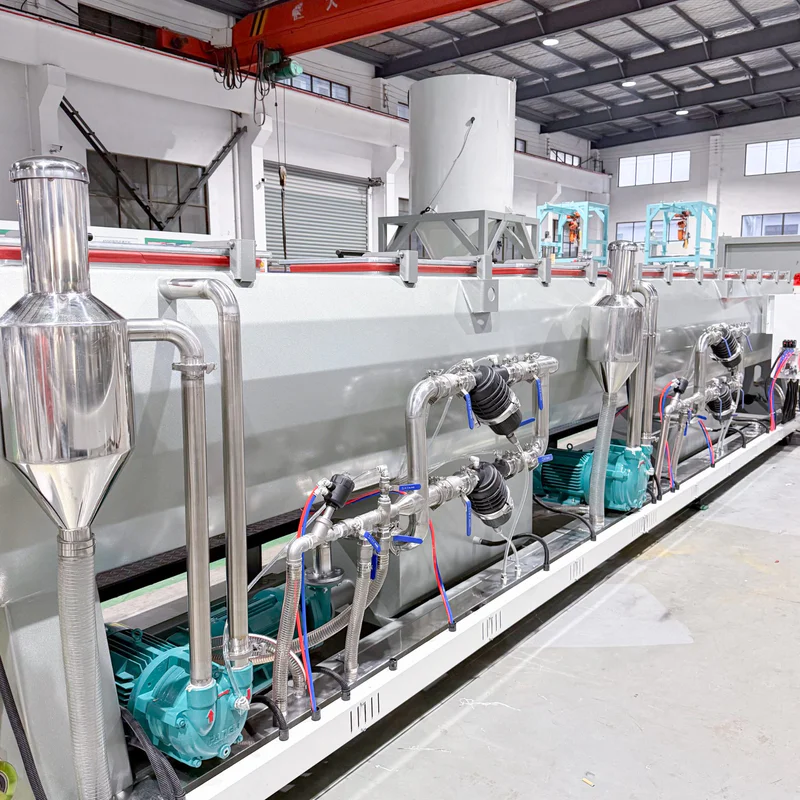
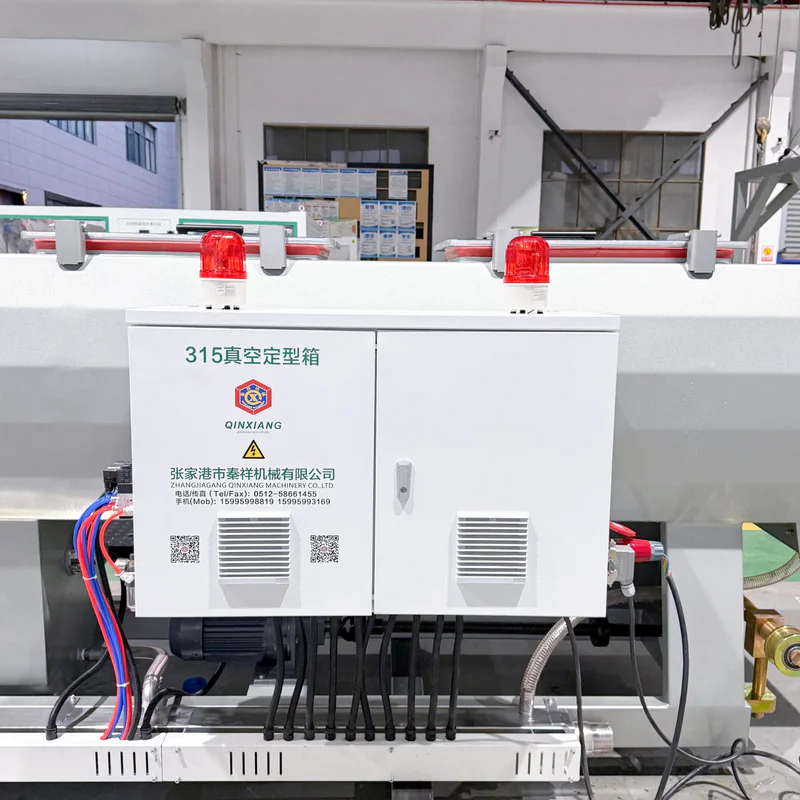
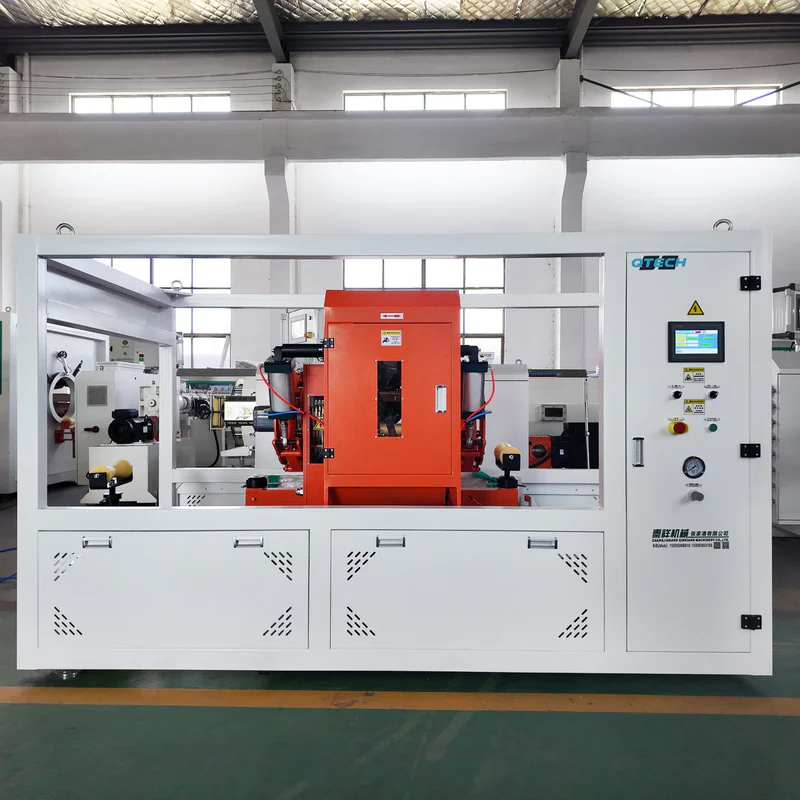
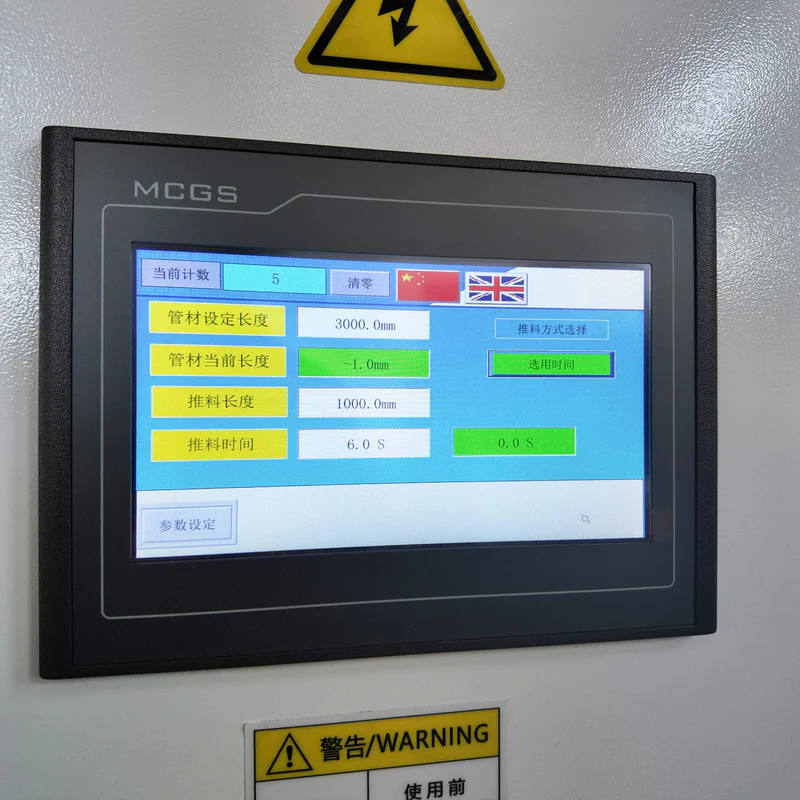
Machine Evidence
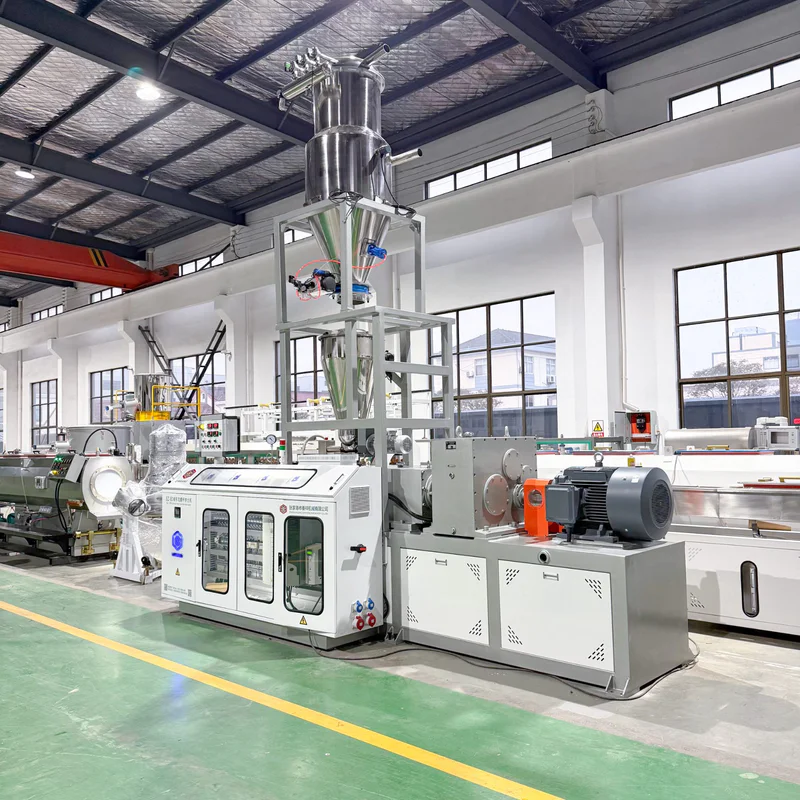
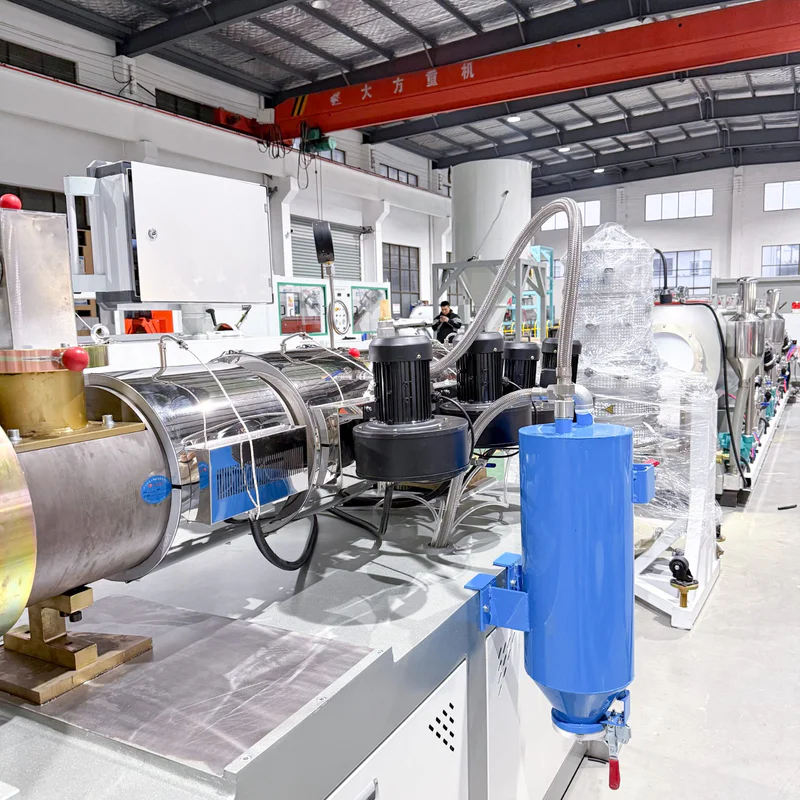
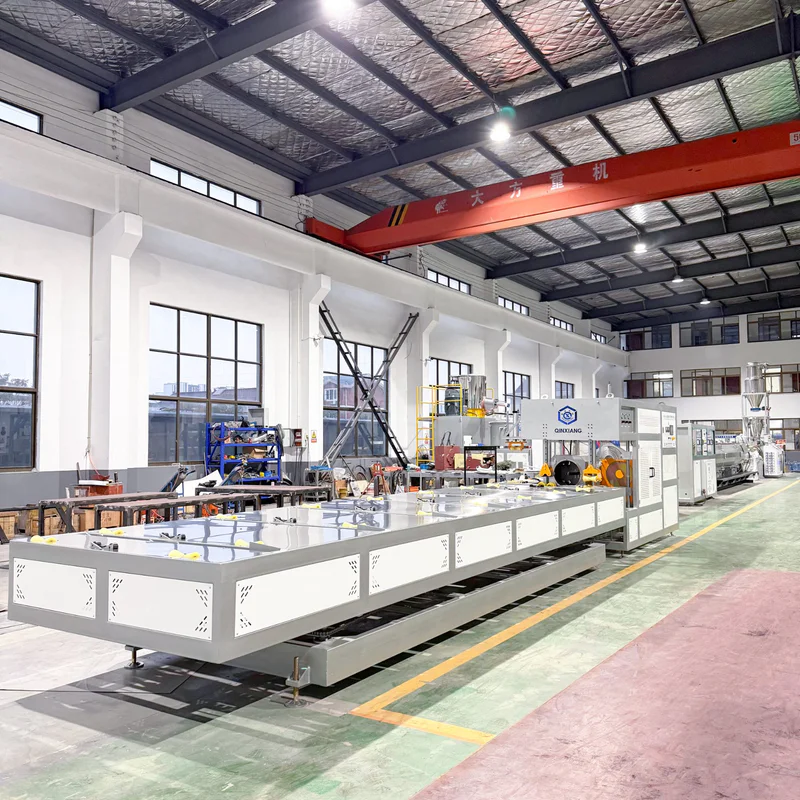
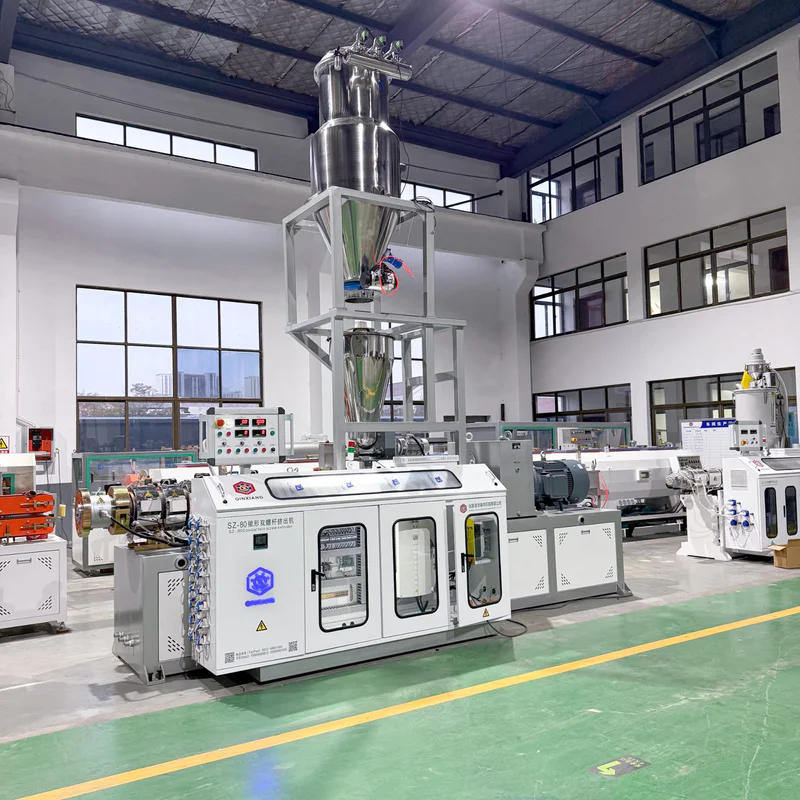
Review machine photos from extruder assembly, screw and barrel matching, electrical control, testing, packing and project integration. These details help you check whether the machine is built for stable operation, easier installation and long-term maintenance.
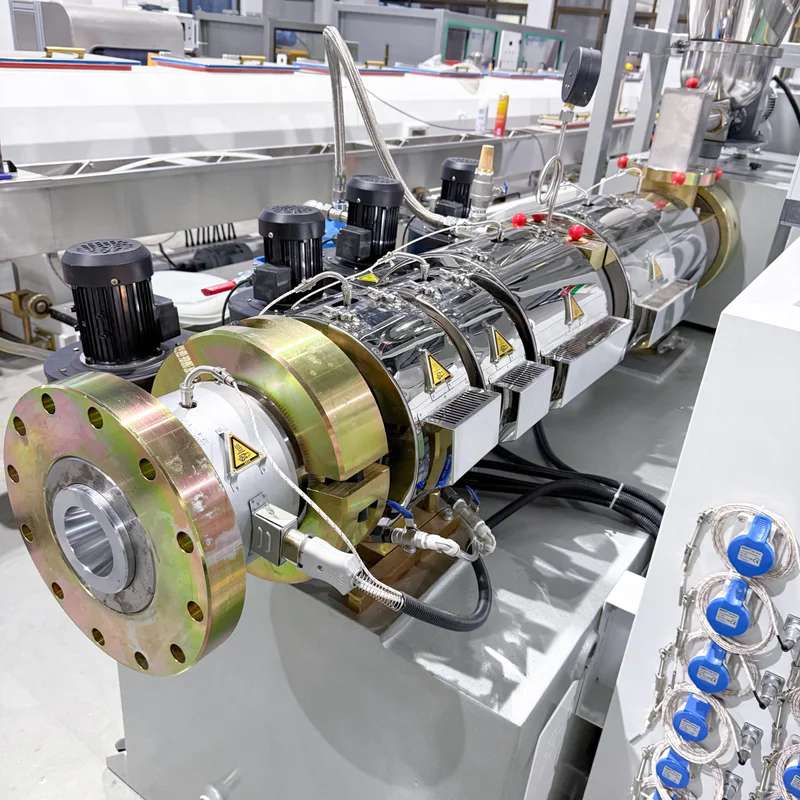
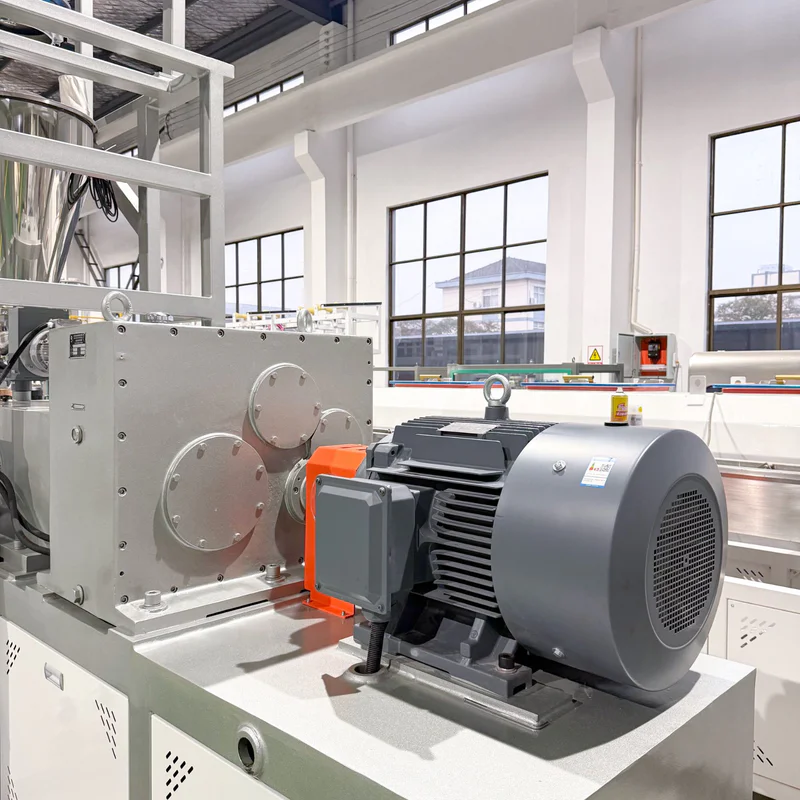
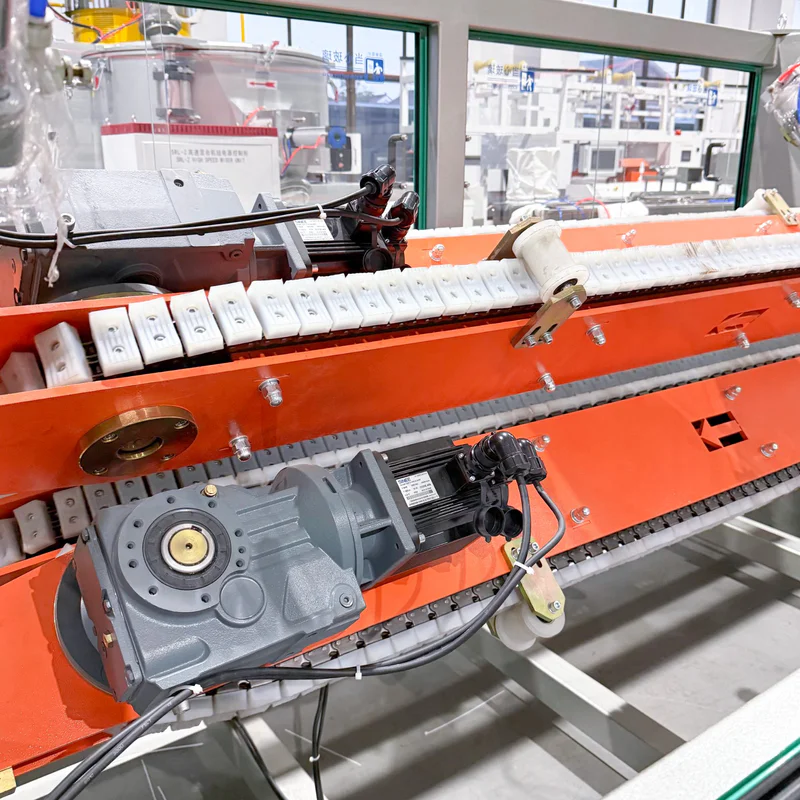
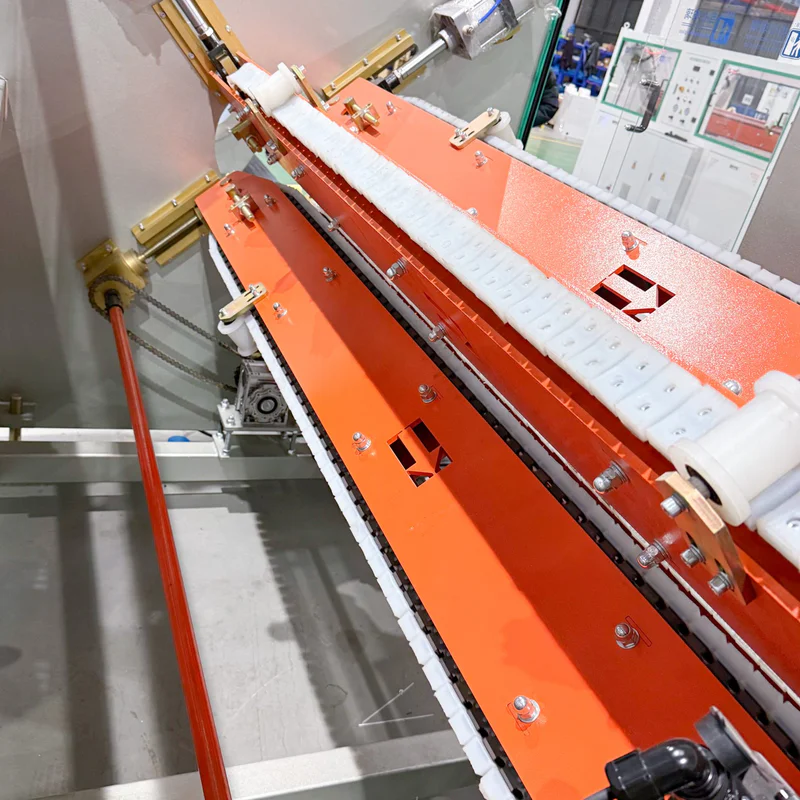
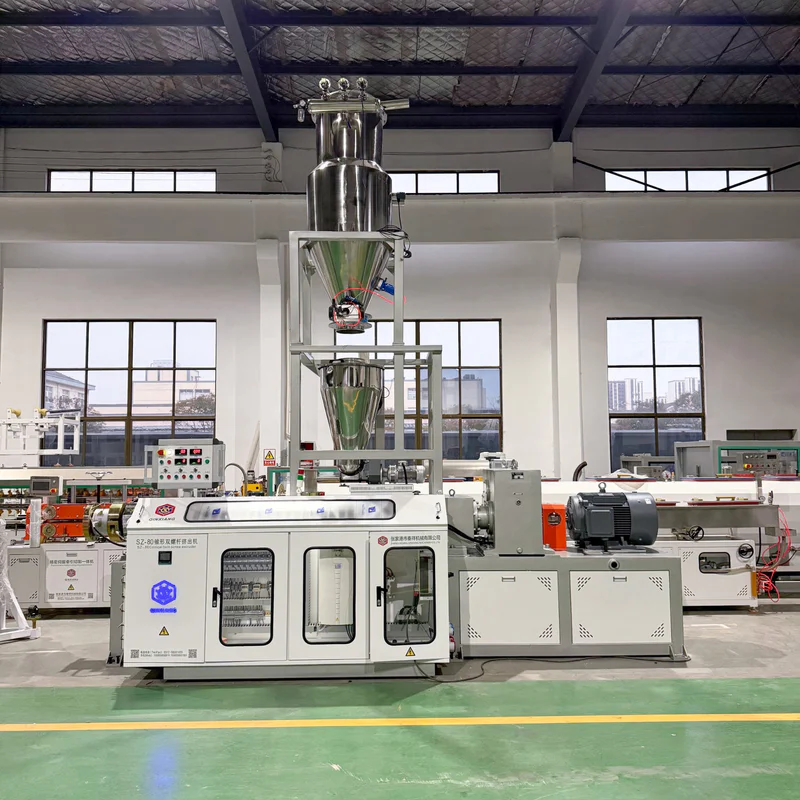
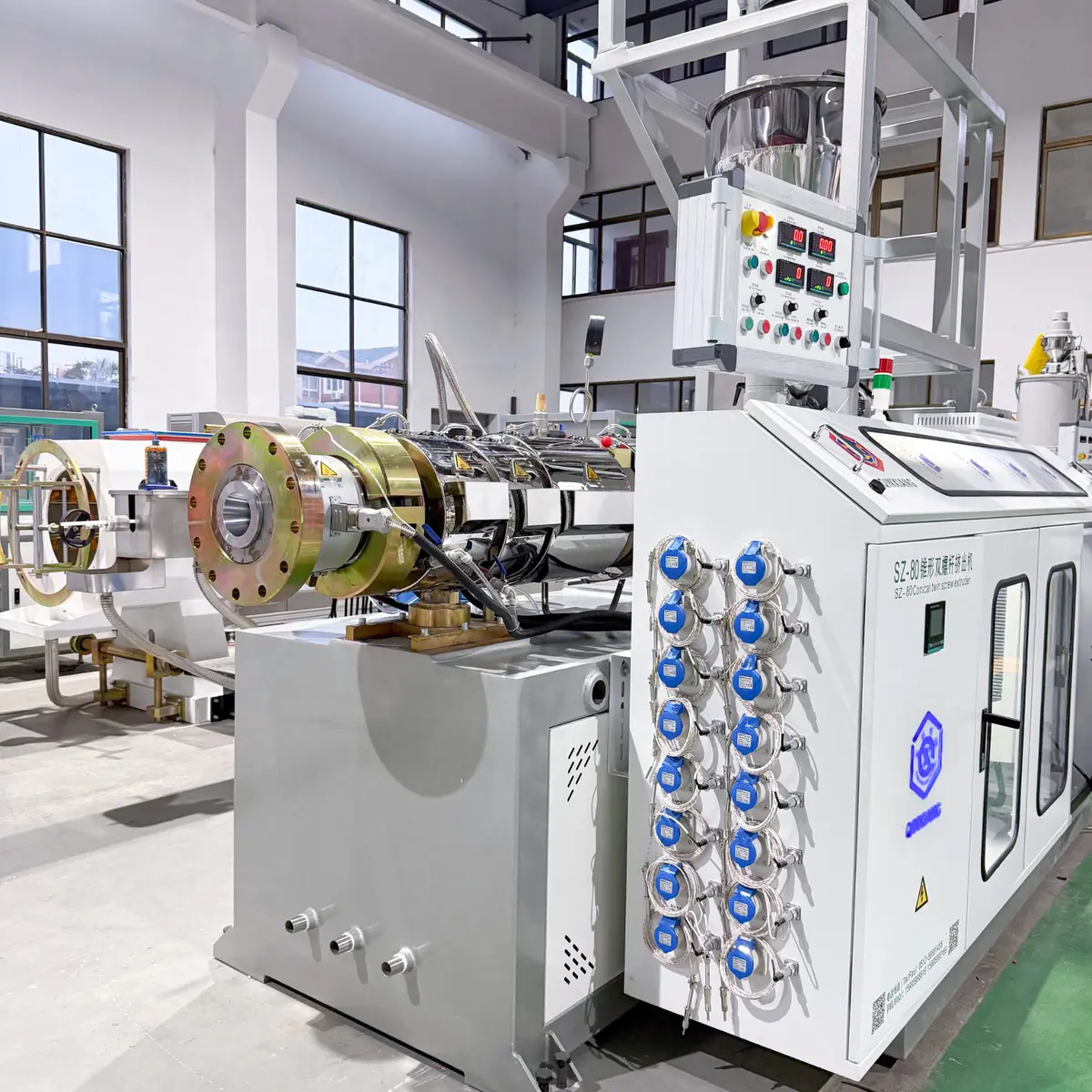
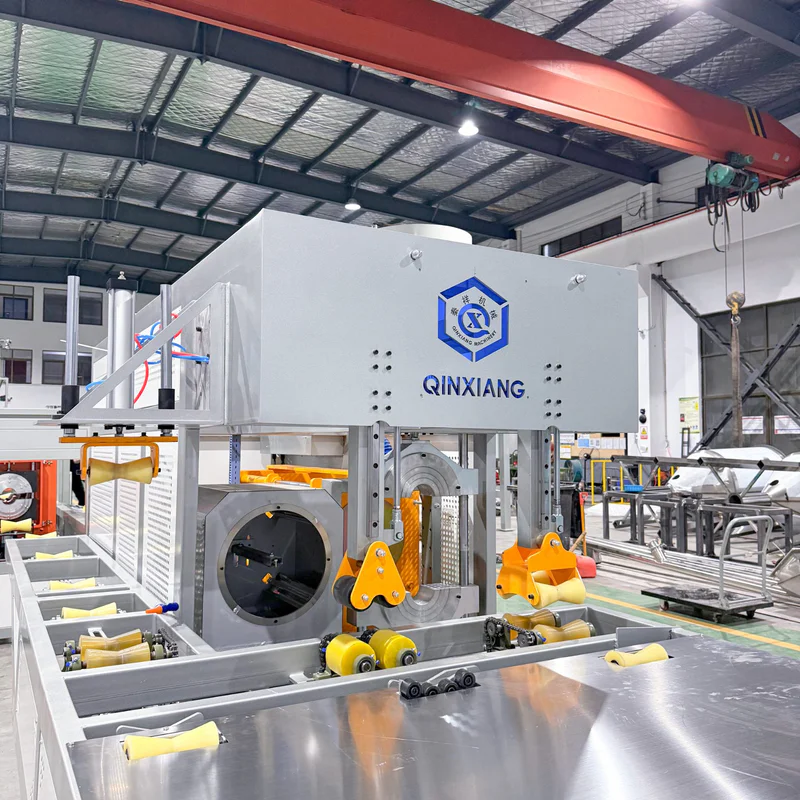
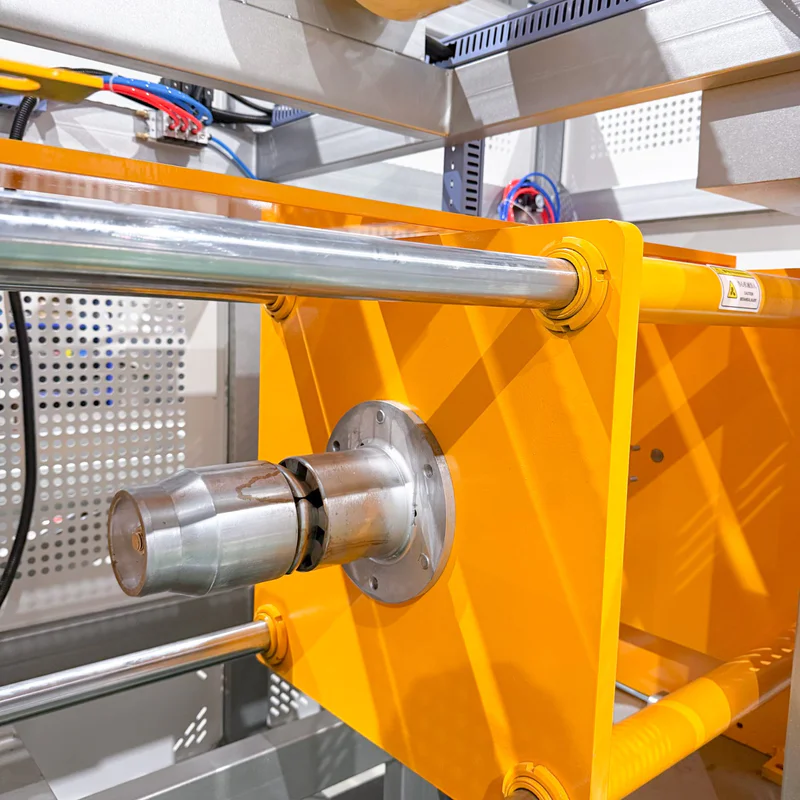
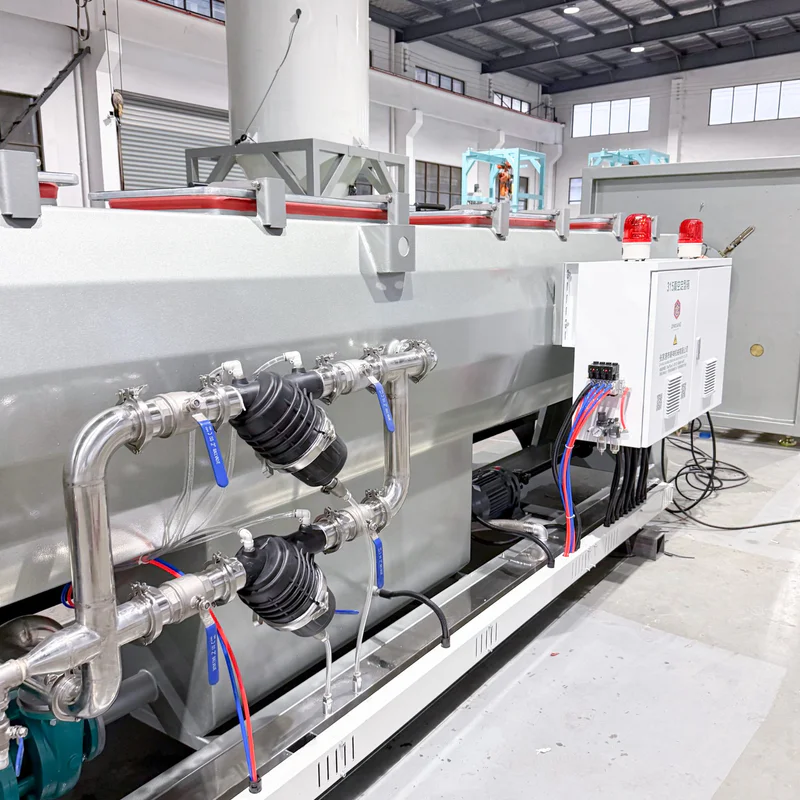
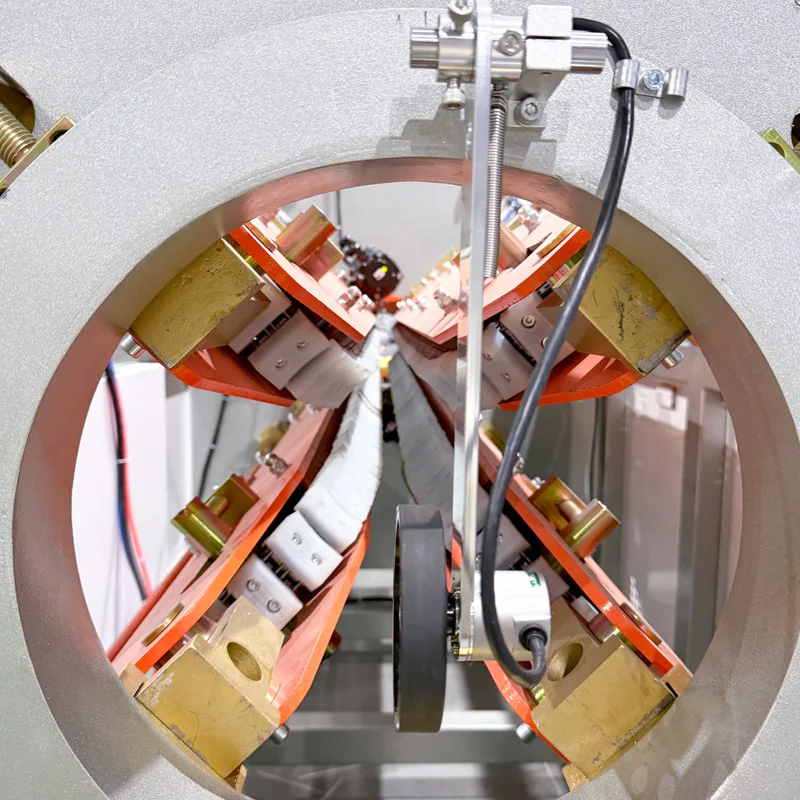
Want More Photos Or A Video Of Your Machine?
Send your material, product and output target, and we share machine photos, test videos and project references close to your configuration, so you can check the build before you order.
Get An Accurate Extruder Quotation
A useful quote is built on your material, final product, output target and machine condition. Share the key details below, and we recommend a suitable extruder configuration before pricing.
What To Send
Material And Material Form
PVC, PE, PP, ABS, WPC or recycled material, in pellets, powder, flakes, regrind or film.
Final Product
Pipe, profile, sheet, board, precision tube, pellets or other extrusion product.
Target Output
Expected capacity in kg/h, line speed or product size range.
Extruder Type
Single screw, twin screw, co-extruder, pilot extruder, or not sure yet.
Current Line Condition
If upgrading, send the existing extruder model, screw diameter, motor power, center height and current production problem.
Special Process Concerns
High filler, PVC heat sensitivity, moisture, degassing, screw wear, color stripe, multi-layer structure or strict tolerance.
Extruder Requirement Sheet
Your Project At A Glance
Plastic Extrusion Machine FAQ
Answers to common technical questions before you choose a plastic extruder for your material, output target, existing line or new extrusion project.
What is the difference between a plastic extrusion machine and a complete extrusion line?
A plastic extrusion machine usually means the core extruder: screw, barrel, motor, gearbox, heating system and control cabinet. A complete extrusion line is the extruder plus die, cooling, calibration, haul-off, cutting, winding, pelletizing or other downstream equipment. If you already have downstream equipment, you may only need a matched extruder. For a new production project, a complete line is usually more suitable.
How do I choose between single screw and twin screw extruder?
Single screw extruders are common for PE, PP, ABS and pellet-based thermoplastic extrusion. Twin screw extruders suit PVC powder, WPC, high-filler materials, compounding or applications that need stronger mixing and better formulation control. The final choice should be based on material form, formula, filler ratio, output target and final product.
Can one extruder process PVC, PE and PP?
It is not safe to assume one extruder handles all materials well. PVC, PE and PP have different plasticizing behavior, temperature requirements and screw design needs. A machine may cover a limited material range if the screw, barrel, temperature control and cleaning process suit it, but multi-material use should be reviewed before quotation.
How should extruder output be confirmed?
Output should be confirmed by material, screw design, die pressure, melt stability and downstream capacity. The same machine can hit different stable output on PVC, PE, PP, ABS, WPC or recycled materials. Motor power alone does not prove production capacity.
Can I replace only the old extruder instead of changing the full line?
Yes, if your die, cooling, haul-off, cutting, winding or pelletizing equipment still meets the production requirement. Before selecting a replacement extruder, check center height, flange size, die connection, current output, target output, motor power, control interface and workshop layout.
When do I need a vented or degassing extruder?
A vented or degassing extruder may be needed when the material carries moisture, volatiles, printed film, recycled content or additives that cause bubbles, black spots, poor surface quality or unstable pellets. The need for vacuum degassing depends on material condition and final product quality requirements.
Can the screw and barrel be customized for my material?
Yes. Screw and barrel design should be selected by material type, filler ratio, wear condition, plasticizing requirement and output target. High-filler PVC, WPC, glass fiber materials and recycled plastics may need wear-resistant screw and barrel options.
Can a co-extruder be added to my existing line?
A co-extruder can be added for color stripes, surface layers, functional layers or multi-layer structures. The configuration should match the main extruder output, layer ratio, material compatibility, die connection, installation space and control synchronization.
What affects the price of a plastic extrusion machine?
Price is affected by screw type, screw diameter, L/D ratio, motor and gearbox, screw and barrel material, heating and cooling system, feeding method, venting, screen changer, control system, customization level, spare parts and testing scope. A useful comparison is based on configuration, not machine name alone.
What should be checked before shipment?
Before shipment, the extruder can be checked for mechanical running, screw rotation, heating zones, motor operation, gearbox condition, electrical control, alarm functions and a material trial if required. For upgrade projects, prepare voltage standard, spare parts, documents and line integration details too.
Start Your Extruder Project With Maggie
Whether you need a machine matched to your material, an upgrade on an old extruder, or just help picking a direction, send what you have. Maggie replies personally within 24 hours with real configuration details and a clear next step.

Maggie
Extruder Sales, QTech Machinery
Replies within 24 hoursEvery message here reaches me directly. Tell me your material, output target, and final product, and I come back with an extruder configuration and a real quote, not a brochure.
Your material, output target, or a photo of your current line is enough to start. We supply extrusion, granulating, and recycling machines to factories and importers across 60+ countries.
Maggie
Sales, Zhangjiagang Qinxiang Machinery Co., Ltd.
Tell Us About Your Extruder Project
Fields marked are required.