What Is a PPR Pipe Extrusion Line?
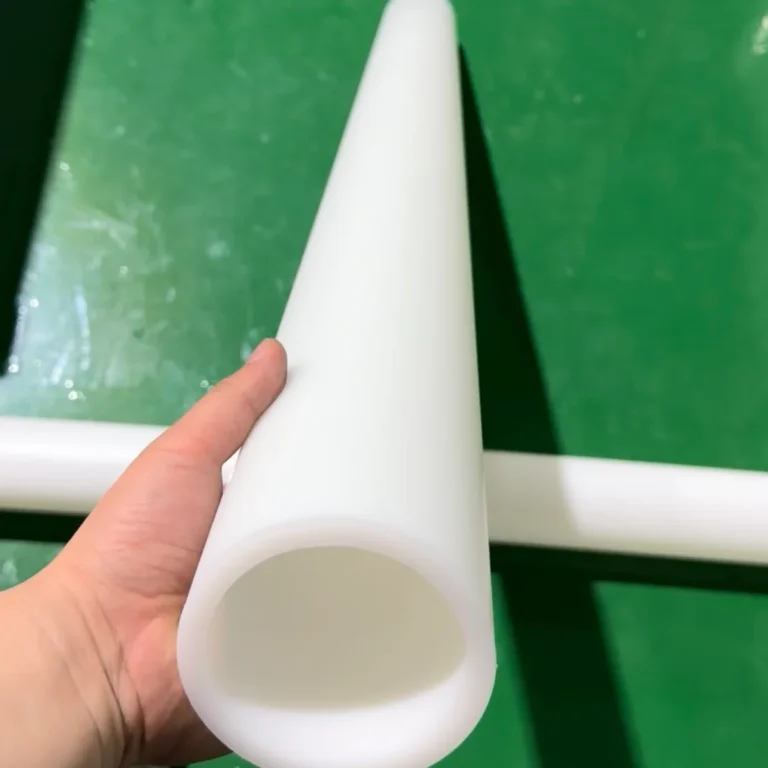
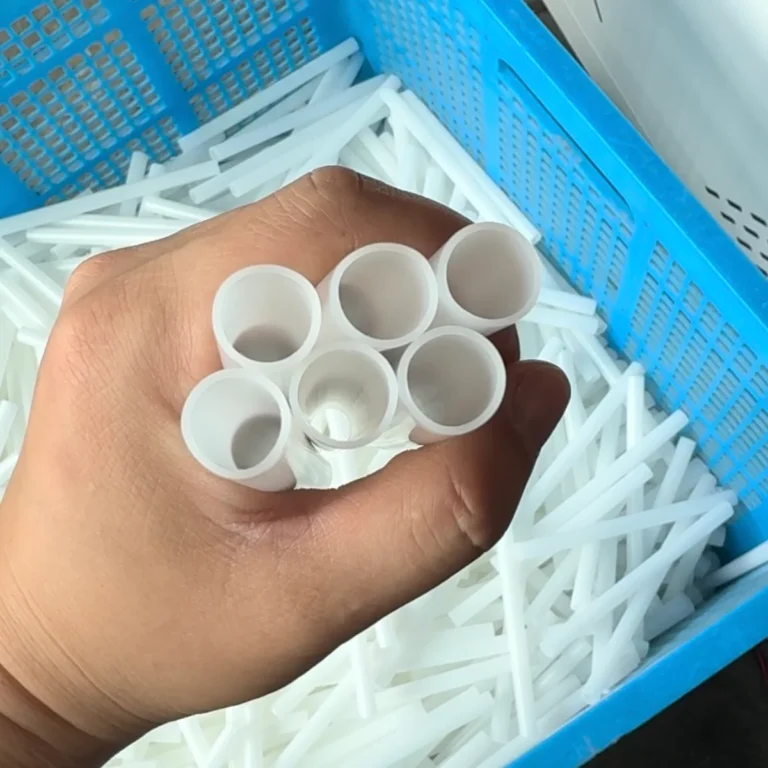
A PPR pipe extrusion line is a complete plastic pipe manufacturing system used to produce polypropylene random copolymer pipes for hot and cold water supply, plumbing systems, building construction, municipal engineering, agricultural irrigation, and industrial fluid transportation. Because PPR pipes require good pressure resistance, heat resistance, dimensional stability, and smooth inner surfaces, the extrusion line must provide stable plasticizing, accurate pipe forming, effective cooling, reliable haul-off, precise cutting, and easy operation.
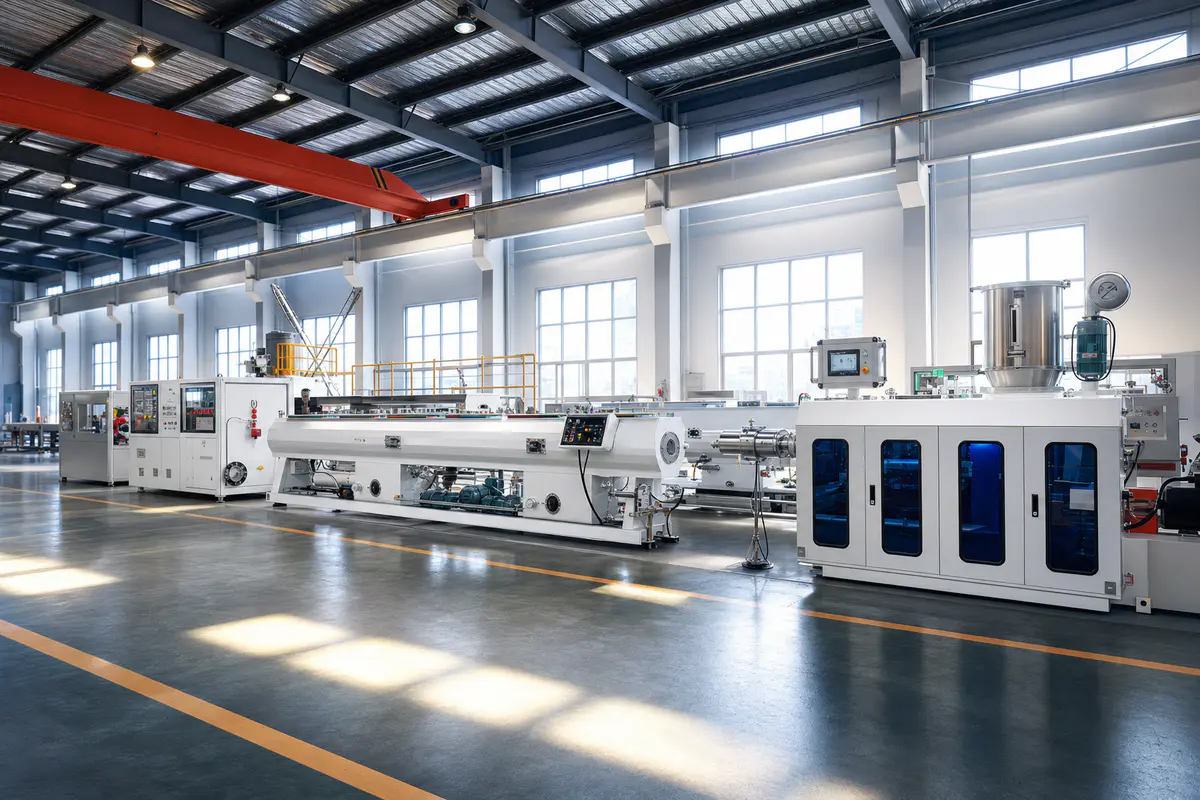
Compared with ordinary plastic pipe production, PPR pipe manufacturing requires careful matching between the extruder, die head, vacuum calibration tank, spray cooling tank, haul-off machine, cutter, and control system. The right production line helps manufacturers improve pipe quality, reduce material waste, lower energy consumption, and maintain stable continuous production.
Based on the QTech Machinery PPR pipe extrusion line case, a successful PPR production solution should be customized according to pipe diameter range, raw material, target output, color marking requirements, local voltage, factory layout, and automation level.
1. What is a PPR pipe extrusion line?
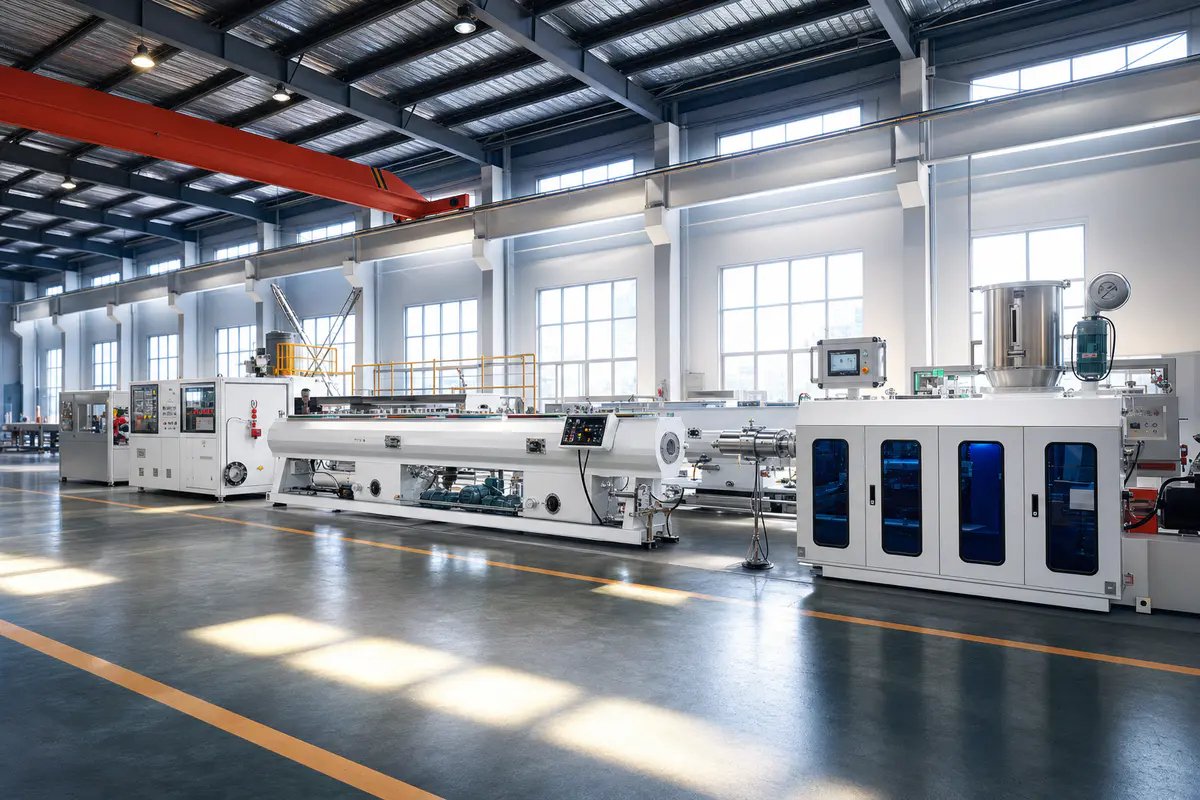
A PPR pipe extrusion line is a complete system that melts PP/PPR material and forms it into pipes through extrusion, calibration, cooling, hauling, and cutting.
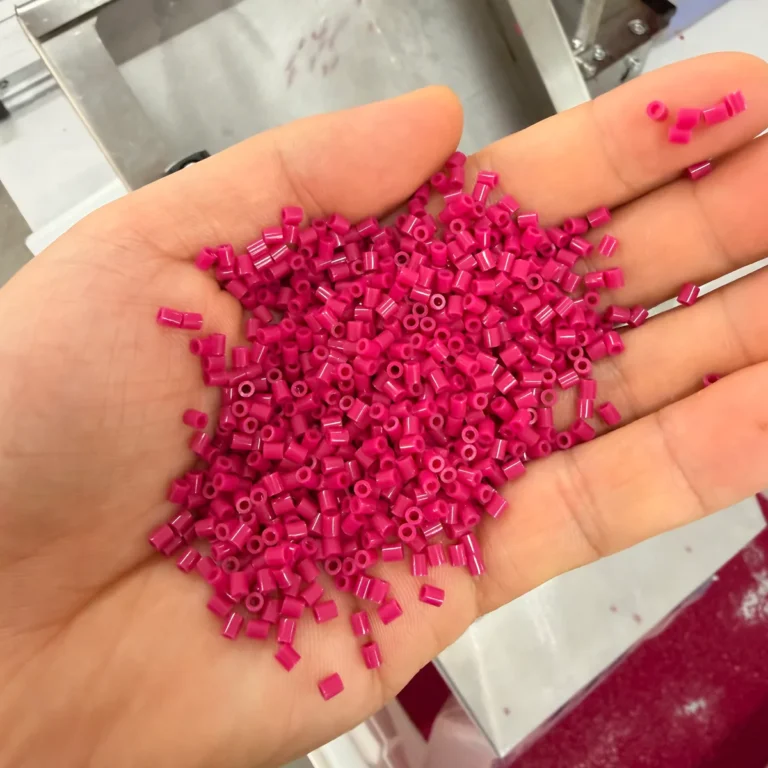
A PPR pipe extrusion line is designed to produce PPR pipes from polypropylene random copolymer material. The process starts with feeding plastic pellets into the extruder. Inside the extruder, the material is heated, melted, plasticized, and pushed forward by the screw. The molten material then passes through the pipe die, where it is shaped into a tube. After that, the pipe enters the vacuum calibration tank for sizing, then moves through the spray cooling tank, haul-off machine, and cutter.
A typical PPR pipe extrusion line includes:
| Main Section | Function |
|---|---|
| Material feeding system | Feeds PP/PPR pellets into the extruder |
| Single screw extruder | Melts and plasticizes the material |
| Pipe die head | Forms the pipe diameter and wall thickness |
| Color marking extruder | Adds color lines for identification |
| Vacuum calibration tank | Controls pipe size and roundness |
| Spray cooling tank | Cools and stabilizes the pipe |
| Haul-off machine | Pulls the pipe at a stable speed |
| Cutting machine | Cuts the pipe to required length |
| Control cabinet | Controls the complete production line |
In the QTech Machinery case, the PPR pipe extrusion line was developed for a plumbing industry customer who needed to produce pipes from Φ20 mm to Φ110 mm with high efficiency, stable quality, and reliable automation.
Reference case: PPR Pipe Extrusion Line
2. What materials can a PPR pipe extrusion line process?
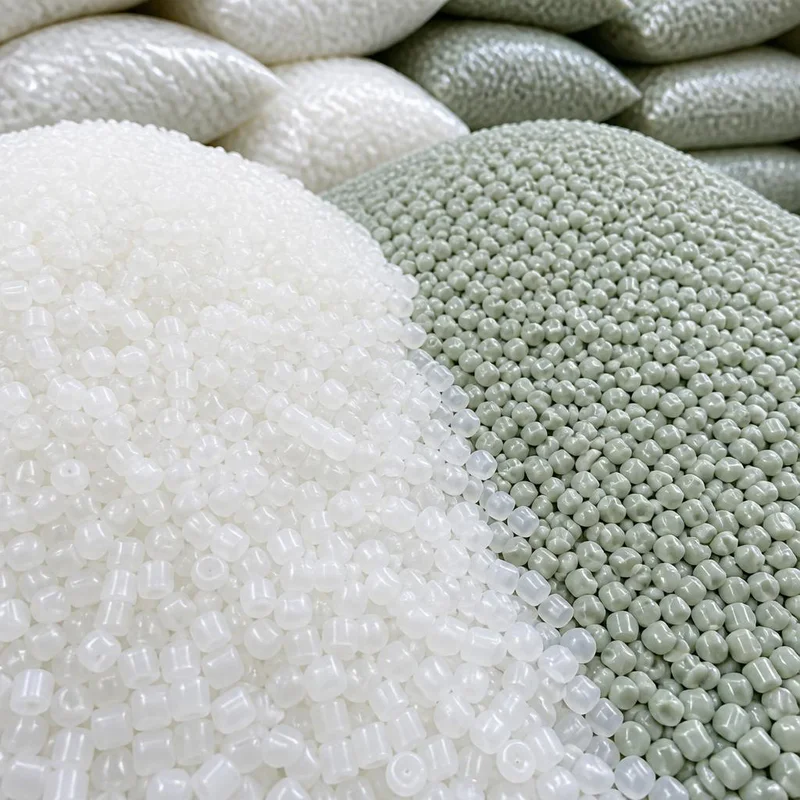
A PPR pipe extrusion line mainly processes PP and PPR materials, and it can be customized for related polypropylene-based pipe applications.
PPR, also known as polypropylene random copolymer, is widely used in water supply and plumbing systems because of its heat resistance, corrosion resistance, lightweight structure, and long service life. It is especially common in hot and cold water pipe systems for residential and commercial buildings.
In the QTech case, the project material was PP and PPR, and the application fields included agricultural irrigation, cable protection, construction and infrastructure, industrial applications, municipal engineering, and natural gas distribution.
Common materials and applications include:
| Material | Features | Typical Use |
|---|---|---|
| PPR | Heat-resistant, pressure-resistant, clean and durable | Hot and cold water pipes |
| PP | Lightweight, chemical-resistant, easy to process | Industrial and irrigation pipes |
| PP-RCT | Higher temperature resistance and pressure performance | High-performance plumbing systems |
| Modified PP | Customized strength or flexibility | Special industrial pipe applications |
For stable PPR pipe production, material quality is very important. Moisture, contamination, unstable melt flow index, or inconsistent raw material grade may cause surface defects, bubbles, wall thickness variation, and unstable output.
A properly configured extruder with optimized screw structure helps improve melt uniformity and pipe quality. In the QTech case, the SJ75/33 single screw extruder used a 75 mm screw and 33:1 L/D ratio, supporting high plasticization and uniform melt flow.
3. What pipe diameter range should customers confirm first?
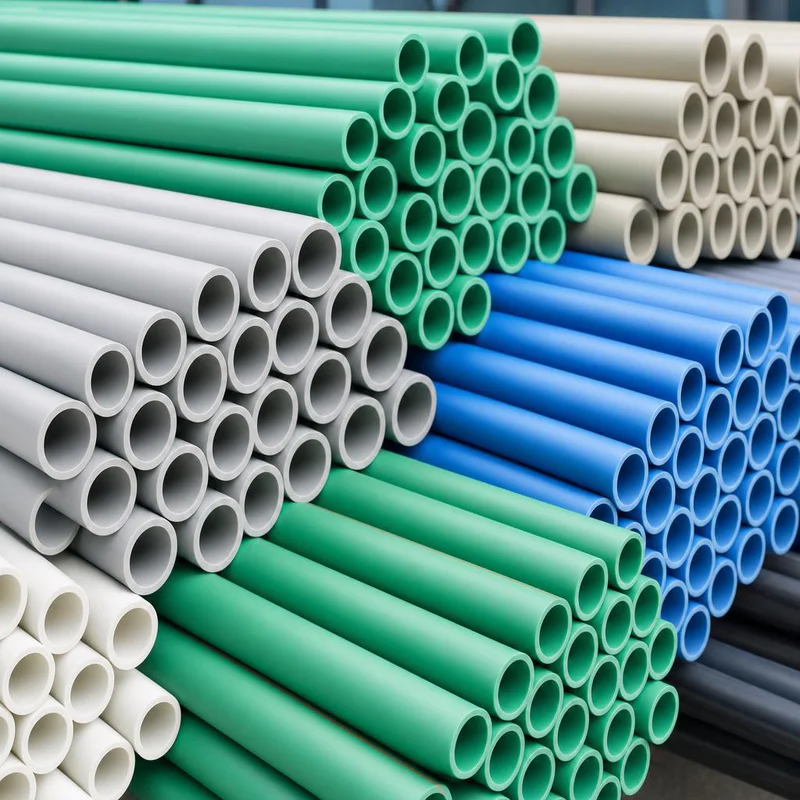
Pipe diameter range determines the extruder size, die set, calibration sleeves, cooling length, haul-off structure, and cutter specification.
Before choosing a PPR pipe extrusion line, customers should first confirm the pipe diameter range they want to produce. PPR pipe production commonly covers small and medium diameters such as 20 mm, 25 mm, 32 mm, 40 mm, 50 mm, 63 mm, 75 mm, 90 mm, and 110 mm.
In the QTech Machinery PPR pipe extrusion line case, the customer required a line capable of producing pipes from Φ20 mm to Φ110 mm. This range is suitable for plumbing, water supply, construction, municipal engineering, and industrial fluid transportation.
Key diameter-related factors include:
| Item | Why It Matters |
|---|---|
| Minimum pipe diameter | Determines small-size die and calibration tools |
| Maximum pipe diameter | Determines extruder capacity and cooling demand |
| Wall thickness | Affects pipe pressure rating and material cost |
| Pipe standard | Determines tolerance and testing requirements |
| Number of pipe sizes | Determines mold and calibration sleeve quantity |
| Production speed | Affects cooling length and haul-off design |
If a customer needs a wide diameter range, the supplier must design the die, vacuum calibration tank, haul-off, and cutter to support multiple pipe sizes. For example, a line for Φ20–Φ110 mm must be flexible enough for small pipe speed and large pipe cooling stability.
4. Why is the extruder important in PPR pipe production?
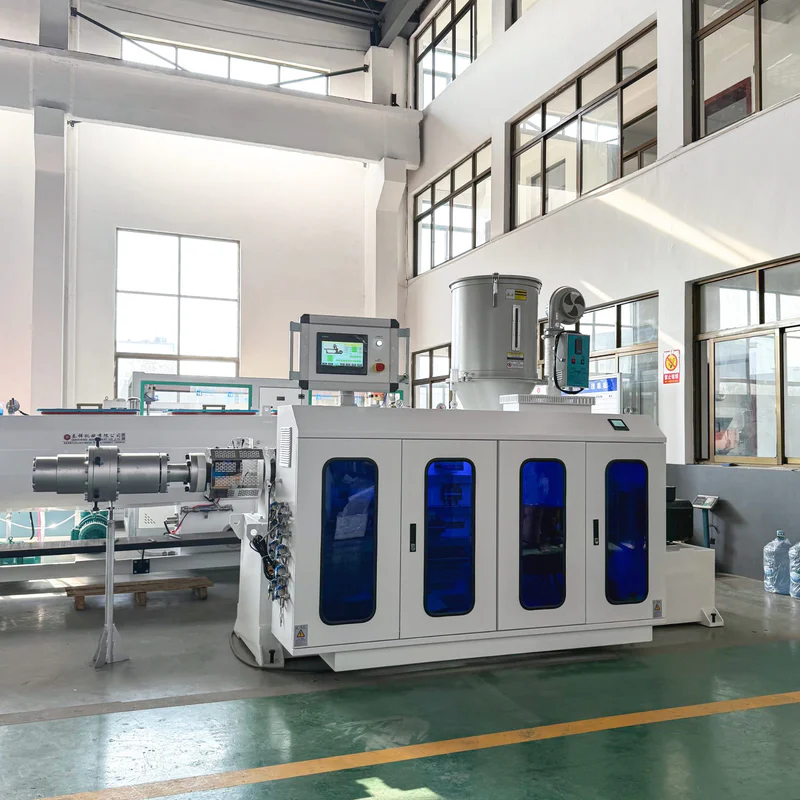
The extruder determines plasticizing quality, melt stability, output capacity, energy consumption, and final pipe consistency.
The single screw extruder is the core machine of a PPR pipe extrusion line. Its screw design, L/D ratio, heating system, cooling system, motor power, and speed control directly affect pipe performance.
In the QTech PPR case, the main extruder configuration included:
| Item | Configuration |
|---|---|
| Extruder model | SJ75/33 |
| Screw diameter | 75 mm |
| Screw L/D ratio | 33:1 |
| Main motor power | 55 kW |
| Speed control | Yaskawa inverter |
| Heating system | Ceramic heaters |
| Heating zones | 4.5 kW × 6 zones |
| Cooling method | Fan cooling |
The 33:1 L/D ratio helps improve plasticizing performance and melt uniformity. The 55 kW motor with Yaskawa inverter supports stable speed control and reliable operation. The ceramic heater and fan cooling system help maintain accurate barrel temperature during continuous production.
For smaller precision pipe or customized plastic tube projects, our uploaded SJ65/28 single screw servo extruder can also be applied when the output requirement is lower or when customers need flexible extrusion capability. Its main advantages include:
| SJ65/28 Feature | Customer Benefit |
|---|---|
| 37 kW Inovance servo motor | Energy saving and accurate speed control |
| Optimized BM screw structure | Better plasticizing uniformity |
| 38CrMoALA nitrided screw and barrel | Wear resistance and longer service life |
| Siemens PLC control | Stable automation and easy operation |
| MCGS touchscreen | User-friendly operation |
| Ethernet communication | Supports production data access |
| Guomao gearbox + Flender coupling | Reliable transmission |
This allows QTech Machinery to recommend either a high-output PPR line or a more compact precision extrusion solution according to each customer’s product and market plan.
5. Why does a PPR pipe line need a color marking extruder?
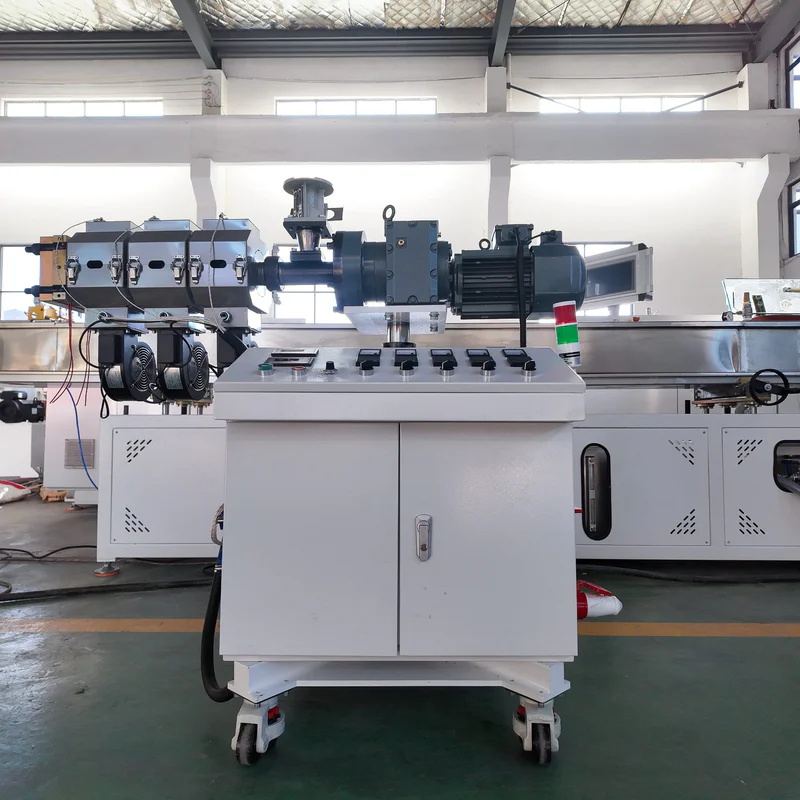
A color marking extruder adds identification stripes to PPR pipes, helping users distinguish pipe types, applications, brands, or specifications.
Color marking is common in PPR pipe production. Pipes may use different colored lines to identify hot water pipes, cold water pipes, pressure ratings, product series, or brand recognition. A stable color marking system improves product appearance and market differentiation.
In the QTech PPR case, the line included a SJ25/25 color marking extruder for precise color marking on pipes.
Color marking benefits include:
| Benefit | Explanation |
|---|---|
| Product identification | Helps distinguish hot/cold water or pipe series |
| Brand recognition | Improves product appearance and market image |
| Specification marking | Helps classify pipe type or pressure level |
| Production consistency | Stable color line improves professional quality |
| Customization | Supports different customer or market requirements |
The color marking extruder must be synchronized with the main extruder and pipe speed. If the color extruder output is unstable, the color line may become broken, uneven, or distorted. Therefore, stable temperature control, suitable screw design, and accurate speed adjustment are important.
For customers selling PPR pipes in competitive markets, color marking is not only a technical function but also a branding advantage.
6. How do vacuum calibration and cooling affect PPR pipe quality?
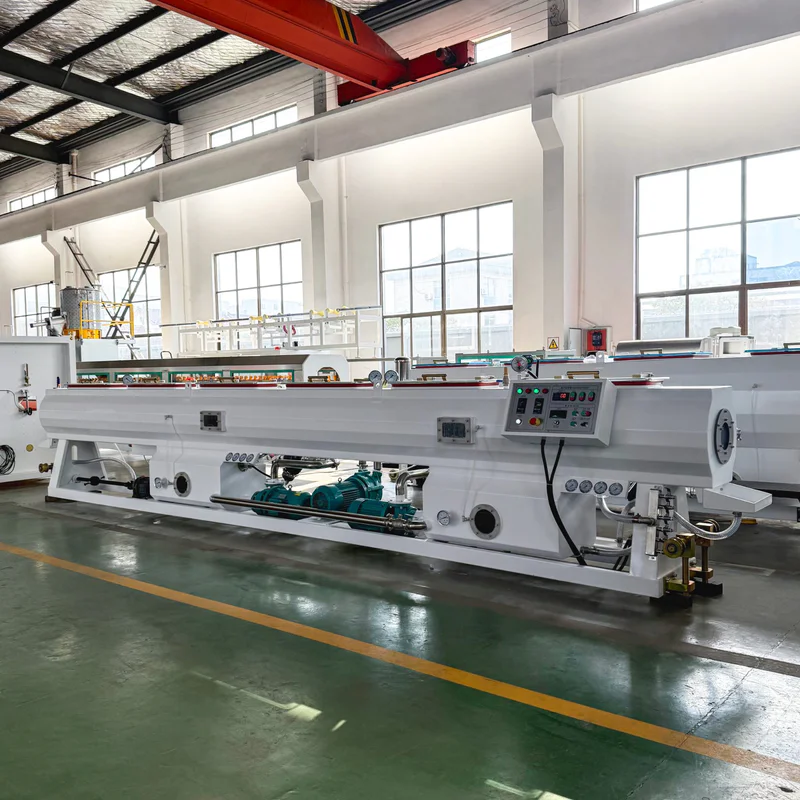
Vacuum calibration and cooling control pipe diameter, roundness, surface finish, shrinkage, and long-term dimensional stability.
After the PPR melt exits the pipe die, it is still hot and soft. It must be quickly shaped and cooled to maintain accurate dimensions. The vacuum calibration tank controls the pipe’s outside diameter and roundness, while the spray cooling tank helps fully cool the pipe before haul-off and cutting.
In the QTech case, the downstream cooling system included:
| Cooling Section | Configuration |
|---|---|
| Vacuum calibration tank | 6 meters |
| Tank material | Stainless steel |
| Vacuum pumps | Dual 4 kW vacuum pumps |
| Spray cooling tank | 6 meters |
| Water pump | 5.5 kW |
The 6-meter vacuum calibration tank helps maintain accurate pipe diameter. The dual 4 kW vacuum pumps provide stable vacuum force. The 6-meter spray cooling tank ensures additional cooling, especially for larger pipe sizes up to Φ110 mm.
Poor cooling may cause:
- Pipe ovality
- Surface marks
- Unstable pipe diameter
- Wall thickness deviation
- Internal stress
- Cutting deformation
- Shrinkage after production
A stainless steel tank structure improves durability, corrosion resistance, and cleanliness. For PPR pipe manufacturers, a stable cooling system is one of the most important factors for consistent pipe quality.
7. How do haul-off and cutting systems influence production efficiency?
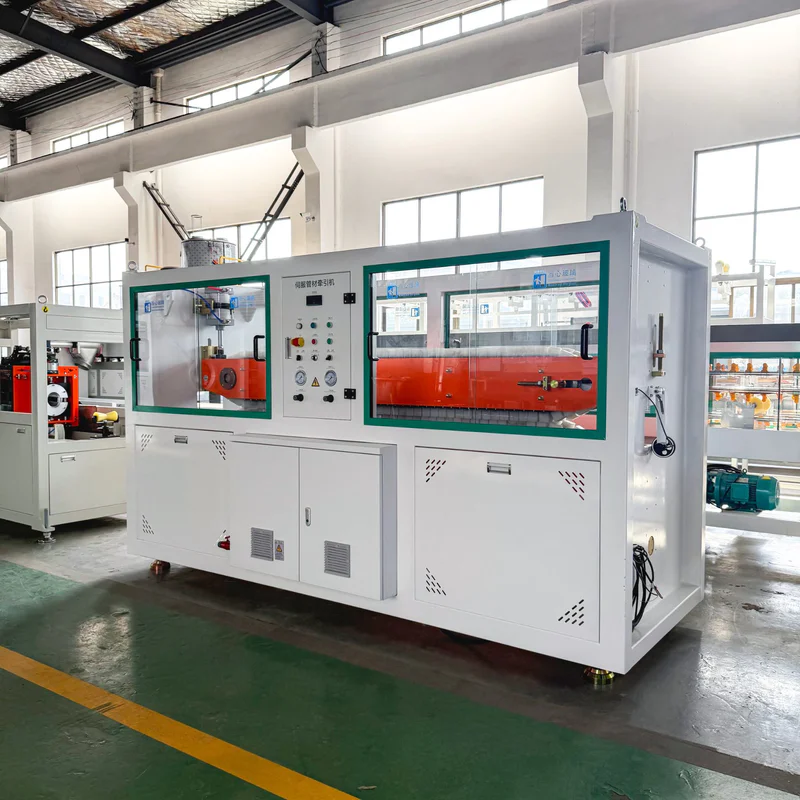
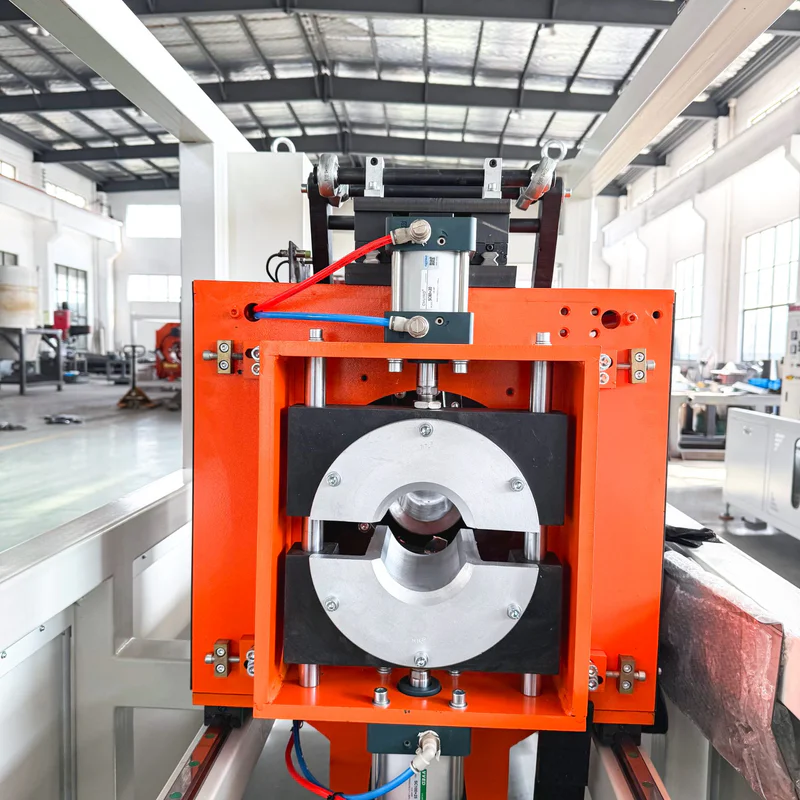
The haul-off and cutting systems control pipe speed, wall thickness stability, cutting accuracy, and final product appearance.
The haul-off machine pulls the pipe at a controlled speed. This speed must match the extrusion output. If the haul-off speed changes, the pipe wall thickness may become unstable. For PPR pipes, especially small and medium diameters, accurate traction is essential for product consistency.
In the QTech PPR pipe extrusion line case, the line included a three-jaw caterpillar haul-off machine with:
| Haul-Off Item | Configuration |
|---|---|
| Type | Three-jaw caterpillar haul-off |
| Effective length | 2500 mm |
| Speed range | 0.2–15 m/min |
| Function | Stable pipe traction |
A haul-off speed range of 0.2–15 m/min allows flexible production for different pipe diameters. Smaller pipes may run at higher speeds, while larger pipes require slower speed and longer cooling time.
The line also included a cutter capable of handling pipe diameters from Φ20 mm to Φ110 mm. In the project solution, QTech supplied a no-chip cutting machine, which provides clean, precise cuts without material loss.
| Cutting Feature | Benefit |
|---|---|
| No-chip cutting | Reduces material waste |
| Accurate cutting length | Improves product consistency |
| Clean pipe end | Better appearance and easier installation |
| Multi-size compatibility | Supports Φ20–Φ110 mm pipe range |
| Automated operation | Reduces labor and improves efficiency |
For PPR pipes used in plumbing systems, clean cutting is important because rough pipe ends may affect welding, installation, and final sealing quality.
8. Why should buyers choose QTech Machinery for a PPR pipe extrusion line?
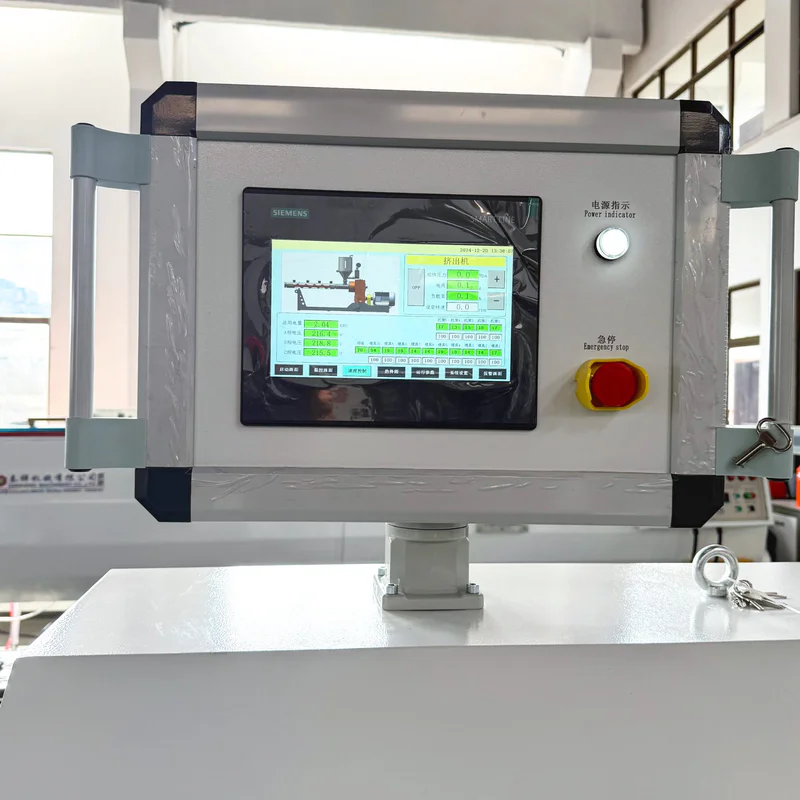
QTech Machinery provides customized PPR pipe extrusion solutions with optimized extruders, color marking systems, stable cooling, precise haul-off, clean cutting, and reliable automation.
A PPR pipe extrusion line should be designed as a complete system. The main extruder, color marking extruder, die head, calibration system, cooling tank, haul-off, cutter, and control system must match each other. QTech Machinery can provide customized solutions according to the buyer’s pipe range, output target, material, voltage, and production environment.
In the PPR Pipe Extrusion Line case, QTech Machinery developed a line for a plumbing industry customer in mid-2025. The project required versatile pipe production from Φ20 mm to Φ110 mm, high efficiency, consistent quality, advanced automation, and robust construction.
QTech supplied:
- SJ75/33 single screw extruder
- SJ25/25 color marking extruder
- Vacuum calibration system
- Spray cooling tank
- Three-jaw caterpillar haul-off
- No-chip cutting machine
- Siemens and Schneider electrical components
- Customized automation system
QTech Machinery’s advantages include:
| QTech Advantage | Customer Benefit |
|---|---|
| Customized line design | Matches customer’s exact pipe range |
| Optimized BM screw structure | Improves melt uniformity |
| Ceramic heating with fan cooling | Stable temperature control |
| Color marking extruder | Better product differentiation |
| Stainless steel calibration and cooling tanks | Durable and reliable operation |
| No-chip cutter | Cleaner cutting and lower waste |
| Siemens and Schneider components | Reliable electrical control |
| OEM and ODM support | Flexible project cooperation |
| Voltage configuration | Suitable for global markets |
| Full run test before shipment | Reduces installation risk |
| Quote in 24 hours | Faster purchasing decision |
Recommended internal links:
- QTech Machinery Home
- Plastic Pipe Making Machine
- Plastic Extrusion Machine
- PPR Pipe Extrusion Line Case
- QTech Machinery Cases
Recommended PPR Pipe Extrusion Line Configuration
The following table summarizes the reference configuration from the QTech PPR pipe extrusion line case.
| Section | Recommended Configuration |
|---|---|
| Pipe material | PP, PPR |
| Pipe diameter range | Φ20–Φ110 mm |
| Main extruder | SJ75/33 single screw extruder |
| Screw diameter | 75 mm |
| Screw L/D ratio | 33:1 |
| Main motor power | 55 kW |
| Speed control | Yaskawa inverter |
| Heating system | Ceramic heaters |
| Heating zones | 4.5 kW × 6 zones |
| Cooling method | Fan cooling |
| Color marking extruder | SJ25/25 |
| Vacuum calibration tank | 6 m stainless steel tank |
| Vacuum pumps | Dual 4 kW vacuum pumps |
| Spray cooling tank | 6 m |
| Water pump | 5.5 kW |
| Haul-off machine | Three-jaw caterpillar haul-off |
| Haul-off effective length | 2500 mm |
| Haul-off speed | 0.2–15 m/min |
| Cutter | For Φ20–Φ110 mm pipes |
| Cutting method | No-chip cutting |
| Electrical system | Siemens and Schneider components |
Customer Selection Steps
Customers can follow these steps when choosing a PPR pipe extrusion line:
Step 1: Confirm your pipe application
Decide whether the pipes will be used for hot and cold water supply, plumbing systems, irrigation, construction, municipal engineering, or industrial fluid transportation.
Step 2: Confirm pipe diameter range
Provide the minimum and maximum pipe sizes, such as Φ20–Φ110 mm.
Step 3: Confirm wall thickness and pressure rating
Provide wall thickness, SDR series, pressure level, or local pipe standard if available.
Step 4: Confirm raw material
Tell us whether you use PPR, PP, PP-RCT, masterbatch, recycled content, or special formulations.
Step 5: Confirm color marking requirement
Tell us whether you need one color line, two color lines, or customized marking.
Step 6: Confirm output target
Provide expected production capacity in kg/h or m/min for each pipe size.
Step 7: Confirm factory voltage and layout
Send voltage, frequency, phase, workshop size, and installation direction.
Step 8: Confirm automation requirements
Choose standard control, PLC/HMI, servo control, data monitoring, or customized smart production functions.
Products We Can Provide
QTech Machinery can provide complete equipment for PPR pipe production.
| Product | Function |
|---|---|
| Single screw extruder | Main plasticizing and extrusion |
| High-efficiency extruder | Higher output PPR pipe production |
| Servo single screw extruder | Precision and energy-saving extrusion |
| Color marking extruder | Adds identification stripes |
| PPR pipe die head | Pipe forming and wall thickness control |
| Vacuum calibration tank | Pipe sizing and roundness control |
| Spray cooling tank | Pipe cooling and stabilization |
| Caterpillar haul-off machine | Stable pipe traction |
| No-chip cutting machine | Clean cutting without material loss |
| PLC control cabinet | Centralized production control |
| HMI touchscreen | Easy machine operation |
| Electrical control system | Safe and reliable operation |
| Pipe stacking system | Product collection |
| Optional printer | Pipe surface marking |
| Spare parts | Screw, barrel, heater, fan, pump, cutter blade, sensor, traction block |
Documents and Information Customers Should Prepare
To help QTech Machinery provide an accurate technical proposal and quotation, customers should prepare the following information:
| Required Information | Purpose |
|---|---|
| Pipe application | Determines product performance needs |
| Raw material data sheet | Helps select screw and temperature setting |
| Pipe diameter range | Determines die, calibration, haul-off, cutter |
| Wall thickness or SDR | Calculates output and cooling demand |
| Pressure rating | Confirms pipe standard and configuration |
| Color marking requirement | Selects color extruder setup |
| Target output | Determines extruder and downstream capacity |
| Factory voltage | Configures electrical components |
| Workshop layout | Designs line arrangement |
| Local pipe standard | Confirms tolerance and testing needs |
| Sample photos or drawings | Helps engineers understand final product |
| Packaging method | Determines stacking or collection system |
Practical References from Forums and Industry Sources
PPR pipe extrusion requires stable melt temperature, accurate sizing, efficient cooling, and synchronized downstream control. These topics are often discussed in plastics engineering communities and technical publications.
On the Eng-Tips Plastics Engineering Forum, engineers frequently discuss extrusion issues such as melt instability, dimensional variation, die flow imbalance, screw design, and cooling limitations. These discussions are useful because they show that pipe quality depends on the complete extrusion process, not only on the extruder itself.
Industry media such as Plastics Technology provides practical content about extrusion troubleshooting, material handling, energy efficiency, screw design, and process optimization. These topics are closely related to PPR pipe production because manufacturers often need to balance output, pipe accuracy, and operating cost.
For buyers who want to understand extrusion fundamentals, ScienceDirect’s single screw extruder topic explains how plastic material is conveyed, melted, pressurized, and metered inside an extruder. This helps explain why screw L/D ratio, temperature control, and stable haul-off speed are important for pipe production.
For plumbing pipe quality and installation context, organizations such as the Plastic Pipe Institute provide broader industry information about plastic piping systems, applications, and performance considerations.
These references support an important purchasing principle: a PPR pipe extrusion line should be selected based on full-system matching, including material, extruder, die, calibration, cooling, haul-off, cutting, automation, and supplier support.
Conclusion
A PPR pipe extrusion line is a complete manufacturing system for producing PP and PPR pipes used in plumbing, water supply, construction, irrigation, municipal engineering, and industrial applications. The right line should be selected according to material, pipe diameter, wall thickness, pressure rating, color marking needs, output target, cooling capacity, haul-off stability, cutting accuracy, automation level, and supplier engineering capability.
QTech Machinery can provide customized PPR pipe extrusion solutions, including SJ75/33 single screw extruders, SJ25/25 color marking extruders, PPR pipe dies, vacuum calibration tanks, spray cooling tanks, caterpillar haul-off machines, no-chip cutters, and Siemens/Schneider-based control systems.
If you are planning a PPR pipe production project, send us your pipe diameter range, wall thickness, raw material, target output, voltage, and workshop layout. Our engineering team will recommend the right extrusion line configuration for your factory.