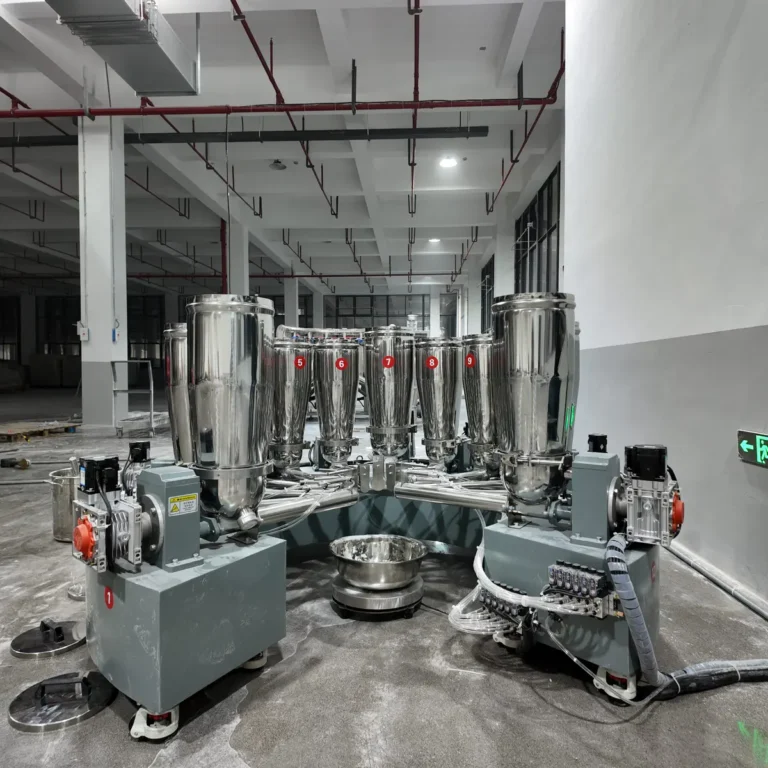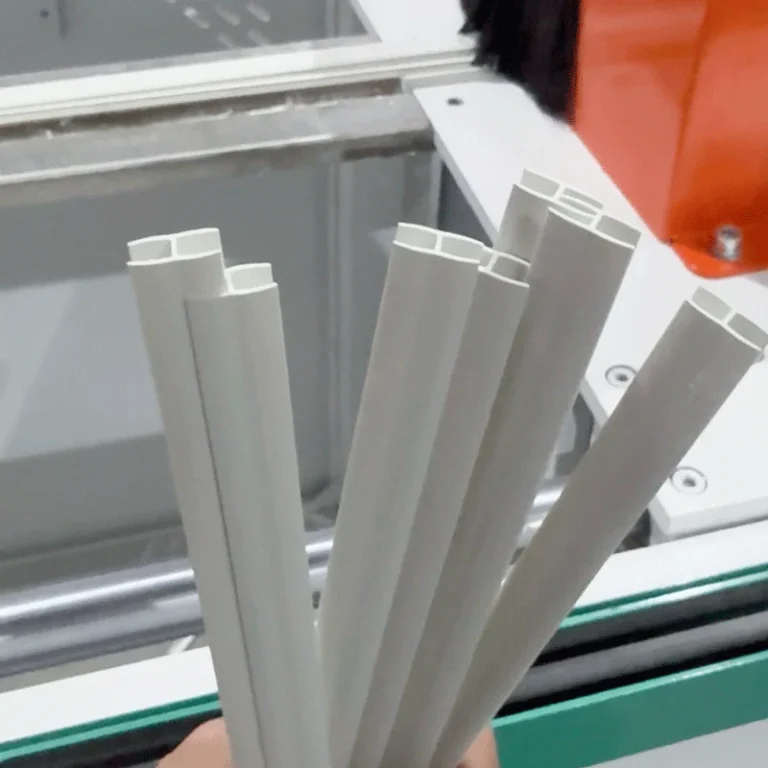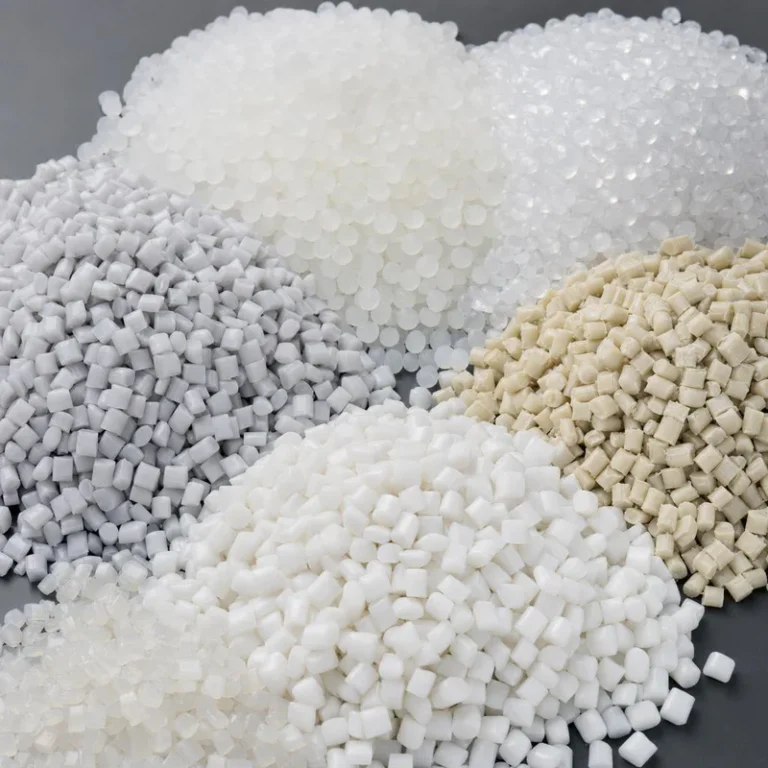
What is a PETG Small Tube Extrusion Line?
A PETG small tube extrusion line is a complete plastic tube production system designed to melt PETG material, form it through a precision tube mold, calibrate and cool it by vacuum sizing, pull it at a stable speed, and cut it into accurate lengths. For customers producing precision PETG tubes, the right extrusion line directly affects tube diameter accuracy, wall thickness stability, surface quality, and cutting cleanliness.
QTech-Machinery provides customized PETG small tube extrusion lines for global customers. Based on our real customer case, the line can produce 14.5 mm and 17.5 mm PETG tubes, using an SJ50/28 single screw extruder, PETG tube extrusion mold, 4.5 m stainless steel vacuum calibration tank, 80 mm belt haul-off machine, and small chipless circular cutting machine.
1. What is a PETG small tube extrusion line?
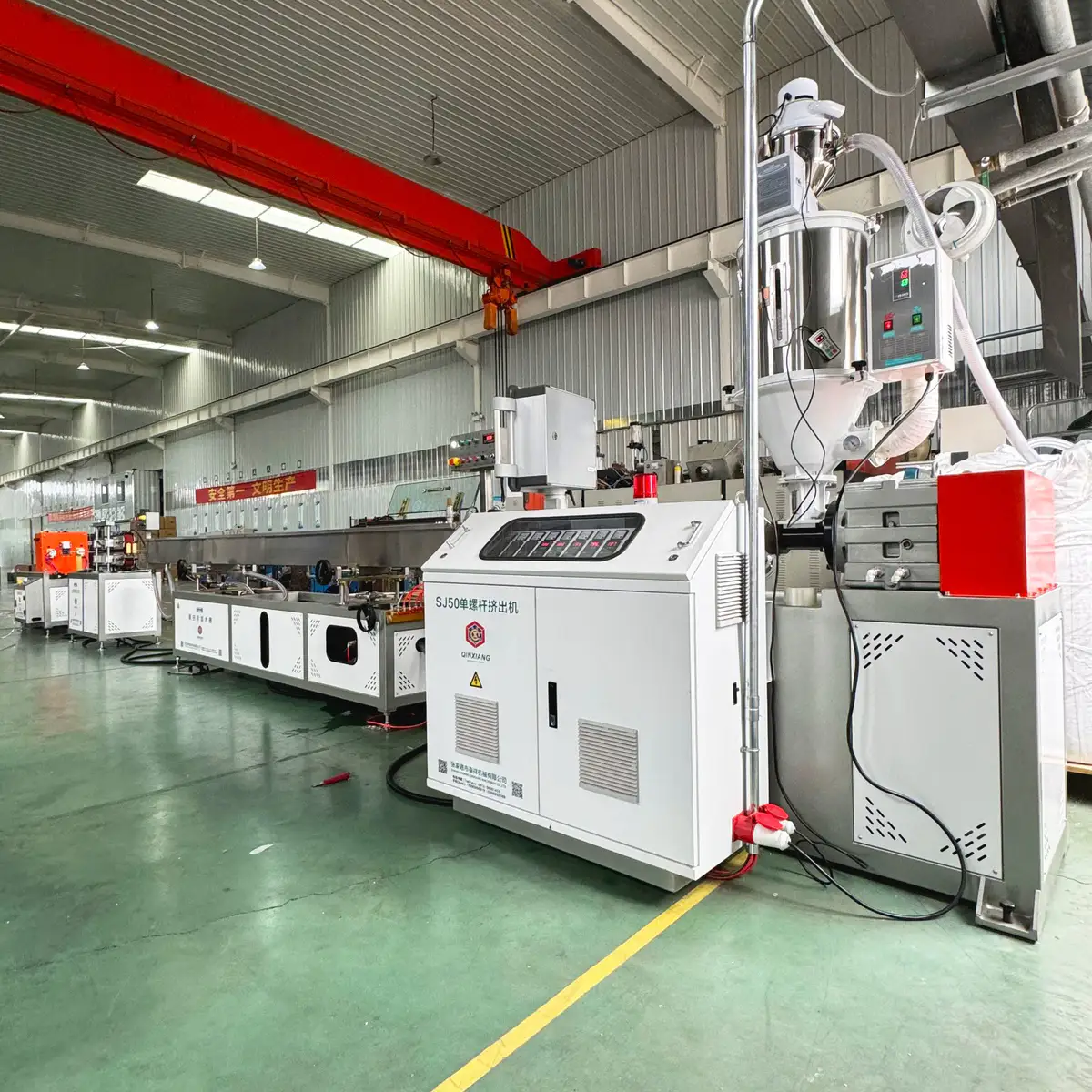
A PETG small tube extrusion line is a complete production system for manufacturing small PETG tubes with stable diameter, smooth surface, and clean cutting.
A PETG small tube extrusion line is not only an extruder. It is a full production system that includes material feeding, plasticizing, tube forming, vacuum calibration, cooling, traction, and cutting. Each machine section must work together to produce high-quality PETG tubes continuously.
The typical production process is:
- PETG material is dried and loaded into the extruder.
- The single screw extruder melts and plasticizes the material.
- The PETG melt passes through the tube extrusion mold.
- The tube is shaped and calibrated by the sizing sleeve.
- The vacuum calibration tank controls tube roundness and dimension.
- The belt haul-off machine pulls the tube at a stable speed.
- The chipless cutting machine cuts the tube to the required length.
In QTech-Machinery’s PETG small tube extrusion line project, the line was designed for a customer producing precision PETG tubes. The project focused on stable extrusion, accurate tube sizing, smooth cutting, and reliable continuous production.
Related case: Customer Case: PETG Small Tube Extrusion Line Project
2. What products can be made by a PETG small tube extrusion line?
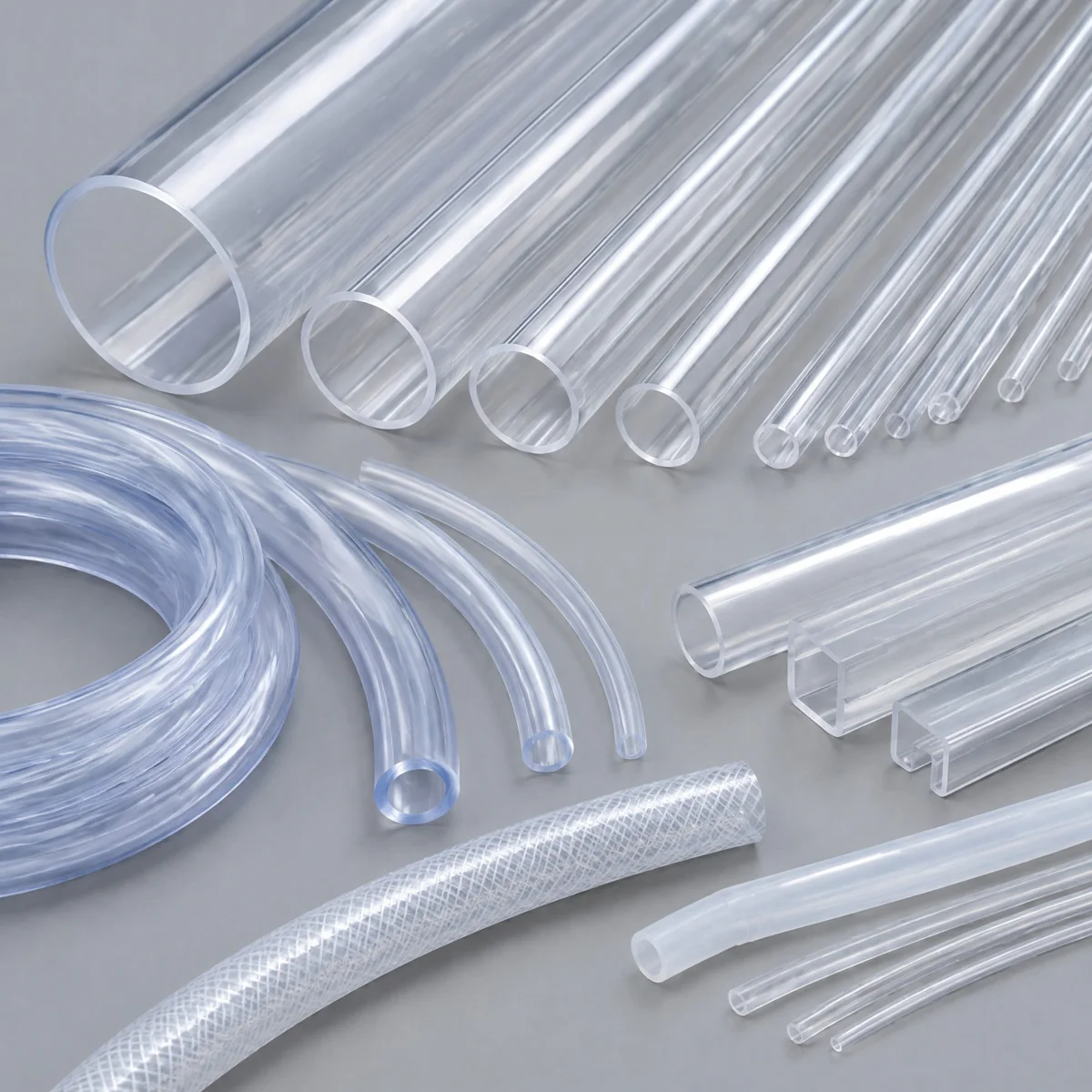
It can produce small PETG tubes for cable protection, industrial use, medical tubing, packaging, construction, and other precision applications.
PETG is widely used because it offers good transparency, toughness, impact resistance, and processability. A PETG small tube extrusion line can be used for different small tube applications depending on tube size, wall thickness, transparency requirement, and cutting quality.
Common PETG small tube applications include:
| Application | Typical Requirement |
|---|---|
| Cable protection | Stable diameter and good flexibility |
| Industrial tubes | Consistent wall thickness and strength |
| Medical-related tubing | Clean surface and accurate size |
| Construction and infrastructure | Durable tube structure |
| Industrial straw production | Smooth surface and clean cutting |
| Packaging tubes | Good appearance and dimensional stability |
In QTech-Machinery’s customer case, the line was designed for 14.5 mm OD × 0.75 mm wall thickness and 17.5 mm OD × 0.9 mm wall thickness PETG tubes. These specifications required accurate mold design, stable vacuum sizing, and chip-free cutting.
3. What machines are included in a PETG small tube extrusion line?
A complete PETG small tube extrusion line usually includes an extruder, mold, vacuum calibration tank, haul-off machine, cutter, and control system.
A PETG tube production line must be designed as an integrated system. If one machine section is not matched correctly, the final tube may have diameter variation, uneven wall thickness, poor surface quality, or inaccurate cutting length.
Main machine sections
| Machine Section | Function | QTech-Machinery Configuration |
|---|---|---|
| Material dryer and loader | Dry and feed PETG material | 50 kg dryer and material loader |
| Single screw extruder | Melt and plasticize PETG | SJ50/28 single screw extruder |
| Tube extrusion mold | Form the tube shape | 40Cr mold body and mandrel |
| Sizing sleeve | Control tube diameter | Wear-resistant copper sizing sleeves |
| Vacuum calibration tank | Size and cool the tube | 4.5 m 304 stainless steel tank |
| Belt haul-off machine | Pull tube continuously | 80 mm belt haul-off machine |
| Cutting machine | Cut tube to length | Small chipless circular cutter |
| Electrical control system | Control speed, temperature, and operation | Siemens, Schneider, Delixi, Yaskawa components |
QTech-Machinery’s advantage is full-line integration. We do not only supply separate machines; we match the extruder, die, vacuum tank, haul-off, cutter, and control system according to the customer’s tube size and production target.
4. How does the SJ50/28 single screw extruder work for PETG processing?
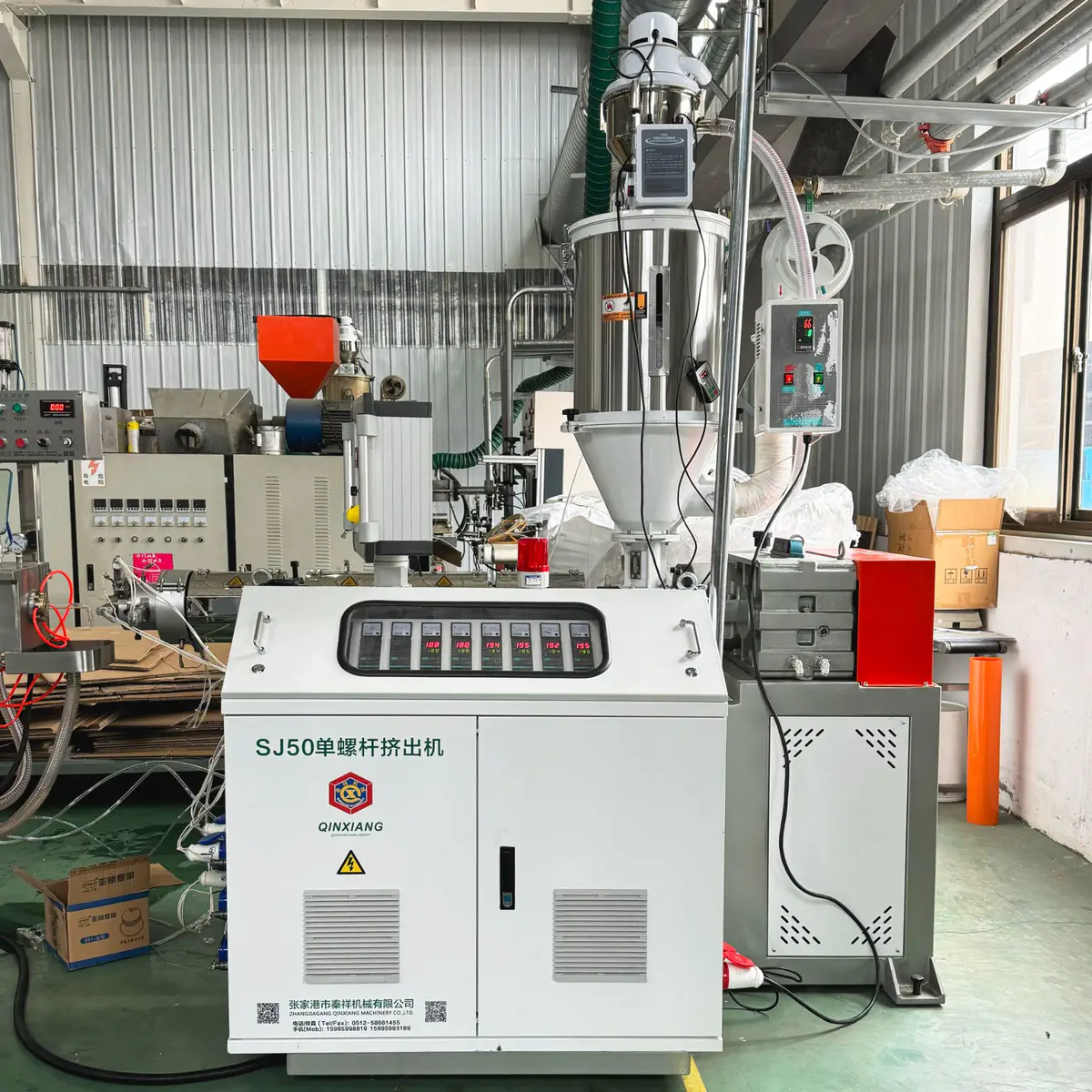
The SJ50/28 extruder melts PETG material through controlled heating and screw rotation, providing stable plasticizing and continuous melt output.
The extruder is the core machine of the PETG small tube extrusion line. It determines the melt quality, output stability, and production continuity. PETG processing requires stable temperature control and suitable screw design because unstable plasticizing may cause surface marks, bubbles, size variation, or poor transparency.
QTech-Machinery SJ50/28 extruder configuration
| Item | Specification |
|---|---|
| Extruder model | SJ50/28 single screw extruder |
| Application | PETG tube extrusion |
| Max output | Up to 50 kg/h |
| Screw L/D ratio | 28:1 |
| Screw and barrel material | 38CrMoAlA |
| Surface treatment | Nitriding treatment |
| Main motor | 15 kW |
| Speed control | Yaskawa inverter |
| Heating zones | 4 barrel heating zones |
| Heating type | Ceramic heating rings |
| Temperature range | 100℃–360℃ |
| Gearbox | ZLYJ146 hardened helical gear gearbox |
| Lubrication | Pressure lubrication system |
| Electrical components | Siemens, Schneider, Delixi |
This configuration helps support stable PETG plasticizing and reliable continuous production. The Yaskawa inverter allows smooth speed adjustment, while the 4-zone heating system gives operators better process control.
5. Why is the PETG tube extrusion mold important?
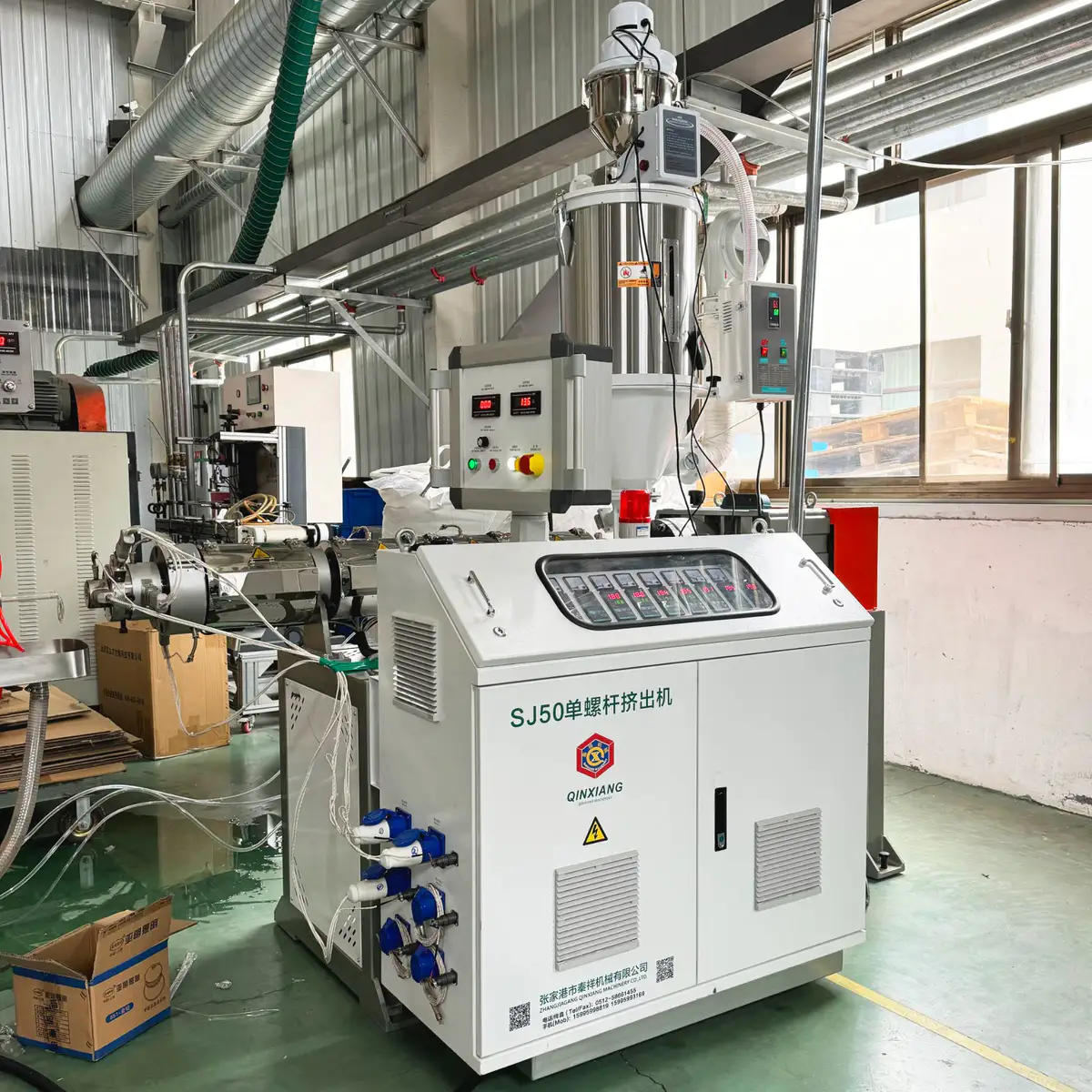
The mold determines the tube size, wall thickness, surface quality, and material flow stability.
The extrusion mold is the forming section of the production line. Even if the extruder output is stable, a poorly designed mold can cause uneven wall thickness, rough surface, unstable dimensions, or poor tube roundness.
In QTech-Machinery’s PETG small tube extrusion project, the mold was designed for two tube specifications:
| Tube Size | Wall Thickness |
|---|---|
| 14.5 mm outer diameter | 0.75 mm |
| 17.5 mm outer diameter | 0.9 mm |
Mold configuration
| Mold Part | Configuration |
|---|---|
| Mold body | 40Cr material |
| Mandrel | 40Cr material |
| Sizing sleeve | High-quality wear-resistant copper |
| Cooling structure | Water-cooled aluminum jacket |
| Heating method | Mica heater |
| Processing | Precision machining, polishing, inner electroplating |
The copper sizing sleeves help stabilize the tube during calibration. The water-cooled aluminum jacket supports fast cooling and better tube forming. Precision machining and polishing improve melt flow and reduce defects on the tube surface.
QTech-Machinery can customize molds based on customer drawings, tube samples, or target tube specifications.
6. Why does a PETG small tube line need vacuum calibration?
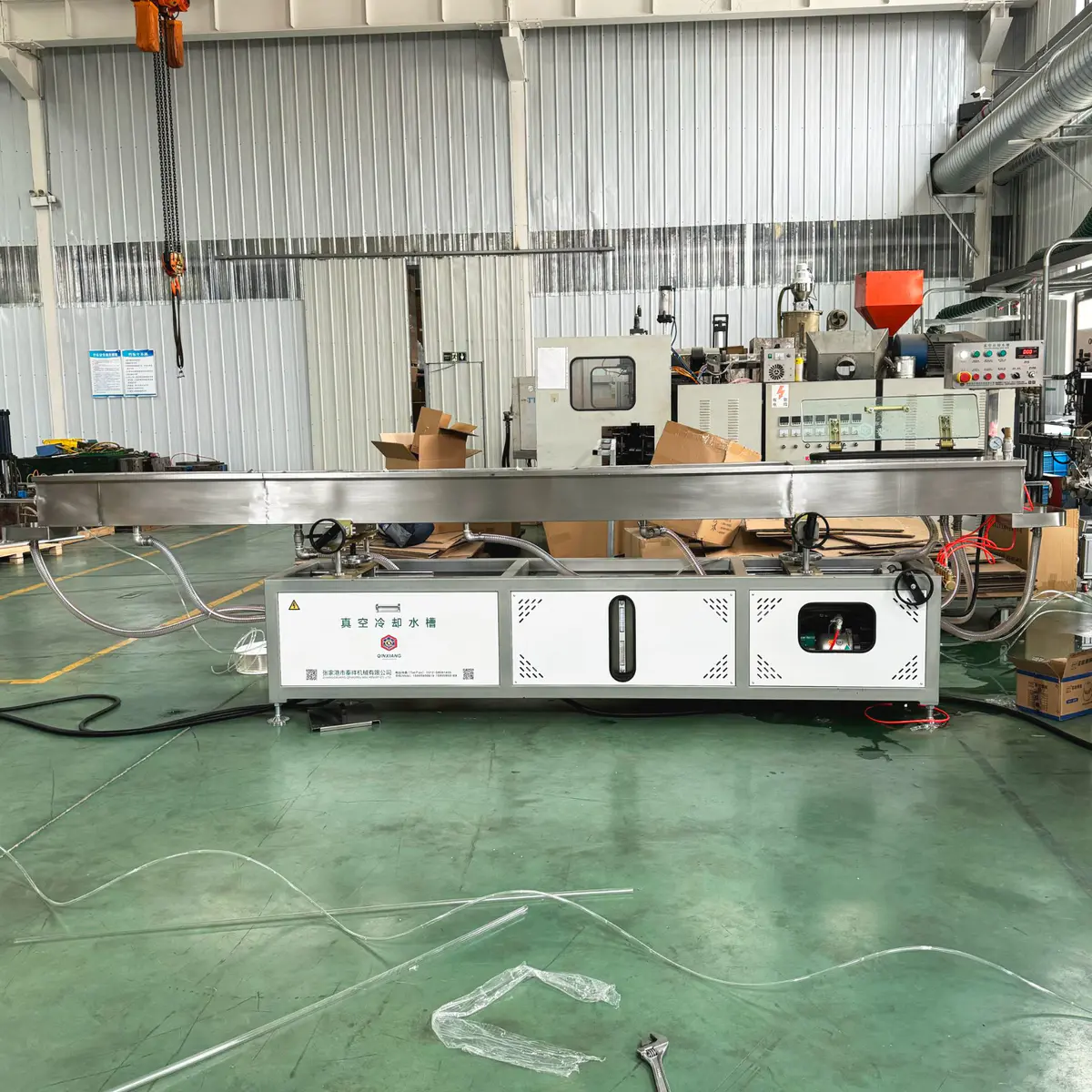
Vacuum calibration controls tube outer diameter, roundness, cooling stability, and dimensional accuracy.
After the PETG tube exits the mold, it is still hot and soft. Without proper vacuum calibration, the tube may shrink, become oval, or lose dimensional accuracy. This is especially important for small PETG tubes because small dimensional changes can directly affect assembly, appearance, and downstream use.
QTech-Machinery vacuum calibration tank configuration
| Item | Specification |
|---|---|
| Tank size | 4500 × 230 × 235 mm |
| Vacuum section | 1000 mm |
| Tank material | 304 stainless steel |
| Vacuum section thickness | 2 mm |
| Water tank thickness | 1.5 mm |
| Vacuum pump | 2.2 kW |
| Vacuum control range | 0 to -50 KPa |
| Adjustment range | Front/back ±250 mm, left/right ±50 mm, up/down ±150 mm |
| Additional devices | Pre-cooling device, blow dryer, high-level water tank |
| Control features | Vacuum gauge, control meter, manual regulating valve, silencer |
| Monitoring | Water level controller and digital water temperature display |
The adjustable frame makes alignment easier during installation and commissioning. The vacuum gauge and manual regulating valve allow operators to fine-tune the vacuum level according to tube size and material condition.
This is one of QTech-Machinery’s key advantages: the line is designed not only for extrusion, but also for stable sizing and cooling.
7. How does the haul-off and cutting system affect tube quality?
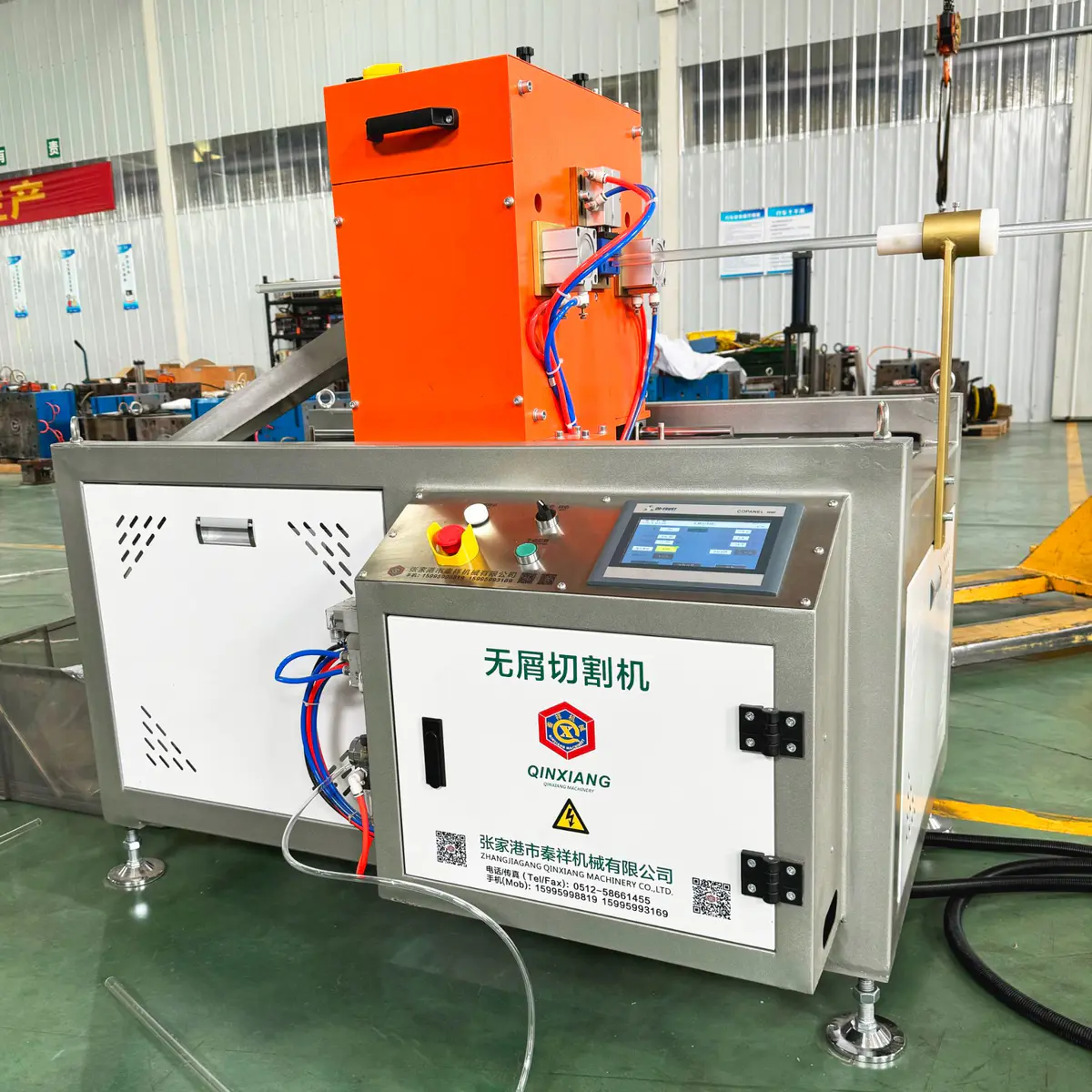
Stable haul-off controls wall thickness and tube movement, while chipless cutting provides clean tube ends without dust or chips.
The haul-off machine must pull the PETG tube at a speed that matches the extrusion output. If the pulling speed is too fast, the tube wall may become thinner. If the pulling speed is too slow, the tube may become thicker or deform. Stable traction is essential for consistent wall thickness and tube appearance.
QTech-Machinery uses an 80 mm belt haul-off machine for stable tube pulling. Belt traction is suitable for small tube products because it provides smooth contact and reduces tube surface damage.
The cutting system is also important. For small PETG tubes, customers often require clean tube ends. A traditional saw cutter may create chips or dust, while a chipless circular cutting machine can provide a cleaner result.
Haul-off and cutting advantages
| Section | Benefit |
|---|---|
| 80 mm belt haul-off | Stable traction and smooth tube movement |
| Adjustable haul-off speed | Matches extrusion output |
| Chipless circular cutter | Clean cutting without chips |
| Automatic cutting control | Improves cutting consistency |
| Smooth tube end | Reduces secondary processing |
For customers who need precision small tubes, clean cutting can reduce labor cost and improve finished product quality.
8. Why choose QTech-Machinery for a PETG small tube extrusion line?
QTech-Machinery provides customized configuration, full-line matching, quality components, factory testing, and practical support for overseas customers.
Choosing the right supplier is as important as choosing the right machine. A PETG small tube extrusion line must be configured according to the customer’s product size, material, output target, factory voltage, and application requirement.
QTech-Machinery’s PETG small tube extrusion line project shows our ability to provide a practical and customized solution for precision tube production.
QTech-Machinery advantages
| Advantage | Customer Benefit |
|---|---|
| OEM and ODM support | Machine can be customized for different tube products |
| Voltage configuration | Suitable for different countries and regions |
| Full run test before delivery | Reduces startup risk after shipment |
| Quote in 24h | Faster project communication |
| PETG special screw design | More stable plasticizing |
| Precision mold manufacturing | Better tube size and surface quality |
| Stainless steel vacuum tank | Stable cooling and longer service life |
| Chipless cutting solution | Cleaner tube ends |
| Integrated line design | Extruder, mold, tank, haul-off, and cutter work together |
Every line is configured to the buyer’s market. Customers can send target output, raw material, product size range, and local voltage, and QTech-Machinery engineers will recommend the correct screw, die, downstream machines, and control setup.
Useful internal links:
- QTech-Machinery Home
- Customer Case: PETG Small Tube Extrusion Line Project
- QTech-Machinery Cases
- Chat With Maggie
Key Configuration Table: QTech-Machinery PETG Small Tube Extrusion Line
| Category | Configuration |
|---|---|
| Line type | PETG small tube extrusion line |
| Extruder model | SJ50/28 single screw extruder |
| Max output | Up to 50 kg/h |
| Screw design | PETG special screw |
| L/D ratio | 28:1 |
| Screw and barrel | 38CrMoAlA with nitriding treatment |
| Main motor | 15 kW |
| Speed control | Yaskawa inverter |
| Heating zones | 4 barrel heating zones |
| Heating type | Ceramic heating rings |
| Temperature range | 100℃–360℃ |
| Gearbox | ZLYJ146 hardened helical gear gearbox |
| Material handling | 50 kg dryer and material loader |
| Tube sizes | 14.5 mm OD × 0.75 mm wall; 17.5 mm OD × 0.9 mm wall |
| Mold material | 40Cr mold body and mandrel |
| Sizing sleeve | Wear-resistant copper sizing sleeves |
| Cooling jacket | Water-cooled aluminum jacket |
| Mold heating | Mica heater |
| Vacuum tank | 4.5 m 304 stainless steel vacuum calibration tank |
| Vacuum pump | 2.2 kW |
| Vacuum range | 0 to -50 KPa |
| Haul-off | 80 mm belt haul-off machine |
| Cutting | Small chipless circular cutting machine |
| Electrical components | Siemens, Schneider, Delixi, Yaskawa |
Customer Selection Steps
Step 1: Confirm the PETG tube application
Before selecting the line, customers should define the tube application, such as cable protection, industrial tubing, medical-related tubing, packaging, construction, or small precision plastic tubes.
Step 2: Confirm tube size and tolerance
Customers should provide outer diameter, inner diameter, wall thickness, tube length, and tolerance requirements. If drawings or samples are available, they should be sent to the supplier.
Step 3: Confirm PETG material grade
Different PETG grades may have different melt flow, transparency, toughness, and drying requirements. The supplier should understand the material before designing the screw and process temperature range.
Step 4: Confirm output requirement
Customers can provide output requirement by kg/h, meters/minute, pieces/hour, or daily production volume. This helps select the right extruder size and downstream equipment.
Step 5: Confirm cutting requirement
If clean tube ends are required, a chipless cutter is recommended. This is especially important for applications where dust, chips, or burrs are not acceptable.
Step 6: Confirm local factory conditions
Customers should provide voltage, frequency, available workshop space, cooling water condition, compressed air supply, and operator skill level.
Step 7: Confirm automation and control preference
Customers can choose inverter control, PLC/HMI control, or customized electrical cabinet design based on production management needs.
Step 8: Confirm supplier documents and testing
Before shipment, customers should request test videos, machine photos, packing photos, manuals, wiring diagrams, and spare parts lists.
Products QTech-Machinery Can Provide
| Product Category | Available Products |
|---|---|
| Small tube extrusion lines | PETG small tube line, PVC small tube line, PE small tube line, PP small tube line |
| Pipe extrusion lines | HDPE pipe extrusion line, PVC pipe extrusion line, PPR pipe extrusion line |
| Corrugated pipe lines | PVC corrugated pipe line, PE corrugated pipe line, flexible hose extrusion line |
| Extruders | Single screw extruder, conical twin screw extruder, parallel twin screw extruder |
| Molds and tooling | Tube mold, pipe die head, sizing sleeves, extrusion tooling |
| Calibration equipment | Vacuum calibration tank, spray cooling tank |
| Downstream equipment | Haul-off machine, cutting machine, winding machine, stacking equipment |
| Auxiliary machines | Dryer, loader, mixer, crusher, chiller, air compressor support |
| Electrical systems | Inverter control, PLC/HMI control, customized control cabinet |
| Custom services | OEM/ODM design, voltage configuration, layout design, full run test |
Documents QTech-Machinery Can Provide
| Document | Purpose |
|---|---|
| Technical proposal | Confirms machine configuration and production target |
| Quotation sheet | Shows price, scope of supply, and commercial terms |
| Machine layout drawing | Helps customers plan workshop space |
| Tube size confirmation | Confirms OD, wall thickness, and mold design |
| Electrical wiring diagram | Supports installation and maintenance |
| Operation manual | Guides machine startup and daily production |
| Spare parts list | Helps customers prepare maintenance parts |
| Testing video | Shows line operation before shipment |
| Machine inspection photos | Confirms machine details and production progress |
| Packing list | Supports shipping and customs checking |
| Commercial invoice | Supports import procedure |
| Shipping documents | Helps customers handle customs clearance |
External Forum and Industry Reference Notes
In practical extrusion discussions, processors often emphasize that small tube production depends on stable melt flow, accurate die design, proper cooling, and synchronized haul-off speed. These points are especially important for PETG because PETG is sensitive to drying, temperature control, and cooling stability.
Useful external references and industry discussion sources include:
-
Eng-Tips Plastics Engineering Forum
This forum includes practical discussions about plastic processing, extrusion troubleshooting, die design, cooling issues, and dimensional control. -
Plastics Technology – Extrusion Zone
This industry resource provides technical articles about extrusion equipment, materials, processing control, and troubleshooting. -
MatWeb Material Property Data
This database is useful for checking polymer material properties and comparing plastic materials. -
The Plastics Exchange
This source provides market-related information for plastic resins and industry trends.
These external references support the same practical idea used by QTech-Machinery: customers should not choose a PETG tube extrusion line only by machine price or motor power. The correct line should be selected based on material grade, tube size, wall thickness, tolerance, output, cooling method, cutting quality, and factory conditions.
Conclusion
A PETG small tube extrusion line is a complete production system for making precision PETG tubes through extrusion, mold forming, vacuum calibration, stable haul-off, and chipless cutting. The quality of the final tube depends on the complete line configuration, not only the extruder.
QTech-Machinery’s PETG small tube extrusion line uses an SJ50/28 single screw extruder, PETG special screw, precision tube mold, 4.5 m stainless steel vacuum calibration tank, 80 mm belt haul-off machine, and chipless circular cutting system. This configuration supports stable output, accurate tube sizing, smooth surface quality, and clean cutting.
If you need a similar PETG small tube extrusion line, send QTech-Machinery your tube size, wall thickness, material grade, output target, and local voltage. Our engineers can provide a customized configuration and quotation for your factory.