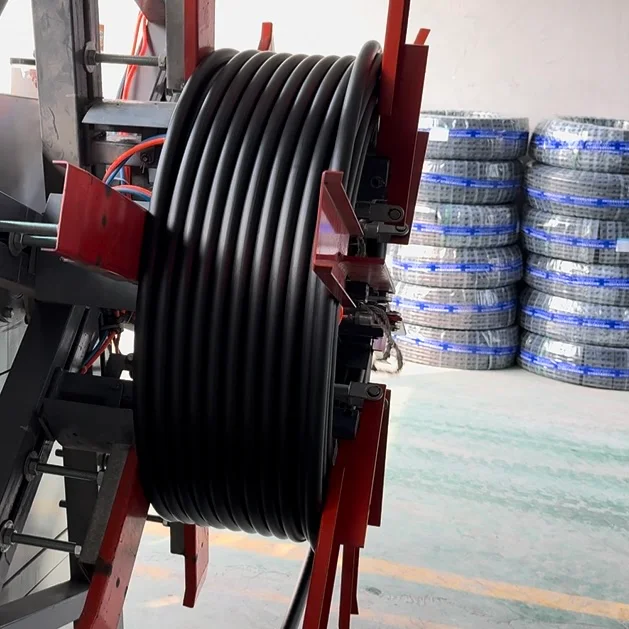
What is a Nylon Tube Extrusion Line and How Does It Work?
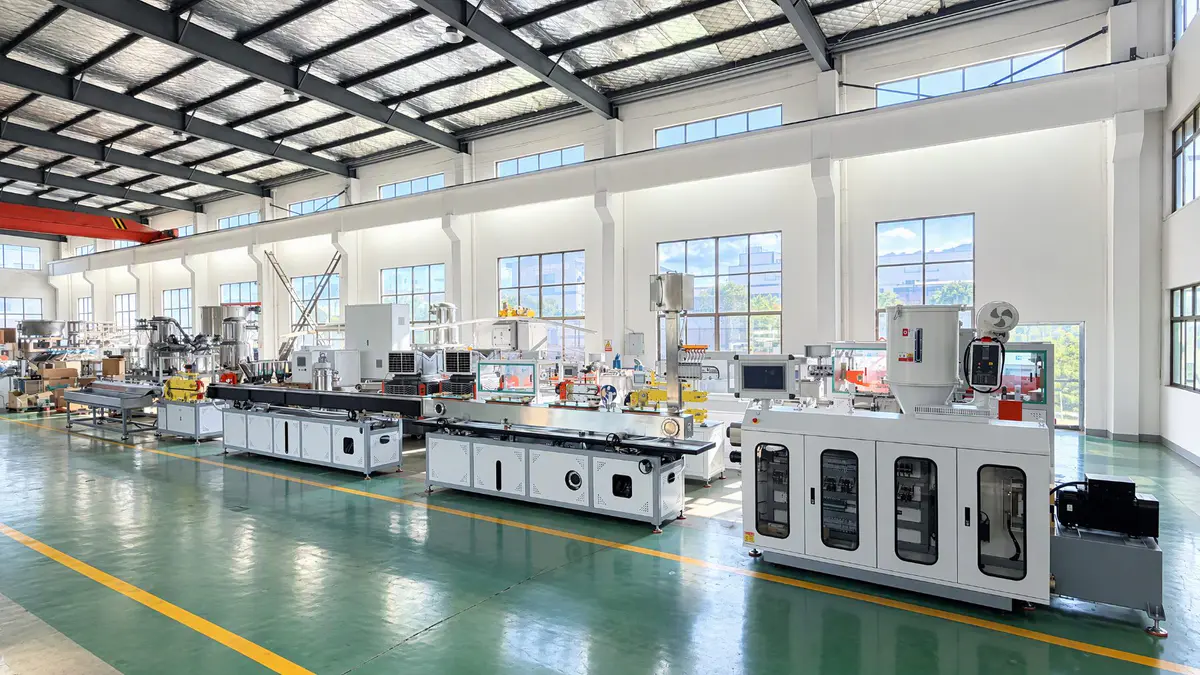
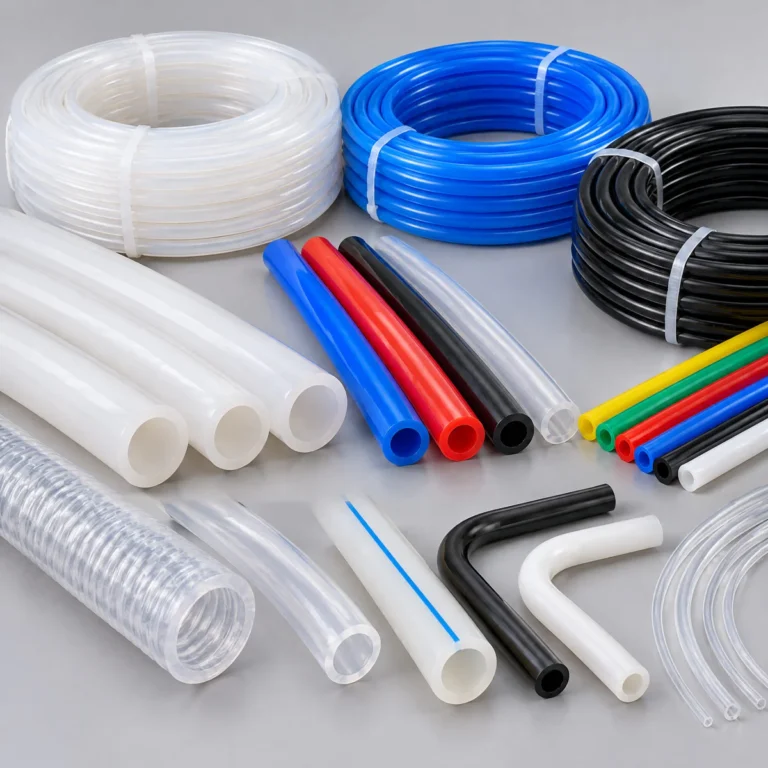
A nylon tube extrusion line is a complete plastic processing system used to continuously produce PA6, PA12, and other nylon tubes through melting, forming, vacuum sizing, cooling, pulling, cutting, and automatic collection.
For manufacturers in automotive, cable protection, medical tubing, telecommunications, municipal engineering, and industrial applications, a stable nylon tube extrusion line is not only a machine combination—it is a complete production solution that determines tube accuracy, surface quality, production efficiency, and long-term operating cost.
QTech-Machinery provides customized nylon tube extrusion solutions based on tube size, raw material, output requirement, local voltage, automation level, and factory layout. In one Asia-Pacific customer project, QTech-Machinery supplied a complete plastic pipe extrusion machine for nylon tube production, including an SJ65 single screw extruder, vacuum calibration cooling tank, stainless steel immersion cooling tank, servo belt haul-off, flying knife cutter, conveyor, and finished product collection system.
1. What is a nylon tube extrusion line?
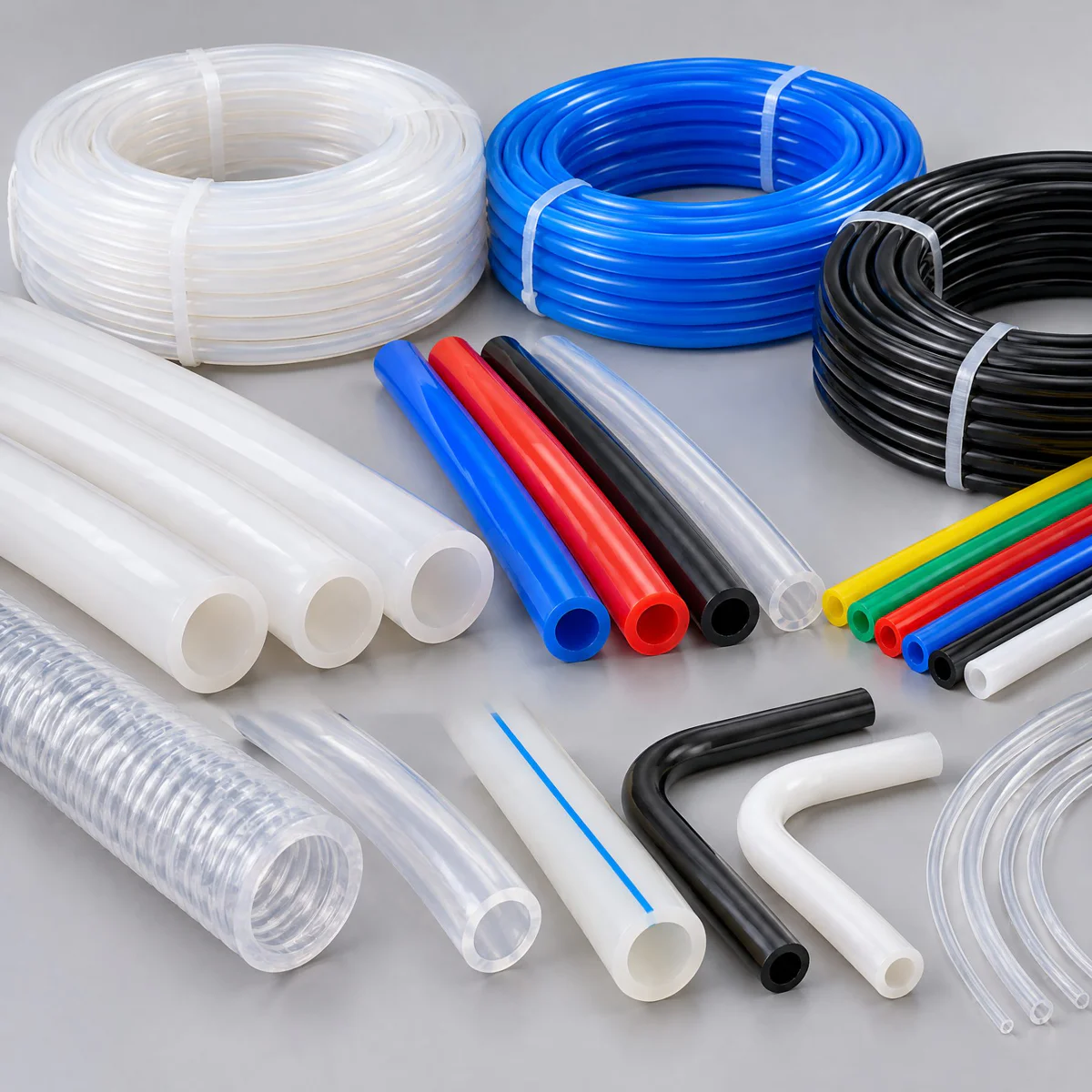
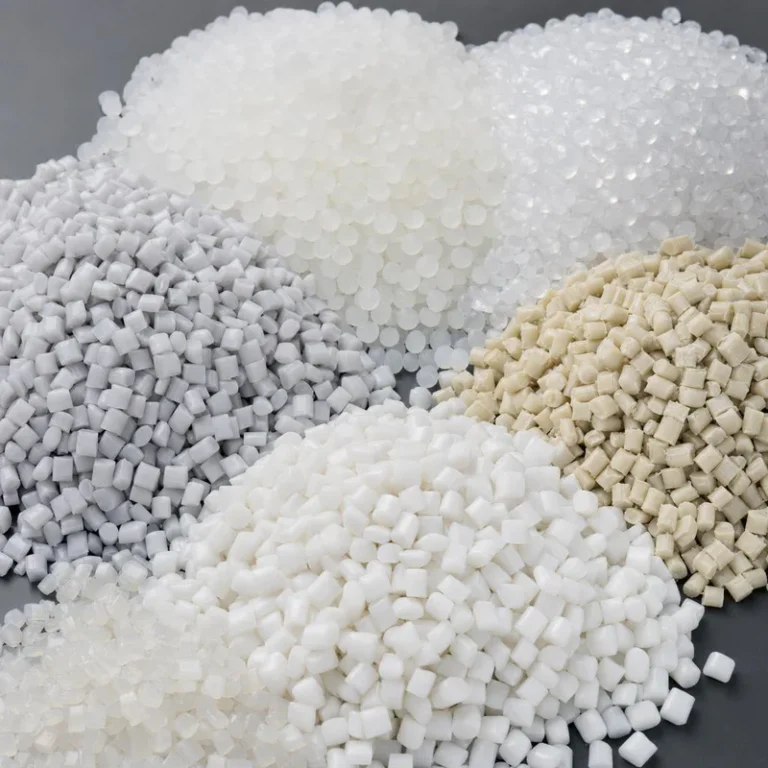
A nylon tube extrusion line is an integrated production system that processes nylon resin into continuous tubes with controlled diameter, wall thickness, and cutting length.
A typical nylon tube extrusion line includes the following main sections:
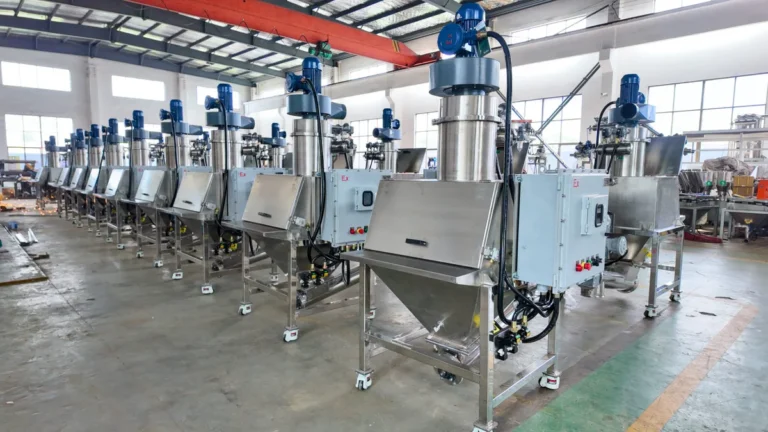
- Raw material feeding system
- Single screw extruder
- Extrusion die and sizing tooling
- Vacuum calibration cooling tank
- Immersion cooling tank
- Servo haul-off machine
- Flying knife cutter
- Conveyor and automatic collection system
- PLC control cabinet and HMI touch screen
In QTech-Machinery’s nylon tube project, the line was designed for continuous production of nylon tubes and PA tubes. The supplied system focused on stable extrusion output, accurate tube sizing, efficient cooling, servo traction and cutting, and automatic product collection.
The main extruder in this configuration is an SJ65/28 single screw extruder, suitable for nylon material processing. With an optimized screw structure, ceramic heating bands, servo motor drive, Siemens PLC, and HMI touch screen operation, it provides stable plasticizing and reliable continuous production.
2. How does a nylon tube extrusion line work?
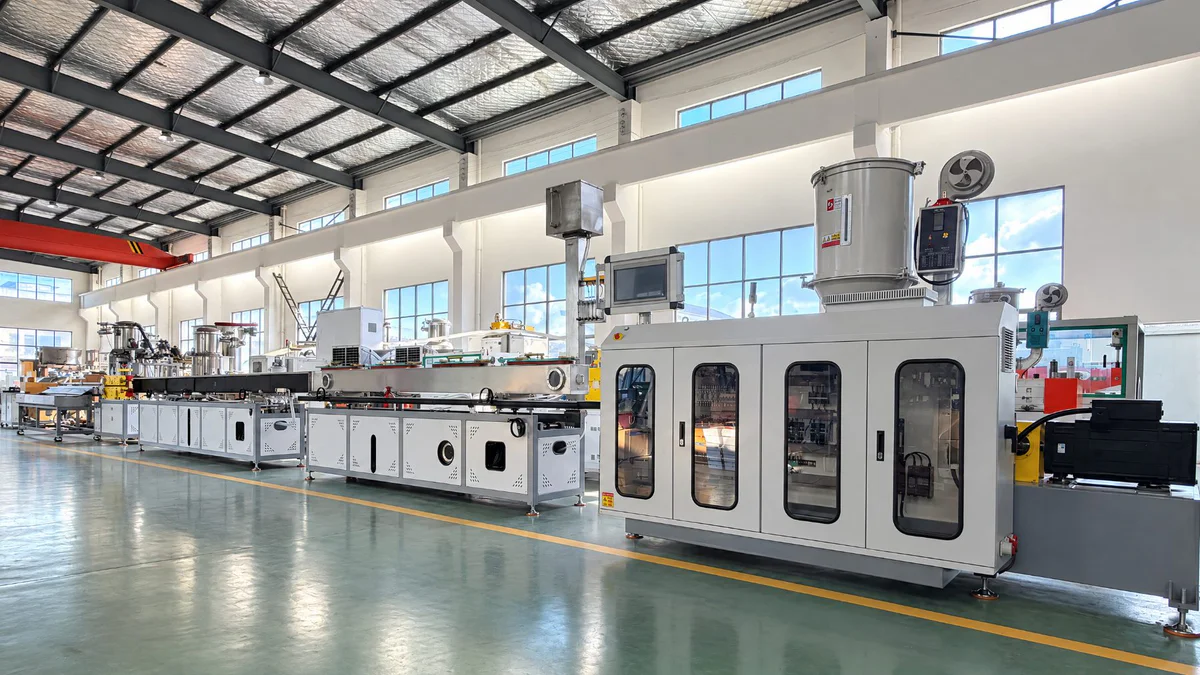
The line melts nylon material in the extruder, forms it through a die, sizes it by vacuum calibration, cools it in water tanks, pulls it at controlled speed, cuts it to length, and collects the finished tubes automatically.
The working process can be divided into several stages:
| Step | Process Stage | Function |
|---|---|---|
| 1 | Material feeding | Nylon pellets are fed into the extruder |
| 2 | Plasticizing | The screw and barrel melt and homogenize the nylon |
| 3 | Extrusion forming | Molten nylon passes through the die to form a tube |
| 4 | Vacuum calibration | The tube diameter and shape are controlled |
| 5 | Water cooling | The tube is cooled and stabilized |
| 6 | Servo haul-off | The tube is pulled forward at stable speed |
| 7 | Cutting | The tube is cut to required length |
| 8 | Conveying and collection | Finished tubes are transferred and collected |
In the QTech-Machinery project, the nylon tube passes from the SJ65/28 single screw extruder into a 4.5-meter vacuum calibration cooling tank, then through a 6-meter stainless steel immersion cooling tank. After cooling, a servo belt haul-off pulls the tube forward, and a rotary flying knife cutter cuts the tube accurately. The finished tubes are then transported by conveyor and discharged into a stainless steel collection trough.
This integrated process helps manufacturers improve production consistency and reduce manual handling.
3. What are the main components of a nylon tube extrusion line?
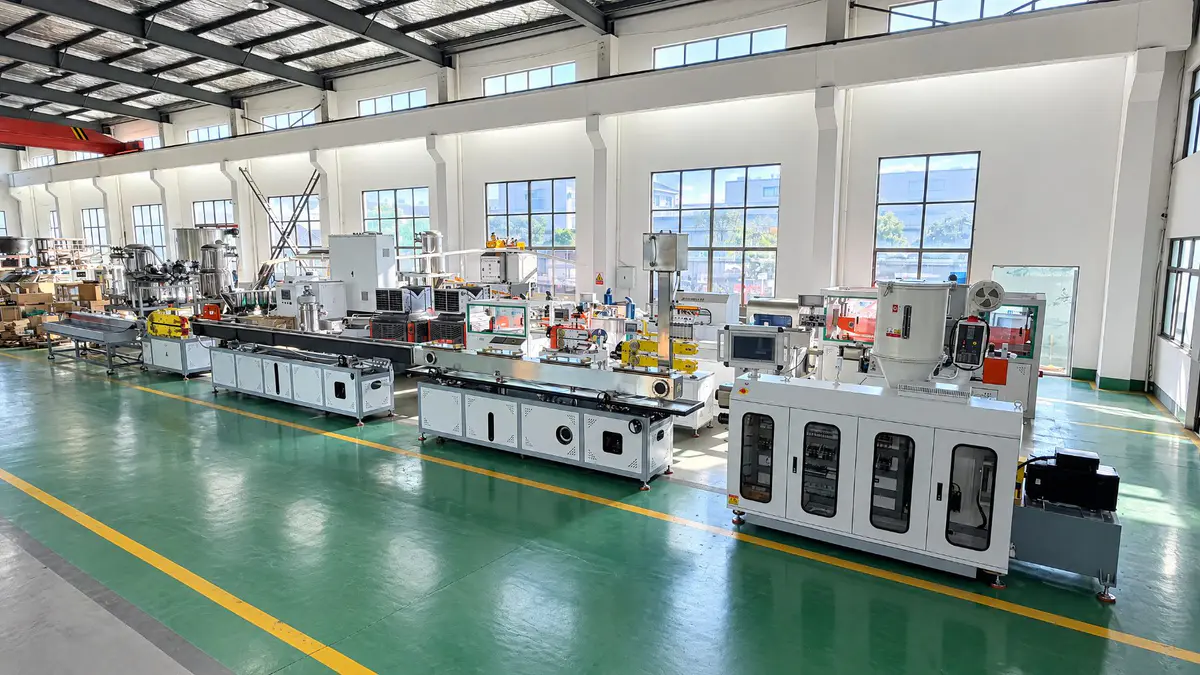
The main components include the extruder, die, vacuum sizing tank, cooling tank, haul-off, cutter, conveyor, collection system, and PLC control system.
Below is a typical configuration based on the QTech-Machinery nylon tube extrusion project:
| Component | Configuration | Main Advantage |
|---|---|---|
| Main Extruder | SJ65/28 single screw extruder | Stable nylon plasticizing |
| Main Motor | 37KW servo motor | Energy-saving and accurate speed control |
| Screw and Barrel | 38CrMoALA with nitriding treatment | Wear resistance and long service life |
| Heating System | Ceramic heating bands | Efficient and uniform heating |
| Temperature Range | 100℃–360℃ | Suitable for nylon processing |
| Vacuum Tank | 4.5m, 304 stainless steel | Accurate sizing and primary cooling |
| Vacuum Accuracy | ±0.1KPa | Better diameter stability |
| Cooling Tank | 6m immersion type, 304 stainless steel | Further cooling and shape stabilization |
| Haul-off and Cutter | Dual servo motor system | Synchronized pulling and cutting |
| Haul-off Speed | 0–40m/min | Adjustable for different tube sizes |
| Cutting Accuracy | ±0.5mm | Precise finished tube length |
| Control System | Siemens PLC + HMI touch screen | Easy operation and parameter control |
| Conveyor | 3m adjustable speed conveyor | Smooth transfer and automatic collection |
QTech-Machinery’s advantage is not only supplying separate machines, but also matching the complete system according to the buyer’s material, tube size, output target, voltage, workshop layout, and downstream automation needs.
4. Why is the extruder important in nylon tube production?
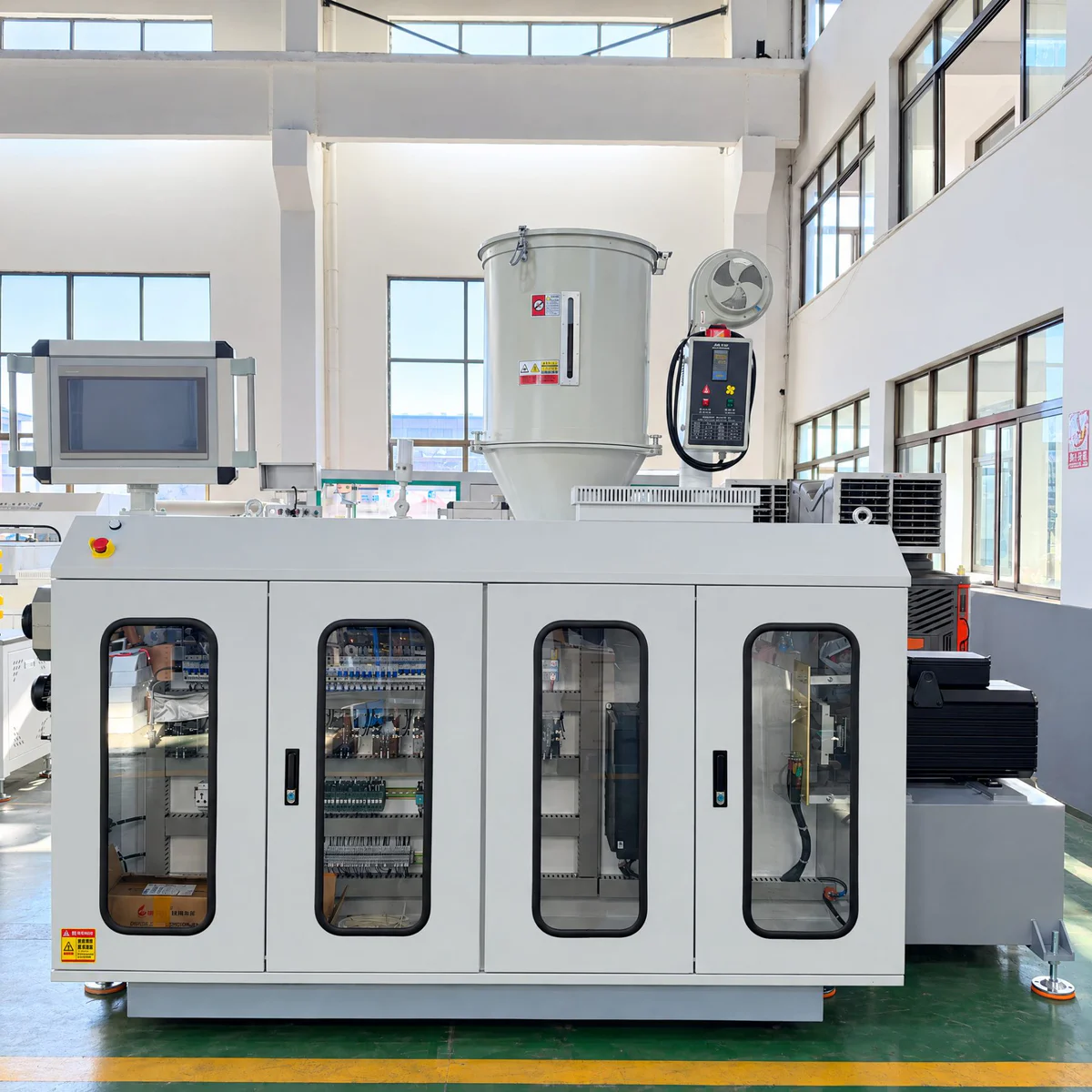
The extruder determines the melting quality, output stability, pressure consistency, and final tube quality.
Nylon processing requires stable temperature control and uniform plasticizing. If the material is not fully melted or the pressure fluctuates, the finished tube may show problems such as:
- Uneven wall thickness
- Poor surface quality
- Diameter instability
- Bubbles or material degradation
- Unstable output
- Difficult downstream calibration
In the QTech-Machinery configuration, the main extruder uses:
- SJ65/28 single screw design
- Screw diameter: SJ65
- L/D ratio: 28:1
- Output capacity: 0–60 kg/h, depending on material and product
- 38CrMoALA nitrided screw and barrel
- 5 barrel heating zones
- Ceramic heating bands
- Air cooling by fans
- 37KW permanent magnet synchronous servo motor
- Siemens PLC control
- HMI touch screen operation
- Schneider and Delixi electrical components
This configuration helps provide stable melt quality and continuous extrusion for PA6, PA12, and nylon tube production.
5. How does vacuum calibration improve nylon tube quality?
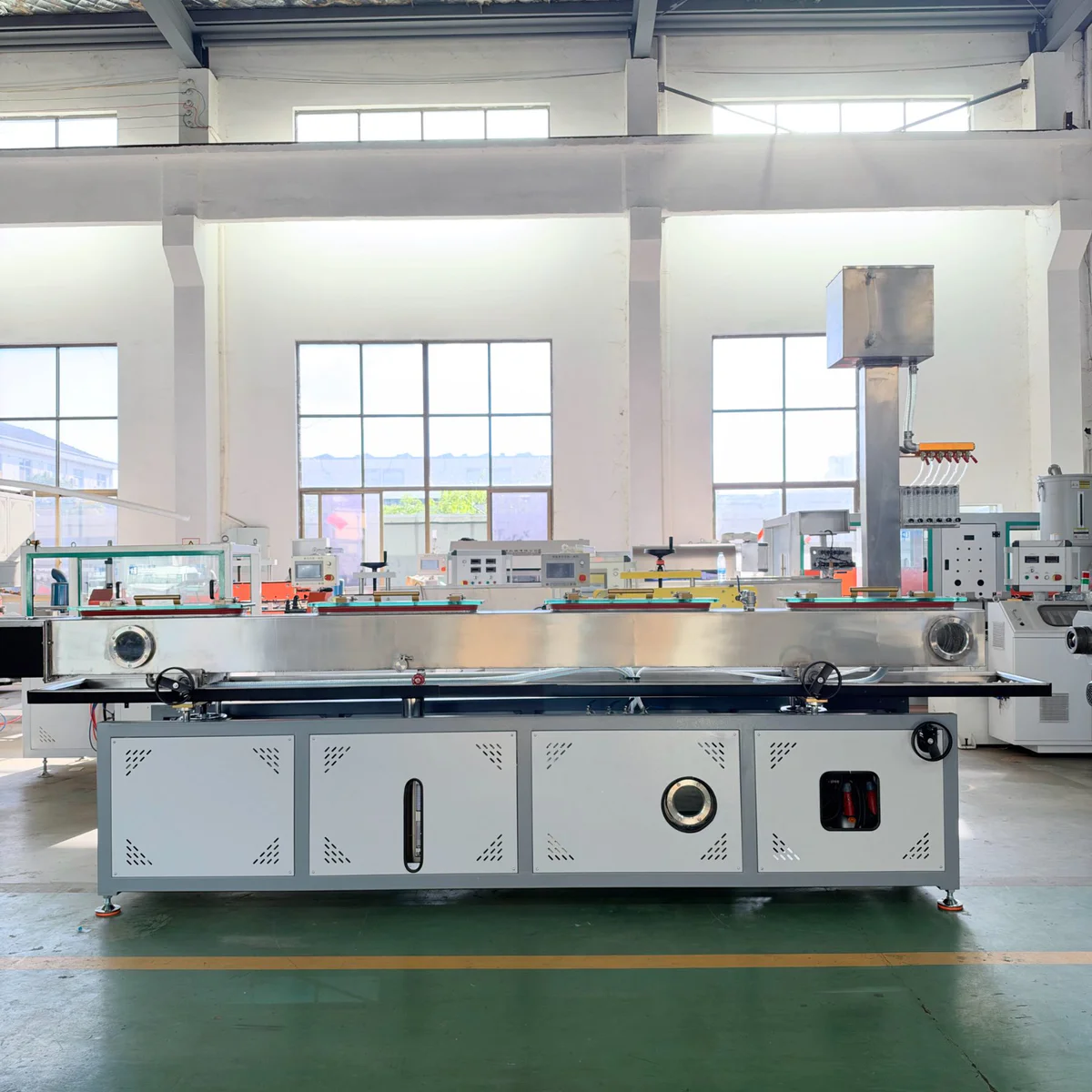
Vacuum calibration controls the tube’s outer diameter, roundness, and surface quality by pulling the hot tube against the sizing sleeve while cooling it.
After the nylon tube leaves the die, it is still hot and soft. Without accurate sizing, the tube may deform, shrink unevenly, or lose dimensional accuracy. The vacuum calibration tank solves this problem by using vacuum force and controlled water cooling.
In QTech-Machinery’s nylon tube project, the vacuum calibration cooling tank includes:
| Item | Specification |
|---|---|
| Tank size | 4500 × 230 × 235 mm |
| Vacuum section length | 4000 mm |
| Tank material | 304 stainless steel, 2mm thickness |
| Vacuum pump | 2.2KW |
| Water pump | 1.5KW stainless steel pump |
| Vacuum range | 0 to -50KPa |
| Vacuum control accuracy | ±0.1KPa |
| Cover | Tempered glass cover |
| Adjustment | Front/back, left/right, up/down adjustment |
| Monitoring | Vacuum gauge and digital water temperature display |
The electronic vacuum controller, automatic/manual regulating valve, silencer, water level control, and adjustable guide rollers help keep tube sizing stable. The outlet is also equipped with an air drying device, which helps remove water before the tube enters the next downstream section.
Industry discussions on pipe extrusion commonly emphasize that vacuum calibration is essential for maintaining pipe dimensions and stabilizing the extruded shape during early cooling. [0]
6. Why are cooling, haul-off, and cutting systems critical?
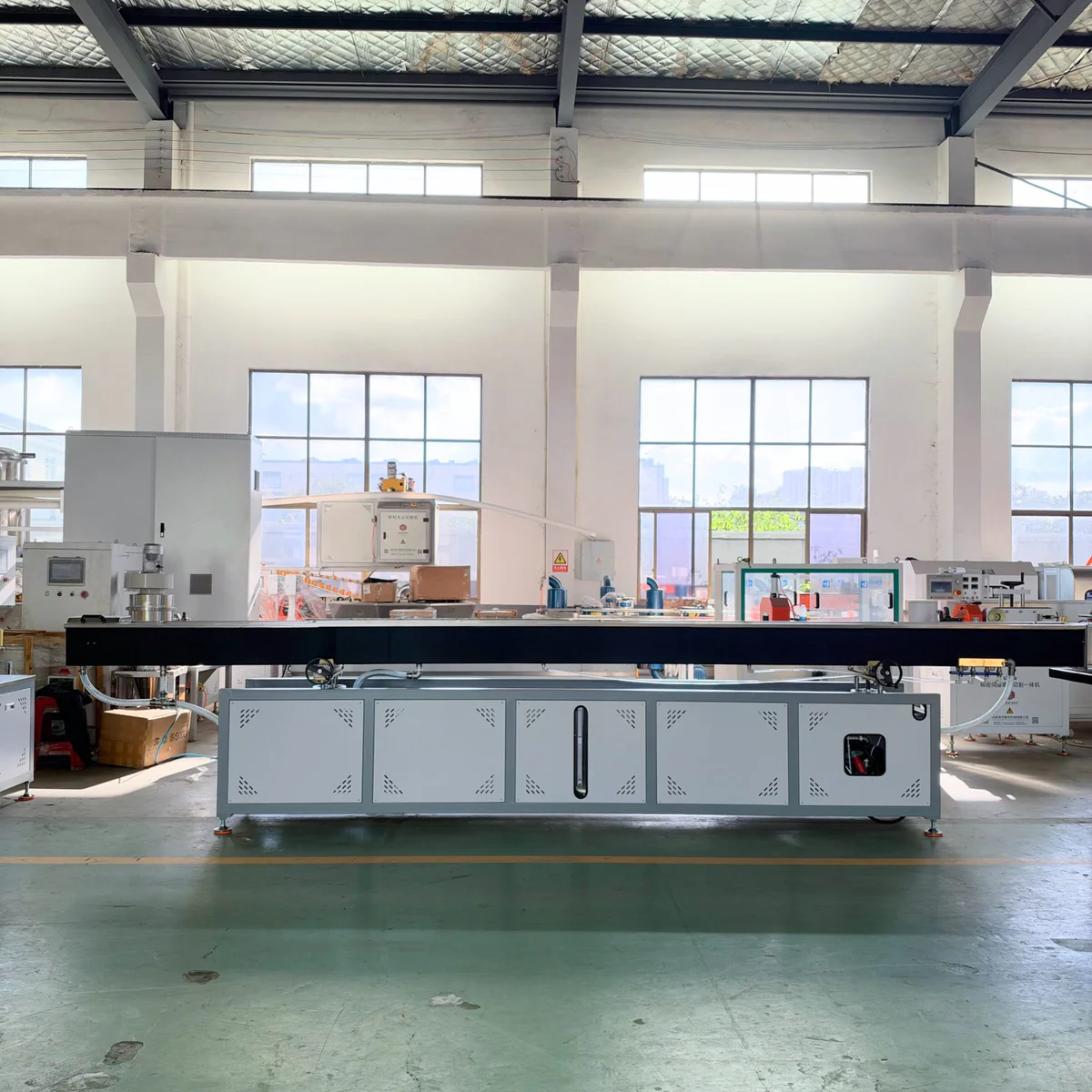
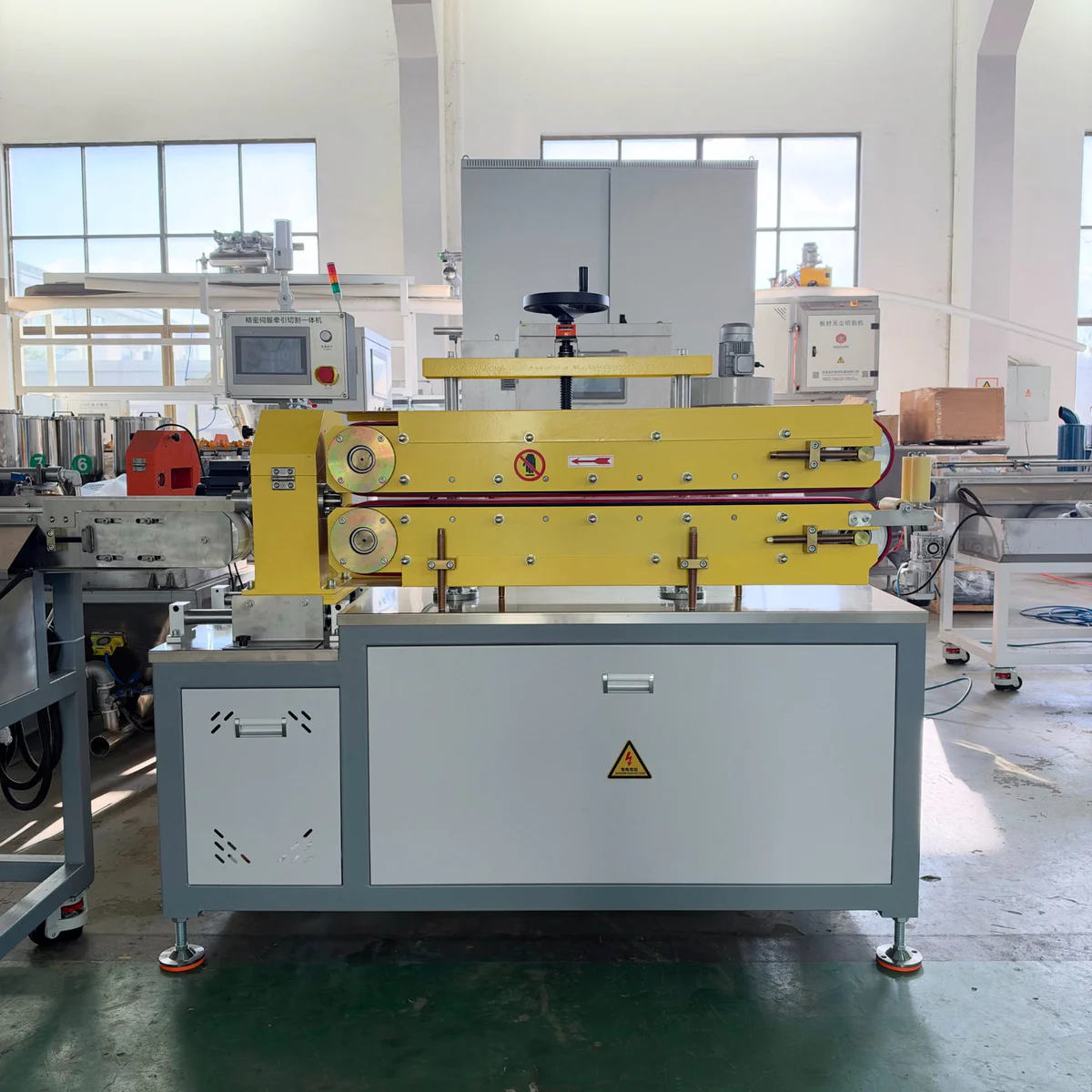
Cooling stabilizes the tube shape, haul-off controls wall thickness and line speed, and cutting determines final product length accuracy.
Once the tube is calibrated, it still needs further cooling to fully stabilize its shape. QTech-Machinery uses a stainless steel immersion cooling tank after the vacuum tank. This improves cooling efficiency and helps prevent deformation during high-speed production.
The haul-off system is also critical. If the pulling speed is unstable, the tube wall thickness and outer diameter can change. A servo-driven haul-off provides better synchronization with the extruder output.
In the QTech-Machinery project:
- The haul-off and cutter use dual servo motors
- The haul-off speed is adjustable from 0–40m/min
- Wear-resistant polyurethane belts help reduce tube deformation
- The flying knife cutter works during continuous production
- Cutting accuracy can reach ±0.5mm
- The conveyor transfers finished tubes automatically
- The air-blowing device helps discharge tubes into the collection trough
This integrated downstream system reduces labor, improves cutting consistency, and supports stable continuous production.
Industry maintenance and troubleshooting discussions often point out that haul-off synchronization, cutter stability, and cooling balance are important factors in reducing pipe production defects. [2] [3]
7. How should buyers choose a nylon tube extrusion line?
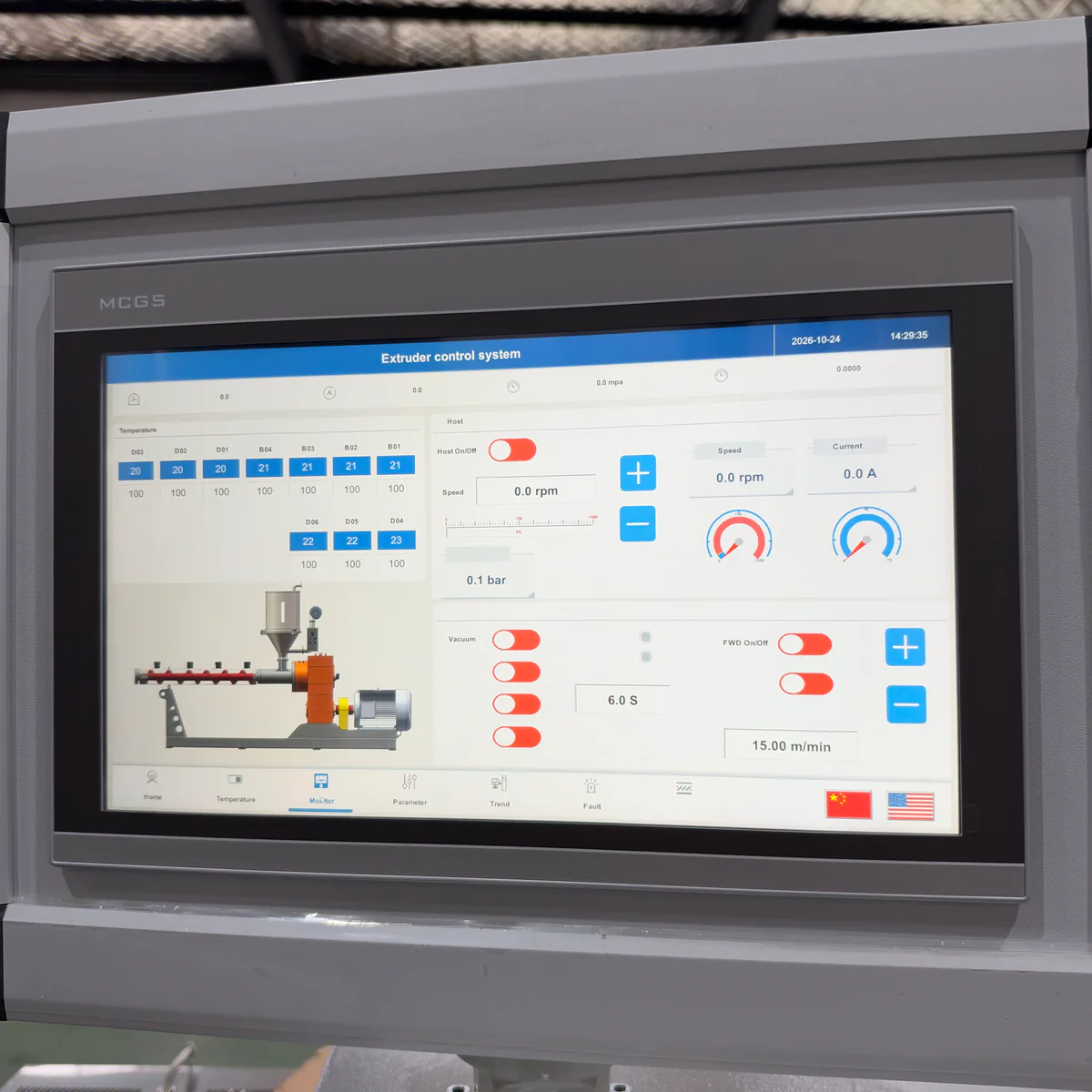
Buyers should choose the line based on raw material, tube size, output, precision requirement, automation level, voltage, and supplier engineering capability.
Choosing a nylon tube extrusion line is not only about machine price. A correct configuration should match your actual production needs.
Step-by-step selection guide
| Step | What to Confirm | Why It Matters |
|---|---|---|
| 1 | Raw material type | PA6, PA12, modified nylon, or recycled content affects screw design and temperature setting |
| 2 | Tube outer diameter and wall thickness | Determines die, sizing sleeve, cooling length, and haul-off configuration |
| 3 | Target output | Helps select extruder size and motor power |
| 4 | Required cutting length and accuracy | Determines cutter type and servo control requirement |
| 5 | Cooling requirement | Nylon needs stable and sufficient cooling for dimensional control |
| 6 | Automation level | Affects labor cost and production efficiency |
| 7 | Local voltage and factory layout | Ensures safe installation and smooth commissioning |
| 8 | Supplier experience | Reduces project risk and improves long-term reliability |
Buyer checklist before requesting a quotation
Before contacting QTech-Machinery, prepare the following information:
- Tube material: PA6, PA12, nylon blend, or other plastic
- Tube outer diameter range
- Wall thickness range
- Required output per hour
- Cutting length
- Required cutting accuracy
- Application industry
- Local voltage and frequency
- Workshop space
- Automation preference
- Packing or collection method
QTech-Machinery can then recommend the right extruder model, screw design, die tooling, cooling system, haul-off, cutter, and control system.
General extruder selection guides also recommend evaluating production capacity, material compatibility, energy consumption, automation, and after-sales support before purchasing a pipe extrusion system. [1]
8. What can QTech-Machinery provide for nylon tube extrusion projects?
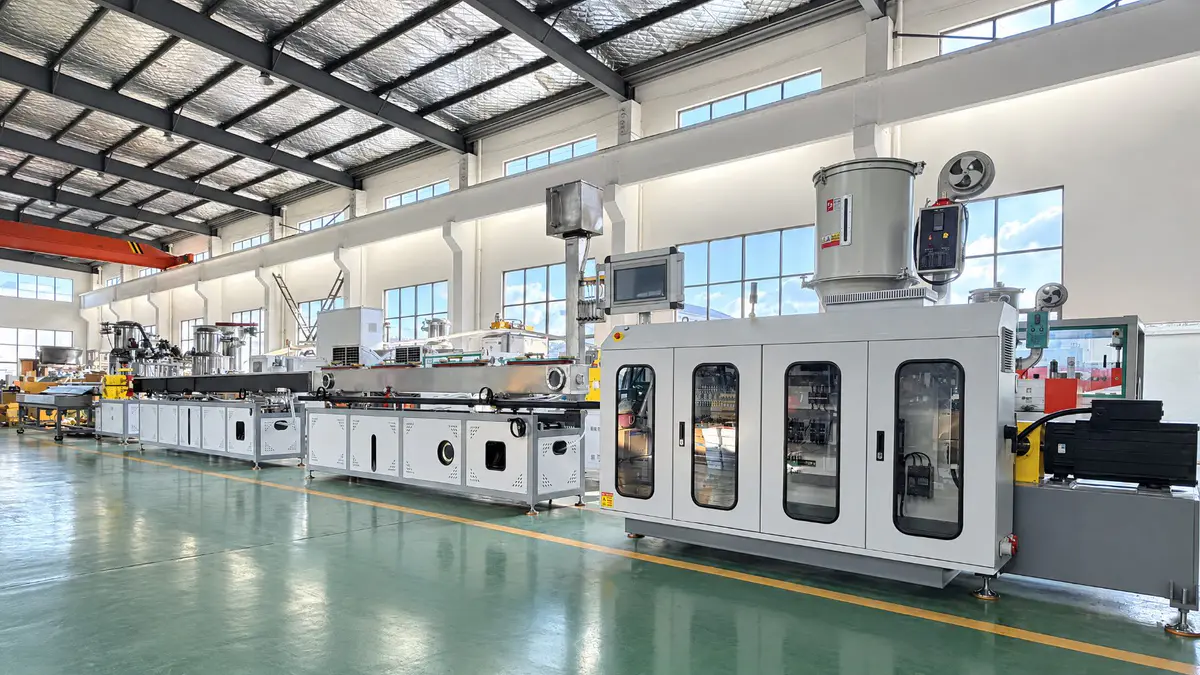
QTech-Machinery can provide complete nylon tube extrusion lines, customized configuration, factory testing, technical documents, installation guidance, and after-sales support.
QTech-Machinery focuses on plastic extrusion and recycling machinery, offering OEM and ODM services, voltage configuration, full run testing, and fast quotation support.
Based on the nylon tube production case in Asia-Pacific, QTech-Machinery supplied a complete plastic pipe extrusion machine for nylon tube production. The customer needed stable extrusion, accurate sizing, efficient cooling, servo-driven traction and cutting, automatic finished product conveying and collection, and easy operation with PLC and touch screen control.
QTech-Machinery configured a complete line including:
Product list we can provide
| Product / System | Description |
|---|---|
| Single screw extruder | SJ series extruder for nylon and plastic pipe production |
| Extrusion die | Customized die according to tube size |
| Vacuum calibration tank | Stainless steel tank for sizing and primary cooling |
| Immersion cooling tank | Stainless steel tank for further cooling |
| Servo belt haul-off | Stable traction with adjustable speed |
| Flying knife cutter | Continuous cutting with high accuracy |
| Conveyor system | Transfers finished tubes after cutting |
| Collection system | Stainless steel collection trough with automatic discharge |
| PLC control system | Siemens PLC and HMI touch screen |
| Electrical system | Schneider, Delixi, or customized components |
| Auxiliary equipment | Dryer, loader, chiller, air compressor, depending on project needs |
Documents we can provide
| Document | Purpose |
|---|---|
| Technical quotation | Confirms machine configuration and price |
| Layout drawing | Helps buyer plan factory space |
| Electrical diagram | Supports installation and maintenance |
| Operation manual | Guides daily operation |
| Maintenance manual | Helps maintain long-term machine performance |
| Spare parts list | Supports quick replacement and inventory planning |
| Test running video | Shows machine performance before shipment |
| Packing list | Supports customs clearance and delivery checking |
| Installation guide | Helps local installation and commissioning |
| Parameter reference sheet | Provides starting settings for production |
QTech-Machinery advantages
- Complete turnkey extrusion solution
- Custom configuration for buyer’s market
- Experience with nylon, PA6, and PA12 tube production
- Stable SJ65/28 extruder configuration
- Accurate vacuum control up to ±0.1KPa
- Servo haul-off and cutting system
- Cutting accuracy up to ±0.5mm
- Siemens PLC and HMI operation
- 304 stainless steel tanks
- OEM and ODM support
- Voltage configuration for different countries
- Full run test before delivery
- Quotation support within 24 hours
Customer Case: Nylon Tube Production Line in Asia-Pacific
QTech-Machinery supplied a complete plastic pipe extrusion machine for nylon tube production for a customer in the Asia-Pacific region.
The customer required a reliable production line for nylon tube extrusion, cooling, sizing, haul-off, cutting, conveying, and finished product collection.
Customer requirements
- Stable extrusion output
- Accurate tube sizing
- Efficient cooling performance
- Servo-driven traction and cutting
- Automatic finished product conveying and collection
- Easy PLC and touch screen operation
QTech-Machinery solution
QTech-Machinery supplied a complete nylon tube extrusion solution, including:
- SJ65 single screw extruder
- Vacuum calibration cooling tank
- Stainless steel immersion cooling tank
- Servo belt haul-off
- Flying knife cutter
- Finished product conveyor
- Collection system
The system supports continuous production with stable operation, accurate cutting, and improved production efficiency.
Read the full case here:
Plastic Pipe Extrusion Machine for Nylon Tube Production
Recommended internal links
To help buyers learn more about QTech-Machinery and related extrusion solutions, you can visit:
- QTech-Machinery Homepage
- Plastic Pipe Extrusion Machine for Nylon Tube Production Case
- QTech-Machinery Cases
- Send Inquiry to QTech-Machinery
- Chat with Maggie on WhatsApp
Related external references and industry notes
When designing or purchasing a nylon tube extrusion line, buyers can also review general industry discussions and technical references about pipe extrusion, vacuum calibration, equipment selection, and troubleshooting.
- Pipe extrusion process references often describe vacuum calibration as a key method for maintaining pipe size and dimensional stability during early cooling. [0]
- Extruder selection guides commonly recommend evaluating machine capacity, material compatibility, energy efficiency, automation, and technical support before investment. [1]
- Pipe line maintenance discussions frequently mention the importance of haul-off, cutter, and cooling system stability for reducing defects and improving production consistency. [2]
- Troubleshooting references for plastic pipe production often focus on vacuum adjustment, sizing sleeve setup, and water cooling balance as important factors in dimensional control. [3]
External links
- Pipe Extrusion Process Overview
- How to Choose the Right PVC Pipe Extruder for Your Business
- PVC Extrusion Line Maintenance Report
- Troubleshooting of Plastic Pipe Production Line
Conclusion
A nylon tube extrusion line is a complete production system that converts nylon resin into accurate, stable, and high-quality tubes through extrusion, vacuum sizing, cooling, traction, cutting, and automatic collection.
For buyers who need PA6, PA12, or nylon tube production, the right line configuration should be based on material, size range, output, accuracy, cooling performance, automation level, and long-term service support.
QTech-Machinery provides customized nylon tube extrusion solutions with SJ65/28 single screw extruders, stainless steel vacuum and cooling tanks, servo haul-off and cutting systems, Siemens PLC control, and automatic collection systems. With full run testing, voltage configuration, OEM/ODM support, and engineering-based project design, QTech-Machinery helps customers build stable and efficient nylon tube production lines for different industrial markets.