How to Make Medical Catheter Tube?
Medical catheter tube production requires high precision, clean processing, stable extrusion, accurate sizing, and strict quality control. Compared with common plastic pipe extrusion, medical catheter tube extrusion has much higher requirements for dimensional accuracy, wall thickness uniformity, material cleanliness, surface finish, and process repeatability.
A complete medical catheter tube extrusion line usually includes a precision single screw extruder, medical-grade die, vacuum sizing and cooling system, servo traction system, precision cutting system, and PLC/HMI control system. For manufacturers who produce PP, PVC, TPU, PE, PA, or other medical-grade tubing materials, the extrusion line must be carefully configured according to tube diameter, wall thickness, tolerance, output, and regulatory requirements.
Based on the QTech Machinery medical catheter tube extrusion line case, the right equipment configuration can help medical device manufacturers improve production efficiency, tube quality, and operation stability.
1. What is a medical catheter tube extrusion line?
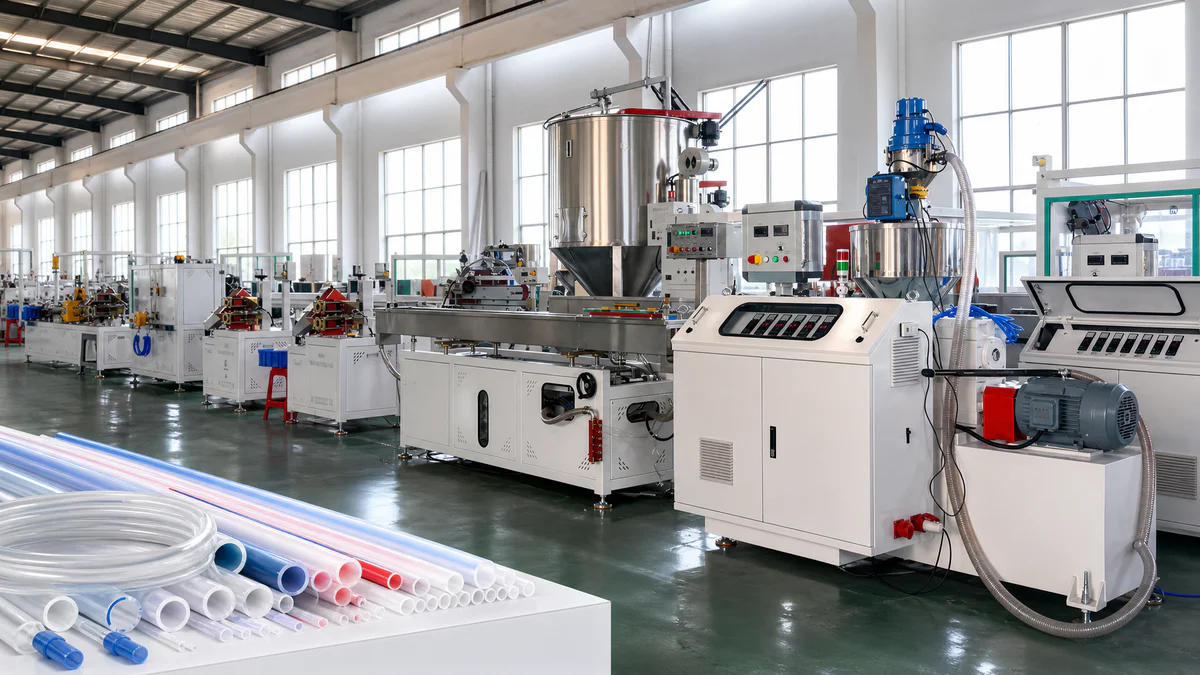
A medical catheter tube extrusion line is a precision plastic extrusion system used to produce small-diameter medical tubes with accurate dimensions and stable wall thickness.
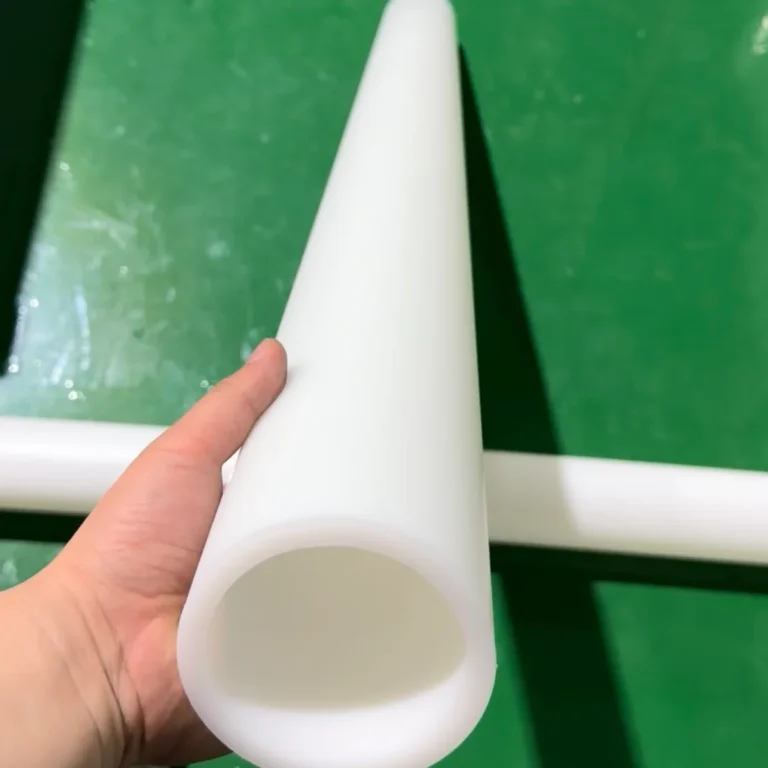
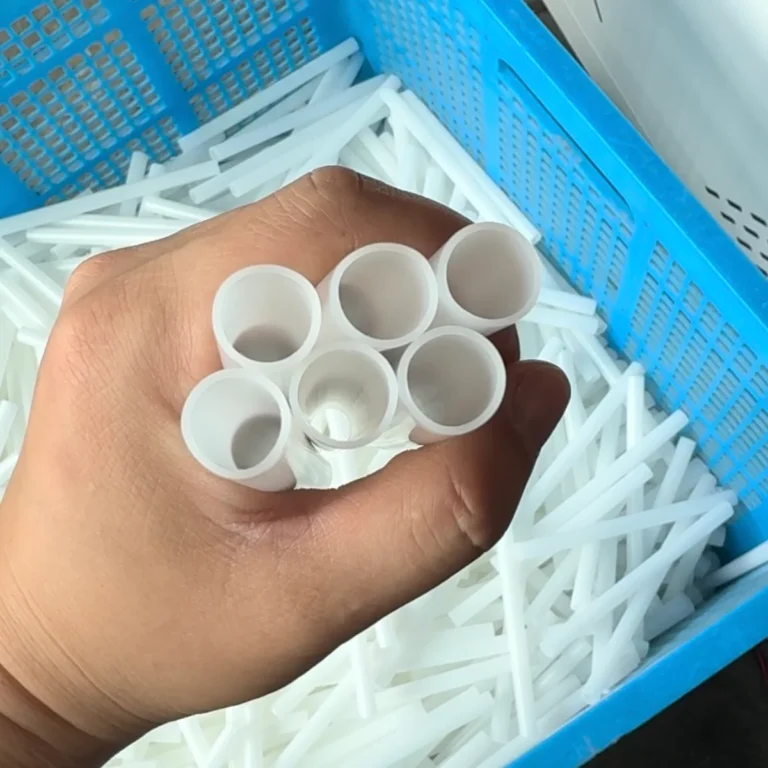
A medical catheter tube extrusion line is designed to produce medical tubing used in catheters, drainage tubes, infusion tubes, surgical tubes, and other medical device applications. The system melts medical-grade plastic material, forms it through a precision die, sizes and cools it, pulls it at a stable speed, and cuts it to the required length.
Unlike general plastic pipe production, medical catheter tube manufacturing requires tighter control of:
| Key Requirement | Why It Matters |
|---|---|
| Outer diameter accuracy | Ensures compatibility with medical devices |
| Inner diameter stability | Affects fluid flow and clinical performance |
| Wall thickness uniformity | Ensures strength and flexibility |
| Surface smoothness | Reduces friction and improves safety |
| Clean processing | Helps meet medical production requirements |
| Stable output | Reduces scrap and improves repeatability |
In the QTech Machinery case, the client required a medical catheter tube extrusion line that could produce tubes with exceptional precision and uniformity while meeting medical-grade production expectations. QTech delivered a customized solution with a precision extruder, stainless steel cooling system, servo traction, and cutting system.
Reference case: Medical Catheter Tube Extrusion Line
2. What materials can be used to make medical catheter tubes?
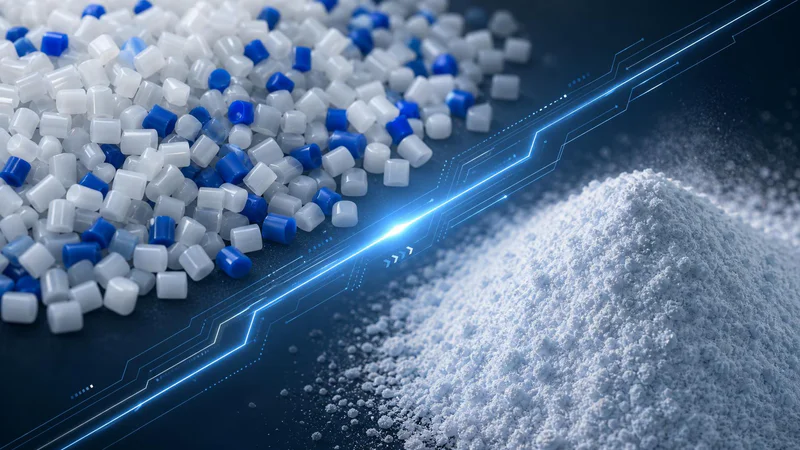
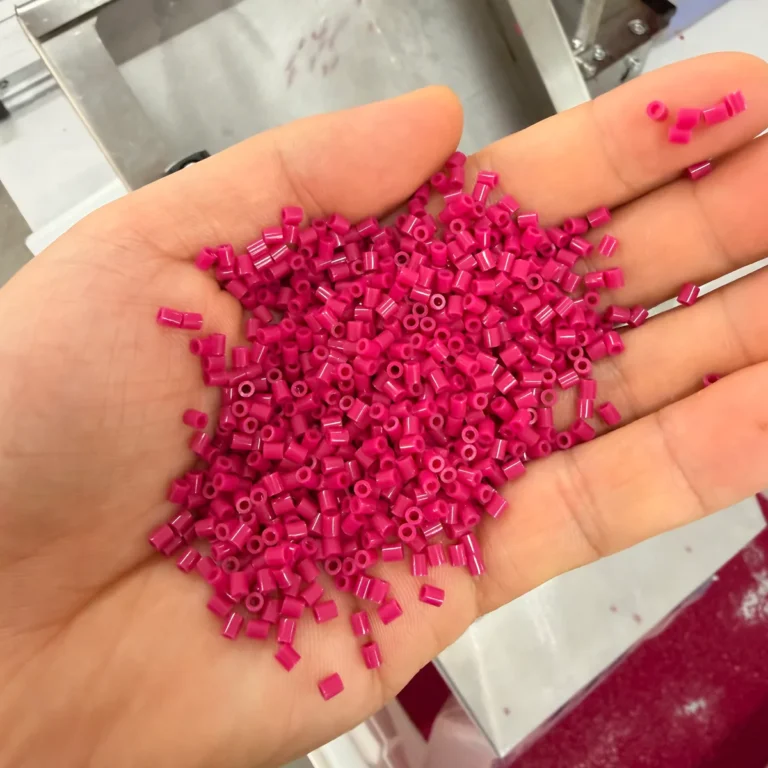
Medical catheter tubes can be produced from PP, PVC, TPU, PE, PA, silicone-compatible materials, and other medical-grade thermoplastics depending on application requirements.
Material selection is the first step in medical catheter tube manufacturing. Different medical tubing applications require different levels of flexibility, transparency, biocompatibility, kink resistance, chemical resistance, and sterilization compatibility.
In the QTech Machinery medical catheter tube extrusion line case, the project material was PP and PVC, both widely used in medical tubing applications.
Common materials include:
| Material | Main Features | Typical Medical Tubing Use |
|---|---|---|
| PVC | Flexible, transparent, cost-effective | Drainage tubes, infusion tubes |
| PP | Good chemical resistance, lightweight | Medical tubes, laboratory tubes |
| PE | Flexible, chemically stable | Catheter components, fluid tubes |
| TPU | High elasticity, abrasion resistance | Flexible catheters, micro tubes |
| PA/Nylon | High strength, good toughness | Precision medical tubes |
| TPE | Soft touch, flexible | Medical flexible tubing |
For medical tube extrusion, the material must be suitable for medical-grade production. Customers should provide material data sheets, processing temperature recommendations, and compliance documents if available.
For precision tube production, our extrusion systems can be configured with optimized screw design, stable temperature control, servo traction, and stainless steel downstream equipment to help maintain clean and accurate production.
3. What equipment is needed to make medical catheter tubes?
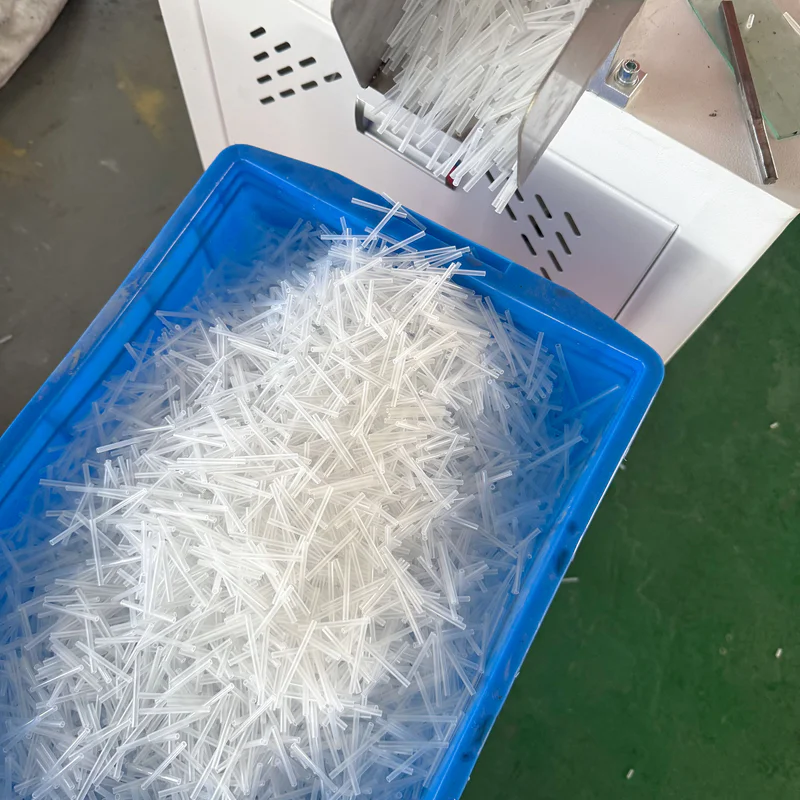
A complete medical catheter tube line usually includes material feeding, precision extruder, die head, vacuum sizing tank, cooling tank, servo haul-off, cutter, and control system.
A medical catheter tube extrusion line should be designed as a complete system. Each part must match the required tube size, material, speed, and tolerance.
Based on the QTech Machinery case, the medical catheter tube extrusion line included the following main equipment:
| Equipment | Case Configuration | Function |
|---|---|---|
| Single screw extruder | SJ40/30 | Plasticizing and extrusion |
| Screw diameter ratio | 30:1 | Improves plasticizing stability |
| Motor system | 7.5 kW motor with Yaskawa inverter | Stable speed control |
| Screw/barrel material | 38CrMoAlA, nitrided and ground | Wear resistance and smooth processing |
| Cooling water tank | 3.5 m stainless steel tank | Tube cooling and sizing |
| Tank material | 304 stainless steel | Clean and corrosion-resistant |
| Vacuum pump | 1.5 kW | Vacuum sizing support |
| Traction system | 0.75 kW servo motor | Stable pulling |
| Cutting system | 1 kW servo motor | Precise cutting |
| Cutting method | Rotary cutting with aluminum clamp fixtures | Smooth tube cutting |
This configuration is suitable for medical tubing projects that require stable extrusion, accurate sizing, and controlled cutting.
For larger or customized precision plastic tube projects, our SJ65/28 single screw servo extruder can also be considered when higher output or different engineering plastics are required. It features a 37 kW Inovance permanent magnet synchronous servo motor, optimized BM screw structure, 38CrMoALA nitrided screw and barrel, Siemens PLC, MCGS touchscreen, and Ethernet communication support.
4. How does the extruder affect medical catheter tube quality?
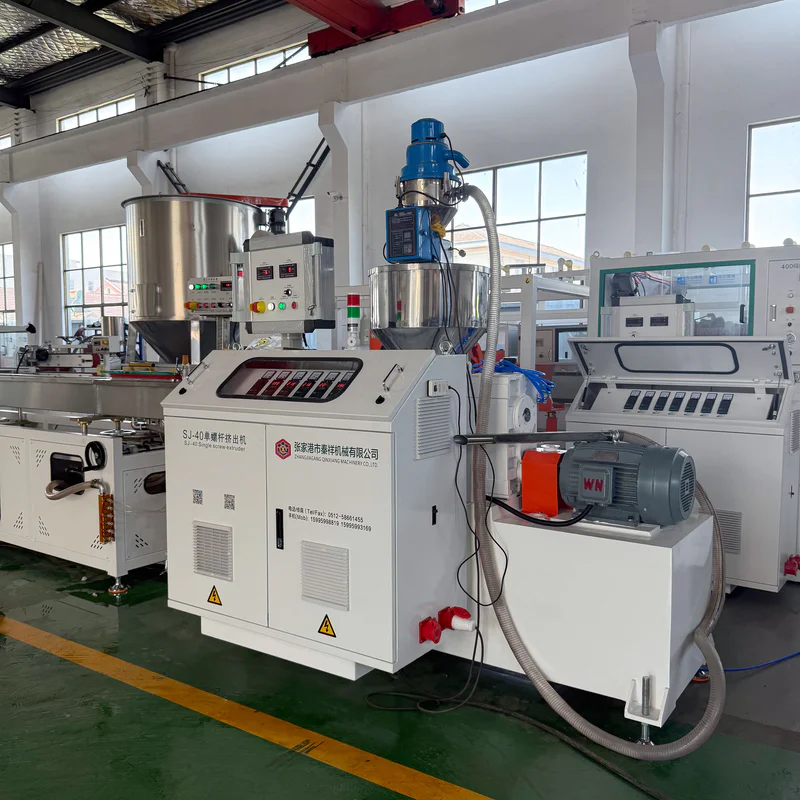
The extruder determines melt uniformity, pressure stability, dimensional accuracy, surface finish, and production consistency.
The extruder is the core machine in medical catheter tube production. A stable extruder helps maintain consistent melt flow, which directly affects tube diameter, wall thickness, transparency, and surface quality.
In the QTech medical catheter project, the line used an SJ40/30 single screw extruder. Its configuration included:
| Item | Specification |
|---|---|
| Extruder model | SJ40/30 |
| Maximum output | 0–40 kg/h |
| Screw L/D ratio | 30:1 |
| Motor power | 7.5 kW |
| Speed control | Yaskawa inverter |
| Screw and barrel material | 38CrMoAlA |
| Surface treatment | Nitrided and ground surface |
The 30:1 L/D ratio helps improve plasticizing quality and melt stability. The nitrided and ground screw/barrel surface improves wear resistance and processing smoothness. Stable speed control from the inverter helps maintain consistent extrusion output.
For more demanding precision extrusion applications, servo-driven systems can provide even better speed response and repeatability. Our SJ65/28 servo extruder uses an Inovance permanent magnet synchronous servo motor, optimized BM screw, Guomao gearbox, Flender direct coupling, and Siemens PLC control. These features help customers achieve stable torque, accurate speed control, and long-term reliability.
5. Why are vacuum sizing and cooling important in catheter tube production?
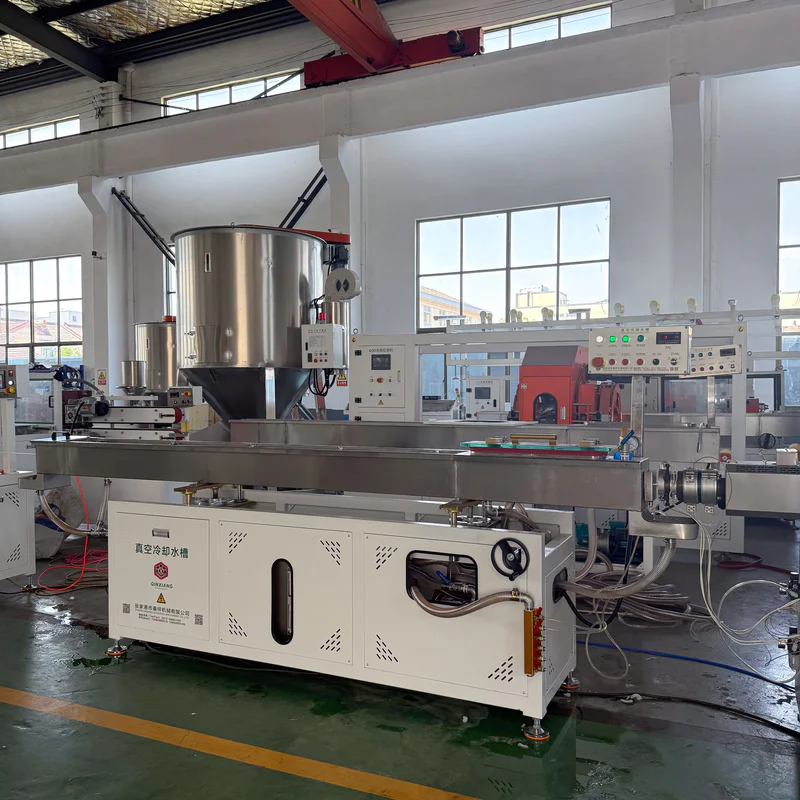
Vacuum sizing and cooling control the tube’s outer diameter, roundness, surface finish, and final dimensional stability.
After the molten plastic exits the extrusion die, it is still soft and easy to deform. The vacuum sizing and cooling system is used to stabilize the tube shape and lock in the required dimensions.
In the QTech case, the cooling system used a 3.5-meter stainless steel cooling water tank with the following configuration:
| Cooling System Item | Specification |
|---|---|
| Tank length | 3.5 m |
| Tank dimensions | 3500 × 230 × 235 mm |
| Material | 304 stainless steel |
| Vacuum pump power | 1.5 kW |
| Precision control | Vacuum gauge with manual adjustment |
The use of 304 stainless steel is important for medical tubing production because it is corrosion-resistant, easy to clean, and suitable for cleaner production environments. Vacuum sizing helps stabilize the outer diameter and improve tube roundness.
For catheter tube production, unstable cooling may cause:
- Oval tubes
- Wall thickness variation
- Surface defects
- Shrinkage
- Bending or deformation
- Poor cutting accuracy
Therefore, the cooling tank length, vacuum control, water temperature, and tube guiding system must be properly configured according to material and production speed.
6. How can servo traction and cutting improve catheter tube production?
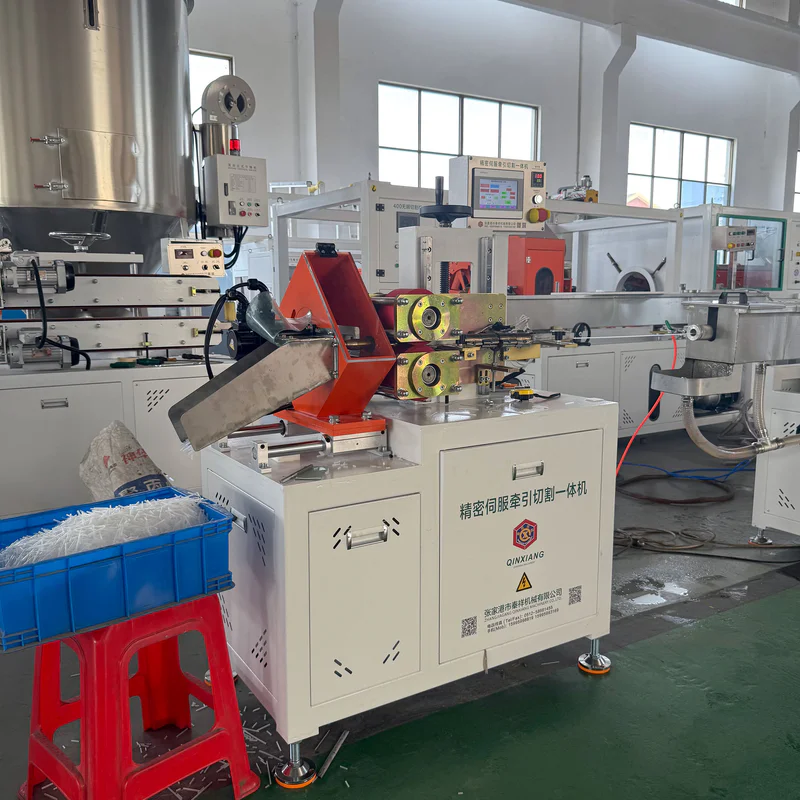
Servo traction and cutting improve tube length accuracy, reduce deformation, and help maintain stable production speed.
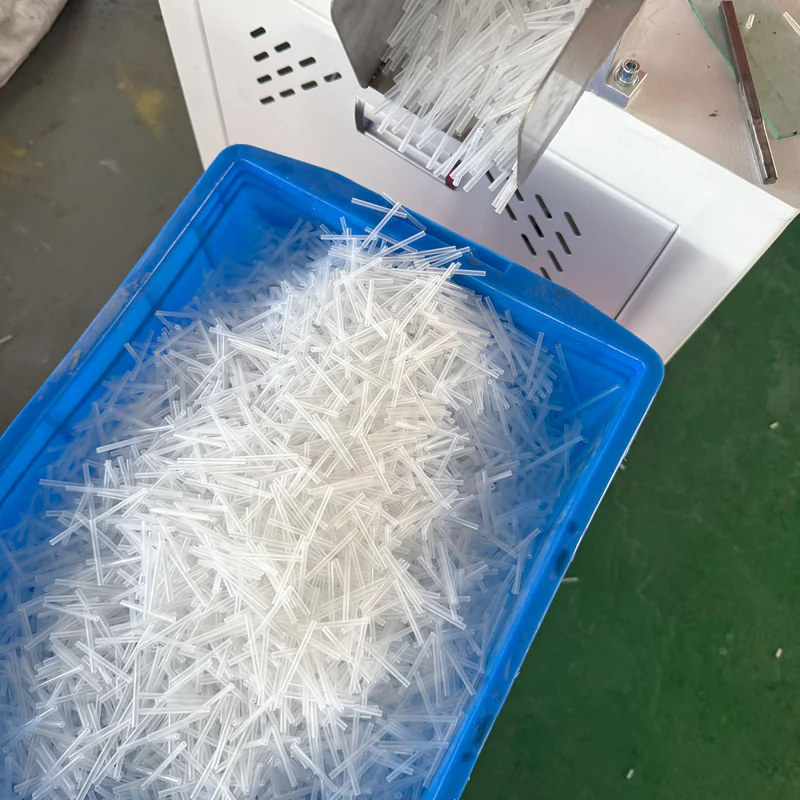
Medical catheter tubes often require accurate cutting length and clean cut surfaces. Manual or unstable cutting can cause burrs, deformation, inconsistent length, and excessive scrap.
In the QTech medical catheter tube line, the cutting system used a servo traction and cutting machine with heating device. The configuration included:
| System | Specification |
|---|---|
| Traction motor power | 0.75 kW servo motor |
| Cutting motor power | 1 kW servo motor |
| Cutting method | Rotary cutting |
| Fixture | Aluminum clamp fixtures |
| Additional function | Heating device |
The servo traction system provides stable pulling speed. This is important because traction speed directly affects tube wall thickness and diameter. If the haul-off speed fluctuates, tube dimensions may also fluctuate.
The rotary cutting method with aluminum clamp fixtures helps improve cutting stability and reduce tube deformation during cutting. For small-diameter medical tubing, this is especially important.
Advantages of servo traction and cutting include:
| Advantage | Benefit |
|---|---|
| Stable traction speed | Better wall thickness control |
| Accurate cutting | Consistent tube length |
| Lower deformation | Better product appearance |
| Reduced manual work | Higher production efficiency |
| Better repeatability | Suitable for medical production |
7. How should customers choose the right medical catheter tube extrusion line?
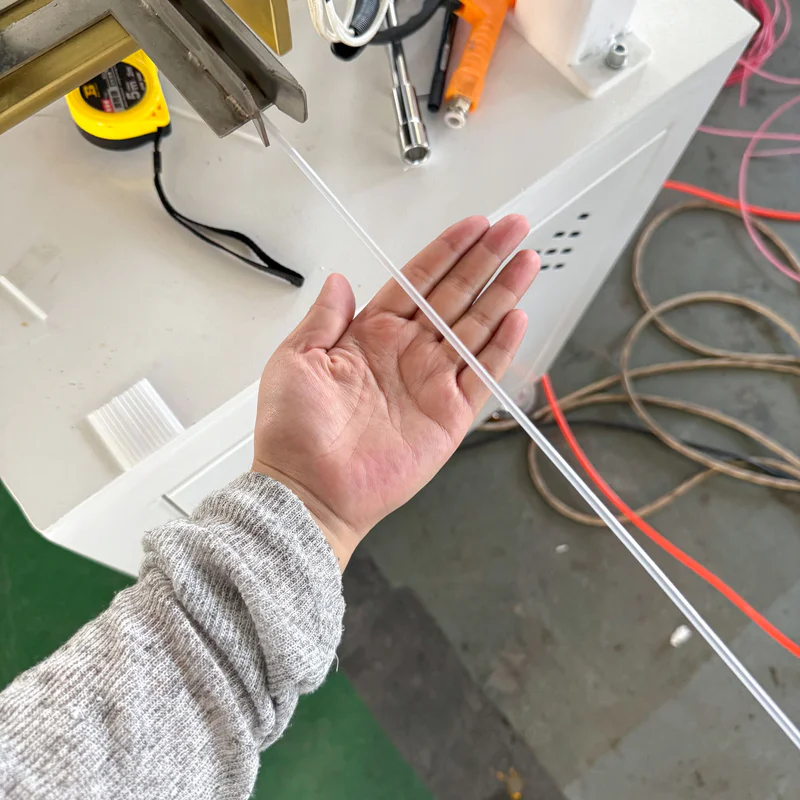
Customers should choose the line based on material, tube diameter, wall thickness tolerance, output, cleanliness requirements, automation level, and compliance needs.
Before purchasing a medical catheter tube extrusion line, customers should clearly define product and production requirements. Medical tubing is a precision product, so accurate project information helps suppliers design the right solution.
Customer Selection Steps
| ![]() | Step | What to Confirm | Why It Matters |
|---|---|---|---|
| Step 1 | Tube material | Determines screw design and temperature | |
| Step 2 | Medical grade requirements | Affects material handling and clean production | |
| Step 3 | Outer diameter and inner diameter | Determines die and sizing system | |
| Step 4 | Wall thickness tolerance | Determines extrusion and haul-off precision | |
| Step 5 | Tube flexibility | Affects material and cooling method | |
| Step 6 | Output requirement | Determines extruder size | |
| Step 7 | Cutting length | Determines cutting system | |
| Step 8 | Surface quality | Determines die, cooling, and traction design | |
| Step 9 | Factory voltage | Determines electrical configuration | |
| Step 10 | Automation level | Determines PLC, HMI, and servo control |
If customers need small-diameter medical tubes with output up to 40 kg/h, an SJ40/30 precision extrusion line may be suitable. If the customer needs larger tubes, higher output, or special engineering plastic processing, a customized SJ65/28 servo extrusion solution may be recommended.
The best approach is to send tube drawings, material information, tolerance requirements, sample photos, and production capacity targets to the supplier for engineering evaluation.
8. Why choose QTech Machinery for medical catheter tube extrusion?
QTech Machinery provides customized medical tube extrusion solutions with precision extruders, stainless steel cooling systems, servo traction, accurate cutting, and full-line engineering support.
Medical catheter tube production requires both machine manufacturing experience and process engineering ability. A good supplier should not only provide machines, but also help customers configure the full line according to material, tube size, output, tolerance, and local factory conditions.
In the Medical Catheter Tube Extrusion Line case, QTech Machinery developed a tailored solution for a leading medical device manufacturer. The client needed high precision, consistency, compliance with medical standards, efficient production capacity, and user-friendly operation.
QTech’s solution included:
- SJ40/30 single screw extruder
- Optimized screw design
- 38CrMoAlA nitrided and ground screw/barrel
- Stainless steel cooling water tank
- Vacuum sizing control
- Servo traction and cutting machine
- Rotary cutting with aluminum clamp fixtures
- User-friendly control and operation
QTech Machinery’s advantages include:
| Advantage | Customer Benefit |
|---|---|
| Customized line design | Matches specific medical tube requirements |
| Precision extrusion technology | Better dimensional stability |
| Stainless steel downstream equipment | Cleaner and more durable production |
| Servo traction and cutting | Higher accuracy and lower scrap |
| OEM and ODM support | Flexible project cooperation |
| Voltage configuration | Suitable for different countries |
| Full run test | Reduces installation risk |
| Quote in 24 hours | Faster project response |
| Engineering support | Better screw, die, cooling, and control matching |
Recommended internal links:
- QTech Machinery Home
- Plastic Pipe Making Machine
- Plastic Extrusion Machine
- Medical Catheter Tube Extrusion Line Case
- QTech Machinery Cases
Recommended Medical Catheter Tube Extrusion Line Configuration
The following table summarizes the reference configuration from the QTech medical catheter tube extrusion line case.
| Section | Recommended Configuration |
|---|---|
| Main extruder | SJ40/30 single screw extruder |
| Maximum output | 0–40 kg/h |
| Screw L/D ratio | 30:1 |
| Motor power | 7.5 kW |
| Speed control | Yaskawa inverter |
| Screw/barrel material | 38CrMoAlA |
| Surface treatment | Nitrided and ground |
| Cooling tank | 3.5 m stainless steel cooling water tank |
| Cooling tank dimensions | 3500 × 230 × 235 mm |
| Cooling tank material | 304 stainless steel |
| Vacuum pump power | 1.5 kW |
| Vacuum control | Vacuum gauge with manual adjustment |
| Traction motor | 0.75 kW servo motor |
| Cutting motor | 1 kW servo motor |
| Cutting method | Rotary cutting |
| Fixture | Aluminum clamp fixtures |
| Optional upgrade | PLC/HMI control, servo extruder, automatic collection |
Products We Can Provide
QTech Machinery can provide complete medical catheter tube extrusion line equipment and related systems.
| Product | Function |
|---|---|
| Precision single screw extruder | Plasticizing and extrusion |
| Medical tube extrusion die | Tube forming |
| Vacuum sizing tank | OD and roundness control |
| Stainless steel cooling tank | Tube cooling and stabilization |
| Servo traction machine | Stable pulling |
| Servo cutting machine | Accurate cutting |
| Rotary cutter | Clean cutting for small tubes |
| Automatic collection system | Tube collection and handling |
| PLC control cabinet | Production control and monitoring |
| HMI touchscreen | Easy operation |
| Material feeding system | Automatic material loading |
| Hopper dryer | Material moisture control |
| Temperature control system | Stable heating and cooling |
| Spare parts | Screw, barrel, heater, cutter blade, sensor, vacuum pump |
Documents and Information Customers Should Provide
To configure the right medical catheter tube extrusion line, customers should prepare the following information before quotation.
| Required Information | Purpose |
|---|---|
| Tube material | Select screw, die, and temperature settings |
| Medical-grade material data sheet | Confirm processing and compliance needs |
| Tube drawing | Design die and sizing system |
| Outer diameter | Confirm sizing and calibration |
| Inner diameter | Confirm die mandrel design |
| Wall thickness | Calculate extrusion stability |
| Tolerance requirement | Select precision level |
| Tube length | Select cutting system |
| Output target | Choose extruder model |
| Surface requirement | Confirm die and cooling design |
| Application | Confirm performance requirements |
| Sterilization method | Check material and production compatibility |
| Factory voltage | Configure electrical system |
| Workshop layout | Plan line arrangement |
| Sample photos or samples | Improve engineering evaluation |
Practical References from Forums and Industry Sources
Medical tubing extrusion is widely discussed in technical communities and industry platforms because it involves precision extrusion, process validation, and strict quality control.
For example, discussions in the Eng-Tips Plastics Engineering Forum often emphasize the importance of melt stability, screw design, cooling control, and downstream synchronization in plastic extrusion. These factors are especially important for medical catheter tube production because even small dimensional changes can affect product performance.
Industry resources such as Plastics Technology frequently publish extrusion troubleshooting articles related to material drying, melt temperature, die design, and process consistency. These topics are useful for buyers who want to understand how to reduce tube defects and improve production repeatability.
For medical device quality and regulatory background, the U.S. FDA Medical Devices page provides useful information about medical device regulation, quality expectations, and compliance considerations. While extrusion machine suppliers do not replace regulatory consultants, equipment design should support stable and traceable manufacturing processes.
For general extrusion theory, ScienceDirect’s single screw extruder topic explains plastic conveying, melting, pressure building, and metering principles, which are important for understanding why screw design and extrusion stability matter.
These references show that medical catheter tube extrusion should be treated as a complete process system, not just a machine purchase. Material preparation, extrusion stability, die accuracy, vacuum sizing, cooling, traction, cutting, and documentation all affect final tube quality.
Conclusion
Making medical catheter tubes requires a precision extrusion line designed for accurate dimensions, stable wall thickness, smooth surface quality, clean processing, and reliable production repeatability. The right line should be selected according to material, tube size, tolerance, output, cooling method, cutting requirement, automation level, and medical production needs.
QTech Machinery can provide customized medical catheter tube extrusion solutions, including precision extruders, medical tube dies, stainless steel cooling tanks, vacuum sizing systems, servo traction machines, servo cutters, and PLC/HMI control systems.
Based on the QTech medical catheter tube extrusion line case, a properly configured line can help manufacturers improve tube quality, reduce waste, increase production efficiency, and support medical-grade manufacturing requirements.
If you are planning to produce medical catheter tubes, send us your material, tube drawing, tolerance, output requirement, voltage, and workshop layout. Our engineering team will recommend the right extrusion line configuration for your project.