How are PE fuse beads produced by extrusion?
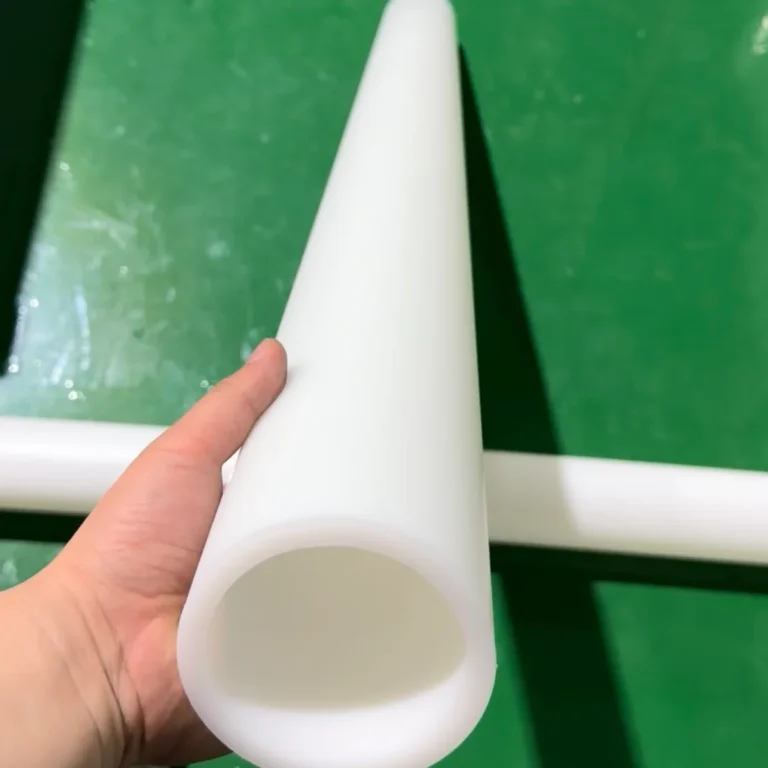
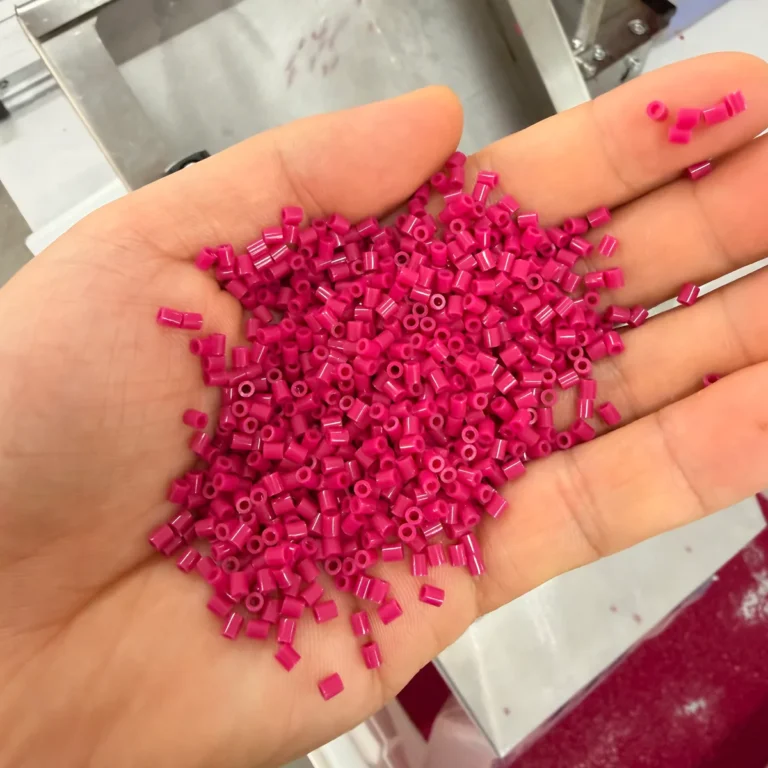
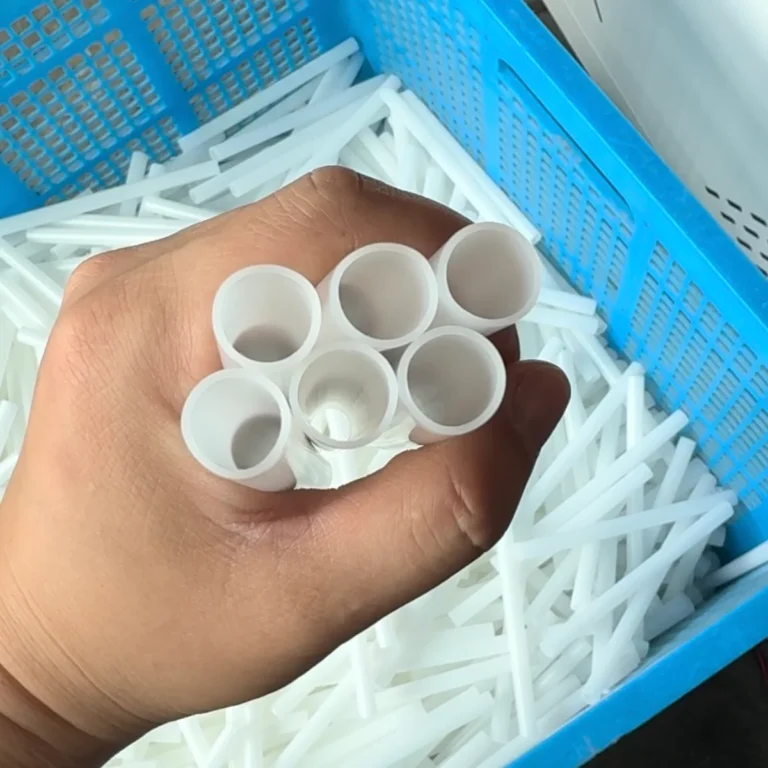
PE fuse beads are produced by extruding PE or HDPE into small tubes, cooling and sizing the tubes accurately, then cutting them into short, uniform beads for craft, educational toy, and DIY applications.
Based on QTech-Machinery’s delivered PE Fuse Beads Small Tube Extrusion Line project, this article explains the complete production process, key equipment, buyer selection steps, technical configuration, and practical considerations for manufacturers planning to produce fuse beads, ironing beads, melty beads, or small PE craft beads.
1. What are PE fuse beads and why are they made by extrusion?
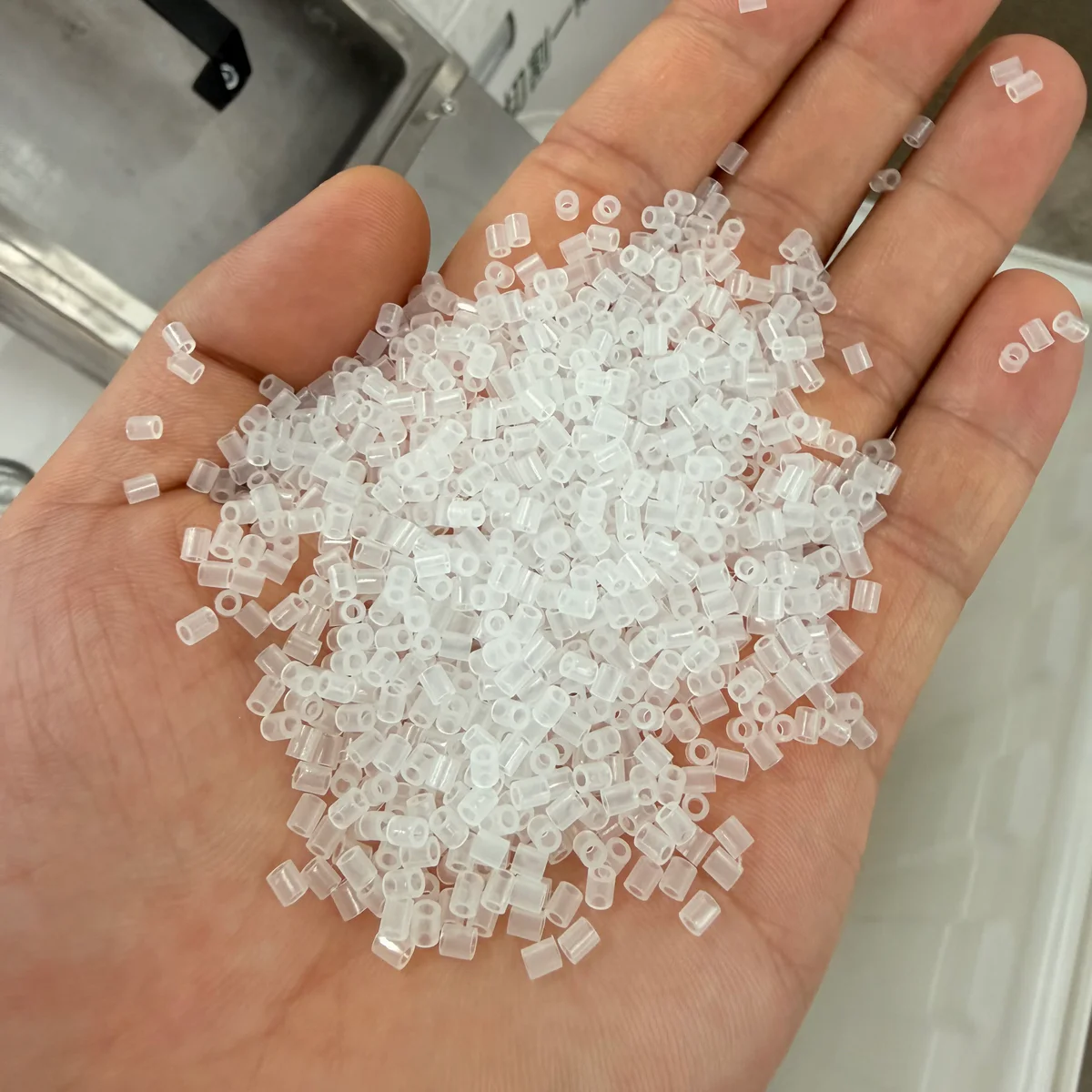
PE fuse beads are small plastic tube beads commonly used for ironing bead crafts, and extrusion is an efficient method to produce them continuously with stable size and clean cutting quality.
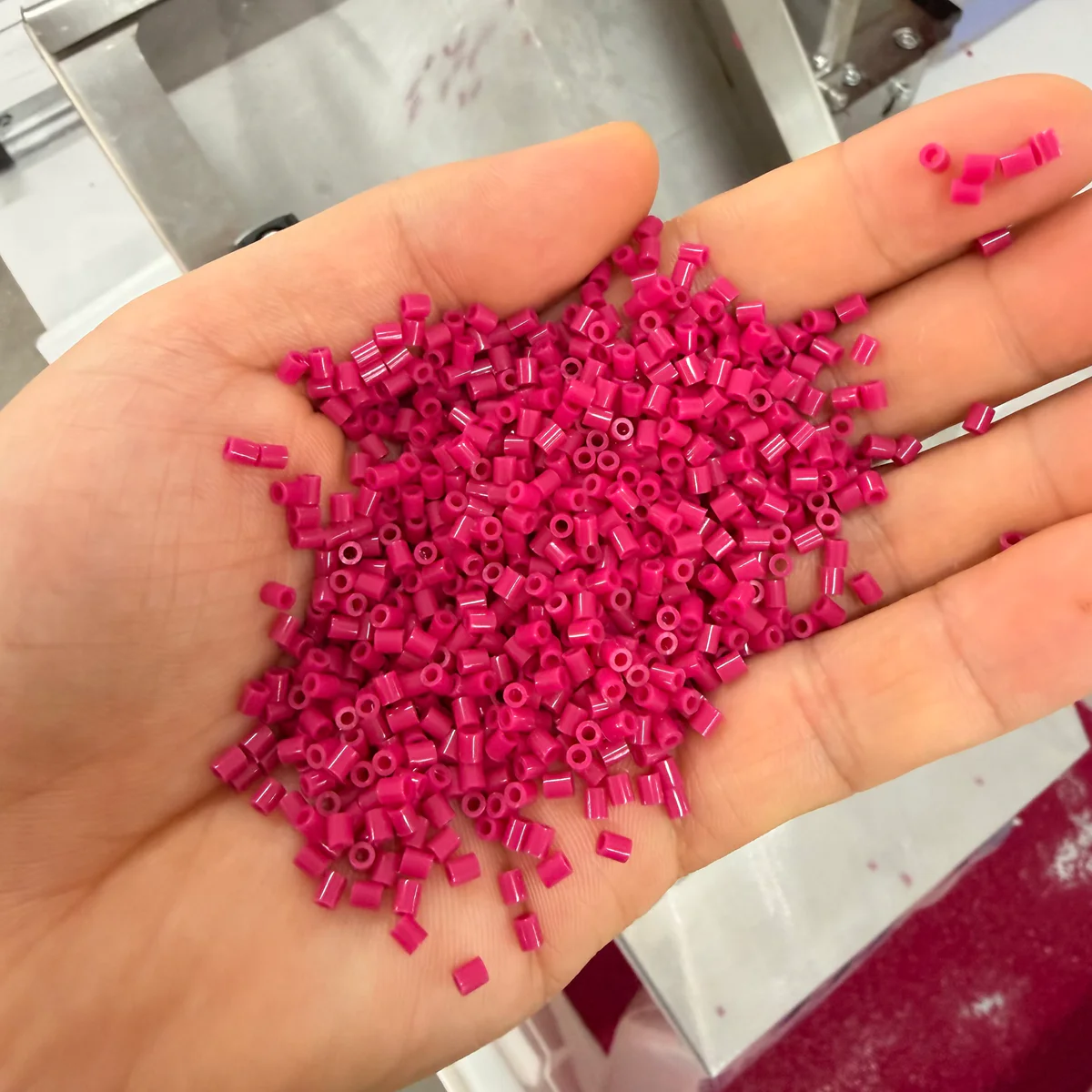
PE fuse beads, also called ironing beads, melty beads, iron beads, or DIY craft beads, are small cylindrical plastic beads used in children’s craft boards and educational toy products. The beads are usually made from PE or HDPE material because the material is easy to process, available in many colors, and suitable for thermal bonding during craft use.
The extrusion process is suitable for fuse bead production because the product shape starts as a small plastic tube. Instead of molding each bead one by one, the machine continuously extrudes PE into a long small tube, cools and stabilizes the tube, then cuts it into short beads at high speed.
For industrial production, this method provides several advantages:
- Continuous production instead of batch-by-batch forming
- Stable tube diameter and wall thickness
- Adjustable bead length
- High cutting efficiency
- Lower labor requirement
- Suitable for colorful PE or HDPE materials
In QTech-Machinery’s customer case, the buyer needed a reliable production line for small PE tube beads used in craft and educational applications. QTech-Machinery supplied a complete extrusion system including automatic feeding, precision extrusion, vacuum cooling, servo haul-off, and rotary cutting.
Internal reference: PE Fuse Beads Small Tube Extrusion Line Case
2. What is the complete process for producing PE fuse beads by extrusion?
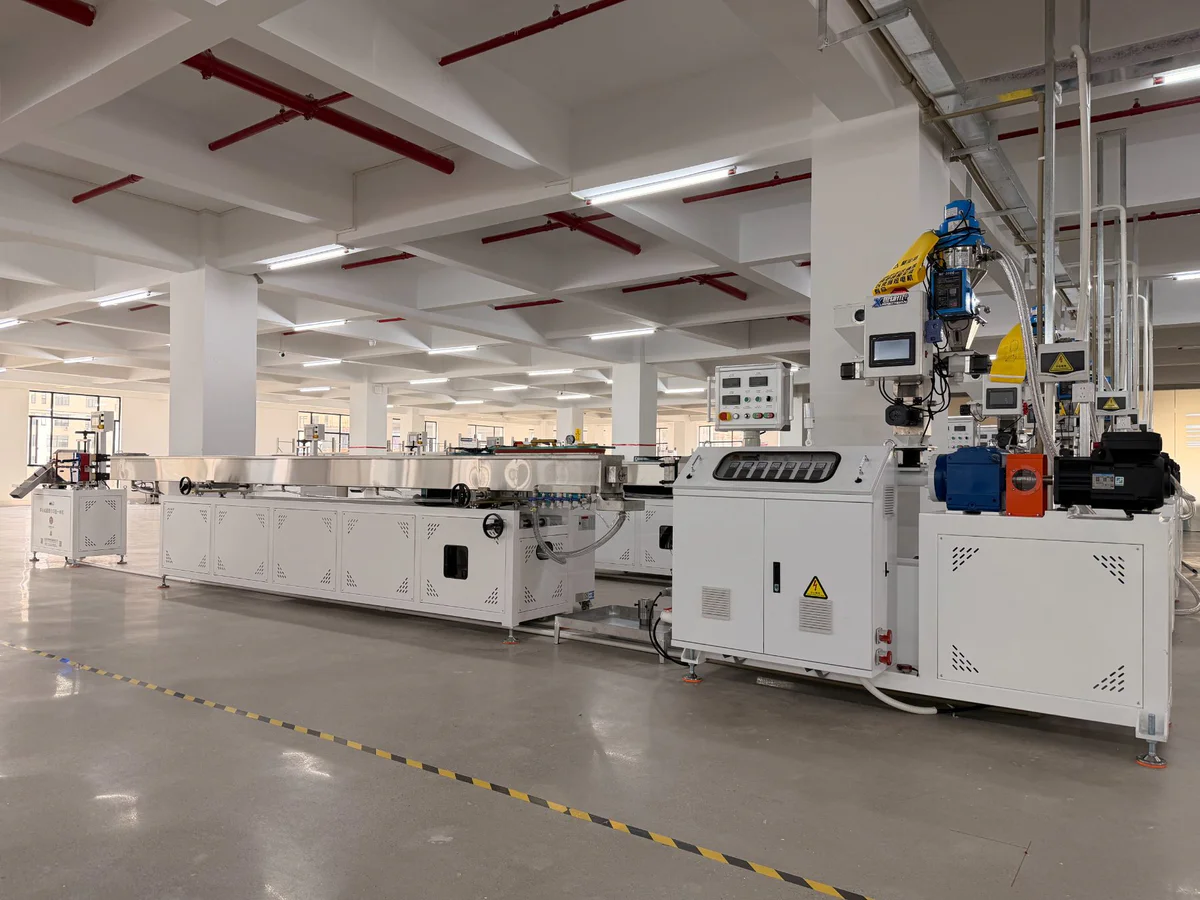
The process includes material feeding, melting and extrusion, small tube forming, vacuum cooling and sizing, servo haul-off, rotary cutting, and final bead collection.
A typical PE fuse beads extrusion process follows a continuous production flow. Each section affects the final bead quality, especially the tube diameter, cutting length, surface smoothness, and edge cleanliness.
PE fuse beads extrusion process flow
| Step | Process Stage | Main Function | Key Quality Point |
|---|---|---|---|
| 1 | Raw material preparation | Prepare PE/HDPE material and color masterbatch | Clean, dry, consistent material |
| 2 | Vacuum feeding | Feed material into extruder hopper | Stable feeding volume |
| 3 | Plasticizing extrusion | Melt and homogenize PE material | Stable melt pressure and temperature |
| 4 | Small tube forming | Form PE into small tube shape through mould | Diameter and wall thickness accuracy |
| 5 | Vacuum cooling and sizing | Cool and stabilize tube dimension | Roundness and surface quality |
| 6 | Servo haul-off | Pull tube at stable speed | Consistent tube size |
| 7 | Rotary cutting | Cut tube into short beads | Uniform length and clean edges |
| 8 | Collection and inspection | Collect finished beads | Appearance, size, cutting quality |
In QTech-Machinery’s supplied line, the main production process is:
Automatic vacuum feeding → SJ45/30 single screw extrusion → precision small tube moulding → 6000 mm vacuum cooling and sizing → dual servo belt haul-off → rotary flying knife cutting → finished PE fuse beads.
This structure is compact, suitable for continuous operation, and designed for small-diameter tube products where dimensional accuracy is important.
3. What machines are needed for a PE fuse beads small tube extrusion line?
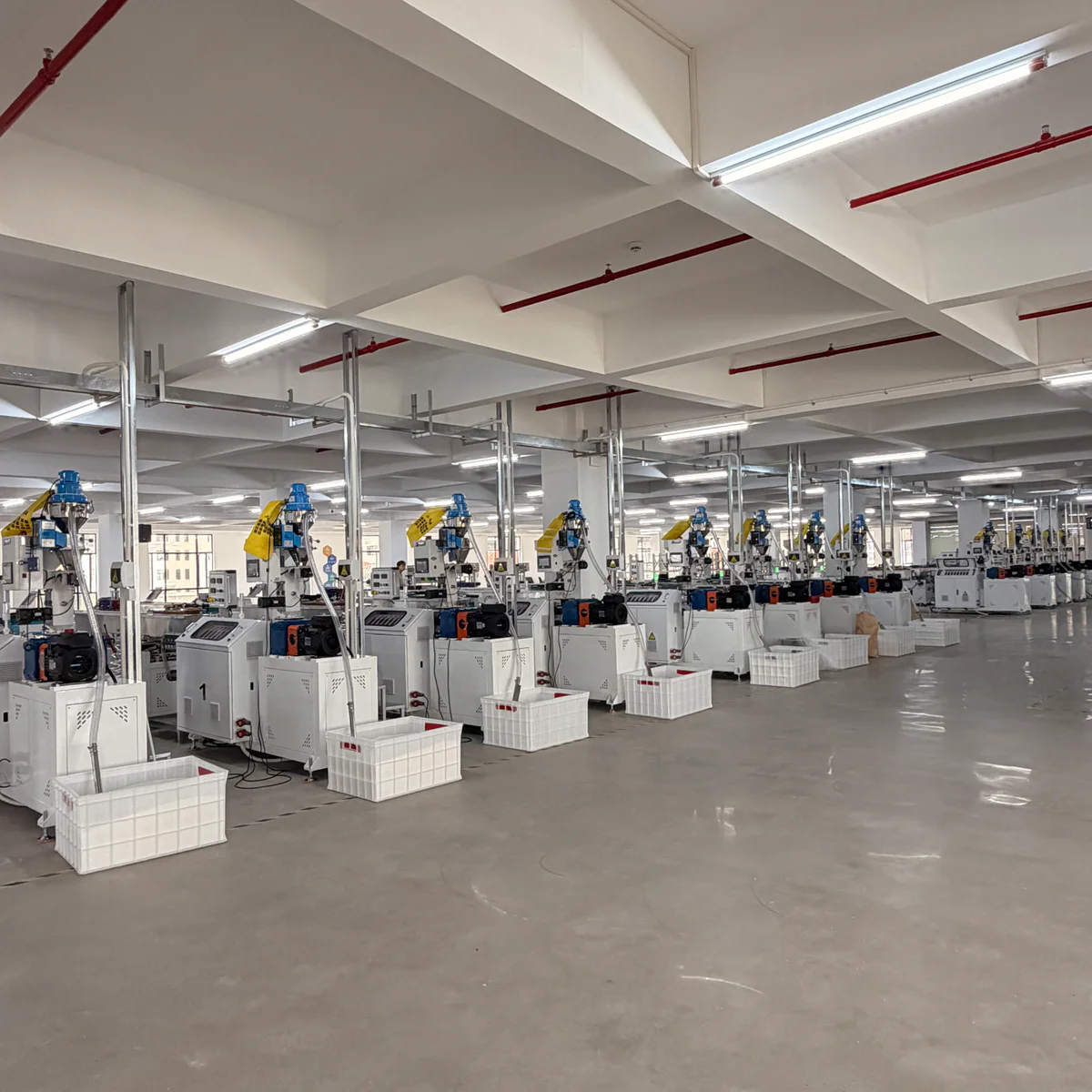
A complete PE fuse beads production line normally includes a vacuum feeder, single screw extruder, precision small tube mould, vacuum cooling tank, servo haul-off, rotary cutter, and PLC control system.
For PE fuse bead production, the line must be designed for small plastic tube extrusion rather than ordinary large pipe production. The equipment must handle low-to-medium output, accurate tube forming, stable traction, and high-speed cutting.
Main machine configuration from QTech-Machinery customer case
| Machine Section | Configuration Used in the Project | Function |
|---|---|---|
| Automatic Feeding System | QX-300 vacuum feeding system | Transfers PE material into extruder automatically |
| Extruder | SJ45/30 precision single screw extruder | Melts and extrudes PE material |
| Main Motor | 11 kW Inovance permanent magnet servo motor | Provides stable extrusion power |
| Screw and Barrel | 45 mm screw, 30:1 L/D, 38CrMoALA nitrided | Ensures stable plasticizing |
| Mould System | S136H mould and mandrel with coating treatment | Forms small PE tube accurately |
| Sizing Mould | Beryllium copper C17200, water cooling | Improves sizing and cooling efficiency |
| Cooling Tank | 6000 mm 304 stainless steel vacuum cooling tank | Cools and stabilizes tube diameter |
| Haul-off Unit | Dual 0.75 kW servo belt haul-off | Pulls tube steadily |
| Cutting Unit | Rotary flying knife cutter with 1.8 kW servo motor | Cuts small tubes into beads |
| Control System | Siemens PLC with HMI touch interface | Controls speed, length, and operation parameters |
This configuration is suitable for manufacturers who need a compact production line for PE/HDPE fuse beads, especially when the requirement includes smooth surface, stable diameter, and clean cutting quality.
Internal reference: Plastic Pipe Making Machine Category
4. How does the extruder affect PE fuse bead quality?
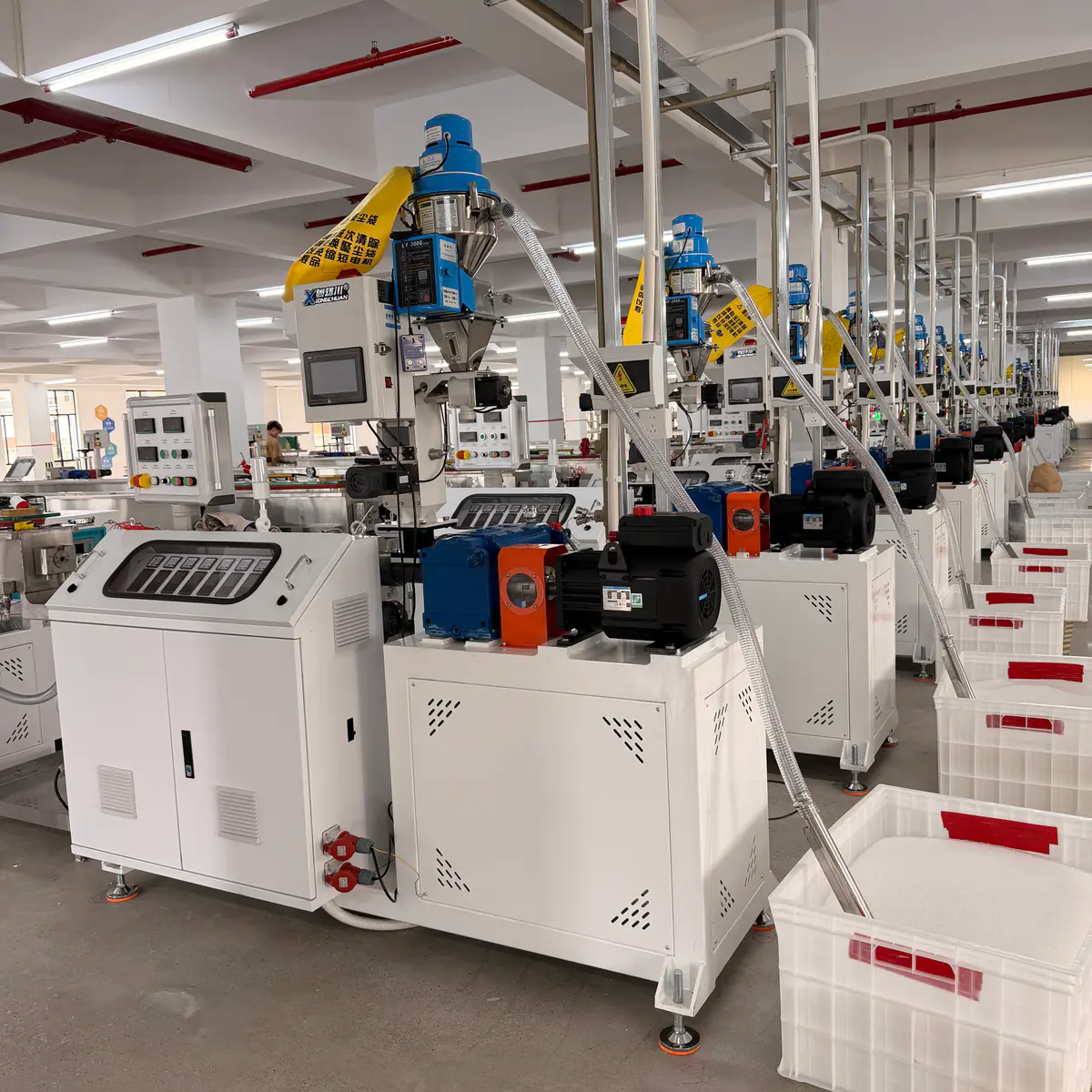
The extruder determines melt stability, output consistency, material plasticizing quality, and the foundation for accurate tube forming.
The extruder is the heart of the PE fuse beads production line. In QTech-Machinery’s project, the line uses an SJ45/30 precision single screw extruder. This model is suitable for small PE tube extrusion because it offers stable plasticizing performance and controllable output for small-diameter products.
Key extruder specifications
| Item | Specification |
|---|---|
| Extruder model | SJ45/30 precision single screw extruder |
| Screw diameter | 45 mm |
| L/D ratio | 30:1 |
| Screw speed | 0–90 rpm |
| Main motor | 11 kW Inovance permanent magnet servo motor |
| Screw material | 38CrMoALA with nitriding treatment and surface electroplating |
| Output range | Approximately 10–40 kg/h |
| Center height | 1000 ± 50 mm |
The 30:1 L/D ratio helps improve material melting and mixing. This is important when using colored PE materials or color masterbatch, because poor mixing may lead to uneven color or unstable melt flow.
The servo motor system provides stable power transmission and helps maintain consistent screw speed. For small tube products, even small fluctuations in extrusion output can affect tube diameter and bead size. Therefore, a stable extruder is critical for high-quality fuse bead production.
QTech-Machinery advantage
QTech-Machinery can configure the screw design, motor power, output range, and control system according to the buyer’s material, bead size, voltage, and production target. This helps customers avoid over-sized or under-powered equipment and receive a production line suitable for their actual factory conditions.
Internal reference: QTech Machinery Homepage
5. Why are mould design and vacuum cooling important for fuse bead production?
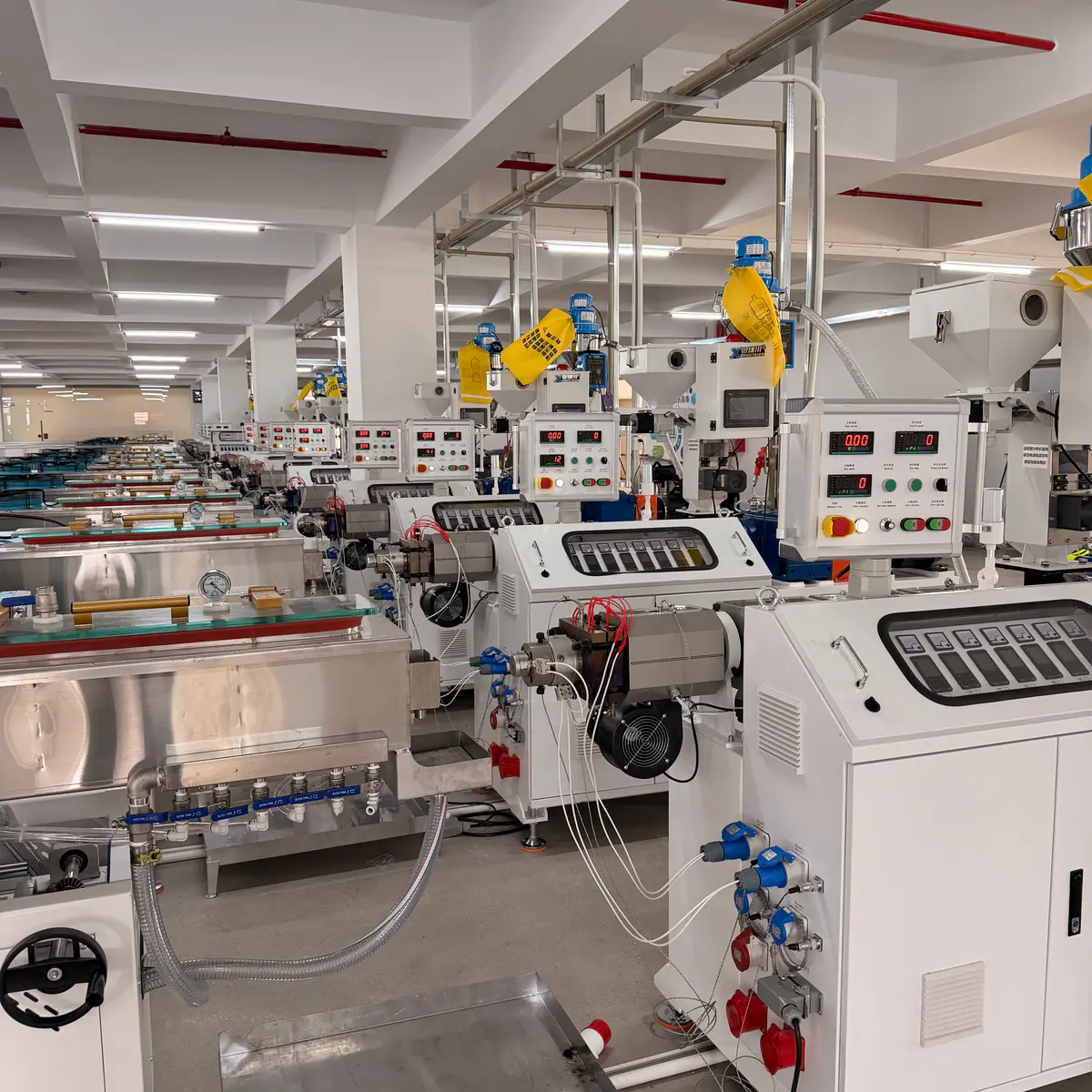
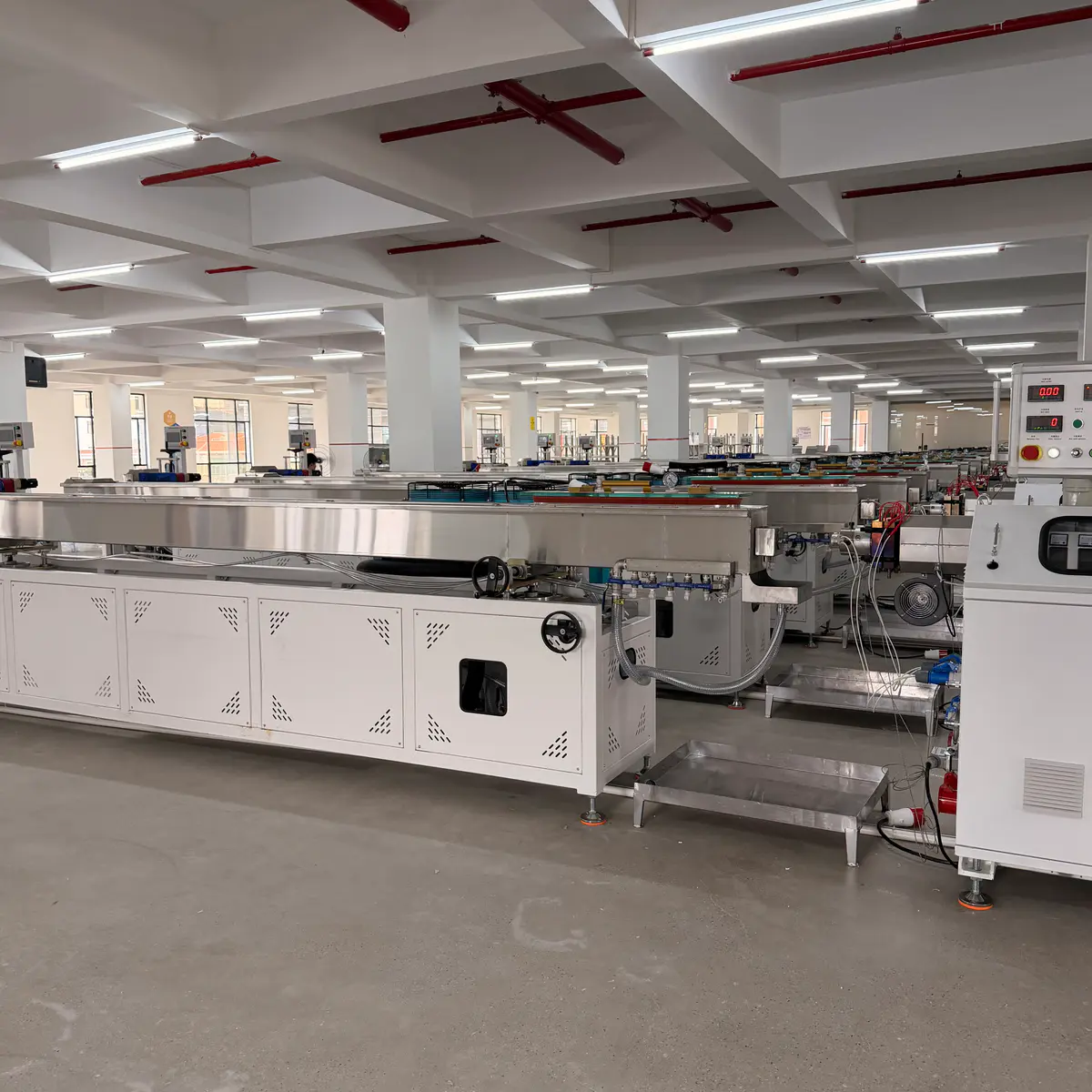
Mould design forms the initial tube shape, while vacuum cooling and sizing keep the tube diameter stable before cutting.
For fuse bead production, the final bead quality depends heavily on the accuracy of the small tube before cutting. If the tube diameter is unstable, the finished beads may show inconsistent appearance, uneven wall thickness, or poor craft performance.
In the QTech-Machinery project, the mould system uses:
| Mould Part | Material / Design | Benefit |
|---|---|---|
| Extrusion mould | S136H with coating treatment | Wear resistance and smooth flow |
| Mandrel | S136H with coating treatment | Stable inner hole forming |
| Sizing mould | Beryllium copper C17200 | Good thermal conductivity |
| Cooling method | Water cooling | Fast and stable tube sizing |
After leaving the mould, the PE tube enters a 6000 mm vacuum cooling and sizing water tank. The vacuum tank helps maintain the tube shape and dimension during cooling.
Cooling tank configuration
| Item | Specification |
|---|---|
| Total tank size | 6000 × 230 × 235 mm |
| Vacuum tank length | 1000 mm |
| Tank material | 304 stainless steel |
| Vacuum tank cover | Tempered glass cover |
| Water pump power | 0.75 kW |
| Vacuum pump power | 2.2 kW |
| Inlet design | Pre-cooling device with regulating valve |
A longer and well-designed cooling tank gives the small PE tube enough time to cool before being pulled and cut. If the tube is not cooled sufficiently, it may deform during haul-off or produce burrs during cutting.
QTech-Machinery advantage
QTech-Machinery uses 304 stainless steel cooling tanks, precise vacuum sizing, and practical water-cooling arrangements to support stable continuous production. The cooling tank design can be adjusted according to the customer’s product diameter, line speed, and workshop layout.
6. How are PE tubes cut into uniform fuse beads?
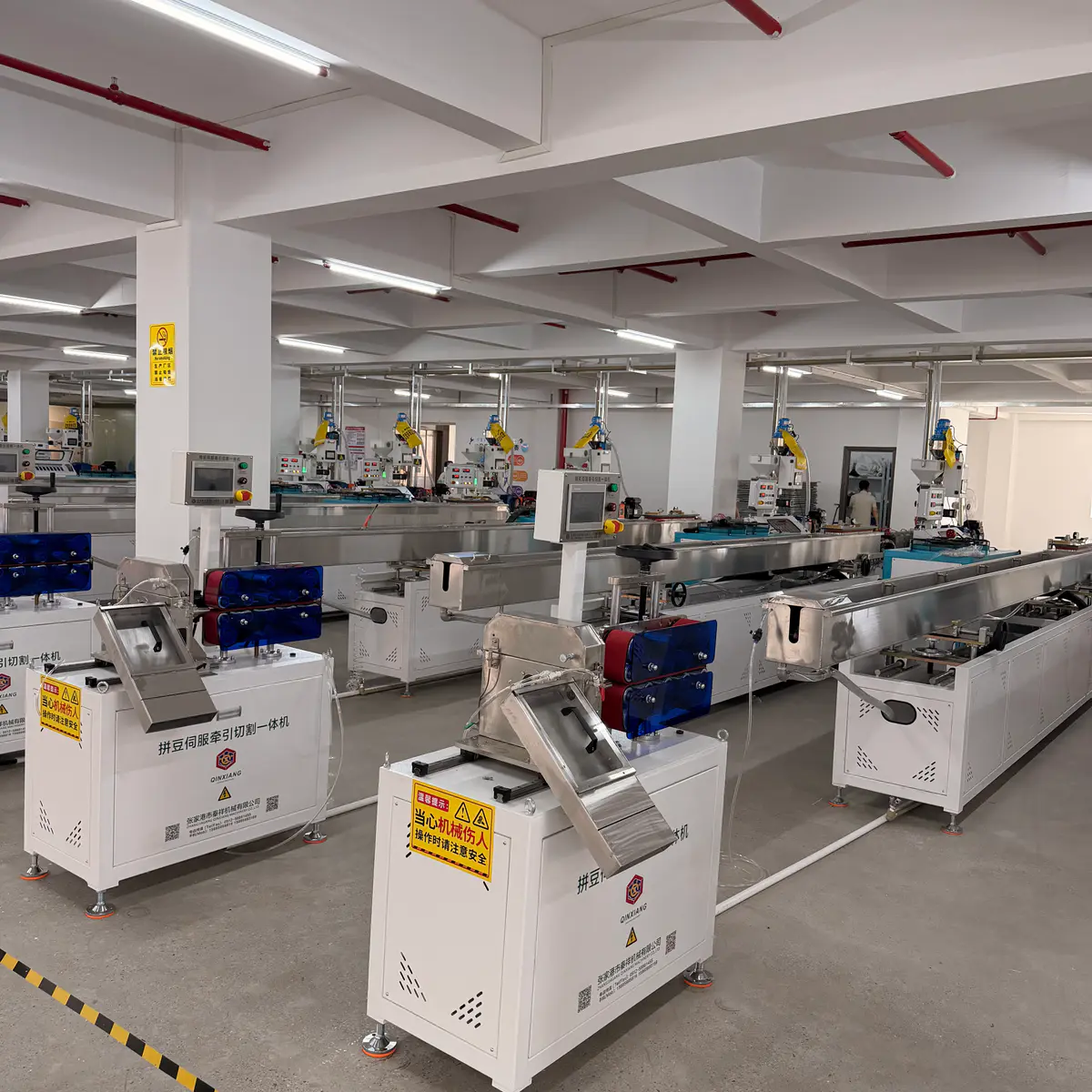
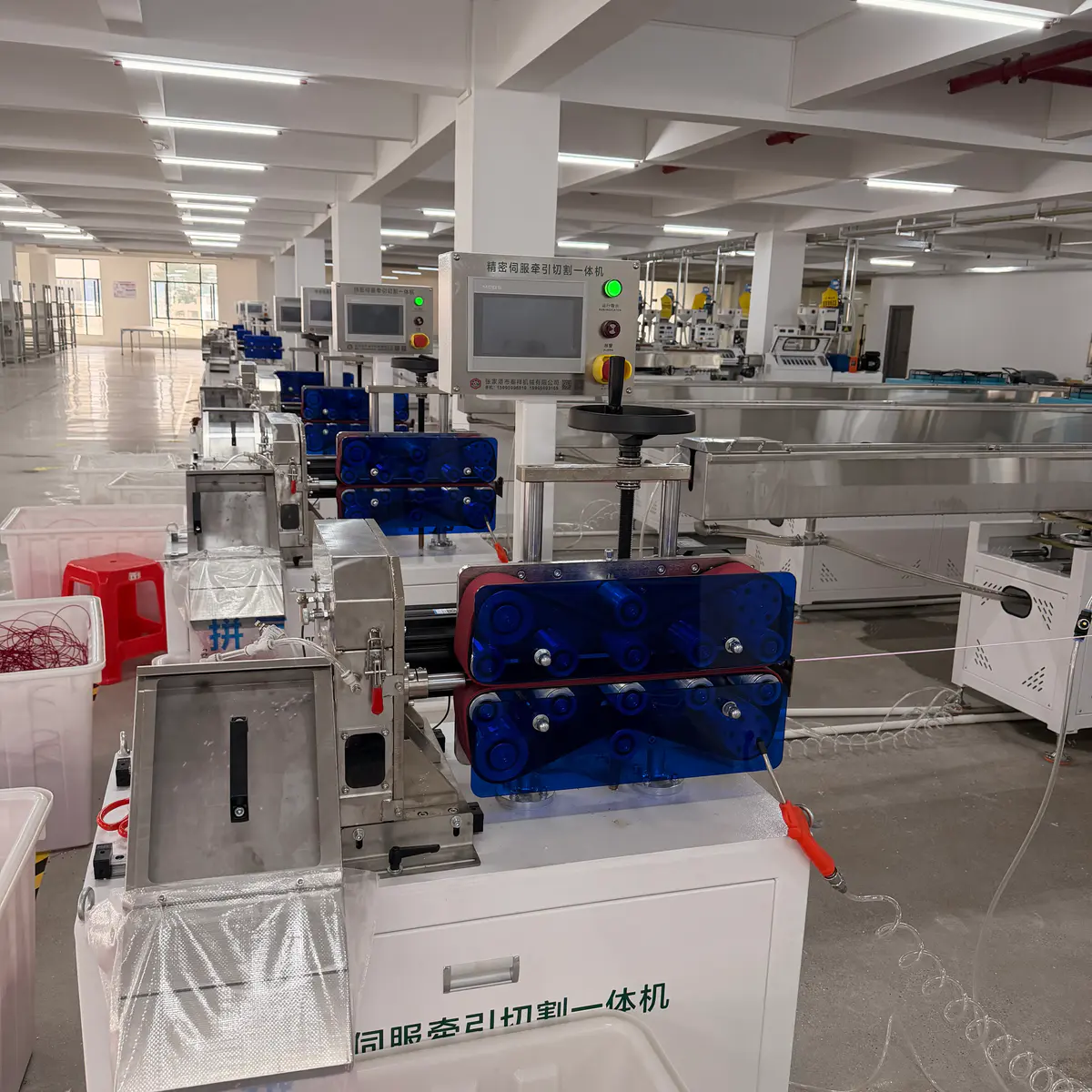
PE tubes are cut into beads by a servo-controlled rotary flying knife cutter, which allows adjustable length, high cutting speed, and clean bead edges.
After extrusion, cooling, and haul-off, the continuous PE tube must be cut into short beads. Cutting accuracy is one of the most important quality points for fuse bead production because customers expect uniform bead height and smooth edges.
QTech-Machinery’s customer case uses a precision servo belt haul-off and cutting integrated machine. The haul-off and cutting sections are installed on an integrated platform to improve compactness and synchronization.
Haul-off and cutting configuration
| Item | Specification |
|---|---|
| Haul-off type | Dual servo belt haul-off |
| Haul-off motor | Inovance 0.75 kW servo motor × 2 |
| Belt width | 80 mm |
| Belt type | Multi-fiber wear-resistant soft flat belt |
| Cutting type | Rotary flying knife cutter |
| Cutting motor | 1.8 kW servo motor |
| Blade quantity | 24 blades |
| Control method | PLC and HMI length setting |
The dual servo belt haul-off pulls the PE tube at a stable speed. This is important because the cutting length depends on both tube movement speed and cutter synchronization.
The rotary flying knife cutter is suitable for high-speed production of short plastic beads. Compared with manual cutting or low-speed cutting, rotary cutting offers:
- Higher production speed
- More uniform bead length
- Cleaner cutting surface
- Better integration with automatic production
- Lower labor cost
QTech-Machinery advantage
QTech-Machinery integrates the haul-off and cutting unit with servo control, helping customers achieve stable traction and accurate cutting. The cutting length can be set through the HMI, allowing easier adjustment for different bead specifications.
Internal reference: QTech Machinery Cases
7. How should customers choose a PE fuse beads extrusion line?
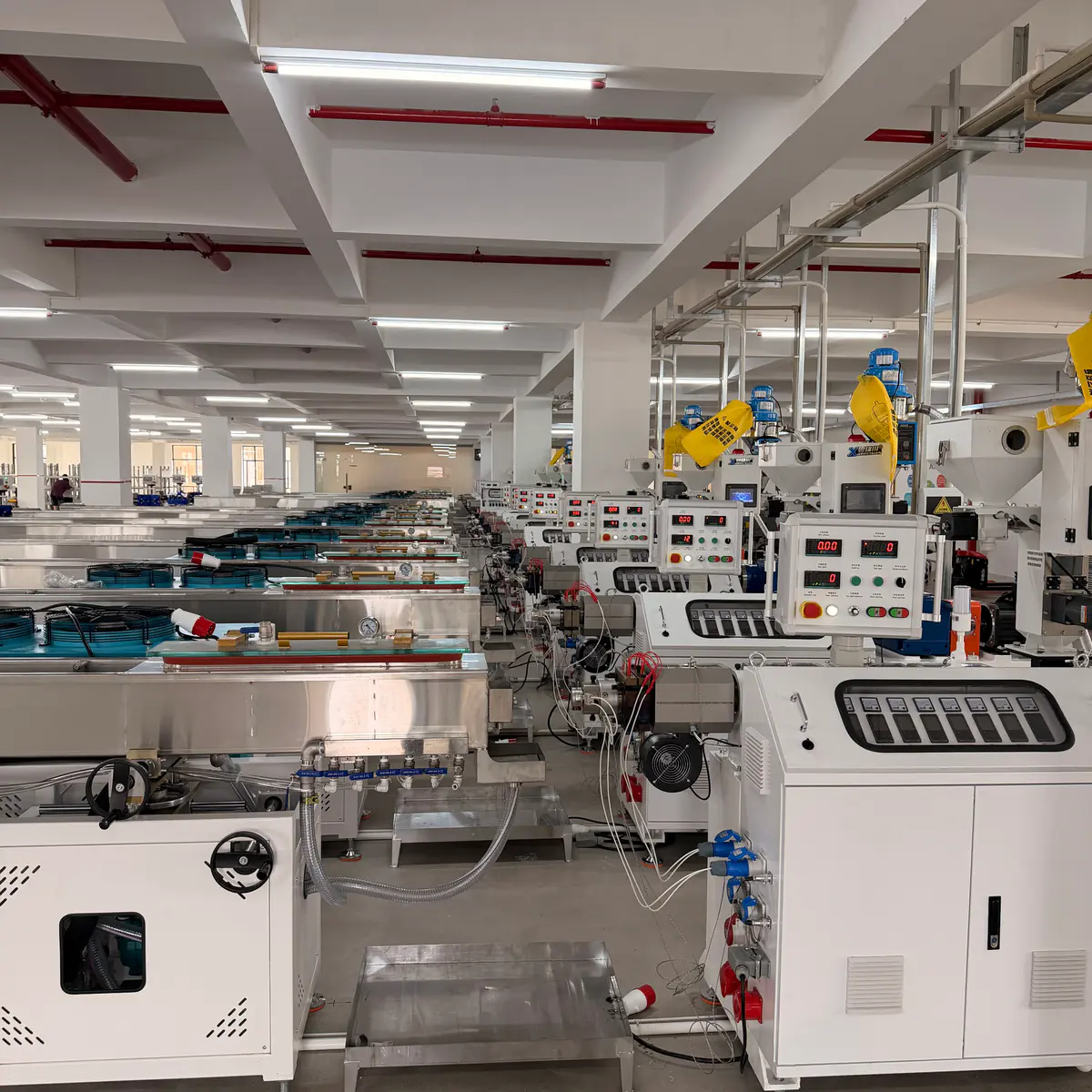
Customers should choose the line according to material, bead size, output target, cutting accuracy, voltage, automation level, and supplier engineering support.
Different customers may produce different bead sizes, colors, outputs, and packaging formats. Therefore, the line should not be selected only by extruder model. It should be configured according to the final product and factory requirement.
Customer selection steps
| Step | What the customer should confirm | Why it matters |
|---|---|---|
| 1 | Raw material type: PE, HDPE, recycled or virgin material | Determines screw design and processing temperature |
| 2 | Bead outer diameter and inner hole size | Determines mould and sizing design |
| 3 | Bead length range | Determines cutting system and control method |
| 4 | Required output per hour | Determines extruder size and line speed |
| 5 | Color requirements | Determines mixing stability and material feeding method |
| 6 | Local power supply | Determines electrical configuration |
| 7 | Workshop layout | Determines line length and tank arrangement |
| 8 | Automation requirement | Determines PLC, HMI, feeding, and collection options |
| 9 | Finished bead quality standard | Determines mould, cooling, haul-off, and cutting precision |
| 10 | After-sales service requirement | Determines installation, training, and spare parts support |
Recommended buyer information before quotation
Before asking for a quotation, customers should prepare:
- Target bead size drawing or sample
- Material type and melt flow information if available
- Expected output, such as kg/h
- Required bead length tolerance
- Local voltage and frequency
- Workshop layout drawing if available
- Photos or videos of existing products if upgrading old equipment
- Packaging and downstream automation needs
QTech-Machinery advantage
QTech-Machinery does not only sell standard equipment. We help customers configure the correct extrusion line according to their market and production requirements. For the fuse beads case, the delivered system was designed around the customer’s need for stable PE extrusion, uniform tube diameter, accurate cutting length, smooth bead surface, and continuous production capability.
Internal reference: Contact QTech Machinery
8. What can QTech-Machinery provide for a PE fuse beads production project?
QTech-Machinery can provide complete machine configuration, technical documents, factory testing, OEM/ODM customization, voltage configuration, installation support, and quotation within 24 hours.
QTech-Machinery is a plastic extrusion and recycling line manufacturer. For PE fuse bead production, we can provide a complete turnkey-style extrusion solution from process discussion to machine manufacturing and delivery.
Products QTech-Machinery can provide
| Product / System | Description |
|---|---|
| PE fuse beads small tube extrusion line | Complete line for PE/HDPE craft bead production |
| Automatic vacuum feeding system | Automatic material transfer to extruder |
| SJ series single screw extruder | Precision plasticizing and extrusion |
| Small tube extrusion mould | Custom mould for bead tube size |
| Vacuum cooling and sizing tank | Stainless steel cooling system for dimension stability |
| Servo belt haul-off unit | Stable pulling for small PE tubes |
| Rotary flying knife cutting machine | High-speed cutting into uniform beads |
| PLC and HMI control system | Easy operation and parameter setting |
| Electrical cabinet and wiring system | Configured according to local voltage |
| Spare parts package | Blades, belts, heating parts, sensors, and consumables |
| Optional downstream equipment | Collection, drying, screening, or packing support based on project needs |
Documents QTech-Machinery can provide
| Document | Purpose |
|---|---|
| Technical quotation | Confirms configuration, price, and scope |
| Machine layout drawing | Helps customer plan workshop space |
| Electrical configuration list | Confirms voltage, motor, and control components |
| Machine specification sheet | Shows technical data of each unit |
| Mould drawing or product confirmation drawing | Confirms product size before manufacturing |
| Operation manual | Supports daily operation |
| Maintenance guide | Helps maintain stable production |
| Spare parts list | Supports future replacement and procurement |
| Factory test video | Confirms machine running before shipment |
| Packing list | Supports import and customs clearance |
| Commercial invoice | Used for payment and customs |
| Bill of lading / shipping documents | Used for international delivery |
| Certificate of origin if required | Supports import documentation |
| CE-related documents if applicable | Supports compliance requirement |
Case-based result from QTech-Machinery
In the customer case published by QTech-Machinery, the buyer required a line for colorful small plastic tube beads with:
- Stable PE extrusion
- Uniform tube diameter
- Accurate cutting length
- Smooth bead surface
- Continuous production capability
- Easy operation and maintenance
QTech-Machinery supplied a complete PE small tube extrusion production line with extrusion, vacuum cooling, servo haul-off, and precision cutting functions. The line was configured for PE/HDPE material and designed for the application of fuse beads, ironing beads, and DIY craft beads.
Case reference: PE Fuse Beads Small Tube Extrusion Line
Key technical configuration table
| Section | QTech-Machinery Configuration | Advantage |
|---|---|---|
| Feeding | QX-300 vacuum feeding system | Reduces manual feeding and supports continuous operation |
| Extruder | SJ45/30 single screw extruder | Suitable for small PE tube extrusion |
| Motor | 11 kW Inovance servo motor | Stable power and energy-efficient operation |
| Screw | 45 mm, 30:1 L/D, 38CrMoALA nitrided | Better plasticizing and durability |
| Mould | S136H coated mould and mandrel | Smooth flow and wear resistance |
| Sizing | Beryllium copper C17200 water-cooled sizing mould | Fast cooling and stable sizing |
| Cooling | 6000 mm 304 stainless steel vacuum tank | Better dimensional stability |
| Haul-off | Dual 0.75 kW servo belt haul-off | Stable traction and tube size control |
| Cutting | 1.8 kW servo rotary flying knife with 24 blades | High-speed, accurate bead cutting |
| Control | Siemens PLC and HMI | Easy operation and length setting |
Practical quality checklist for finished PE fuse beads
| Quality Item | What to Check | Why It Matters |
|---|---|---|
| Bead length | Whether each bead has uniform height | Affects product appearance and craft use |
| Outer diameter | Whether the bead fits craft boards properly | Affects end-user experience |
| Inner hole | Whether the hole is open and consistent | Affects ironing and bead arrangement |
| Cutting edge | Whether edges are clean without burrs | Affects safety and appearance |
| Surface | Whether surface is smooth and bright | Affects product grade |
| Color | Whether color is uniform | Affects retail appearance |
| Deformation | Whether bead shape remains round | Affects packing and craft performance |
| Production stability | Whether output remains stable over time | Affects manufacturing cost |
Customer purchasing workflow with QTech-Machinery
-
Send product requirement
Customer provides bead size, material, output, color, voltage, and sample photos if available. -
Technical discussion
QTech-Machinery engineers review product requirements and confirm extrusion process feasibility. -
Configuration proposal
We recommend suitable extruder, mould, cooling tank, haul-off, cutter, and control system. -
Quotation and layout
Customer receives technical quotation, machine layout, and main component list. -
Order confirmation
Both sides confirm technical details, delivery time, payment terms, and machine scope. -
Machine manufacturing
QTech-Machinery manufactures the line according to confirmed configuration. -
Factory running test
The line is tested before shipment, and videos or inspection records can be provided. -
Packing and shipment
Machines are packed for export and shipped with commercial documents. -
Installation and training support
We provide remote or on-site support according to project requirement. -
After-sales service
Spare parts, technical guidance, and process support are available after delivery.
Forum and external reference notes
In plastic extrusion discussions, experienced operators often emphasize that stable pulling speed, cooling control, and die setup are critical for dimensional consistency. These practical points match the design logic of a PE fuse beads small tube extrusion line: the extruder must provide stable melt flow, the vacuum tank must control tube shape, and the haul-off/cutter must work synchronously.
For additional technical discussions and operator experience, readers may refer to these public communities and technical resources:
- Eng-Tips Plastics Engineering Forum — A professional engineering forum where users discuss plastics processing, extrusion troubleshooting, tooling, and production issues.
- Reddit Plastics Community — A public discussion community where users share questions and practical experience about plastics, materials, and processing.
- Society of Plastics Engineers — A professional plastics industry organization providing technical knowledge, events, and industry resources.
- Plastics Technology Magazine — A plastics processing publication covering extrusion, tooling, materials, and production technology.
These references are useful for understanding general extrusion principles, but actual machine selection should still be based on the target bead size, material, output, cutting accuracy, and factory conditions.
Conclusion
PE fuse beads are produced by continuously extruding PE or HDPE material into small tubes, cooling and sizing the tubes through a vacuum tank, pulling them with a servo haul-off system, and cutting them into uniform beads with a rotary cutter.
For manufacturers who want to produce ironing beads, melty beads, DIY craft beads, or small plastic tube beads, QTech-Machinery can provide a complete customized extrusion solution. Based on the proven customer case, our PE fuse beads small tube extrusion line offers stable extrusion, accurate sizing, servo traction, precise cutting, and practical factory operation support.
To request a similar line, visit: PE Fuse Beads Small Tube Extrusion Line Case