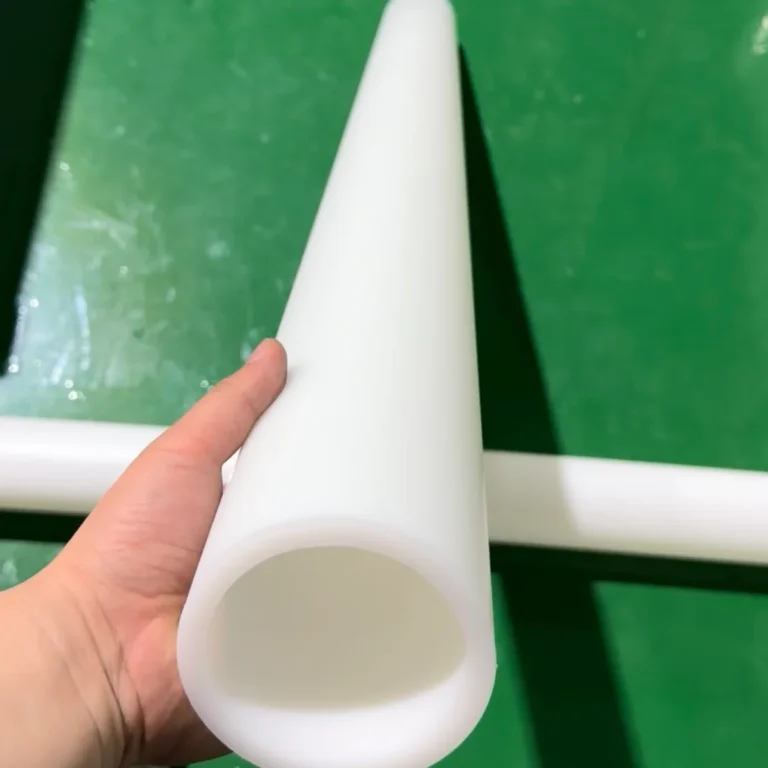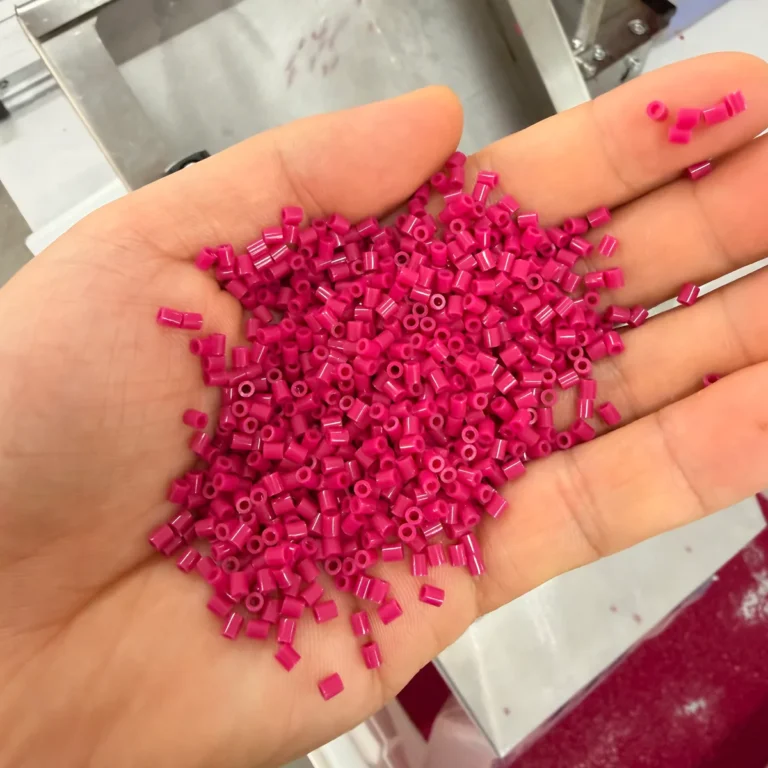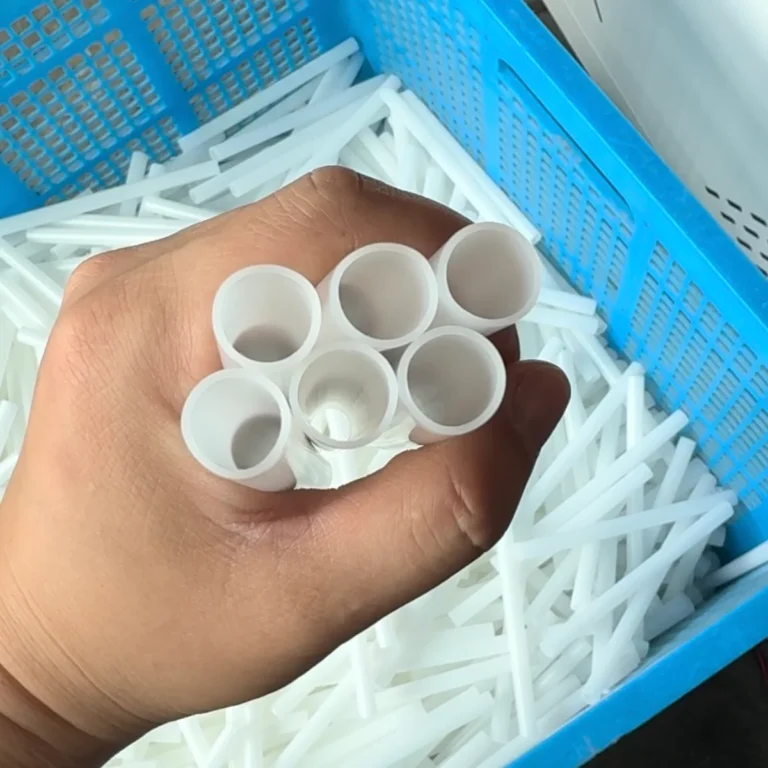
What Is a PA6/PA12 Nylon Tube Making Machine?
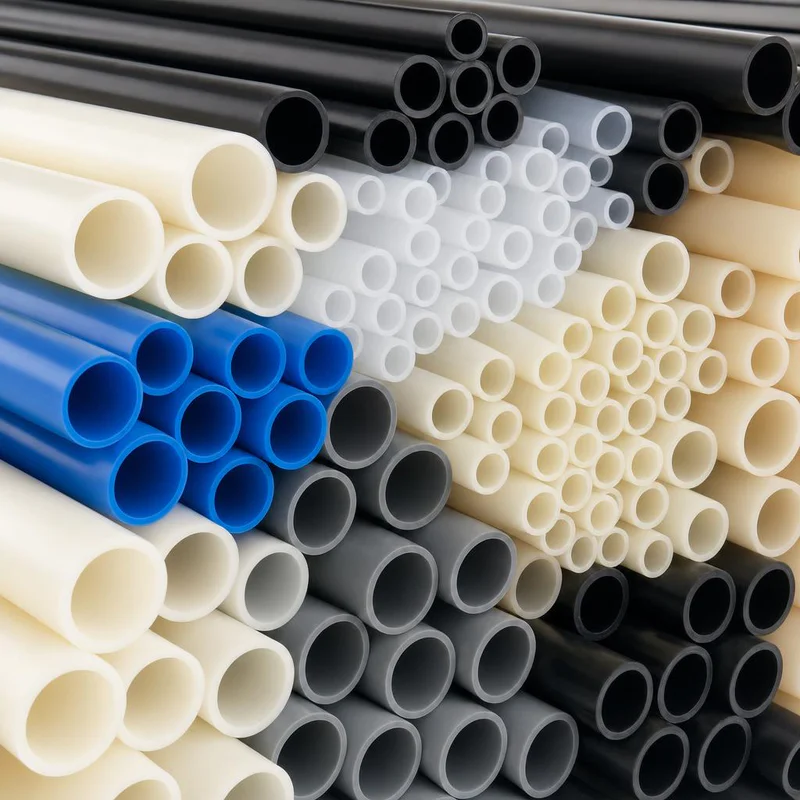
A PA6/PA12 nylon tube making machine is a precision plastic extrusion system designed to produce nylon tubes with stable dimensions, smooth surfaces, high strength, and consistent flexibility. These tubes are widely used in cable protection, construction and infrastructure, industrial applications, pneumatic tubing, automotive pipelines, medical tubing, and other precision fluid or protection systems.
Compared with common PE or PP pipe extrusion, PA6 and PA12 nylon tube production requires more accurate material drying, stable extrusion temperature, precise vacuum sizing, controlled cooling, accurate hauling, and high-precision cutting. A complete nylon tube extrusion line should be configured according to material grade, tube diameter, wall thickness, output target, tolerance, production speed, and factory requirements.
Based on the QTech Machinery client case for Suzhou Houlichun Plastics Co., Ltd., a successful PA6/PA12 nylon tube making project depends on customized engineering, reliable components, automation, and full-line matching.
1. What is a PA6/PA12 nylon tube making machine?
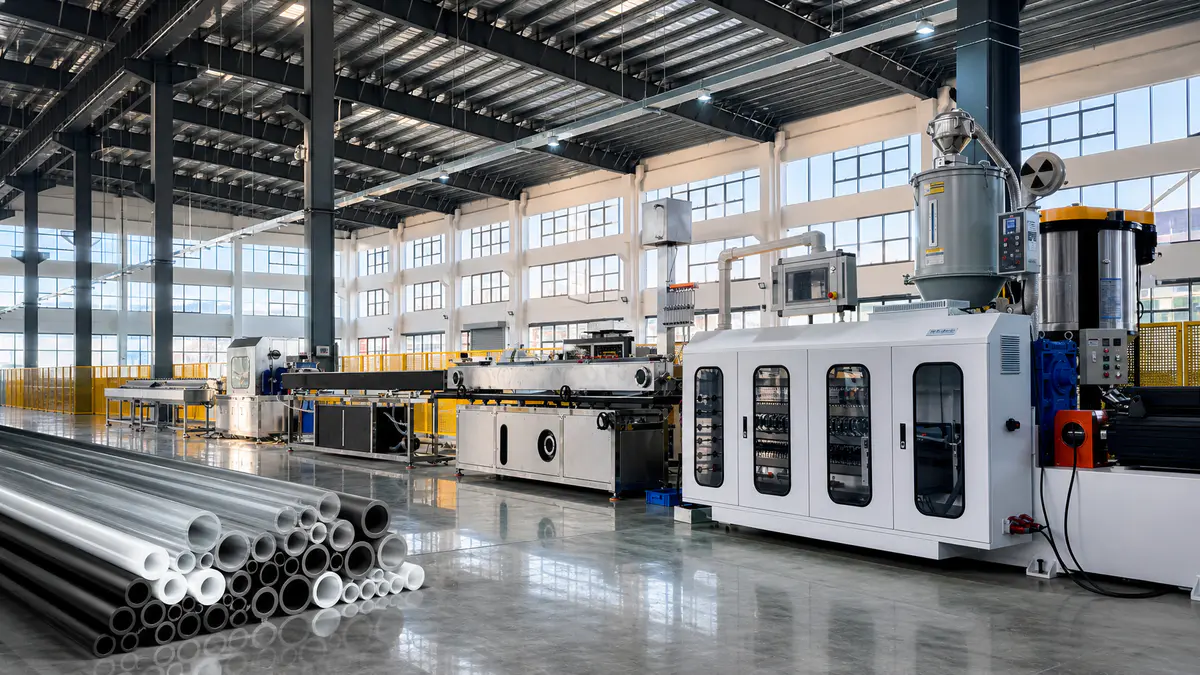
A PA6/PA12 nylon tube making machine is a precision extrusion line that melts nylon material and forms it into tubes through extrusion, vacuum sizing, cooling, hauling, cutting, and collection.
A PA6/PA12 nylon tube making machine is used to manufacture nylon tubes from PA6, PA12, and related thermoplastic materials. The production process includes material preparation, extrusion, tube forming, vacuum cooling and sizing, immersion cooling, servo hauling, rotary cutting, conveying, and collection.
A typical nylon tube making line includes:
| Main Section | Function |
|---|---|
| Material feeding and drying | Prepares PA6/PA12 material before extrusion |
| Single screw extruder | Melts and plasticizes nylon resin |
| Tube die head | Forms tube inner and outer diameter |
| Vacuum cooling and sizing tank | Controls tube size and roundness |
| Immersion cooling tank | Stabilizes tube dimension |
| Servo belt hauling machine | Pulls tube at stable speed |
| Rotary cutting machine | Cuts tube to required length |
| Conveyor and collection trough | Transfers and collects finished tubes |
| PLC control system | Coordinates machine operation |
In the QTech Machinery case, the project focused on a Precision Tube Extrusion Line for PA6/PA12 nylon tube production, designed for Suzhou Houlichun Plastics Co., Ltd. The customer required high efficiency, reliability, advanced automation, minimal downtime, and better production capacity.
Reference case: Precision Tube Extrusion Line: PA6/PA12 Nylon Tube Making Machine
2. What materials can the nylon tube making machine process?
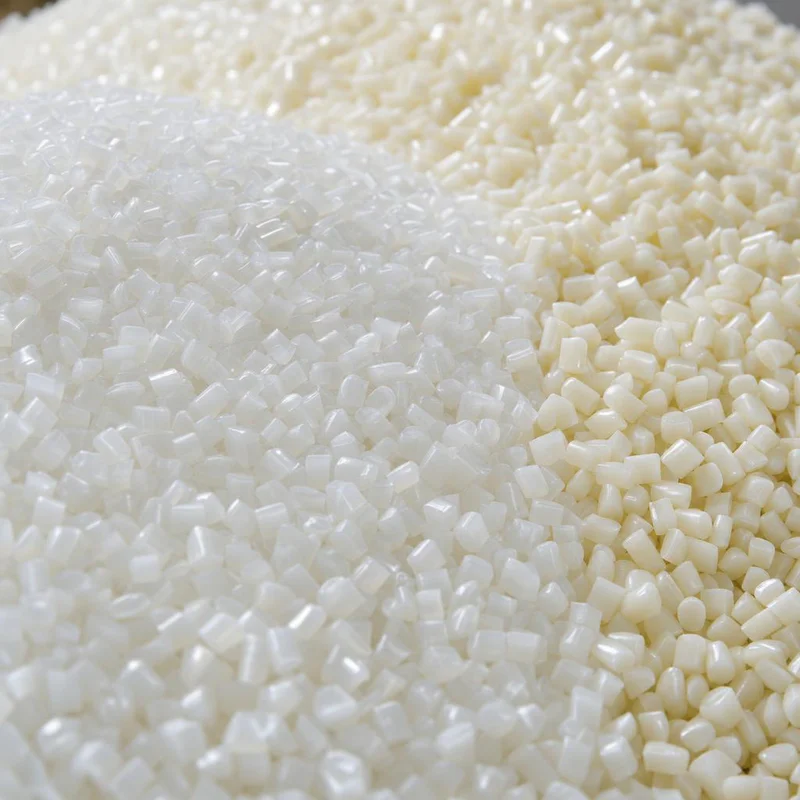
The machine can process PA6, PA12, polyethylene, polypropylene, and customized engineering plastics depending on screw design, drying, temperature control, and die configuration.
PA6 and PA12 are common nylon materials used for high-performance tubing. PA6 generally offers good mechanical strength, wear resistance, and heat resistance. PA12 provides better flexibility, lower moisture absorption compared with many nylon types, good dimensional stability, and excellent chemical resistance.
According to the QTech case, the line was configured for materials including PA12 Nylon, PA6 Nylon, Polyethylene, and Polypropylene.
Common materials and features include:
| Material | Key Features | Typical Applications |
|---|---|---|
| PA6 Nylon | High strength, wear resistance, good toughness | Industrial tubes, cable protection, mechanical tubing |
| PA12 Nylon | Flexible, low moisture absorption, stable dimensions | Pneumatic tubing, automotive tubes, precision tubes |
| PE | Flexible, easy processing, chemical resistance | Protection tubes, fluid tubes |
| PP | Lightweight, chemical-resistant | Industrial and general tubing |
| Modified nylon | Customized performance | Special engineering tubing |
Because nylon materials are moisture-sensitive, material drying is very important. If PA6 or PA12 pellets contain too much moisture, bubbles, silver streaks, poor surface quality, unstable dimensions, or weak mechanical properties may appear during extrusion. For this reason, customers should provide material data sheets and drying recommendations before machine configuration.
3. Why is material drying important for PA6/PA12 nylon tube extrusion?
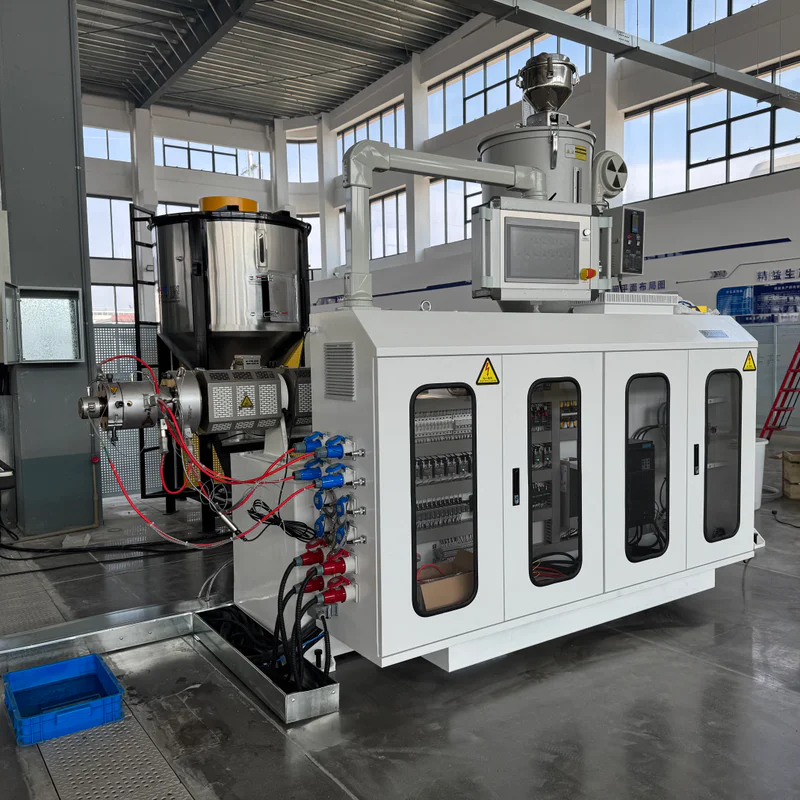
Proper drying removes moisture from nylon resin, preventing bubbles, surface defects, unstable dimensions, and reduced mechanical strength.
Nylon is hygroscopic, meaning it absorbs moisture from the air. Moisture in nylon resin can cause hydrolysis during high-temperature processing, which may reduce molecular weight and weaken the final product. It can also create bubbles, voids, unstable extrusion pressure, and poor tube surface finish.
For PA6/PA12 nylon tube production, drying conditions should be set according to material supplier recommendations. Customers should pay attention to:
| Drying Factor | Why It Matters |
|---|---|
| Drying temperature | Prevents moisture-related defects |
| Drying time | Ensures moisture is fully removed |
| Dew point | Important for high-quality drying |
| Hopper capacity | Must match extrusion output |
| Material storage | Prevents re-absorption of moisture |
| Clean feeding | Avoids contamination |
Although the QTech case focuses mainly on the extrusion line configuration, a complete production solution can include material handling and drying systems based on customer needs. For PA6 and PA12, proper drying before extrusion is one of the most important process controls.
Industry discussions on Plastics Technology often emphasize that moisture control is critical for engineering plastics. In nylon tube production, drying is not optional—it is a key condition for stable extrusion and tube quality.
4. What extruder configuration is suitable for PA6/PA12 nylon tubes?
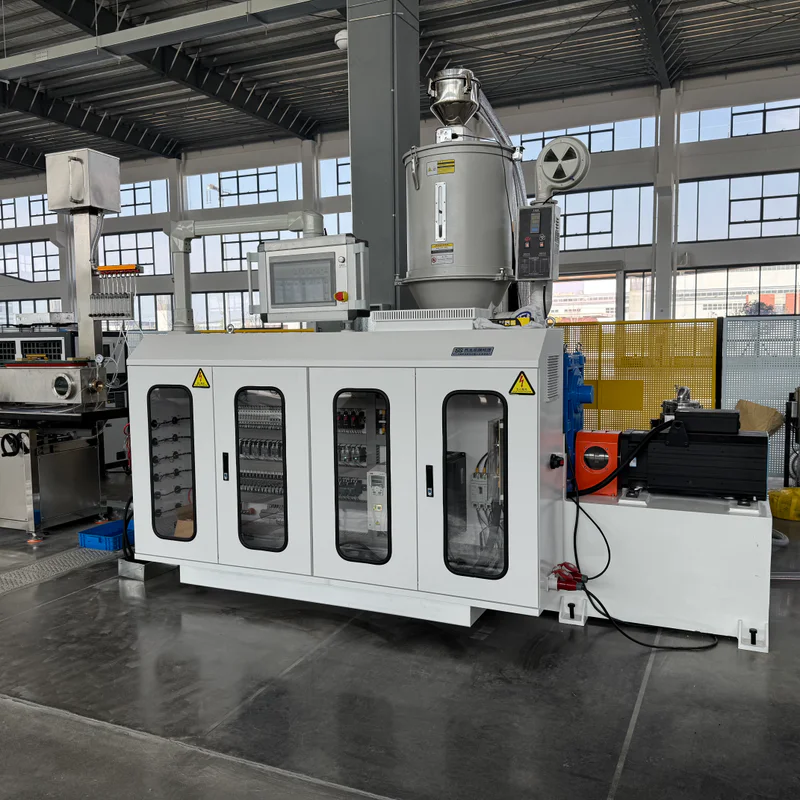
A suitable nylon tube extruder should have stable plasticizing, optimized screw design, precise temperature control, servo drive, and reliable PLC control.
The extruder is the core of a nylon tube making machine. PA6 and PA12 require stable melting and uniform plasticizing. Poor screw design or unstable temperature control can cause uneven melt flow, wall thickness variation, surface defects, and output instability.
In the QTech precision tube case, the line used an SJ65/28 single screw extruder with the following configuration:
| Item | Configuration |
|---|---|
| Extruder model | SJ65/28 |
| Maximum output | 0–60 kg/h |
| Screw L/D ratio | 28:1 |
| Main motor | 37 kW Inovance servo motor |
| Control system | Siemens PLC with Ethernet interface |
| Heating zones | 5 zones with ceramic heaters |
| Cooling system | Barrel fan cooling |
This configuration matches the uploaded product configuration and provides several important advantages for PA6/PA12 nylon tube production.
Our SJ65/28 extruder advantages include:
| Feature | Customer Benefit |
|---|---|
| 37 kW Inovance servo motor | Accurate speed control and energy saving |
| Optimized BM screw structure | Better plasticizing and melt uniformity |
| 38CrMoALA screw and barrel | Wear resistance and long service life |
| Nitrided surface treatment | Improved durability |
| Ceramic heating rings | Efficient and stable heating |
| Fan cooling system | Better barrel temperature control |
| Siemens PLC | Reliable automation |
| Ethernet interface | Data access and production monitoring |
| MCGS touchscreen | User-friendly operation |
| Guomao gearbox + Flender coupling | Stable power transmission |
For nylon tube manufacturers, this extruder helps achieve consistent melt flow, stable output, and repeatable production quality.
5. How do vacuum sizing and cooling affect nylon tube accuracy?
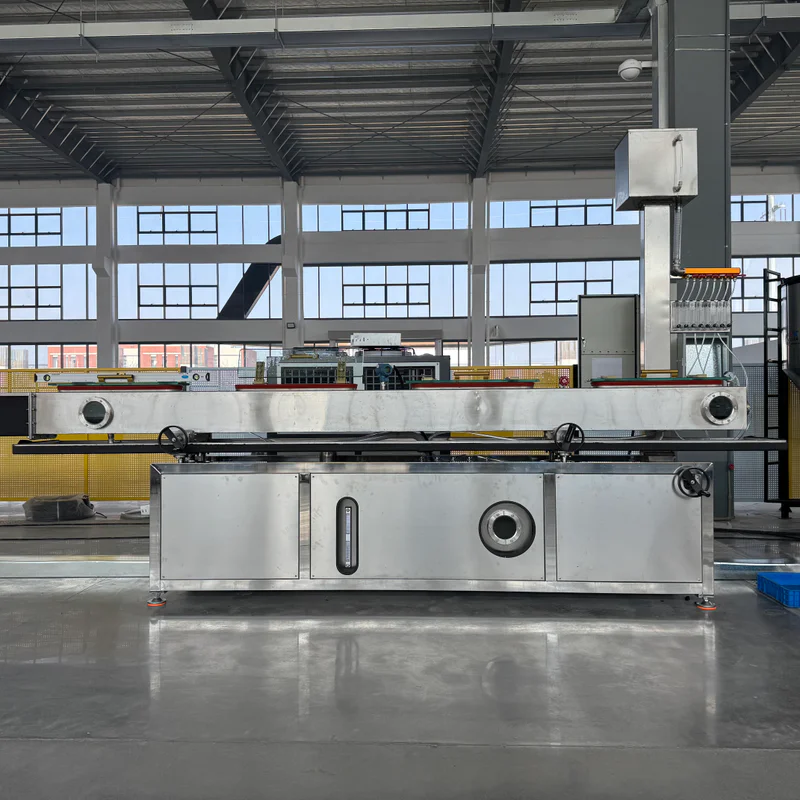
Vacuum sizing and cooling determine tube outer diameter, roundness, dimensional stability, surface finish, and final product tolerance.
After the nylon melt exits the extrusion die, it must be shaped and cooled carefully. If cooling is too fast, too slow, or uneven, the tube may deform, shrink, become oval, or show surface defects.
In the QTech PA6/PA12 precision tube extrusion case, the cooling and sizing system included:
| Equipment | Configuration |
|---|---|
| Vacuum cooling and sizing water tank | 304 stainless steel, 2 mm thickness |
| Vacuum pump power | 2.2 kW |
| Water pump power | 1.5 kW |
| Vacuum control | Electronic vacuum gauge with manual/automatic adjustment |
| Immersion stainless steel cooling tank | 6000 × 230 × 235 mm |
| Cooling tank material | 304 stainless steel, 2 mm thickness |
| Cooling tank water pump | 0.75 kW |
The vacuum cooling and sizing water tank controls tube diameter and roundness. The electronic vacuum gauge with manual/automatic adjustment allows more precise control during production. The immersion stainless steel cooling tank provides additional cooling and helps stabilize the final tube dimensions.
The use of 304 stainless steel improves corrosion resistance, cleanliness, and durability. This is especially useful for precision tube production where clean and stable downstream equipment is required.
6. Why are servo hauling and rotary cutting important?
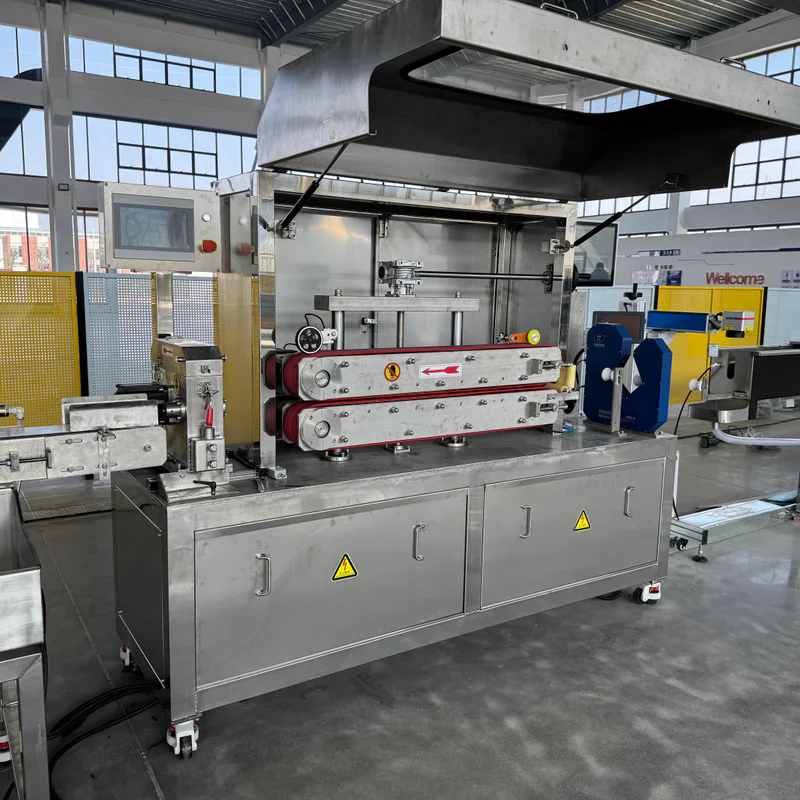
Servo hauling and rotary cutting improve tube speed stability, length accuracy, cutting quality, and production repeatability.
The haul-off machine pulls the tube continuously from the extrusion line. If the hauling speed fluctuates, the tube diameter and wall thickness may change. For precision nylon tubes, stable traction is essential.
In the QTech case, the line used a precision servo belt hauling and rotary cutting machine with:
| Item | Configuration |
|---|---|
| Hauling speed | 0–40 m/min |
| Cutting precision | ±0.5 mm |
| Motor power | 1.8 kW Inovance servo motor |
| Cutting method | Rotary cutting |
| Application | Precision tube hauling and cutting |
A servo-driven haul-off system allows accurate speed control and better synchronization with extrusion output. The 0–40 m/min hauling speed supports different tube sizes and production speeds. The ±0.5 mm cutting precision helps customers produce finished tubes with consistent length and professional appearance.
Benefits include:
| Benefit | Explanation |
|---|---|
| Stable tube diameter | Hauling speed remains consistent |
| Better wall thickness control | Reduces process variation |
| Accurate tube length | ±0.5 mm cutting precision |
| Smooth cutting surface | Rotary cutting improves finish |
| Less manual operation | Improves efficiency |
| Lower waste | Reduces scrap from unstable cutting |
For applications such as automotive tubing, pneumatic tubes, cable protection tubes, and medical tubing, accurate cutting and consistent tube size are important for downstream assembly and quality control.
7. How should customers choose the right PA6/PA12 nylon tube making machine?
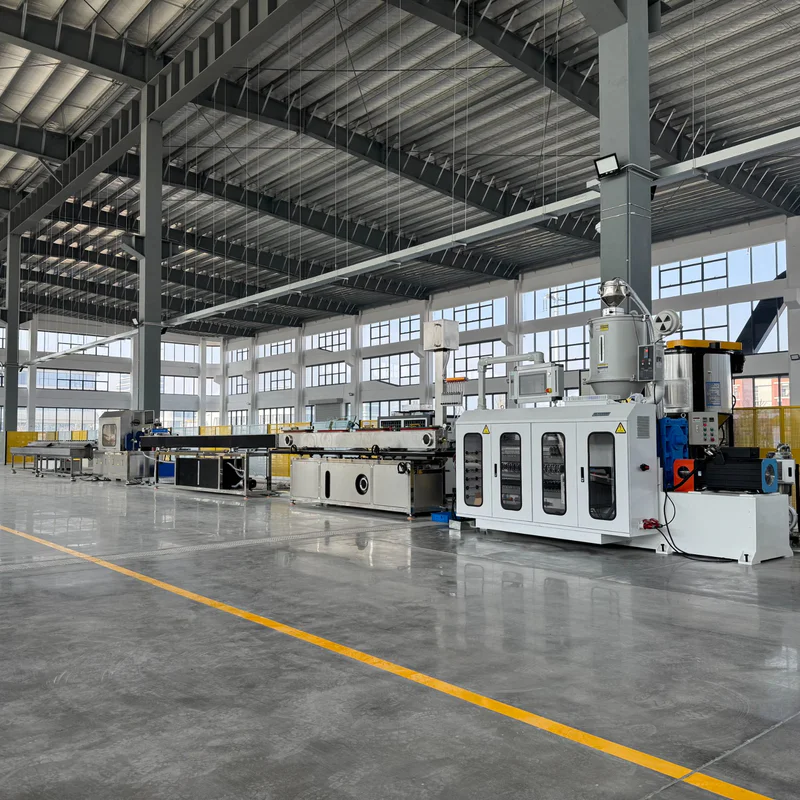
Customers should choose the machine based on material type, tube size, tolerance, output, drying needs, cooling method, cutting accuracy, and automation level.
Before purchasing a nylon tube extrusion line, customers should prepare clear production requirements. This helps the supplier recommend the correct extruder, screw design, die head, cooling tank, haul-off, cutter, and control system.
Customer Selection Steps
| Step | What to Confirm | Why It Matters |
|---|---|---|
| Step 1 | Material type | PA6, PA12, PE, PP, or modified material |
| Step 2 | Material data sheet | Determines drying and temperature settings |
| Step 3 | Tube outer diameter | Determines die and sizing tools |
| Step 4 | Tube inner diameter | Determines mandrel and die design |
| Step 5 | Wall thickness | Affects strength and extrusion stability |
| Step 6 | Tolerance requirement | Determines precision level |
| Step 7 | Target output | Selects extruder and downstream capacity |
| Step 8 | Cutting length | Determines cutting system |
| Step 9 | Application | Determines tube performance |
| Step 10 | Factory voltage and layout | Determines electrical and layout design |
| Step 11 | Automation requirement | Determines PLC, HMI, and servo configuration |
For example, if a customer needs precision PA6/PA12 tubes with stable dimensions, accurate cutting, and automated operation, an SJ65/28 servo extrusion line with vacuum sizing, immersion cooling, servo haul-off, rotary cutter, conveyor belt, and collection trough is a practical solution.
Every QTech line is configured to the buyer’s market. Customers can send target output, raw material, product size range, and local voltage, and QTech engineers will quote the correct screw, die, downstream, and control setup.
8. Why choose QTech Machinery for a PA6/PA12 nylon tube extrusion line?
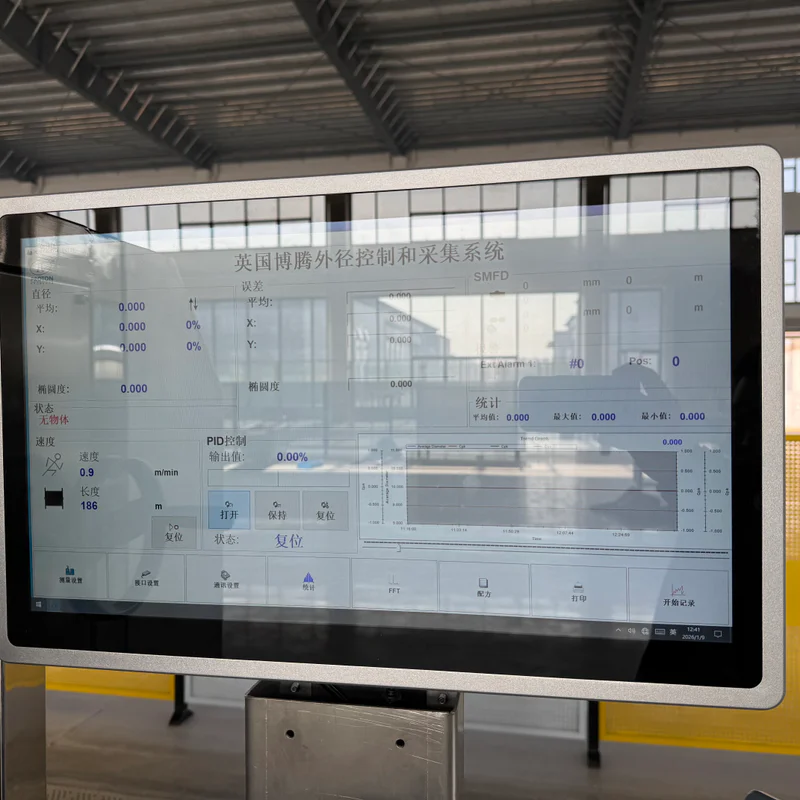
QTech Machinery provides customized nylon tube extrusion solutions with servo extruders, precision cooling, accurate cutting, automated collection, full testing, and engineering support.
QTech Machinery provides complete extrusion line solutions for precision tube production. In the Precision Tube Extrusion Line case, QTech worked with Suzhou Houlichun Plastics Co., Ltd. to develop a PA6/PA12 nylon tube making machine that improved production capability, automation, and reliability.
QTech supplied a complete line including:
- SJ65/28 single screw extruder
- Vacuum cooling and sizing water tank
- Immersion stainless steel cooling tank
- Precision servo belt hauling and rotary cutting machine
- Finished product conveyor belt and collection trough
- Siemens PLC with Ethernet interface
- Inovance servo motor system
- Stainless steel downstream equipment
QTech Machinery’s advantages include:
| QTech Advantage | Customer Benefit |
|---|---|
| Customized engineering | Line matched to material and tube size |
| SJ65/28 precision extruder | Stable output for PA6/PA12 tubes |
| Inovance servo drive | Energy saving and accurate speed control |
| Siemens PLC | Reliable automation |
| Ethernet interface | Supports data access and monitoring |
| 304 stainless steel tanks | Durable and clean operation |
| Electronic vacuum control | Better tube size accuracy |
| ±0.5 mm cutting precision | Consistent finished tube length |
| Conveyor and collection system | Higher automation and easier handling |
| OEM and ODM support | Flexible production needs |
| Voltage configuration | Suitable for global customers |
| Full run test before shipment | Reduces installation risk |
| Quote in 24 hours | Faster project response |
Recommended internal links:
- QTech Machinery Home
- Plastic Pipe Making Machine
- Plastic Extrusion Machine
- Precision Tube Extrusion Line Case
- QTech Machinery Cases
Recommended PA6/PA12 Nylon Tube Making Machine Configuration
The following table summarizes the reference configuration from the QTech precision tube extrusion line case.
| Section | Recommended Configuration |
|---|---|
| Suitable materials | PA6, PA12, PE, PP |
| Main extruder | SJ65/28 single screw extruder |
| Maximum output | 0–60 kg/h |
| Screw L/D ratio | 28:1 |
| Main motor | 37 kW Inovance servo motor |
| Control system | Siemens PLC with Ethernet interface |
| Heating zones | 5 zones |
| Heating method | Ceramic heaters |
| Cooling system | Barrel fan cooling |
| Vacuum sizing tank | 304 stainless steel, 2 mm thickness |
| Vacuum pump | 2.2 kW |
| Water pump | 1.5 kW |
| Vacuum control | Electronic vacuum gauge, manual/automatic adjustment |
| Immersion cooling tank | 6000 × 230 × 235 mm |
| Cooling tank material | 304 stainless steel, 2 mm thickness |
| Cooling tank water pump | 0.75 kW |
| Hauling and cutting | Precision servo belt hauling and rotary cutting machine |
| Hauling speed | 0–40 m/min |
| Cutting precision | ±0.5 mm |
| Servo motor | 1.8 kW Inovance servo motor |
| Conveyor | 3000 mm finished product conveyor belt |
| Conveyor speed | 0–60 m/min adjustable |
| Collection | Finished product collection trough |
| Conveyor control | PLC program controller + electromagnetic control valve |
Products We Can Provide
QTech Machinery can provide complete equipment for PA6/PA12 nylon tube extrusion projects.
| Product | Function |
|---|---|
| SJ65/28 single screw extruder | Plasticizing and extrusion |
| Precision tube die head | Tube forming |
| Vacuum cooling and sizing tank | Tube diameter and roundness control |
| Immersion stainless steel cooling tank | Final cooling and dimensional stabilization |
| Servo belt haul-off machine | Stable tube pulling |
| Rotary cutting machine | Accurate tube cutting |
| Finished product conveyor | Transfers finished tubes |
| Collection trough | Collects finished products |
| Material feeding system | Automatic material loading |
| Hopper dryer or dehumidifying dryer | Nylon material drying |
| PLC control cabinet | Centralized machine control |
| HMI touchscreen | User-friendly operation |
| Electrical system | Voltage and control configuration |
| Spare parts | Screw, barrel, heater, fan, pump, cutter blade, sensor, belt |
Documents and Information Customers Should Prepare
To configure the correct PA6/PA12 nylon tube making machine, customers should prepare the following information:
| Required Information | Purpose |
|---|---|
| Material type | Select screw and temperature range |
| Material data sheet | Confirm drying and processing conditions |
| Tube outer diameter | Design die and sizing tools |
| Tube inner diameter | Design mandrel and die structure |
| Wall thickness | Confirm extrusion stability |
| Tolerance requirement | Select precision configuration |
| Target output | Choose extruder and downstream capacity |
| Tube length | Configure cutting system |
| Application | Determine tube performance requirements |
| Surface requirement | Optimize die and cooling |
| Factory voltage | Configure electrical components |
| Workshop layout | Design line arrangement |
| Automation requirement | Configure PLC, HMI, servo, and data system |
| Sample photos or drawings | Help engineers understand final product |
Practical References from Forums and Industry Sources
PA6/PA12 nylon tube extrusion requires stable material drying, precise temperature control, consistent screw output, accurate vacuum sizing, and reliable haul-off synchronization. These topics are frequently discussed in plastics engineering forums and extrusion technical resources.
On the Eng-Tips Plastics Engineering Forum, engineers often discuss extrusion troubleshooting topics such as melt instability, moisture-related defects, die flow problems, cooling control, and dimensional variation. These discussions support the practical conclusion that tube quality depends on the full process, including material preparation, screw design, cooling, and traction.
Industry resources such as Plastics Technology regularly publish articles about material drying, screw performance, extrusion troubleshooting, and process optimization. For nylon processing in particular, moisture control is often highlighted as a critical factor for reducing bubbles and improving mechanical performance.
For general extrusion theory, ScienceDirect’s single screw extruder topic explains how plastic pellets are conveyed, melted, compressed, and metered inside the extruder. This helps buyers understand why screw structure, L/D ratio, motor control, and temperature management are important for PA6/PA12 nylon tube production.
For broader information on nylon material characteristics, buyers can also refer to material suppliers and technical sources such as MatWeb material property database, which provides comparative information about engineering plastics, including nylon grades.
These references show that a PA6/PA12 nylon tube making machine should be selected as a complete precision extrusion system rather than only comparing extruder size or price.
Conclusion
A PA6/PA12 nylon tube making machine is a precision extrusion line designed to produce high-quality nylon tubes for cable protection, industrial tubing, construction, pneumatic systems, automotive applications, and medical tubing. The right machine should be selected according to material type, drying requirements, tube size, tolerance, output, cooling method, hauling accuracy, cutting precision, automation level, and supplier support.
QTech Machinery provides customized PA6/PA12 nylon tube extrusion solutions based on customer requirements. The reference line for Suzhou Houlichun Plastics included an SJ65/28 single screw extruder, vacuum cooling and sizing tank, immersion stainless steel cooling tank, precision servo belt hauling and rotary cutting machine, finished product conveyor belt, and collection trough.
If you are planning a PA6/PA12 nylon tube production project, send us your material, tube drawing, tolerance, target output, voltage, and workshop layout. Our engineering team will recommend the right extrusion line configuration for your factory.