What Is a Core Tube Extrusion Line?
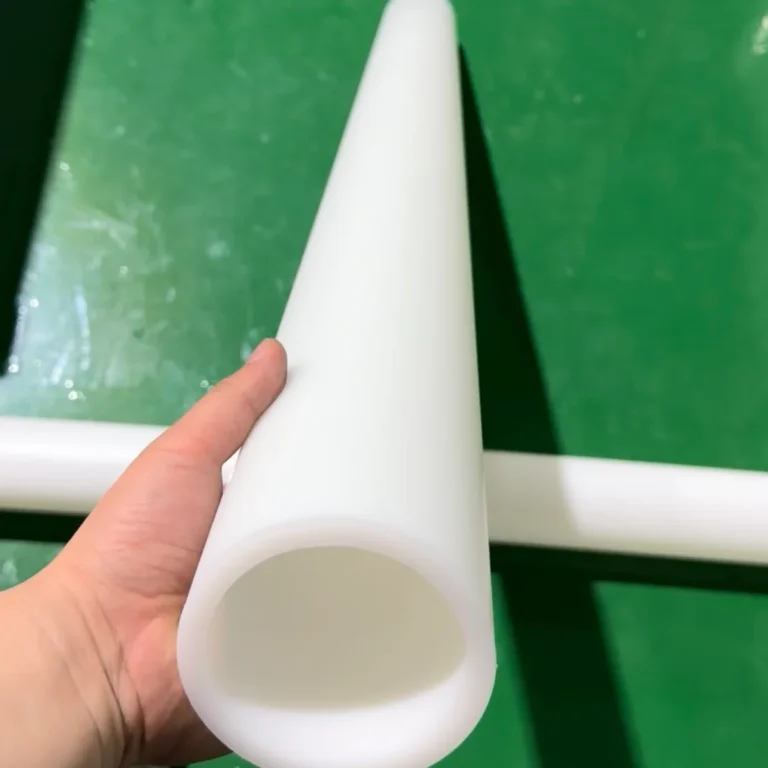
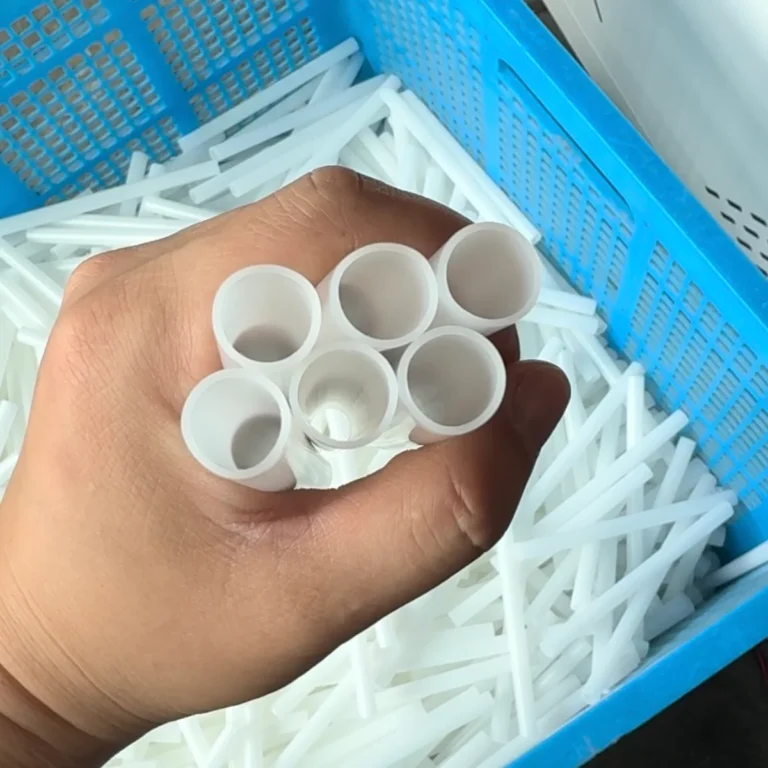
A core tube extrusion line is a complete plastic pipe production system used to manufacture rigid or semi-rigid plastic core tubes with stable dimensions, smooth surfaces, and consistent mechanical strength. These tubes are widely used in packaging cores, cable protection, industrial applications, construction, telecommunications, agricultural irrigation, municipal engineering, and other plastic pipe applications.
For manufacturers, choosing the right core tube extrusion line is not only about selecting one extruder. It requires a complete evaluation of raw material, tube diameter, output capacity, die design, vacuum calibration, haul-off stability, cutting accuracy, automation level, and supplier engineering capability.
Based on the QTech Machinery client case for a PE core tube extrusion line, a successful project usually requires customized configuration according to the buyer’s target product, material, output, local voltage, and factory layout.
1. What is a core tube extrusion line?
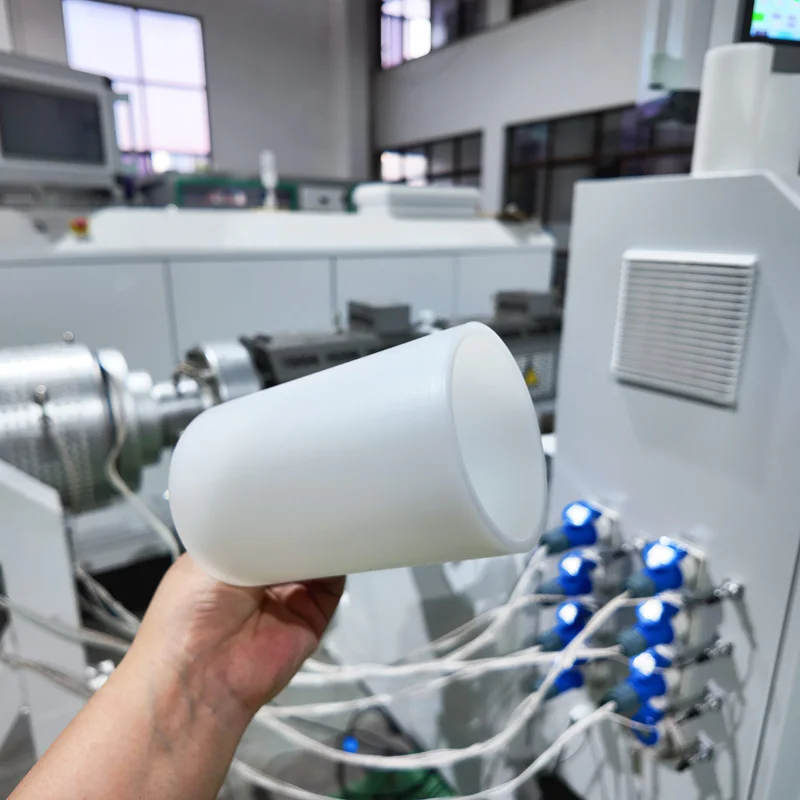
A core tube extrusion line is a complete production system that melts plastic material, forms it through a die, calibrates the tube, cools it, hauls it off, and cuts it into required lengths.
A core tube extrusion line is mainly used to produce plastic core tubes from materials such as PE, HDPE, ABS, PP, and other thermoplastics. The production process usually starts with automatic material feeding and drying, followed by extrusion, die forming, vacuum calibration, cooling, haul-off, and cutting.
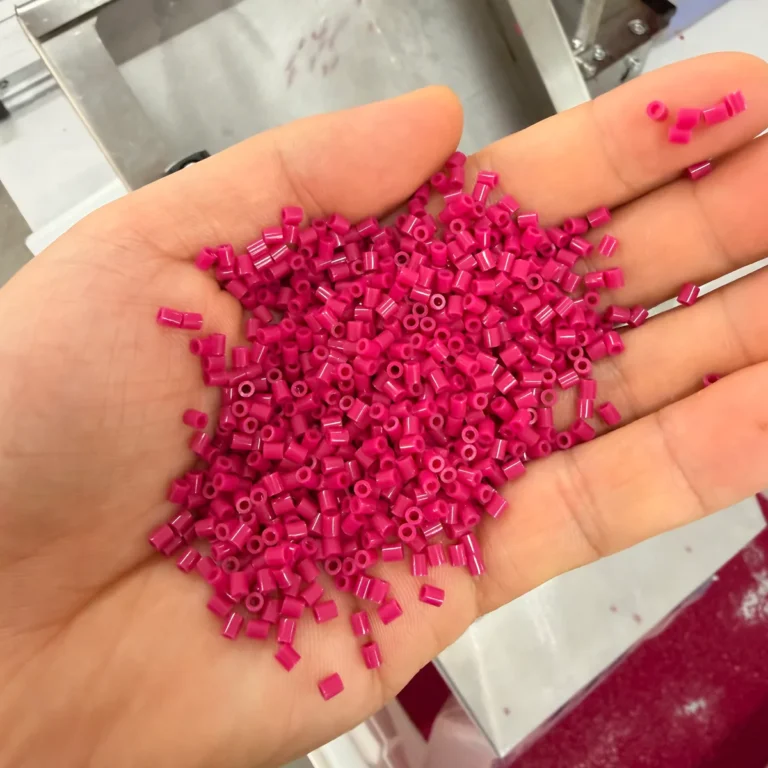
In a typical production line, plastic pellets are fed into the extruder through a vacuum feeding system. The material is then heated, plasticized, and pushed forward by the rotating screw. After passing through the extrusion die, the molten plastic becomes a tube shape. The tube is then calibrated by a vacuum tank, cooled by water, pulled by a haul-off machine, and finally cut by a cutter.
A complete core tube extrusion line usually includes:
| Main Section | Function |
|---|---|
| Vacuum feeding system | Automatic material loading |
| Hopper dryer | Removes material moisture |
| Single screw extruder | Plasticizes and extrudes material |
| Extrusion die | Forms the tube shape |
| Vacuum calibration tank | Controls tube diameter and roundness |
| Cooling system | Stabilizes the tube dimension |
| Haul-off machine | Pulls the tube at stable speed |
| Cutting machine | Cuts the tube to required length |
| Control system | Coordinates the full production line |
For buyers who want to produce PE or HDPE core tubes with stable dimensions, the core tube extrusion line should be customized based on tube diameter, wall thickness, output requirement, and application.
2. What materials can be used for core tube extrusion?
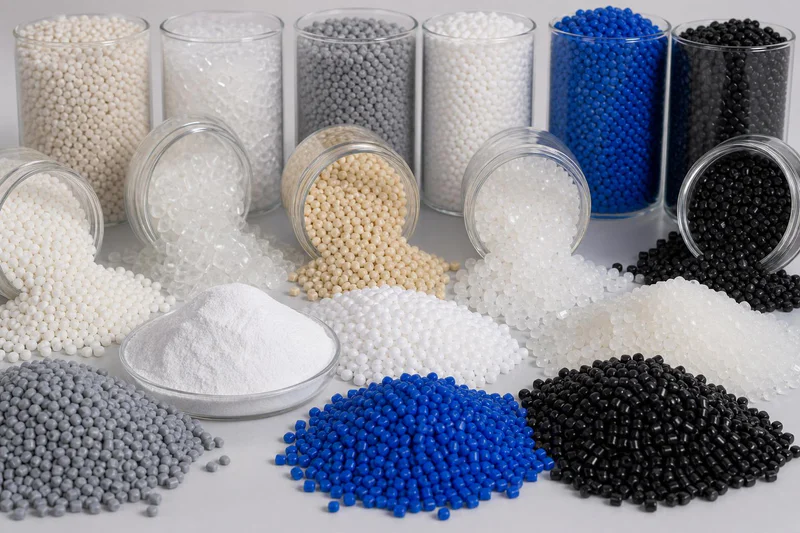
Core tubes are commonly produced from PE, HDPE, ABS, PP, and other thermoplastics depending on strength, flexibility, application, and cost requirements.
Material selection is one of the first decisions when buying a core tube extrusion line. Different plastic materials require different screw designs, drying conditions, processing temperatures, die structures, cooling methods, and line speeds.
In the QTech Machinery case study, the project was designed for PE core tube production, with applications covering agricultural irrigation, cable protection, construction and infrastructure, industrial applications, municipal engineering, natural gas distribution, and telecommunications.
Common materials include:
| Material | Features | Typical Applications |
|---|---|---|
| PE | Good toughness, chemical resistance, easy processing | Core tubes, cable protection, irrigation |
| HDPE | High strength, good impact resistance | Industrial tubes, infrastructure pipes |
| ABS | Good rigidity and surface finish | Industrial core tubes, structural tubes |
| PP | Lightweight and chemical resistant | Packaging cores, industrial tubes |
| Modified plastics | Customized properties | Special engineering applications |
For PE and HDPE core tube production, a high-speed single screw extruder is often recommended because it provides stable plasticizing, high output, and continuous production performance.
For smaller output, customized engineering plastic tubes, or precision extrusion projects, our SJ65/28 single screw servo extruder can also be used depending on the required material and production capacity. It features a 37 kW Inovance permanent magnet synchronous servo motor, optimized BM screw structure, 38CrMoALA nitrided screw and barrel, and Siemens PLC control, making it suitable for stable and energy-efficient plastic extrusion applications.
3. What production capacity should a core tube extrusion line have?
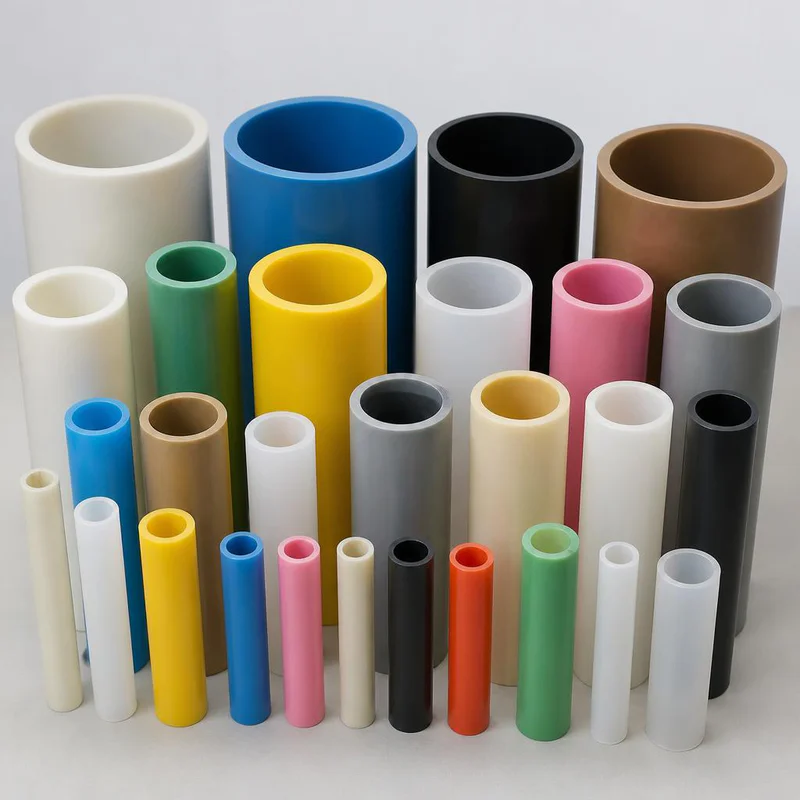
The required production capacity depends on tube diameter, wall thickness, raw material, working hours, and market demand.
Output capacity is a key factor when selecting a core tube extrusion line. If the output is too low, production cost will increase. If the line is oversized, the initial investment and energy consumption may be unnecessarily high.
In the QTech Machinery core tube extrusion line case, the customer required a production output of 100–200 kg/h. To meet this requirement, QTech configured an SJ75/33 high-speed single screw extruder with:
| Item | Configuration |
|---|---|
| Extruder model | SJ75/33 high-speed single screw extruder |
| Output | 100–200 kg/h |
| Motor power | 75 kW |
| Screw diameter | 75 mm |
| Screw speed | 0–90 rpm |
| Heating zones | 5 zones |
| Cooling system | 5-zone fan cooling |
This configuration was suitable for producing PE core tubes with internal diameters of 77 mm and 152 mm, while maintaining precise dimensional accuracy and reducing material waste.
For customers with smaller output requirements, our SJ65/28 servo extruder can provide an output range of 0–60 kg/h, depending on raw material, die structure, tube size, and production conditions. This model is suitable for smaller core tubes, customized plastic tubes, nylon tubes, engineering plastic tubes, and precision extrusion applications.
4. Why are tube diameter and dimensional accuracy important?
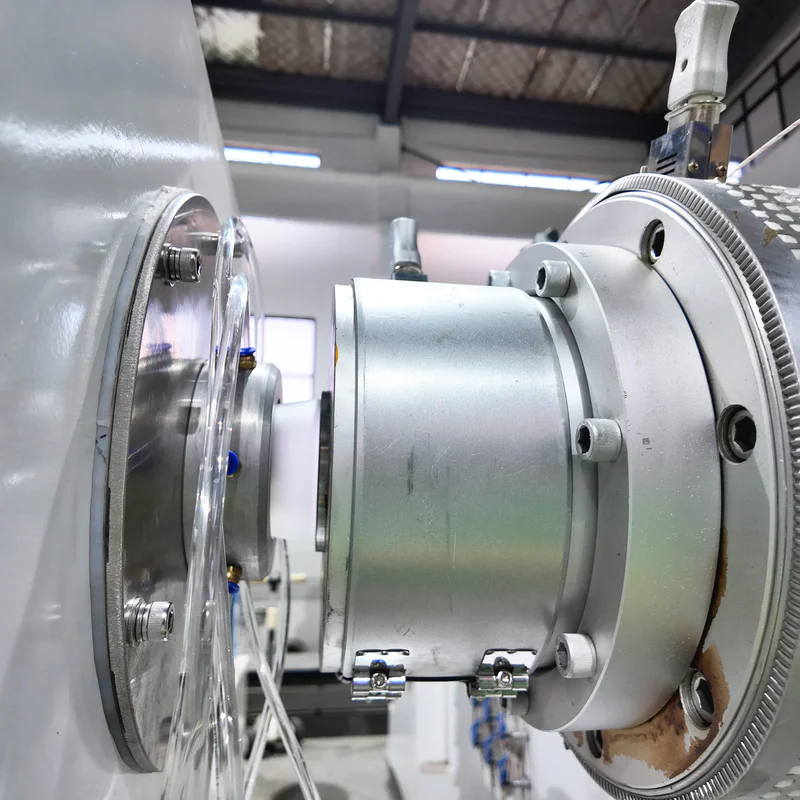
Tube diameter, wall thickness, and roundness determine the die design, vacuum calibration system, haul-off speed, and final product quality.
Core tubes are often used as supporting, winding, protection, or structural components. Therefore, dimensional accuracy is very important. If the tube diameter is unstable, the final product may not fit downstream equipment or application requirements.
In the QTech case, the customer needed PE core tubes with internal diameters of 77 mm and 152 mm. The production line was designed to achieve accurate tube dimensions with minimal material wastage.
Key dimensional factors include:
| Parameter | Why It Matters |
|---|---|
| Inner diameter | Determines product fit and application |
| Outer diameter | Affects assembly and packaging |
| Wall thickness | Influences strength and material cost |
| Roundness | Affects appearance and installation |
| Cutting length | Important for packaging and downstream use |
| Surface smoothness | Reflects extrusion and cooling quality |
The extrusion die plays a major role in tube shape control. In the case project, QTech supplied a PE core tube extrusion die with diameter specifications of 76 mm and 152.4 mm, using mica heaters and 40Cr material.
A properly designed die helps ensure uniform material distribution, stable melt flow, and consistent tube wall thickness. Combined with vacuum calibration and stable haul-off, it helps produce accurate and repeatable core tubes.
5. What equipment is included in a complete core tube extrusion line?
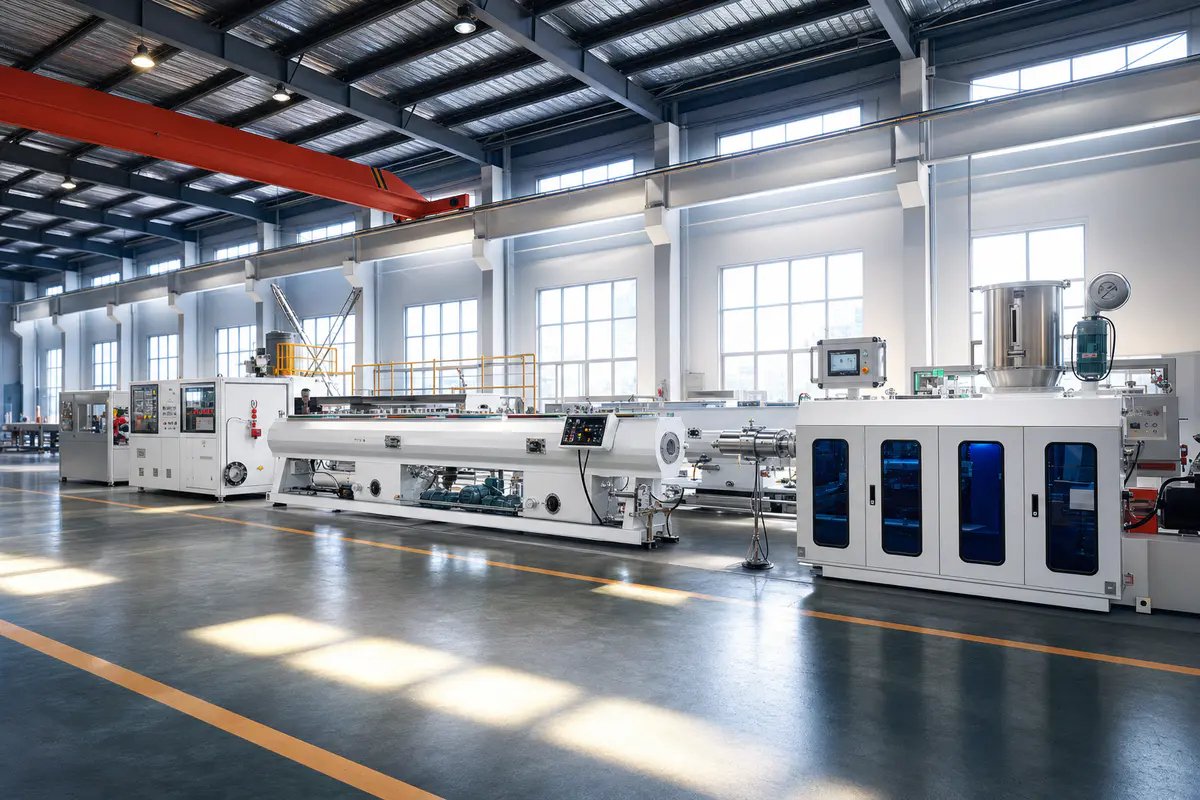
A complete core tube extrusion line usually includes feeding, drying, extrusion, die forming, vacuum calibration, cooling, haul-off, cutting, and electrical control systems.
A core tube extrusion line should be selected as a complete system rather than as separate machines. Every section must match the others. If the extruder output is high but the cooling tank or haul-off machine is not properly configured, the line may still fail to produce stable tubes.
Based on the QTech Machinery case, the supplied core tube extrusion line included:
| Equipment | Case Configuration | Function |
|---|---|---|
| Automatic vacuum feeding system | QX-900, 900 kg/h capacity | Automatic material feeding |
| Hopper dryer | QX-100, 100 kg capacity | Material drying |
| Single screw extruder | SJ75/33, 100–200 kg/h | Plasticizing and extrusion |
| PE core tube die | 76 mm and 152.4 mm | Tube forming |
| Vacuum calibration tank | 7 m length | Tube sizing and shaping |
| Haul-off machine | Three-claw servo haul-off | Stable traction |
| Cutting machine | Dust-free cutter | Accurate cutting |
| Control system | Customized electrical control | Line coordination |
The 7 m vacuum calibration tank provides precise tube shaping with a vacuum pressure range of 0.01–0.08 MPa. The three-claw servo haul-off machine offers stable traction with a speed range of 0.2–3 m/min. The dust-free cutter uses a 72 mm blade for precise cutting without excessive material loss.
This complete configuration helps customers achieve higher productivity, better tube accuracy, and cleaner cutting results.
6. How does the extruder affect core tube quality?
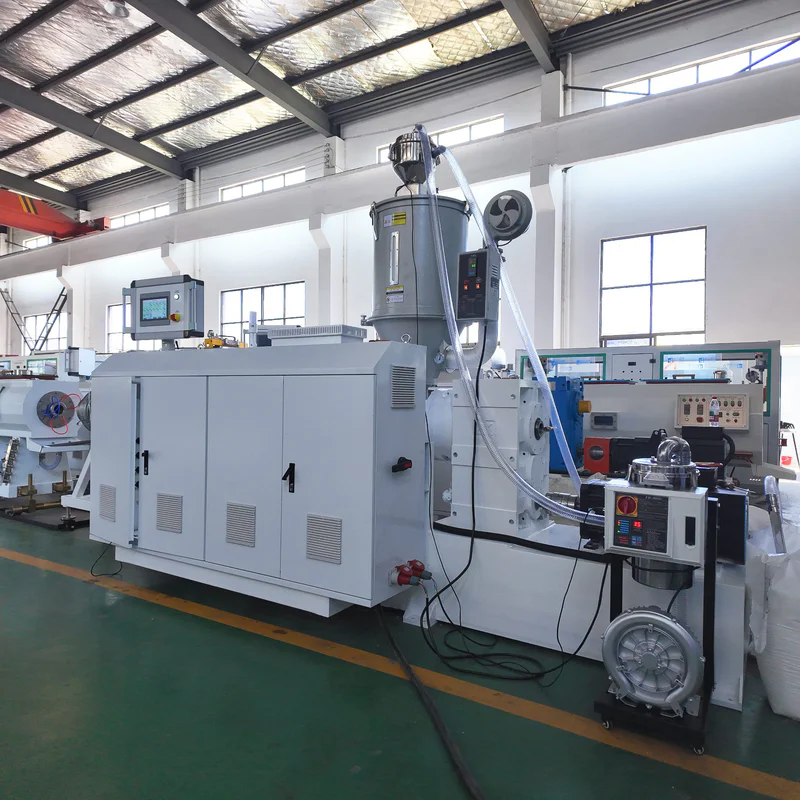
The extruder determines plasticizing quality, output stability, melt pressure, energy consumption, and long-term production reliability.
The single screw extruder is the core machine of the production line. Its screw design, motor system, gearbox, barrel heating, cooling system, and control system directly influence production quality.
For high-output PE core tube production, the QTech case used an SJ75/33 high-speed single screw extruder with a 75 kW motor and 100–200 kg/h output. This type of configuration is suitable for industrial production where continuous output and stable processing are required.
For customers needing a smaller or more precision-focused extrusion line, our SJ65/28 single screw servo extruder offers the following advantages:
| Component | SJ65/28 Configuration |
|---|---|
| Output | 0–60 kg/h |
| Screw diameter | 65 mm |
| L/D ratio | 28:1 |
| Screw speed | 75 r/min |
| Screw structure | Optimized BM structure |
| Screw material | 38CrMoALA |
| Barrel material | 38CrMoALA |
| Barrel surface hardness | ≥ HV940 |
| Barrel surface roughness | ≤ Ra1.6 μm |
| Main motor | 37 kW Inovance servo motor |
| Motor type | Permanent magnet synchronous servo motor |
| Motor speed range | 50–1500 rpm |
| Gearbox | Guomao 200 gearbox |
| Coupling | Flender direct coupling |
| Control system | Siemens PLC + MCGS touchscreen |
The optimized BM screw structure helps improve plasticizing uniformity and output stability. The nitrided screw and barrel improve wear resistance and service life. The servo motor provides accurate speed control, stable torque, and better energy efficiency compared with many traditional drive systems.
These features are especially useful when customers require stable tube dimensions, lower energy consumption, and repeatable production performance.
7. How should customers choose the right core tube extrusion line?
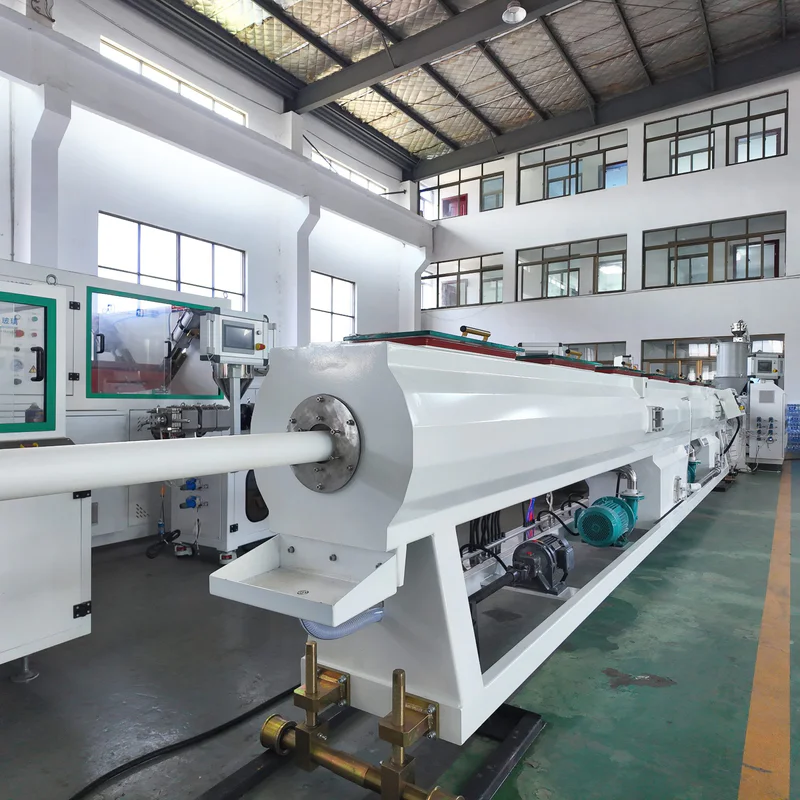
Customers should choose the line according to material, tube size, output, accuracy requirement, automation level, factory voltage, and future production plan.
Choosing the right core tube extrusion line requires a structured evaluation. Customers should not only compare machine price, but also check whether the line can meet actual production needs.
Customer Selection Steps
| Step | What to Confirm | Why It Matters |
|---|---|---|
| Step 1 | Raw material | Determines screw, dryer, temperature, and die design |
| Step 2 | Tube diameter range | Determines die, calibration tank, and haul-off |
| Step 3 | Wall thickness | Affects output, cooling, and material cost |
| Step 4 | Target output | Determines extruder size and downstream capacity |
| Step 5 | Product application | Determines mechanical strength and accuracy |
| Step 6 | Cutting length | Determines cutter type and control method |
| Step 7 | Factory voltage | Determines electrical configuration |
| Step 8 | Workshop layout | Determines line arrangement |
| Step 9 | Automation level | Determines PLC, touchscreen, and servo control |
| Step 10 | Future expansion | Determines whether the line should support more sizes |
For example, if your target is PE core tubes with 77 mm and 152 mm inner diameters and 100–200 kg/h output, an SJ75/33 high-speed extrusion line may be recommended. If your project focuses on smaller tubes or precision engineering plastic extrusion, an SJ65/28 servo extrusion system may be more suitable.
QTech Machinery configures each line according to the buyer’s market. Customers can send raw material, tube drawing, target output, local voltage, and factory layout, and our engineers will recommend the correct screw, die, downstream equipment, and control system.
8. Why should you choose QTech Machinery for a core tube extrusion line?
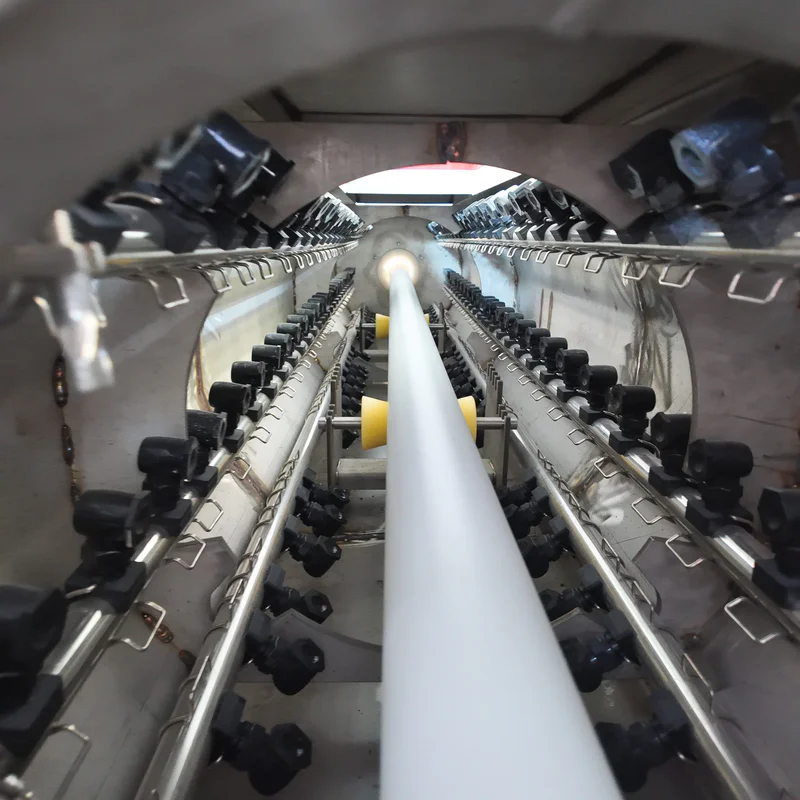
QTech Machinery provides customized extrusion solutions, reliable machine configuration, full-line engineering support, voltage adaptation, run testing, and technical documents.
A good core tube extrusion line supplier should understand not only machine manufacturing, but also material processing, die design, downstream matching, automation, and overseas project support.
In the Core Tube Extrusion Line case, QTech Machinery designed and delivered a customized production line for Wuxi Huike International Trade Co., Ltd. The line helped the customer produce PE core tubes with accurate dimensions, stable output, and reduced material waste.
QTech Machinery’s advantages include:
- Customized line design according to buyer requirements
- OEM and ODM support
- Voltage configuration for different countries
- Full run test before shipment
- Quote response within 24 hours
- Complete extrusion line supply
- Servo drive and PLC control options
- Engineering support for screw, die, downstream, and control setup
- Practical experience in plastic pipe extrusion projects
Recommended internal links:
- QTech Machinery Home
- Plastic Pipe Making Machine
- Plastic Extrusion Machine
- Core Tube Extrusion Line Case
- QTech Machinery Cases
These pages help buyers understand QTech’s extrusion machine range, pipe making solutions, and real project experience.
Recommended Core Tube Extrusion Line Configuration
Below is a reference configuration based on the QTech core tube extrusion line case.
| Machine Section | Recommended Configuration |
|---|---|
| Material feeding | QX-900 automatic vacuum feeding system |
| Feeding capacity | 900 kg/h |
| Dryer | QX-100 hopper dryer |
| Dryer capacity | 100 kg |
| Main extruder | SJ75/33 high-speed single screw extruder |
| Extruder output | 100–200 kg/h |
| Main motor | 75 kW |
| Screw diameter | 75 mm |
| Screw speed | 0–90 rpm |
| Heating zones | 5 zones |
| Cooling system | 5-zone fan cooling |
| Extrusion die | PE core tube die |
| Die specifications | 76 mm and 152.4 mm |
| Die material | 40Cr |
| Die heating | Mica heaters |
| Calibration system | 7 m vacuum calibration tank |
| Vacuum pressure | 0.01–0.08 MPa |
| Haul-off | Three-claw servo haul-off |
| Haul-off speed | 0.2–3 m/min |
| Cutter | Dust-free cutter |
| Blade | 72 mm blade |
Products We Can Provide
QTech Machinery can provide complete equipment for core tube extrusion projects.
| Product | Function |
|---|---|
| Automatic vacuum feeding system | Automatic raw material loading |
| Hopper dryer | Material drying before extrusion |
| Single screw extruder | Plasticizing and extrusion |
| High-speed single screw extruder | High-output tube production |
| Servo single screw extruder | Precision and energy-saving extrusion |
| PE/HDPE/ABS tube die | Tube forming |
| Vacuum calibration tank | Diameter and roundness control |
| Cooling tank | Tube cooling and stabilization |
| Servo haul-off machine | Stable pulling |
| Dust-free cutter | Clean and accurate cutting |
| Winding or stacking system | Product collection |
| PLC control cabinet | Line control and monitoring |
| Electrical system | Voltage and power configuration |
| Molds and tooling | Different tube sizes |
| Spare parts | Screw, barrel, heater, fan, sensor, blade, coupling |
Documents and Information Customers Should Prepare
To help us provide an accurate quotation and technical proposal, customers are recommended to prepare the following information.
| Required Information | Purpose |
|---|---|
| Raw material type | Select screw, dryer, die, and temperature range |
| Material grade or data sheet | Confirm processing conditions |
| Tube drawing | Design die and calibration system |
| Inner and outer diameter | Confirm tooling size |
| Wall thickness | Calculate output and cooling needs |
| Tube length | Select cutting method |
| Target output | Select extruder and downstream equipment |
| Product application | Confirm strength and accuracy requirements |
| Factory voltage | Configure electrical system |
| Workshop layout | Plan line arrangement |
| Local standards | Meet product compliance |
| Sample photos or videos | Help engineers understand final product |
| Packaging method | Configure stacking or collection system |
Case Reference: QTech Core Tube Extrusion Line
A useful project reference is the QTech Machinery case: Core Tube Extrusion Line: A Comprehensive Client Case Study.
In this project, QTech Machinery worked with Wuxi Huike International Trade Co., Ltd. to develop a customized PE core tube extrusion line. The customer needed to produce PE core tubes with internal diameters of 77 mm and 152 mm, output of 100–200 kg/h, precise dimensional accuracy, minimal material wastage, energy efficiency, and smooth integration into their existing production facilities.
QTech supplied a complete solution including:
- QX-900 automatic vacuum feeding system
- QX-100 hopper dryer
- SJ75/33 high-speed single screw extruder
- PE core tube extrusion die
- 7 m vacuum calibration tank
- Three-claw servo haul-off machine
- Dust-free cutter
This project proves that a successful core tube extrusion line must be configured according to the buyer’s actual product size, output target, material, voltage, and factory requirements.
Practical References from Industry Forums and Technical Sources
In real extrusion production, many common issues are discussed by engineers and operators in technical forums and industry platforms. For example, discussions on the Eng-Tips Plastics Engineering Forum often mention that melt stability, screw design, cooling efficiency, and downstream synchronization are key factors affecting extrusion quality.
Industry resources such as Plastics Technology also regularly discuss extrusion troubleshooting, material drying, screw performance, energy-saving drives, and automation trends. These discussions support the idea that a core tube extrusion line should be evaluated as a complete system instead of only comparing extruder size.
For basic technical understanding, ScienceDirect’s single screw extruder topic provides useful background on plastic conveying, melting, pressure generation, and metering in extrusion systems.
These references are helpful because they explain why material preparation, screw design, die flow, vacuum calibration, haul-off stability, and cutting accuracy are critical for producing high-quality core tubes.
Conclusion
A core tube extrusion line is a complete plastic tube manufacturing system designed to produce accurate, stable, and high-quality core tubes from PE, HDPE, ABS, PP, and other thermoplastics. The right line should be selected according to material, tube diameter, wall thickness, output, dimensional accuracy, automation level, and factory conditions.
QTech Machinery can provide customized core tube extrusion solutions, from material feeding and drying to extrusion, die forming, vacuum calibration, haul-off, cutting, and control systems. Whether you need a high-output SJ75/33 extrusion line for PE core tubes or a precision SJ65/28 servo extruder for customized plastic tube production, our engineering team can recommend the right configuration for your project.
If you are planning a core tube extrusion project, send us your material, tube drawing, target output, voltage, and factory layout. We will provide a suitable technical proposal and quotation.