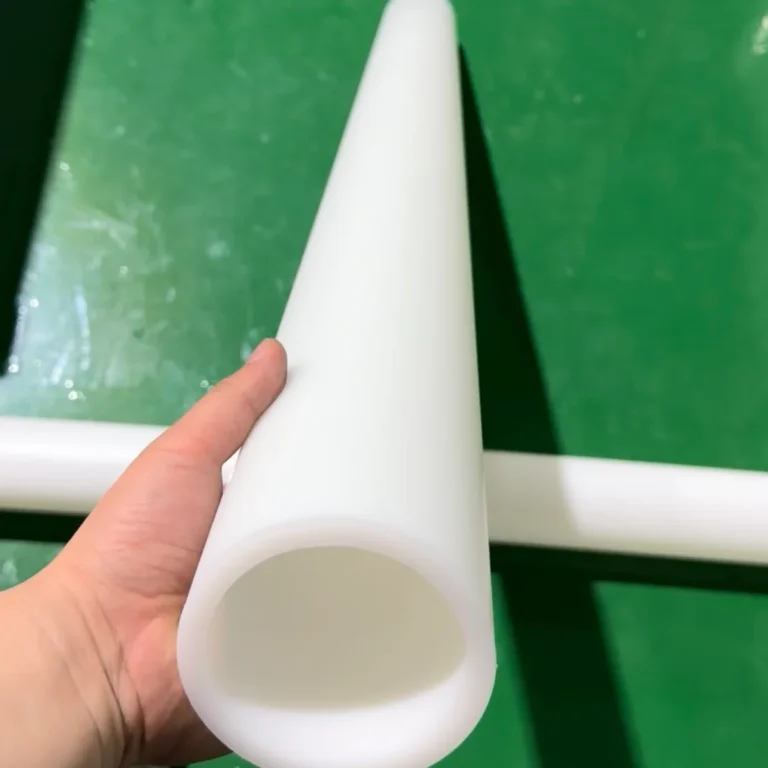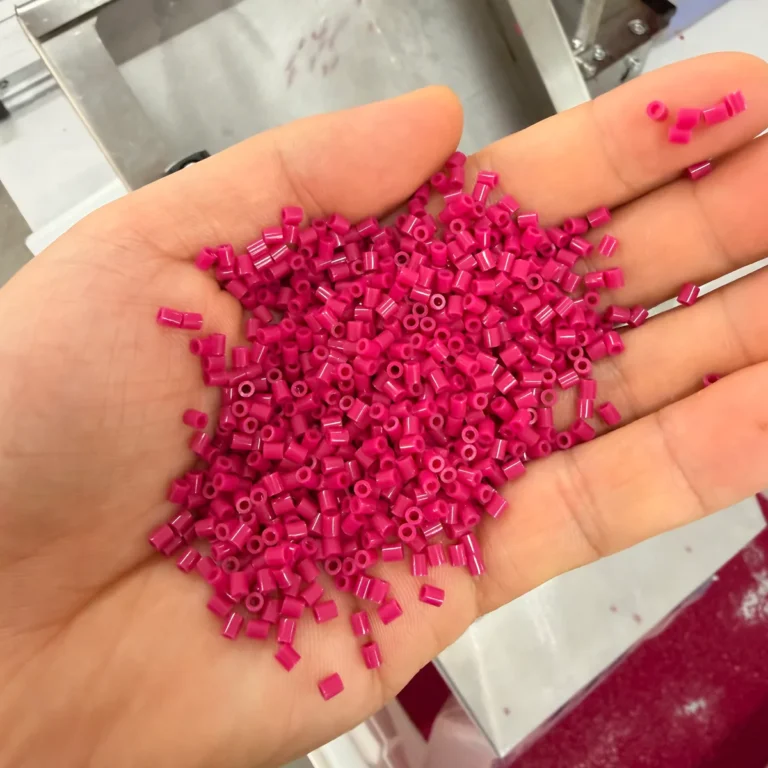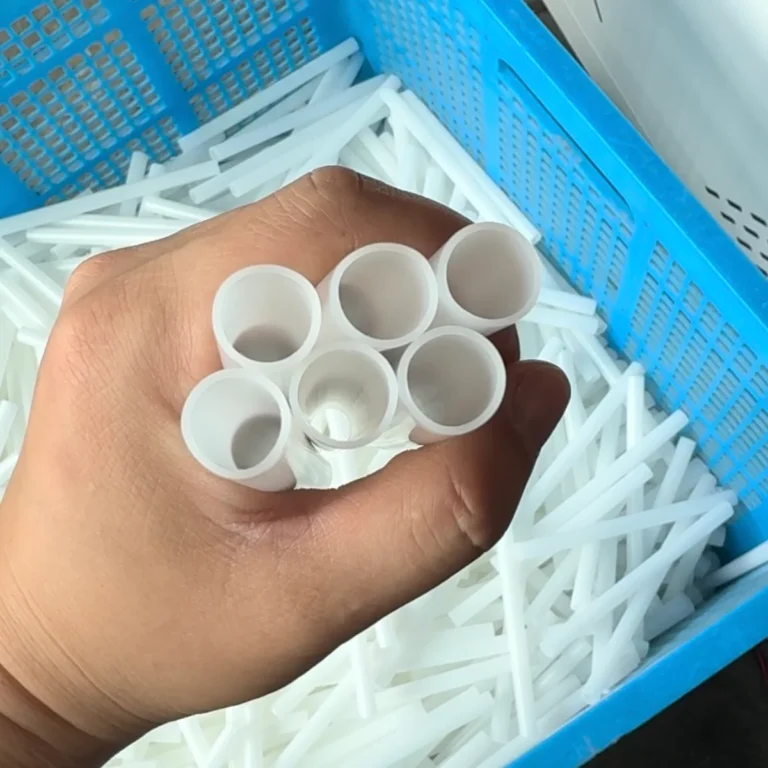
How to Choose the Right PPH Pipe Extrusion Machine?
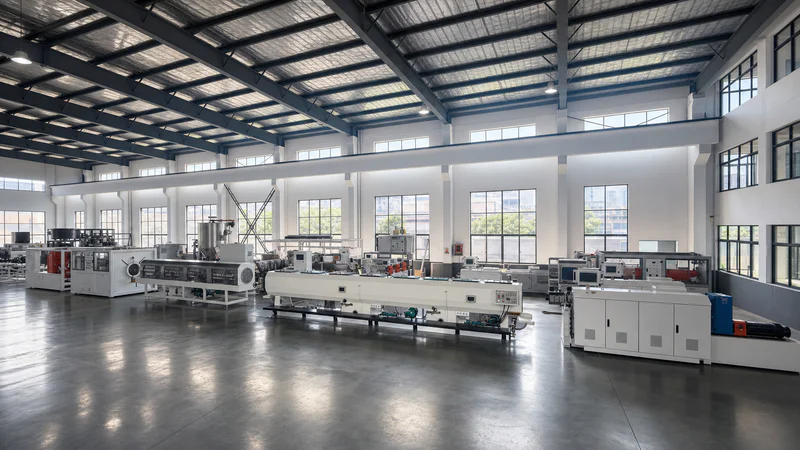
Choose the right PPH pipe extrusion machine by comparing pipe range, extruder size, calibration, cooling, haul-off, cutting, automation, supplier support, and real project cases.
Choosing the right PPH pipe extrusion machine is not only about buying an extruder. It is about matching your pipe diameter, output target, raw material, factory voltage, cooling capacity, cutting method, automation level, and after-sales support with a complete and reliable production line.
For customers producing industrial PPH pipes, chemical-resistant pipes, drainage pipes, agricultural irrigation pipes, municipal engineering pipes, cable protection pipes, or construction piping, a well-configured extrusion line directly affects pipe roundness, wall thickness stability, surface quality, production efficiency, and long-term operating cost.
Below are 8 key questions to help you choose the right PPH pipe extrusion line for your factory.
1. What Pipe Diameter Range Do You Need to Produce?
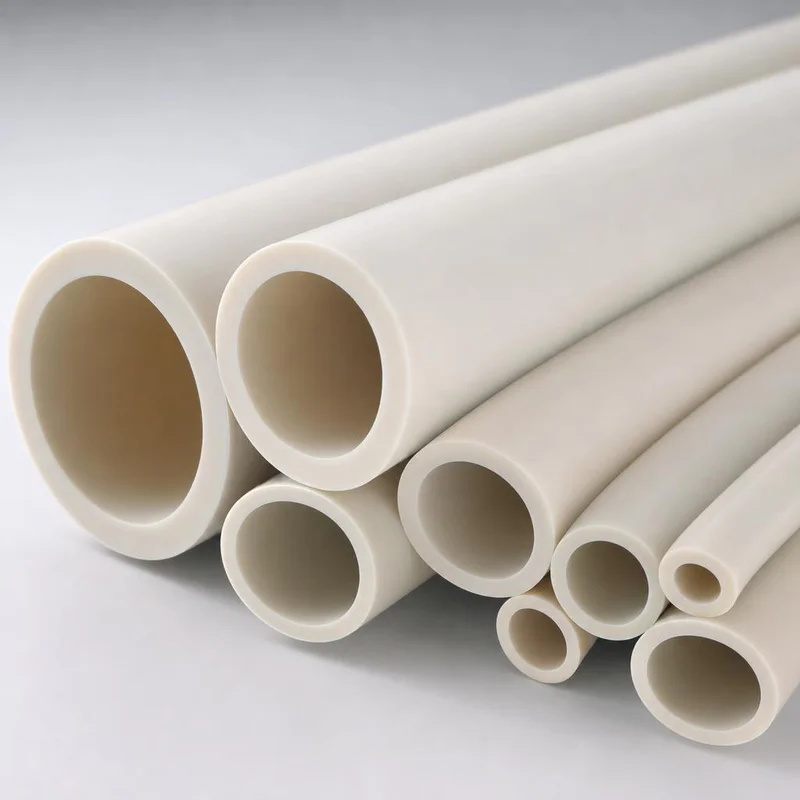
Choose a PPH pipe extrusion machine according to your target pipe diameter range, wall thickness, market demand, and future expansion plan.
The first step is to define your pipe size range clearly. A machine designed for small-diameter PPH pipes will not be suitable for large-diameter pipes, and a large line may waste investment if your market mainly needs small pipes.
For example, in QTech Machinery’s overseas customer case, the buyer needed to produce Φ110–400mm PPH pipes. Based on this requirement, QTech supplied a complete large-diameter PPH pipe extrusion line including extrusion, vacuum calibration, spray cooling, servo haul-off, ring cutting, and pipe discharge.
This type of configuration is suitable for customers who need medium-to-large PPH pipes for:
- Industrial piping systems
- Chemical fluid transportation
- Agricultural irrigation
- Municipal engineering
- Cable protection
- Construction and infrastructure
If your target market includes both large and small pipes, you should tell the supplier your complete size plan. In the case mentioned above, extra cutting equipment for Φ20–160mm pipes was also included to support wider production needs.
Recommended case: Φ110–400mm PPH Pipe Extrusion Line Customer Case
2. Which Extruder Model Is Suitable for PPH Pipe Production?
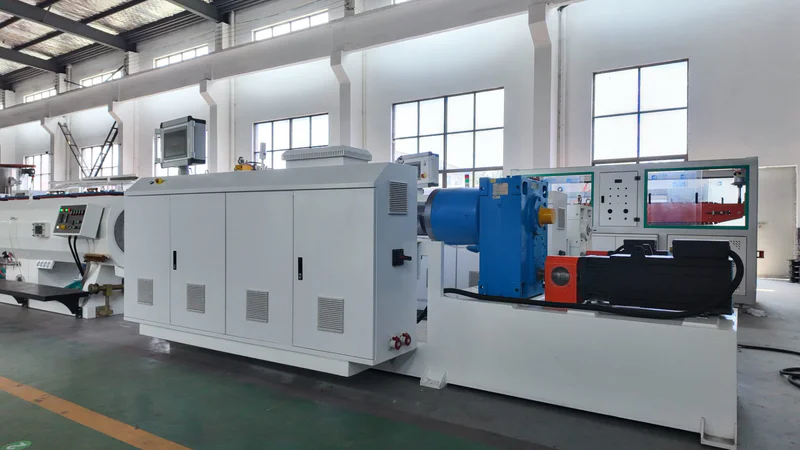
The extruder should be selected based on pipe diameter, output capacity, PPH material characteristics, screw design, motor power, and control system.
The extruder is the core machine of the PPH pipe production line. For stable production, the extruder must provide consistent plasticizing, stable melt pressure, and uniform material output.
In the QTech Φ110–400mm PPH pipe extrusion line project, the main extruder was an SJ90 single screw extruder, configured with:
| Item | Configuration |
|---|---|
| Extruder model | SJ90 single screw extruder |
| Screw and barrel material | 38CrMoAlA |
| Gearbox | Flender gearbox |
| Barrel heating zones | 6 zones |
| Die heating zones | 25 zones |
| Barrel cooling | Fan cooling |
| Cooling fan power | 380W × 6 |
| Control system | Siemens PLC |
| Touch screen | 15-inch Kunlun Tongtai HMI |
| Servo motor | 110kW Inovance servo motor |
| Electrical components | Chint and Schneider |
| Control cabinet | Swing-arm cabinet |
| Frame | 16 national standard channel steel |
These specifications show several important advantages:
-
Stable plasticizing performance
The 38CrMoAlA screw and barrel provide wear resistance and long service life. -
High transmission reliability
A Flender gearbox improves long-term operating stability. -
Accurate temperature control
Multiple barrel and die heating zones help maintain uniform melt flow. -
Easy operation
Siemens PLC and a large touch screen make operation and parameter adjustment easier. -
Energy-efficient drive system
The 110kW Inovance servo motor supports stable output and better energy control.
For PPH pipe extrusion, the machine should not only “push material out.” It must melt, mix, pressurize, and deliver the material consistently. This is especially important when producing thick-wall or large-diameter pipes.
Know more: Plastic Pipe Making Machine
3. How Important Is Vacuum Calibration for PPH Pipe Quality?
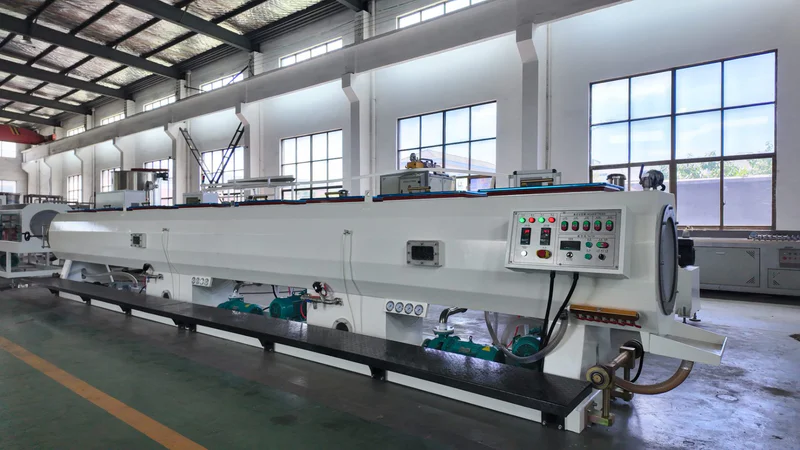
Vacuum calibration is critical because it determines pipe outer diameter accuracy, roundness, surface finish, and initial cooling stability.
After the molten PPH pipe leaves the die head, it needs to be shaped quickly and accurately. This is where the vacuum calibration tank plays a key role.
For the Φ110–400mm PPH pipe extrusion line, QTech supplied a 9m vacuum calibration tank with the following features:
| Item | Configuration |
|---|---|
| Pipe range | Φ110–400mm |
| Tank length | 9m |
| Tank material | SUS304 stainless steel |
| Tank thickness | 5mm |
| Vacuum pump | 5.5kW × 2 |
| Water pump | 5.5kW × 2 |
| Front/back movement | Motorized, adjustable up to 800mm |
| Water system | Double-loop and double-filter inlet control |
| Spray nozzles | Quick-removal type |
| Support plate | Quick-change nylon support plate |
| Center height | 1000mm |
| Sizing method | Vacuum negative pressure, two-chamber calibration |
| Spray pipe quantity | 8 pieces |
| Pipework and valves | SUS304 stainless steel |
The advantages of this configuration include:
- More accurate pipe sizing
- Better pipe roundness
- Improved pipe surface
- Easier maintenance
- Longer tank service life
- Stable water and vacuum control
The use of SUS304 stainless steel is especially important because the vacuum tank constantly contacts water. A stronger stainless-steel structure reduces corrosion risk and improves long-term reliability.
The two-chamber calibration structure helps maintain more stable vacuum sizing, while quick-removal nozzles and quick-change nylon support plates reduce maintenance time.
External industry discussions often emphasize that extrusion stability depends not only on the extruder but also on downstream cooling, sizing, and line speed control. In polymer processing, parameters such as screw design, melt temperature, cooling, and calibration conditions all influence final product quality. Reference discussions and technical papers on extrusion parameter optimization also support this point.
4. What Cooling System Should a PPH Pipe Extrusion Line Have?
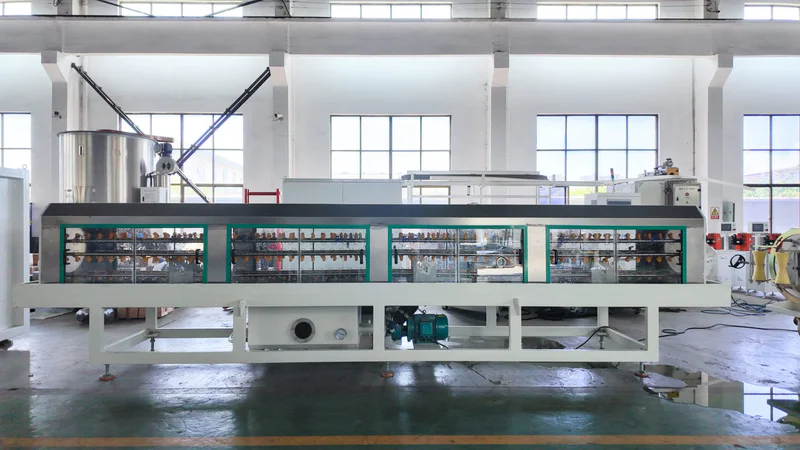
A good cooling system should match pipe diameter, wall thickness, output speed, factory water conditions, and the required pipe dimensional stability.
Cooling is one of the most important parts of pipe extrusion. If cooling is insufficient, the pipe may deform, become oval, or show unstable dimensions. If cooling is uneven, the pipe may bend or shrink irregularly.
For medium and large PPH pipes, cooling generally includes:
- Vacuum calibration cooling
- Spray cooling tank
- Controlled water circulation
- Stable support during cooling
In the QTech case, the line included a 6m spray cooling tank after the 9m vacuum calibration tank. This combination supports stable cooling for Φ110–400mm PPH pipes.
When selecting the cooling system, customers should confirm:
| Question | Why It Matters |
|---|---|
| Is the tank length enough? | Longer cooling helps large pipes stabilize |
| Is the tank made of stainless steel? | Better corrosion resistance |
| Are spray nozzles easy to clean? | Reduces blockage and maintenance time |
| Is the water system filtered? | Prevents impurities from affecting cooling |
| Is the pipe well supported? | Helps avoid bending and ovality |
For thick-wall PPH pipes, the cooling system may need to be longer or specially configured. Before quoting, QTech engineers can recommend the correct tank length and water system according to your pipe OD, wall thickness, output, and raw material.
Know more cases: QTech Machinery Cases
5. Why Should You Pay Attention to the Haul-Off Machine?
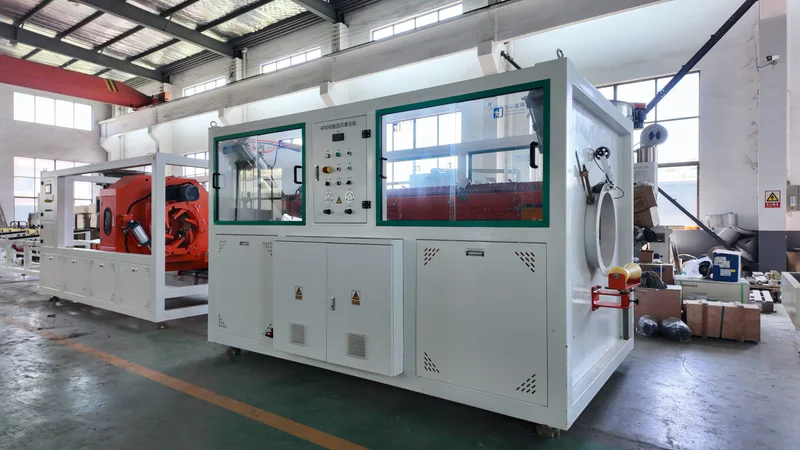
The haul-off machine controls pipe pulling speed, which directly affects wall thickness, pipe diameter stability, and production consistency.
Many buyers focus on the extruder but ignore the haul-off machine. In fact, the haul-off is one of the key machines for stable PPH pipe production.
If the haul-off speed fluctuates, the pipe wall thickness may become unstable. If the clamping force is not enough, the pipe may slip. If the traction system is not synchronized with the extruder, production quality will be affected.
For the Φ110–400mm PPH pipe extrusion project, QTech supplied a four-caterpillar servo haul-off machine. This configuration is suitable for large-diameter pipe production because it provides:
- Stronger and more stable traction
- Better pipe clamping
- Servo-controlled pulling speed
- Improved synchronization with the whole line
- Smoother production for large pipes
For large PPH pipes, two-caterpillar haul-off may not be enough. A four-caterpillar or multi-caterpillar design provides better contact area and stronger pulling force.
When choosing a haul-off machine, you should check:
| Selection Point | Recommended Consideration |
|---|---|
| Number of caterpillars | Match pipe diameter and weight |
| Drive system | Servo drive is preferred for accuracy |
| Clamping method | Should be stable and adjustable |
| Speed control | Must synchronize with extrusion output |
| Contact material | Should protect pipe surface |
QTech’s advantage is that the haul-off system is not selected separately. It is configured according to the full line, including extruder output, pipe diameter, wall thickness, cooling length, and cutting method.
6. What Cutting Method Is Best for PPH Pipes?
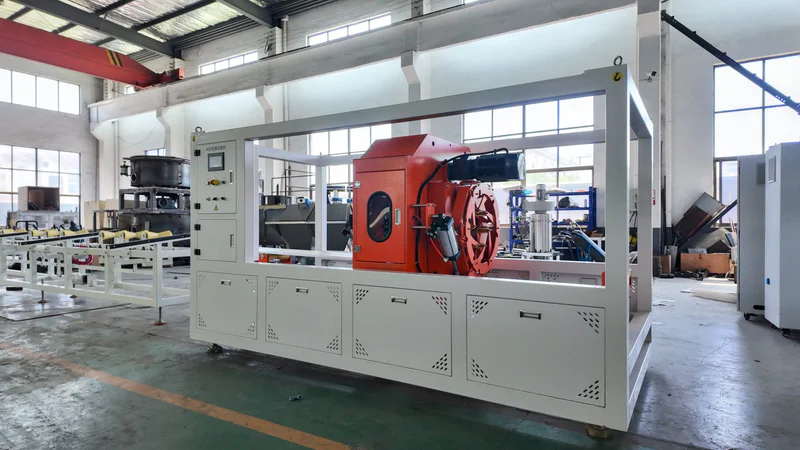
The cutting machine should provide smooth, accurate, and stable cutting according to pipe diameter, wall thickness, and required pipe end quality.
Cutting quality affects the final appearance and installation performance of PPH pipes. Poor cutting may cause burrs, uneven pipe ends, deformation, or cracks.
For large-diameter PPH pipes, a ring cutting machine is often a suitable choice. In the QTech Φ110–400mm PPH pipe extrusion line, a ring cutting machine was used to support smooth cutting of finished pipes.
A good PPH pipe cutting system should offer:
- Accurate length control
- Smooth cutting surface
- Low vibration
- Stable clamping
- Compatibility with pipe diameter range
- Automatic coordination with haul-off speed
For smaller pipe ranges, saw cutting or planetary cutting may be used depending on the pipe material, wall thickness, and production speed. In the customer case, extra cutting equipment for Φ20–160mm pipes was also provided, showing that the cutting solution can be customized for different production needs.
When discussing your project with a manufacturer, provide:
- Minimum and maximum pipe diameter
- Wall thickness range
- Required pipe length
- Pipe end quality requirement
- Production speed
- Whether chamfering is needed
QTech can configure the cutting solution according to your production plan instead of using one standard machine for all customers.
7. How Much Automation and Electrical Configuration Do You Need?
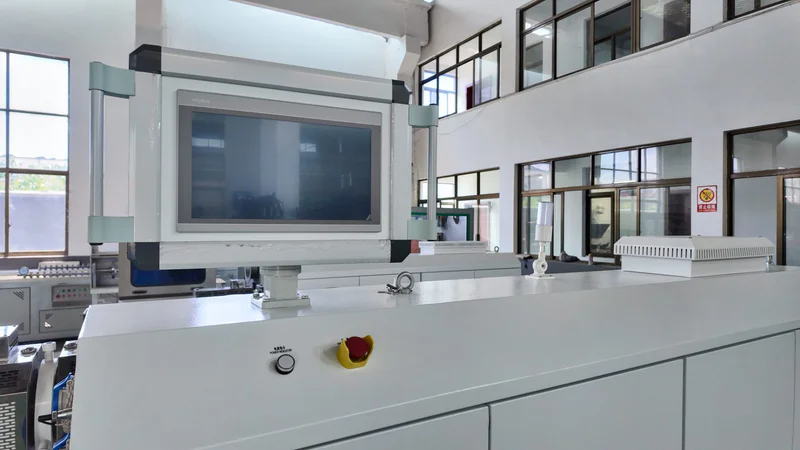
A higher automation level improves line stability, operation convenience, production monitoring, and long-term efficiency.
Automation is increasingly important in PPH pipe extrusion. A modern production line should help operators control the whole process more easily and reduce manual adjustment errors.
In QTech’s configuration, the line used:
- Siemens PLC control system
- 15-inch Kunlun Tongtai HMI
- Inovance servo motor
- Chint and Schneider electrical components
- Swing-arm control cabinet
These components improve the user experience and production stability.
A good automation system should allow operators to monitor and adjust:
| Parameter | Importance |
|---|---|
| Extruder temperature | Affects plasticizing and melt stability |
| Screw speed | Controls output |
| Haul-off speed | Affects wall thickness |
| Vacuum level | Affects sizing accuracy |
| Water pump operation | Affects cooling efficiency |
| Cutting length | Affects finished pipe consistency |
| Alarm information | Helps troubleshoot problems |
For overseas customers, voltage configuration is also very important. QTech Machinery can configure the line according to the customer’s local voltage and electrical standards.
This is one of QTech’s important advantages:
- OEM and ODM support
- Voltage configured according to customer market
- Full run test before delivery
- Quotation within 24 hours
- Customized line design by engineers
Know more cases: QTech Machinery Home
8. How Do You Evaluate the Supplier Before Buying a PPH Pipe Extrusion Machine?
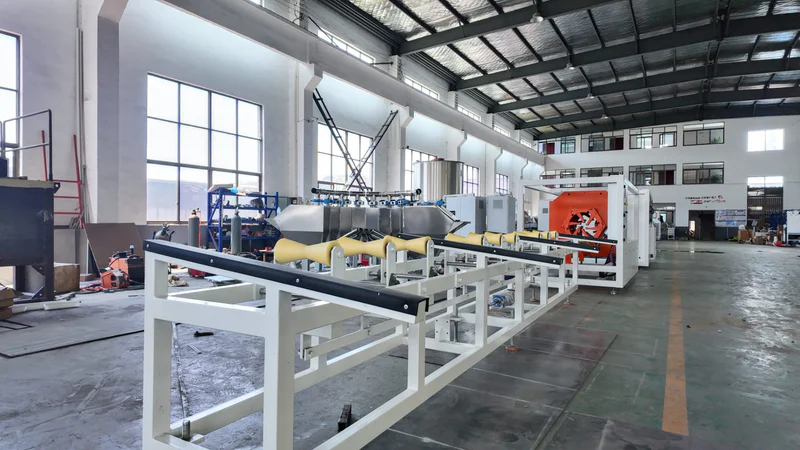
Choose a supplier that can provide complete line design, proven project cases, proper technical documents, factory testing, customization, and after-sales support.
A PPH pipe extrusion machine is a long-term investment. The supplier should not only sell individual machines but also provide a complete solution.
Before choosing a manufacturer, check whether they can provide:
Customer Selection Steps
| Step | What the Customer Should Confirm | What QTech Can Support |
|---|---|---|
| 1 | Pipe material | PPH, PP, PPR, PE/HDPE solutions |
| 2 | Pipe diameter range | Example: Φ110–400mm |
| 3 | Wall thickness | Engineer-based line configuration |
| 4 | Target output | Extruder and downstream matching |
| 5 | Application | Irrigation, industrial, municipal, cable protection |
| 6 | Factory voltage | Customized electrical configuration |
| 7 | Workshop layout | Line layout support |
| 8 | Budget range | Suitable configuration proposal |
| 9 | Delivery plan | Production and testing arrangement |
| 10 | After-sales needs | Installation guidance and documents |
Product List We Can Provide
QTech Machinery can provide complete plastic extrusion and recycling solutions, including:
| Product Category | Available Products |
|---|---|
| Pipe extrusion line | PPH pipe extrusion line |
| Pipe extrusion line | PP pipe extrusion line |
| Pipe extrusion line | PPR pipe extrusion line |
| Pipe extrusion line | PE/HDPE pipe extrusion line |
| Main machine | Single screw extruder |
| Downstream equipment | Vacuum calibration tank |
| Downstream equipment | Spray cooling tank |
| Downstream equipment | Servo haul-off machine |
| Downstream equipment | Ring cutting machine |
| Downstream equipment | Automatic pipe discharge rack |
| Auxiliary equipment | Material feeding and drying system |
| Control system | PLC and HMI control cabinet |
| Customized solution | OEM and ODM extrusion line |
Documents We Can Provide
| Document | Purpose |
|---|---|
| Technical quotation | Confirms price and configuration |
| Machine configuration list | Shows machine model and components |
| Layout drawing | Helps plan factory space |
| Electrical diagram | Supports installation and maintenance |
| Operation manual | Helps operators run the machine |
| Maintenance manual | Guides routine maintenance |
| Wearing parts list | Supports spare parts planning |
| Test video before delivery | Confirms machine running status |
| Packing list | Supports shipment inspection |
| Commercial invoice and packing documents | Supports import clearance |
| Installation guidance | Helps customer start production |
Supplier Evaluation Checklist
| Evaluation Item | Why It Is Important |
|---|---|
| Real customer cases | Shows actual project experience |
| Complete line capability | Ensures all machines work together |
| Custom engineering | Avoids wrong machine selection |
| Quality components | Improves machine stability |
| Factory run test | Reduces installation risk |
| Clear documents | Supports operation and maintenance |
| Fast quotation | Saves purchasing time |
| After-sales support | Protects long-term investment |
The Φ110–400mm PPH Pipe Extrusion Line for Overseas Customer case shows QTech’s ability to provide a complete, customized solution for an overseas buyer. The project included the main extruder, calibration, cooling, hauling, cutting, discharge, and additional cutting support for smaller pipes.
Contact us: Contact QTech Machinery
Comparison Table: Key Factors When Choosing a PPH Pipe Extrusion Machine
| Factor | Basic Requirement | Better Choice | QTech Advantage |
|---|---|---|---|
| Pipe range | Match current production | Support future expansion | Customized Φ110–400mm solution |
| Extruder | Stable output | Servo motor and quality gearbox | SJ90 extruder with Flender gearbox |
| Screw and barrel | Wear resistance | 38CrMoAlA material | Long service life |
| Control system | Basic control | PLC + large HMI | Siemens PLC and 15-inch HMI |
| Vacuum calibration | Accurate sizing | Two-chamber vacuum calibration | 9m SUS304 calibration tank |
| Cooling | Sufficient water cooling | Spray cooling with filtration | 6m spray cooling tank |
| Haul-off | Stable traction | Servo-controlled caterpillar haul-off | Four-caterpillar servo haul-off |
| Cutting | Accurate length | Smooth ring cutting | Ring cutting machine |
| Discharge | Manual or automatic | Automatic discharge rack | Complete downstream solution |
| Supplier support | Machine sale | Complete project solution | OEM/ODM, voltage configuration, full run test |
Customer Case Reference: Φ110–400mm PPH Pipe Extrusion Line
In the referenced customer case, an overseas buyer required a reliable production line for large-diameter PPH pipe manufacturing. Their main requirements included:
- PPH pipe production range: Φ110–400mm
- Stable single screw extrusion system
- Accurate vacuum calibration
- Efficient spray cooling
- Servo-controlled hauling
- Smooth ring cutting for finished pipes
QTech Machinery supplied a complete extrusion line including:
- SJ90 single screw extruder
- Φ110–400mm vacuum calibration tank
- 6m spray cooling tank
- Four-caterpillar servo haul-off machine
- Ring cutting machine
- Automatic discharge rack
- Additional cutting equipment for Φ20–160mm pipes
This project demonstrates that the correct PPH pipe extrusion line must be configured according to the buyer’s actual market, raw material, product size, output target, and factory conditions.
Case link: Customer Case: Φ110–400mm PPH Pipe Extrusion Line for Overseas Customer
Useful External References and Forum-Based Insights
When selecting or troubleshooting an extrusion line, it is helpful to review both technical literature and industry discussions. Several common insights from extrusion-related engineering communities and polymer processing references are relevant to PPH pipe production:
-
Extrusion quality is strongly affected by temperature, screw design, melt pressure, and cooling conditions.
Technical discussions on polymer extrusion often mention that unstable melt temperature or inconsistent pressure can lead to dimensional variation and surface defects.
Reference: Optimization of parameters during filament extrusion -
Vacuum-assisted calibration is widely recognized as important for profile and pipe dimensional control.
Polymer processing references note that vacuum-assisted calibration can support reliable sizing, especially where dimensional accuracy is important.
Reference: Optimization in Polymer Processing -
Process optimization should consider the whole extrusion line, not only the extruder.
Research on extrusion process optimization shows that forming, cooling, and downstream control influence final product geometry and consistency.
Reference: Optimizing Plastic Extrusion Process via Grey Wolf Optimization -
For precise polymer products, production parameters must be selected together rather than adjusted independently.
Studies on polymer extrusion emphasize that material behavior, temperature, die design, and cooling conditions interact with each other.
Reference: Numerical Study on the Optimization of Polymer Extrusion Process
These references support a practical conclusion: when buying a PPH pipe extrusion machine, customers should evaluate the complete extrusion system, including the extruder, die, vacuum calibration tank, cooling tank, haul-off, cutting machine, control system, and supplier engineering ability.
Conclusion: What Is the Best Way to Choose a PPH Pipe Extrusion Machine?
The best way to choose the right PPH pipe extrusion machine is to start from your real production demand and then match every machine section accordingly.
You should confirm:
- Pipe diameter range
- Wall thickness
- Raw material
- Application
- Output capacity
- Factory voltage
- Workshop space
- Automation requirement
- Cutting quality
- Budget and delivery schedule
For customers who need a reliable large-diameter pipe solution, QTech Machinery’s Φ110–400mm PPH pipe extrusion line provides a proven reference. With an SJ90 single screw extruder, SUS304 vacuum calibration tank, spray cooling system, four-caterpillar servo haul-off, ring cutting machine, and automatic discharge rack, the line is designed for stable production, accurate sizing, smooth cutting, and long-term operation.
QTech Machinery can provide OEM and ODM service, voltage configuration, full run testing, customized engineering design, and quotation within 24 hours. If you are planning to produce PPH pipes, you can send your pipe size, raw material, output target, voltage, and application requirements to get a suitable line configuration.