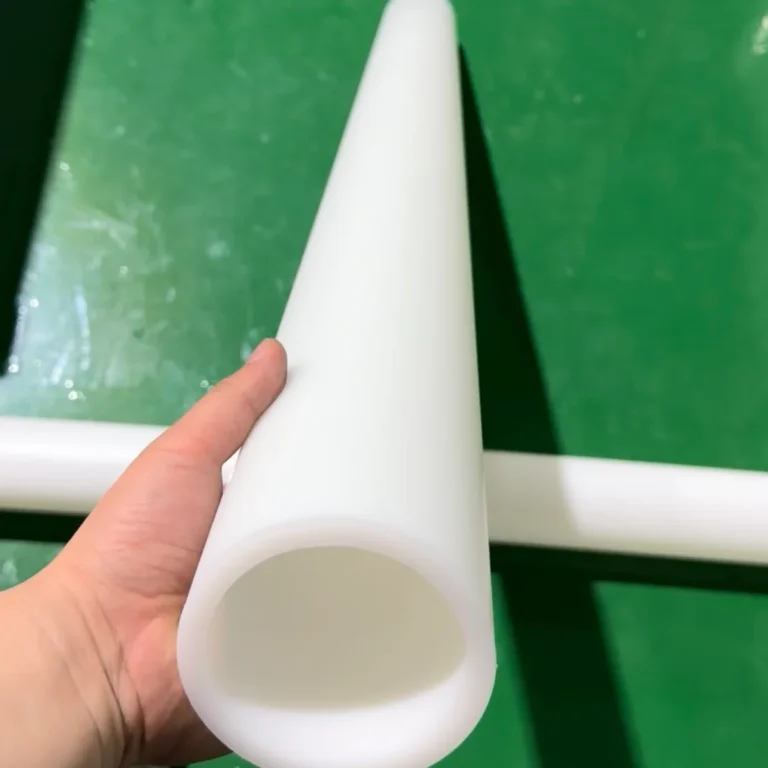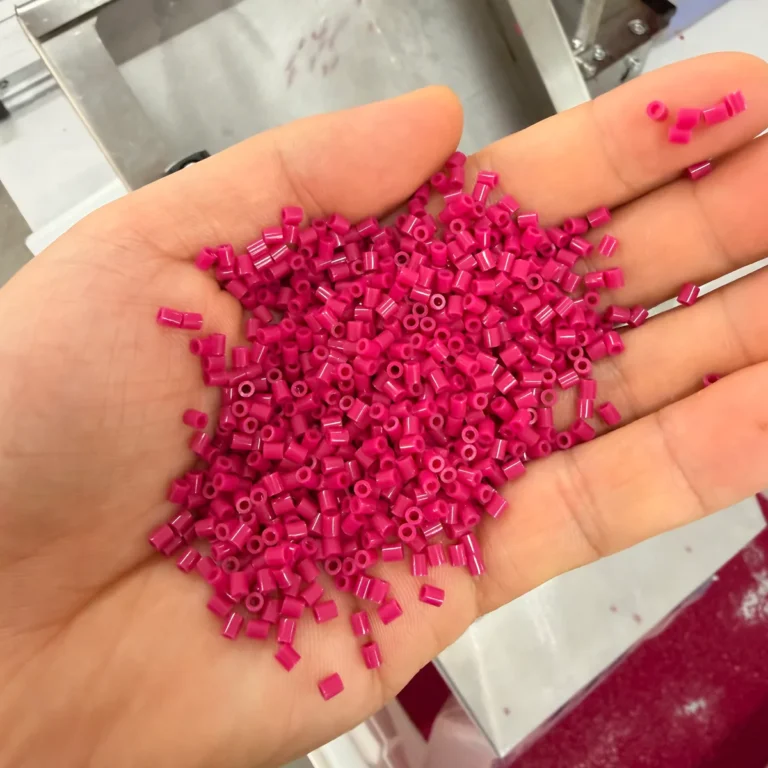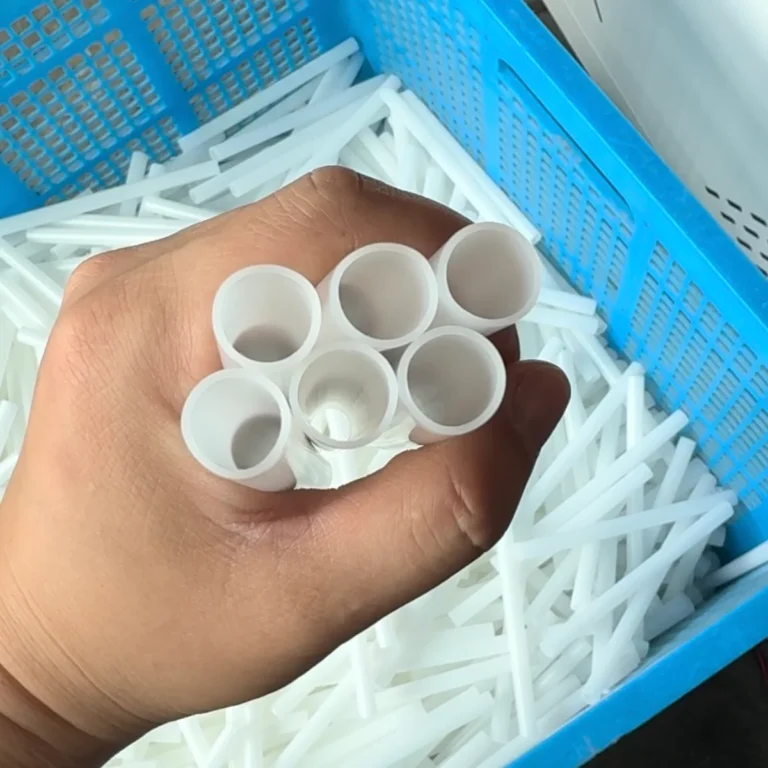
Choosing a plastic extrusion machine is not simply a matter of comparing screw diameter, motor power and maximum output.
Two machines with similar specifications may perform very differently when they process different materials, formulas and finished-product sizes. A machine may also have sufficient extrusion capacity but still fail to produce qualified products if the die, cooling system, haul-off unit or cutting equipment is not correctly matched.
The safest selection method is to work backward from the finished product:
Finished product → Raw material → Extrusion process → Stable output → Extruder configuration → Downstream equipment → Factory conditions → Production test
This guide explains the eight questions you should answer before selecting a plastic extrusion machine or complete extrusion line.
What Finished Product Will the Extrusion Line Manufacturer?
The extrusion machine should be selected from the finished product backward because product type, dimensions, wall thickness, structure and quality tolerances determine the required die, extruder capacity, cooling method, haul-off system and cutting equipment.
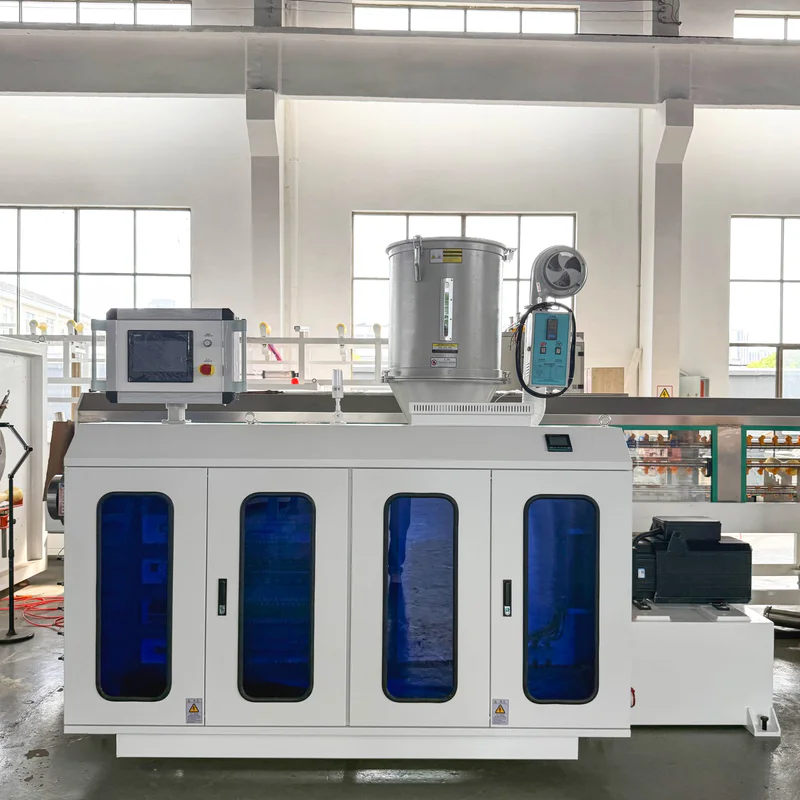
A supplier cannot accurately recommend a machine based only on a general description such as “PVC profile,” “PE pipe” or “plastic sheet.”
Before comparing machine models, prepare a clear definition of the product you plan to manufacture.
The information should include:
- Product type
- Product drawing or cross-sectional drawing
- Minimum and maximum dimensions
- Wall thickness or sheet thickness
- Product width or pipe diameter
- Product weight per meter
- Required cutting length
- Single-layer or multilayer structure
- Surface and color requirements
- Dimensional tolerances
- Representative product samples, when available
For pipe production, diameter alone is not enough. The supplier also needs to know the wall thickness, pipe weight, material grade, required line speed and whether the finished pipe will be cut to a fixed length or wound into coils.
For profile production, the cross-sectional shape is especially important. A wide hollow profile, a narrow solid profile and a profile with thin internal ribs may require different die designs, calibration tooling, cooling arrangements and haul-off forces.
For sheet and board production, confirm the finished width, thickness range, surface finish, flatness and whether the material will be cut, stacked or wound.
You can review the corresponding machine categories before requesting a proposal:
- Plastic pipe extrusion lines
- Plastic profile extrusion lines
- Plastic sheet and board extrusion lines
- PVC pelletizing lines
The supplier should review your product drawing before recommending the extruder model. The machine must not only extrude plastic continuously; it must support stable production of a product that meets your dimensional and appearance requirements.
Which Raw Material and Formula Will You Process?
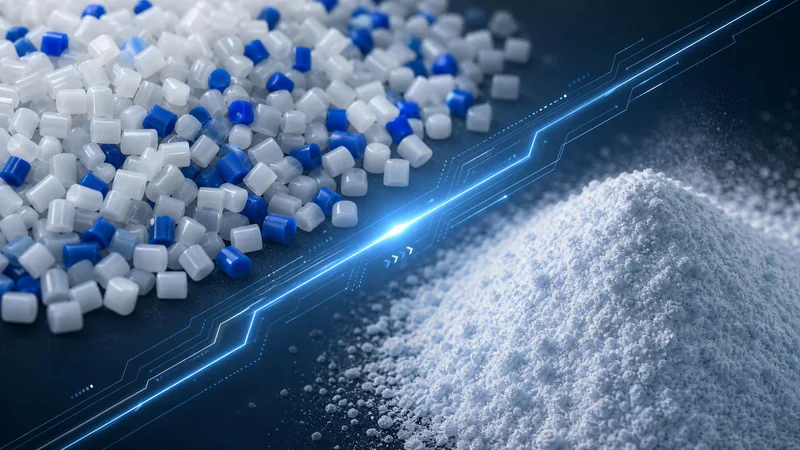
The extruder must be matched to the actual resin, material form, filler percentage, recycled content and additives used in production because formulation differences directly affect feeding, plasticizing, torque, melt temperature, filtration and screw-barrel wear.

Polyethylene granules used as a plastic-processing raw material. Image source: Wikimedia Commons.
Products that look similar can require different machine configurations when their formulations are different.
Before requesting an extrusion-line proposal, confirm:
- Base resin, such as PVC, PE or PP
- Exact resin grade, when available
- Powder, pellet, flake or regrind form
- Virgin-material percentage
- Recycled-material percentage
- Filler type and percentage
- Color masterbatch or pigment dosage
- Stabilizers and processing aids
- Plasticizer content for flexible PVC
- Bulk density
- Moisture condition
- Expected variation between batches
PVC requires particular attention because it is sensitive to excessive heat and residence time. The extruder must provide sufficient conveying, mixing and plasticizing without creating unnecessary thermal or mechanical stress.
For PVC dry-blend processing, the supplier should understand the complete formulation rather than only the percentage of PVC resin. Calcium carbonate, stabilizers, lubricants, processing aids and recycled content can all change the operating load and production stability.
PE and PP are commonly supplied as pellets, but the resin grade still matters. Differences in melt behavior, molecular structure, additive package and recycled content can affect output, pressure, surface quality and cooling requirements.
High filler content may increase wear on the screw and barrel. Recycled material can introduce inconsistent bulk density, moisture, contamination or more demanding filtration requirements.
Material preparation may therefore require additional equipment, such as:
- Hot and cold mixers
- Vacuum loaders
- Hopper dryers
- Dehumidifying dryers
- Volumetric dosing units
- Gravimetric dosing systems
- Metal separators
- Screen changers
- Vacuum venting systems
A machine proposed for clean virgin pellets should not automatically be assumed to perform the same way with powder, high-filler material or inconsistent recycled feedstock.
Send the supplier the actual material data sheet, formulation range and representative raw-material sample whenever practical.
Which Extrusion Process and Extruder Type Should You Choose?
The correct extruder type depends on whether your process mainly requires stable melting and pressure generation or also requires intensive mixing, difficult-material feeding, additive dispersion, venting or controlled processing of a heat-sensitive formulation.

Cutaway view of a plastic extruder showing the hopper, screw, barrel, drive and die. Image source: Wikimedia Commons.
A single-screw extruder is commonly considered for continuous processing of prepared thermoplastic materials, including many PE and PP pipe, profile and sheet applications.
Its suitability still depends on:
- Resin grade
- Screw design
- Feeding method
- Required pressure
- Product dimensions
- Target output
- Melt-temperature requirements
Twin-screw extruders are normally evaluated when the process requires stronger conveying, mixing, additive distribution, venting or handling of materials that are difficult to feed.
However, “twin screw” is not one universal machine type.
For example, co-rotating twin-screw extruders are widely used for compounding and material modification. Counter-rotating twin-screw extruders are commonly considered for PVC pipe and profile production from dry blend.
A practical starting point is shown below:
| Application | Common Starting Point | Main Selection Factors |
|---|---|---|
| PE or PP pipe | Single-screw extruder | Resin grade, diameter, wall thickness, output and cooling |
| PE or PP profile | Single-screw extruder | Profile geometry, die resistance, surface quality and speed |
| PVC pipe from dry blend | PVC twin-screw extruder | Formula, filler level, torque, heat sensitivity and output |
| PVC profile from dry blend | PVC twin-screw extruder | Cross-section, formula, tooling and cooling stability |
| Plastic sheet or board | Material-specific extrusion system | Material, width, thickness, surface quality and calender capacity |
| PVC pelletizing | PVC-specific extrusion and cutting system | Rigid or flexible PVC, formula, output and pelletizing method |
The number of screws is only one part of the selection.
The supplier must also determine:
- Screw diameter
- Screw geometry
- Length-to-diameter ratio
- Screw speed range
- Feeding method
- Venting requirement
- Heating and cooling arrangement
- Gearbox torque
- Wear-resistant treatment
Be cautious when a supplier claims that one standard extruder can process every material and manufacture every product simply by changing the die.
A more reliable supplier will explain the suitable processing range and the conditions under which additional screw, feeding, venting or downstream changes are required.
How Much Stable Production Output Do You Actually Need?
Required output should be calculated from the finished-product weight and target line speed, then verified as continuous qualified-product output rather than accepted as the maximum short-term figure shown in a machine quotation.
Operating data should be recorded while the line is producing qualified products. Image source: Wikimedia Commons.
For pipes and profiles, the basic output calculation is:
Required output in kg/h = Product weight in kg/m × Line speed in m/min × 60
For example:
- Product weight:
0.75 kg/m - Required line speed:
4 m/min - Calculated output:
180 kg/h
The line must therefore produce approximately 180 kilograms of qualified product per hour under the agreed material formula and product specification.
The calculated figure is only a starting point. The supplier must also consider:
- Die resistance
- Product geometry
- Wall thickness
- Cooling capacity
- Surface requirements
- Dimensional tolerances
- Material heat sensitivity
- Expected operating hours
- Product-size range
- Start-up and changeover losses
- Future capacity requirements
Do not treat the following terms as identical:
- Maximum output: A high figure that may only be reached under favorable conditions
- Rated output: A nominal capacity used for machine positioning
- Stable output: Output that can be maintained continuously
- Qualified-product output: Stable output that also meets the agreed product standard
The most useful number for a buyer is qualified-product output.
Selecting an oversized extruder does not automatically improve production. When a large machine operates far below its intended range, the material may remain in the barrel for too long, processing may become unstable and heat-sensitive material may face a greater risk of degradation.
Selecting a machine with almost no capacity margin creates the opposite risk. The motor, gearbox and screw may need to operate close to their practical limits during normal production.
When comparing output claims, ask:
- Which material and formulation were used?
- Which finished-product size was produced?
- What screw speed was required?
- Was the figure a peak or stable output?
- Did the product meet the agreed dimensions?
- How long did the test continue?
- Which downstream equipment was operating?
An output figure without material, product and testing conditions is not sufficient for making a purchasing decision.
Which Screw, Barrel, Motor and Gearbox Configuration Is Suitable?
The screw, barrel, motor and gearbox must be evaluated as one processing system because screw geometry determines material behavior, while available torque, drive capacity, wear resistance and temperature control determine whether that process can remain stable during continuous production.

The screw design must be matched to the material and processing objective. Image source: Wikimedia Commons.
A larger screw diameter usually provides greater potential conveying capacity, but screw diameter alone does not determine actual output or product quality.
Two machines with the same screw diameter may use different:
- Screw geometries
- Screw speeds
- Length-to-diameter ratios
- Gearbox ratios
- Motor capacities
- Feeding systems
- Temperature-control systems
These differences can result in different output, melt temperature, pressure stability and product quality.
Screw design
The screw must support the feeding, conveying, compression, melting, mixing and pressure requirements of the material.
A screw designed for one resin may not perform correctly with another material, even when the machine dimensions appear similar.
Length-to-diameter ratio
The L/D ratio describes the relationship between screw length and screw diameter. It affects the available processing length for conveying, melting, mixing, venting and pressure generation.
A longer processing section is not automatically better. Excessive residence time or shear may be unsuitable for heat-sensitive materials.
Screw and barrel materials
Wear protection becomes more important when the line processes:
- High filler percentages
- Recycled materials
- Abrasive additives
- Contaminated feedstock
- Long production cycles
- High operating loads
Depending on the application, the supplier may recommend nitrided surfaces, bimetallic barrels or wear-resistant alloy treatment.
The proposed treatment should be connected to the actual material formula rather than presented as a general premium upgrade.
Motor and gearbox
Motor power should be reviewed together with:
- Available torque
- Gearbox rating
- Screw-speed range
- Transmission efficiency
- Expected process load
- Overload protection
A larger motor does not compensate for an inadequately rated gearbox or an unsuitable screw design.
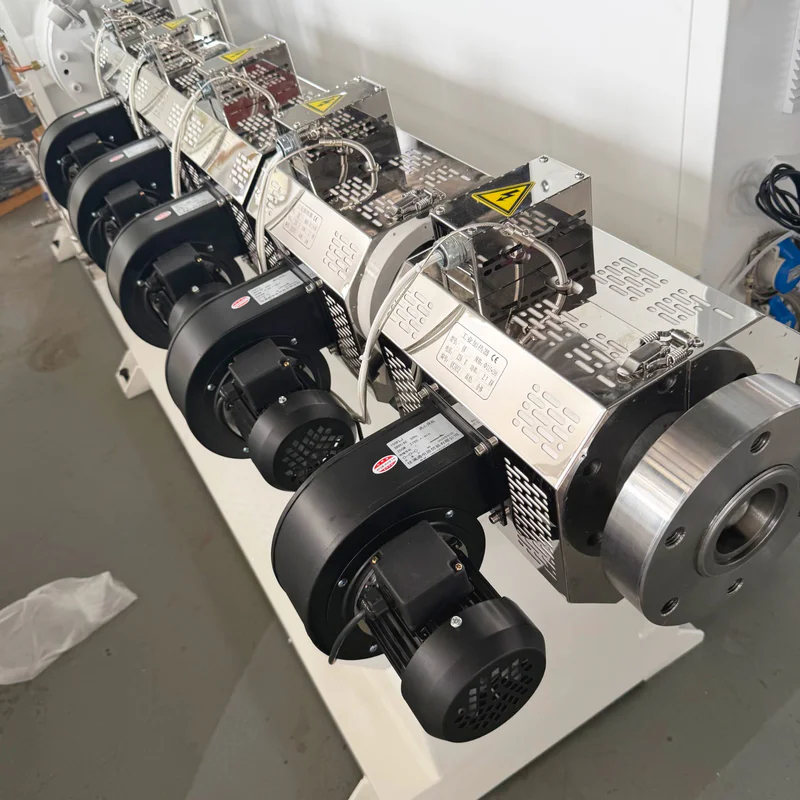
Heating and cooling
Barrel heaters establish the initial processing conditions, while cooling systems help control excess heat generated during operation.
The temperature displayed for a barrel zone is not necessarily the same as the actual melt temperature. Mechanical shear from the rotating screw can add significant heat to the material.
A useful machine proposal should therefore explain:
- Why the selected screw suits the formulation
- Why the proposed motor power is sufficient
- How the gearbox torque matches the expected load
- Which wear protection is included
- How barrel and melt temperatures will be monitored
Which Downstream Equipment Must Be Matched to the Extruder?
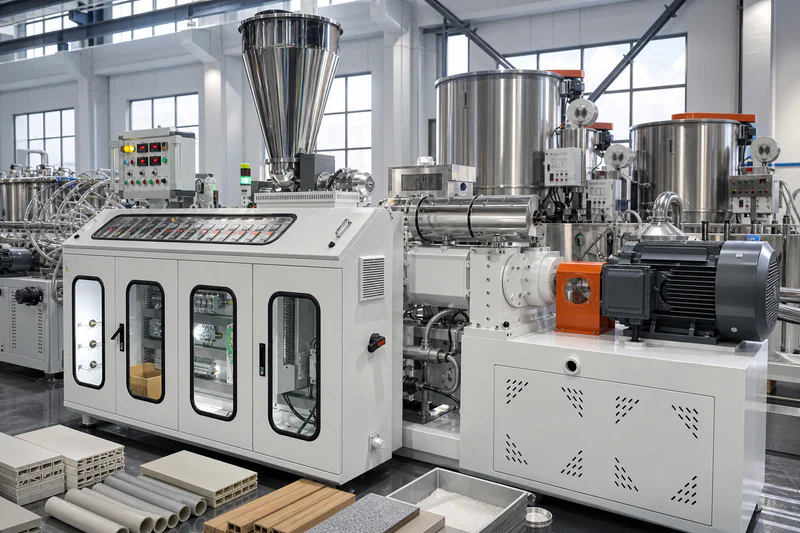
The die, calibration system, cooling equipment, haul-off unit and cutting or winding system must be sized for the same product and operating speed because the complete line can only run as fast as its most restrictive downstream component.
The extruder is only one part of a complete production line.
A machine may deliver the required amount of molten plastic, but the finished product can still become unstable if the die, cooling system, haul-off unit or cutter cannot handle that flow rate.
A pipe extrusion line may include:
- Material feeding system
- Extruder
- Pipe die head
- Vacuum calibration tank
- Spray cooling tanks
- Haul-off unit
- Cutter or coiler
- Stacker or discharge table
A profile extrusion line may include:
- Extruder
- Profile die
- Calibration tooling
- Vacuum calibration table
- Cooling system
- Haul-off unit
- Cutter
- Collection table
A sheet or board extrusion line may include:
- Material feeding and dosing
- Extruder
- Screen changer or filtration system
- Melt pump, when required
- Flat die
- Three-roll calender
- Cooling frame
- Haul-off and edge trimming
- Cutting, stacking or winding equipment
Cooling is often a practical production limit.
If the product cannot be cooled and stabilized quickly enough, increasing extruder output may cause:
- Pipe ovality
- Unstable wall thickness
- Profile twisting
- Profile deformation
- Sheet warpage
- Poor flatness
- Reduced line speed
The haul-off unit must provide sufficient and stable traction without marking or deforming the product.
The cutting or winding system must follow the actual line speed. If it cannot operate quickly and accurately enough, it becomes the bottleneck even when the extruder has additional capacity.
When comparing quotations, check whether each supplier includes the same downstream scope.
A lower quotation may contain:
- Shorter cooling tanks
- A smaller haul-off unit
- A basic cutter
- Fewer calibration tools
- Lower automation
- No material dosing
- No filtration equipment
- No product collection system
Do not compare only the price and power of the extruder.
The more useful comparison is:
At what continuous speed can the complete line produce a qualified finished product?
What Product Quality and Factory Conditions Must Be Confirmed?
Product acceptance criteria and factory utilities must be confirmed before machine production because tolerance, surface quality, electrical supply, cooling water, compressed air and available space can all change the required equipment configuration.

Finished-product dimensions should be checked against measurable acceptance criteria. Image source: Wikimedia Commons.
A general statement such as “the product should have good quality” cannot be used as an acceptance standard.
The required quality should be converted into measurable criteria.
Depending on the finished product, confirm:
- Outer diameter
- Inner diameter
- Wall thickness
- Sheet width
- Sheet thickness
- Product weight per meter
- Cutting length
- Ovality
- Flatness
- Straightness
- Surface smoothness
- Gloss
- Color consistency
- Visible bubbles
- Black specks
- Warpage
- Twisting
- Stable production output
Tighter tolerances may require better material dosing, more accurate tooling, stronger cooling control, improved speed synchronization or online measurement equipment.
Your factory conditions must also be reviewed before the line is manufactured.
| Factory Requirement | Information to Confirm |
|---|---|
| Electrical supply | Voltage, frequency, phase and transformer capacity |
| Cooling system | Water temperature, pressure, flow and water quality |
| Compressed air | Available pressure and flow |
| Factory layout | Available length, width and height |
| Material handling | Storage, mixing and feeding locations |
| Product handling | Cutting, stacking, winding and collection space |
| Maintenance access | Space for tooling changes, cleaning and repairs |
| Local environment | Ambient temperature, humidity, dust and voltage fluctuation |
The quoted line length should not be treated as the minimum required factory length.
Additional space is normally needed for:
- Operating access
- Mold and tooling changes
- Material feeding
- Product collection
- Electrical cabinets
- Cooling equipment
- Forklift or crane movement
- Preventive maintenance
The supplier should provide a preliminary line layout and utility list before equipment production begins.
These documents allow your team to prepare:
- Electrical cables
- Water connections
- Compressed-air lines
- Foundations
- Drainage
- Factory access
- Material and finished-product areas
Failing to confirm factory conditions early can result in installation delays, insufficient electrical capacity, poor cooling performance or an unsuitable production layout.
How Should You Verify the Extrusion Line Before Shipment?
The line should be verified through a defined factory acceptance test using the agreed material, product size, production target and quality criteria so that stable qualified-product output is demonstrated before the equipment is packed and shipped.
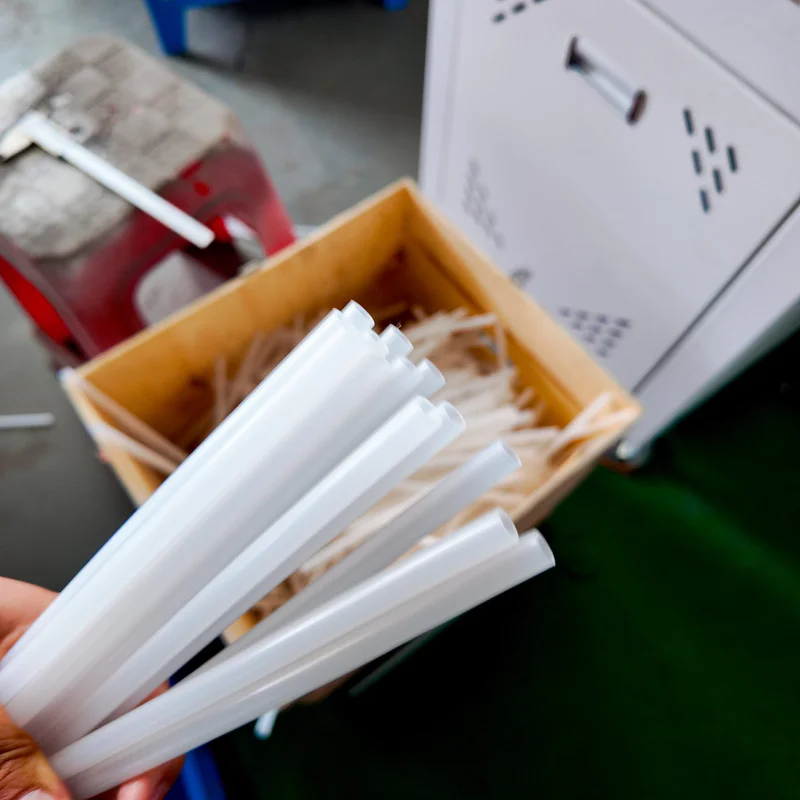
A factory acceptance test, commonly called an FAT, should verify the production process rather than only showing that the motors, heaters and control panel can switch on.
Whenever practical, the test should use:
- Your actual raw material
- Your approved formula
- The ordered die and tooling
- A representative finished-product size
- The complete downstream equipment
- The agreed production conditions
If the exact material cannot be shipped to the machine supplier, the substitute material should be clearly identified and its differences should be recorded.
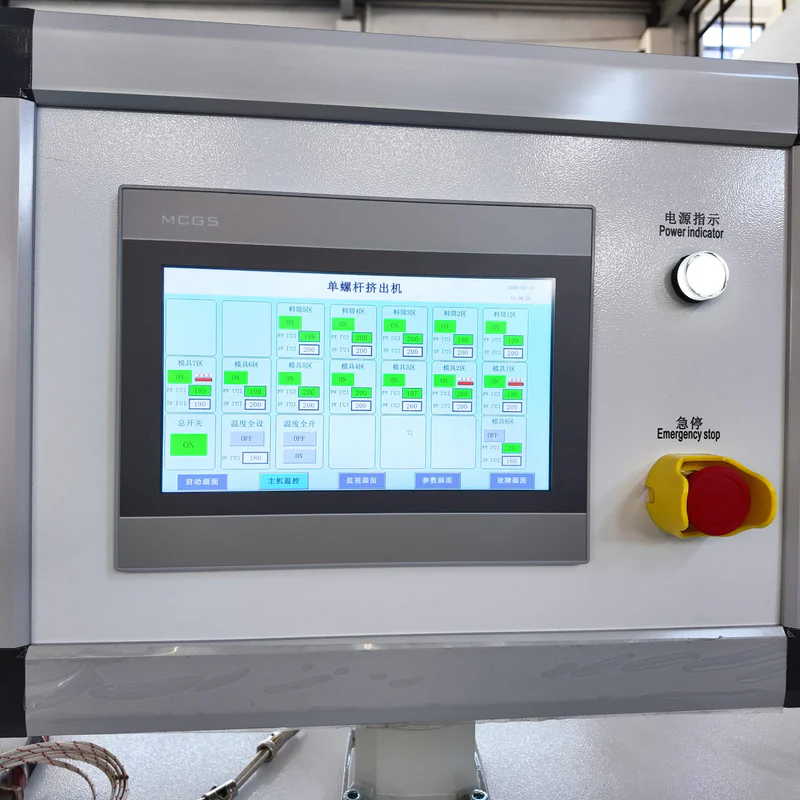
During the test, record:
- Screw speed
- Motor current
- Gearbox condition
- Barrel-zone temperatures
- Melt temperature
- Melt pressure, when monitored
- Haul-off speed
- Cutting or winding performance
- Product weight
- Output per hour
- Start-up scrap
- Continuous running time
The finished product should then be measured against the agreed acceptance criteria.
For pipes, this may include:
- Diameter
- Wall thickness
- Ovality
- Weight per meter
- Surface quality
- Cutting length
For profiles, this may include:
- Cross-sectional dimensions
- Wall thickness
- Straightness
- Surface quality
- Product weight
- Deformation after cooling
For sheets and boards, this may include:
- Width
- Thickness distribution
- Flatness
- Surface finish
- Edge condition
- Cutting or winding quality
The FAT should also confirm machine functions and safety items:
- Emergency-stop functions
- Safety guards
- Motor-overload protection
- Heater and cooling controls
- Alarm functions
- Line-speed synchronization
- Haul-off performance
- Cutting or winding operation
- Parameter storage
- Electrical drawings
- Operation manuals
- Maintenance instructions
- Spare-parts list
- PLC and HMI program backup
Do not accept a peak output reached for several minutes as proof of production capacity.
The important result is stable operation while the complete line continuously produces a finished product that meets the agreed standard.
Final recommendation: The right plastic extrusion machine should be selected from the finished product backward, not from a standard model list. Product dimensions, material formula, stable output, screw design, downstream equipment, factory utilities and acceptance criteria must be evaluated as one production system.
Before requesting a quotation, prepare:
- Product drawing or sample
- Raw-material information
- Material formulation
- Product-size range
- Required stable output
- Quality tolerances
- Local voltage and frequency
- Factory layout
- Cooling-water conditions
- Required automation level
Need help selecting an extrusion machine?
Send us your product drawing, raw material, size range and required output. Our engineering team will review the information and recommend a suitable extrusion-line configuration for your application.
Request a Plastic Extrusion Line Proposal
Technical references