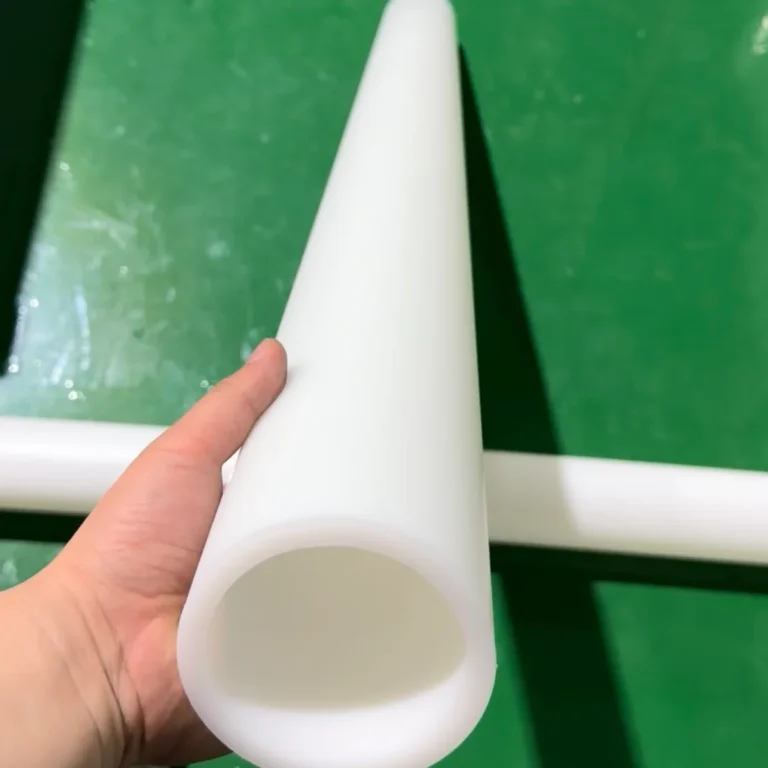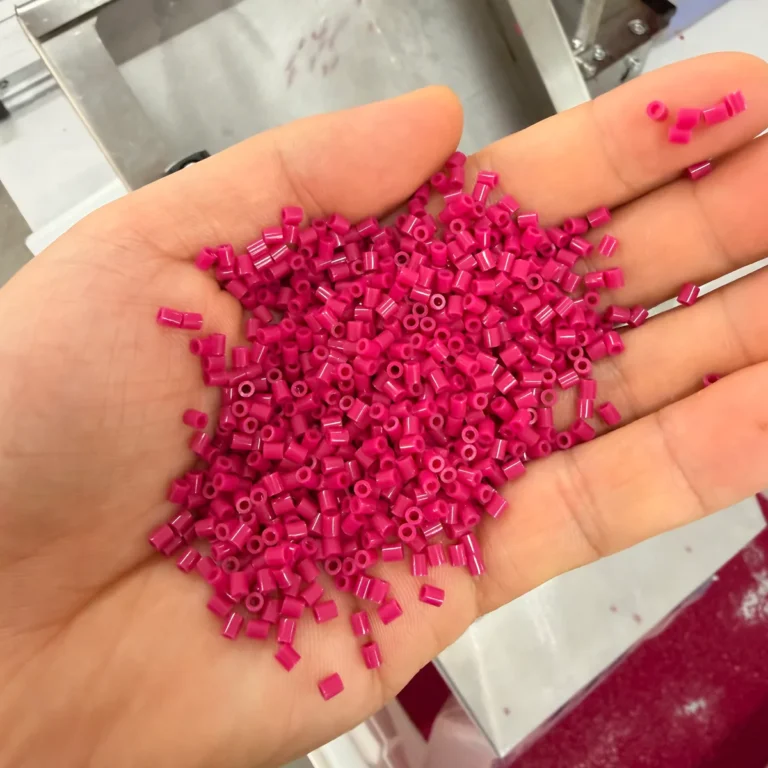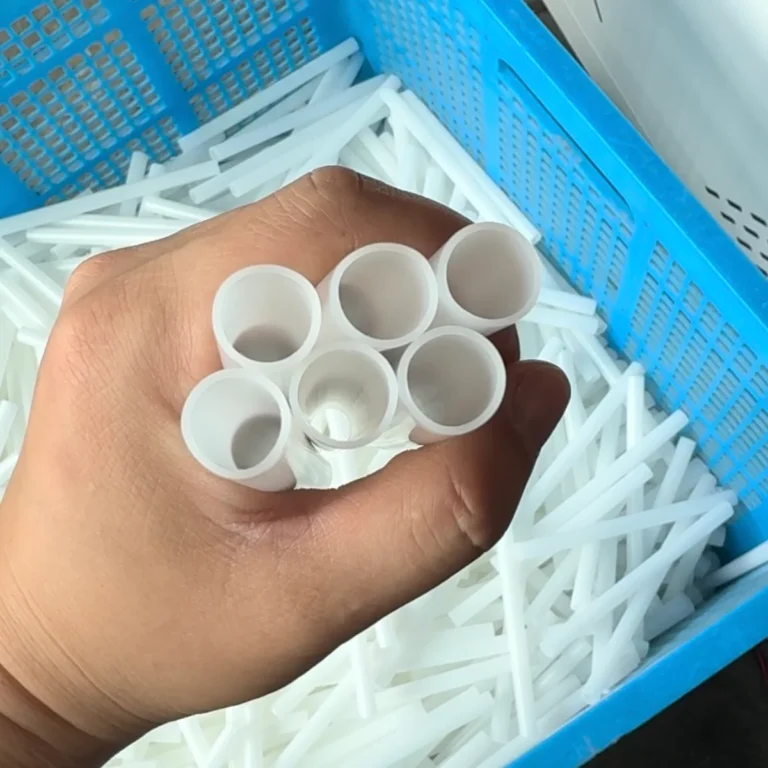
How Does a PE Tube Extrusion Line Work?
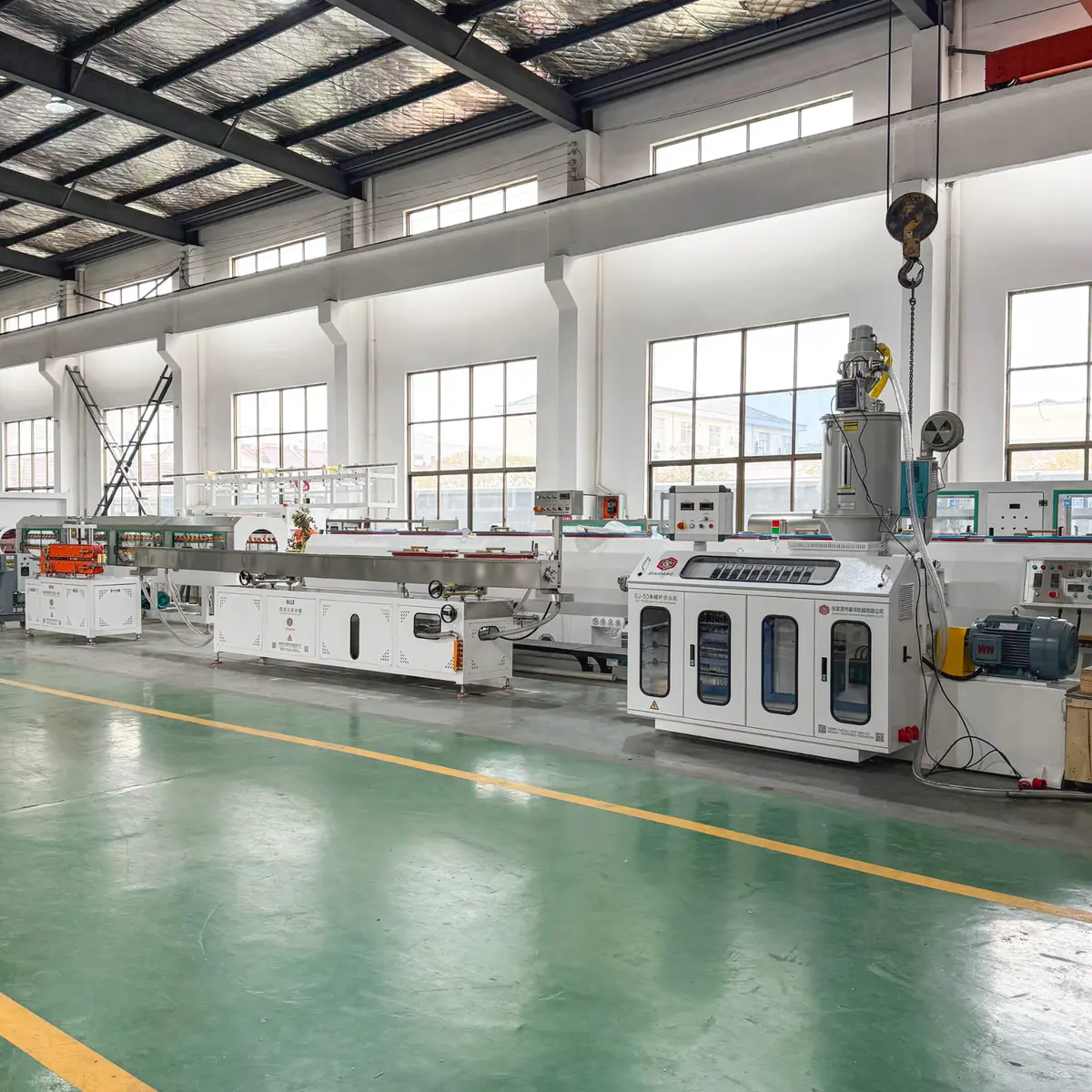
A PE tube extrusion line works by melting PE resin in an extruder, forming it through a die, cooling and sizing it in a vacuum tank, pulling it at a controlled speed, and cutting it into required lengths. For small-diameter PE tubes, a compact and stable line configuration is especially important because tube size accuracy, continuous output, and cutting precision directly affect production quality.
Based on QTech-Machinery’s customer case for a compact PE tube production line, this article explains the full working process, machine configuration, buyer selection steps, required documents, and practical questions buyers often ask before purchasing a PE tube extrusion line.
1. What Is a PE Tube Extrusion Line?
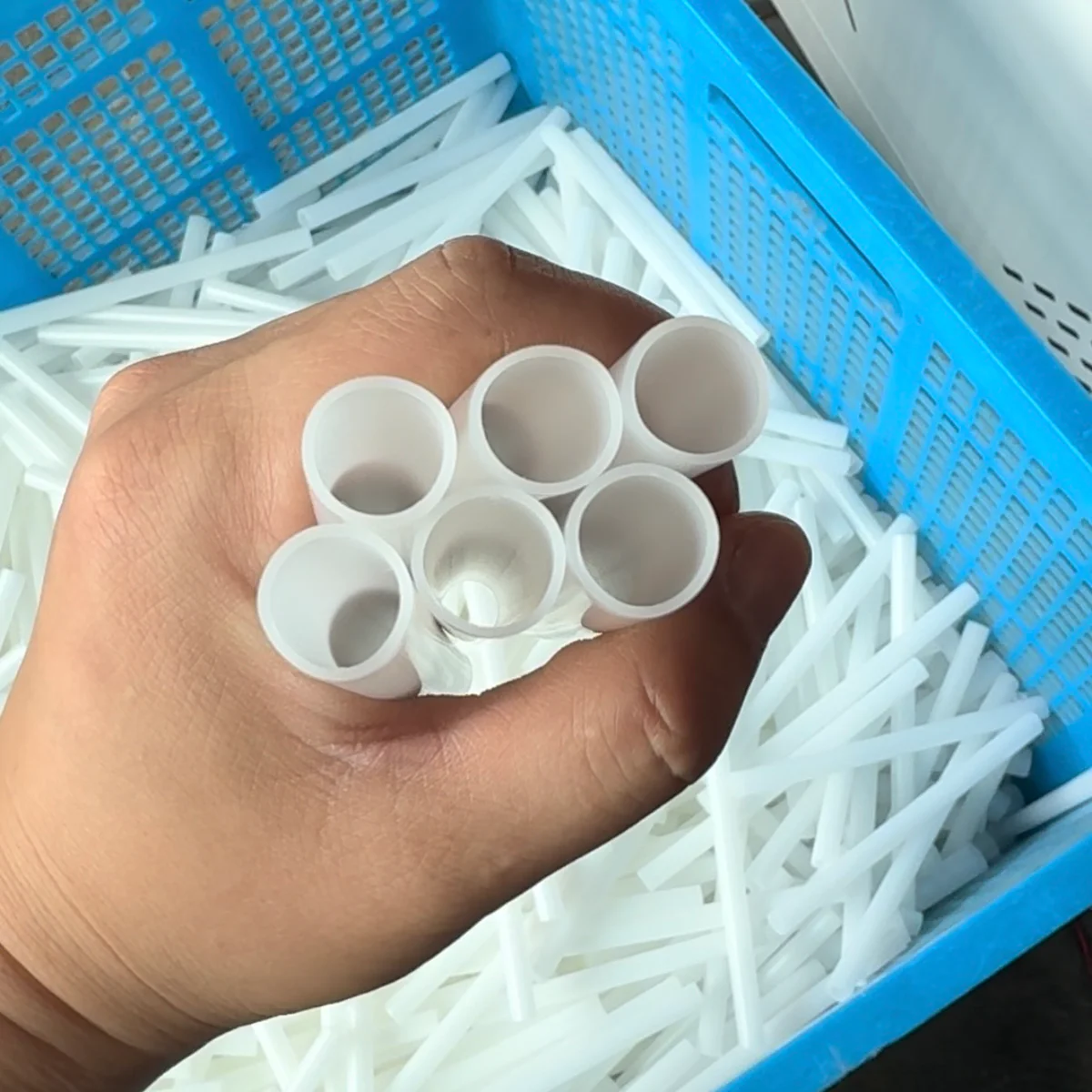
A PE tube extrusion line is a complete production system used to continuously manufacture polyethylene tubes through extrusion, cooling, hauling, and cutting.
A typical PE tube extrusion line includes several main sections:
- Material drying and feeding system
- Single screw extruder
- Extrusion die and sizing tooling
- Vacuum cooling tank
- Haul-off machine
- Cutting machine
- PLC control system
- Optional collection or winding system
For small-diameter PE tube production, QTech-Machinery supplied a compact line including an SJ50/30 single screw extruder, a 4.5m stainless steel vacuum cooling tank, and a servo haul-off with flying knife cutting integrated machine.
This configuration is suitable for applications such as:
- Agricultural irrigation tubes
- Cable protection tubes
- Industrial small tubes
- Packaging tubes
- Medical or laboratory small tubing, depending on material and standards
- Construction and infrastructure tube applications
In the referenced customer case, the overseas buyer needed a line with stable extrusion, compact layout, accurate hauling and cutting, and easy operation, which is a common requirement for factories entering or expanding small PE tube production.
2. How Does the Extrusion Process Start?
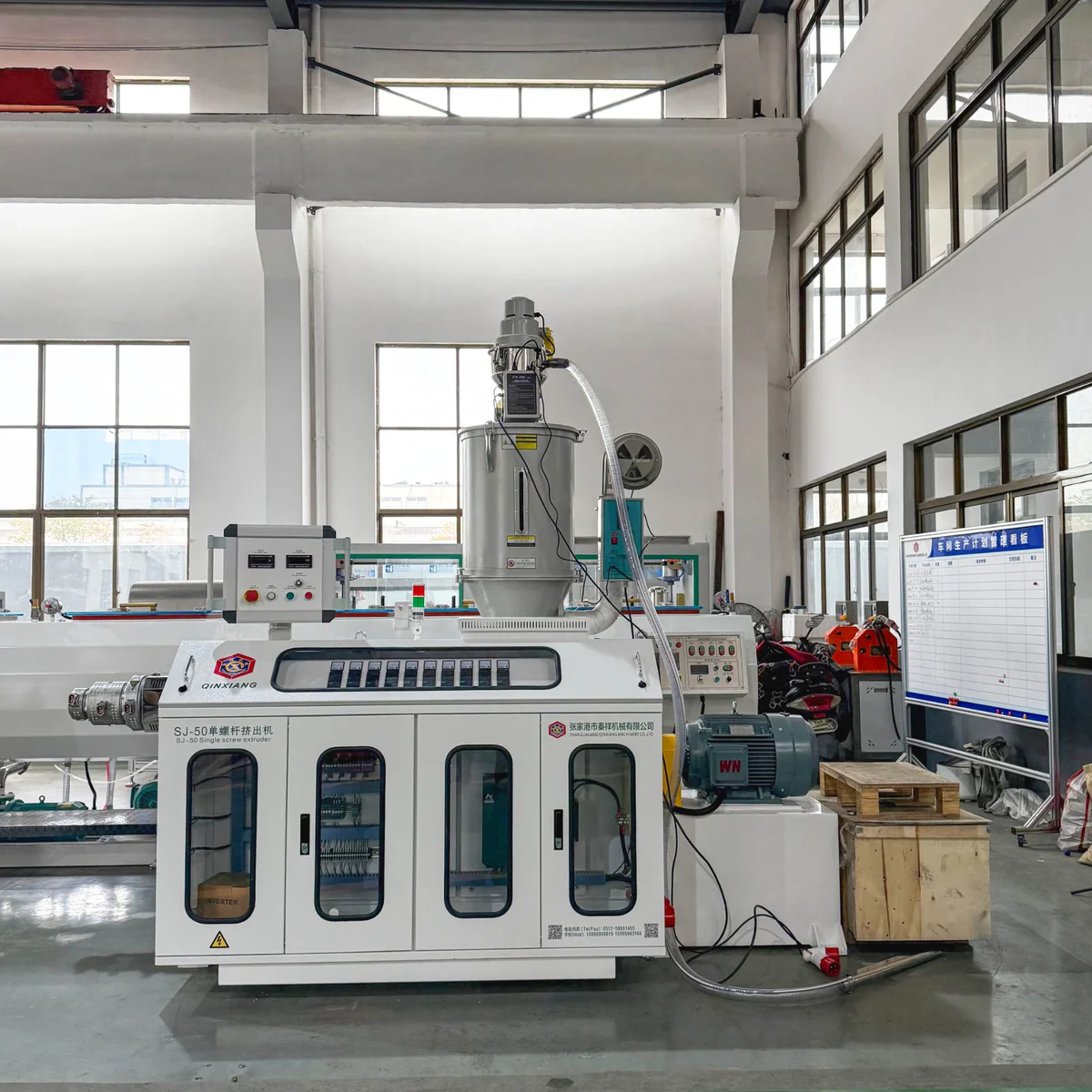
The extrusion process starts when PE raw material is dried, loaded into the hopper, melted inside the screw barrel, and pushed toward the die.
The first working section of a PE tube extrusion line is the extruder. PE resin is usually supplied in pellet form. Before extrusion, the material may pass through a dryer and vacuum loader to keep feeding stable and reduce moisture-related production issues.
In QTech-Machinery’s PE tube line, the main extrusion unit is:
| Item | Configuration |
|---|---|
| Extruder model | SJ50/30 single screw extruder |
| Application | Small PE tube extrusion |
| Output capacity | 20–40 kg/h |
| Screw L/D ratio | 30:1 |
| Screw material | 38CrMoAlA |
| Barrel material | 38CrMoAlA |
| Heating zones | 4 zones |
| Main motor power | 18.5 kW |
| Speed control | Inverter control |
| Auxiliary equipment | 50 kg dryer and vacuum loader |
The 30:1 screw L/D ratio helps improve melting and plasticizing performance. The screw rotates inside the heated barrel, conveying, compressing, melting, and homogenizing the PE material.
The inverter speed control allows operators to adjust the screw speed according to:
- Tube diameter
- Wall thickness
- Required output
- Material type
- Downstream haul-off speed
This is important because extrusion speed must match cooling, pulling, and cutting performance to keep the tube dimension stable.
3. How Is the PE Tube Formed Through the Die?
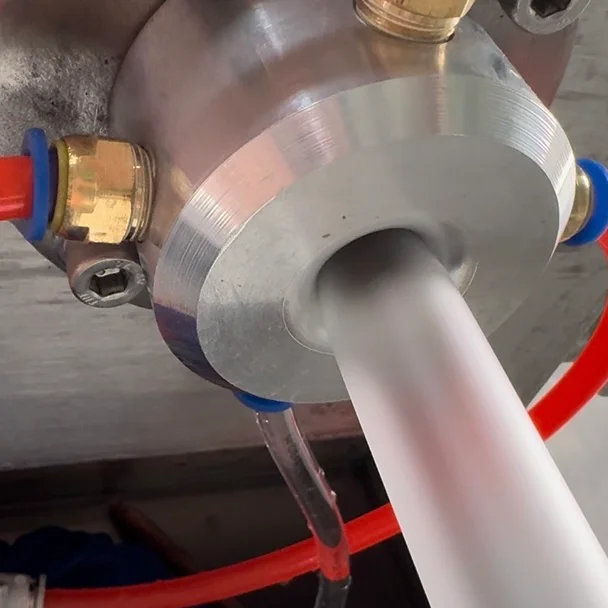
The molten PE material is pushed through a tube die, where it forms a continuous hollow tube shape before entering the cooling and sizing section.
After the PE material is melted and pressurized by the extruder, it flows into the extrusion die. The die shapes the molten plastic into a tube profile.
The die and sizing tooling are selected according to the buyer’s required:
- Tube outer diameter
- Inner diameter
- Wall thickness
- Material grade
- Production speed
- Application requirements
For small-diameter PE tubes, tooling accuracy is very important. Even small changes in melt pressure, die centering, cooling efficiency, or haul-off speed can influence tube roundness and wall thickness.
QTech-Machinery configures the screw, die, downstream equipment, and control system according to each buyer’s production target. As stated in the customer case, every line is configured to the buyer market, meaning the final setup depends on the customer’s product size range, output requirement, raw material, and local voltage.
4. How Does Vacuum Cooling and Sizing Work?
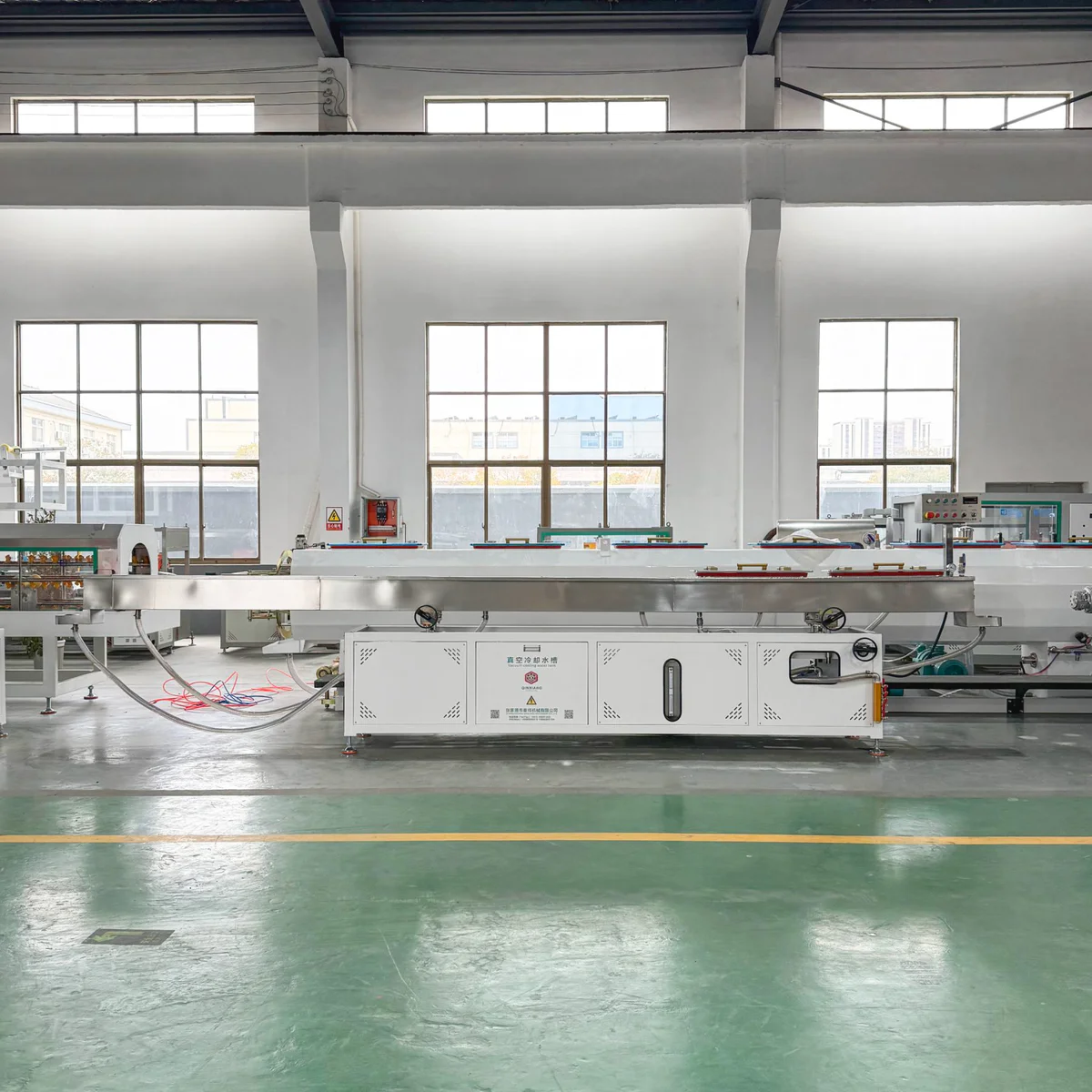
Vacuum cooling and sizing use negative pressure and circulating water to stabilize tube shape, control diameter, and cool the hot PE tube after extrusion.
After the tube leaves the die, it is still hot and soft. It must immediately enter the vacuum cooling tank for sizing and cooling. This section helps maintain tube roundness and dimensional accuracy.
In the QTech-Machinery customer project, the line used a 4.5m stainless steel vacuum cooling tank.
| Item | Configuration |
|---|---|
| Tank size | 4500 × 230 × 235 mm |
| Vacuum tank length | 1000 mm |
| Vacuum tank material | 304 stainless steel, 2 mm thickness |
| Water tank material | 304 stainless steel, 1.5 mm thickness |
| Vacuum pump power | 2.2 kW |
| Vacuum control range | 0 to -50 KPa |
| Vacuum control accuracy | ±0.1 KPa |
| Outlet device | Aluminum alloy air dryer |
| Adjustment method | Forward/backward, left/right, up/down manual adjustment |
| Other features | Water level controller, water temperature display, guide rollers |
The vacuum tank provides negative pressure to help the tube attach to the sizing sleeve or maintain the correct shape during cooling. The circulating water cools the tube and improves dimensional stability.
QTech-Machinery’s advantages in this section include:
- 304 stainless steel construction for corrosion resistance and durability
- Adjustable vacuum range from 0 to -50 KPa
- Vacuum accuracy of ±0.1 KPa
- 3D manual adjustment for easier alignment
- Water temperature display and level control
- Tempered observation cover for easy production monitoring
For small PE tubes, precise vacuum control is especially useful because it helps reduce deformation, unstable diameter, and poor surface appearance.
5. How Does the Haul-Off Unit Control Tube Quality?
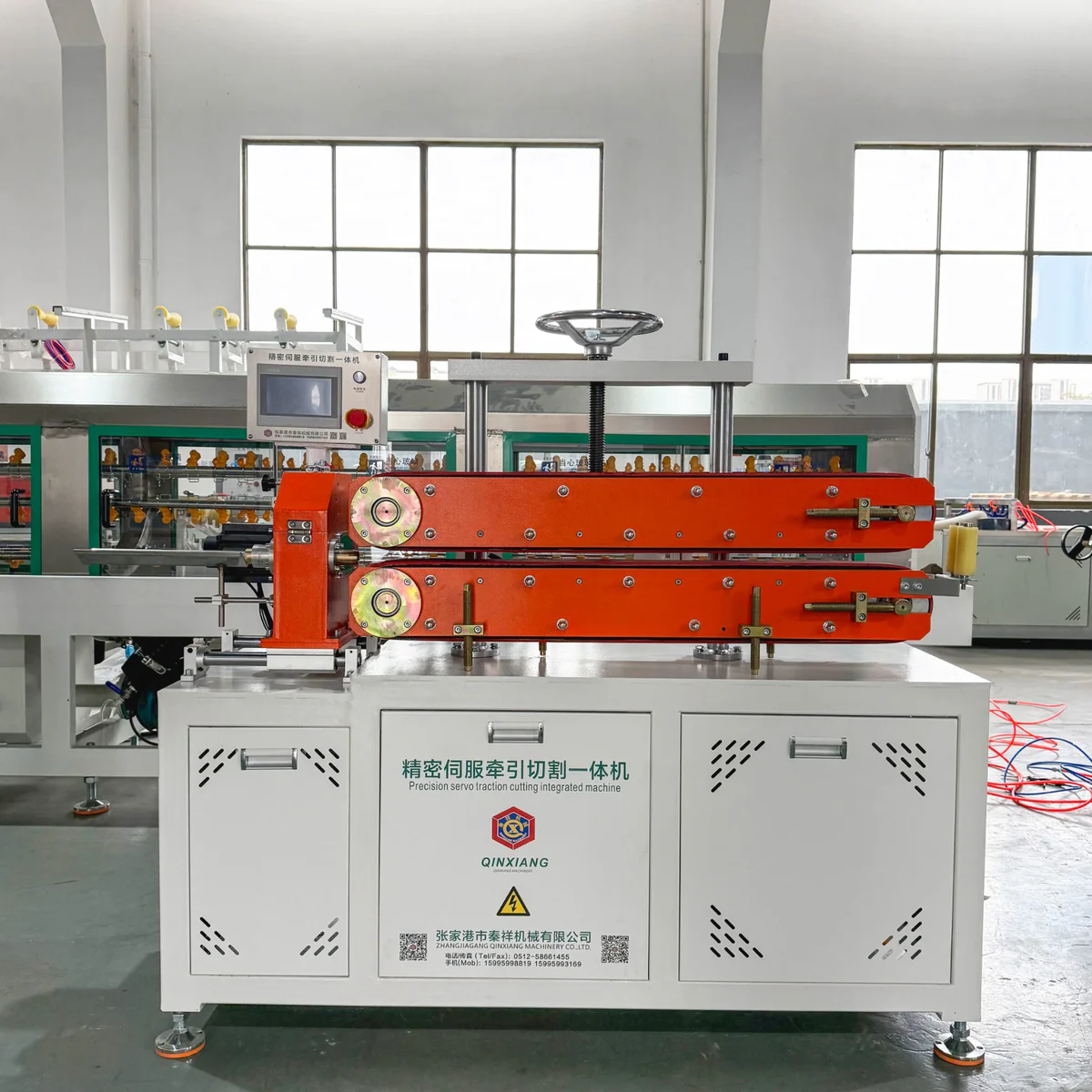
The haul-off unit pulls the tube at a stable speed, and this pulling speed directly affects tube diameter, wall thickness, and production consistency.
The haul-off unit is one of the most important downstream sections in a PE tube extrusion line. It continuously pulls the tube from the cooling tank and keeps the entire extrusion process synchronized.
In QTech-Machinery’s PE tube line, the customer received a servo belt haul-off and flying knife cutting integrated machine.
| Item | Configuration |
|---|---|
| Haul-off frame length | 1000 mm |
| Center height | 1000 mm, adjustable |
| Haul-off belt width | 80 mm |
| Haul-off motor | 1 kW servo motor × 2 |
| Control system | PLC control |
| Electrical components | Delixi and Schneider components |
Servo haul-off provides more accurate speed control compared with simple mechanical or standard motor systems. This helps maintain stable tube size during continuous operation.
If the haul-off speed is too fast, the tube may become thinner. If it is too slow, the tube wall may become too thick or unstable. Therefore, synchronized speed control between the extruder and haul-off machine is critical.
QTech-Machinery’s servo haul-off design gives buyers these advantages:
- Stable pulling speed
- Better tube dimension control
- Easy adjustment through PLC
- Suitable for continuous small tube production
- Integrated design with cutting unit to save space
6. How Is the PE Tube Cut During Continuous Production?
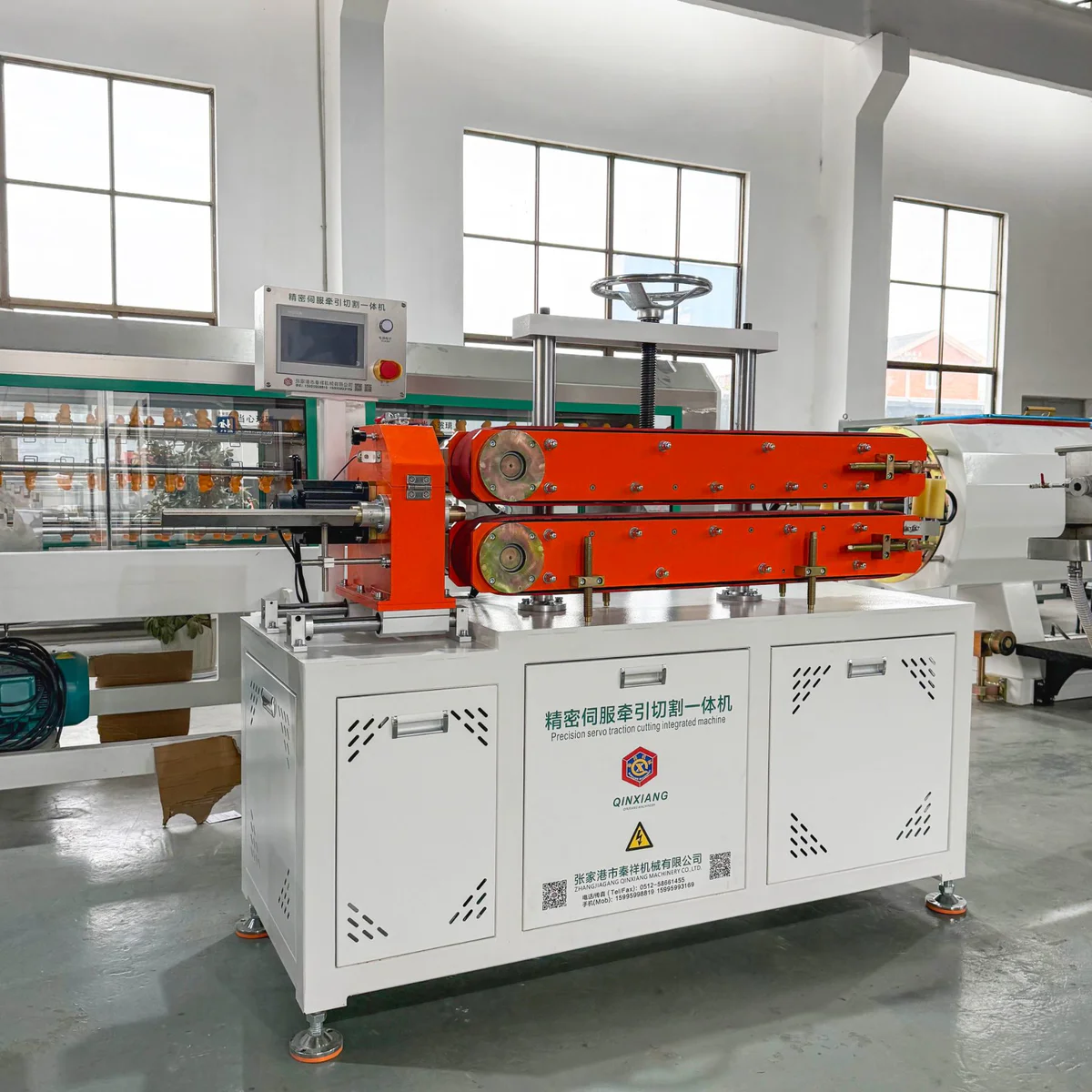
The PE tube is cut online by a rotary flying knife system, allowing continuous production without stopping the extrusion line.
After the tube is cooled and pulled forward, it enters the cutting section. For continuous PE tube production, the cutter must work in synchronization with the haul-off unit.
The QTech-Machinery line uses a rotary flying knife cutting system.
| Item | Configuration |
|---|---|
| Cutting method | Rotary flying knife cutting |
| Cutting motor | 1.5 kW servo motor |
| Clamping method | Copper clamp, customized size |
| Control system | PLC control |
The flying knife cutter moves and cuts while the tube continues running. This avoids stopping the production line for each cut, improving production efficiency.
This system is suitable for buyers who need:
- Continuous online cutting
- Accurate cut length
- Clean tube end quality
- Stable cutting during long production runs
- Adjustable cutting length through PLC control
The customized copper clamp helps hold the tube during cutting and can be designed according to tube size.
7. What Are the Main Advantages of QTech-Machinery’s PE Tube Extrusion Line?
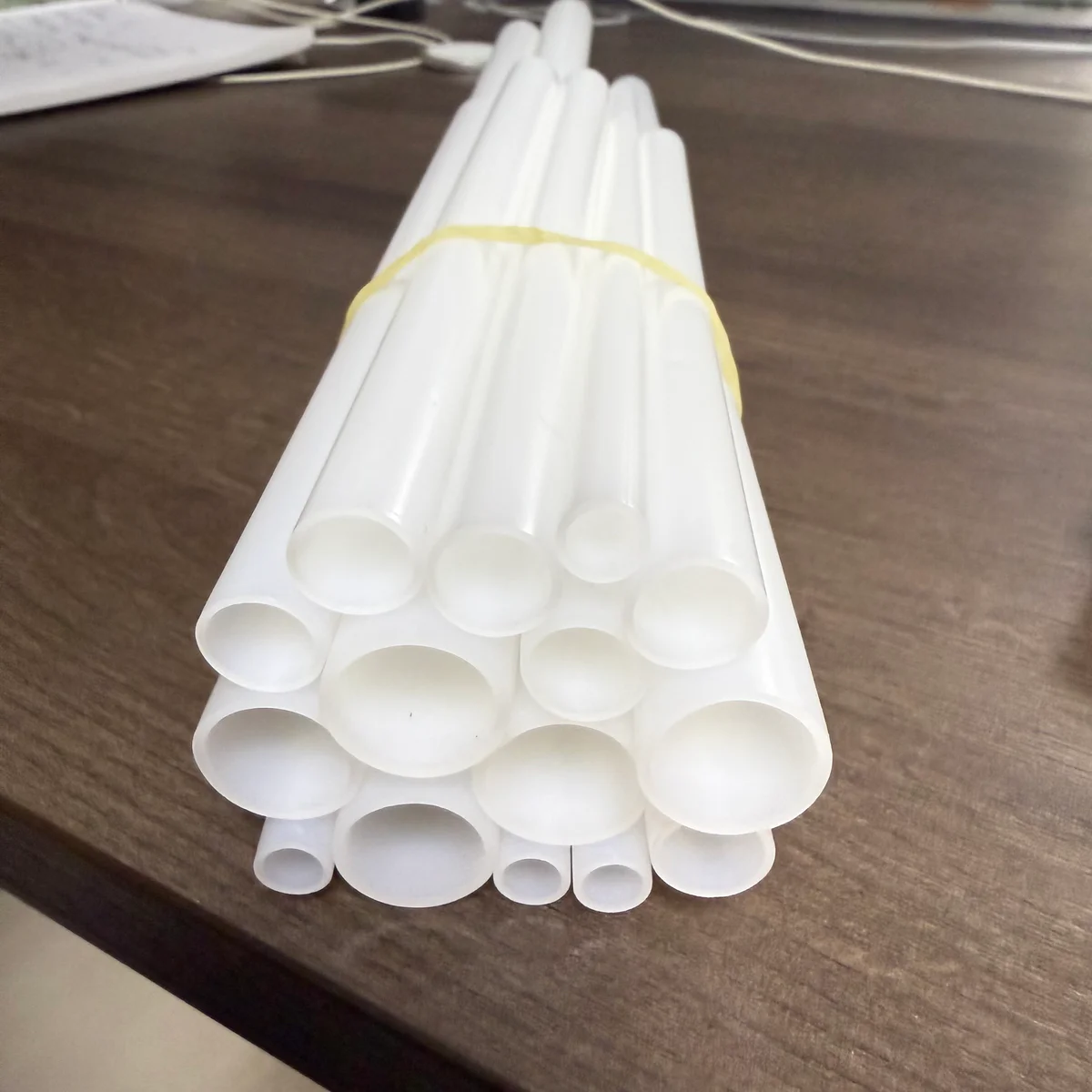
QTech-Machinery’s PE tube extrusion line offers compact layout, stable extrusion, stainless steel vacuum cooling, servo control, precise cutting, and customized configuration.
Based on the customer case, QTech-Machinery supplied a complete solution for an overseas customer who needed a compact and stable small PE tube production line.
Main advantages include:
| Advantage | Explanation |
|---|---|
| Compact layout | Suitable for factories with limited workshop space |
| Stable extrusion | SJ50/30 extruder with 30:1 screw L/D ratio supports continuous production |
| Durable cooling tank | 304 stainless steel structure improves service life |
| Accurate vacuum control | 0 to -50 KPa vacuum range with ±0.1 KPa accuracy |
| Servo haul-off | Helps keep pulling speed stable and tube size consistent |
| Flying knife cutting | Supports continuous online cutting without stopping production |
| PLC control | Easier operation and production adjustment |
| Customized configuration | Screw, die, voltage, downstream, and control system can be matched to buyer needs |
| Full run test | The line can be tested before delivery to confirm performance |
The case also shows QTech-Machinery’s ability to support overseas buyers with customized voltage, full machine testing, project photos, videos, packing, and application-based configuration.
8. How Should Buyers Choose the Right PE Tube Extrusion Line?
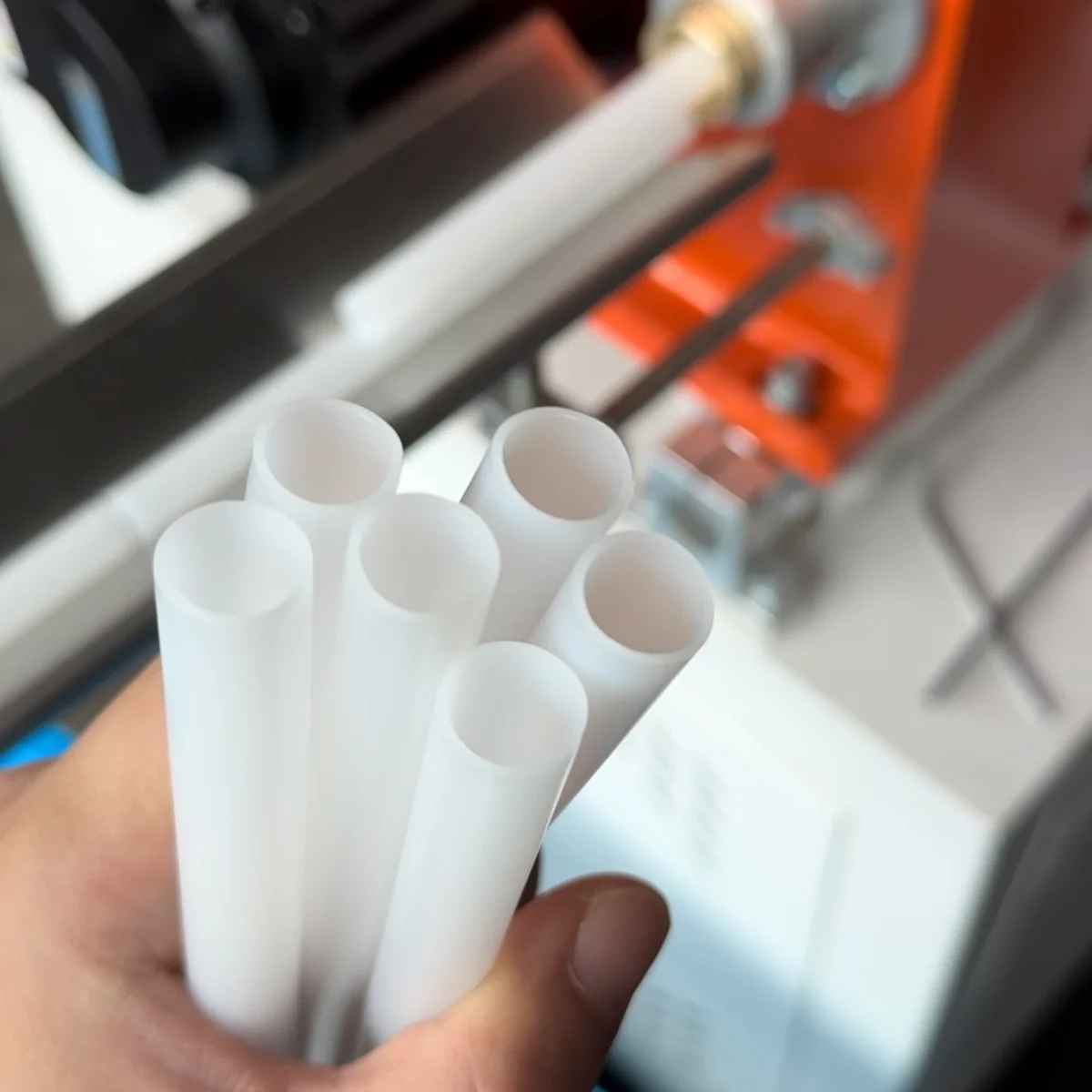
Buyers should choose a PE tube extrusion line based on tube size, output, material, workshop layout, automation level, cutting method, voltage, and supplier support.
Before purchasing a PE tube extrusion line, customers should not only compare price. They should confirm whether the line can actually match their product requirements and factory conditions.
Step-by-step selection guide
| Step | What Buyers Should Confirm | Why It Matters |
|---|---|---|
| 1 | Tube outer diameter and wall thickness | Determines die, sizing sleeve, haul-off, and cutter design |
| 2 | Raw material | PE, HDPE, LLDPE, PP, PLA and other materials may require different screw or temperature settings |
| 3 | Required output | Helps select extruder model and motor power |
| 4 | Tube application | Irrigation, cable protection, packaging, industrial use, etc. affect quality requirements |
| 5 | Cutting length | Determines cutter type and control system |
| 6 | Workshop space | Compact or extended layout should be planned in advance |
| 7 | Local voltage | Machine electrical system must match local factory power |
| 8 | Automation level | Servo control and PLC improve operation accuracy |
| 9 | Testing requirement | Full run test helps reduce startup risk |
| 10 | Documents and after-sales support | Installation, operation, and maintenance depend on proper support |
For example, in the QTech-Machinery case, the customer needed small PE tube production with stable output, compact layout, easy maintenance, and accurate hauling and cutting. QTech-Machinery configured a complete line accordingly.
Practical Configuration Table for This PE Tube Extrusion Line
| Section | Machine | Key Function | QTech-Machinery Configuration |
|---|---|---|---|
| Material handling | Dryer and vacuum loader | Dry and feed PE material | 50 kg dryer and vacuum loader |
| Extrusion | SJ50/30 single screw extruder | Melt and plasticize PE resin | 20–40 kg/h, 18.5 kW motor, 30:1 screw |
| Forming | Tube die | Shape molten PE into tube | Customized according to tube size |
| Cooling and sizing | 4.5m vacuum cooling tank | Cool and stabilize tube diameter | 304 stainless steel, 0 to -50 KPa vacuum |
| Hauling | Servo belt haul-off | Pull tube at stable speed | 1 kW servo motor × 2, 80 mm belt |
| Cutting | Rotary flying knife cutter | Online length cutting | 1.5 kW servo motor, copper clamp |
| Control | PLC system | Coordinate line operation | PLC control, Delixi and Schneider components |
What Products Can QTech-Machinery Provide?
QTech-Machinery can provide not only PE tube extrusion lines but also related plastic extrusion and recycling equipment.
Product list
| Product Category | Available Machines |
|---|---|
| PE tube extrusion line | Small-diameter PE tube line, HDPE tube line, customized PE pipe/tube line |
| Plastic pipe making machine | PE pipe line, PP pipe line, PVC pipe line, irrigation pipe line |
| Plastic profile extrusion line | PVC profile line, WPC profile line, plastic strip/profile line |
| Plastic sheet extrusion line | PP/PE sheet line, PET sheet line, ABS sheet line |
| Plastic recycling line | Film recycling line, rigid plastic recycling line, washing and pelletizing systems |
| Auxiliary equipment | Dryer, vacuum loader, crusher, mixer, chiller, mold temperature controller |
| Downstream equipment | Vacuum tank, cooling tank, haul-off, cutter, winder, stacker |
What Documents Can We Provide Before and After Order?
For international buyers, complete documentation is important for quotation approval, installation, customs clearance, and factory operation.
Document list
| Stage | Documents We Can Provide |
|---|---|
| Before quotation | Technical proposal, machine configuration sheet, layout drawing, optional configuration list |
| Before production | Proforma invoice, production schedule, voltage confirmation, machine layout confirmation |
| During production | Production photos, assembly photos, electrical cabinet photos, project progress updates |
| Before delivery | Test video, inspection photos, packing photos, machine checklist |
| Shipping stage | Commercial invoice, packing list, bill of lading, certificate of origin if required |
| Installation stage | Operation manual, electrical diagram, installation guide, maintenance instructions |
| After-sales stage | Spare parts list, troubleshooting guide, remote technical support records |
Customer Case Reference: Compact PE Tube Production Line
QTech-Machinery supplied a complete PE tube production line for an overseas customer who needed a compact and stable solution for small-diameter PE tube manufacturing.
The customer required:
- Stable extrusion performance
- Suitable output for small PE tube production
- Compact equipment layout
- Accurate hauling and cutting
- Easy operation and maintenance
QTech-Machinery supplied:
- SJ50/30 single screw extruder
- 4.5m stainless steel vacuum cooling tank
- Servo belt haul-off and flying knife cutting integrated machine
This solution helped the customer achieve continuous, stable, and efficient production.
Read the full case here:
Customer Case: PE Tube Production Line
Recommended Internal Links
You can add these internal links to improve SEO and help visitors explore related pages:
- QTech-Machinery Home
- Customer Case: PE Tube Production Line
- QTech-Machinery Cases
- Send Inquiry to QTech-Machinery
- Chat With Maggie for a Similar PE Tube Line
External Forum and Industry Reference Notes
In plastic extrusion discussions, operators often emphasize that stable haul-off speed, correct die alignment, cooling control, and material consistency are key factors for producing accurate tube dimensions.
For additional practical discussions and industry learning, readers may refer to these external resources:
- Eng-Tips Plastics Engineering Forum — useful for technical discussions about plastics processing, extrusion problems, and troubleshooting.
- Reddit r/Plastics — community discussions about plastic materials, processing, and manufacturing questions.
- Reddit r/Manufacturing — practical manufacturing discussions including production setup, equipment selection, and factory operation.
- The Plastics Pipe Institute — industry information about plastic pipe materials, applications, and standards.
These references are helpful for buyers who want to better understand common production concerns such as melt stability, tube ovality, cooling length, puller synchronization, and quality inspection in plastic tube extrusion.
FAQ for Buyers
What output can this PE tube extrusion line reach?
This line configuration can reach approximately 20–40 kg/h, depending on tube size, material, wall thickness, and production settings.
Can the machine be customized for my local voltage?
Yes. QTech-Machinery can configure voltage according to the buyer’s local factory requirements.
Can I use this line for HDPE or LLDPE tubes?
Yes. The line can be configured for PE, HDPE, LLDPE, and other suitable materials depending on the final tube application.
Is this line suitable for small workshops?
Yes. The compact layout makes it suitable for factories that need efficient production in limited workshop space.
Can QTech-Machinery test the line before delivery?
Yes. Full run testing, production photos, videos, and inspection records can be provided before shipment.
Conclusion
A PE tube extrusion line works through a continuous process of material feeding, plasticizing, tube forming, vacuum cooling, servo hauling, and online cutting. For small-diameter PE tube production, machine stability and synchronization are especially important.
QTech-Machinery’s compact PE tube production line combines an SJ50/30 single screw extruder, 304 stainless steel vacuum cooling tank, servo haul-off, rotary flying knife cutter, and PLC control system. This configuration helps buyers achieve stable production, accurate tube sizing, easy operation, and reliable continuous output.
If you are planning a similar PE tube project, you can send your tube size, material, output requirement, voltage, and workshop layout to QTech-Machinery for a customized solution.