How Are Plastic Straws Made by Extrusion Line?
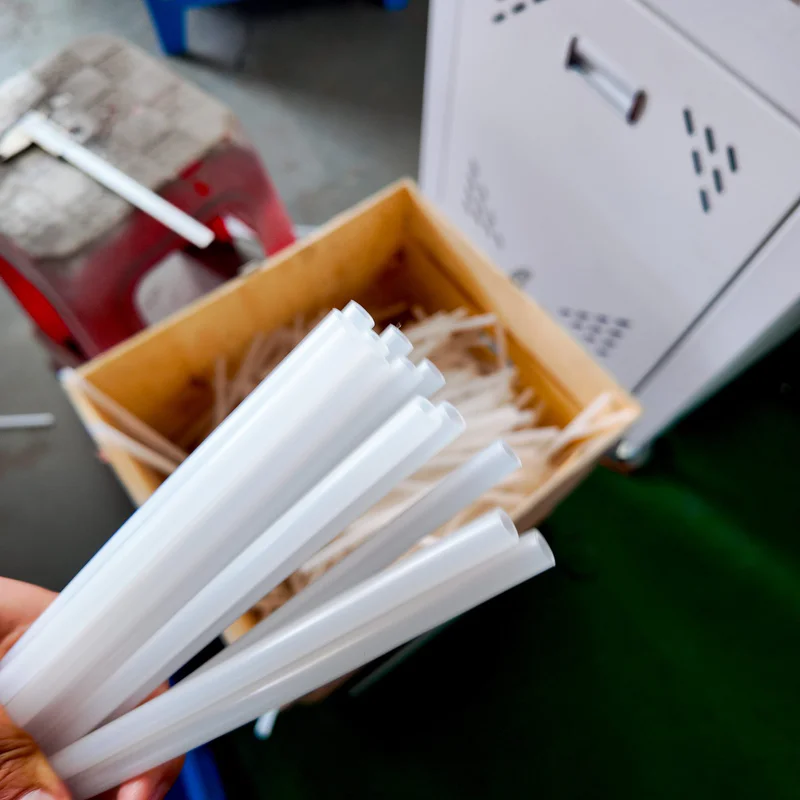
Plastic straws are made by a continuous extrusion process in which thermoplastic materials such as LLDPE, PP, PE, or PLA are fed into an extruder, melted, shaped through a small tube die, cooled and calibrated in a stainless steel water trough, pulled by a servo haul-off unit, cut to length, and optionally chamfered or slit according to the final straw design. A well-configured straw pipe extrusion line can produce smooth, accurate, lightweight, and consistent straw tubes for food and beverage packaging, industrial straw production, and medical tubing applications.
Compared with large pipe extrusion, straw extrusion requires smaller tube dimensions, higher speed control, accurate cooling, clean cutting, and stable continuous operation. Based on the QTech Machinery straw pipe extrusion line case, a successful production line should be customized according to material type, output target, straw diameter, wall thickness, center height, operation direction, cutting requirement, and factory layout.
Reference case: Straw Pipe Extrusion Line
1. How are plastic straws made by extrusion line?
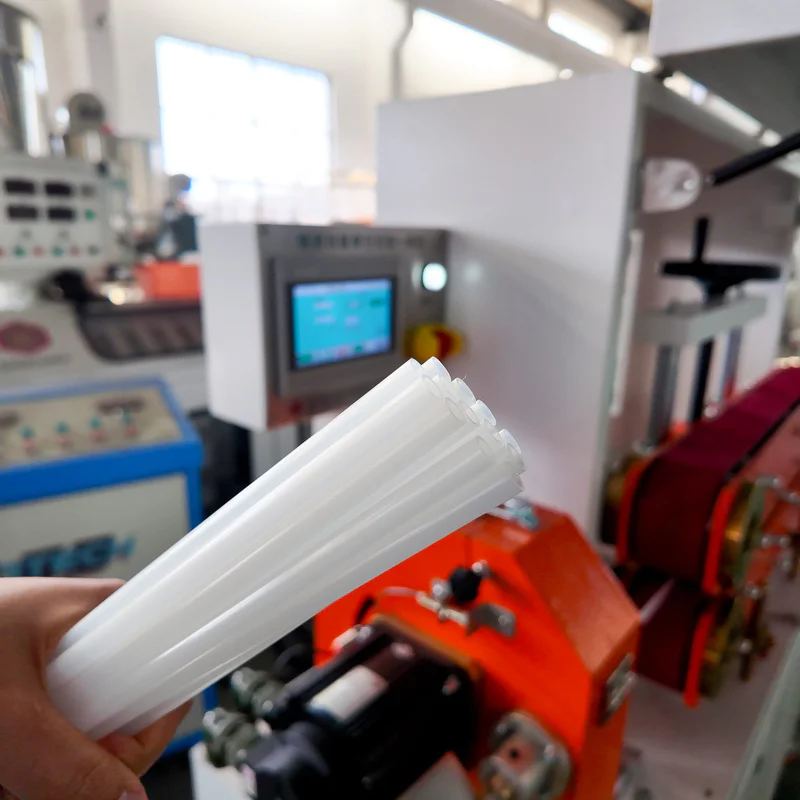
Plastic straws are made by melting plastic pellets, extruding them through a tube die, cooling the formed straw pipe, hauling it at a controlled speed, and cutting it into finished straw lengths.
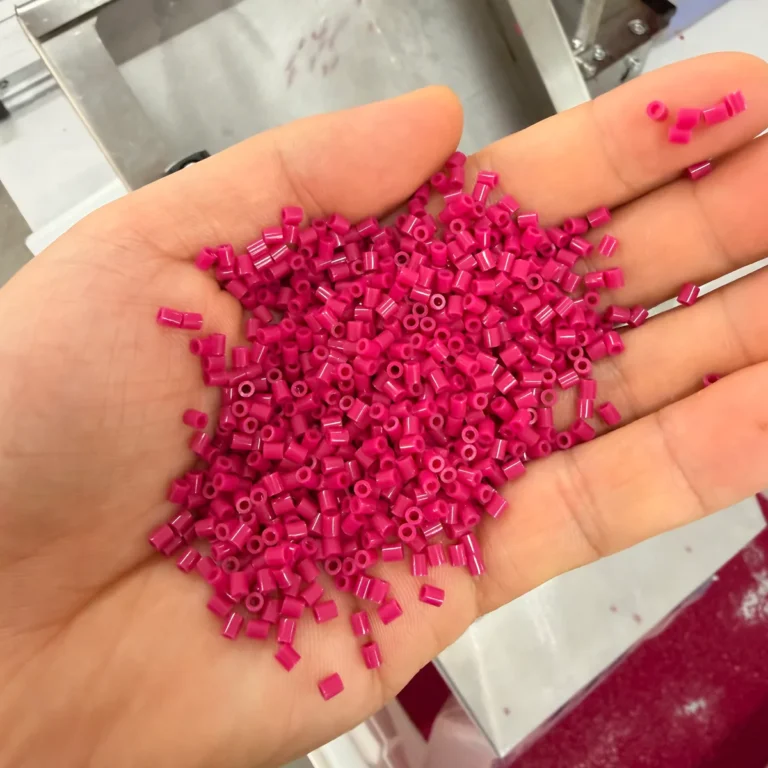
The plastic straw extrusion process is continuous. First, plastic pellets are loaded into the feeding system of the extruder. The pellets are heated and plasticized inside the screw and barrel. The molten plastic is then pushed through a precision straw tube die to form a small hollow tube. After the tube exits the die, it enters a vacuum cooling and calibration water trough, where the shape, diameter, and surface quality are stabilized. The servo belt haul-off unit pulls the tube forward at a constant speed, and the cutting unit cuts it into required lengths.
Typical plastic straw extrusion process:
| Process Step | Function |
|---|---|
| Material feeding | Supplies plastic pellets to the extruder |
| Melting and plasticizing | Converts solid pellets into uniform melt |
| Tube die forming | Shapes the melt into a hollow straw tube |
| Vacuum cooling calibration | Controls diameter and roundness |
| Water cooling | Stabilizes straw dimensions |
| Servo haul-off | Pulls straw pipe at constant speed |
| Cutting | Cuts straw pipe to required length |
| Chamfering or slitting | Finishes special straw ends or openings |
| Collection | Collects finished straw tubes |
In the QTech Machinery case, the straw pipe extrusion line was designed for materials such as LLDPE, PP, PE, and PLA, with a production capacity of 10–40 kg/h, helping the customer achieve stable, flexible, and high-quality straw pipe production.
2. What materials can be used for plastic straw extrusion?
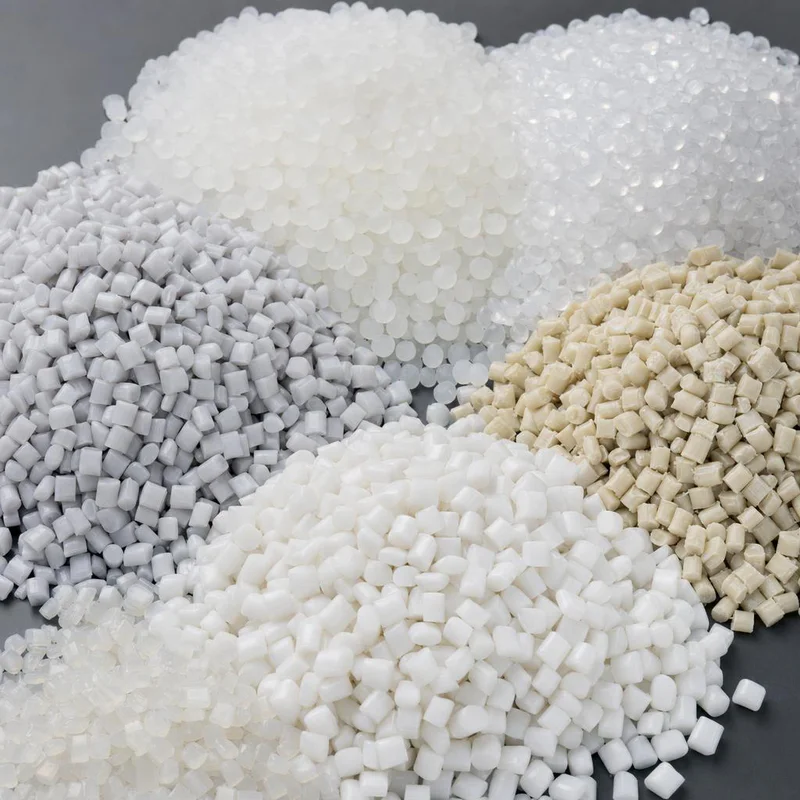
Plastic straw extrusion lines can process materials such as LLDPE, PP, PE, HDPE, and PLA depending on product application and market requirements.
Different straw materials have different properties. The choice of material affects processing temperature, flexibility, stiffness, surface finish, cutting performance, and environmental positioning.
According to the QTech case, the straw pipe extrusion line was designed for LLDPE, PP, PE, and the project material list also includes PLA.
Common straw materials include:
| Material | Features | Typical Application |
|---|---|---|
| LLDPE | Flexible, soft, good impact resistance | Flexible drinking straws, soft tubes |
| PP | Lightweight, good stiffness, heat resistance | Standard drinking straws |
| PE/HDPE | Tough, chemical-resistant, stable processing | Industrial straw pipes or protection tubes |
| PLA | Bio-based, compostable under suitable conditions | Eco-friendly straw products |
| Modified plastics | Customized color, stiffness, or performance | Special straw or tube products |
For food and beverage packaging, customers should confirm whether the material complies with local food-contact regulations. For industrial straw production or medical tubing, material performance and cleanliness requirements may be different.
The extruder screw and temperature settings should be matched to the selected material. For example, PP usually needs different barrel temperature settings than PE or PLA. PLA also requires more careful drying and temperature control to avoid degradation.
3. What is the role of the precision servo single-screw extruder?
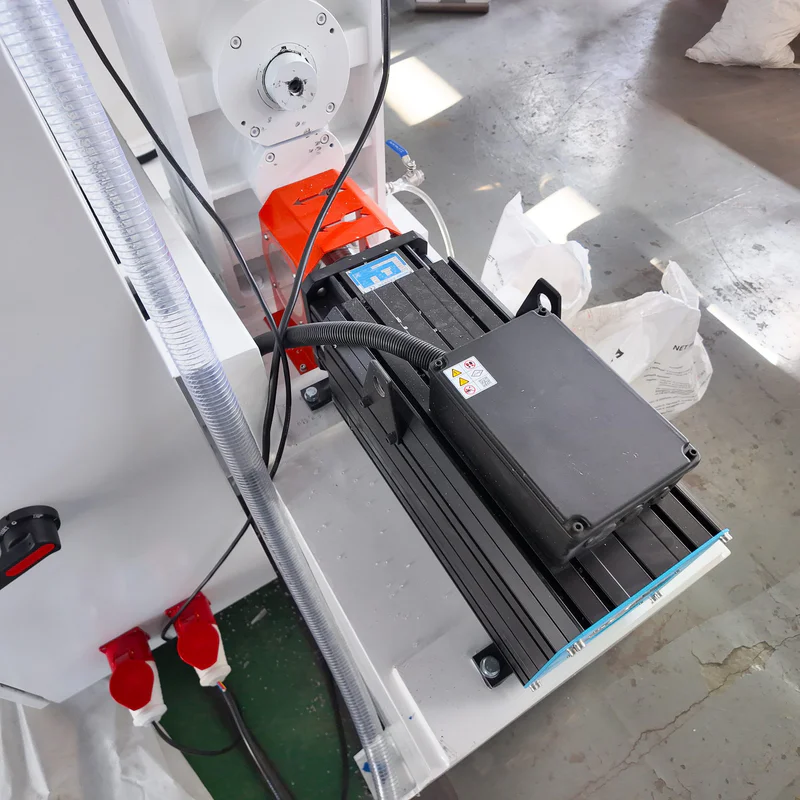
The precision servo single-screw extruder melts and delivers plastic material steadily, which directly affects straw diameter, surface finish, output stability, and energy consumption.
The extruder is the core machine of a plastic straw extrusion line. For straw pipe production, output does not need to be as high as large pipe extrusion, but stability and precision are very important. Small changes in extruder speed or melt pressure can cause straw diameter variation, uneven wall thickness, or surface defects.
In the QTech straw pipe extrusion line case, the main machine was a QX-SJ50/28 precision servo single-screw extruder.
Key configuration:
| Item | Configuration |
|---|---|
| Extruder model | QX-SJ50/28 |
| Production capacity | 10–40 kg/h |
| Motor power | 22 kW |
| Motor type | Inovance permanent magnet synchronous motor |
| Screw diameter | 50 mm |
| Screw L/D ratio | 28:1 |
| Operation | Touchscreen operation |
| Drive | Variable frequency drive |
| Temperature control | Advanced temperature control |
| Material compatibility | LLDPE, PP, PE |
The 22 kW Inovance permanent magnet synchronous motor helps improve speed accuracy and energy efficiency. The 50 mm screw with 28:1 L/D ratio is suitable for stable plasticizing of straw materials. Touchscreen operation and advanced temperature control make daily production easier for operators.
For customers who need higher precision or additional production monitoring, our uploaded SJ65/28 single screw servo extruder configuration can also be used in customized tube extrusion projects. It features a 37 kW Inovance servo motor, Siemens PLC, MCGS touchscreen, Ethernet communication, optimized BM screw structure, and 38CrMoALA nitrided screw and barrel, supporting stable output, long service life, and better process data access.
4. How does the vacuum cooling calibration water trough work?
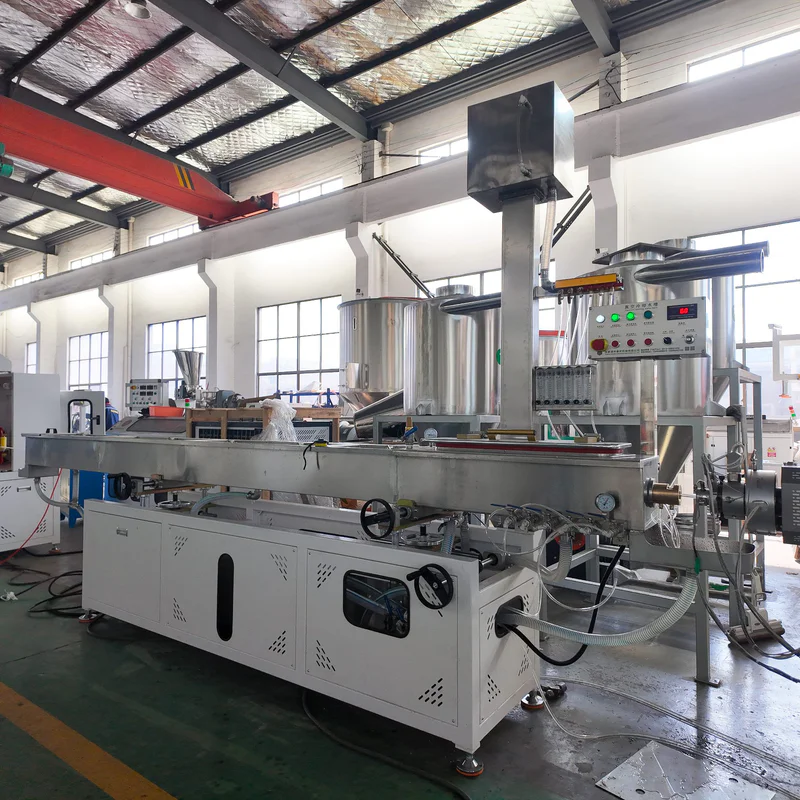
The vacuum cooling calibration water trough cools the straw tube, controls its diameter, stabilizes roundness, and improves final surface quality.
After the molten straw tube exits the die, it is still soft and hot. The vacuum cooling calibration water trough helps shape and cool the tube quickly. For small straw pipes, even slight cooling imbalance can cause bending, ovality, or size instability.
In the QTech straw pipe extrusion line case, the cooling calibration section was the QX-SC4500 vacuum cooling calibration water trough line.
| Item | Configuration |
|---|---|
| Model | QX-SC4500 |
| Dimensions | 4500 × 230 × 235 mm |
| Material | 304 stainless steel |
| Thickness | 2 mm |
| Features | Water flow control, vacuum degree control, drying system |
The 304 stainless steel structure improves corrosion resistance, hygiene, and long-term durability. The precise water flow control helps maintain stable cooling. The vacuum degree control supports accurate straw diameter and roundness. The drying system helps remove water from the straw surface before haul-off and cutting.
Advantages of a good cooling calibration trough:
| Advantage | Benefit |
|---|---|
| Stable cooling | Reduces deformation |
| Vacuum control | Improves diameter accuracy |
| Water flow adjustment | Matches different materials |
| Stainless steel structure | Cleaner and more durable |
| Integrated drying | Better cutting and handling |
| Compact design | Suitable for straw production layout |
For food packaging-related straw production, stainless steel downstream equipment is an important advantage because it supports cleaner operation and easier maintenance.
5. How does the servo belt haul-off and cutting unit work?
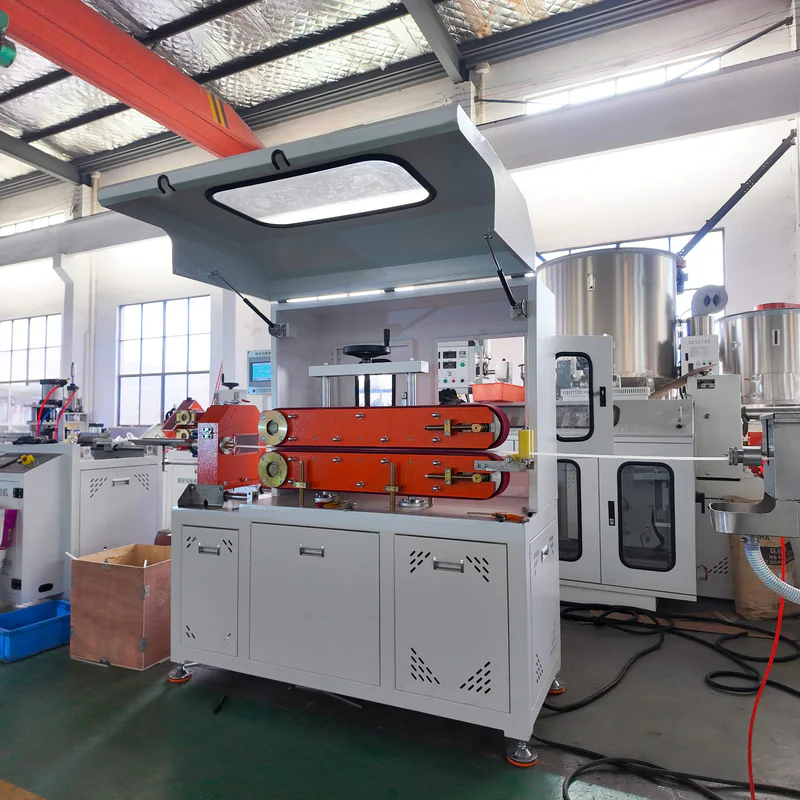
The servo belt haul-off and cutting unit pulls the straw pipe smoothly and cuts it accurately into required lengths.
The haul-off unit must pull the straw pipe at a constant speed. If the pulling speed changes, the straw diameter and wall thickness will also change. For small tubes like straws, precise speed control is essential.
In the QTech case, the line used the QY-CM1200 precision servo belt haul-off and cutting unit.
| Item | Configuration |
|---|---|
| Model | QY-CM1200 |
| Belt width | 80 mm polyurethane belt |
| Motor power | 1 kW × 2 |
| Motor type | Inovance servo motor |
| Reducer | High-precision planetary gear reducer |
| Control | Independent haul-off speed control |
| Function | Smooth traction and cutting |
The 80 mm polyurethane belt provides gentle and stable contact with the straw pipe without damaging the surface. The 1 kW × 2 Inovance servo motors support precise pulling control. The high-precision planetary gear reducer improves transmission accuracy and stability.
A servo haul-off and cutting system helps improve:
- Straw length consistency
- Diameter stability
- Wall thickness uniformity
- Cutting smoothness
- Production speed control
- Lower waste rate
- Less operator adjustment
For straw producers, accurate cutting is directly related to finished product appearance, packaging efficiency, and customer satisfaction.
6. Why are chamfering and slitting machines used after straw extrusion?
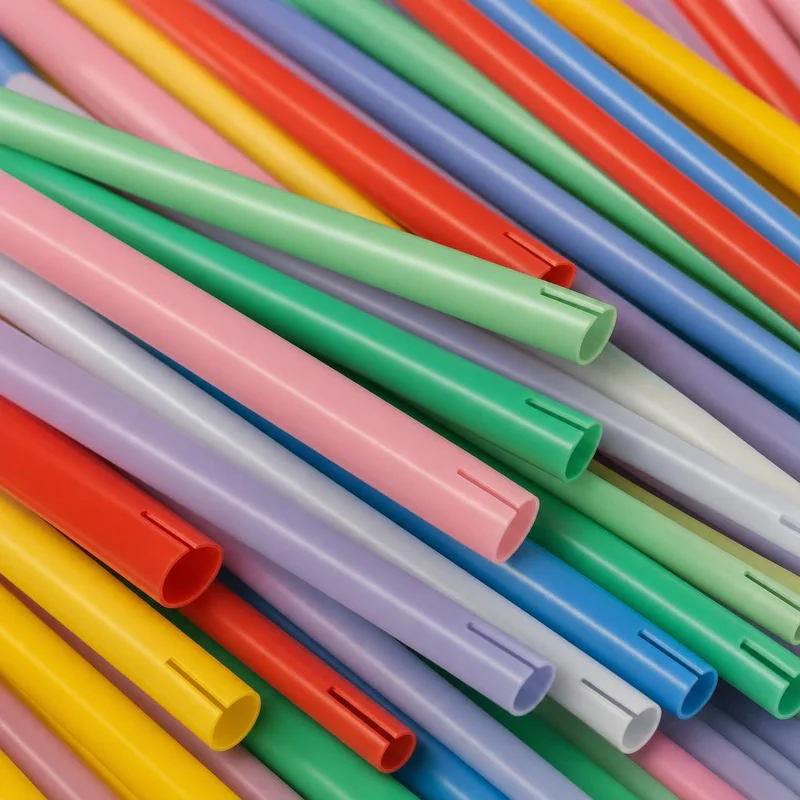
Chamfering and slitting machines provide secondary finishing for straw ends or special straw structures, improving usability and product variety.
After extrusion and cutting, some straw products require additional processing. Chamfering can smooth or shape straw ends, while slitting can create special openings or functional structures depending on the application.
In the QTech straw pipe extrusion case, the line included:
| Equipment | Model | Configuration |
|---|---|---|
| Manual chamfering machine | QX-75M | 1.1 kW AC motor, pneumatic clamping |
| Manual slitting machine | QX-OM1.8 | 1.8 kW servo motor |
The QX-75M manual chamfering machine uses pneumatic clamping and durable construction for precise straw pipe end processing. Chamfered ends can improve appearance, reduce sharp edges, and support specific assembly or packaging requirements.
The QX-OM1.8 manual slitting machine uses a servo motor to support stable slitting work. Slitting can be useful for special straw designs, industrial straw pipe processing, or customized tube applications.
Secondary processing advantages include:
| Processing | Benefit |
|---|---|
| Chamfering | Smooths pipe ends and improves appearance |
| Pneumatic clamping | Holds small tubes securely |
| Slitting | Creates customized openings or structures |
| Servo drive | Improves processing accuracy |
| Manual operation | Flexible for small batches or special orders |
For customers who need different straw types, these optional machines increase product flexibility and expand production capability.
7. How should customers choose a plastic straw extrusion line?
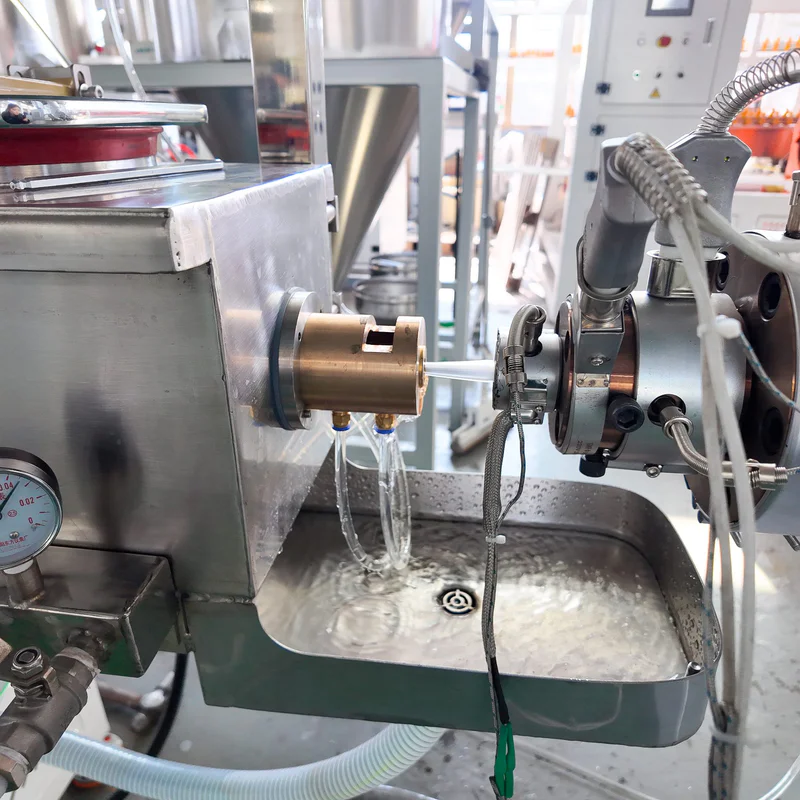
Customers should choose the line according to material, straw diameter, wall thickness, output, cutting length, finishing process, hygiene requirements, voltage, and workshop layout.**
A plastic straw extrusion line should be customized to the buyer’s product type and market demand. Standard drinking straws, flexible straws, PLA straws, industrial straw pipes, and medical tubing may all require different configurations.
Customer Selection Steps
| Step | What to Confirm | Why It Matters |
|---|---|---|
| Step 1 | Material type | LLDPE, PP, PE, HDPE, PLA, or modified material |
| Step 2 | Straw outer diameter | Determines die and calibration design |
| Step 3 | Wall thickness | Affects strength, flexibility, and material cost |
| Step 4 | Cutting length | Determines cutter setup |
| Step 5 | Output target | Determines extruder size and downstream speed |
| Step 6 | Surface requirement | Determines die quality and cooling control |
| Step 7 | Food-contact requirement | Determines material and cleanliness standards |
| Step 8 | Chamfering or slitting | Determines secondary equipment |
| Step 9 | Factory voltage | Configures electrical system |
| Step 10 | Operation direction | Left-to-right or right-to-left layout |
| Step 11 | Center height | Matches workshop and downstream machines |
| Step 12 | Machine color | Supports customer factory standards |
In the QTech case, the customer required material versatility, 10–40 kg/h production capacity, accurate dimensions, smooth finishes, energy efficiency, adjustable center height 1000 ± 50 mm, right-to-left operation, and customized design.
Every QTech line is configured according to the buyer’s target output, raw material, product size range, and local voltage. Our engineers can recommend the correct screw, die, cooling trough, haul-off, cutter, and optional finishing machines for each factory.
8. Why choose QTech Machinery for a plastic straw extrusion line?
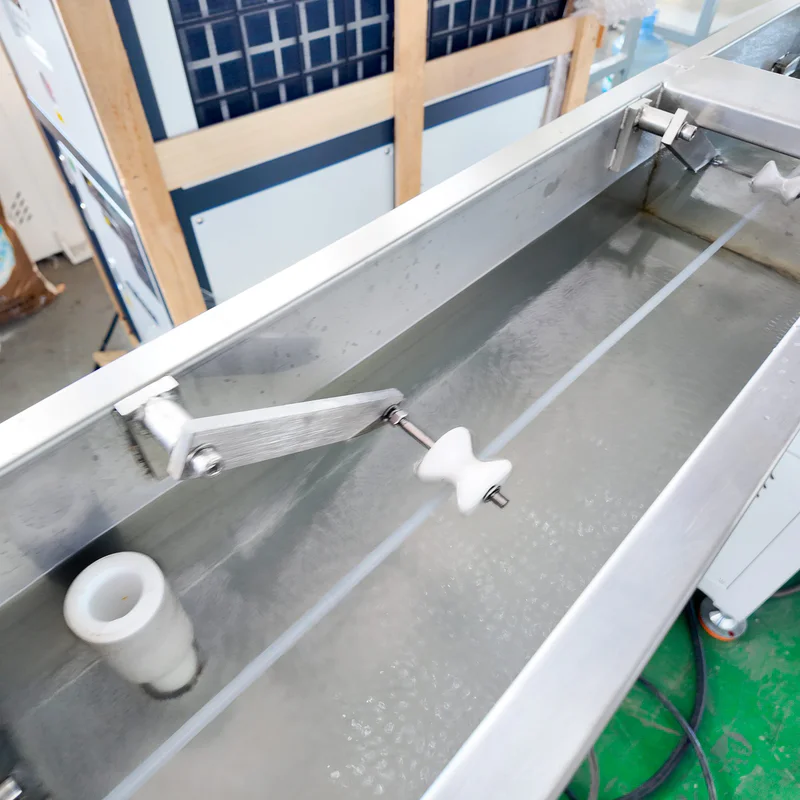
QTech Machinery provides customized straw extrusion solutions with servo extruders, stainless steel cooling troughs, precision haul-off cutting, optional finishing machines, and turnkey support.
A reliable straw extrusion line supplier should not only provide machines but also match the full production process. The extruder, die, cooling trough, haul-off cutter, chamfering machine, slitting machine, control system, and collection method must work together.
In the Straw Pipe Extrusion Line case, QTech Machinery delivered a high-performance solution for producing LLDPE, PP, PE, and PLA straw pipes. The project focused on versatility, efficiency, quality, energy saving, and customized factory integration.
QTech supplied:
- QX-SJ50/28 precision servo single-screw extruder
- QX-SC4500 vacuum cooling calibration water trough
- QY-CM1200 precision servo belt haul-off and cutting unit
- QX-75M manual chamfering machine
- QX-OM1.8 manual slitting machine
- Customized center height and operation direction
- Installation, commissioning, and training support
QTech Machinery’s advantages include:
| QTech Advantage | Customer Benefit |
|---|---|
| Customized straw extrusion design | Matches different straw materials and sizes |
| QX-SJ50/28 precision servo extruder | Stable output for small tube production |
| Inovance permanent magnet synchronous motor | Energy saving and accurate speed control |
| Touchscreen operation | Easier machine control |
| Advanced temperature control | Better material processing |
| 304 stainless steel water trough | Cleaner and more durable |
| Vacuum and water flow control | More accurate straw sizing |
| Servo belt haul-off | Stable traction and dimension control |
| Polyurethane belt | Gentle contact and less surface damage |
| High-precision planetary reducer | Better speed stability |
| Chamfering and slitting options | Supports product diversification |
| Adjustable center height | Easier factory integration |
| OEM and ODM support | Flexible customization |
| Voltage configuration | Suitable for global markets |
| Full run test before shipment | Lower startup risk |
| Quote in 24 hours | Faster project planning |
Recommended internal links:
- QTech Machinery Home
- Plastic Pipe Making Machine
- Plastic Extrusion Machine
- Straw Pipe Extrusion Line Case
- QTech Machinery Cases
Recommended Plastic Straw Extrusion Line Configuration
The following table summarizes the reference configuration from the QTech straw pipe extrusion line case.
| Section | Recommended Configuration |
|---|---|
| Suitable materials | LLDPE, PP, PE, HDPE, PLA |
| Product application | Food and beverage packaging, industrial straw production, medical tubing |
| Main extruder | QX-SJ50/28 precision servo single-screw extruder |
| Production capacity | 10–40 kg/h |
| Motor power | 22 kW |
| Motor type | Inovance permanent magnet synchronous motor |
| Screw diameter | 50 mm |
| Screw L/D ratio | 28:1 |
| Operation | Touchscreen operation |
| Drive system | Variable frequency drive |
| Temperature control | Advanced temperature control |
| Cooling calibration | QX-SC4500 vacuum cooling calibration water trough |
| Trough dimensions | 4500 × 230 × 235 mm |
| Trough material | 304 stainless steel |
| Trough thickness | 2 mm |
| Trough features | Water flow control, vacuum degree control, drying system |
| Haul-off and cutting | QY-CM1200 precision servo belt haul-off and cutting unit |
| Belt width | 80 mm polyurethane belt |
| Haul-off motor | 1 kW × 2 Inovance servo motors |
| Reducer | High-precision planetary gear reducer |
| Control | Independent haul-off speed control |
| Chamfering machine | QX-75M manual chamfering machine |
| Chamfering motor | 1.1 kW AC motor |
| Chamfering feature | Pneumatic clamping |
| Slitting machine | QX-OM1.8 manual slitting machine |
| Slitting motor | 1.8 kW servo motor |
| Center height | 1000 ± 50 mm |
| Operation direction | Right-to-left in reference case |
Products We Can Provide
QTech Machinery can provide complete equipment for plastic straw extrusion and related small tube production projects.
| Product | Function |
|---|---|
| Precision servo single-screw extruder | Melting and extrusion |
| Straw pipe die head | Small tube forming |
| Vacuum cooling calibration water trough | Diameter control and cooling |
| Drying system | Removes water from straw surface |
| Servo belt haul-off unit | Stable tube pulling |
| Cutting unit | Cuts straw pipe to length |
| Manual chamfering machine | Straw end finishing |
| Manual slitting machine | Creates custom slits or openings |
| Conveyor or collection system | Finished straw handling |
| Material feeding system | Automatic material supply |
| Hopper dryer | Material pre-drying when needed |
| PLC or touchscreen control system | Operation and process control |
| Electrical control cabinet | Safe and stable electrical operation |
| Spare parts | Screw, barrel, heater, belt, blade, pump, sensor, clamp |
Documents and Information Customers Should Prepare
To help QTech Machinery recommend the right plastic straw extrusion line, customers should prepare the following information:
| Required Information | Purpose |
|---|---|
| Material type | Determines screw and temperature settings |
| Material data sheet | Confirms processing and drying requirements |
| Straw outer diameter | Determines die and calibration tooling |
| Inner diameter | Determines mandrel design |
| Wall thickness | Affects strength and material cost |
| Straw length | Determines cutter configuration |
| Output target | Selects extruder and downstream speed |
| Food-contact requirement | Confirms material and cleanliness needs |
| Color requirement | Determines masterbatch and feeding setup |
| Chamfering requirement | Selects end finishing equipment |
| Slitting requirement | Selects slitting equipment |
| Factory voltage | Configures electrical system |
| Workshop layout | Designs line direction and space |
| Center height requirement | Matches factory installation |
| Sample photos or drawings | Helps engineers understand final product |
Practical References from Forums and Industry Sources
Plastic straw extrusion requires stable melt flow, accurate small-diameter forming, efficient cooling, gentle haul-off, and precise cutting. These topics are widely discussed in extrusion communities and industry resources.
On the Eng-Tips Plastics Engineering Forum, engineers frequently discuss extrusion issues such as melt pressure fluctuation, small tube sizing, die design, cooling balance, and downstream speed synchronization. These practical discussions support the idea that straw quality depends on the complete extrusion line, not only on the extruder.
Industry resources such as Plastics Technology publish articles on extrusion troubleshooting, screw design, process control, material handling, and energy-saving technologies. These topics are directly relevant to straw extrusion because stable speed, temperature control, and material flow are essential for thin-wall tube production.
For general extrusion fundamentals, ScienceDirect’s single screw extruder topic explains how thermoplastics are conveyed, melted, pressurized, and metered inside an extruder. This helps buyers understand why screw design, L/D ratio, motor control, and melt stability matter in straw pipe production.
For sustainability and packaging context, the European Bioplastics website provides information about bio-based and compostable plastics such as PLA, which may be considered by straw manufacturers targeting environmentally focused markets.
These references show that a plastic straw extrusion line should be selected based on material compatibility, small-tube precision, cooling control, haul-off stability, cutting accuracy, secondary processing, and supplier engineering experience.
Conclusion
Plastic straws are made by an extrusion line that melts plastic pellets, forms them through a straw tube die, cools and calibrates the tube in a stainless steel water trough, pulls it with a servo belt haul-off unit, cuts it to length, and optionally finishes the ends through chamfering or slitting. The right straw extrusion line should be selected according to material, straw size, wall thickness, output, food-contact requirements, cooling method, cutting accuracy, finishing process, voltage, and factory layout.
QTech Machinery provides customized straw pipe extrusion solutions for LLDPE, PP, PE, HDPE, PLA, and related materials. The reference project included a QX-SJ50/28 precision servo single-screw extruder, QX-SC4500 vacuum cooling calibration water trough, QY-CM1200 precision servo belt haul-off and cutting unit, QX-75M manual chamfering machine, and QX-OM1.8 manual slitting machine.
If you are planning a plastic straw production project, send us your material, straw diameter, wall thickness, straw length, output target, voltage, and workshop layout. Our engineering team will recommend the suitable extrusion line configuration for your factory.