
China Plastic Crusher, Pulverizer & PVC Pelletizing Line Factory
Choose equipment for plastic size reduction, powder preparation or PVC granulation according to your material type, feed size, target output and final use. Send your scrap details to confirm whether you need a crusher, pulverizer or PVC pelletizing line.
- Plastic Crushers
- Plastic Pulverizers
- PVC Pelletizing Lines
- Material Based Configuration
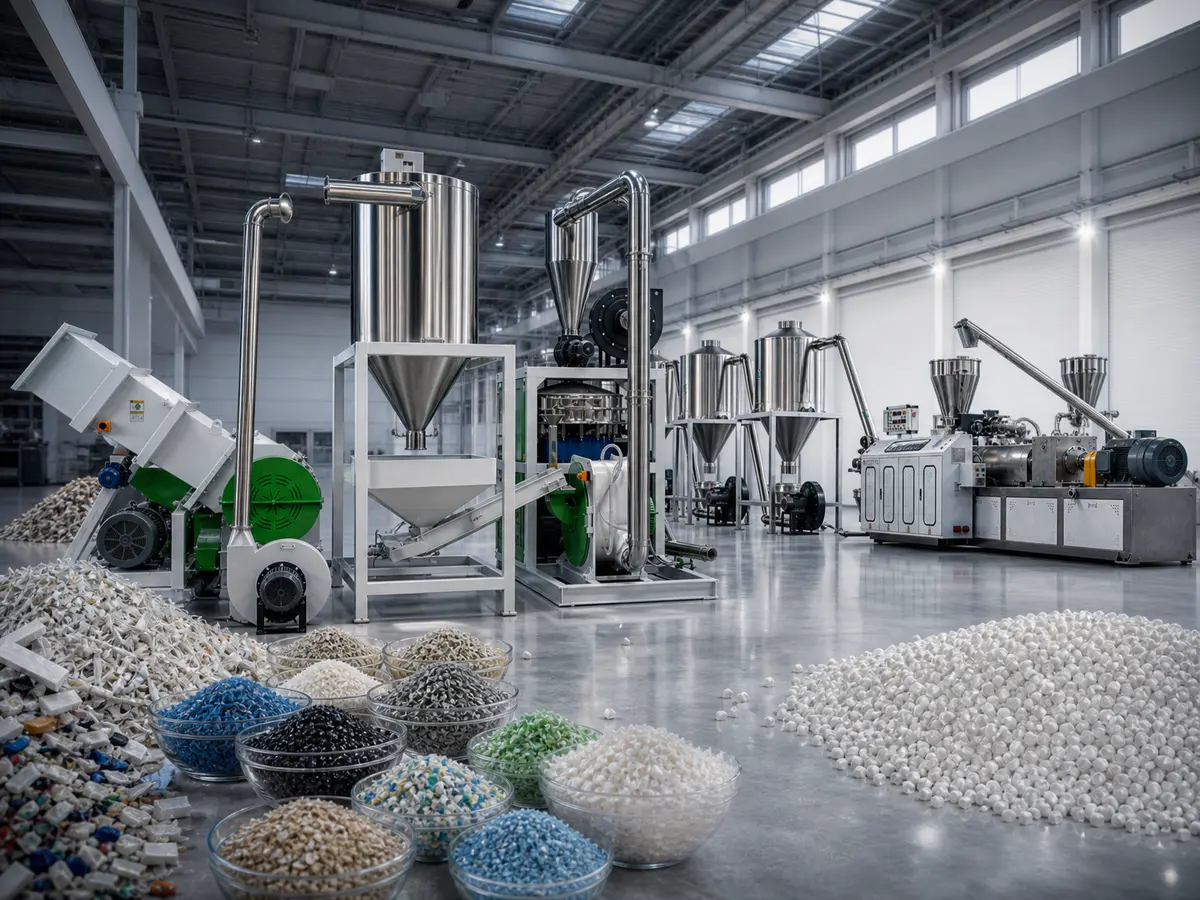
Crush, Pulverize, Pelletize
PVC, PE, PP Scrap
Everything You Need To Plan Your Pulverizing And Pelletizing Line
Jump straight to the section that answers your question, from matching your scrap type to picking a process, checking quality control, and sending us your material details for a quote.
Scrap Types
PVC, PE, PP scrap sources
Line Categories
Pulverizing and pelletizing
Process Selection
Powder or pellet output
Line Configurations
Single, staged, custom setups
Common Problems
Sourcing mistakes to avoid
Scrap Differences
How feedstock changes the line
Quality Control
Checks before every shipment
Process Boundary
What we cover and do not
Factory Capability
What we build in house
Project Process
Selection to installation
Samples And Trial Runs
Your material tested first
Quotation Checklist
What to send for a quote
FAQ
MOQ, lead time, voltage
Get Configuration
Send your scrap details
What Material Do You Need To Process?
Start with the material you have now. Its type, size, condition, and final use will determine whether you need crushing, pulverizing, or PVC pelletizing equipment.
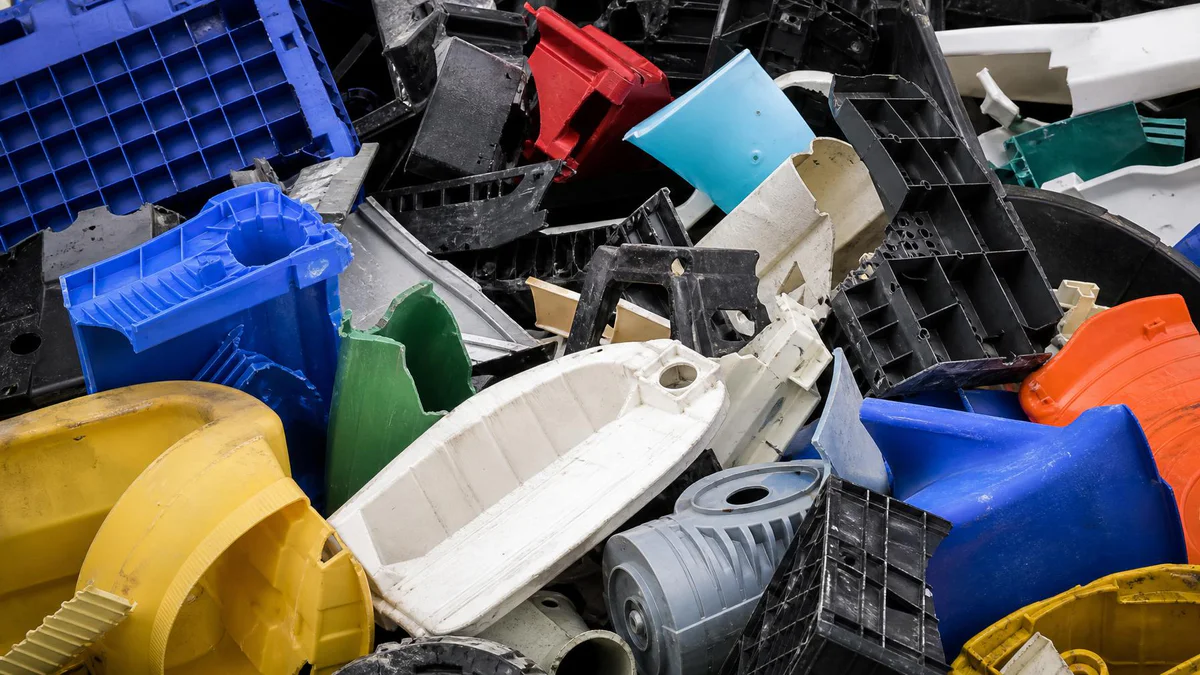 Crushing
For plastic pipe, profile, sheet, lumps, thick edge trim, or molded rejects that are too large for direct feeding.
You may need a plastic crusher to reduce the material into smaller, more manageable pieces.
Check First
- Material type
- Current size and thickness
- Required output size
- Target processing capacity
- Next step after crushing
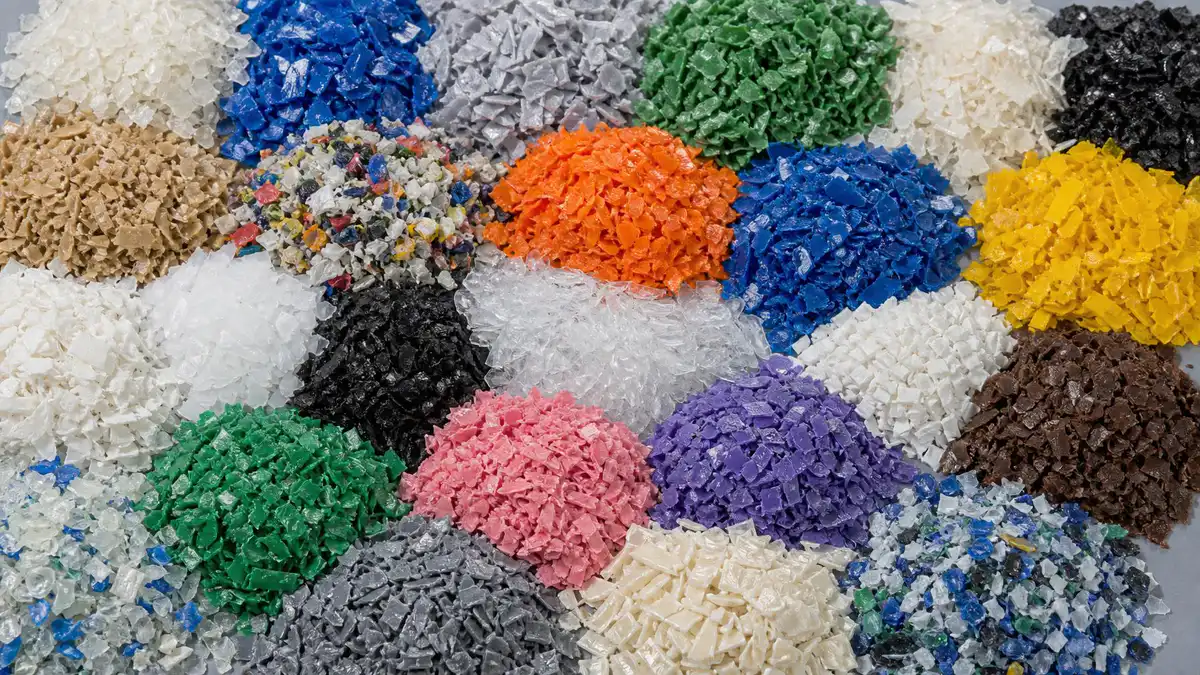 Pulverizing
For suitable rigid plastic regrind or granules that need to be processed into finer powder.
You may need a plastic pulverizer when the final material must reach a controlled powder size for reuse or further processing.
Check First
- Material type
- Current feed size
- Target mesh size
- Required kg/h
- Heat sensitivity
- Powder reuse
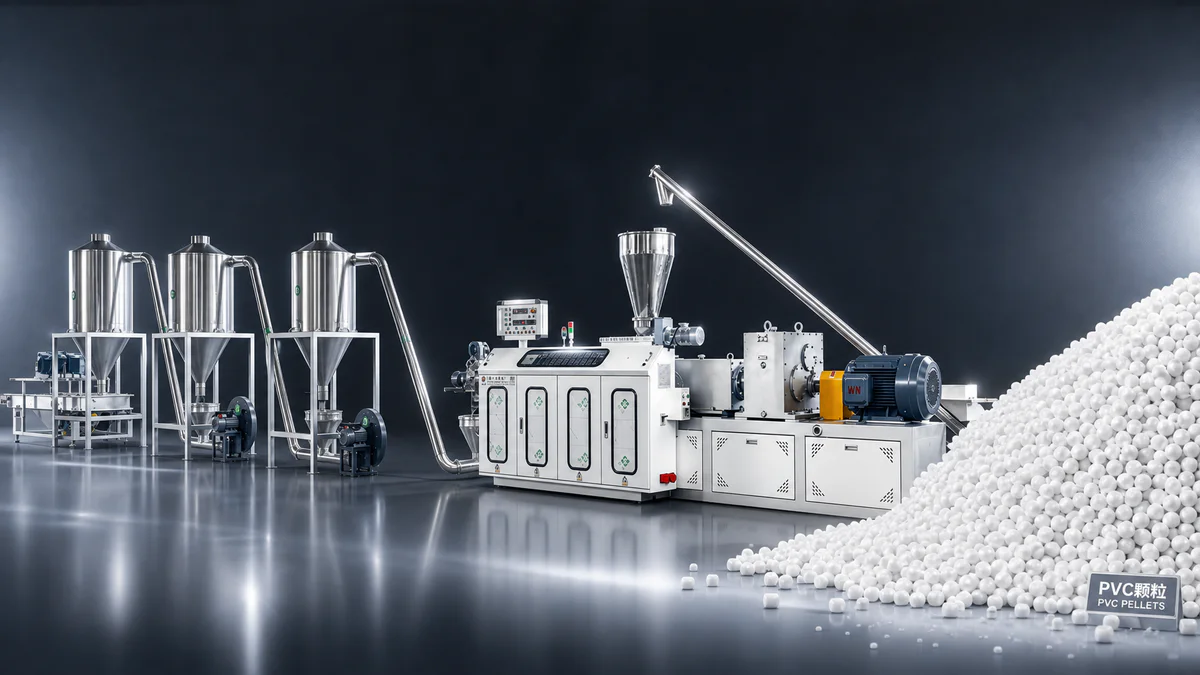
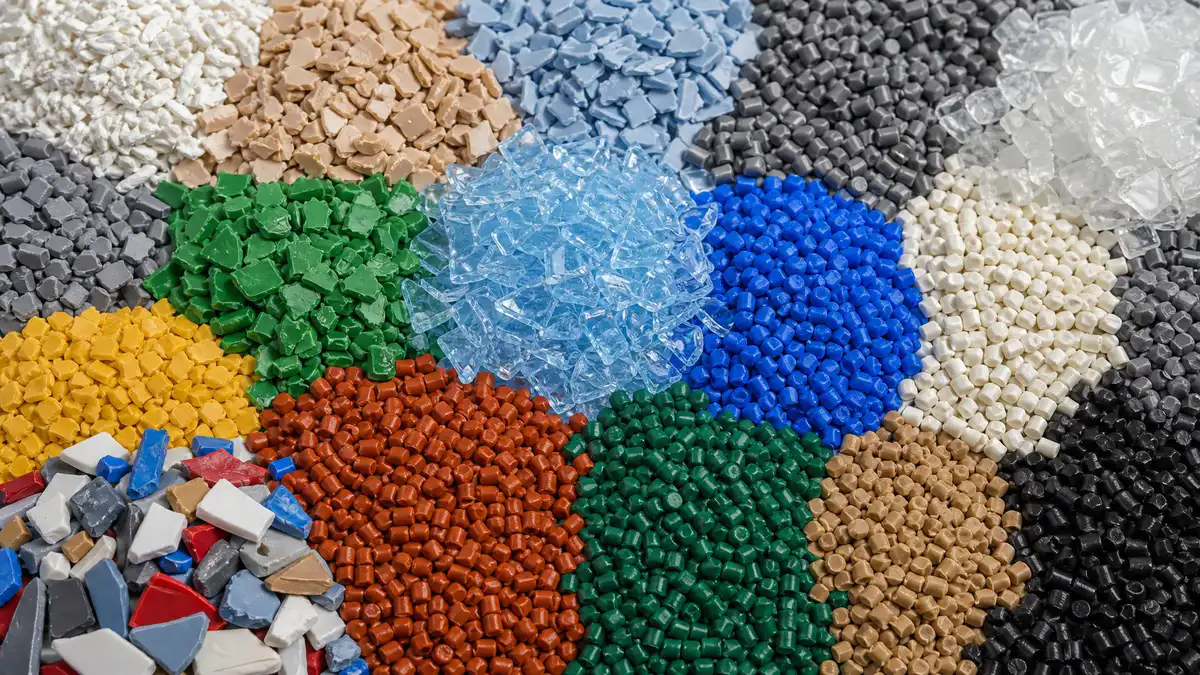 PVC Pelletizing
For rigid PVC, soft PVC, PVC regrind, PVC compound, or clean PVC production scrap that needs to become granules.
You may need a PVC pelletizing line. The configuration depends on the PVC formula, filler ratio, feeding form, temperature range, and final pellet application.
Check First
- Rigid or soft PVC
- Material formula
- Filler ratio
- Current material form
- Target output
- Final pellet use
 In House Processing
For clean scrap from pipe, profile, sheet, or molding production that you want to process inside your factory.
Depending on the material and final use, you may need crushing, pulverizing, or PVC pelletizing equipment. PVC pelletizing is only available for suitable PVC materials.
Check First
- Scrap source
- Material type
- Daily scrap volume
- Current size
- Required final material
- Available workshop space
Send Your Material, We Suggest The Route
Send photos or videos of your scrap, current size, moisture, contamination level, target output, and final reuse. We tell you whether your project should start with size reduction, pulverizing, pelletizing, or pilot testing.
Please Note
Heavily contaminated post consumer waste may need sorting, washing, and drying before pulverizing or pelletizing. This page focuses on pulverizing, pelletizing, and clean post industrial scrap recovery.
Choose The Right Equipment Category
Start with the result you need. Choose a plastic crusher for smaller regrind, a pulverizer for controlled powder, or a PVC pelletizing line for PVC granules.
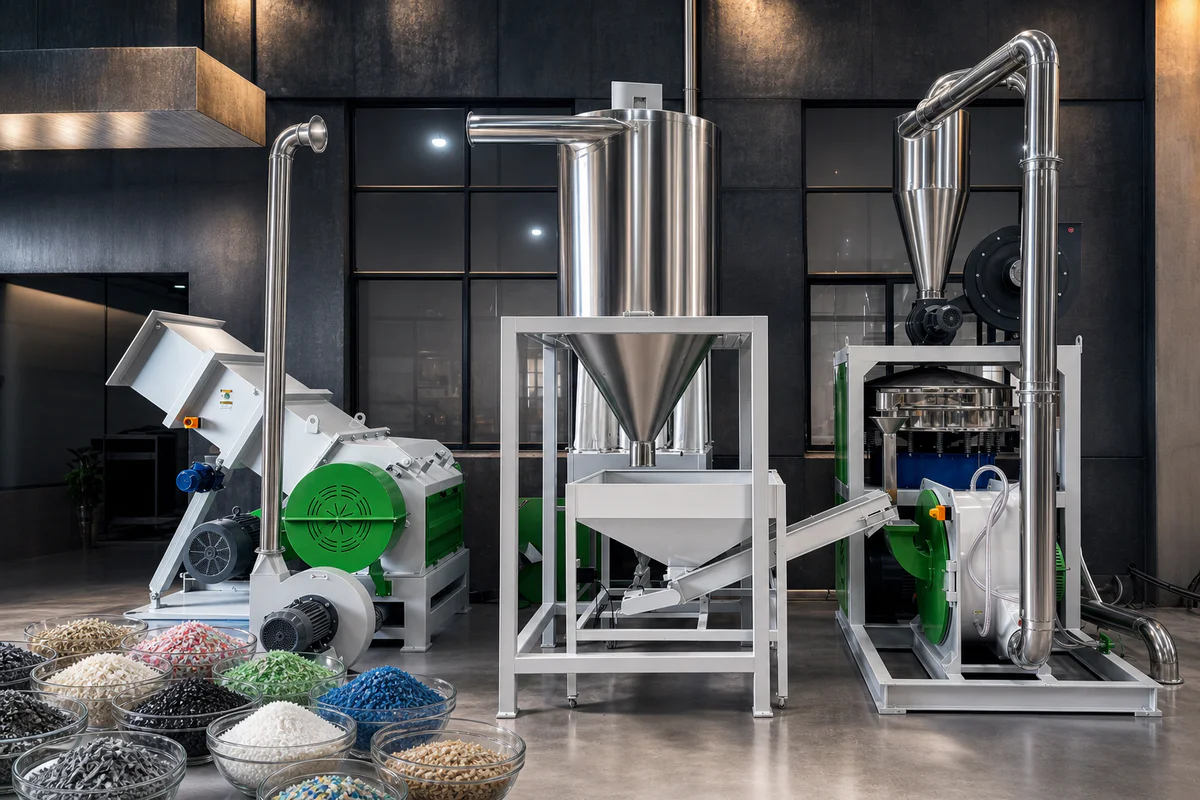
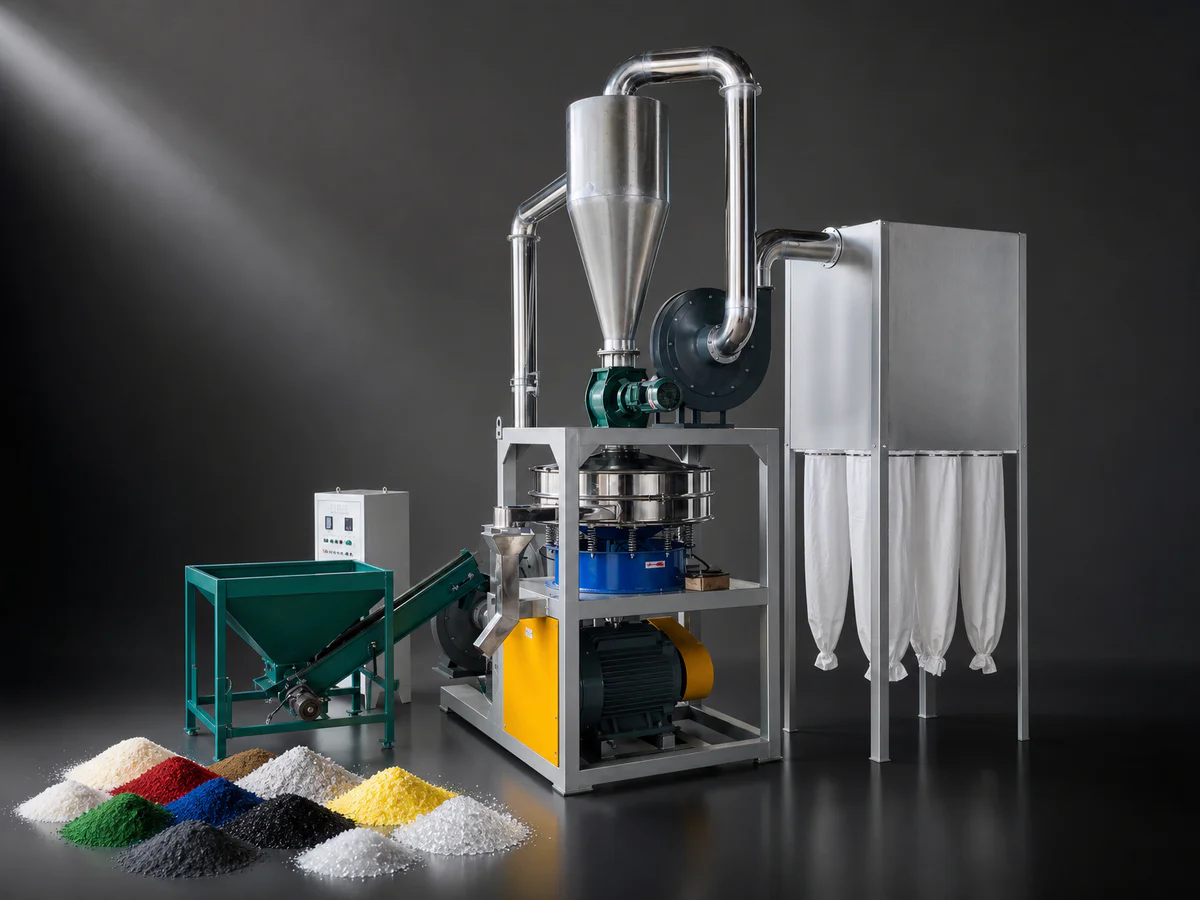
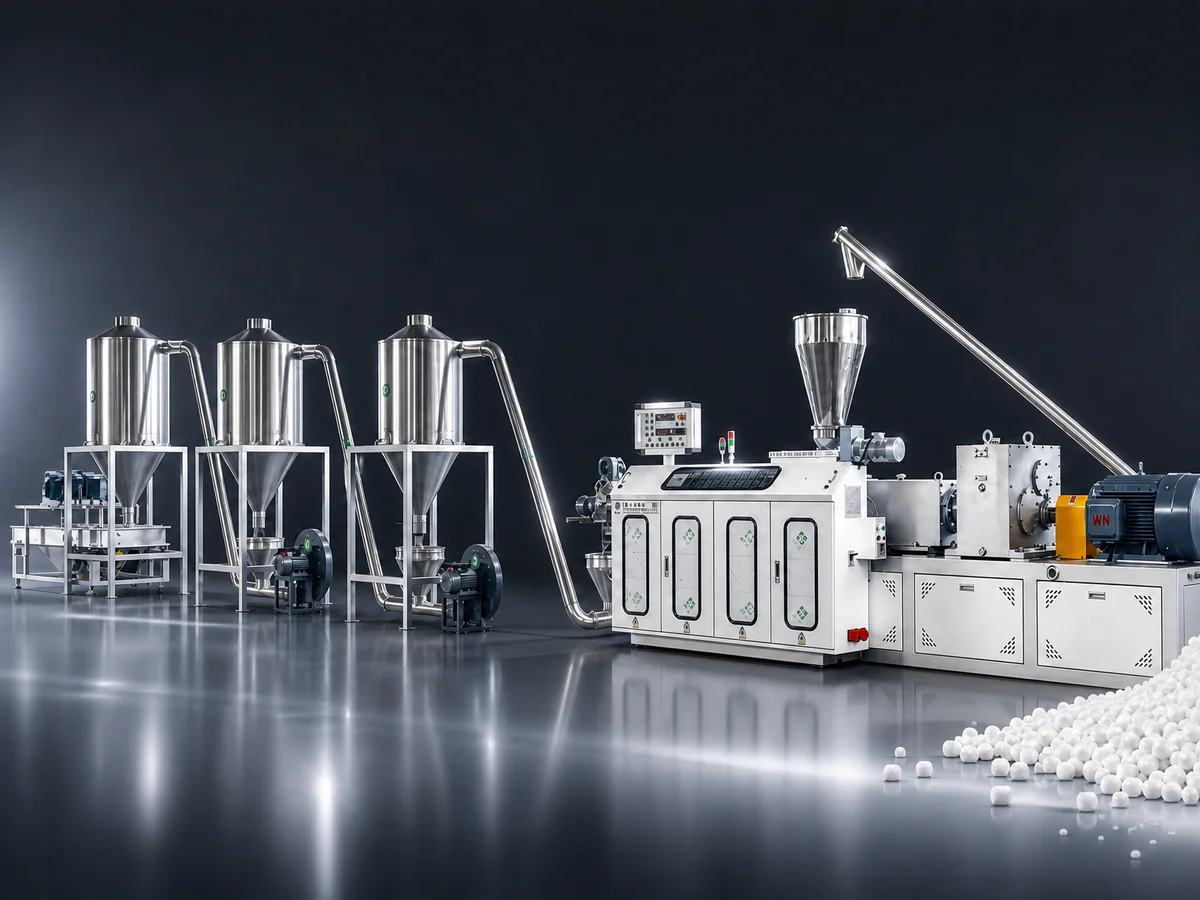
Every machine is configured around your material, feed size, output target, and voltage. Send those details and we confirm the right setup before quotation.
Which Process Fits Your Material?
Choose the equipment according to the material you have now and the result you need. A crusher makes large scrap smaller, a pulverizer turns suitable regrind into powder, and a PVC pelletizing line converts suitable PVC material into granules.
| Your Material | What You Need | Recommended Equipment | Confirm First |
|---|---|---|---|
| Large plastic pipe, profile, sheet, lumps, or molded rejects | Reduce large scrap into smaller pieces for handling, reuse, or further processing | Plastic Crusher | Material type, maximum feed size, thickness, required output size, and capacity |
| Long edge trim or irregular rigid production scrap | Create a more uniform size before storage, feeding, or further processing | Plastic Crusher | Scrap dimensions, hardness, feeding method, screen size, and next processing step |
| Suitable pre crushed plastic regrind or granules | Produce finer powder with a controlled particle size | Plastic Pulverizer | Material type, feed size, target mesh, required kg/h, heat sensitivity, and final powder use |
| PVC pipe, profile, or sheet regrind | Produce PVC powder for mixing back into a suitable formulation | Plastic Pulverizer | PVC type, current particle size, target mesh, filler content, and intended reuse ratio |
| Rigid PVC compound, PVC regrind, or clean PVC production scrap | Convert PVC material into reusable granules | PVC Pelletizing Line | PVC formula, filler ratio, feeding form, temperature requirement, target output, and pellet application |
| Soft PVC compound or soft PVC production material | Produce PVC granules with a configuration matched to the formula | PVC Pelletizing Line | Plasticizer content, formula, feeding condition, cutting method, and final pellet use |
| Clean production scrap with an unclear processing route | Determine whether the material should be crushed, pulverized, or pelletized | Material Review First | Material type, current form, required final result, daily volume, and photos or videos |
| Dirty, wet, or mixed post consumer plastic | Sorting, washing, and drying may be required before further processing | Outside The Current Equipment Range | Contamination, moisture, mixed plastic content, and available pre treatment system |
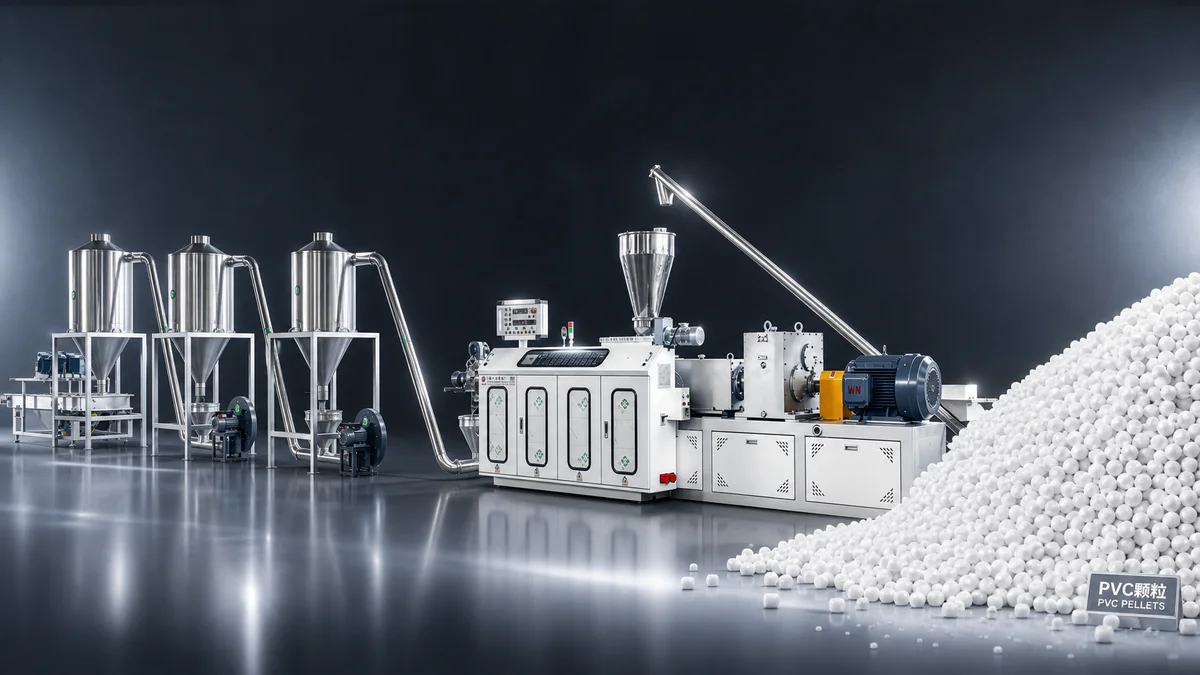
Answer These Before The Equipment Is Selected
Most quoting mistakes come from missing material details, not from the machine itself. If you are not sure what you have, send scrap photos or videos with the current size, material type, and target output. We confirm whether you need a crusher, a pulverizer, or a PVC pelletizing line before quoting.
Equipment Selection Checklist
- 1 What plastic is it, and is it rigid or soft?
- 2 What is the current size and thickness of the scrap?
- 3 Do you need smaller regrind, powder, or granules?
- 4 What output size or target mesh does the next step need?
- 5 How many kg/h do you need to process?
- 6 Is the material heat sensitive or filled?
- 7 Where does the processed material go afterwards?
- 8 What is your local voltage and workshop space?
Typical Equipment Configurations
Your equipment configuration depends on the material you have, its current size, and the result you need. The examples below show the basic processing route. The final machine model and equipment list should be confirmed after reviewing your material.
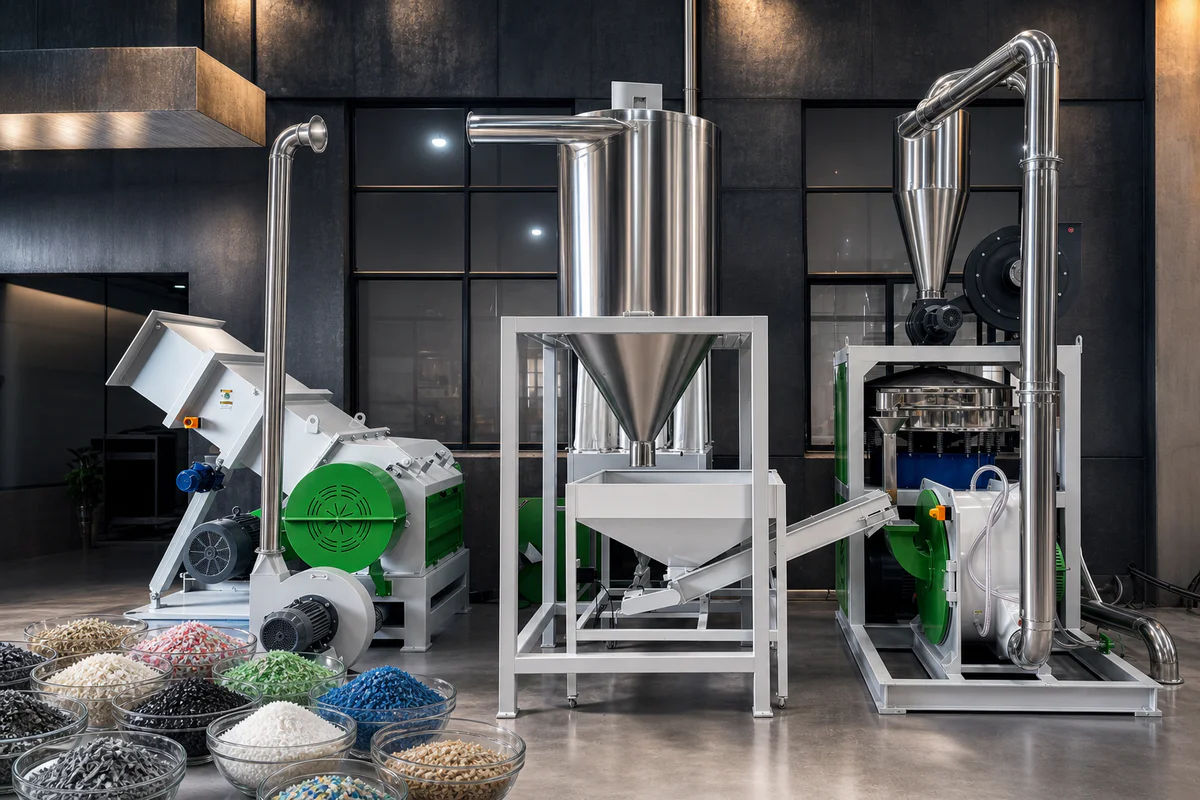
Plastic Crusher Configuration
Best for large plastic pipe, profile, sheet, lumps, molded rejects, and rigid production scrap that cannot be fed directly into the next process.
Typical Flow
Plastic scrap → Feeding → Crushing → Smaller regrind → Collection or further processing
Your Configuration Should Confirm
- Material type
- Maximum feed size
- Material thickness and hardness
- Required output size
- Target capacity
- Next use after crushing
The crusher can be used as a standalone size reduction machine, or as a preparation step before suitable pulverizing or PVC pelletizing projects.
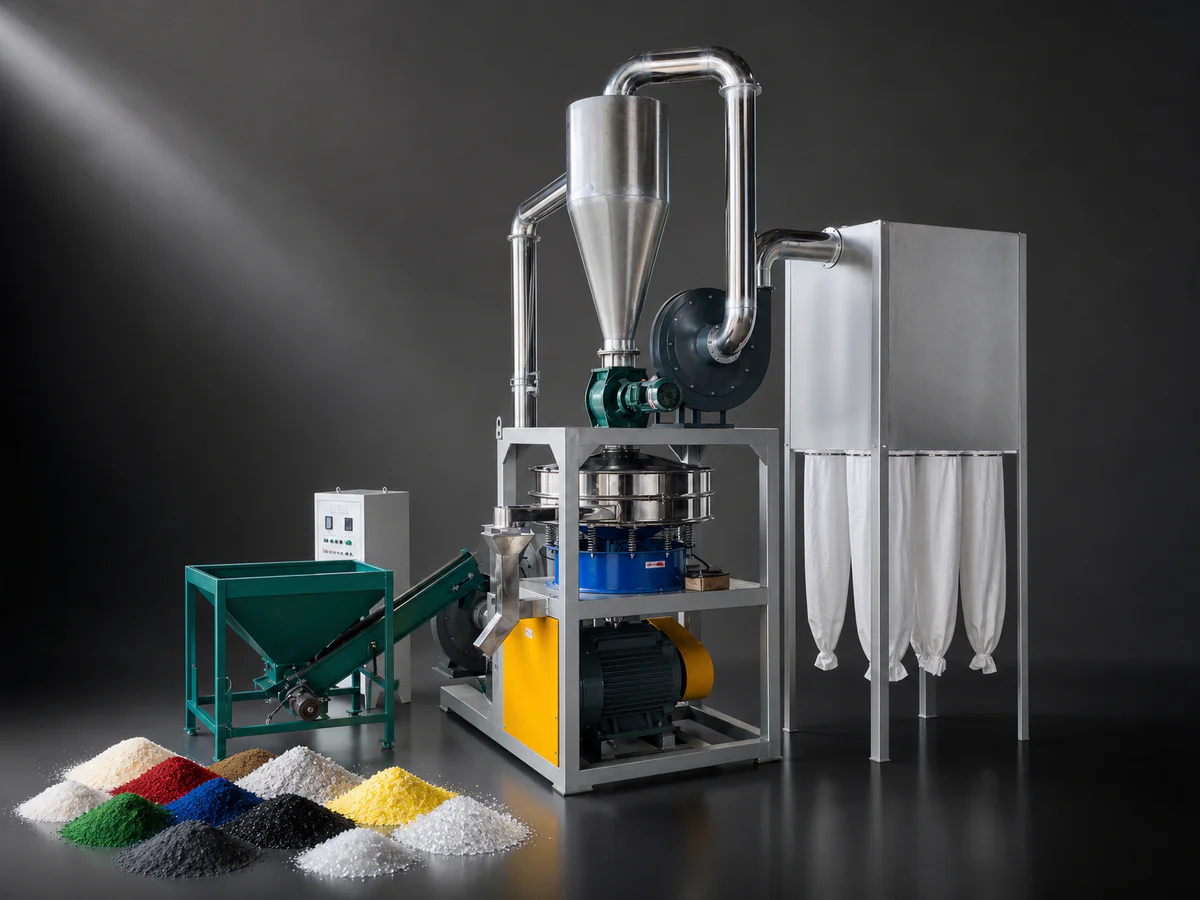
Plastic Pulverizer Configuration
Best for suitable pre crushed plastic regrind or granules that need to be processed into finer powder.
Typical Flow
Pre crushed material → Controlled feeding → Pulverizing → Powder collection
Your Configuration Should Confirm
- Material type
- Current feed size
- Target powder mesh
- Required output
- Material heat sensitivity
- Final powder use
If your material is still too large, you may need a plastic crusher before the pulverizer. Screening, cooling, conveying, and dust control requirements should be confirmed according to the selected machine and workshop conditions.
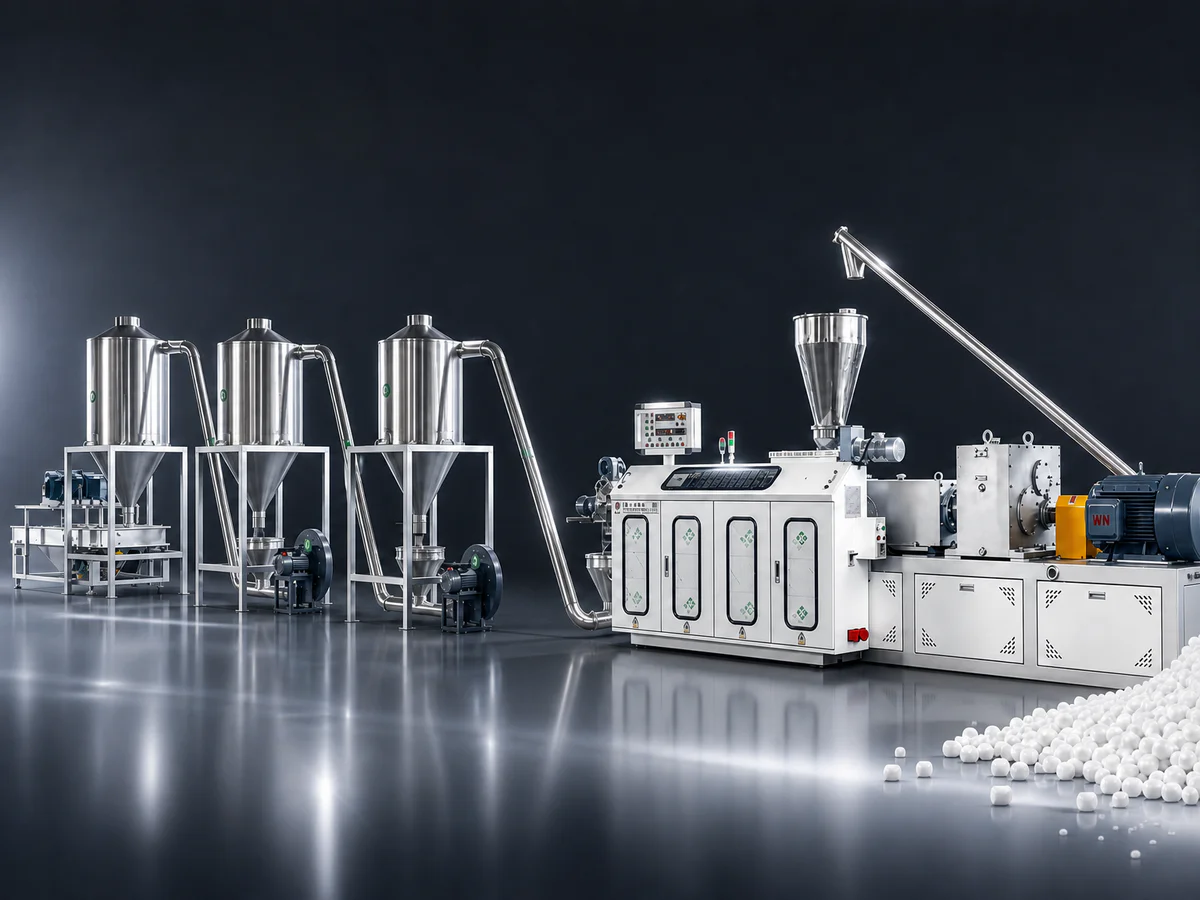
PVC Pelletizing Line Configuration
Best for suitable rigid PVC, soft PVC, PVC compound, PVC regrind, and clean PVC production material that needs to become granules.
Typical Flow
PVC material feeding → Controlled plasticizing → Pellet cutting → Cooling → Pellet collection
Your Configuration Should Confirm
- Rigid or soft PVC
- Material formula
- Filler and plasticizer content
- Current feeding form
- Target output
- Required pellet size
- Final PVC pellet application
The screw structure, feeding method, temperature settings, cutting method, and cooling arrangement should be selected according to the actual PVC formulation.
When Two Processing Steps Are Needed
You may need more than one machine when the incoming material is too large for the required final process.
The combined route should be confirmed from your scrap size, material formulation, and final reuse. Washing lines and PE / PP pelletizing lines are not included in the current equipment range.
Send your material photos, current size, required output, and target result before confirming the equipment configuration.
Common Problems To Check Before Choosing Equipment
The machine should match your incoming material, required output, and next processing step. Check the problems below before confirming a plastic crusher, pulverizer, or PVC pelletizing line.
Scrap Cannot Enter The Crusher Smoothly
You May See
Large pipe, profile, sheet, or irregular scrap becomes stuck at the inlet or requires frequent manual handling.
Check
Maximum scrap dimensions, wall thickness, shape, material hardness, and feeding method.
Crushed Material Is Too Large Or Uneven
You May See
The output pieces are not suitable for storage, feeding, pulverizing, or PVC pelletizing.
Check
Required output size, screen opening, blade condition, feed size, and the next processing step.
The Crusher Overloads Or Stops Frequently
You May See
Motor load rises, output drops, or the machine stops when feeding thick, hard, or oversized scrap.
Check
Material hardness, wall thickness, maximum feed size, feeding speed, and possible metal contamination.
Powder Mesh Is Not Consistent
You May See
The powder contains too many coarse particles or does not meet your required mesh.
Check
Material type, incoming particle size, target mesh, feeding stability, grinding part condition, and expected capacity.
Material Heats Up During Pulverizing
You May See
The material softens, sticks, blocks the machine, or produces unstable powder.
Check
Material heat sensitivity, feed size, feeding rate, target mesh, and the cooling arrangement of the selected pulverizer.
Too Much Dust Escapes From The Pulverizing Process
You May See
Powder collects around the machine, material is lost, and the workshop requires frequent cleaning.
Check
Target mesh, powder volume, collection method, connection sealing, and the dust control configuration available for the selected equipment.
PVC Material Feeds Unevenly
You May See
Output fluctuates, plasticizing becomes unstable, or the PVC material does not enter the extruder consistently.
Check
Rigid or soft PVC, powder or regrind form, bulk condition, filler content, and feeding method.
PVC Pellets Turn Yellow Or Show Burnt Specks
You May See
The granules become darker, yellow, brittle, or contain burnt particles.
Check
PVC formula, stabilizer system, filler content, processing temperature, material residence time, and feeding stability.
PVC Pellet Size Is Uneven
You May See
The granules are too long, too short, sticky, or inconsistent in shape.
Check
PVC formulation, plasticizing stability, cutting method, cutter condition, cooling arrangement, and required pellet size.
The Finished Material Cannot Be Reused As Expected
You May See
The crushed material, powder, or PVC pellets look acceptable but do not feed, mix, or process correctly in the next production step.
Check
Required final size, target mesh, PVC pellet application, material cleanliness, formulation compatibility, and intended reuse ratio.
Send Your Material Before Model Selection
Send clear photos or videos of your material, current size, required output, and final use. These details help confirm the machine type and reduce the risk of selecting equipment that does not match your process.
If The Material Is Dirty Or Wet
Dirty, wet, or mixed post consumer waste may need sorting, washing, and drying before further processing. Washing systems are not included in the current equipment range.
How Your Scrap Changes The Equipment Choice
The same material may need different equipment depending on its size, shape, cleanliness, and final use. Check what you have now before choosing a crusher, pulverizer, or PVC pelletizing line.
| Your Scrap | What You May Face | Suitable Direction | Confirm First |
|---|---|---|---|
| Large pipe, profile, sheet, lumps, or molded rejects | Difficult feeding, manual cutting, and oversized material | Plastic crushing | Material type, maximum dimensions, thickness, hardness, and required output size |
| Long edge trim or irregular production scrap | Bridging, uneven feeding, and difficult storage | Plastic crushing before collection or further processing | Scrap shape, width, thickness, feeding method, and next processing step |
| Suitable pre crushed plastic regrind | Material is still too coarse for powder use | Plastic pulverizing | Material type, current particle size, target mesh, required kg/h, and heat sensitivity |
| Clean PVC pipe, profile, or sheet regrind | Powder size may affect mixing, surface quality, and reuse ratio | PVC pulverizing when powder is required | PVC formulation, filler content, feed size, target mesh, and intended reuse |
| PVC compound, PVC regrind, or clean PVC production material | Unstable feeding, overheating, color change, or uneven pellets | PVC pelletizing | PVC formula, filler or plasticizer content, feeding form, target output, and pellet application |
| Clean factory scrap with an unclear route | You may not know whether to make regrind, powder, or PVC pellets | Material review before equipment selection | Material type, current size, required final form, daily volume, and reuse method |
| Dirty, wet, or mixed post consumer waste | Moisture, labels, oil, sand, and mixed plastics can affect the result | Sorting, washing, and drying before further processing | Contamination level, moisture, material purity, and available pre treatment |
Start With The Result You Need
Choose Crushing
When you need smaller regrind.
Choose Pulverizing
When suitable material needs to become powder.
Choose PVC Pelletizing
When suitable PVC material needs to become granules.
If your material is dirty, wet, or mixed, complete the required pre treatment first. Washing and complete post consumer recycling systems are not included in the current equipment range.
Send your material photos, current size, and required final result before choosing the machine model.
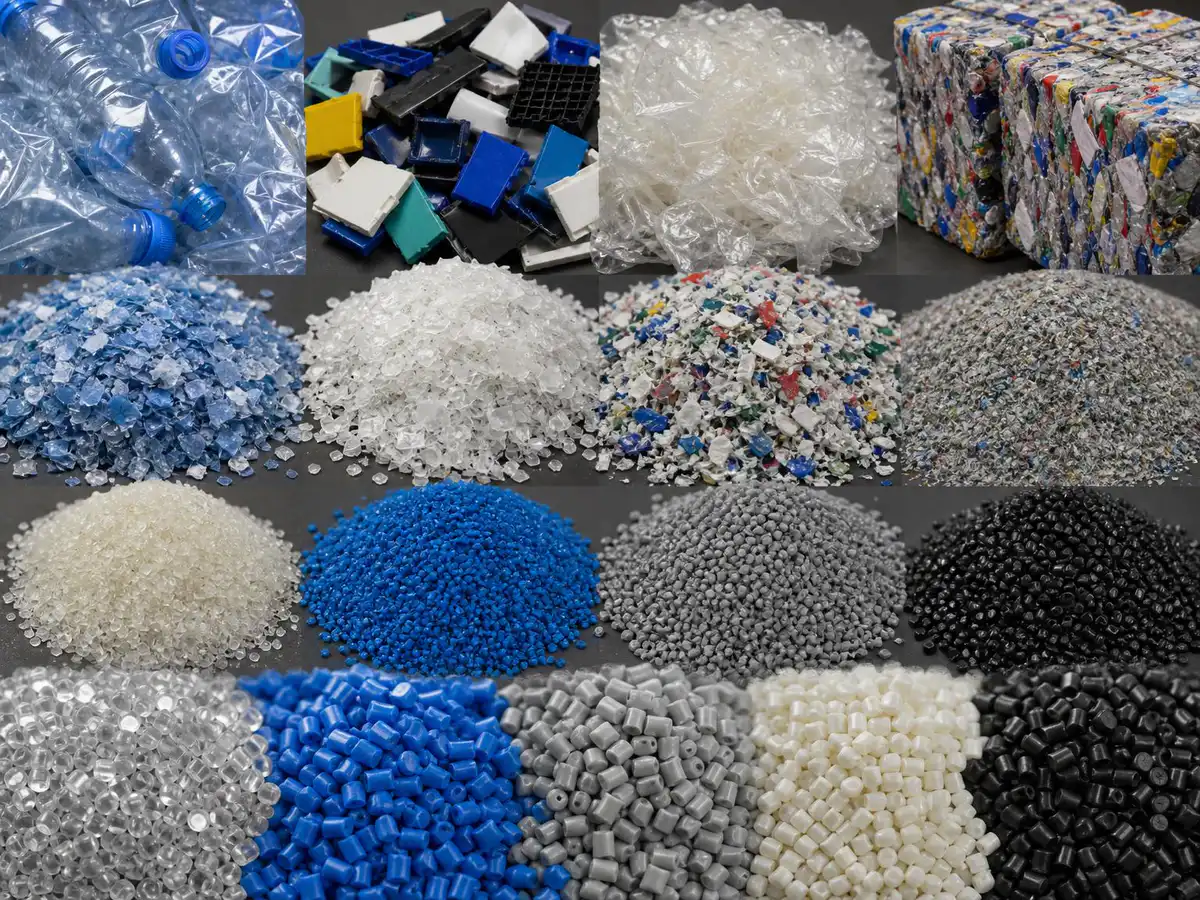
The Form Of Your Scrap Decides The Route
The question is not only what plastic you have. It is what form it is in, how clean it is, how much moisture it carries, and whether the final material should come out as powder or pellets.
Clean PVC pipe or profile scrap. Powder reuse is often the practical route when the material goes back into a PVC formulation.
PE / PP rigid scrap. Pelletizing is the clearer route when the material has to feed extrusion, injection, molding, or compounding.
Film scrap. Feeding and moisture control get checked before we even talk output.
Dirty or mixed material. Pre treatment has to be reviewed before any line is selected.
Send material photos, short videos, current size, moisture, contamination, target output, and final reuse. The line plan is far more reliable when the material difference is clear from the start.
Powder Or Pellet
Decided By Material Form
Quality Checks From Material To Final Output
Your material and required result are checked at each key stage, from incoming scrap to crushed regrind, plastic powder, or PVC pellets.
Material Review
Check the plastic type, current size, shape, cleanliness, and required final result.
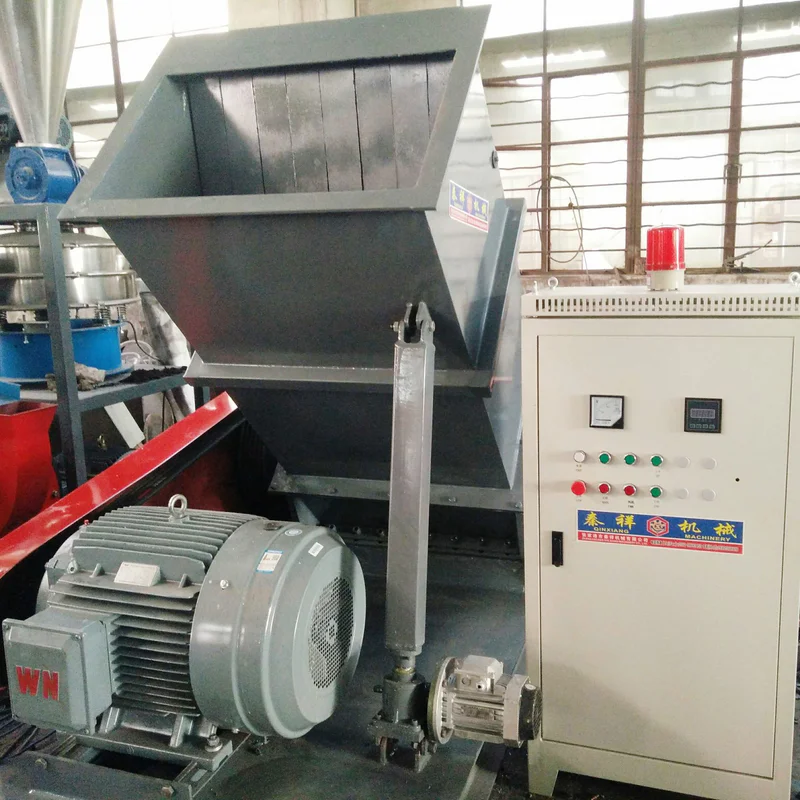
Crusher Feeding Check
Confirm that the scrap can enter the crusher safely and consistently.
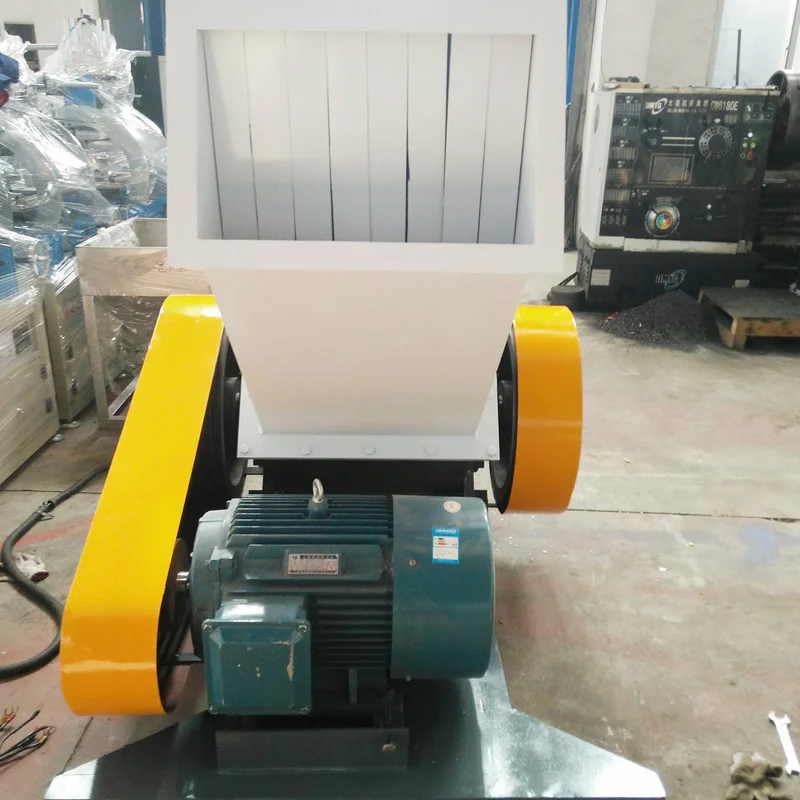
Crushed Size Check
Compare the crushed output with the agreed particle size and next processing step.
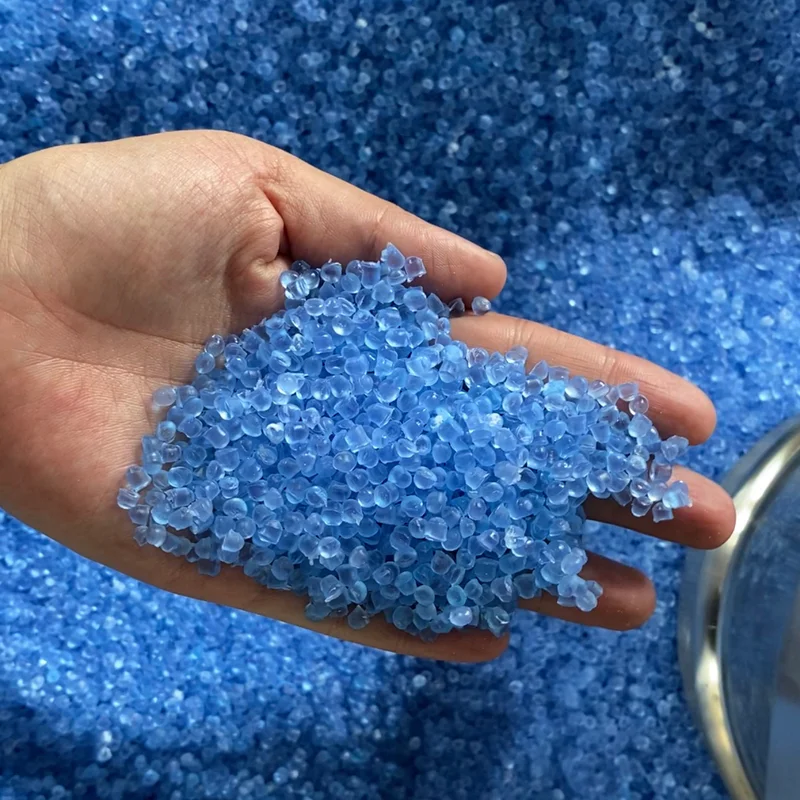
Pulverizer Running Check
Check feeding stability, material buildup, and operating condition during pulverizing.
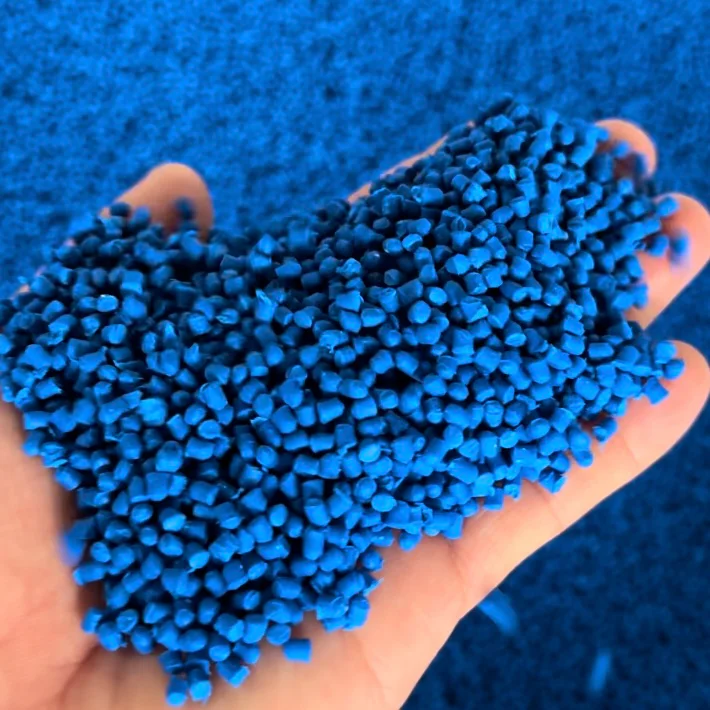
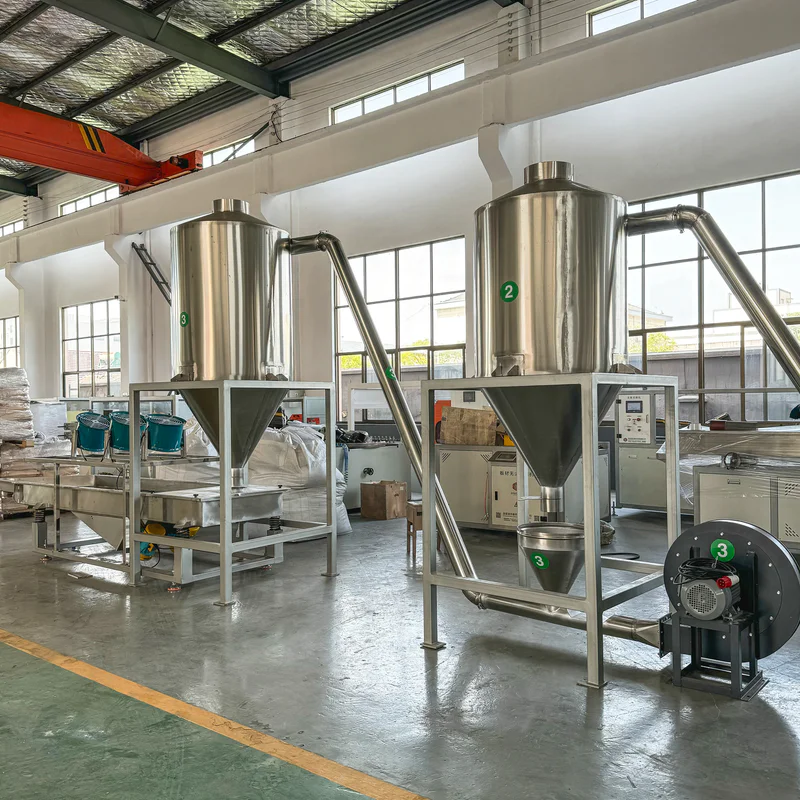
Powder Sample Check
Review powder fineness, particle consistency, and collection condition.
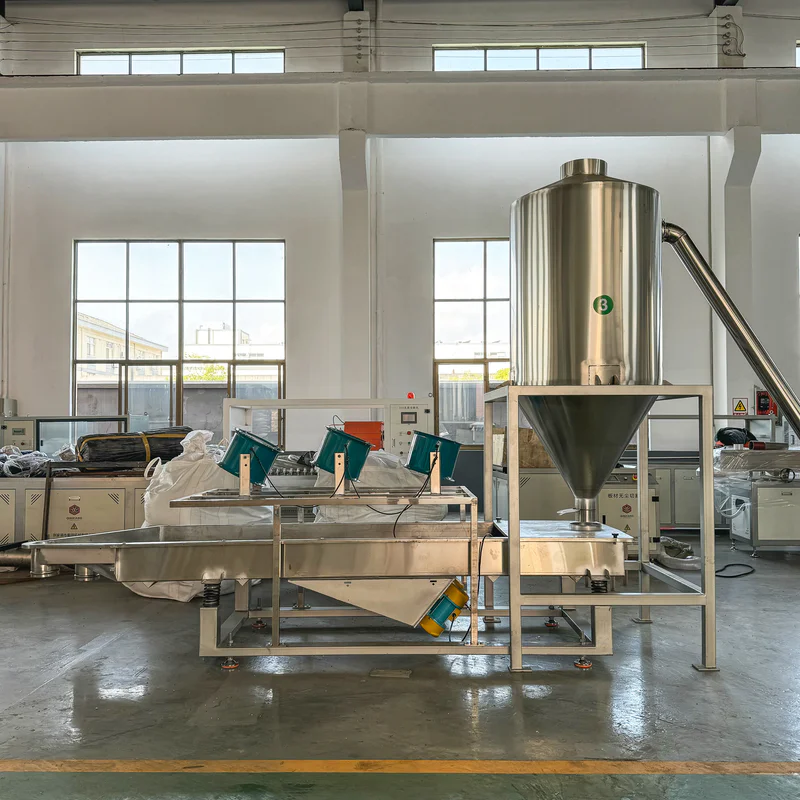
PVC Processing Check
Check feeding, plasticizing condition, and temperature response according to the PVC formulation.
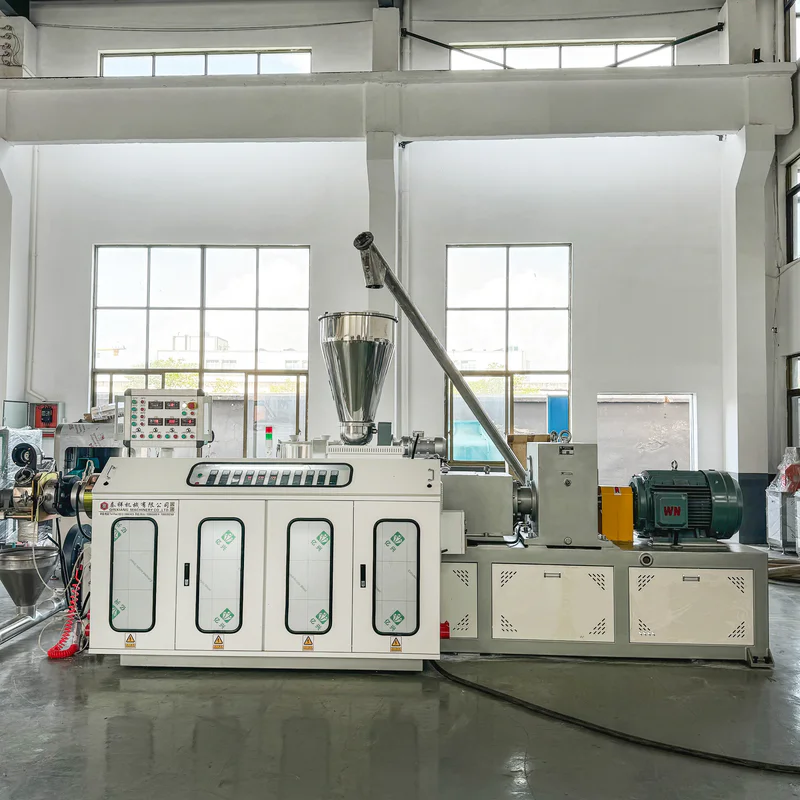
PVC Pellet Check
Review pellet size, shape, color, surface, and sticking condition.
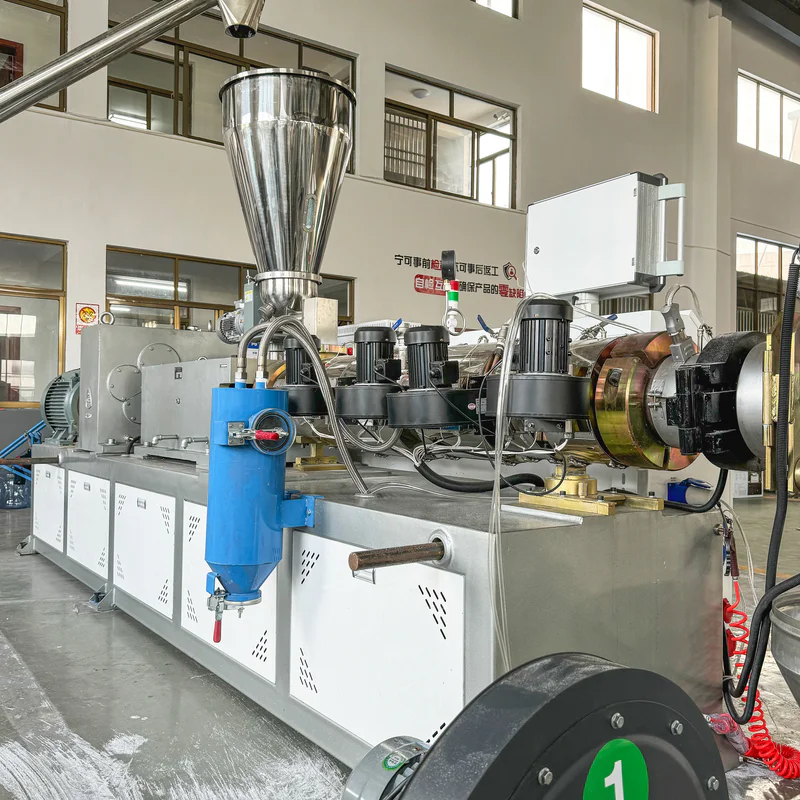
Final Sample Review
Compare the incoming material with the crushed regrind, powder, or PVC pellets before shipment.
Choose The Process By Your Final Result
You may not need a complete processing line. Start with the material you have now and the result you need.
 01
01
You need smaller plastic pieces
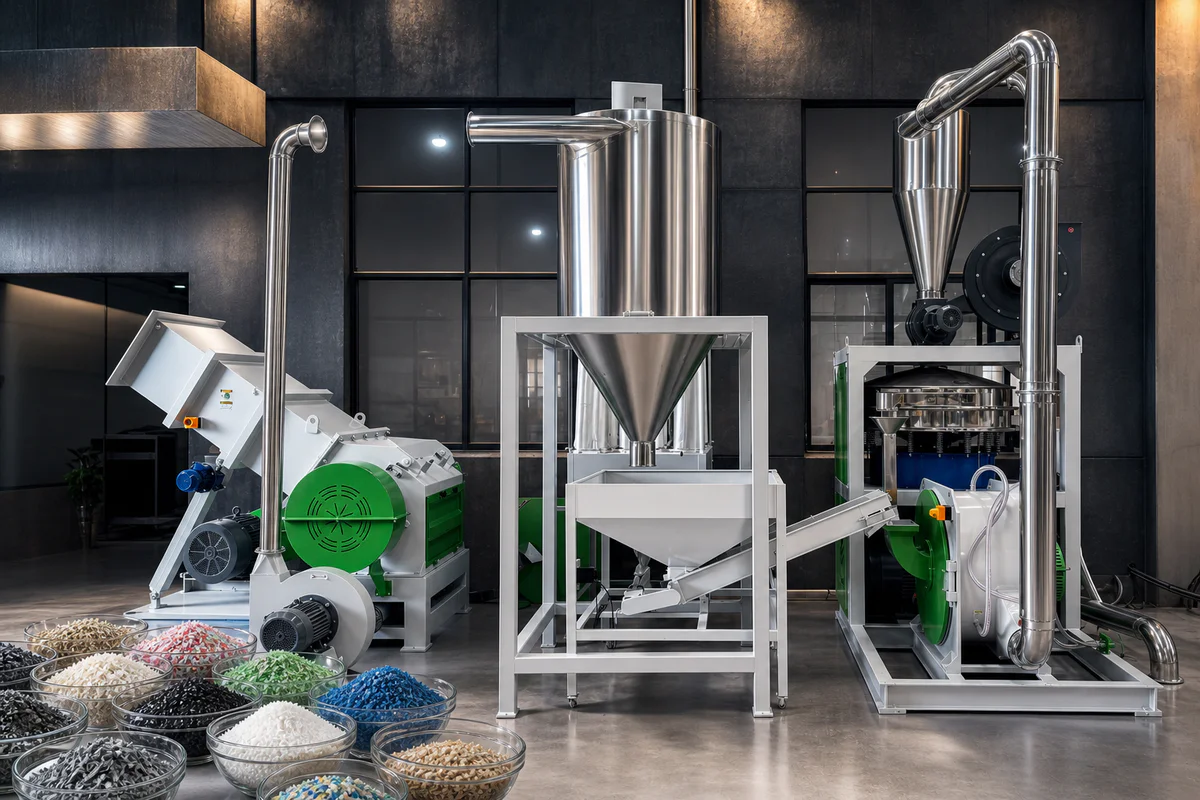
Choose A Plastic Crusher
A crusher reduces large pipe, profile, sheet, lumps, or molded rejects into smaller regrind for easier collection, storage, or further processing.
Typical Route
A crusher does not produce fine powder or PVC pellets.
Confirm First
You need plastic powder
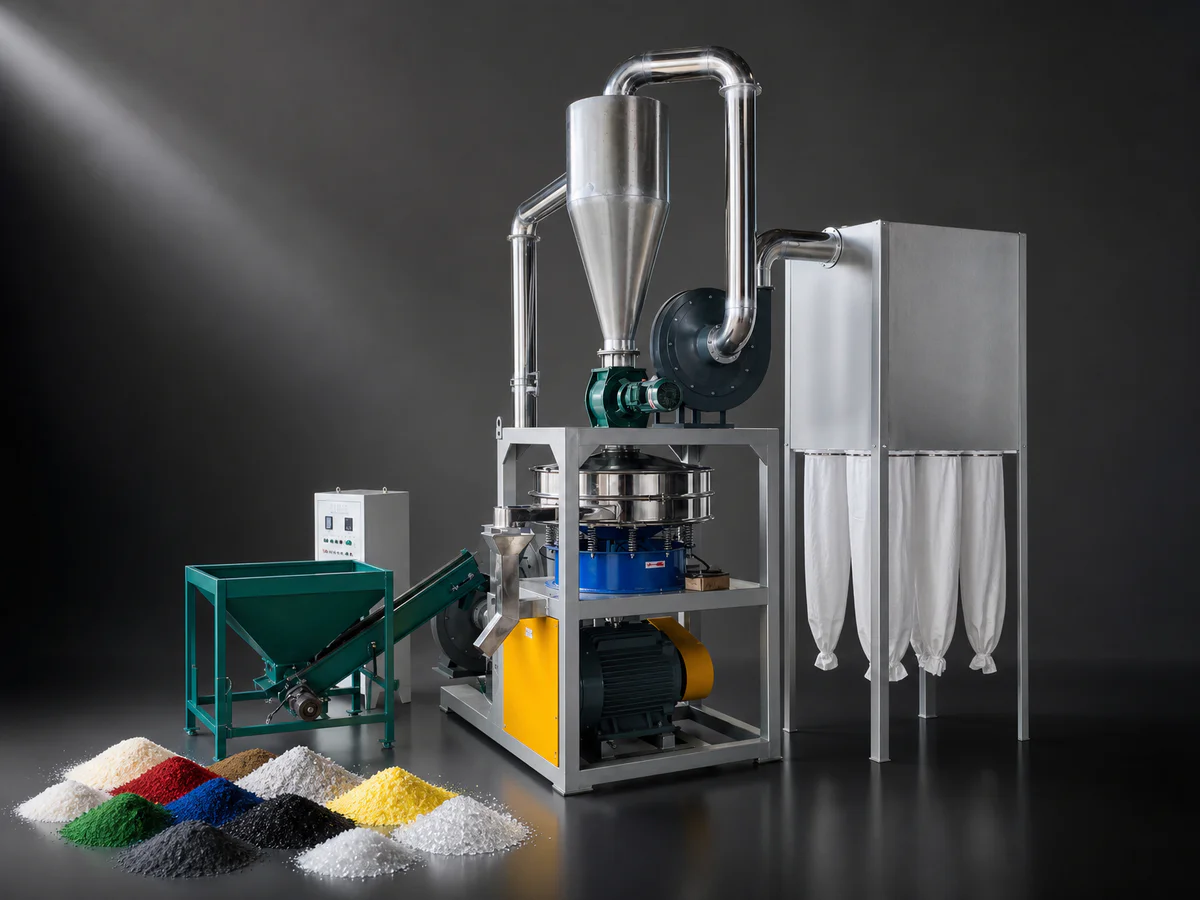
Choose A Plastic Pulverizer
A pulverizer processes suitable pre crushed regrind or granules into finer powder for mixing, formulation, or internal reuse.
Typical Route
Large scrap normally needs crushing before pulverizing. The material type, feed size, and target mesh must be confirmed first.
Confirm First
 02
02
 03
03
You need PVC pellets
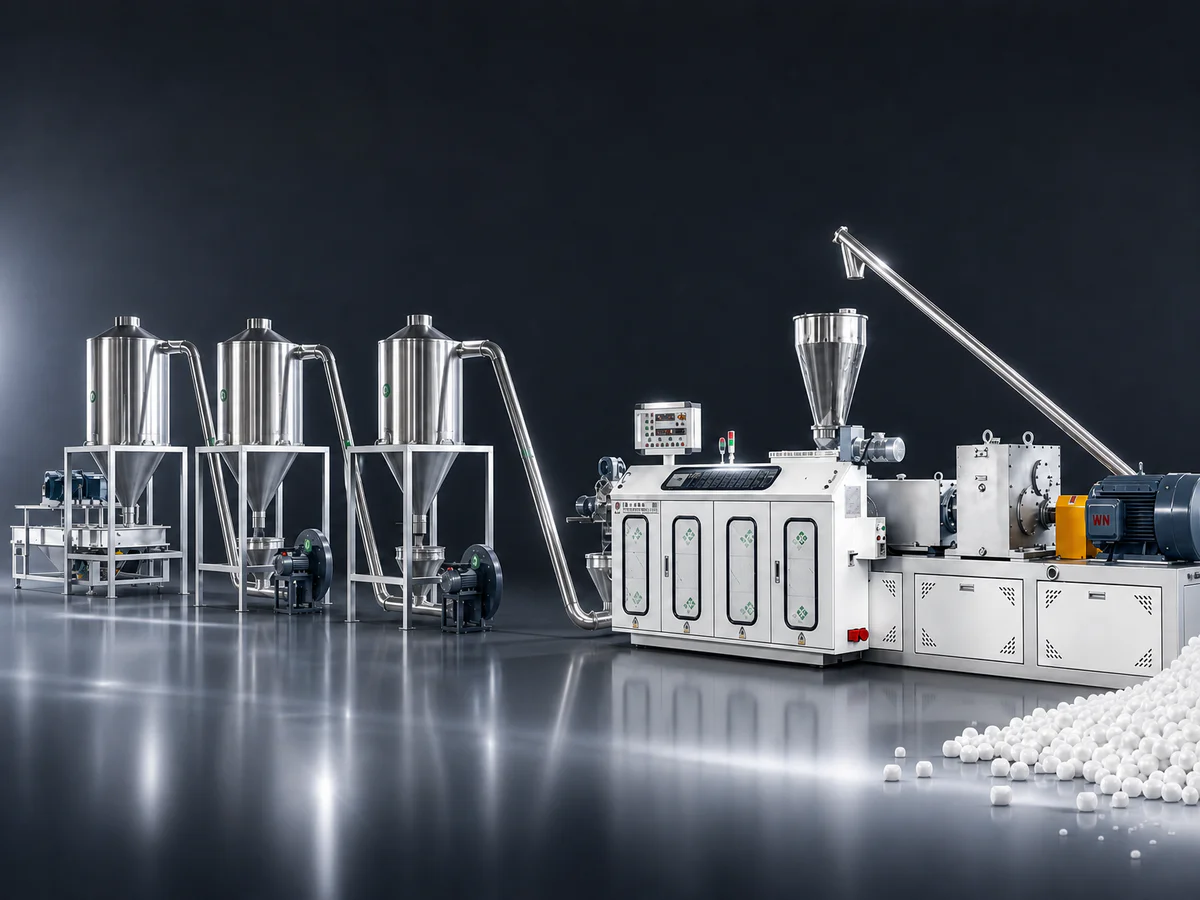
Choose A PVC Pelletizing Line
The line processes suitable PVC compound, PVC regrind, or clean PVC production material into granules.
Typical Route
This equipment is designed for PVC pelletizing. It is not offered for PE or PP pellet production.
Confirm First
You have large PVC scrap
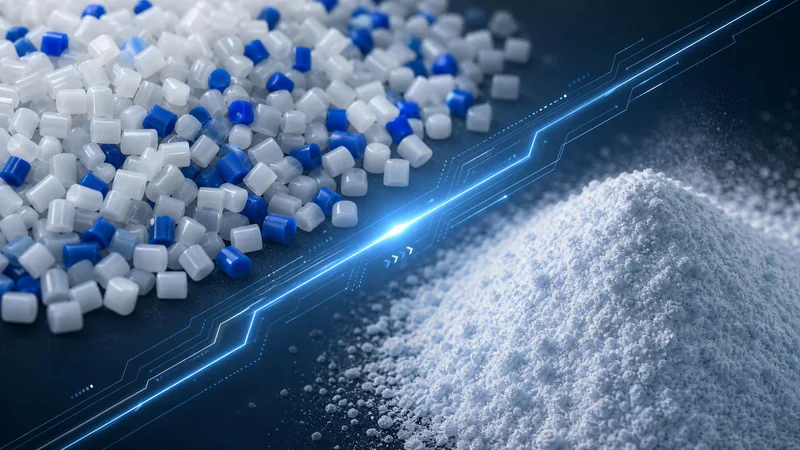
You May Need Two Processing Steps
The route depends on whether you need powder or granules for the next production step.
For PVC Powder
For PVC Pellets
 04
04
You have dirty, wet, or mixed waste
Sorting Or Washing May Be Required First
Sorting, washing, or drying may be required before further processing. Washing lines, post consumer recycling systems, and PE / PP pelletizing lines are not included in the current equipment range.
Send material photos, current size, and your required final result before choosing the equipment.
Choose The Process, Then The Machine
Send your scrap photos, videos, current size, moisture, contamination, and final reuse. The process should be chosen after the material is clear, not by machine model alone.
- Scrap too large Make it smaller first
- You need powder Choose pulverizing
- You need granules Choose pelletizing
- You are testing a formula Choose pilot granulation
- Dirty, wet, or mixed Sort, wash, and dry first
Factory Capability For Plastic Processing Equipment
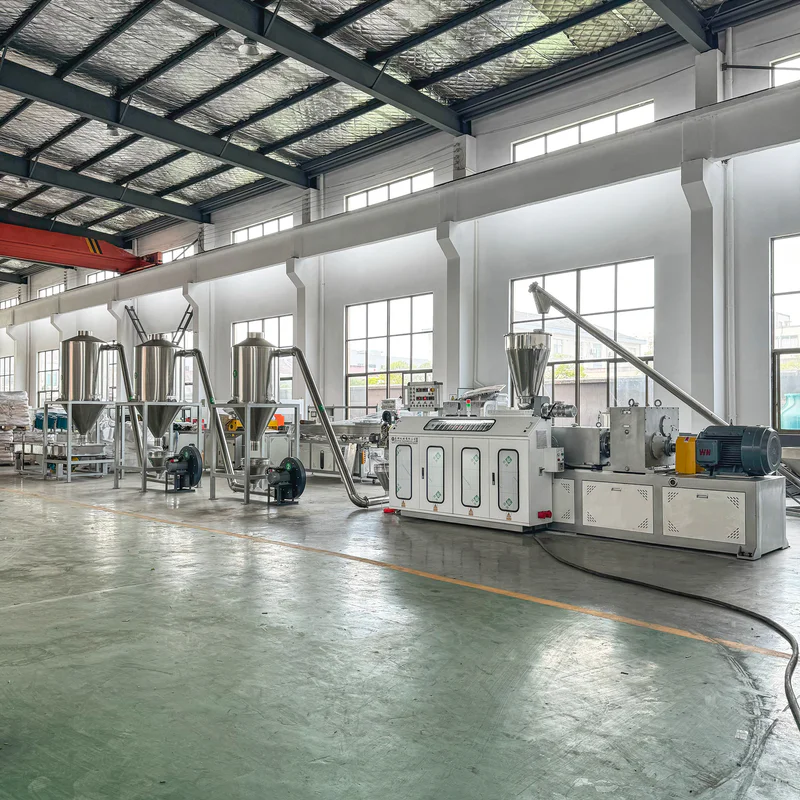
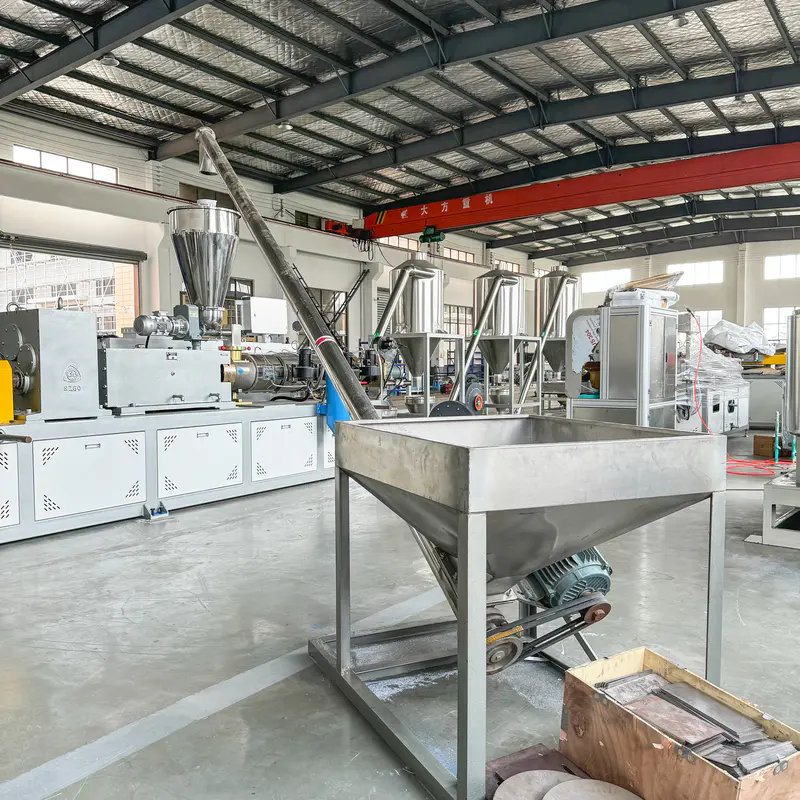
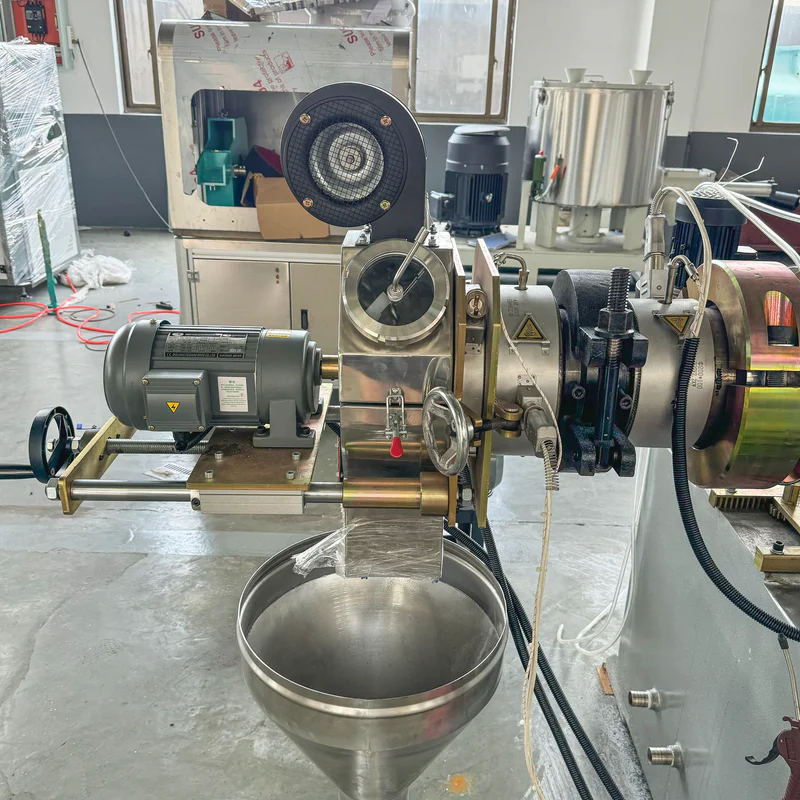
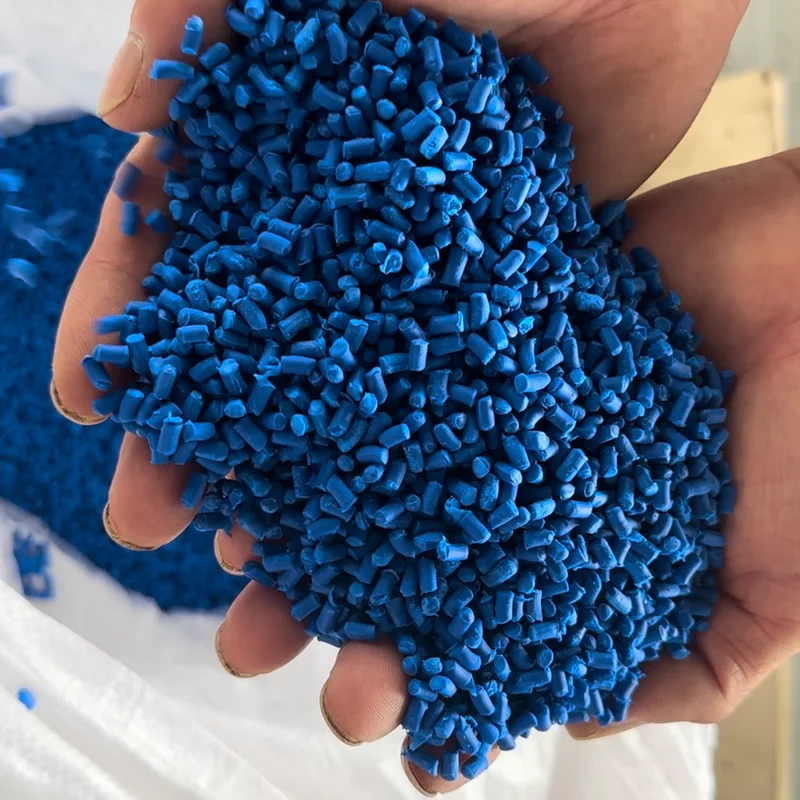
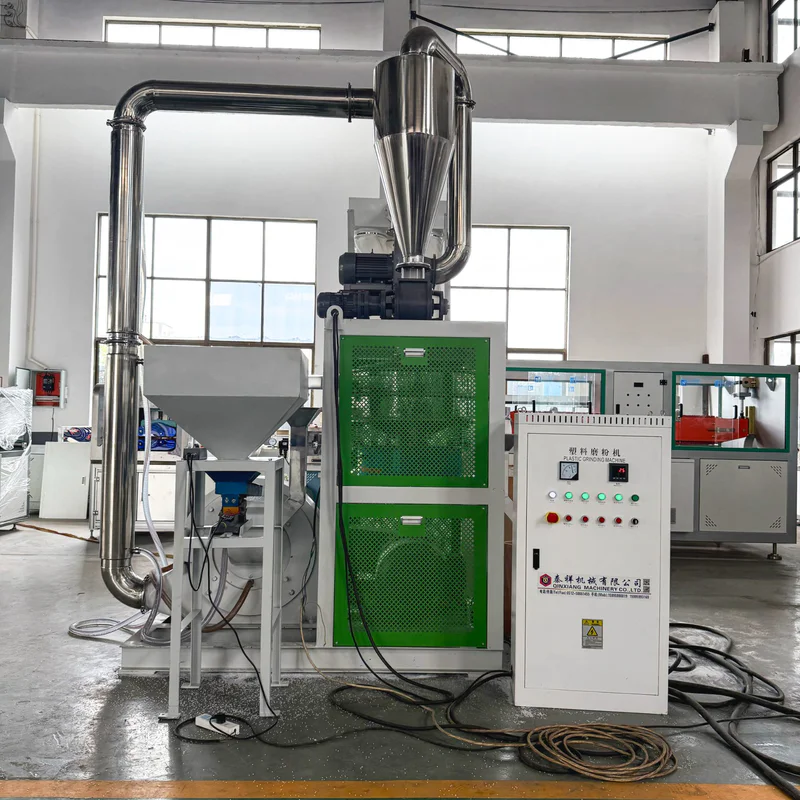
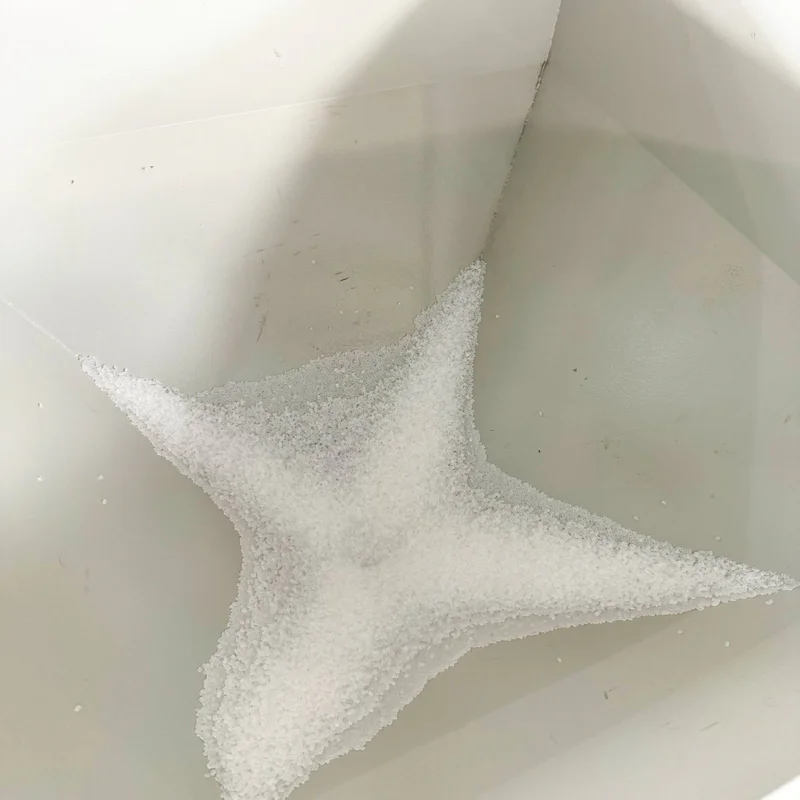
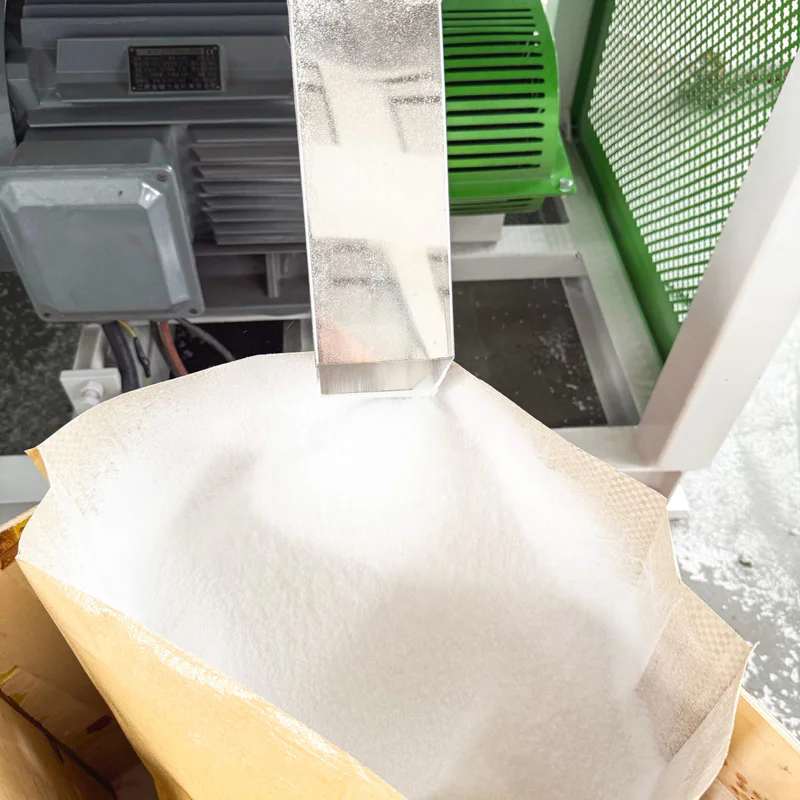
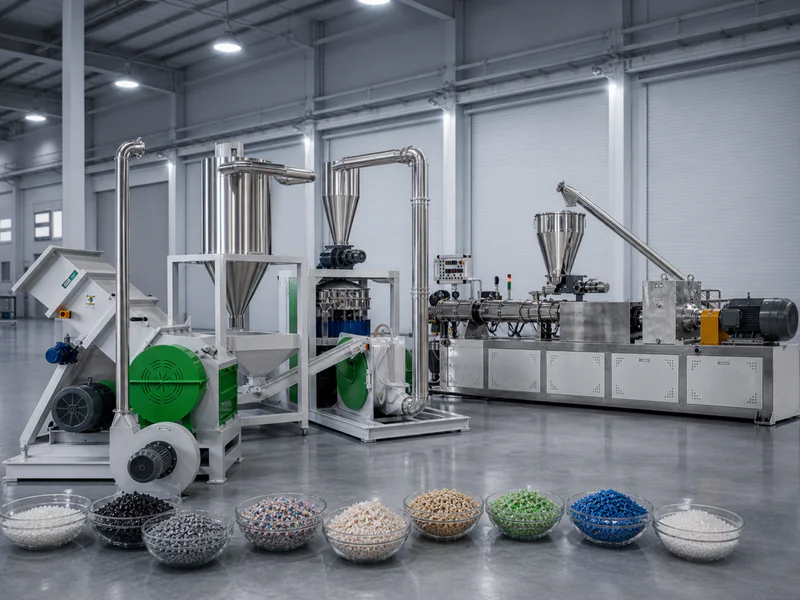
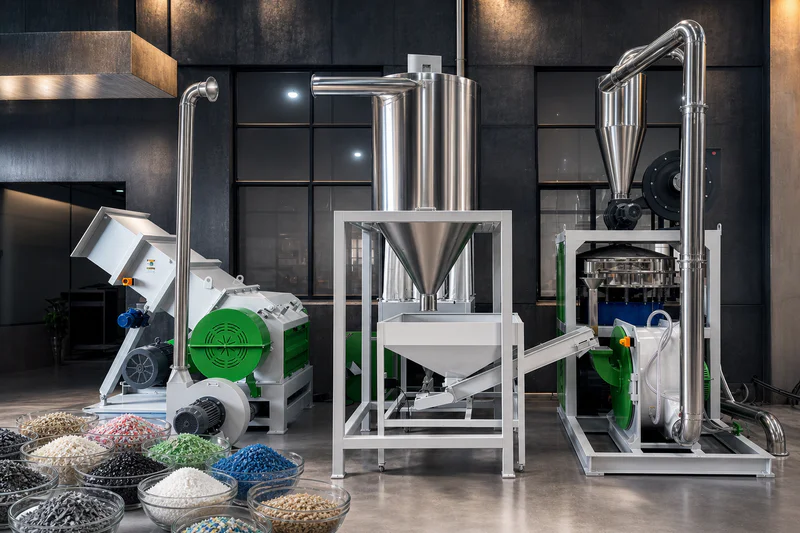
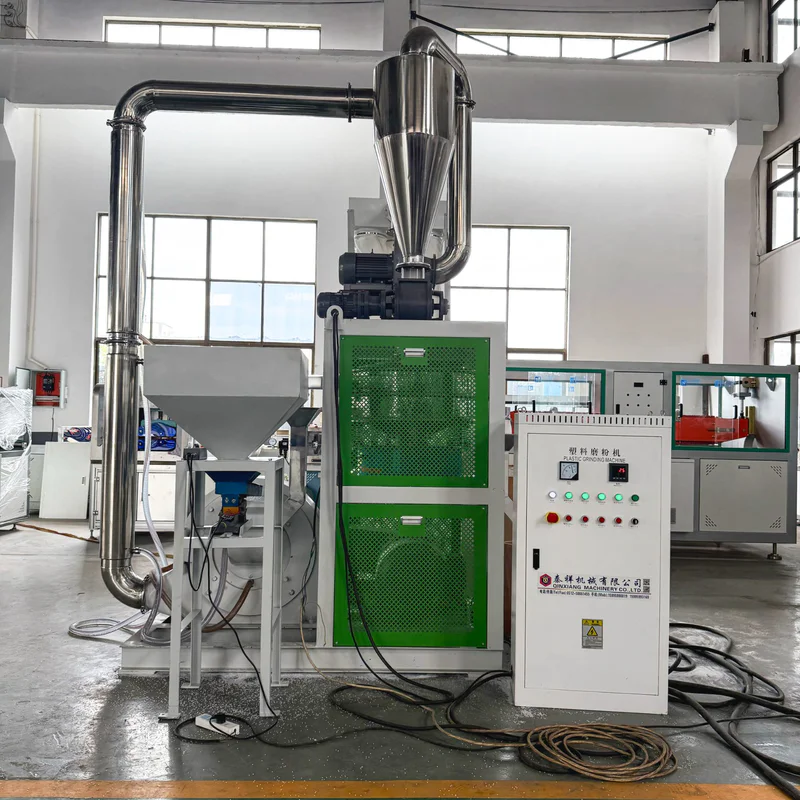
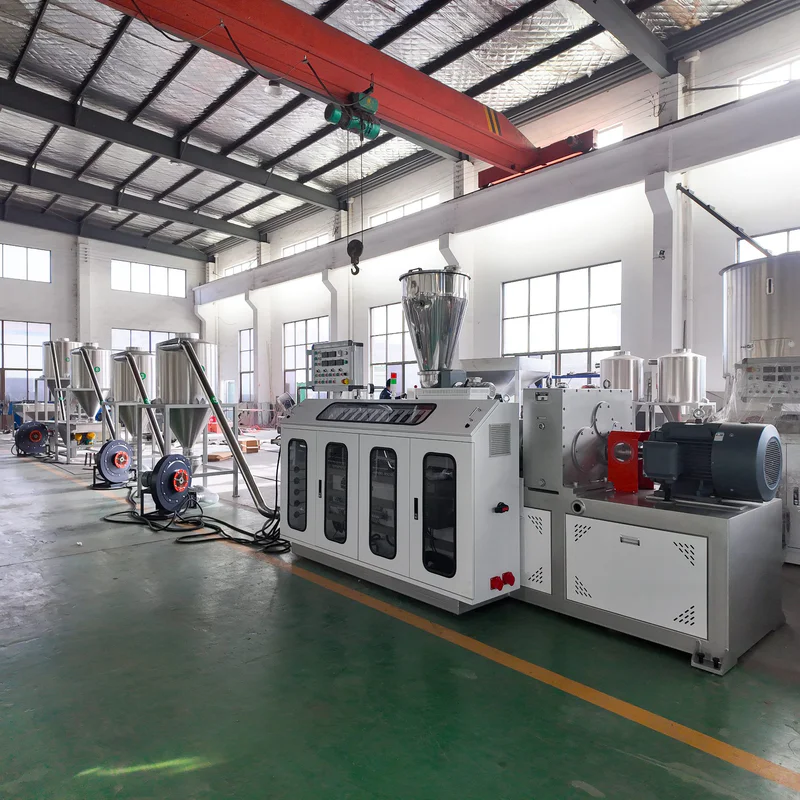
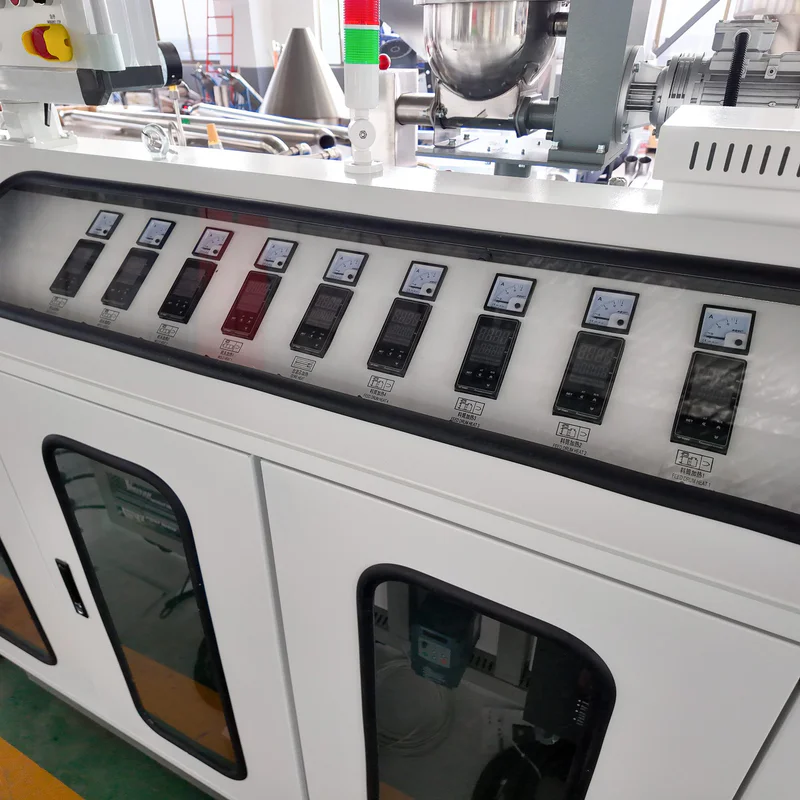
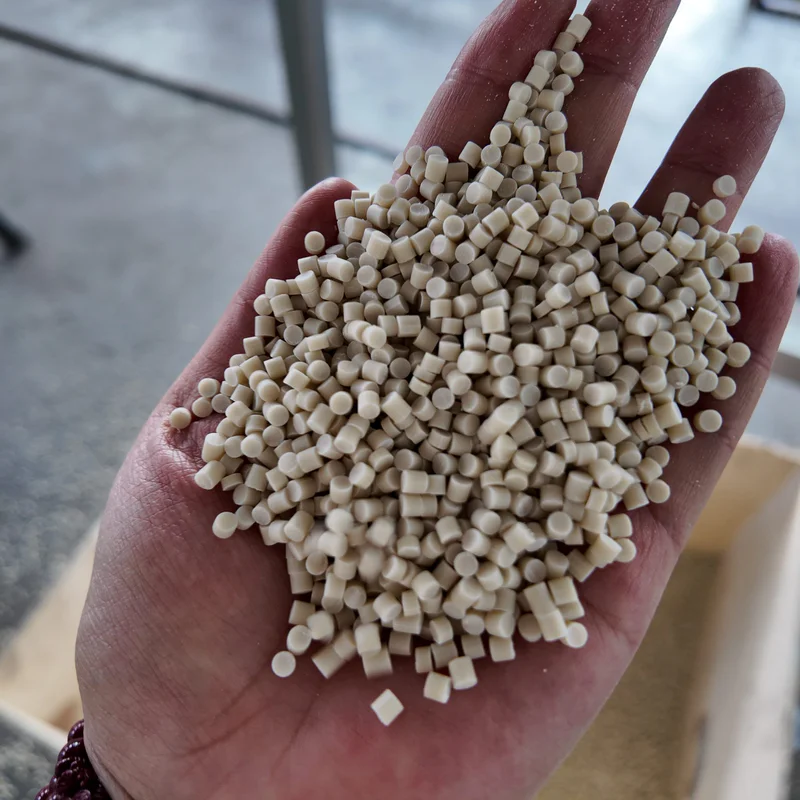
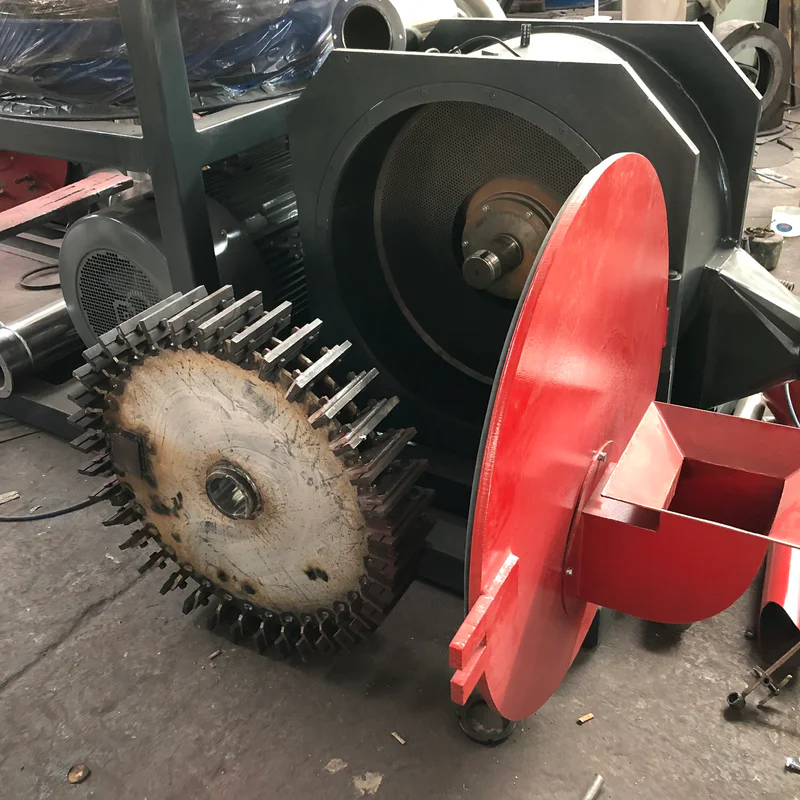
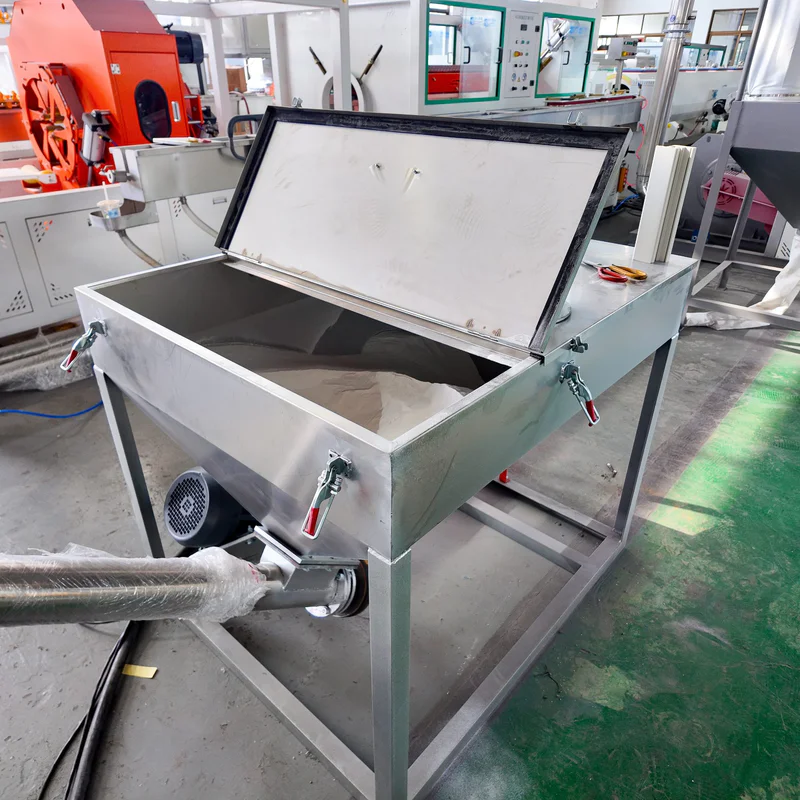
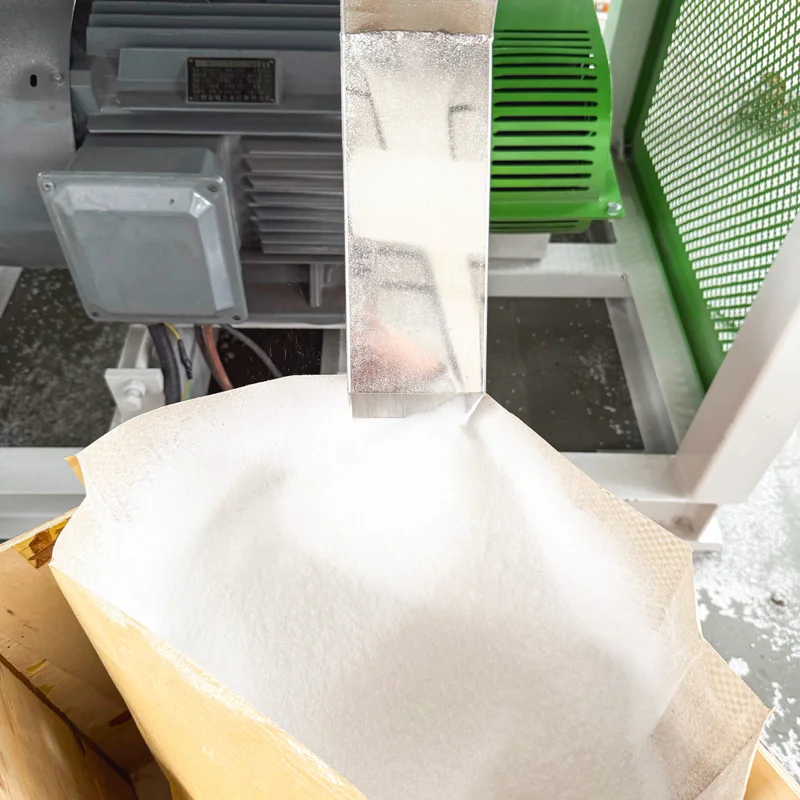
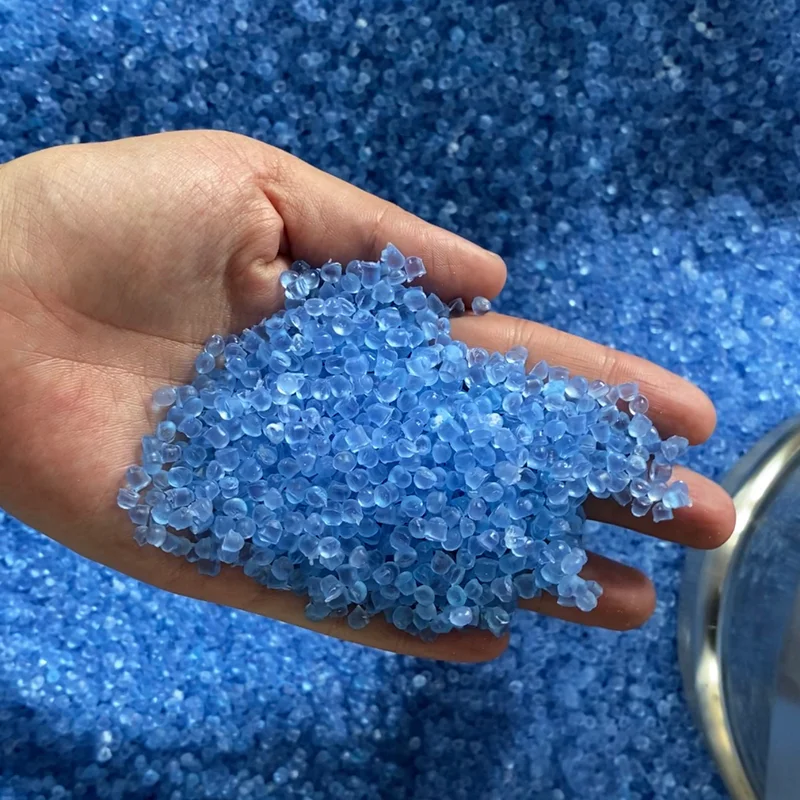
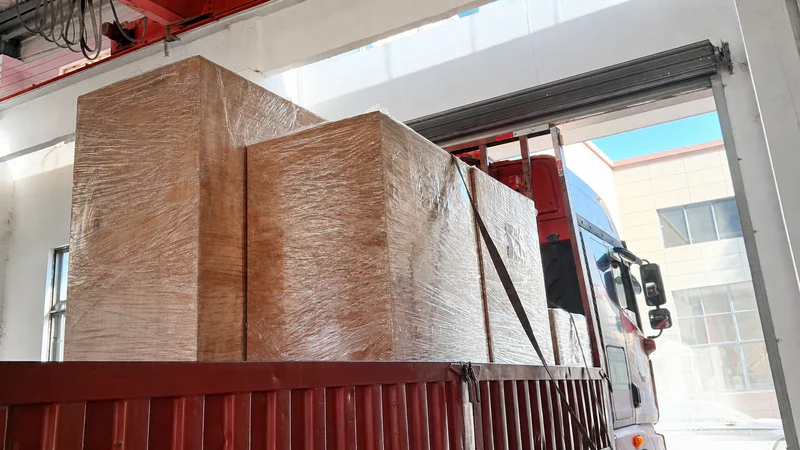
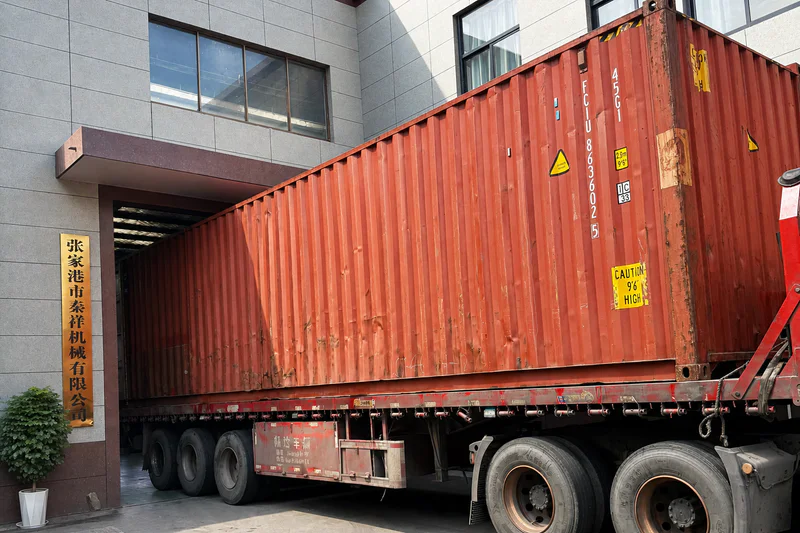
See the manufacturing, assembly, and operating details behind our plastic crushers, plastic pulverizers, and PVC pelletizing lines. Factory photos can show machine structures, electrical controls, material feeding, crushed regrind, powder samples, PVC pellets, and export packing, helping you review the equipment and final output before confirming your project.
Every Line Is Voltage And Standard Configured
Your line is built to your local voltage, frequency, and safety standard before it ships. Send your market, scrap material, moisture, and target output when you inquire, and we quote the correct configuration, spare parts, and export documents for your setup.
How Your Equipment Project Works
Your project starts with the material you need to process and the result you want. The machine type, model, and configuration are confirmed step by step before production.
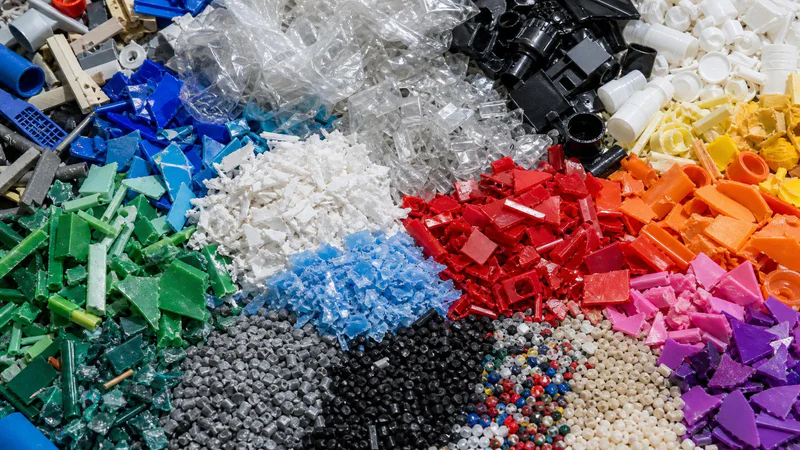
Send Your Material Details
Send clear photos or videos of your material, including its type, current size, shape, and condition. Also tell us what result you need.
- Smaller regrind
- Controlled plastic powder
- PVC pellets
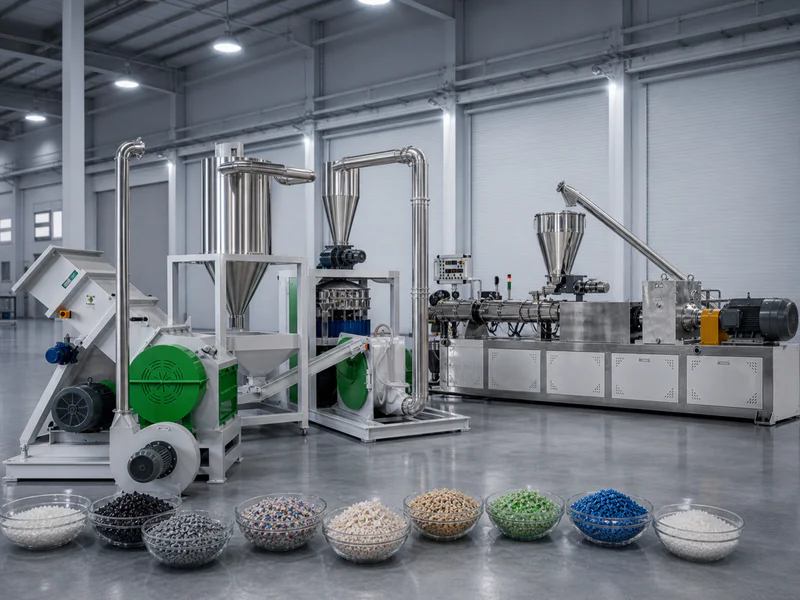
Confirm The Processing Route
Your material is reviewed to determine which route fits.
- A plastic crusher
- A plastic pulverizer
- A PVC pelletizing line
- Crushing before pulverizing
- Crushing before PVC pelletizing
Dirty, wet, or mixed waste may need sorting, washing, or drying before entering the equipment. These pre treatment systems are not included in the current product range.
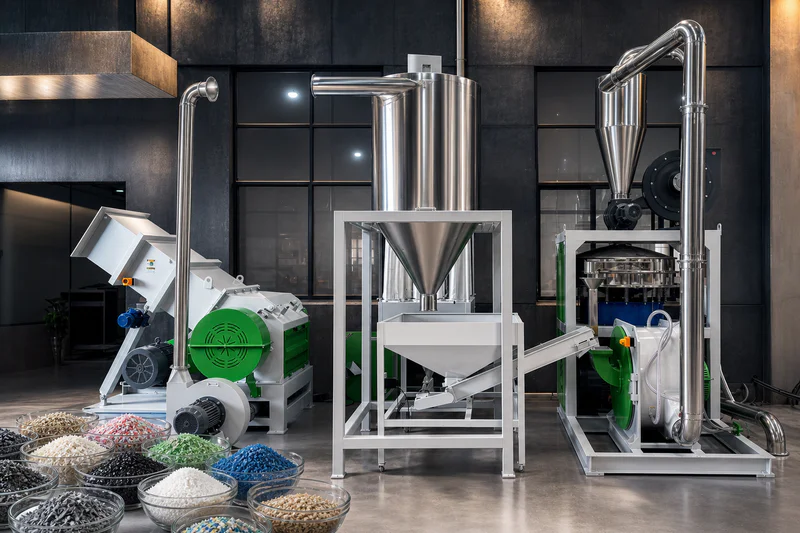
Select The Equipment
The equipment is selected according to your material and final result.
Crusher
Feed size, thickness, output size, and capacity.
Pulverizer
Feed size, target mesh, output, and powder use.
PVC Pelletizing Line
PVC type, formulation, filler or plasticizer content, output, and pellet application.
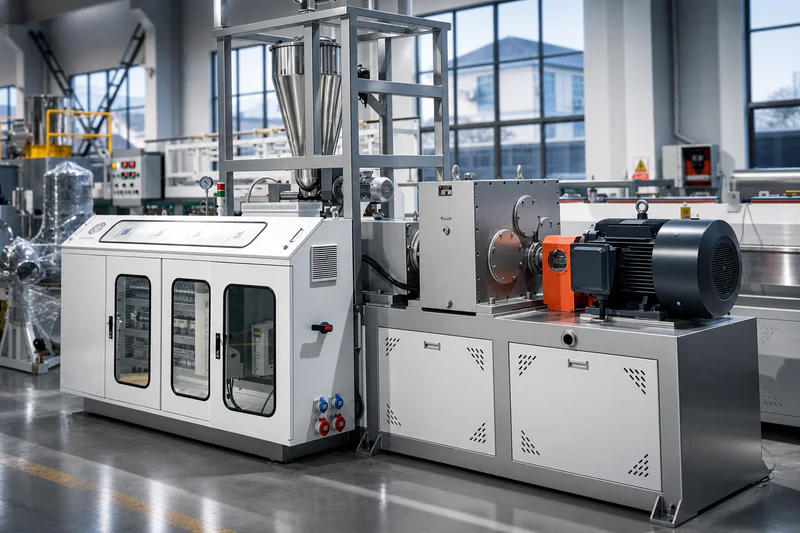
Review The Technical Proposal
You receive the proposed machine model, basic processing route, equipment list, power reference, capacity reference, and required project conditions.
Optional parts and supporting equipment should be confirmed according to the selected machine and actual material.
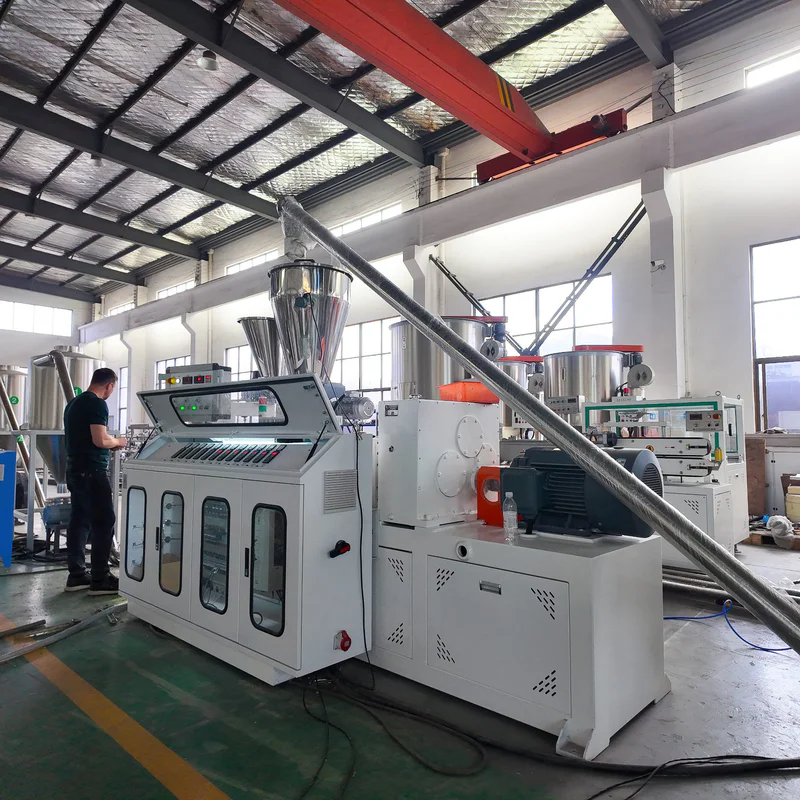
Manufacturing And Assembly
The equipment is manufactured and assembled according to the confirmed configuration.
Production and assembly photos can be provided to help you review the machine structure, control system, and main components.
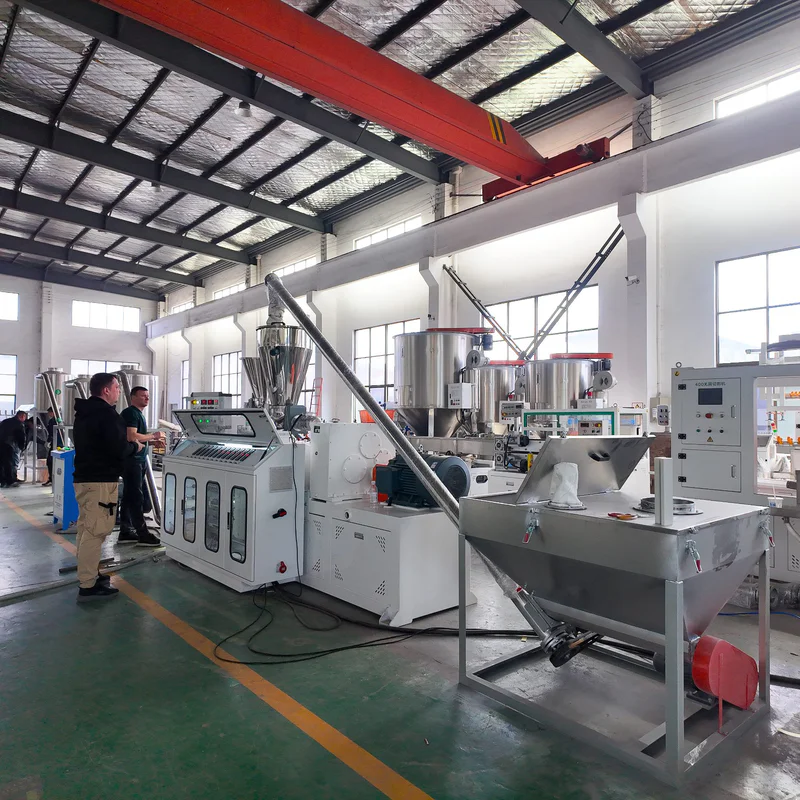
Trial Run And Sample Review
When trial running is arranged, the checks follow the selected equipment.
Plastic Crusher
Feeding condition, running stability, crushed output size.
Plastic Pulverizer
Feeding condition, powder fineness, powder consistency, collection condition.
PVC Pelletizing Line
Feeding stability, processing condition, pellet size, pellet shape, color and sticking condition.
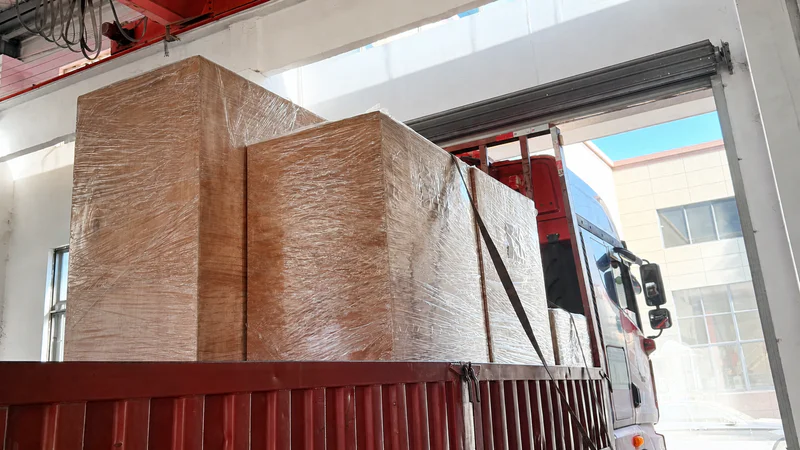
Packing And Shipment Preparation
Before shipment, check the completed equipment, trial samples, and export packing.
Operation information, electrical documents, and spare parts details are prepared according to the confirmed order scope.
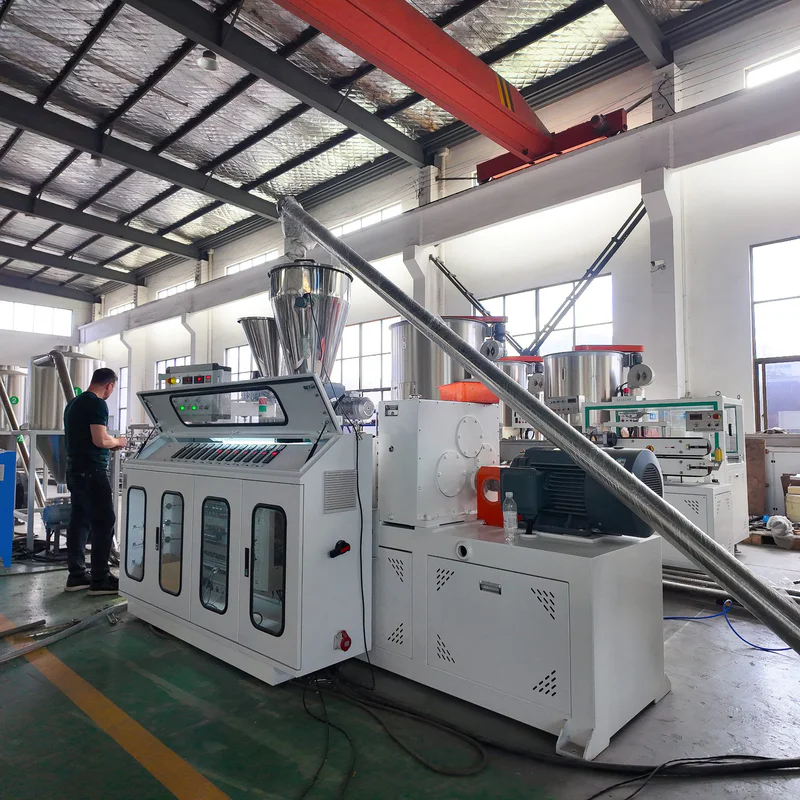
Installation And Start Up
Installation guidance, commissioning support, and operator instruction are confirmed according to the equipment and agreed service scope.
Your team should prepare the required power supply, workshop space, foundation, material, and supporting utilities before start up.
Samples And Trial Runs
When trial running is included in the project scope, you can review the incoming material, machine operation, and processed samples before shipment.
 01
01
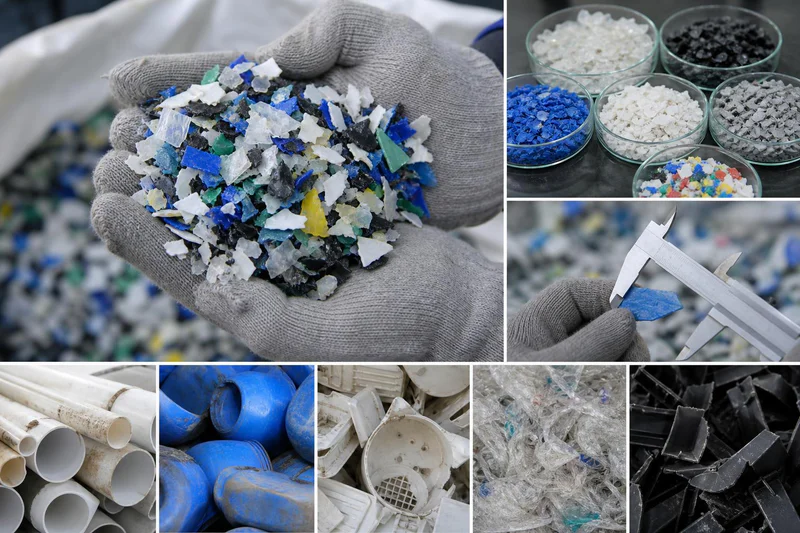
Material Sample
Check the material type, current size, shape, and cleanliness before testing.
 02
02
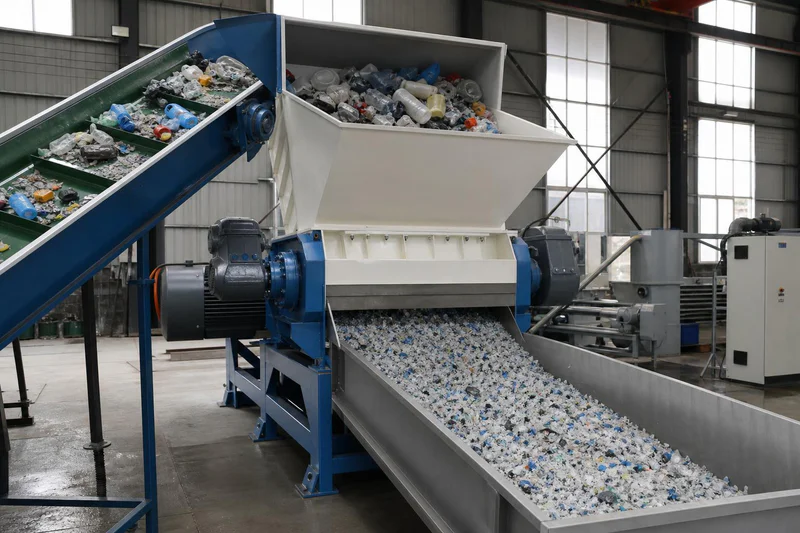
Crusher Trial
Check feeding condition, running stability, and the size of the crushed regrind.
 03
03
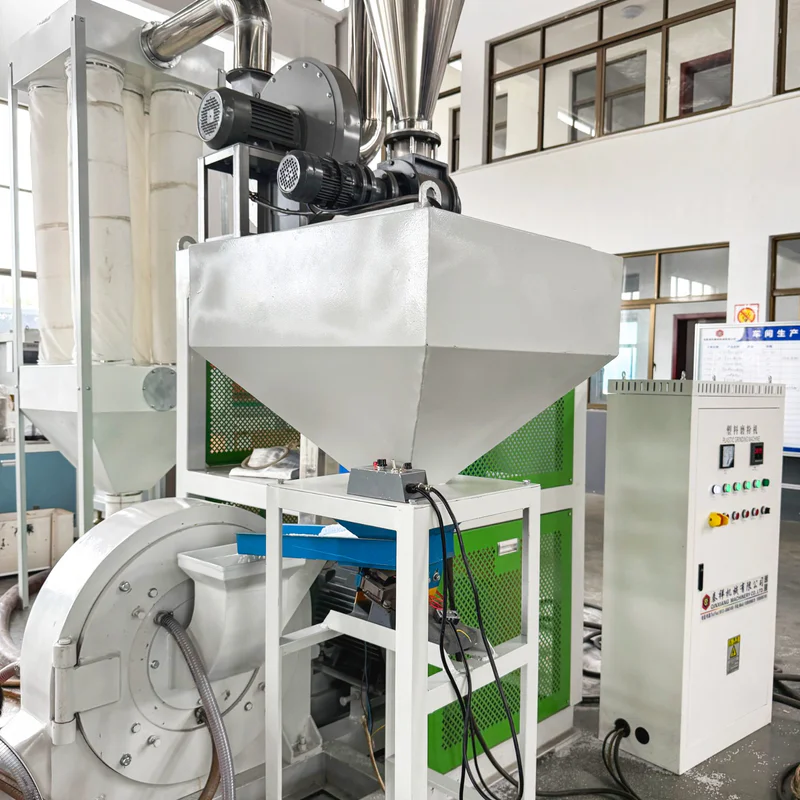
Pulverizer Trial
Check whether the material feeds steadily and reaches the required powder fineness.
 04
04
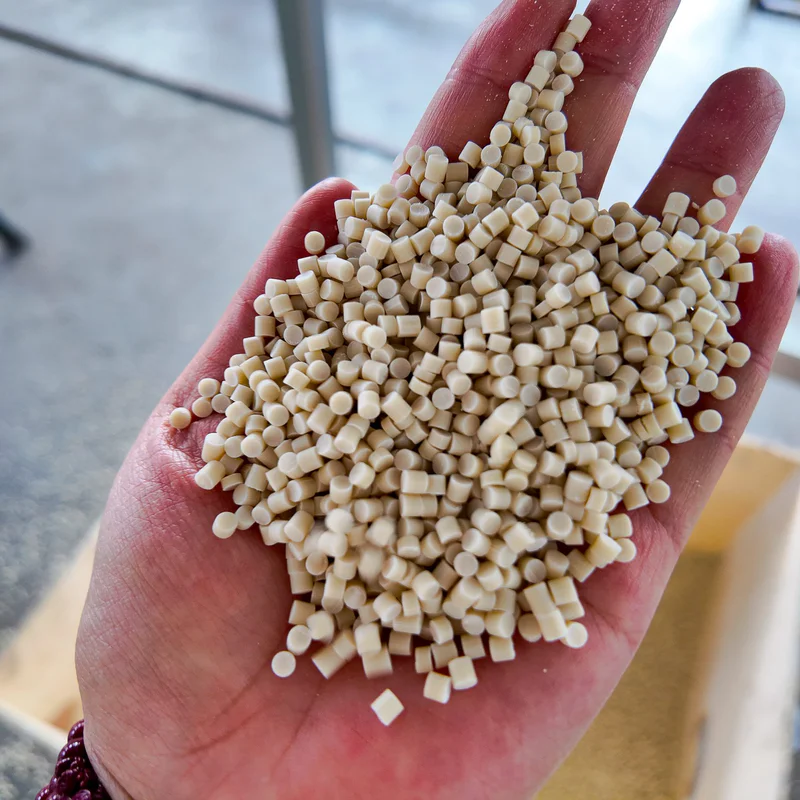
PVC Pelletizing Trial
Check PVC feeding, processing condition, pellet size, shape, color, and sticking condition.
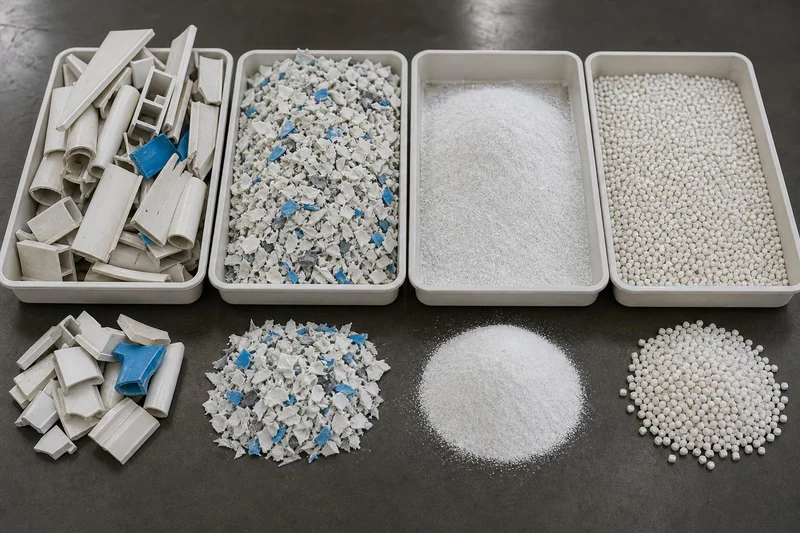 05
05
Final Sample Review
Compare the incoming material with the crushed regrind, plastic powder, or PVC pellets.
 06
06
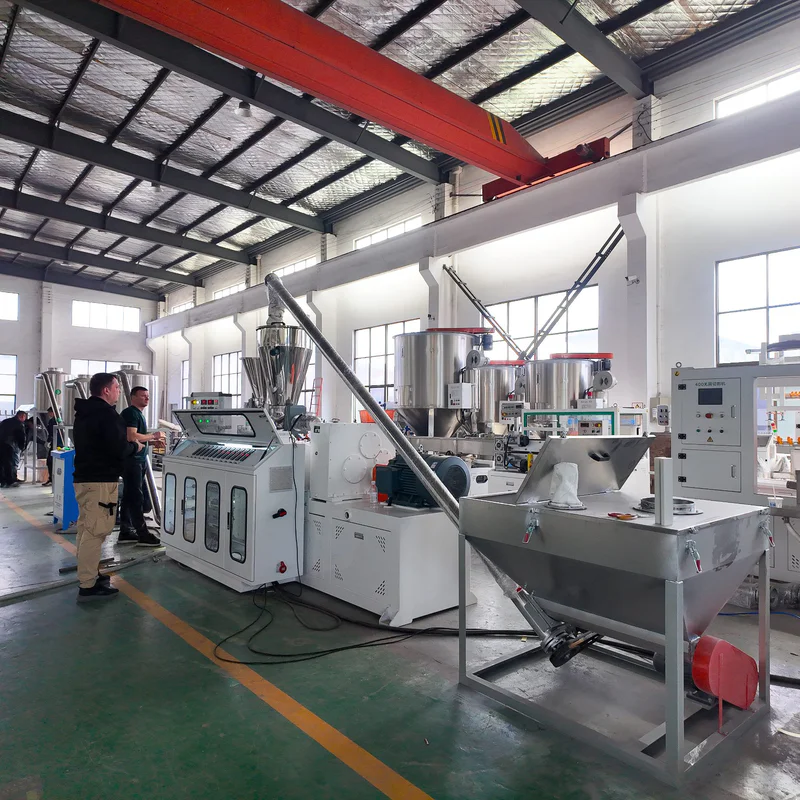
Trial Records
Photos or videos can be provided according to the agreed test scope, showing machine operation and sample results.
Get An Accurate Equipment Quotation
You do not need a complete technical file. Start with the details on the right, and we can help you check the suitable machine and configuration.
Not sure on a few of them? Send what you have. Material photos or a short video often tell us more than a spec sheet.
Plastic crusher, plastic pulverizer, or PVC pelletizing line. If you are unsure, tell us the final result you want.
Share the plastic type and whether the PVC material is rigid or soft.
Provide the approximate length, width, thickness, or particle size.
Smaller regrind, plastic powder, or PVC pellets.
- For crushing, share the required output size
- For powder, share the target mesh
- For PVC pellets, share the final application
Share your target kg/h or daily processing volume.
Clear material photos or short videos help us check the feeding condition, machine type, and required configuration.
Frequently Asked Questions
The questions buyers ask most before choosing a plastic crusher, pulverizer, or PVC pelletizing line. If yours is not here, send it over and we answer it directly.
Choose a plastic crusher when large scrap needs to become smaller regrind. Choose a pulverizer when suitable pre crushed material needs to become fine powder. Choose a PVC pelletizing line when suitable rigid or soft PVC material needs to become granules.
The correct choice depends on your incoming material and the final result you need.
You may need a crusher if your material is too large for stable pulverizer feeding.
Pipe sections, profiles, sheets, thick edge trim, lumps, and molded rejects normally need to be reduced to a suitable feed size first. If your material is already clean, uniform regrind, a separate crushing step may not be necessary.
Provide the material type, maximum scrap dimensions, thickness, shape, required output size, and target capacity.
Photos or videos are especially useful for irregular pipe, profile, sheet, and molded scrap, because the feed opening and crushing structure must match the actual material.
The final regrind size is mainly affected by the screen opening, blade condition, material thickness, material hardness, and feeding rate.
The required output size should be confirmed according to the next step, such as storage, refeeding, pulverizing, or PVC pelletizing.
Provide the material type, current particle size, target mesh, required output, and final powder use.
The material must also be checked for heat sensitivity. A finer powder target may require more careful feeding and temperature control, and may reduce the achievable capacity.
Uneven powder can be caused by unstable feeding, oversized incoming material, worn grinding parts, unsuitable settings, or an unrealistic combination of very fine mesh and high output.
The feed size, target mesh, and required capacity should be reviewed together before selecting the pulverizer.
Dust control depends on powder fineness, collection method, connection sealing, and the supporting configuration of the selected machine.
The workshop layout and required powder collection method should be discussed before confirming the equipment. The exact dust control scope must follow the agreed machine configuration.
Rigid and soft PVC have different formulations, feeding behavior, plasticizer content, and processing requirements.
A line may need different screw, feeding, temperature, cutting, or cooling arrangements depending on the material. Send the PVC formulation and final pellet application before confirming whether one configuration can cover both materials.
These problems may be related to excessive temperature, long material residence time, unstable feeding, unsuitable formulation settings, insufficient stabilizer, or a cutting and cooling method that does not match the PVC material.
The PVC type, formula, filler or plasticizer content, and required pellet use should be checked before the line is configured.
Dirty, wet, or mixed post consumer waste should not be assumed suitable for direct processing.
Labels, oil, sand, metal, moisture, and mixed plastics can affect crushing, powder quality, and PVC pelletizing stability. Sorting, washing, or drying may be required first. Washing lines and complete post consumer recycling systems are not included in the current equipment range.
Start Your Equipment Project With Maggie
Whether you need a machine matched to your material, a replacement for an old one, or just help picking a direction, send what you have. Maggie replies personally within 24 hours with real configuration details and a clear next step.

Hi, I'm Maggie.
Your Equipment Sales Contact
Every message here reaches me directly. Tell me about your material and the result you need, and I come back with an equipment configuration and a real quote, not a brochure.
Your material type, current size, output target, or a few photos are enough to start. We supply plastic crushers, pulverizers, and PVC pelletizing lines to factories and importers across 60+ countries.
Maggie
Sales, Zhangjiagang Qinxiang Machinery Co., Ltd.
Tell Us About Your Equipment Project
Fields marked are required.