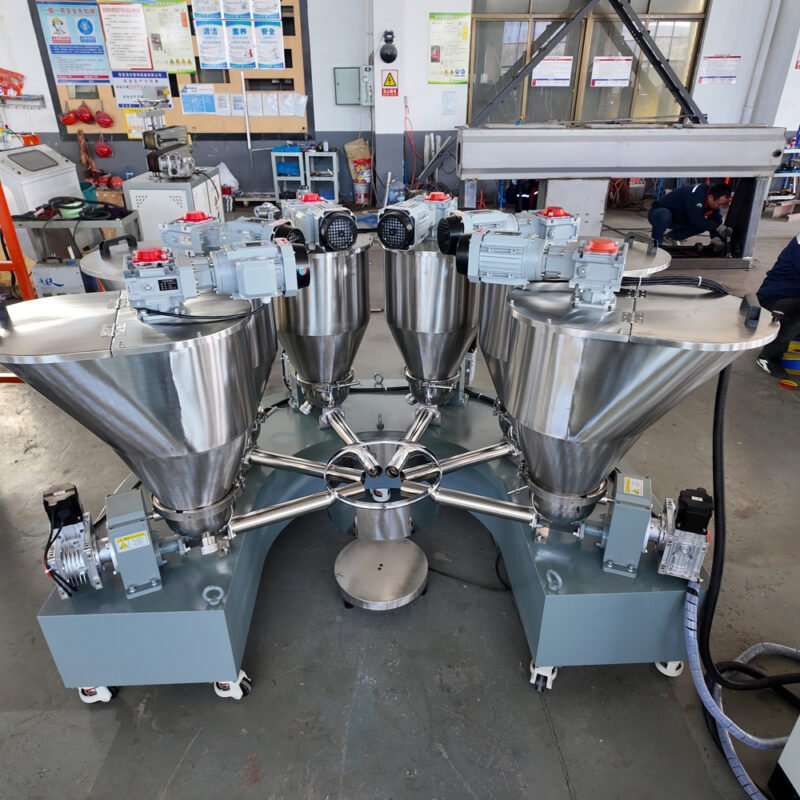
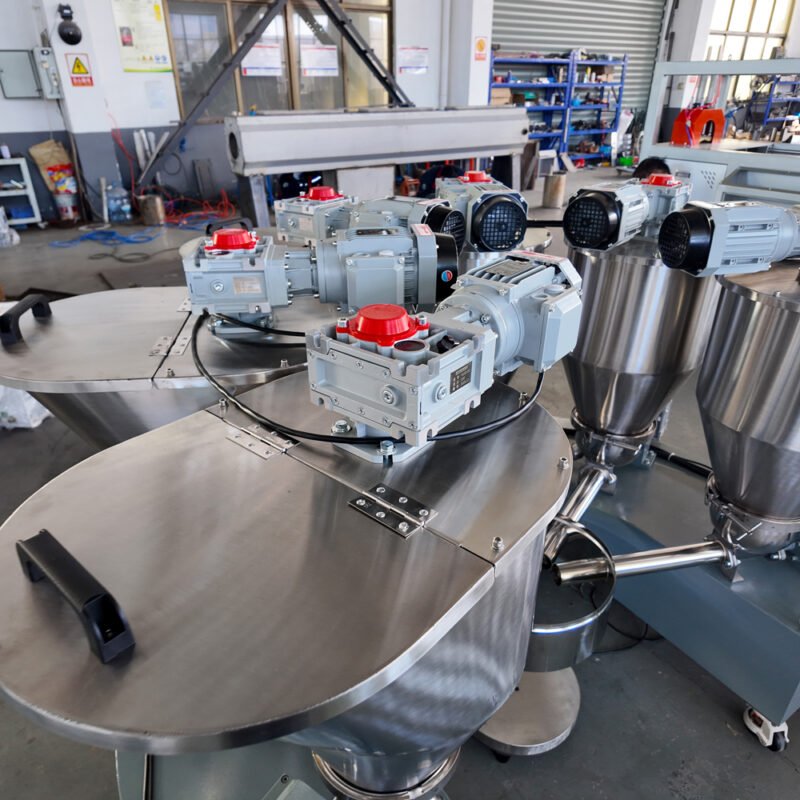
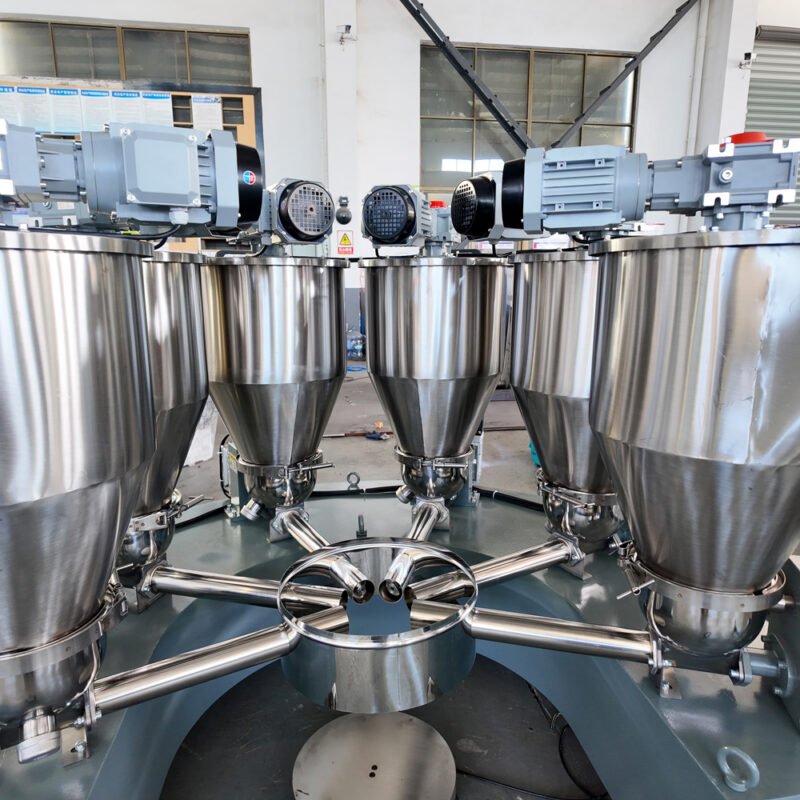
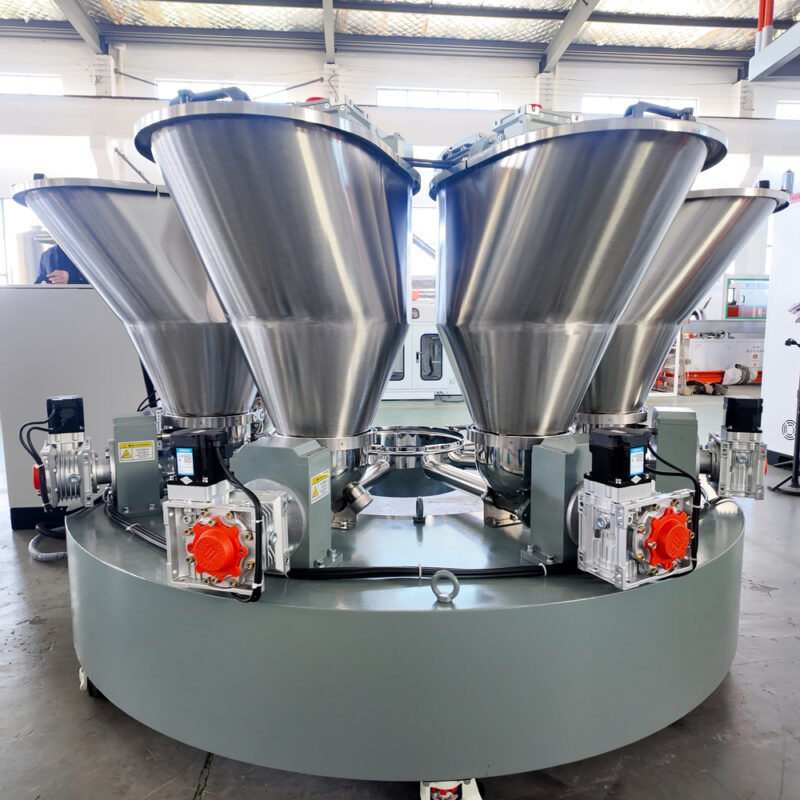
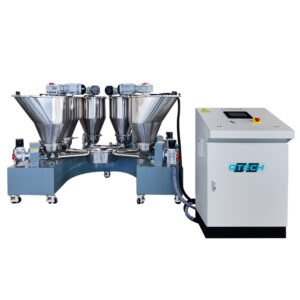
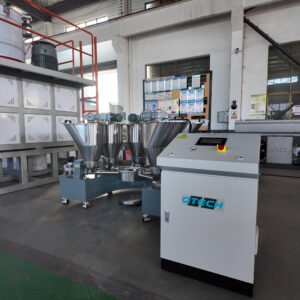
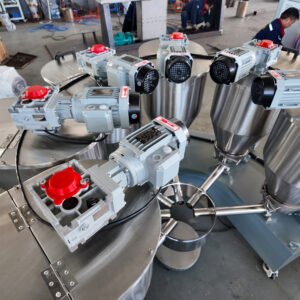
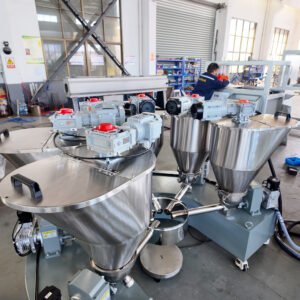
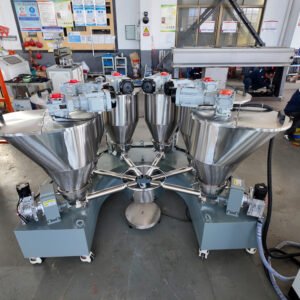
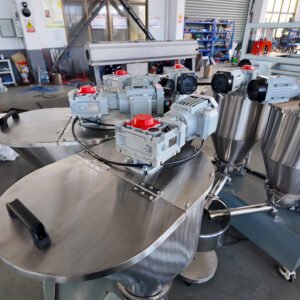
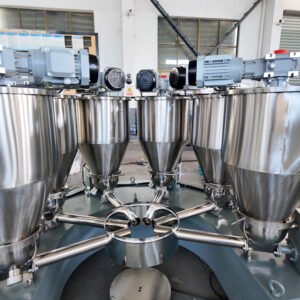
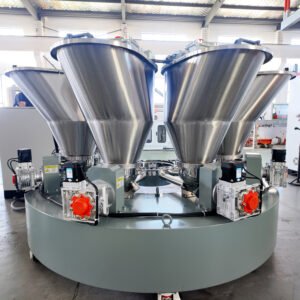
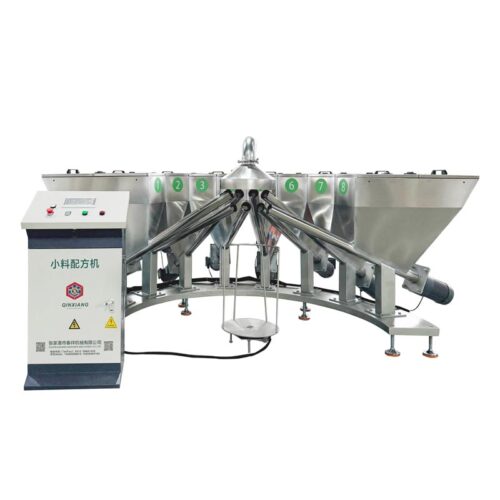
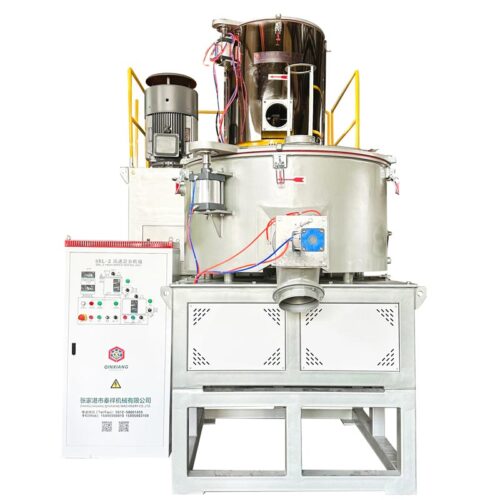
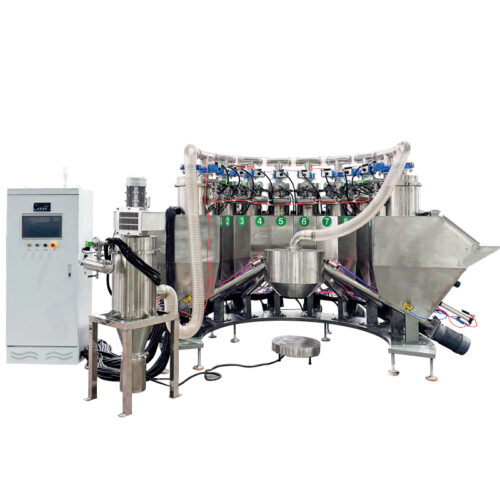
Six-Hopper Material Batching Machine
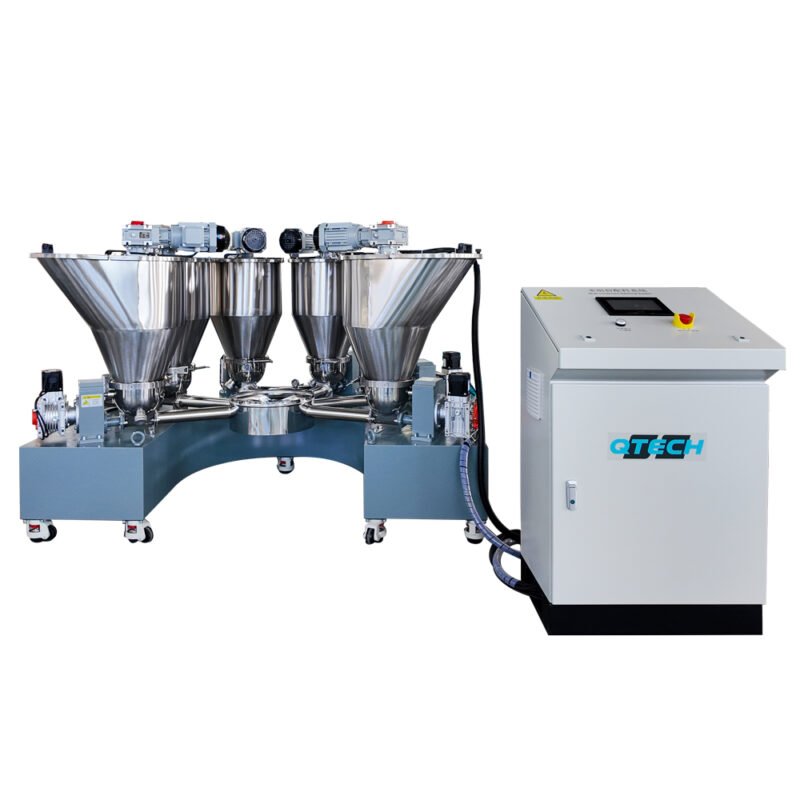
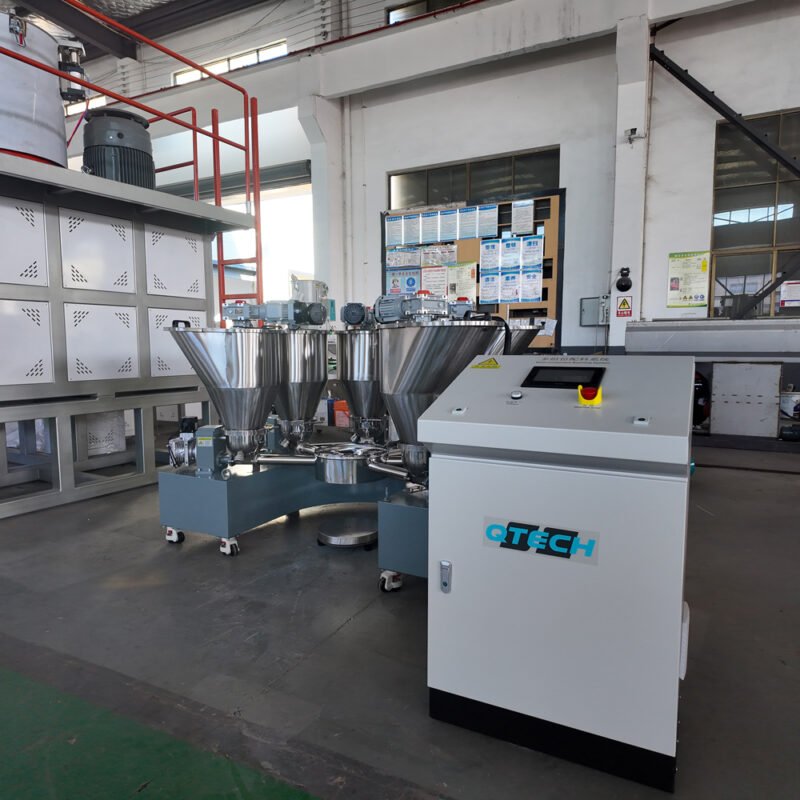
A compact, high-precision six-hopper material batching machine engineered for smart dosing, consistent recipes, and energy-efficient continuous production. Ideal for multi-material compounding in plastics, rubber, and powder-processing lines, it delivers tight ratio accuracy, traceable batch records, and rapid changeovers for modern factories.
Product Features
Precision Dosing and Stable Ratio Control
- Closed-loop weight control with high-resolution load cells and servo-driven feeders ensures ±0.3–0.5% recipe accuracy across all six hoppers.
- Adaptive algorithm compensates for bulk density and flow variation, maintaining consistent throughput for continuous extrusion and injection molding lines.
Smart PLC/HMI, Recipe Management, and Traceability
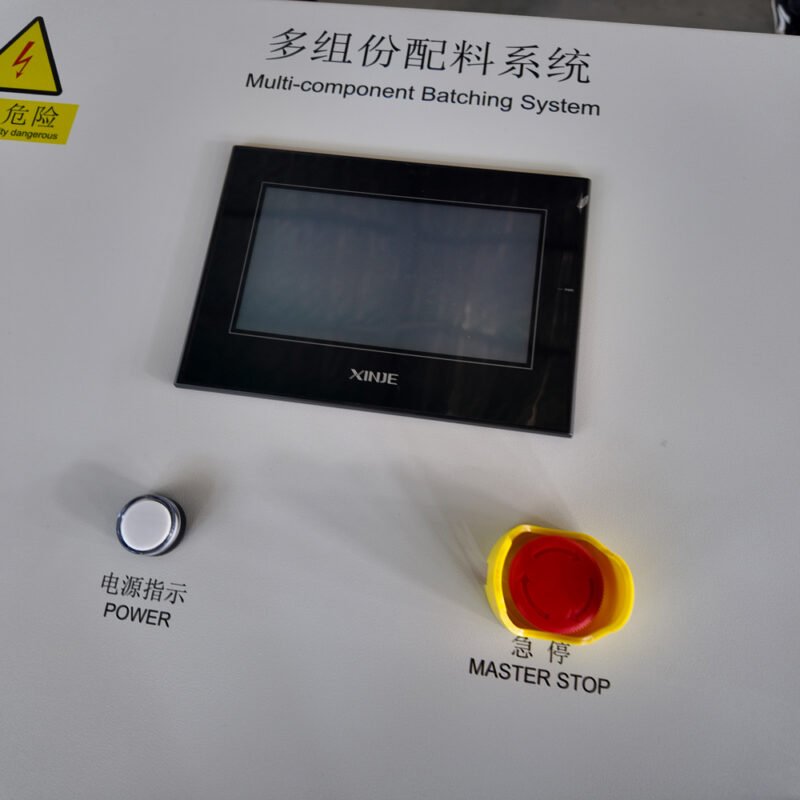
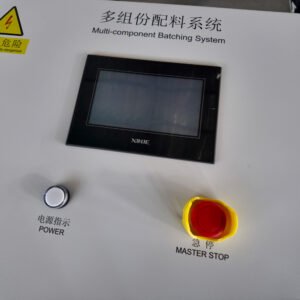
- Industrial PLC with intuitive HMI supports multi-recipe storage, user permissions, and audit trail for GMP-style documentation.
- Barcode/RFID recipe call-up, batch ID logging, and exportable CSV data for MES/ERP integration enhance traceability and compliance.
Versatile Materials and Hygienic Construction
- Handles pellets, granules, powders, and regrind (LLDPE, PP, ABS, PA, PVC, PET, masterbatch, fillers) with anti-bridging cone design and vibration-assisted flow.
- Food-grade optional contact parts, 304 stainless steel hoppers, and easy-clean access to minimize cross-contamination and downtime.
Efficiency, Energy Saving, and Low Scrap
- Optimized feeder geometry and real-time correction minimize overfeeding and underfeeding, reducing scrap and stabilizing product properties.
- Energy-efficient motors and standby modes cut power consumption without compromising dosing stability.
Modular, Space-Saving, and Easy Maintenance
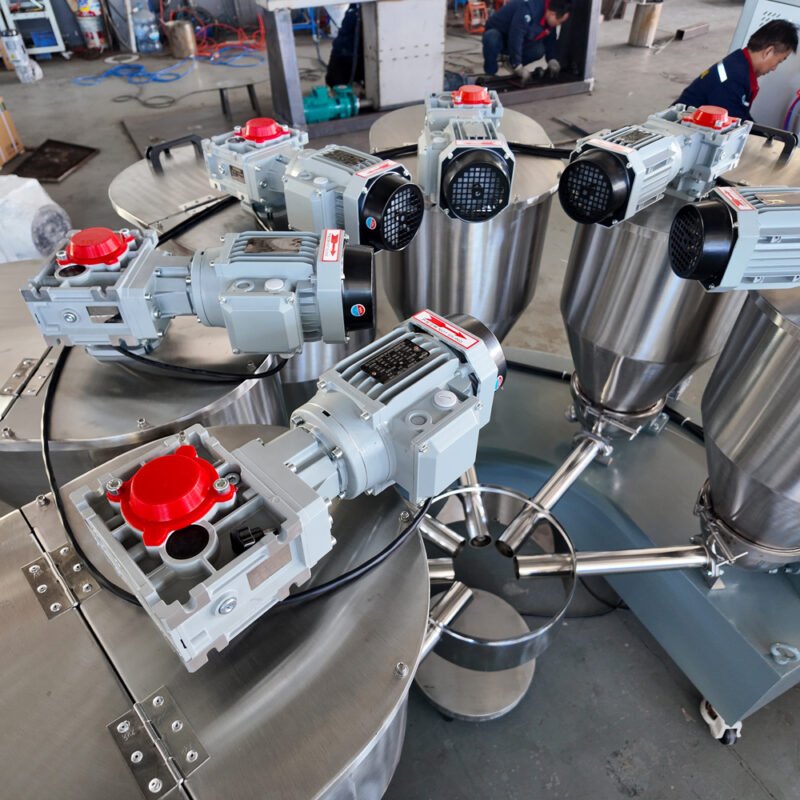
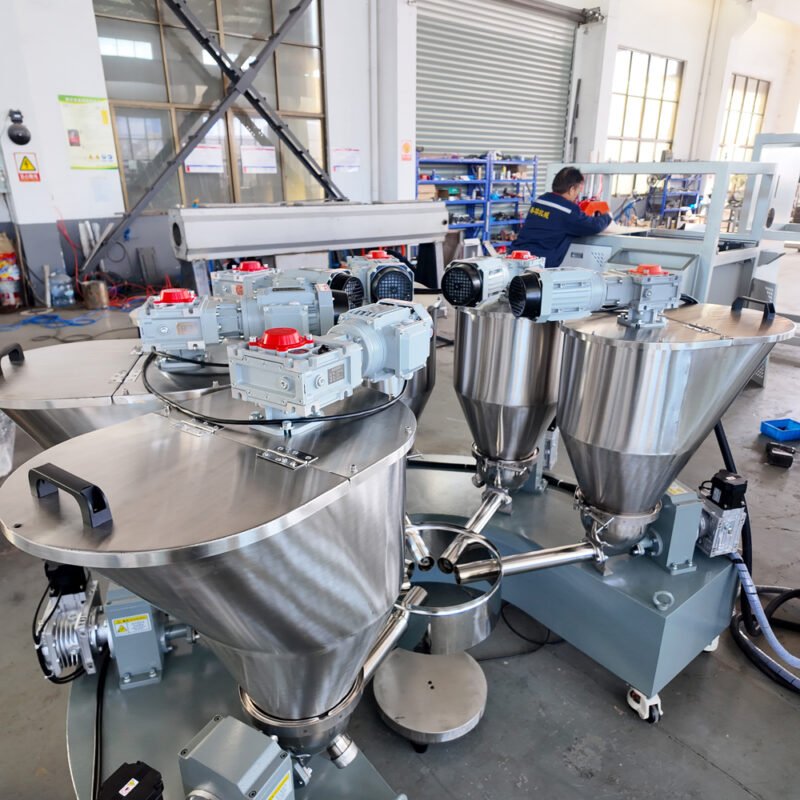
- Six independent hoppers with quick-release gates and tool-free maintenance points.
- Optional dust extraction, level sensors, and vacuum loader interfaces for cleaner, safer operation.
Application Fields
Building and Construction
- PVC profiles, pipes, seals, waterproof membranes: precise dosing of stabilizers, lubricants, fillers, and pigments for dimensional stability and UV resistance.
Furniture and Home Appliances
- ABS/PP housings, decorative trims, flame-retardant blends: consistent masterbatch and additive ratios for color uniformity and mechanical performance.
Automotive and Transportation
- Nylon/PP composites, impact modifiers, UV packages: repeatable recipes for under-the-hood components, interior trims, and lightweight structural parts.
Packaging and Consumer Goods
- PET/PP/PE packaging, straws, caps: high-volume production with stable color and additive dispersion, enabling low-defect, glossy surface finish.
Rubber, Cables, and Electronics
- Cable compounds, elastomers, flame-retardant formulations: accurate dosing of fillers and FR packages for electrical insulation and fire safety standards.
Technical Specifications
Capacity and Accuracy
- Throughput: 50–800 kg/h (configurable by hopper/feeder size and material flow properties).
- Ratio accuracy: ±0.3–0.5% per component; batch repeatability ±0.2% under stable ambient conditions.
Hopper and Feeder Configuration
- Six hoppers: 25–80 L each (customizable), level sensors, anti-bridging design.
- Feeders: servo-driven screw or vibratory feeders matched to material type; quick-change augers for fast recipe swaps.
Control and Connectivity
- PLC/HMI: Siemens/Mitsubishi options, 7–10″ touchscreen, multi-language UI.
- Interfaces: Modbus TCP/RTU, OPC UA, Ethernet, digital I/O; ready for MES/ERP integration and barcode/RFID scanners.
Energy and Utilities
- Power: 380V/50Hz (other voltages optional), total power 2.5–6.0 kW depending on feeder configuration.
- Air: 0.5–0.6 MPa for pneumatic gates (optional).
- Dust extraction port for cleaner operation and improved safety.
Construction and Safety
- Contact parts: 304 stainless steel; optional 316L for corrosive additives.
- Safety: interlocks, emergency stop, overload protection, lockable access doors.
User Recognition
Proven Market Performance and Customer Satisfaction
- Widely adopted by extrusion, injection molding, and compounding plants for its stable ratio control and low scrap rate.
- Customers report 8–15% reduction in additive overuse, improved color consistency, and faster changeovers (down to 5–10 minutes per recipe).
- Case highlights: automotive compounder achieved ±0.3% additive accuracy across three shifts; packaging customer reduced defects by 20% with inline data logging.